
Museo de Arte Latinoamericano in Buenos Aires, created and managed by the Costantini family, has begun to implement a policy of devoting one of its galleries to temporary exhibitions of works by established Argentinean artists. Neither ultra-famous nor emerging names (the former tend to be housed on the museum’s top floor, while the latter are included in the cycle Contemporáneos, held in the basement gallery), the artists of the intermediate generation have gained a space of unquestionable quality for the exhibition of their work. Alejandro Kuropatwa deserves such a privilege: despite his death in 2003, he remains one of the greatest talents in contemporary Argentinean photography.
Educated at Parsons School of Design in New York City in the years of the pre-paranoia, when the city celebrated itself with abandon in parties and other excesses, Kuropatwa returned to Buenos Aires in 1985 and inserted himself seamlessly into the local art circuit, reestablishing contact with his actor and musician friends, who had jumped from the underground they occupied under the military dictatorship to the explosion of cultural euphoria that came with democracy. Considered by all—and by himself—an irreverent eccentric, Kuropatwa carved the place he occupies today in Argentinean art on the basis of a gaze that was as refined as it was kitschy, a gaze that seemed intent on capturing the boundary that separates the sublime from the ridiculous.
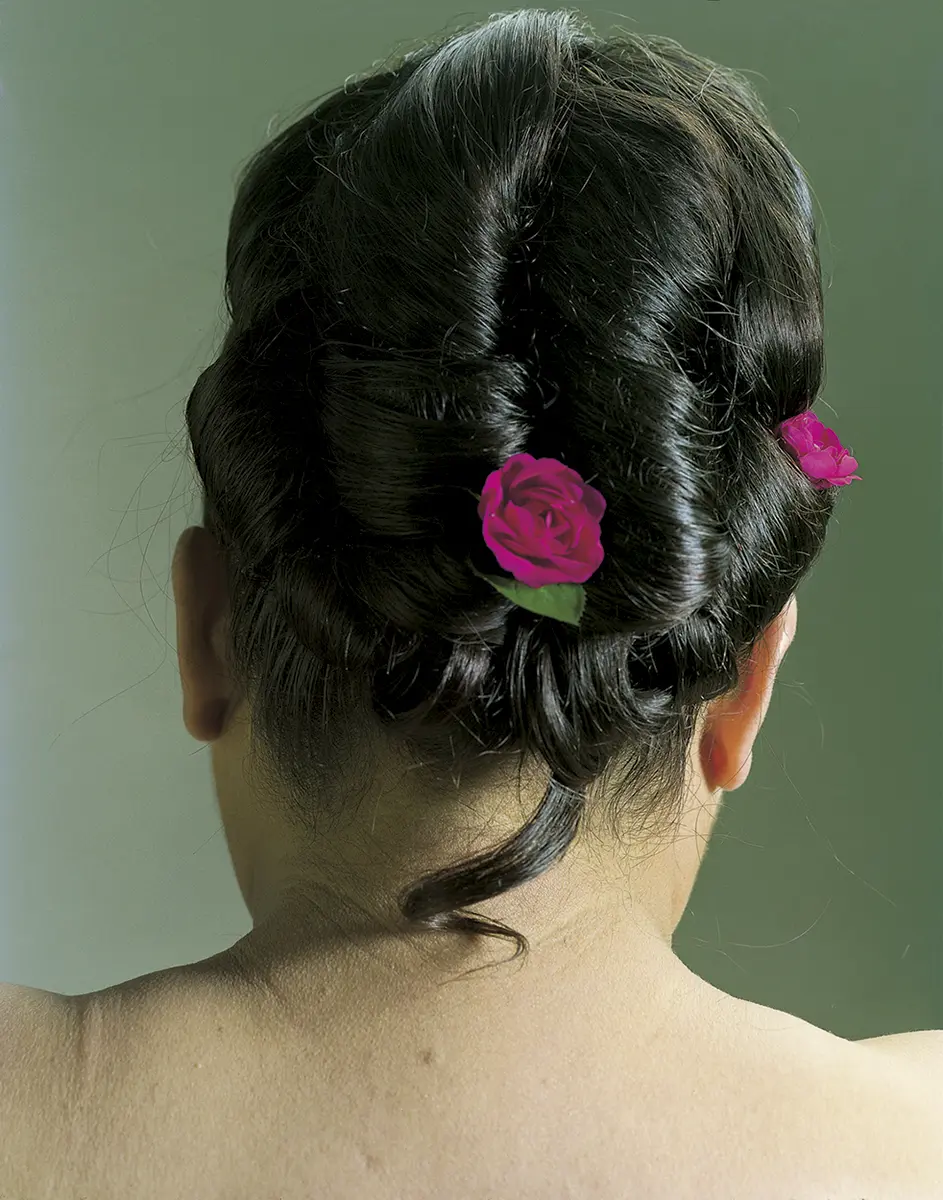
The show presented at MALBA, an anthology of his last years lovingly curated by Andrés Duprat, includes images from series that vary widely and yet are linked by a common stylistic thread of large formats and vibrant colors, and a common conceptual thread associated with an—almost always incisive—observation of power and glory, beauty and decay, exquisiteness, and the antinomy of natural/artificial. Cóctel (1996), Yocasta (2000), Mujer (2001) Flores (2002), and Naturalezas muertas (2002) are the titles of this series created in the final period of Kuropatwa’s life (the artist had suffered from AIDS since the 1980s). Accompanied by a good selection of portraits of his friends and of celebrities, both black and white and in color, these images transcend the limits of each series and make up a whole filled with humor, a certain hardness, and an evident gift for composition, in the classic sense.
Cóctel was one of the most heavily promoted and commented on of Kuropatwa’s shows: euphoric after the development of an AIDS treatment with DDI and AZT, the artist launched a personal song in celebration of those pills which, as he said in many interviews and public statements, had given him new hope. The series is devoted to the colorful little pills and uses the formats of advertising, a resource that the artist was able to deploy with great intelligence and with humor (one pill barely leans on the tip of a prototypical, dew-covered rose). Seductive in their brilliance, size, and excellent definition, Kuropatwa’s photographs are all very impressive and etch themselves on the retina with the efficacy of the best communications campaigns. Except that in his case, what is being communicated always has a dark, even sad side, which places him at the opposite pole of those media discourses he emulates or quotes.
The series Mujer and Marie Antoinette, partially included in this overview, are among Kuropatwa’s sharpest creations. Both reflect his fetishistic spirit and his fascination with the trickster nature and flirtatiousness of the world of women. In Mujer he cuts out minimal details, observed through a magnifying glass, of a repertoire associated with the clichés of beauty. Thus a lipstick bar (or a row of them), a pair of glittered breasts, a mouth, and a face ready for the application of some cream, symbolize that universe of expectations and sufferings that are needed for the perpetuation of certain beauty ideals. In Marie Antoinette, the artist’s gesture goes beyond that, adding a ruthless commentary about the passage of time: these are portraits of rich society ladies who, despite their jewels and makeup, grow inexorably old before the photographer’s raw lens.
“In photography,” Kuropatwa said, “the first thing is the gaze. One needs to learn how to see with humor. That doesn’t mean waiting until something comical occurs. A photograph is a solemn event.” It is in this interplay of humor and sobriety that his work effectively takes place, rescued not only by the exhibition but also by the catalog published by the museum, with excellent reproductions and a delicious biographical chronicle by María Gainza.
EVA GRINSTEIN