
Mythical and boundless, Patagonia is a natural portent. It is also a large territory construed, precisely, as a site of borderlands and freedom. It is there, where hopes and solitude, fortune and misfortune are born; it is there that geography rubs elbows with the eternal ice of the extreme south and where we find cultural traces dating from at least 10,000 years ago. In spatial terms, the southernmost point in Argentina is Cabo Vírgenes, “geographical and metaphorical referent of the current situation of art” and starting point for Proyecto Atmósfera, conceived and directed by Matilde Marín.
Photographs, objects, and videos in the show Proyecto Atmósfera. Las formas del fin, the suggestive show generated by these southern artists around the conference of the same name, were reflected, alongside local researchers and art critics from the Río de la Plata region, about “the place where they are and the shapes of the end.” Precisely, Marín’s beautiful image Fotografía desde Cabo Vírgenes hasta Punta Dúngenes illustrates the end of continental land (Tierra del Fuego is an island and Argentina’s southwestern border with Chile; it also reproduces reminiscences of the energy travelers feel in those gray beaches, next to the roaring Atlantic, where the Strait of Magellan begins, separated from Chile by just a wire fence.
With a curatorial script by Marín, her own work and the work of artists from Chubut, Santa Cruz, and Tierra del Fuego are displayed in three temporary galleries at the Federico Jorge Klemm Foundation (National Fine Arts Academy.) Aesthetic seduction in these images navigates existential issues, explore collective memory, and work with biographical perceptions and with a multiplicity of artistic sensibilities.
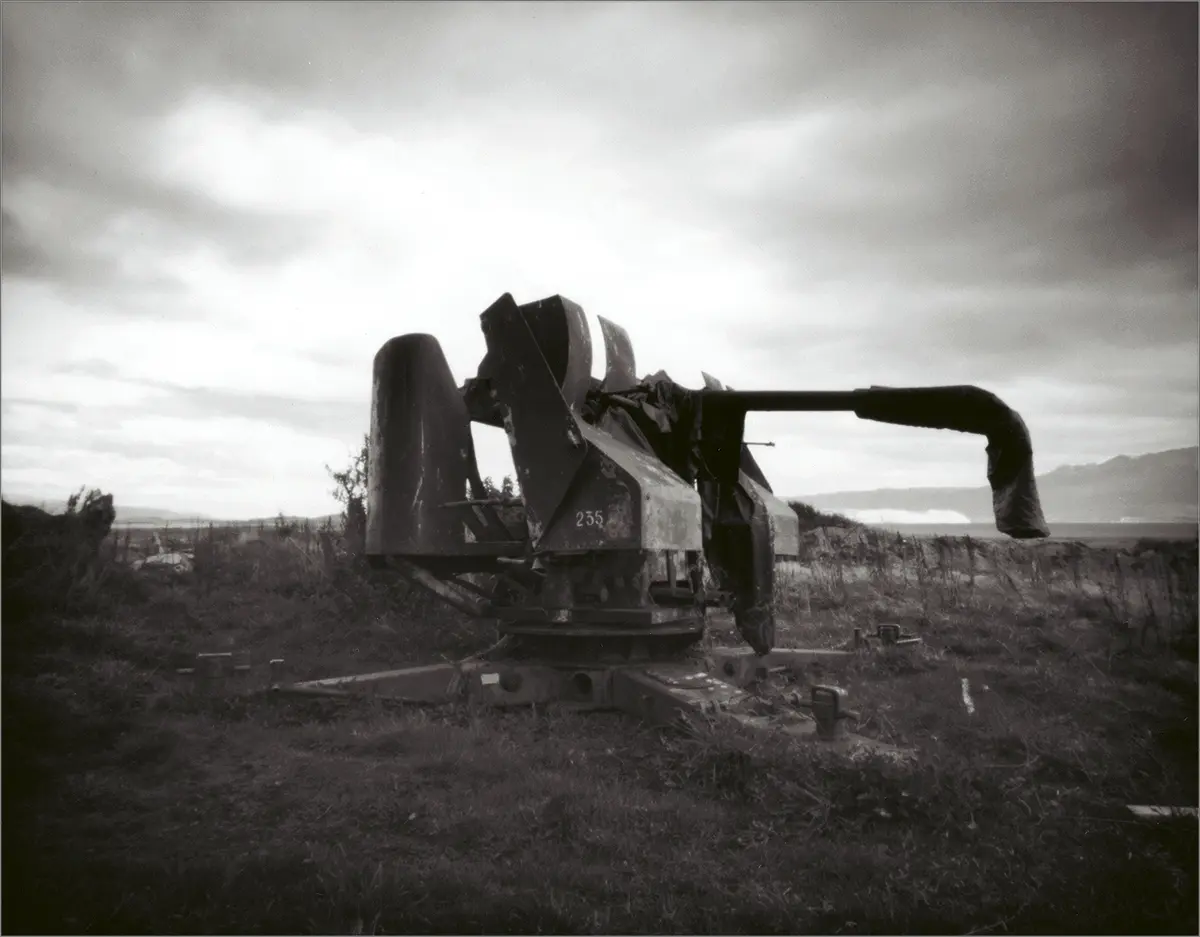
Gustavo Groh’s revealing series El agua que apagó el fuego, which opens the show in the central gallery, makes evident human obtuseness. Taken with a stenocamera, the small black and white photographs (10 x 13 cm) reveal insulting military debris that pile up in the middle of the immense steppes, witnesses to the border disputes between Argentina and Chile, which came close to outright war in 1978, when both nations were governed by military dictatorships.
Meanwhile, Julio Aguirre’s well-aimed direct photographs capture portraits where, thanks to the force of natural beauty, the universe becomes a magical whirlwind of colors, and the reproductions seem like glorious artifices rather than magnificent mirrors of reality. In the same gallery, Horacio Córdoba’s deeply felt direct color photographs offer romantic, protective skies bathing the borderland’s solitary houses and trails in flashes of golden light.
Further inside the exhibition, Adriel Ramos’ animation work plays with perspective and permanence, while José Luis Tuñón presents a series of photographs that attest to his interventions on the landscape, where, using a large tin mold (on exhibit) and clay, he grants a spurious kind of life to some giant, nonexistent birds. Bettina Muruzábal guanaco pelts neighbor Sonia Cortez’s Mesetas.
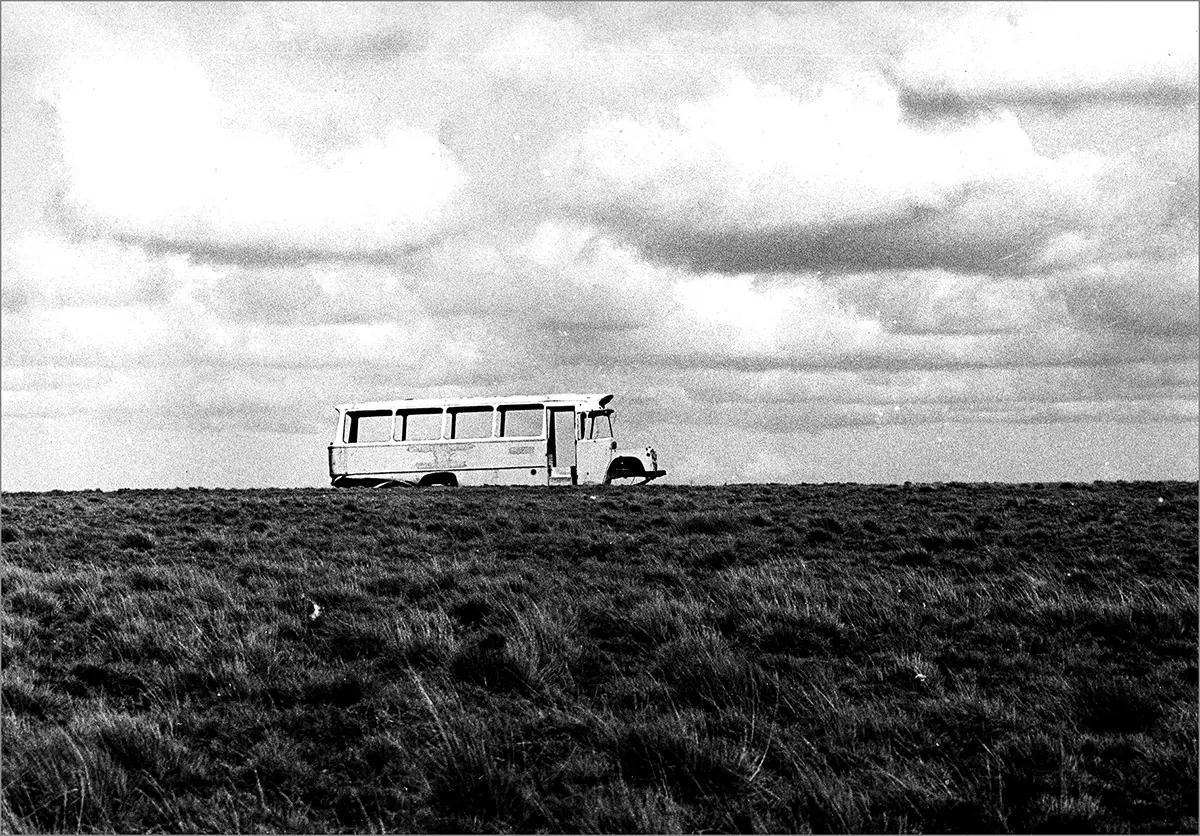
Cortez apparently appeals to sociology in order to evoke human presence on the almost deserted surface of Patagonia, sparsely populated by some grasses and bushes, their growth stunted by the constant wind, and by small animals sheltered in their underground burrows. Historical archives and demographic statistics (less than one person per square km,) photographic registers that affirm the passage of man, and fictional stories use memory to inform their task.
The site’s underground area held more of Murazábal’s provocative pieces. She works in a certain investigative spirit, using and giving new meaning to materials provided by nature. A dried native bush and the skins of local animals appear as “coats” that remind us of the landscape’s visual generosity and the climate’s harshness, the fragility of the balance between man and nature, and the instability of meaning. On her part, Liliana Solari works intelligently, using digital means, with satellite photographs of the region, which she prints over copies of old maps of dubious outlines, a propos the lack of definition tools back then and the precarious nature of any border.
Meanwhile, Niní Bernardello presents a poem —“The two-fronted afternoon with its golden horns // opens its mouth at the edge of the Atlantic // the delicate sand trembles under my feet (...)”—; a text by researcher Silvia Lousto accompanies images of Tierra del Fuego’s earliest inhabitants, where Monica Alvarado’s ancestors originated; Alvarado presents a series of very moving self-portraits and drawings. Also, Andrina Opacak’s excellent photographs place the vast Patagonian landscape in tension with man’s intrusions. In her series Quietud de la línea, the horizon remains undisturbed despite the apparition of objects that shrink and become, real and metaphorically, ridiculously useless.

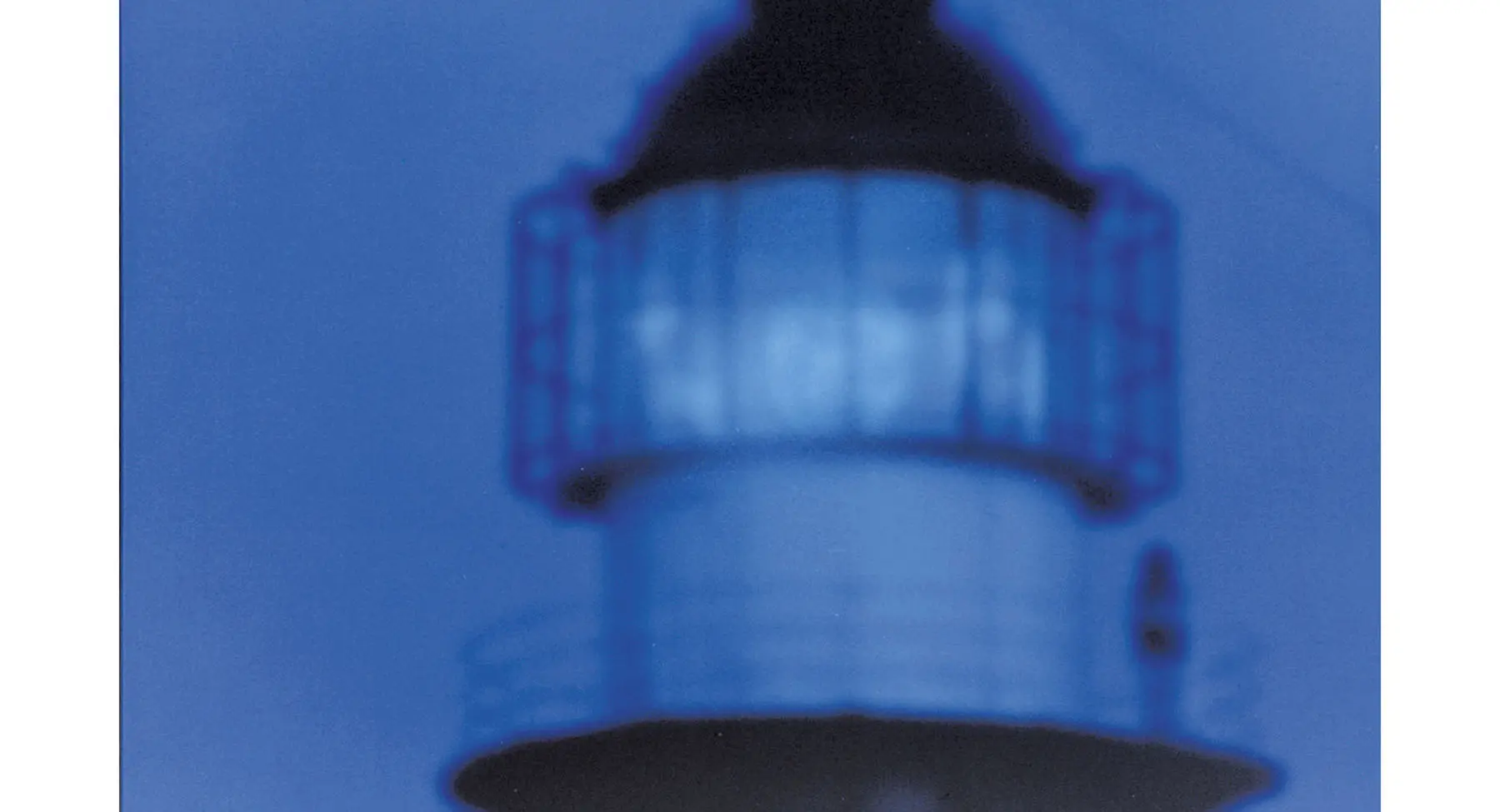
The end as beginning or as dissolution? A video of the conference’s debates is presented in a small room —with conceptual parameters by Elena Oliveras: form and end, two concepts in tension; the figures of the end as metaphors for an aesthetics of limits and for a deterritorialization of art; the mystical figures of the end—. The conference was held in February in a tiny museum located just steps away from the Cabo Vírgenes searchlight tower —the same searchlight that dominates the immeasurable night south of the South, open to similar extensions of an unknown sea and silent land. That oscillating light, spectral and hopeful, potent yet faltering, is captured by Matilde Marín in the video that welcomes visitors to the show. This piece seems to function as a synthesis of the intense, silent commitment felt by artists who inhabit Patagonia, and of the experience of those who come from outside and are only passing by. Perhaps it is also an allusion to the duality of visions and sensations offered by serpentine contemporary art.
Las formas del fin will travel to the Complejo Cultural Santa Cruz (August,) the Museo del Penal in Ushuaia (October,) and the Italian-Latin American Institute, Rome (February 2006.)
VICTORIA VERLICHAK