
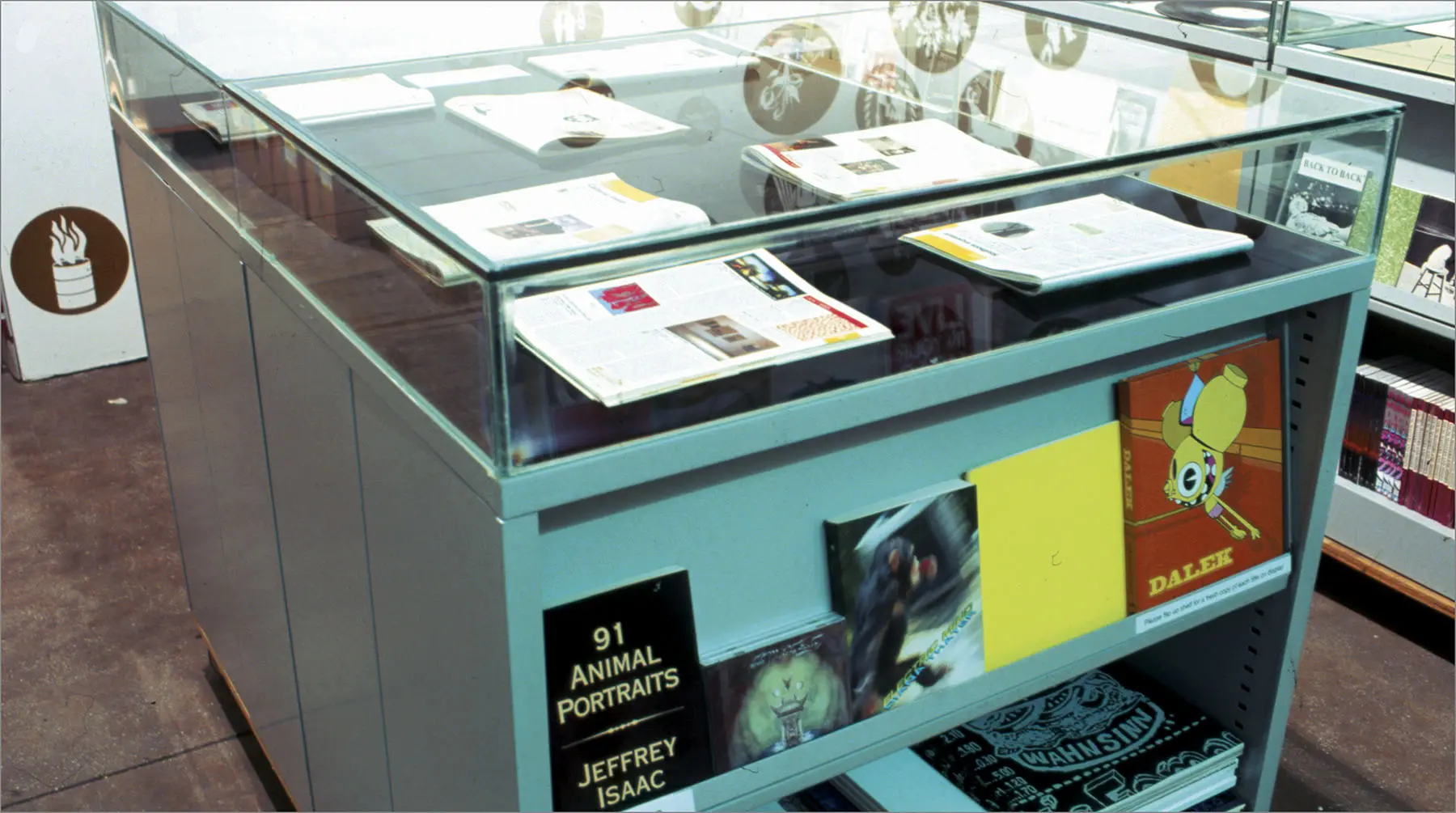
On October 16, Nicolás
Guagnini, Argentinian artist and critic residing in New York, presented his
publication The Seven Reviews of Monkeys
and Shit in the gallery of Printed
Matter in New York. The publication is part of a larger piece that places
Guagnini in the scatological tradition in western art. The tradition is long,
though spotty. In the early 19th century, Simón Rodríguez (1769-1854), the
tutor of Simón Bolívar and later his appointee to reform the educational system
in Bolivia was rumored to have presented dinner for General Sucre in
hospital bedpans. The rumor was spread by the Bolivian oligarchy resentful of
Rodríguez’s progressive pedagogical reforms. When Rodríguez, whose views Sucre
opposed, heard of it, he liked it so much that he continued spreading it himself.
This probably was the first appearance of urinals in the Western art tradition.
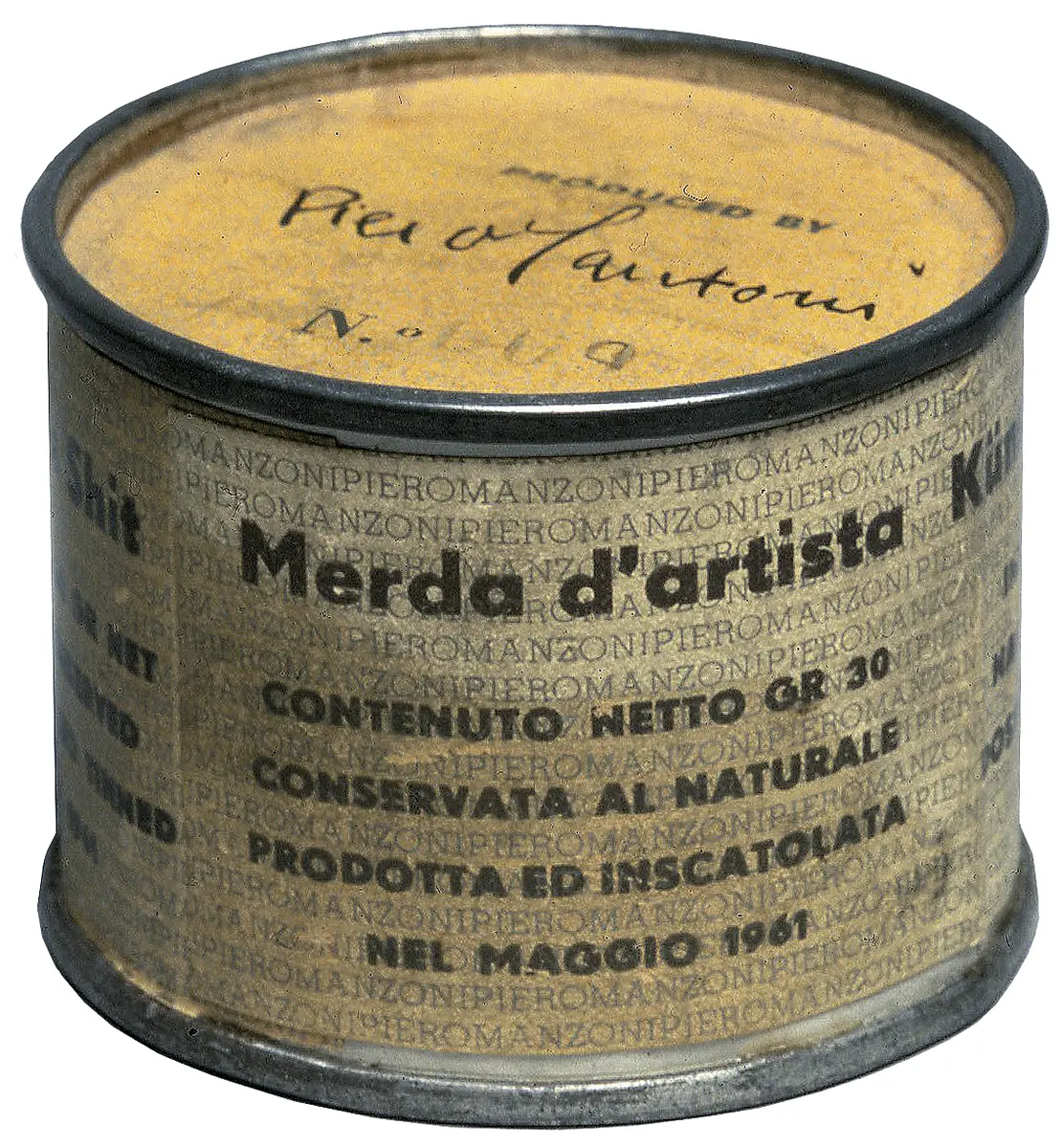
A half-century later, most likely uninformed of the distinguished work of his predecessor, Duchamp exhibited a urinal (1917) in a Salon in Paris. He accomplished two feats in one blow: introducing the ready-made as an art statement and shocking the members of the Salon to which he submitted his piece. Less well known is the Manifeste pour la plastique physiologique of Isidore Isou, who, with his exhibition of a chamber pot containing feces (1962), unknowingly echoed Rodríguez. Isou was the founder of Lettrism and for the occasion, he wrote: “In a certain phase of the evolution of art, the artist seeks the most personal and individual form...” While Isou’s bedpan has remained in the shadows, Manzoni’s Artist’s Shit (1961) almost immediately achieved renown. Thanks to Conceptualism, Post-Conceptualism, and Neo-Conceptualism, Manzoni’s shit has continued to grow in prominence till today, to the point where it was available to serve Guagnini when he needed it (see below). Manzoni had his excretion carefully canned for posterity and set at the value of its weight in gold before it entered the secondary market, where its value soon rose exponentially. Three years later, a U.S. artist by the name of Sam Goodman, nearly forgotten today, exhibited replicas of droppings of different species as a comment on the infatuation of Pop art with consumer society. Under the title of No-art, he filled New York’s Gertrude Stein Gallery with representations of a diverse array of shit, including that of humans. Each sample was delicately reproduced in polyester resin; with such care to fine detail, the viewer could easily imagine smelling something in the air. The press release, astonishingly poorly informed about the scatological tradition in art, mistakenly promoted the event as “a first” in the history of art, describing it “as part of a new wave of artistic expression concerned with social realism; social comment and expression of a personal nature in its extreme.” Contrary to his intent to critique Pop art, Goodman’s piece in hindsight can easily be seen as very much part of Pop-art and post-Pop Hyperrealism. In fact, it is easy to visualize Goodman’s work alongside that of the sculptures of Duane Hanson whose production entered the market some years later.
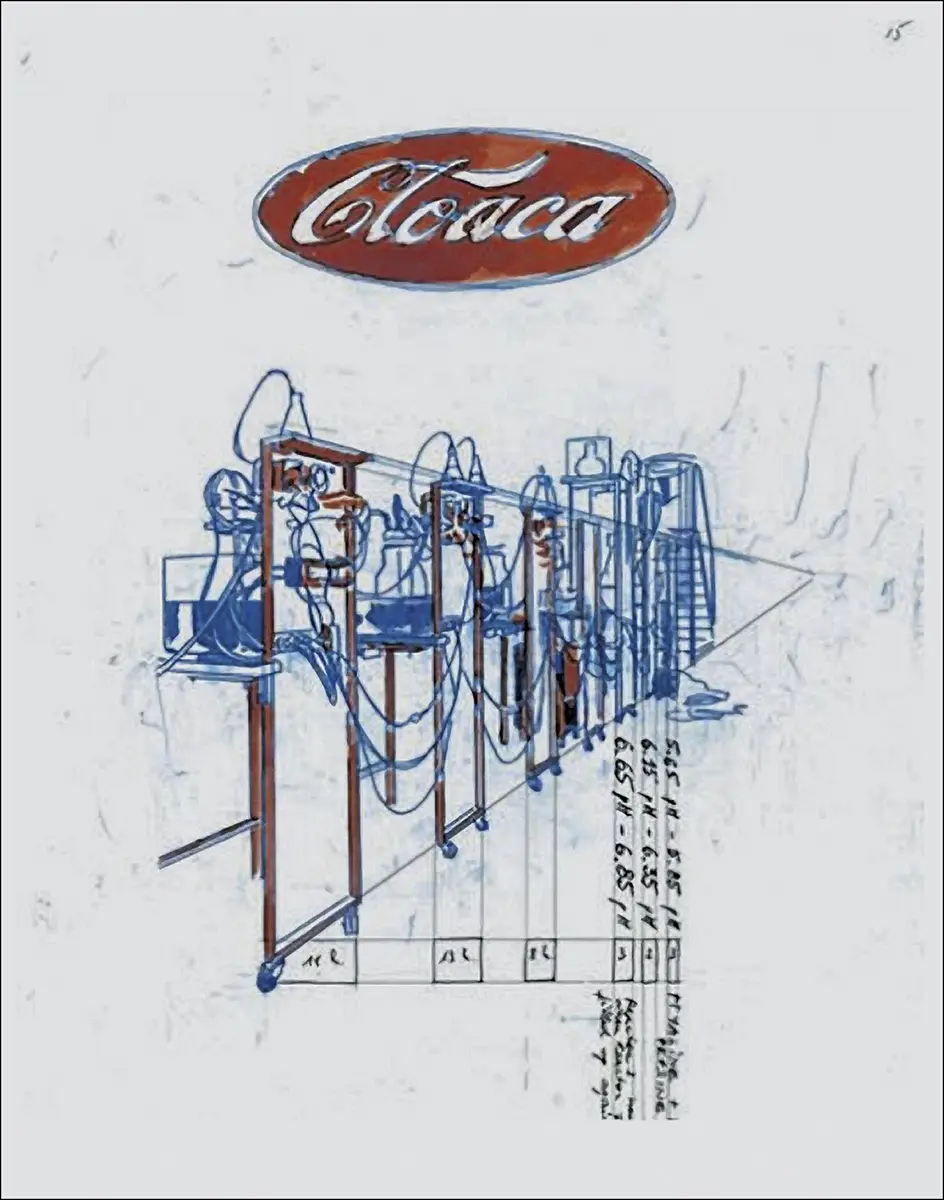
In 2001, Belgian artist Wim Delvoye started his Cloaca project which underwent a process of improvement in three stages: Cloaca-Original, Cloaca-New, and Cloaca-Turbo. The improved model, thanks to the help of a team of biologists, engineers, and chemists, is a machine that after being fed restaurant leftovers is able to process the food in six hours and deliver a credible set of feces.1
In Latin America, the scatological tradition was interrupted in visual arts after Rodríguez, but it managed to stay somewhat alive in poetry. In his Poemas y Antipoemas (1954), Chilean poet Nicanor Parra included: “Look, even in the sewers there is a little shit.” Decio Pignatari followed in 1957 with his variations on “drink Coca-Cola” (beba coca-cola) and the variations ending in “sewer” (cloaca):
beba coca cola
babe cola
beba coca
babe cola caco
caco
cola
cloaca
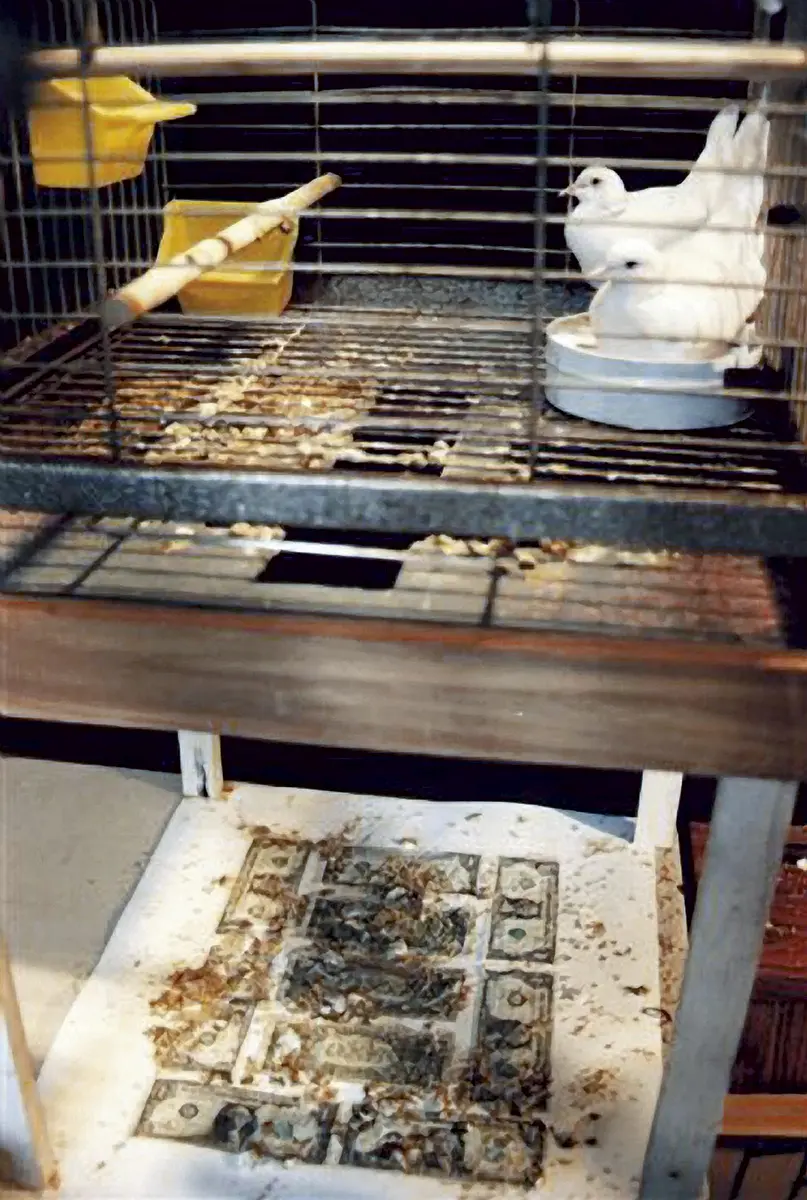
Research would undoubtedly unearth many more examples, but an exhaustive survey would exceed the limits of this article. We skip therefore directly to 1986 when scatology in the visual arts returned with a bang. In that year Argentinian artist León Ferrari exhibited, in the São Paulo Biennial, a cage with two pigeons, whose excretions fell through a stencil of a cross onto a reproduction of Michelangelo’s Final Judgment. Two years later, Ferrari had the pigeon's droppings fall on dollar bills, which he then sent to President Ronald Reagan with the request that they are used to help pay off either the Latin American debt or the U.S. debt, at Reagan’s discretion. Here one sees a clear resurrection of the political strategy in scatology first introduced by Rodríguez.
During the early 1990s, Brazilian artist Cildo Meireles started working on his KU KKA KA KKA. It was intended to be exhibited in Spain in 1994 in the exhibition Lo crudo y lo cocido in the Museum Reina Sofia. However, Spanish authorities did not permit the installation because of existing health regulations. Two 3 x 3 x 3 meters glass cubes contained glass shelves alternating vases with real and artificial roses and bedpans with real and artificial feces. The philosophical bent in his piece came from a story Meireles’ father had told him as a child. A shack in a village had a sign saying: “Discover the truth.” For one cruzeiro, people could go into the shack to receive a jar covered with paper. The public was to use a finger to poke through the paper and discover the excrements underneath.2
While the scatological tradition in Latin America has tended to be more politicized than in the mainstream, there is nevertheless a common sensibility. Both make an effort to achieve critical distance to reevaluate the status quo.3 All the examples cited in this essay, no matter where they took place, have in common a strategy of substitution. Feces and/or their containers are offered in the place of art. There is a critique of art here in which the main statement is not “this is a piece of shit,” even if you are looking at it, but rather “that-that art-is a piece of shit.” Even when not explicitly made, such a message is implicit in the fact that it is being shown in a gallery setting. Thus, what might well appear to the uninitiated as a cheap, crude even offensive statement, to the initiated would appear as a somewhat more subtle critical reference to the rituals surrounding the art object. However shocking, whimsical or childish this swap of meanings may seem, it is undeniably a simple object-for-object exchange. And even more significantly, it is an exchange in which the critical act is absorbed into the unified history of art whereupon a second exchange takes place: a concrete monetary value is substituted for the critique.
The inevitable failure of the scatological art piece to realize its objective raises an interesting question about the value and efficacy of insult. A plain insult works like a mosquito-sting, it may bother momentarily, but disappears quickly. An elaborate and well-crafted insult may make it into posterity, but not with the same effect. With renown comes an increase in value, which is justified on grounds of quality, which in turn robs the barb of immediacy. A famous and expensive epithet somehow lacks the instantly annoying impact one expects from a well-aimed insult. Perhaps it is impossible to achieve a good artistic insult.
On the other hand, perhaps not. It’s possible to see a direct and unmitigated insult as more like a terrorist in that it delivers a blow at the moment but fails to have a long-term impact, whereas a good artistic insult is more an act of subversion, possessing the potential to alter culture. (Sometimes one thing can become the other.4) I would guess that when Manzoni filled his cans, he was primarily produced in the insult mode, for he would not have been able to foresee the subsequent success of his piece(s). Their success caused them to lose their terrorist quality, but at the same time granted them cultural leverage. The fate of Manzoni’s cans is an example of the market defusing the aggression of the insult through commodification, which in turn made them grow in renown allowing them to smuggle critique into the story of art. However slightly, and whichever way you look at it, Manzoni’s cans subverted art history: either by forcing acceptance of shit as art or by redefining everything cataloged around them. Something similar can be said about Andrés Serrano’s Piss Christ (1989) in which he submerged a crucifix in a glass with urine.
The insult or critique not always is embedded in the work of art. When in 1999 British artist Chris Ofili showed his Holy Virgin Mary (1996) in the Brooklyn Museum as part of the Sensation show, Mayor Giuliani cut off the funds of the museum. Ofili had used elephant dung on the canvas and Giuliani (and the Cardinal of New York and a lot of other people that didn’t even see the exhibition) considered that an insult. Ofili correctly stated that: “The people who are attacking this painting are attacking their own interpretation, not mine.”5 According to Ofili, he only wanted to give the painting the feeling that it had “come from the earth rather than simply hung on the wall.” During the interview, Ofili was painting a canvas about a “magic monkey” reaching out to “three elements of life: sex, money and drugs” represented by three piles of elephant droppings.
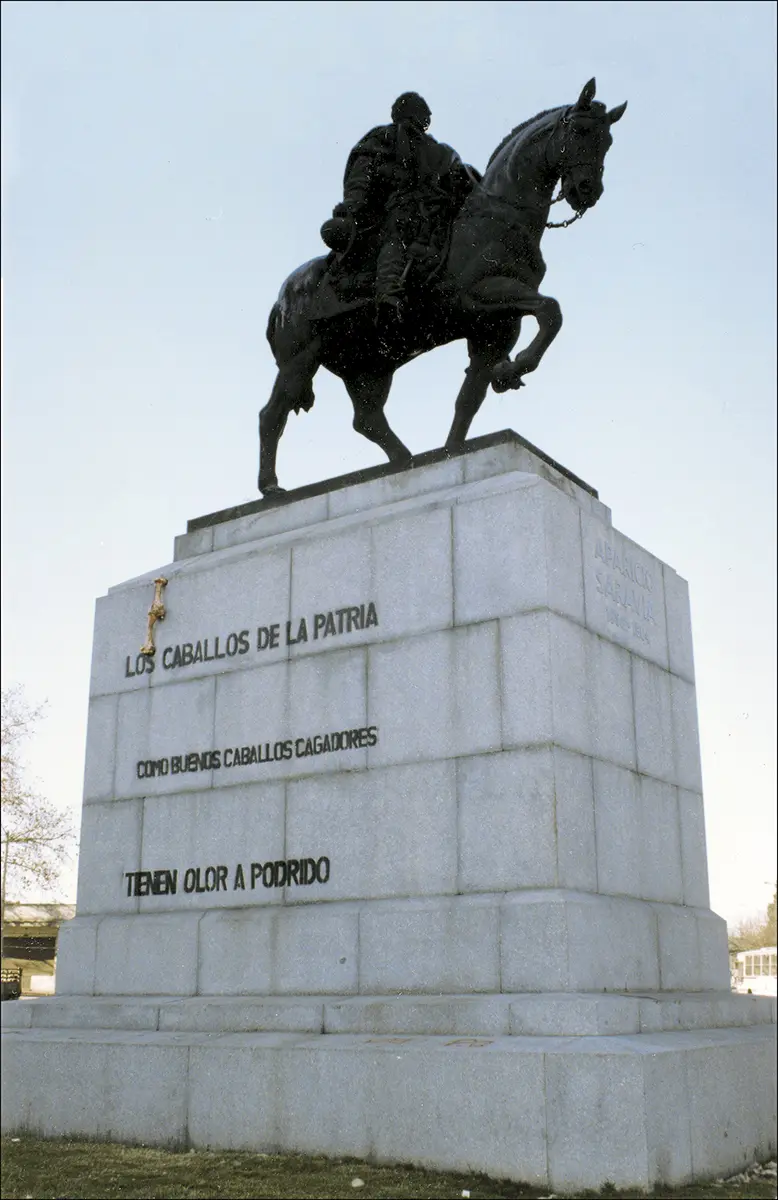
The heyday of feces in the art of the mainstream may be over. Not so in the Latin American tradition, where it would seem that the use of scatology for political art has prolonged its life. For example, in contemplating the context in which Guagnini’s piece appears, I found myself looking anew at the 1996 installation by Uruguayan artist Ricardo Lanzarini. On July 6 of that year, Lanzarini completed an art piece that made use of an equestrian monument in Montevideo erected in honor of Aparicio Saravia, one of the country’s heroes from the country. On one side of the base of the monument, Lanzarini wrote in big black letters: “The fatherland was built riding horses.”6 On the other side he wrote:” Like good shitting horses, the horses of the fatherland smell rotten”7 Hanging above the texts were bloody bones acquired fresh from a butcher. On July 8, Lanzarini was arrested (subsequently released pending a court decision), and charged with having committed “aggravated damage.” Lanzarini was at that time a public employee working in a museum administered by the city. For many viewers, this made his vandalism even more reprehensible. In justification of his piece, Lanzarini told the press that “...What I tried to do was to reformulate a monumentality I believe is not perceived but which is precisely what projects us into the future. Otherwise, the bronze horse continues being bronze, and what interests me is that it [the horse] be true. It is a way of saying that we may be in bad shape, but we are more alive than ever…. Thus there is no criminal act here, no damage. Moreover, this monument was never photographed as often as it is now; I gave it a new life.”8 Using knowledge acquired from his museum training, Lanzarini made certain his action was completely reversible, and a week later he contracted a company to clean the monument. Immersed in what had become a national scandal, nobody at the time realized that Lanzarini had no legal right to contract a private company to perform the cleaning of a national monument. From a legal point of view, he was tampering with evidence. On December 23, the Court of Appeals declared Lanzarini innocent of the charges against him. The judge determined that he had neither damaged nor affected the functions of any part of the monument (“the natural destiny of the base, which is to support the statue of Aparicio Saravia, was not affected”). On the contrary, the Court wrote that the action should be considered an artistic expression, “although a very peculiar one”. At no time was the scatological aspect of this scandalous work even mentioned.
Lanzarini was aware that what he had to prove was that he was doing a work of art, not committing vandalism. He wrote a letter to the commander-in-chief of the local police precinct in which he asked for protection of his work and attached his art school diploma to certify his professionalism. In his explanation to the commander, he wrote: “To ask me: What is fatherland? What is art? These are questions that stem from the same doubts. To ask me: What type of engagement?, etc. is very much connected with the question: with what horse will I build my fatherland, with a live horse or with a bronze horse?”9 Meanwhile, Lanzarini heard one of the policemen arresting him (unaware of his letter) muttering to the other: “Give us murderers and thieves. Don’t give us artists, they complicate our life.”10
It took a while for the political ripples of Lanzarini’s piece to die down.11 Uruguay has a tradition of two main political parties: the blancos (whites) and the colorados (reds). Aparicio Saravia is a hero cherished by the blancos. A third party, the Frente Amplio (Broad Front) has emerged in recent decades and won the presidential elections in 2004. It is a leftist coalition of small parties and has controlled the capital for many years. The blancos tried to use the Lanzarini incident to embarrass the Mayor of Montevideo who happened to be a Frente Amplio politician and demanded Lanzarini, be fired from his job on the public payroll Lanzarini responded:” ... that is ridiculous. When I received the prize of the U.S.-Uruguay Alliance [a cultural subsidiary of the U.S. Embassy] and received a grant to go to New York, I did not ask for a salary raise.”12 Coincidentally, the same day the monument was being cleaned, the blancos organized an act of vindication. After some speeches, a wreath was placed at the base of the monument. The cleaners watched the ceremony as they waited for it to be over, and then cleaned the text away. Later the wreath was viewed as Lanzarini’s, in mourning for the end of his piece.
Comments in the Uruguayan media ranged from a demand for mind control (“The imagination too is accountable to the law”13) to empathy (“I believe that monuments are rather ridiculous so that there is nothing that can offend them. Birds shit on them every day.”14) Meanwhile Lanzarini resigned from his city job. He had hoped that after the storm had passed he would be rehired, but that didn’t happen.
Compared to Lanzarini’s piece of 1996, Guagnini’s monkey-shit piece is both less spectacular and more insidious. It was enacted over the period December 26, 2002, to October 16, 2004, when it culminated in the publication of a booklet. Hired by Time Out New York, an entertainment magazine, Guagnini was to review exhibits of interest, particularly those involving non-mainstream artists. Guagnini made the decision to define his task as having two tracks. His manifest responsibility was to write an informed, informative, and intelligent short review of the shows; the hidden task he set for himself was to make sure that in each of his reviews he found a way to mention either apes or feces. The easiest review for the achievement of his dual purpose was an essay on the work of Manzoni. For reasons mentioned previously, he only had to cite the title of Manzoni’s cans.15 Another review, about 19th-century French painter Theodore Chasseriau, turned out to be a lucky choice. He wrote: “The son of a French diplomat and a French-Creole woman, the small, dark-skinned Chasseriau (a mistress dubbed him ‘the little monkey’) joined the studio of Jean-August-Dominique Ingres at the prodigious age of 12.” Information from one of the labels provided the text for the parenthesis.16 Later, in another review of the work of Oyvind Fahlstrom, Guagnini was able to write that: “The overall compositions immediately suggest gigantic digestive apparatuses, and the events they describe.... have the inescapable, organic logic of bowel movements.”17 Guagnini finally ended the cycle with a review of MoMA’s exhibition of Latin American art in the Museo del Barrio in 200, in which he accurately describes the museum’s acquisition policy during the 1930s and 1940s as a “‘monkey see, monkey do’ approach.”18
Significantly, Guagnini’s project did not end with the cycle of reviews. His seven articles were then reproduced in a booklet, to which were added separate essays by Dan Graham and John Miller. Dan Graham’s piece reminds the reader that during a presentation of the Art Workers Coalition on April 10, 1969, he, Graham, had declared: “The art world stinks; it is made of people who collectively dig the shit; now seems to be the time to get the collective shit out of the system.”
John Miller plays a more interesting role in Gaugnini’s booklet. In his essay, he makes explicit what up to then had been the hidden and virtually unperceivable structure of Guagnini’s actions. We also find out that Miller was hired to write his piece, and that he was paid exactly the amount Guagnini had earned for writing his reviews for Time Out New York. Miller thus provides the critically important information that Gaugnini has reduced himself to funneling Timeout New York’s money to Miller. In other words, Guagnini also has subverted himself.
The announcement launching the publication of Gaugnini’s booklet reached the arts editor of Time Out New York who, admiring the piece, shared the news with the magazine’s editor-in-chief. The reaction of this individual, however, was not a happy one. He immediately fired Guagnini for infringement of copyright.
Standing back, Graham’s 1969 hope of getting the feces out of the system seems an antiquated utopianism. But making shit visible is still badly needed. A Challenger space mission in 1985 included two monkeys to serve as lab animals for research into the effects of zero gravity. The monkeys were put into a normal cage. Once weightlessness was achieved, their waste floated out through the bars of the cage, compromising the work of the crew. “The monkeys were not Colonel Overmyer’s favorite passengers; he expressed considerable annoyance when waste leaked from their cages into the shuttle laboratory and the cockpit.”19
It could be said that the monkeys used the conditions offered by the system that kept them captive. Using those conditions, they were able to subvert that system. In their case, this was the result of a lucky coincidence; they didn’t strategize or even have to think about it. In the case of Lanzarini earlier and Guagnini now, it is the use of critical distance that purposefully creates the equivalent of weightlessness, making things visible. It is irrelevant who generates the raw materials that make this insight possible. What matters is that it be made visible.
*Edited by Selby Hickey.
NOTES
1. Cloaca-Original was first shown in MuHKA, Antwerp (2000); Cloaca-New and Improved were exhibited in the Migros Museum in Zurich and in the New Museum of Contemporary Art, in New York, (2002). In a conversation during the time of the exhibition, the artist expressed his puzzlement about the public in New York, that would applaud each time the machine evacuated.
2. The piece was eventually shown in 1999 in the Gallery Lelong in New York and in the Kiasma Museum of Contemporary Art in Helsinki.
3. Sometimes the act of distancing from the status quo is the political statement, rather than the content. Cuban artist Tomás Esson painted his SPOULAKK in 1987, the back of a person in full action. The title when the letters are read by their name, esepeoueleakaka, translates into “that fart smells like shit.” The conjunction of image and title is intended to be scandalous in the Cuban scene. In 1990, on the occasion of the exhibit El objeto esculturado (The Sculpted Object) in Havana, the artist Angel Delgado (who was not part of the show) went to the opening, carefully laid down a piece of newspaper on the floor, lowered his pants and deposited his work. As a consequence, he was jailed for six months.
4. In 1986, Mexican artist Roger Von Gunten was ordered by the Court to produce paintings in order to comply with a contract agreement with his dealer Serapión Fernández Stark. Feeling that the verdict was unjust, Von Gunten painted 19 canvases with texts explaining his version of the case. The first canvas started with: I paint these 19 canvases to comply with the order of the Superior Tribunal of Justice.” (Sam Dillon, “Here’s Paint in Your Eye, or the Artist’s Revenge,” The New York Times, 4.3.1996, p. A4. A lengthy analysis of the case was written by Francisco Reyes Palma in Curare #16. After several appeals alternating culpability, the case was finally settled against Von Gunten in 2004, forcing him to put a house up for auction.
5. Carol Vogel, “Chris Ofili: British Artist Holds Fast to His Inspiration,” The New York Times, 9.28.1999
6. “A lomo de caballo criollo se hizo la patria”
7. “Los caballos de la patria como buenos caballos cagadores tienen olor a podrido”
8. “Arte y justicia,” Tres, Montevideo, 7.12.96
9. Letter to the Captain of the 12th Police Precinct, Montevideo, 7.6.1996.
10. Lanzarini in a letter to the author, 10.7.1996
11. Lanzarini’s piece generated many second-rate emulators and in the city of Cerro Largo, the monument in honor of Jose Artigas, the founding father of Uruguay, although placed in front of the police headquarters, appeared with the inscription “Sex and Drugs.” La Republica, Montevideo, 8.6.1996.
12. “Arana Complice,” Tres, Montevideo, 7.19.96, p.57. Mariano Arana is the Mayor of Montevideo.
13. Ramón Díaz in a debate with Lanzarini broadcast by Radio Sarandi.
14. Gabriel Lagos, La Republica, Montevideo, 7.9.1996., p.13
15. “Piero Manzoni: Achrome,” Time Out New York, 10.16.03, p.82
16. “Theodore Chasseriau (1819-1856): The Unknown Romantic,” Time Out New York, 12.26.2002, p. 53
17. “Oyvind Fahlstrom, The Complete Graphics, and Multiples from the Bank One Art Collection,” Time Out New York, 4.3.2004
18. “MoMA at El Museo: Latin American and Caribbean Art from the collection of the Museum of Modern Art,” Time Out New York, 4.1.2004.
19.“Col. Overmyer, Commander of Shuttle Missions, Dies at 59,” The New York Times, 3.24.1996
LUIS CAMNITZER
Emeritus Professor at the SUNY College, Old Westbury.