
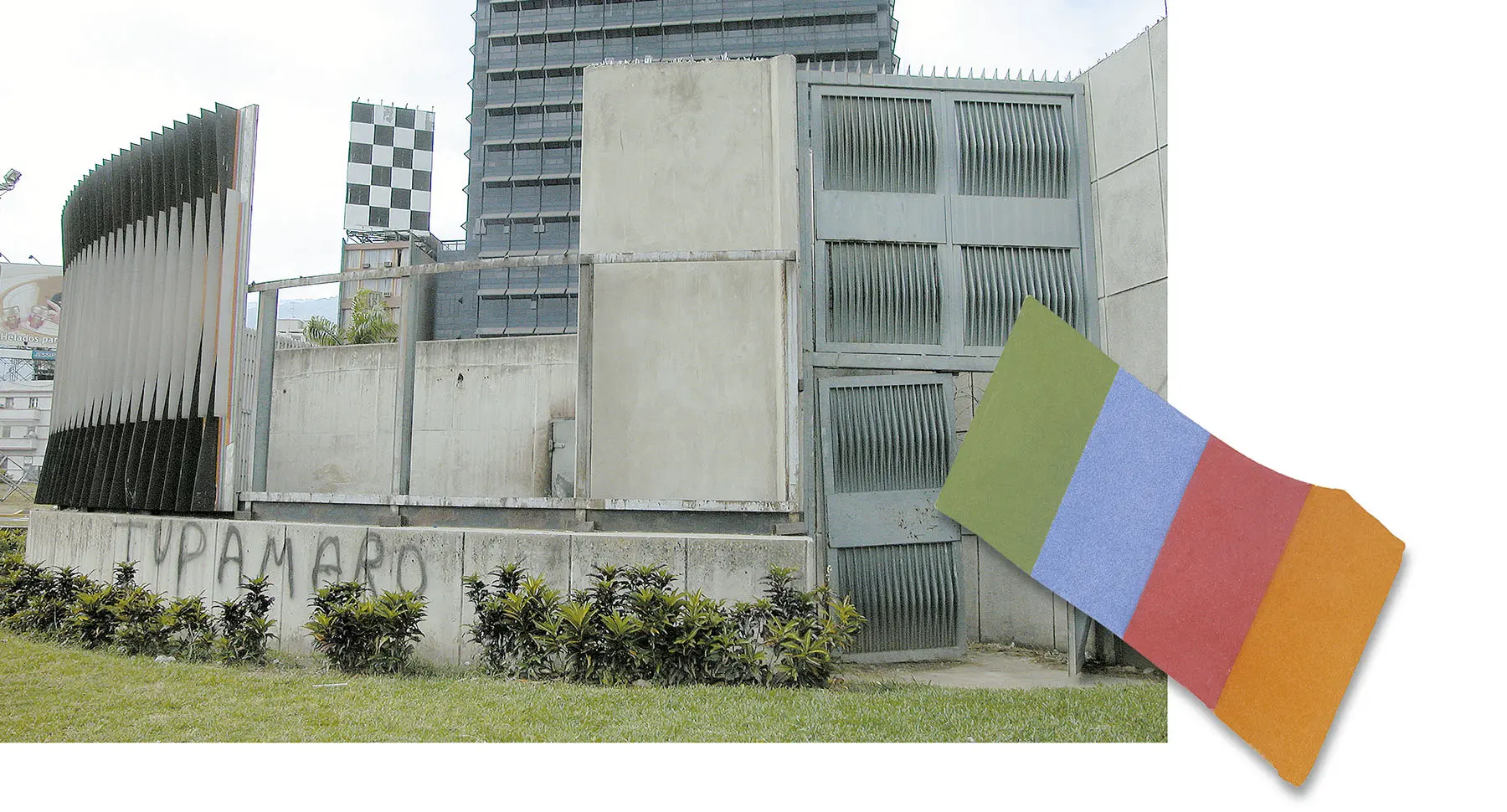
Caracas’ Venezuela Square occupies a privileged location, right at the center of the valley in which the capital city lies. To the west, the “old” city, what we call el centro (the traditional neighborhoods, the seat of the branches of government and, until not too long ago, of the most significant private economic actors); to the east, modern urban developments and industrial areas. The old city ends at Venezuela Square, with Los Caobos park, and the new one begins with the Sabana Grande boulevard (formerly Sabana Grande avenue)
Venezuela Square is an area of significant automobile traffic, some emblematic buildings, and valuable green zones: the so-called “square” is now a subterranean channel, opened to ease transit, and a long garden that connects to the proverbial park, Los Caobos. Venezuela Square also borders the University’s Botanical Garden. All of this is to situate ourselves in a relevant geographical location.
It was not by chance that very important large-scale sculptures were placed in this green strip, most of them in the public areas, but some also in private spaces, such as Torre Capriles, where we can find three huge pieces by Soto.
In that area of Venezuela Square, there was a large circular mural by Carlos Cruz Diez, an extraordinary sculpture by Alejandro Otero, and an academic work by Rafael de la Cova. The three of them have been destroyed by politicized hordes.
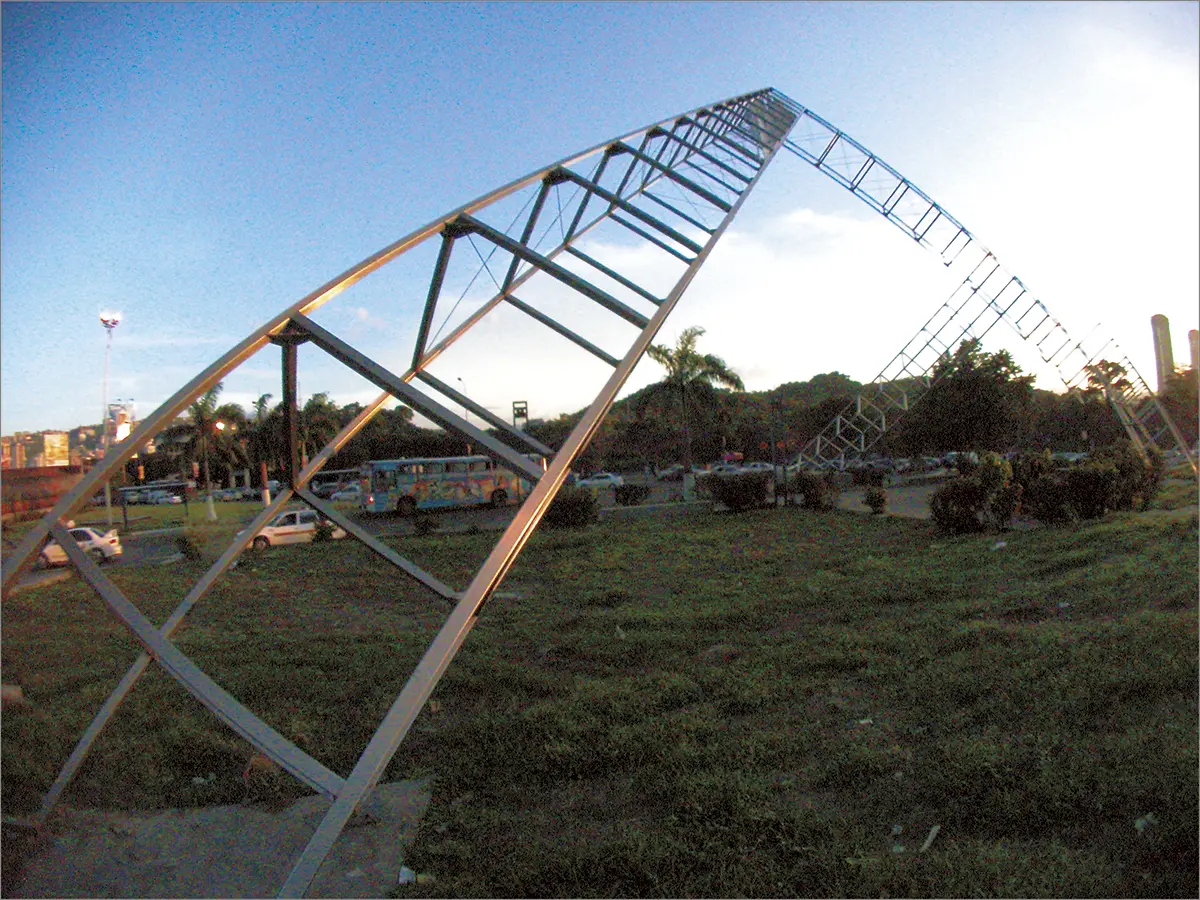
Up until 1999, these works of art were the pride of Caracas. They were there for everyone’s enjoyment, and on weekends, people would stroll around the garden in which they were located and relax, have picnics, rejoice, and benefit from the outdoors in the middle of the big city.
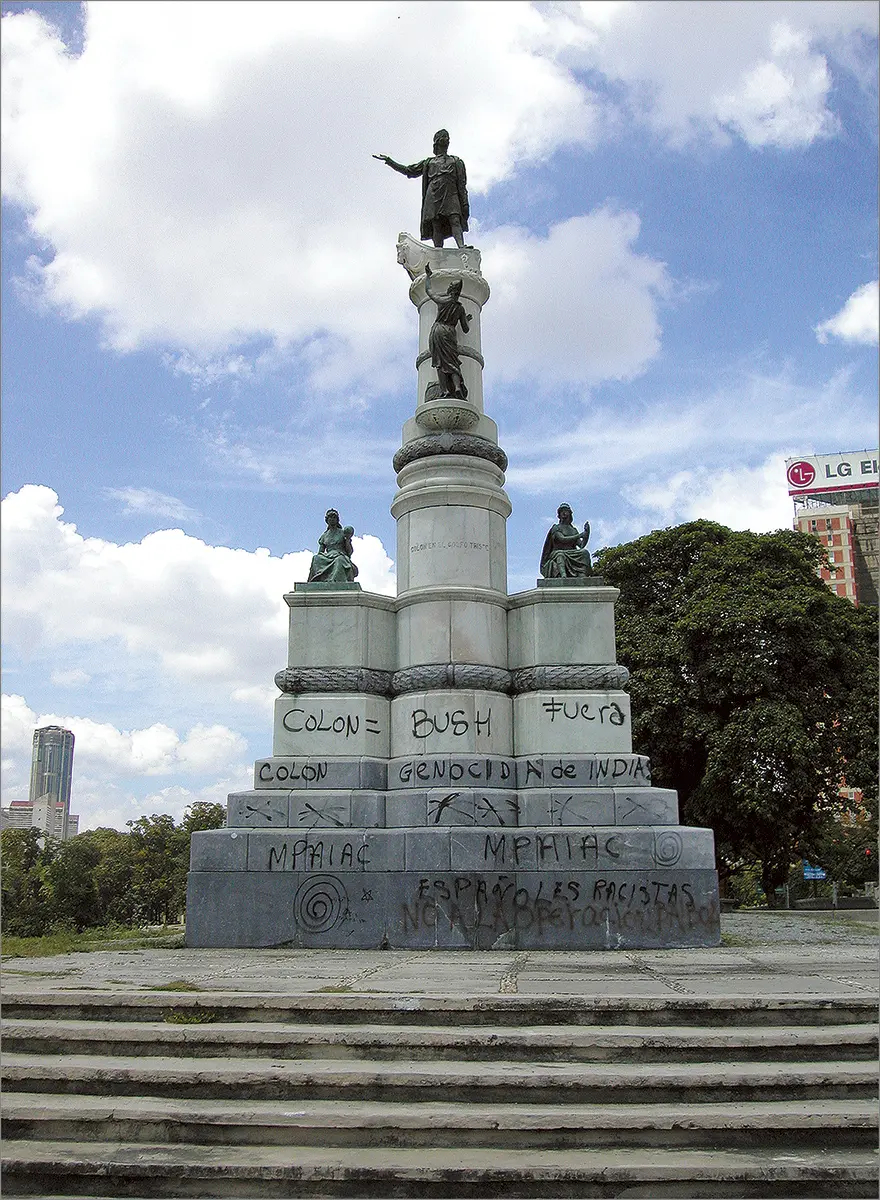
Each one of these three sculptures was important. Colón en el Golfo Triste dates from 1898, although it was installed and unveiled in 1904, when, by the way, its author had already passed away. It was a memorial monument in marble and bronze. On a 20-meter column stood Admiral Christopher Columbus, his arm outstretched towards the horizon; below him, a native beauty offered him a crown of laurels, and to each side, two sitting female figures represented, respectively, Spain and Italy. The pedestal and column were marble, while the figures were bronze. These had been molded in New York. At the time, a September 1904 edition of the Caracas newspaper El Corresponsal highlighted the fact that this sculpture by Rafael de la Cova was “the country’s first monument.” It was certainly the first monument to be erected in the public space of Caracas.
Alejandro Otero’s sculpture was in structural iron and stainless steel, and it had been originally located at the entrance to the Venice Biennial (next to a work by Brancusi,) in 1982. Alba Solar was dated 1981 and was one of the sculptures that the Caracas Metro deployed in public areas. It measured 16.40 x 42.60 meters. It was a huge structure raised towards the sky, in whose interior large vanes were moved by the wind. Otero used to say regarding his sculptures that they were “impossible machines, games of pure imagination.” From any angle, this piece was notable for its lightness, its silver color that changed as the hour advanced, and its mobile lines in the air.
Carlos Cruz Diez’s work was titled Fisicromía homenaje a don Andrés Bello, 1982, metallic structure, anodized aluminum, and ceramic, three meters tall and 76 meters long. This mural piece was arranged in a circular pattern because it also hid from view some of the Metro’s air machines. Its color lines were green, blue, red, and orange. Movement on foot or by car created a color dynamic and generated a “chromatic climate,” as the artist argues regarding his work. Color is an autonomous reality that appears and disappears in the course of an individual’s relationship with the work when, perhaps, “we can awaken another mechanism for sensorial apprehension.”
Well, these three pieces large in format and large in meaning (historical, cultural, and aesthetic,) have been destroyed with the complicit silence of the “authorities,” be it the local one —the majors—, those in the education sector (we have two Education Ministers, each more silent than the other in this matter!), the police, those in charge of our cultural heritage (yes, there is a cultural heritage organism, but it is blind,) or in the culture sector.
Oh, yes, the Culture Minister!
The Culture Minister (who, paradoxically, worked in cultural heritage) calls himself a “soldier.” This anachronism is an attempt to ingratiate himself with Lieutenant Chavez, the President of the Republic. In other words, the Minister does not emphasize his condition as a man of culture (if that were the case,) or, at the very least, his civic background. No, he sees himself in the context of militarism that is eroding Venezuelan democracy.
The works of Cruz Diez and Otero were dismantled under cover of night, slowly, until they were entirely destroyed. Nobody knows how this happened, but, at the same time, the discourse of power is against civil society, against the social inclusiveness that is meant by democracy, and against art that is now labeled bourgeois, capitalistic, and elitist.
Cova’s work, in turn, was savagely ruined during the day and in plain view of TV cameras. A small horde of Chavistas decided that Columbus was an agent of the Spanish empire and should be decapitated. So, they brought down his figure. They also pretended to vindicate the rights of indigenous peoples. An indigenous memory that, in today’s Venezuela, has been reduced to begging in the streets and spending the night at Los Caobos park. No revolutionary authority has done a thing for those poor souls to this day. There isn’t either a plan to restore the three works of art. For the time being, they will remain in ruins. This is the sole cultural achievement of the revolutionary government.
JUAN CARLOS PALENZUELA
Art historian and critic. Author of Escultura en Venezuela.