
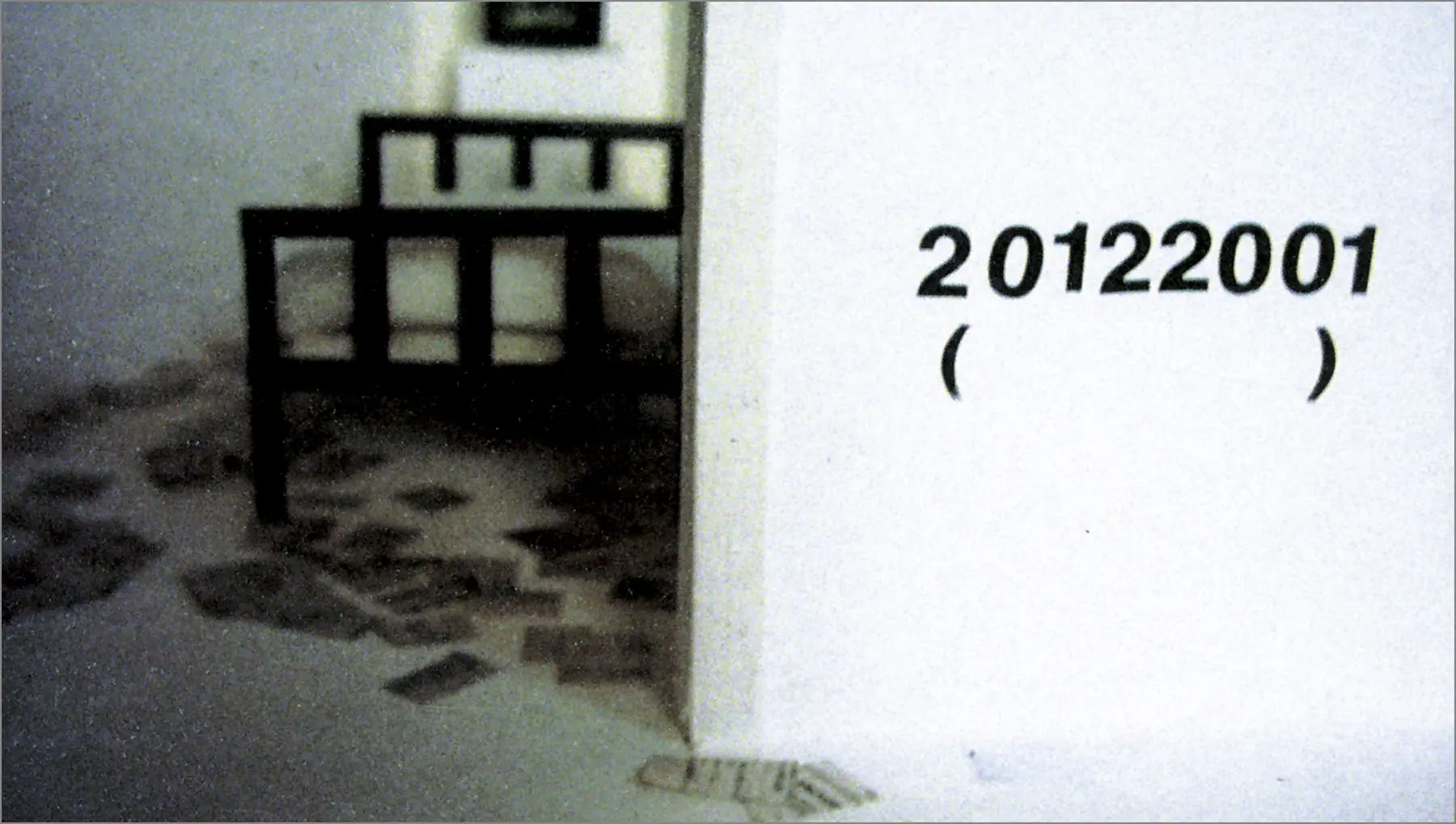
Making art in Argentina is as easy and as difficult as making art anywhere else in Latin America. But in Argentina, social conflicts are more urgent than ever and, in such a state, artists have responded by sharing that urgency. As this show proves, the character of their responses—their content, their structures, and the changes to the artistic practice they imply—are matters of current interest. The eleven artists or artist groups included in Sobre una realidad ineludible were selected by the show’s two commissioners on the basis of their commitment to that urgency, as transformed into an unavoidable reality. Their works bring to the fore not an enumeration of the horrors suffered by the Argentinean people but a registry of what they as artists have done, as acts of resistance or merely of survival. Included are artists who form groups for street activism in defense of human rights or to denounce former oppressors and torturers who live their lives quietly in middle-class neighborhoods. Also included are artists who work by themselves and evoke the terrible past represented by the Videla military dictatorship and its consequences, in order to decipher, exorcize, or simply condemn it. Almost all of them share, however, a commitment to forms that are as prosaic as a political rally or a street riot. This transgression of the boundary separating the sacred space of art from lay reality is made clearer by comparing it with the attitude maintained by artists who, from Nan Goldin to Richard Billingham, have incorporated raw documents from everyday life into the sphere of art. In contrast, the Argentinean artists in this show also deal with everyday life, not for the sake of exhibiting it but to politicize it. The clearest example in this show is 20122001, a video installation by the Etcétera collective that subjects the private space of the bed to the disturbing interplay of televised images illustrating the social storm coursing through the country. It emphasizes the intrusion of the outside into an intimate space with a profusion of citizen mobilization flyers, strewn about the floor around the bed. This piece confirms everyday life not as the site of resignation but of its opposite: insurrection. Yet what is evoked is a slow-motion insurrection, one that moves forward and backward between flashes and blackouts, seemingly incapable of becoming a full-fledged revolution, perhaps because The Revolution is something nobody really wants, not even those who promote it.
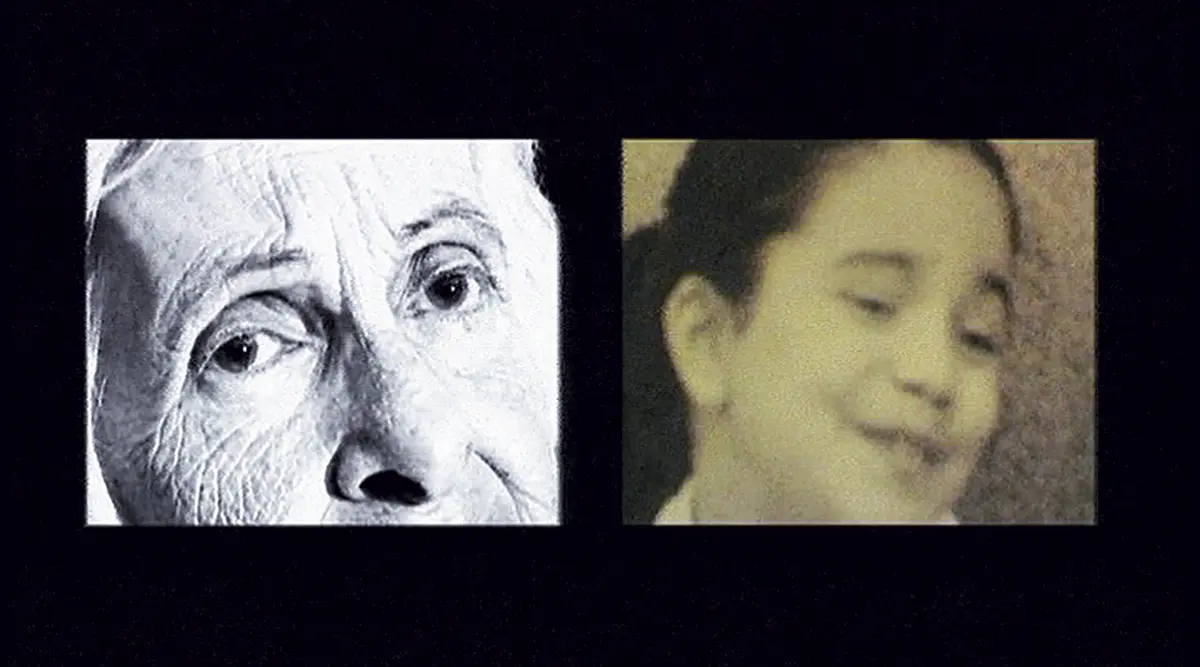
Perhaps the effects of the mass terror imposed by the military dictatorship are still to be fully realized and there is an insufficient degree of defiance. At any rate, there is a basic ambiguity in contemporary Argentina that denounces torturers while living alongside them. Gabriela Golder refers to this in an indirect manner. Her piece, titled En memoria de los pájaros, is a two-screen video, each screen framing against a black background two smaller screens where we can see a highly varied series of moving images. On one of the screens are family scenes filmed with Super 8, and on the other are TV images from the time of the military junta and the turbulent period immediately before its ascent to power. The family scenes are of Golder’s own family and families close to hers, and their placement alongside archival images of what was happening when she was a child presents the question of how it is possible to live a normal life under a regime of terror. How is it possible to continue living, knowing that families around you have disappeared? In a text in the catalog, Fabiana Barreda underscores the psychological bent of Golder’s motivations. For her, there is in this piece a “melancholic genealogy,” evinced by the artist’s intention to recover not only the experiences of her childhood but the experience of childhood itself, which survived in Argentina by the invention of a “parallel space.” This parallel space, however, was an insufficient consolation. Barreda trusts that the images of Golder’s video will become so intermingled with a previously anesthetized pain that they will be incorporated into the collective memory as images from a painful childhood: images from a childhood one doesn’t want to forget, no matter how painful it was.
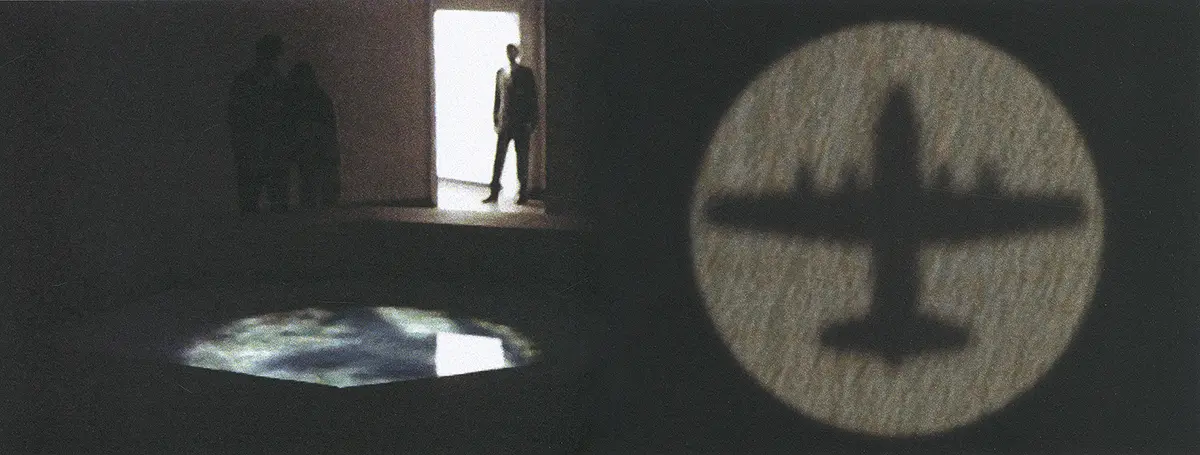
A memory of a difficult past is also the topic of Gustavo Romano’s video installation, which is more effective or at least more direct than Gabriela Golder’s, despite being an entirely allegorical piece. Titled Espejos, it is an audiovisual hieroglyph that combines a few visual elements to generate a semantic charge. In the version shown here, it comprised a single mirror placed on the floor of a darkened room; a video was projected onto that surface, showing the recurring shadow of a plane above waters that are first brown, then blue, and finally red. The historical datum evoked is the practice by the Air Force during the dictatorship of taking political prisoners, tied and drugged, on flights above the River Plate estuary and throwing them into the ocean. Thus, the changing colors of the water refer to the colors of the river, the sea, and the blood spilled in the ocean. The repeated sequence of colors contrasts with the fixity of the plane’s shadow, always the same and always centered on the screen. Gonzalo Romano has expressed his intention in these terms: “The proposal is, in truth, to maintain the moment of flight over the river and then the ocean and to avoid any possible human trace. I wanted to emphasize the situation of not knowing the final destination and to congeal that moment of uncertainty, of being at the mercy of a plan one is not privy to in any detail and the resolution of which veers between liberation and death.”
Jorge Macchi’s gesture in this show pointed in a different direction. Macchi is an excellent visual poet who has set out to unmask the violence and fatality present in common language. But the piece he presented in this show establishes an elliptical relationship to language, instead of a shockingly Dadaist one. Titled Concentración, it comprises twenty-six framed photographs, each one corresponding to one letter in the alphabet. Yet it is a peculiar alphabet since each photo shows a letter used by political parties, groups, and movements in their street graffiti. Macchi does not attend, however, to the contents of the slogans or initials, paying attention exclusively to the typography. The result is a series of images that could very well have been created by a follower of Joaquín Torres-García’s Escuela del Sur and as such could be presented in any art show. But the elliptical character of Macchi’s piece makes it impossible for it to be entirely subsumed by a formalist reading. Knowing the origin of those letters and the nullification implicit in their excision from the words of political groups and parties, we could think that Macchi intends to declare these groups and parties passé, due to the rejection by many citizens, who loudly chanted the slogan “Everybody out” in the protest marches of 2001–2002, or by the opinion that these parties and groups should unite if they truly want to change the country or at least move it forward. It is even possible to think that Macchi simply wants to bring to our attention the iconographic substratum common to contemporary Argentina’s political dialects, seemingly so distinct and mutually exclusive.
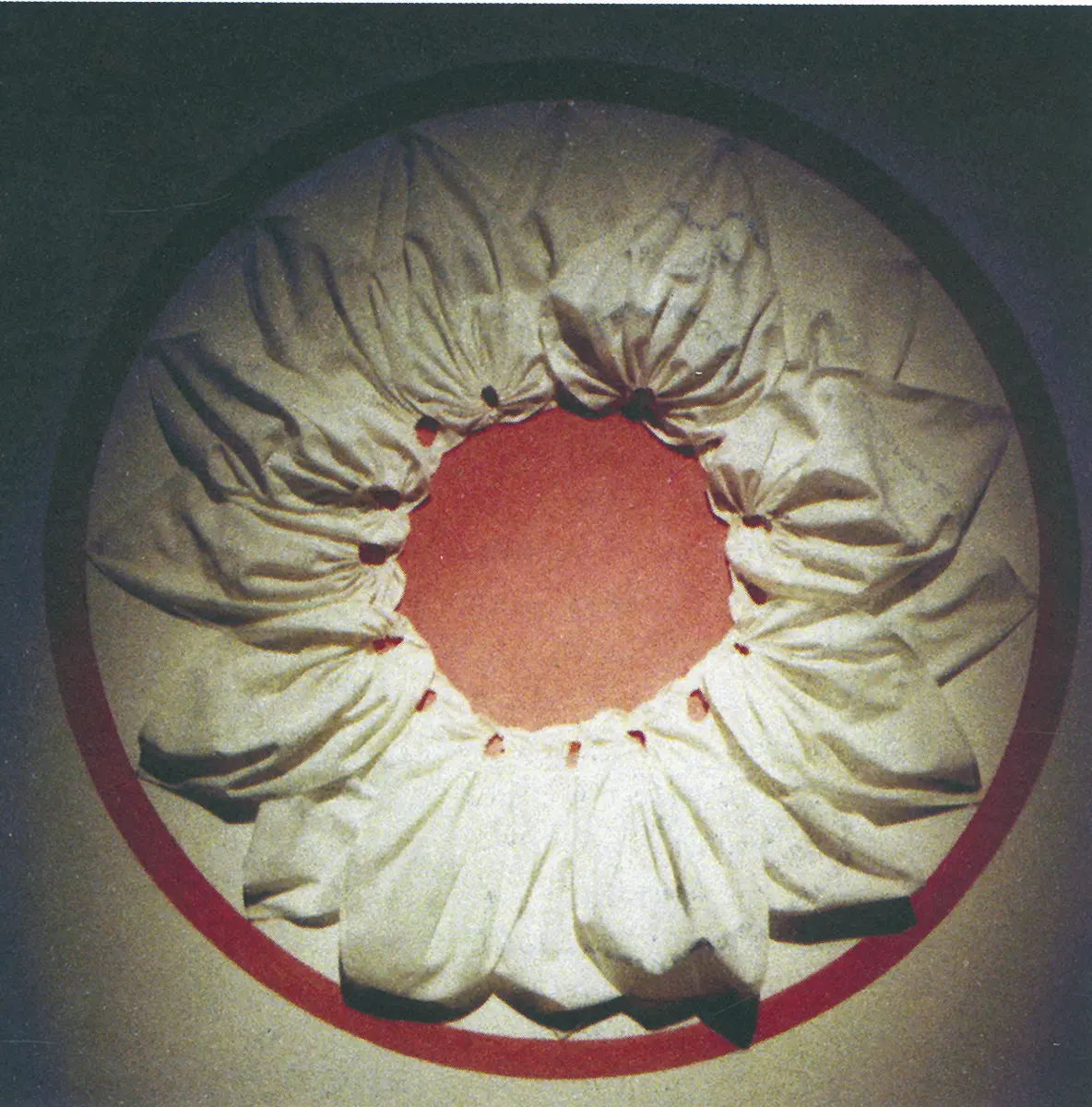
The neutralization of semantic content also plays an important role in Arte light, an installation first presented by Daniel Ontiveros in 1993. Ontiveros is an activist in the cause of the Madres de Plaza de Mayo, but his piece does not constitute a defense of that cause; it attempts, rather, to comment on the aestheticization of the bloodiest events to which the art world lends itself with excessive ease. His piece comprises a group of large “daisies” formed with the kind of kerchiefs used by the Madres de Plaza de Mayo as they demand the return of their disappeared sons, arranged like petals around a point painted onto the wall. In this way, the exhibition of an anodyne beauty is presented as culpable in the masking of a crime and a tragedy.
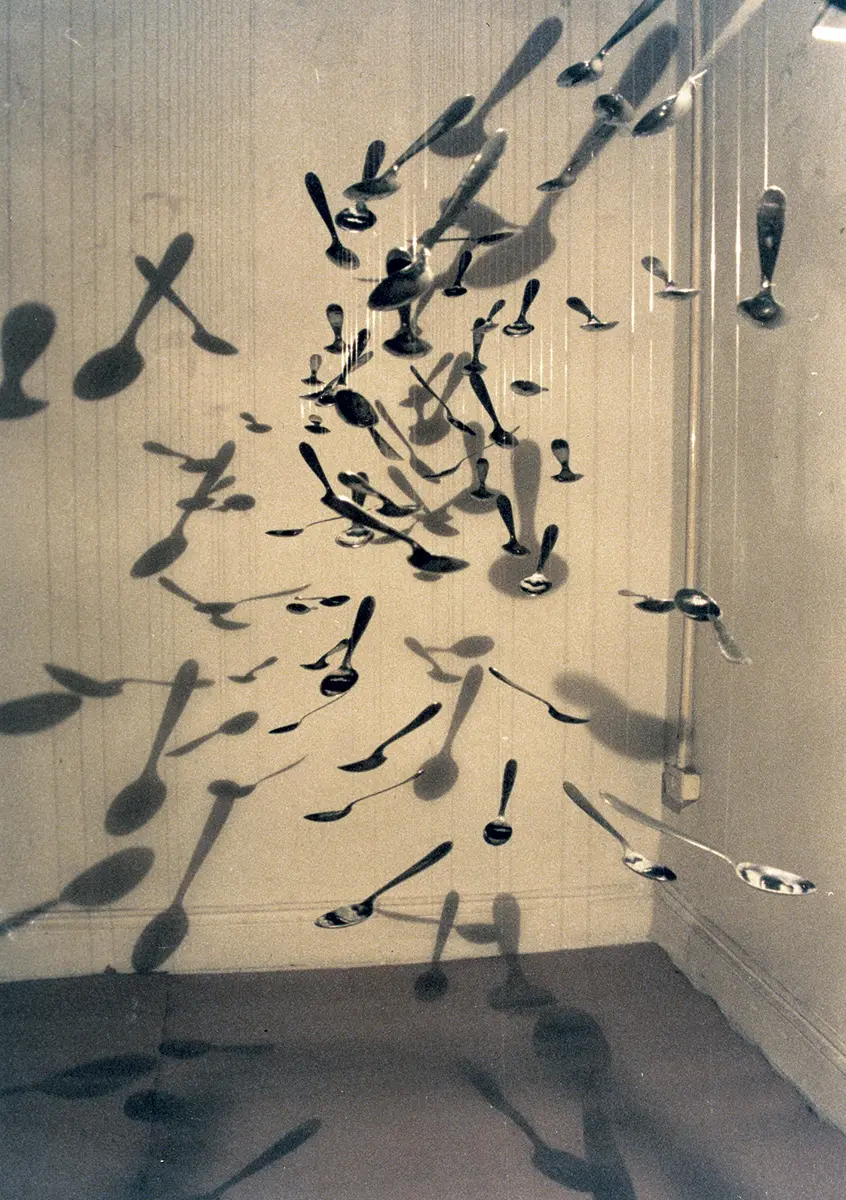
Rosana Fuertes’ piece, Untitled, comprises a collection of children’s t-shirts, all of the same color, with texts, sayings, and slogans derived from stereotypes of Argentinean thought, alongside which there appear characters from Mafalda, Quino’s famous comic strip. And Graciela Sacco, in her installation Bocanada, posits a role reversal between the mouth and the spoon, an idea that is perhaps related to the hunger that grows among the poor in Argentina, and which is documented by Gabriela Golder in her piece Las vacas.
The show also includes works by Carlos Trilnick, Dino Bruzzone, Charly Nijensohn, Esteban Álvarez, and Tamara Stuby.
*This exhibition has traveled between the MEIAC and the Centro de Arte Caja de Burgos.
CARLOS JIMÉNEZ