
There has been in recent years a proliferation of photography festivals throughout the world. What began in Arles and reached this continent with PhotoFest (Houston,) is now a web of festivals that includes Barcelona, Krakow, Medellín, Mexico City, Montreal, Rotterdam, Portland, and San Francisco, São Paulo, Stockholm, and more. Although not many are aware of this, all these events are part of a cooperative project titled Festival of Light. The point of this international cooperation is to share resources, exchange exhibitions, and ensure, through the establishment of a schedule, not only that festivals will not interfere with one another, but also that there is one each season, each month, and even each week.
These Festivals of Light present certain features that identified them immediately as such: a large number of exhibitions, some lectures, and many highly coveted portfolio reviews —where, often, the most interesting works are to be found. The notes that follow are from two of these recent festivals: Encuentros Abiertos.04 (Buenos Aires) and FotoArte 2004 (Brasilia). The former, Encuentros Abiertos, harks back to the Arlesian idea of the “meet-up,” while the neologism coined in the latter is an obvious attempt at establishing that, indeed, photography is a medium for artistic creation —something that, unfortunately, still needs underscoring today. Yet it is equally important to point out that the medium is also used to document, sell, and register data, and that this one is — along with all the other visual media— just a mere province of the image factory. It is always salutary to make this clarification so that the reader is aware of the writer’s particular biases in these matters.
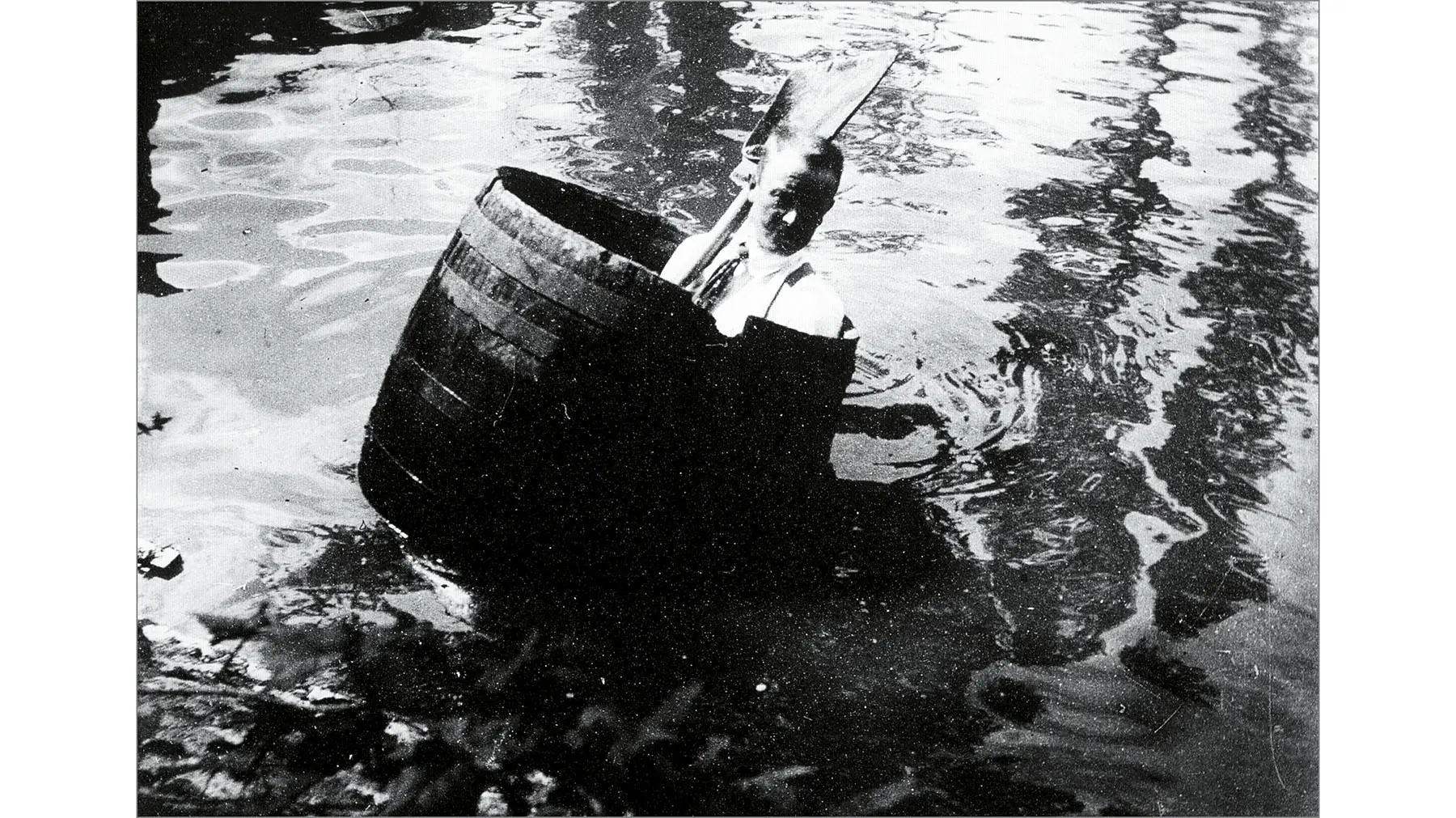
As in every version of Festival of Light, FotoArte 2004 comprised local and international exhibitions. Among the latter was an anthology show of works by Jacques Henri Lartigue (1894-1977). Lartigue was one of the main contributors to modern photographic aesthetics. Before him, the academicist and romantic aesthetics of drawing and painting had been the model for photography. Lartigue was doubly fortunate to find a world in rapid evolution and a medium that was vastly unexplored. He was among the pioneers of intimate family snapshots and street photography. Watching his works, it is difficult to determine whether he is more enthusiastic about car races, early airplane flights, modern lifestyles, or the representational medium he used to observe all of them.
Among the local exhibitions, the Pirelli photography collection (MASP) was the most exhaustive and diverse. Few countries can boast a collection of the photographic heritage conceived with such intelligence, one that crystallizes as it grows. Prominently foregrounded in the exhibition was the work of Brazilian-Japanese photographer Haruo Ohara. While Ohara’s aesthetics shows the imprint of the photo clubs of the 1950s, there is also in his imaginary a unique sensibility that subtly combines Italian Neo-Realist film with Akira Kurosawa.
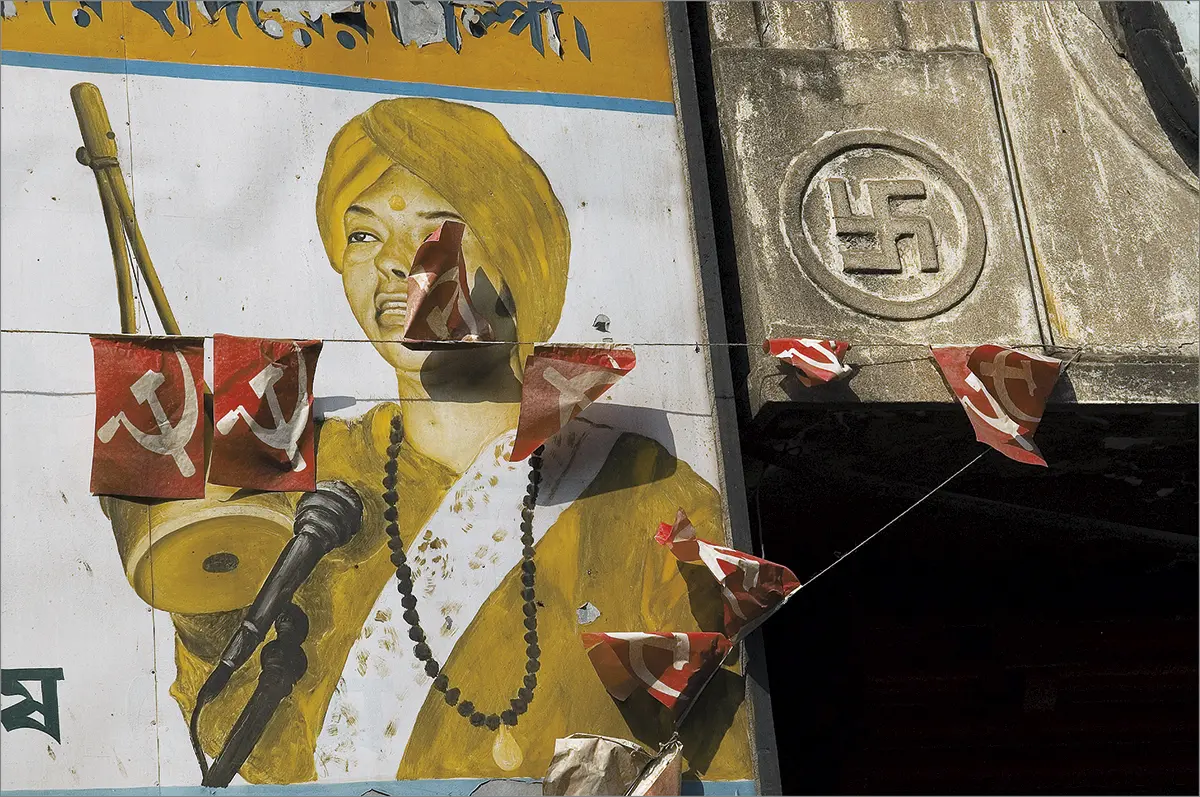
FotoArte itself was a kind of MRI of the current trends in Brazilian photography. In the conceptual domain, Rosângela Rennó’s show O Arquivo Universal e Outros Arquivos notes the ubiquity of old photographic albums. In a series of installations on double-top tables, Rennó places real albums on the lower level, under their photographic images, placed on the upper level. This arrangement produces a kind of failed trompe l’oeil that nevertheless alludes self-referentially to the ambivalent role of the photographic medium in the modern world as a replacement for the real that does not achieve its mission.
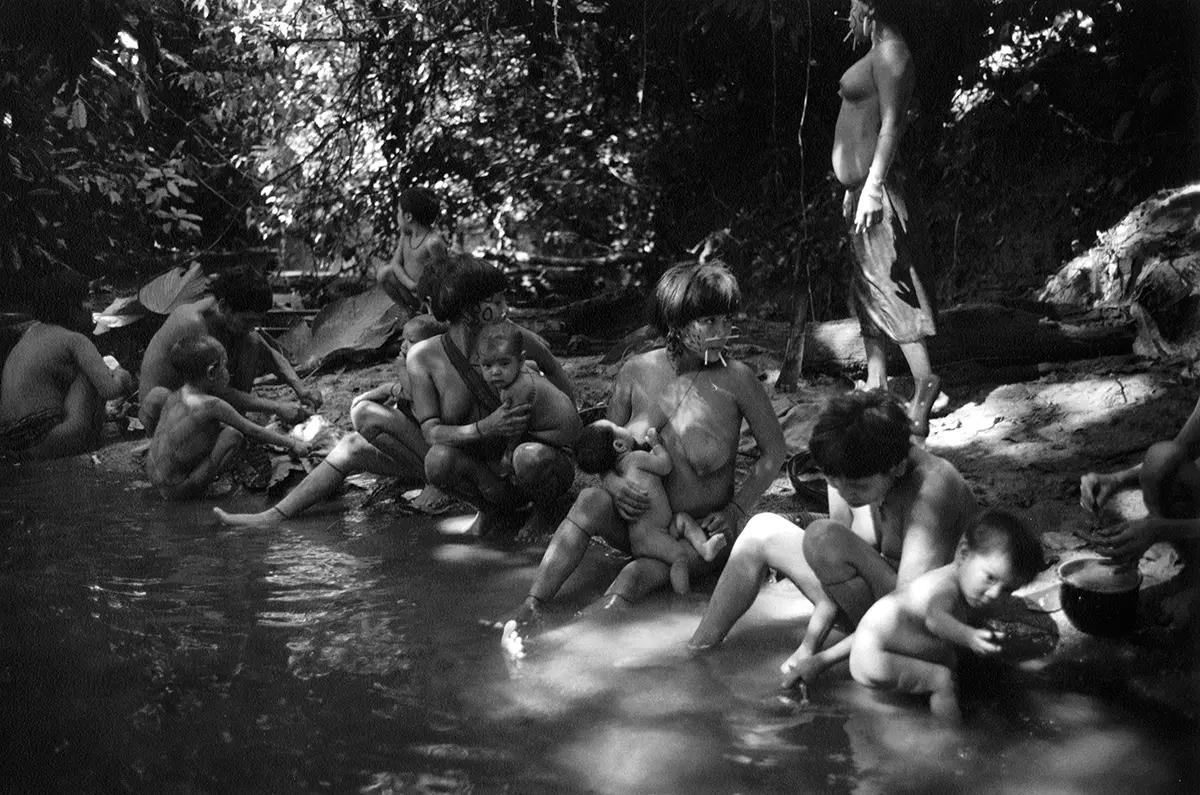
Valdir Cruz’s exhibition, Faces da Floresta, is a serious contribution to a tradition in which several photographers have left their mark, from Claudia Andujar to Nair Benedicto, to Maureen Bisilliat (not in chronological order) Brazil’s indigenous peoples have received the blunt end of the national slogan, Order and Progress. Cruz’s photographic inquiry tells us that an order of a different nature —than of the Amazon rainforest’s original inhabitants— is disappearing with the forward march of progress that does not necessarily mean betterment. Cruz’s work embraces not just people, but also the landscape. His most recent works focus on the thinning of waterfalls along the Paraná River. Although these photographs belong to the Landscape genre, for the natives who live in communion with nature —like Kurosawa’s Dersu Uzala—, the waterfalls are also “people.”
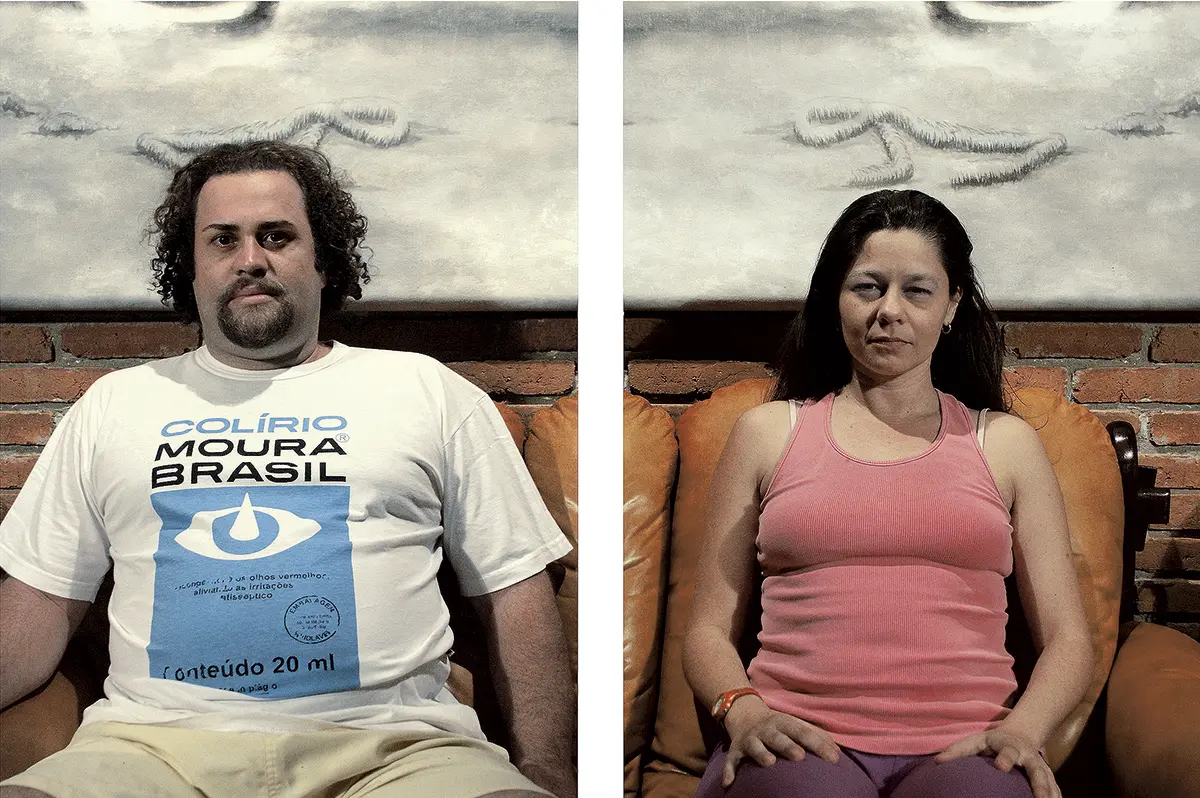
These exhibitions, however, were just the tip of the iceberg. The organizers of these festivals of Light always have a good sense of including the work of emerging artists. Such was the case of Clarissa Borges’s Com os Olhos do Outro. These dual portraits of couples have been minimally manipulated by digital means so that the man’s eyes end up in the woman’s face and hers in his. The unadvised observer will perhaps not notice the detail, except to note that the man’s gaze is somewhat effeminate. It is the women’s faces, however, that suffer the greatest and most disquieting transformation.
Two Mexican artists made memorable presentations. Before a crowded audience, Pedro Meyer —who very well could reject the label of “artist”— offered a kind of critical memory. Meyer is one of the world’s pioneers in digitally manipulated photography and the founder of zonezero.com, the Web’s most visited photography site. The second artist, Juan José Díaz, heir to the legacy of Ángel Cosmos, orchestrated a multimedia performance in which a Brazilian musician, armed with an ax, destroyed literally and musically a TV monitor that showed him in the more benign act of simply playing music.
The Buenos Aires Encuentros was framed by the architecture of a city imbued more with a fin-de-siecle grandeur than with Brasilia’s mid-century modern utopia. At the event’s epicenter was Chema Madoz’s exhibition El sueño de los objetos, a fittingly ambiguous title hovering between our dreams about objects and the dreams the objects themselves might have if they were to have dreams. Madoz’s progressive assault on the viewer’s expectations has taken many to confuse his aesthetic with Surrealism’s dreamlike and/or automatic associations. However, Madoz’s aesthetic is at once more calculated and more poetic. It exploits the coincidences between the shapes of objects, which prompt us to think that they could have functions that are different from those somebody has imposed on them. It does not point to the irrationality of human dreams, but to certain rationality derived from objects. Thus the idea that objects —confused about their true identity— could be dreaming for themselves a different existence.
The mirror image of Madoz’s exhibition was Distancia y proximidad: fotografía contemporánea alemana, the nucleus of which was the work of Bernd and Hilla Becher. It included also works by other celebrated German photographers like Candida Höfer and Andreas Gursky, who reveal the impact of the couple’s affinity for Sachlichkeit (the “thingness” of the world.) In this photographic tradition, no moment is more decisive than others, there is no humanistic project beyond photographic documentation, there is almost no personal revelation, no commentary on the medium, no modern angle; only the unbearable heaviness of visual facts in an ever more westernized world and the occasional display of a sehr German romanticism. Although repetition and permutation have subtle virtues, Becher’s obsession with objects of the same type could come across to naïve viewers as somewhat compulsive. Some of Gursky’s better-known images of hotels, supermarkets, and other public spaces, in fact, have a certain family resemblance to a clinical, distant, industrial focus. Perhaps what is needed to understand the world that makes these images possible is what Kant called an “uninterested interest”.
In Buenos Aires there is one gallery whose commitment to photography deserves special mention: Arte por Arte. It is spacious enough to have hosted multiple exhibitions on several levels. One of the most interesting of these was Jorge Bispo’s. Bispo, a Brazilian photographer, had several men dressed in white wedding dresses. Until they took part in the project, these men had displayed no interest in cross-dressing. Bispo respects the conventions of this kind of commercial portrait in terms of posing and framing, and it is precise that what makes viable this clash of the male physique and the feminine garment.
Buenos Aires has an abundance of buildings that, without being new or having been originally designed to show art, have been transformed into first-rate galleries. One of the most impressive is the Palais de Glace, an Art Nouveau building that used to be a skating rink. It hosted an exhibition of Spanish photography and poetry, the concept of which was best exemplified by Manuel Sonseca’s work. Another important space is the Teatro San Martín cultural center, with a small gallery that hosted a celebratory exhibition of Cassio Vasconcellos’ modern architecture, and two mezzanines where Jan Van Leeuwen showed solemn works about the Holocaust and biblical scenes. In the numerous halls in Las Recoleta, a large number of shows happened in quick succession, from Elaine Ling’s intriguing images of the Namibian desert to the winners of Leica’s Oscar Barnack prize (Andrea Hoyer and Narelle Autio,) and the collective show Anónimos/Sinónimos/Antónimos. The Centro Cultural Borges, located on the upper level of an upscale shopping center, presented Roberto Huarcaya’s El último viaje (the shocking images of cars destroyed in accidents,) John Demos’ Sombras de silencio (penurious life in a small Greek town,) Luis Lares’ Hombres de carbón (the grim lives of coal miners,) and Fernando Castro’s —no relation to the author of this note— La ideología del color (a reflection about skin color through the disparate media of photography and collage).
In an era of global connections, Festival of Light has established a system of communication that tends to lessen the verticality of international relations in the art world and the dark outlook of extreme relativists, without diminishing their valid demand to be different. Those in the world of photography possess a certain reverence towards the past and a certain curiosity towards the new, albeit everything in moderation. Sociologically speaking, they seem more predisposed to cooperate than other groups in the art world.
FERNANDO CASTRO R.