
A different motive prompted the Peabody Essex Museum —an institution originally devoted to maritime topics, located in the city of Salem– to convene a selection of contemporary art from the Caribbean with expanded collections from a variety of periods. The Peabody, articulated in a recent architectural renewal that symbolizes a ship’s hull, hosted only four artists in its ample temporary galleries: David Boxer (1946, Jamaica), Tony Capellán (1955, Dominican Republic), Kcho (1970, Cuba), and Marc Latamie (1952, Martinique). These artists —predominantly familiar with the experience of living in New York— come together on the common subject of “an introduction to contemporary art in the islands of the Caribbean.” Artists developed their own sub-themes and their own aesthetics.
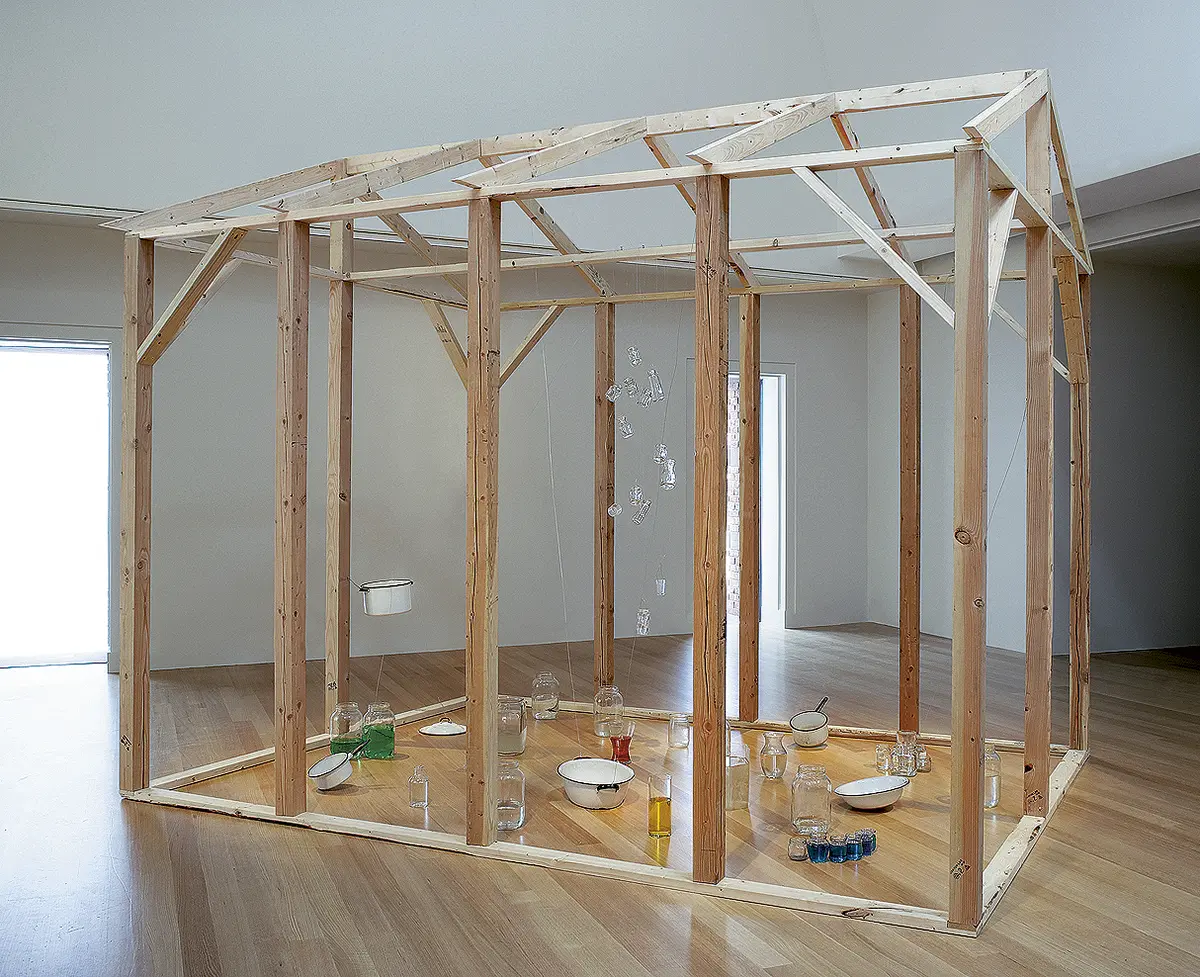
Latamie, who tried to widen the viewer’s experience from the visual to the olfactory and the ambulatory, presented Ajoupa (2004), a construction similar to a narrow shack and very carefully finished, which people can enter to find themselves enveloped in aromas of the local diet: coffee, rum, nutmeg, and others. Although the artist doesn’t seek to provide a sociological reference or a strictly historical one, the learned vector emerges from “spices/the Discovery of the Americas.” In Casatlantic (2004), the artist uses only the most elementary tools to communicate, without extravagance, the experience of island life, exploring the sensation of less urban buildings. Both suspended and on the ground in this installation are bottles and everyday-use containers that transmit the local reference transferred to a museum. The feeling of being without walls symbolizes the apparent condition of living “without borders” that occurs in the islands; it is a condition where the borders are precisely open space, the ocean, and the finitude of the territory. Marc Latamie, who designs his pieces but does not build them (he gave up his studio long ago because he thinks that his role is to conceptualize and to project), occasionally draws or sketches creating works like Transatlantic (1996-2001), a group of watercolors on pages ripped from Atlases. The author uses the word Atlantic in his titles because the Atlantic Ocean has been his subject for many years.
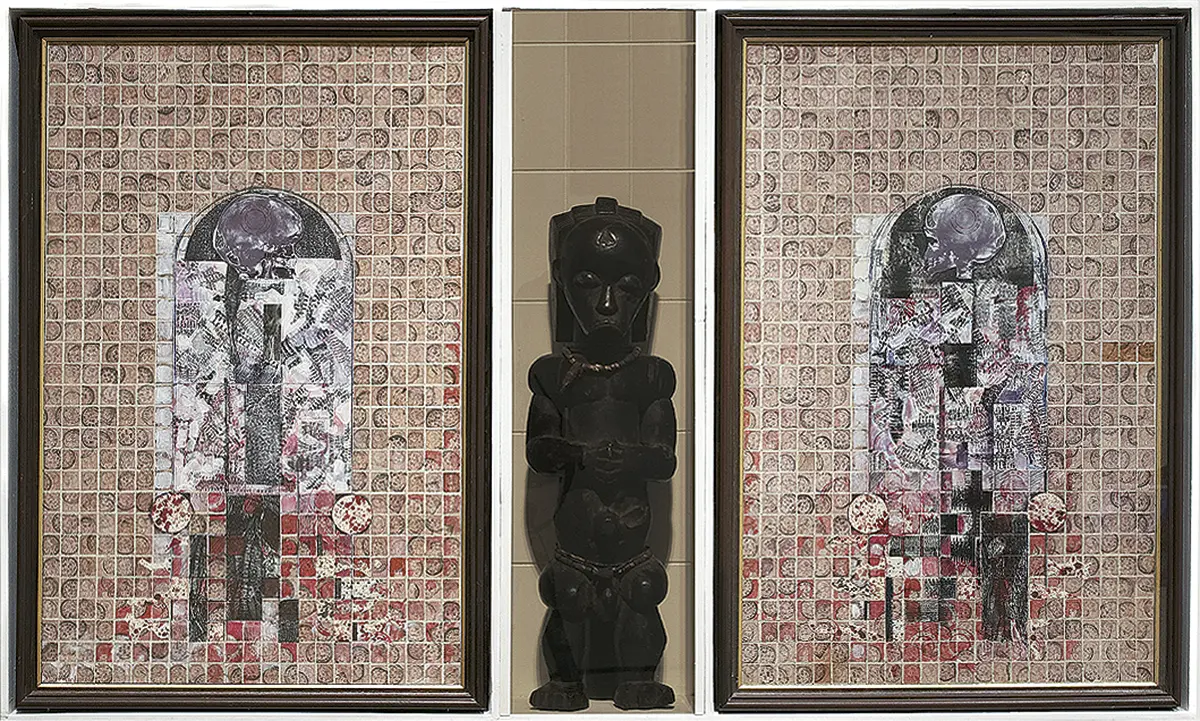
David Boxer presented The Black Books (1992-2003), three bound books comprising digital images scanned on paper; a series of polyurethane and acrylic on canvas paintings; and QVSWF, Queen Victoria Set We Free (1996-2003), a mixed-technique piece (1 pence stamps, ivory sculpture, wood, glass, and paper). In the introductory area, a video with interviews and geographical references accompanied QVSWF and The Black Books works of heavy expressiveness that the viewer was able to thumb through at will.
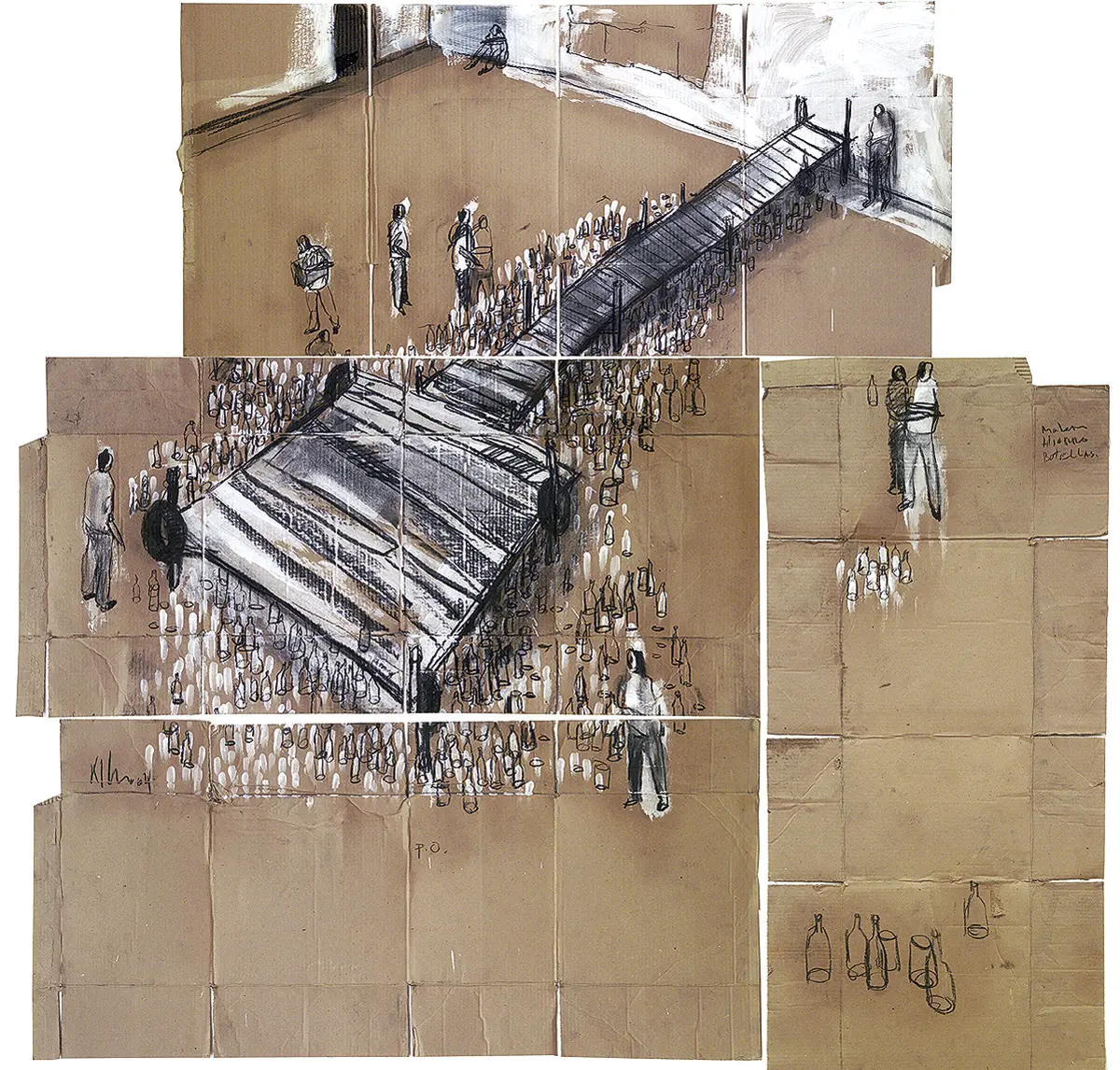
Kcho presented a solid proposal of untitled charcoal drawings with an island symbolism, dated 2004 and with a collection of papers supporting the conception of the installation presented in Salem, in the same tenor as other his international presentations. Thus, Para olvidar (2000), the emotive installation displayed by the Cuban artist in the Peabody show, uses salvaged pieces of furniture, tires, and bottles. In this work, Kcho brings to the fore the lack of resources as an element of both insular and political conceptualization. This is “less is more” —not in terms of the number of elements, but in terms of material means in search of expressiveness— that works as a propeller for ideas and artworks. Using bottles, Kcho represents the packed crowds of people at the docks —abandoned just like the bottles— at the moment of jumping/escaping (no one needs the present text to give more details of embarking, emigrating, or fleeing).
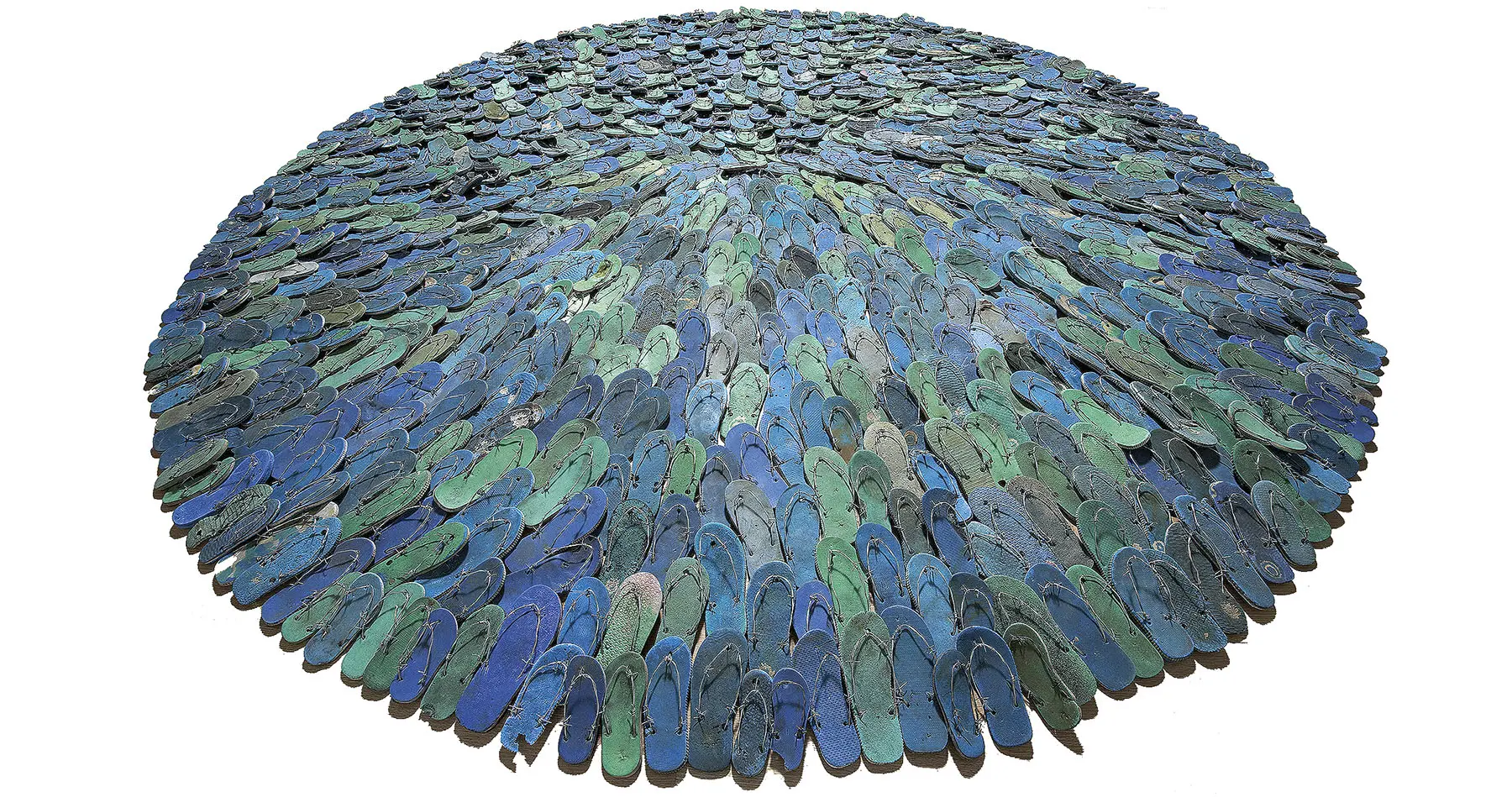
Tony Capellán came to this show with three works that are older but possess great relevance and aesthetic weight demonstrating that the work of art does not exhaust itself; on the contrary, the passage of time only reaffirms and recharges its lucidity. Mar Caribe (1996) is a circular installation made with discarded and salvaged rubber sandals with barbed wire substituting for the toe holder. If in the past the poverty of the materials was important, now, when this type of footwear is the latest fashion, the artist’s conception, the extension of poverty and suffering, the mingling of social strata, and his distancing game are intensified. Most of Capellán’s works appear serene yet show ideas of disheartenment, sacrifice, and death. La bandera de los ahogados (1996), conceived with cross-shaped pieces of wood, locate sand, shoes, and even recovered flashlights inside each quadrant. The cross organizes the sacrifice of lives taken by the sea in so many attempts of flight. Isla en tránsito (1994) is a harmonious installation that resolves yet another Latin American issue still in the closet: to freely choose altars that are full of attributes.
Related in time to Island Nations: New Art From Cuba, the Dominican Republic, Puerto Rico, and the Diaspora at the Rhode Island School of Design Museum in Providence, and to the Dominicazo! exhibition in a commercial gallery in Boston, the experience of Island Thresholds in Salem makes clear that it is an introduction to the arts of the Caribbean basin.
GRACIELA KARTOFEL