
First of all, I want to thank you for granting us this interview, and to congratulate you on your work as adjunct curator at the Museum of Modern Art in New York City, in charge of Latin American projects.
F.B.: We began our visit on the 5th floor and right there we encountered José Clemente Orozco’s Dive Bomber and Tank. What has been the reaction of both the public and the experts, to this mural that in a way introduces the museum’s permanent collection? 1
L.P.O.: Well, I like this question because it allows me to clarify certain things and focus on our topic right from the start. Orozco’s Dive Bomber and Tank were commissioned by the museum for its 1940 show Twenty Centuries of Mexican Art, as an on-site piece, and it wasn’t reinstalled until 2000. I don’t think it has been placed there to indicate the start of the permanent Painting and Sculpture collection, among other things because the general public perceives that the installation begins in the grand entrance atrium and the entryway to the sculpture garden. I don’t think one should interpret this piece as the beginning of the painting and sculpture gallery in their chronological course, because it is located in a public circulation area, away from the proper galleries that hold other important works, some of which are staples of the MoMA collection, like Claude Monet’s Reflections of Clouds on the Water-Lily Pond, which was in the atrium, until a few weeks ago.
The museum’s natural vocation, inscribed in its foundational program, is to be a universal modern art museum, and its inevitable fate was to become a museum of universally-recognized modernity, of what we would call the mainstream of modernity. We are all aware of the limitations of the concept of modernity, of the limitations of the concept of the mainstream, and of the need to debate that strong idea in the history of modern art. Thus, this is not an institution where you will find a Latin American wing like you find in museums that do categorize their selections geographically. MoMA’s vocation is not representative in geographical terms. For instance, here there is no representation of modern French painting as such, with all the weight that the French perspective on the history of pre-1945 modern art has had at MoMA. This is why I have personally argued, with the acquiescence and the support of John Elderfield, chief curator in the Painting and Sculpture department, who is in truth the author of all these Latin American inclusions, for the latter to be placed in dialog with their respective moments within the historical process of constitution of modern art.
F.B.: Let’s talk in more detail about the Latin American inclusions in the current selection of works from MoMA’s permanent collections that are on display.
L.P.O.: The permanent galleries hold exhibitions that change all the time. There, one can see a line, an argument for inclusion, and in six months' time, there can be an entirely different one. There are more than three thousand works by Latin American artists in the museum’s collection, and in the exhibition spaces, you can see a little over thirty. Only between ten and fifteen percent of the Modern art Museum’s collection is exhibited, so the percentage of Latin American works on the display relative to the total number in the collection is the same as the percentage of works exhibited in general relative to the total number of pieces in the collection.
F.B.: What would be, then, the piece that introduces the Latin American inclusions we will be talking about?
L.P.O.: The first piece in the chronological course of the collection is by a Mexican artist, Diego Rivera’s Jacques Lipchitz (Portrait of a Young Man) from 1914, exhibited for the first time in the Cubism galleries. In this case, Lipchitz’s portrait appears rather as an example of an alternative “Cubism,” as a counter figure of Cubism, and I personally like the fact of having it displayed near a “cubist” Duchamp that, seen in retrospect, is another counterfigure of Cubism.
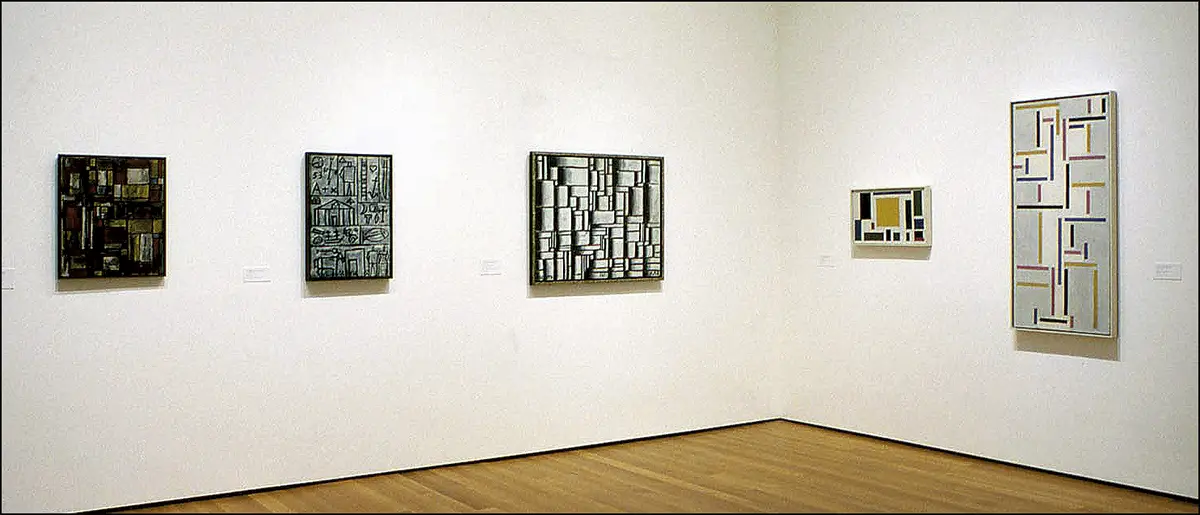
F.B.: Following the course, we find an excellent representation of Joaquín Torres-García’s work.
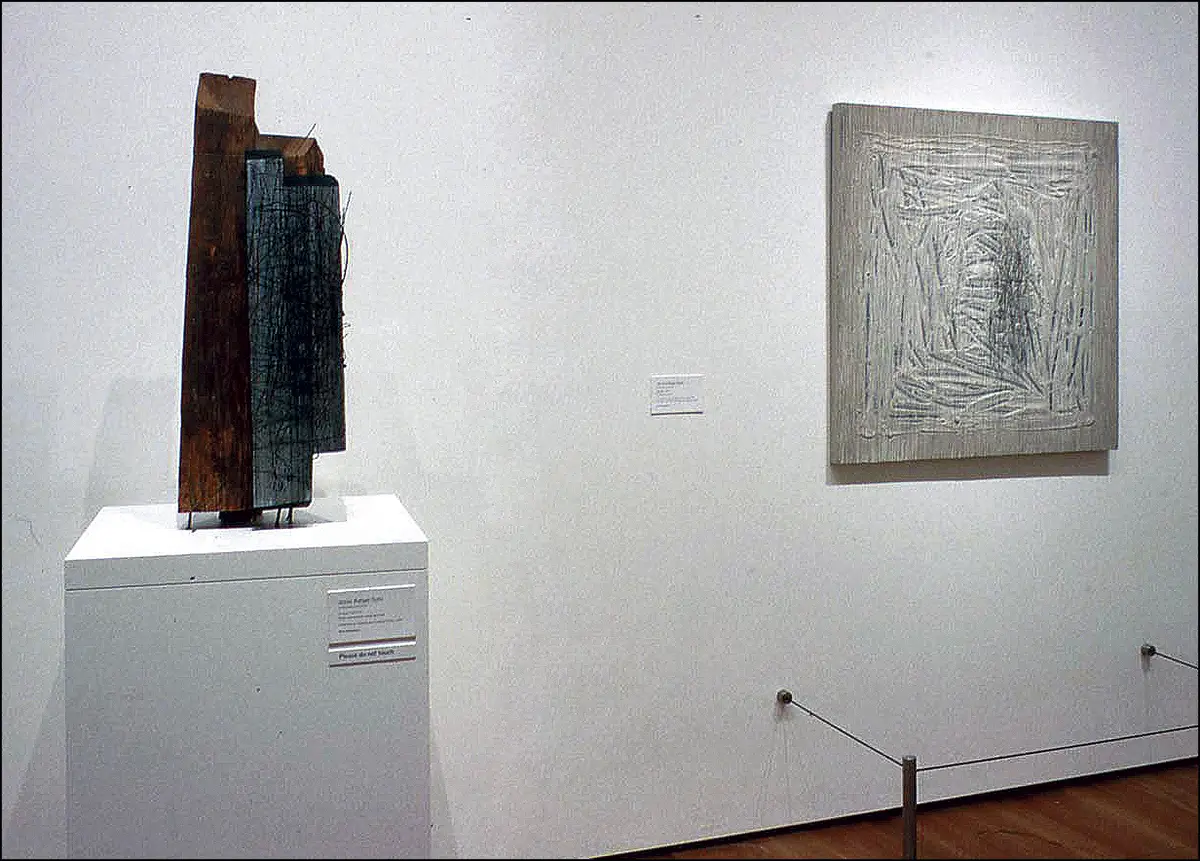
L.P.O.: The wall devoted to Joaquín Torres-García has a central piece, Composición (1932) acquired by the museum in 1942, and two pieces acquired recently, Estructura en color (1930) and Construcción en Blanco y Negro (1938.) The former is a key work of 1930, precisely the moment when Torres-García became acquainted with Mondrian and began to work at Circle et Carre in Paris. It is a very interesting piece because, besides being configured as a kind of stained-glass window, it is completely abstract where you can read the pentimenti of the iconograms and figures: it is a figuration that was erased and transformed into abstract work in primary, “mondrianesque” colours, yet it is at the same time entirely “torres-garcíanesque.” Construcción en blanco y negro of 1938, given to the collection by Patricia Phelps de Cisneros, is one of the most abstract works by Torres García after his definitive return to Uruguay. These are very special, very rare works, of a kind that are scarce throughout the world, and we are greatly satisfied to have them here at MoMA.
The Mondrian piece that is next to them is one of the emblematic works in the MoMA collection, Broadway Boogie-Woogie (1942-1943), one of the “jewels” of the permanent collection, it was given to the museum by an anonymous donor who turned out to be none other than Maria Martins, the celebrated Brazilian surrealist sculptor, who at the time was married to the Brazilian ambassador in Washington. Maria Martins had an exhibition with Mondrian at a New York gallery, where she sold everything and Mondrian didn’t sell a single piece. She felt bad and acquired Broadway Boogie-Woogie with the idea of donating it to the museum, but the museum initially rejected the gift. Thanks to the intervention of her husband, Maria Martins finally got the museum to accept the piece, and until today her wish to remain anonymous has been respected.
F.B.: From abstraction, we move on to figuration.
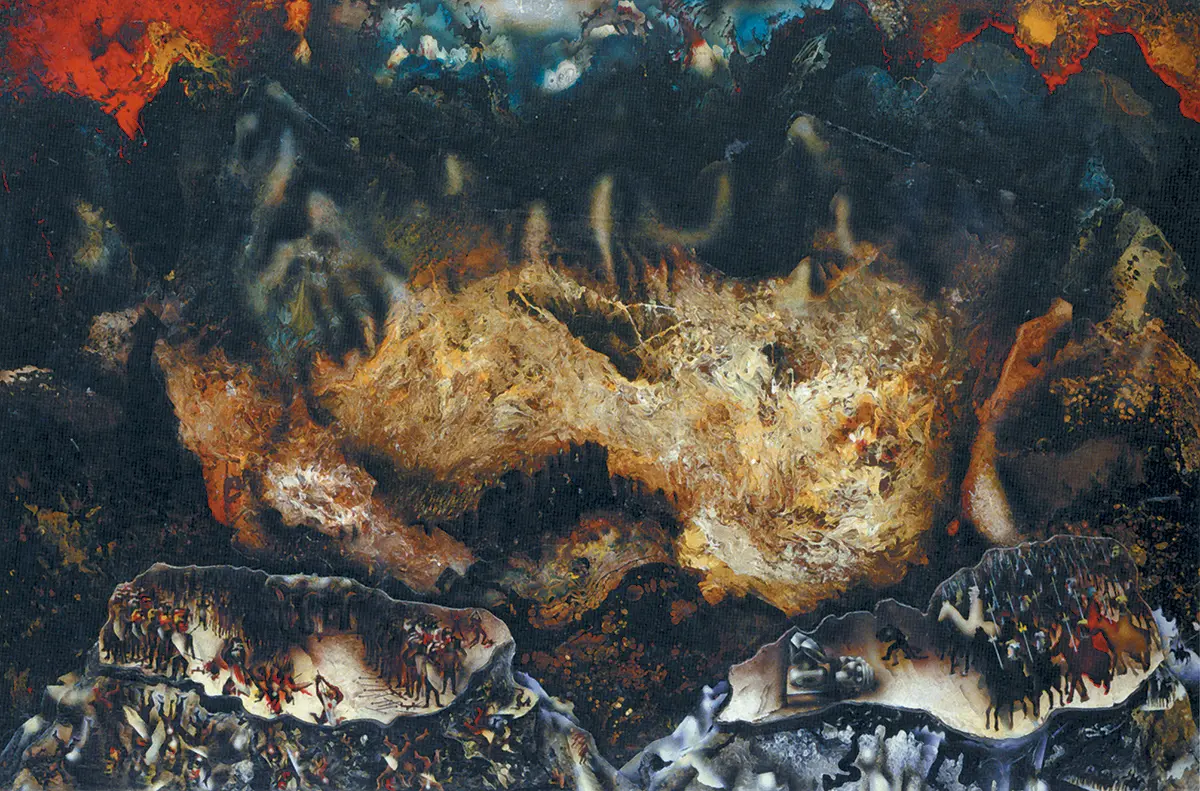
L.P.O.: To the traditional pathway through the collection, which articulates that “main view of modernity”, conceived originally by Alfred Barr and modified later by so many curators, John Elderfield and his team have intercalated a series of galleries, known as crosscurrents, to show contemporaneous works that run counter or parallel to the mainstream, rarely shown before at MoMA. One of them is a gallery of interwar figurative painting, with works from the late 1920s and the 1930s, a moment that has only been recently studied anew. There used to be the idea, a schematic notion if you will, that the avant-gardes did away with figuration, which is not true, and that there was a return to figuration later on, which isn’t true either. There was always figuration. There is a period, which is this interwar period that Jean Clair has dubbed the “era of melancholy,” when there was a kind of explosion of social figurations, often “monstrous,” and always loaded with social content. Alongside Oscar Schlemmer, Otto Dix, and Max Beckmann, the MoMA collection includes works by Mexican muralists Rivera and Siqueiros, one in his muralist moment and the other in his period of greater plastic-inventive experimentation, as is the case of Siqueiro’s Suicidio colectivo (1936.)
F.B.: Siqueiros’ Suicidio colectivo was included in the show at the Museo del Barrio.
L.P.O.: That is correct. In 2004 I had the opportunity to work in the organization of a show at the Museo del Barrio, about which I have to say that it never pretended to be an exhibition of Latin American art, but a critical reflection on the history of the Latin American collection at MoMA: MoMA at El Museo: Latin American and Caribbean Art from the Collection of the Museum of Modern Art. The idea was to trace the history of MoMA’s Latin American collection since we could not do an inclusive exhibition with the collection as a whole, nor did we claim to do yet another exhibition of Latin American art. I don’t think it makes much sense to present an exhibition of European art or of African art. I am increasingly more mistrustful, and more critical, of those totalizing surveys that, even when disguised under novelty concepts, continue to offer a “Hegelian” and “centennial” view of art in our countries. I think that we need to focus on the significant moments, on the specific problems, on artists as creative people and not as theoretical “examples.”
Regarding Siqueiros Suicidio colectivo, my colleagues in the Painting and Sculpture department debated very hard whether the location where we see it now was the appropriate place for it. They know that Pollock was influenced by Siqueiros and that these 1936 experiments with the pigment using industrial paint on non-traditional supports, where dripping starts appearing, anticipated Pollock’s works by twenty years when he was to deploy the technique fully. They debated whether they should include the piece in the gallery that precedes Jackson Pollock, and finally, I believe good sense prevailed, the idea that Siqueiros is important for what Siqueiros wanted to express rather than for what mainstream artists like Pollock found in Siqueiros’s work. This is a point that I debate often with my Latin Americanist colleagues: Latin American art is important in its own right, not because this or that person, however famous, discovered it all of a sudden. I believe that this exhibition of the permanent collection Suicidio colectivo makes a difference in relation to the rest of the socio-political paintings of the 1920s and 1930s.
F.B.: Visiting the next gallery, I was surprised to find a painting by Frida Kahlo inside a display case filled with objects.
L.P.O.: One decision that has been criticized was to include Frida Kahlo’s self-portrait, Autorretrato con pelo cortado (1940,) in the set of two displays of surrealist objects by Max Ernst, Jean Arp, Joseph Cornell, Hans Belmer, Óscar Domínguez, and Meret Oppenheim, among others. I personally think the decision was right and it serves to recontextualize Frida’s oeuvre historically. Frida Kahlo has acquired a spectacular presence that to a degree blinds us in a general judgment of her work. I believe that this moment in Frida Kahlo’s career, in the late 1930s and early 1940s, is extremely important, extremely beautiful, and luminous, and I also believe that what Frida achieves in this period she achieves thanks to, among other things, a constellation of connections that occurs in Mexico around her and around Rivera. The avant-garde coalesced around them and, evidently, their link to Surrealism is an important chapter. The location of this work in the context of the surrealist displays gives the public the historical ground on which this phenomenon really occurred.
F.B.: It seems to me, in what we have seen so far, that great emphasis is placed on what I would call “contemporaneous dialogs,” more than a visual mix-and-match.
L.P.O.: Definitely. I expect the museum to move more and more in that direction. One of my debates here is to argue that there is a modern way of “making sense,” which is precisely through juxtapositions, dialogs, oppositions, and series, and that the concept of meaning based on the absolute masterpiece is not really a modern one, even if the spectacular vocation of the great museums results often in their being regulated under that model.
F.B.: The context in which Lam’s and Matta’s paintings are displayed is an excellent example.
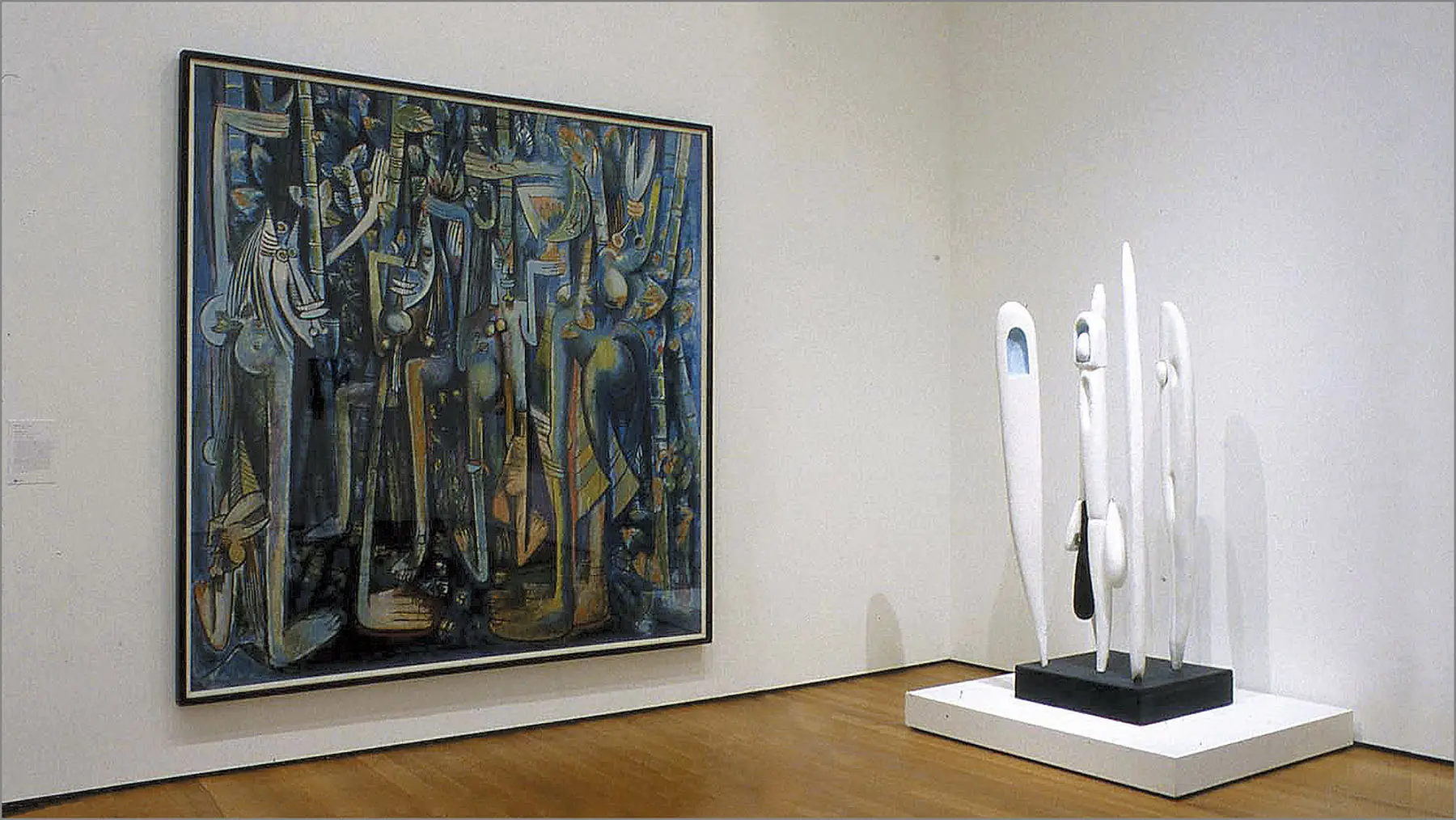
L.P.O.: On the 4th floor, which begins with the late-1930s, early 1940s Surrealism, we find Wifredo Lam’s La jungla (1943) once again included in the body of the permanent galleries, in that logic of dialog that you pointed out, close to contemporaneous works by Louise Bourgeois, Matta, and other surrealists who established the ground for New York painting to acquire its spectacular scale, so centrally welcoming to the avant-garde, in the second half of the Twentieth Century.
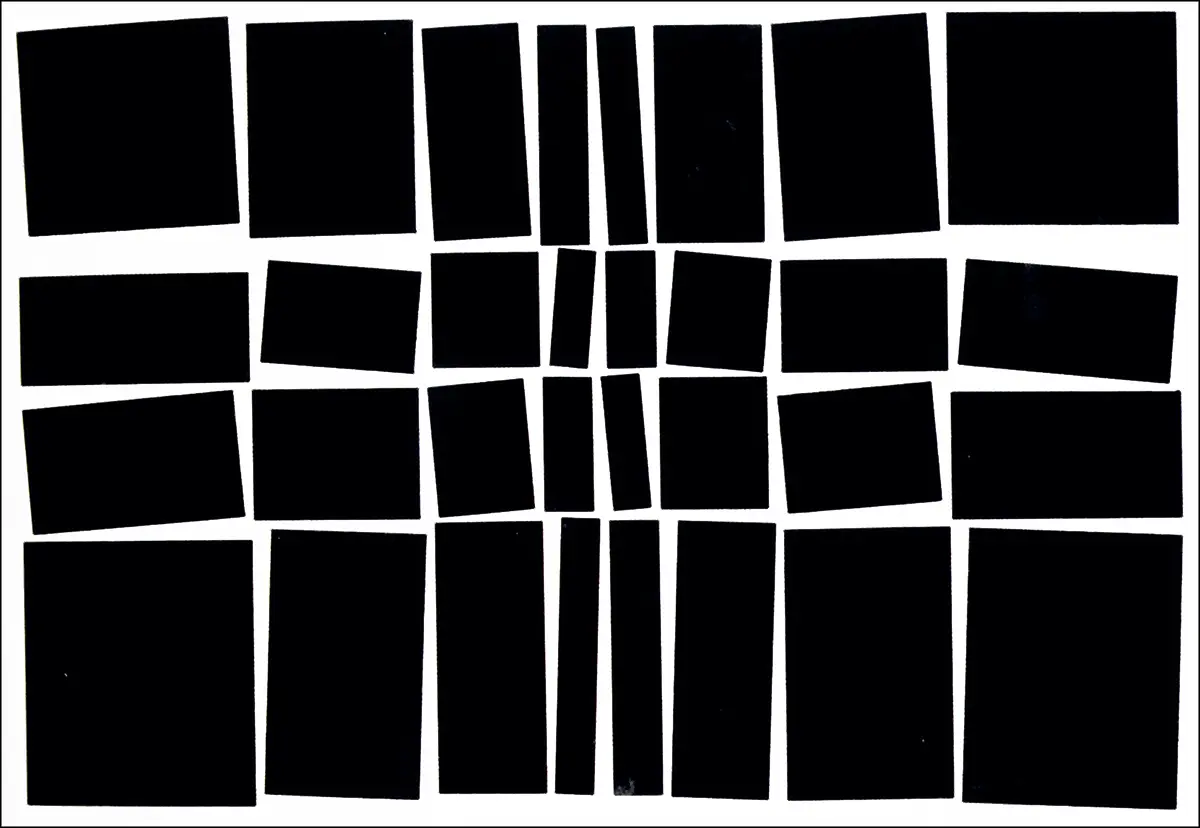
F.B.: I think it is a great visual achievement to place Louise Bourgeois’ Quarantania, I (1947-53) next to Lam’s, and Matta’s Here, Sir Fire, Eat (1942) alongside Gorky’s Garden in Sochi (c. 1943.)
L.P.O.: For the longest time, some critical circles in New York wanted to deny Matta’s influence on local artists, such as Gorky, and on the early beginnings of New York painting. It is obvious that Matta is a character that travels from Europe to the United States and serves as a hinge for what is about to happen. In that sense, I think it is important to point out that the Painting and Sculpture galleries are organized according to the following exhibition syntax: one representative gallery of the North American scene, generally followed by a representative gallery of what was happening in Europe or other parts of the world at the same point in time. Here we are in the first of those galleries, let’s call them...
F.B.: Parallel...
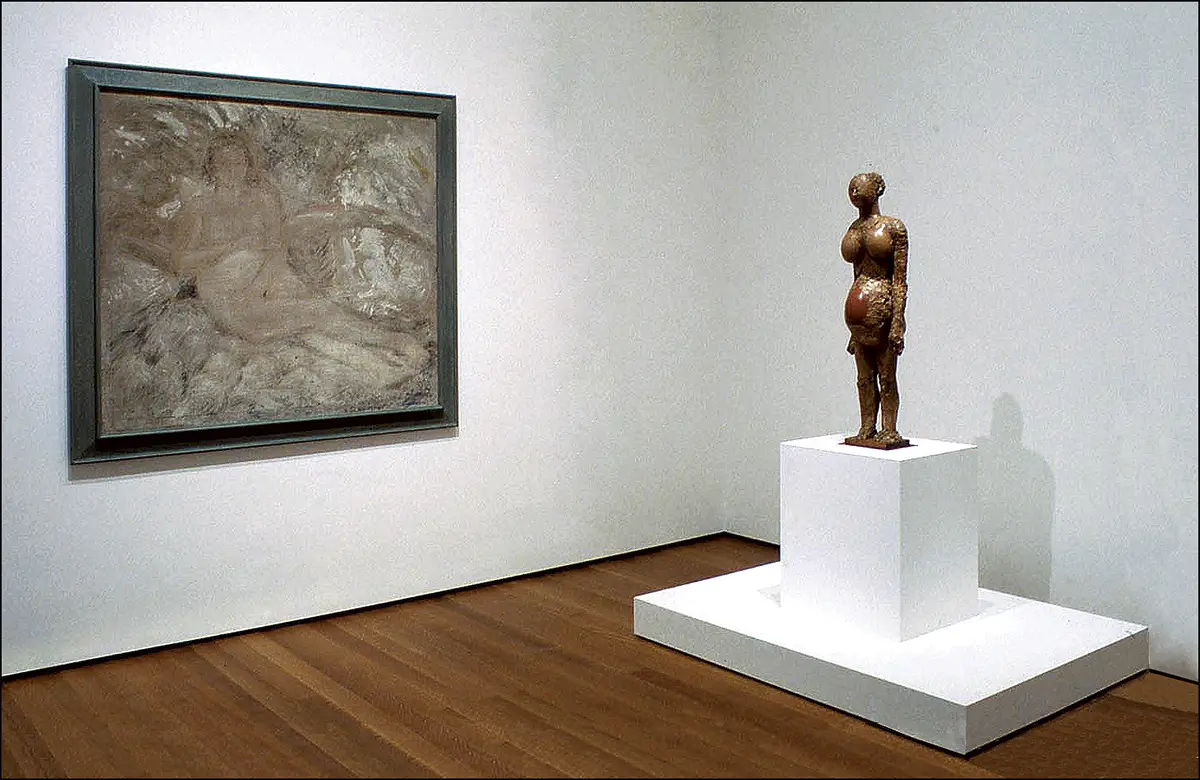
L.P.O.: Exactly, parallel to what is happening in New York. Included in this one are some works by Picasso, who, as we all know, is a kind of leitmotif for the museum’s collection, alongside works by Giacometti, Dubuffet, Bacon, and a new acquisition, Armando Reverón’s La mujer del río (1939,) donated by Patricia Phelps de Cisneros in tribute to John Elderfield. This piece is one of Reverón’s undisputed masterpieces: it belongs to the period of the great series of majas, where Reverón connects to the whole iconography of arcadia that has marked the origins of modern painting, from Manet’s Le Déjeuner sur l’Herbe (1863,) through all those modern scenes of Arcadias and majas all the way to Les Demoiselles d’ Avignon (1907,) and which probably ends with Willem de Kooning’s series of women of the early 1960s. Between 1936 and 1939, Reverón produced a constant series of sepia paintings with the leitmotif of the nude bathers in a tropical setting. This series marks a transformation in his oeuvre, which was created around the solar emptiness of white paints, and which here becomes a painting of shadows and melancholy, and this is a key piece of that moment.
In the next galleries, we find works by Barnett Newman and Rothko, a room devoted to Jackson Pollock, and a parallel room that includes Alejandro Otero’s Coloritmo No. 1 (1955,) which Alfred Barr acquired in 1956 and which had never been exhibited in the museum’s permanent galleries. John Elderfield decided to take this piece to MoMA’s exhibition in Berlin, and then he included it in this gallery next to Ellsworth Kelly. It is interesting to note that Kelly and Otero met in Paris, that they lived in Paris during the same years, and that although they didn’t establish a sustained friendship, their works are parallel because, among other things, they drank from that same fountain: Parisian abstraction of the late 1940s and early 1950s.
In another American gallery we find Twombly, Jasper Johns, and Rauschenberg, and in the parallel gallery, alongside works by Lucio Fontana, Piero Manzoni, and Marcel Broodthaers, are two recent acquisitions: Sin título (1959-1960) and Vibración (1960), by Jesús Soto, as well as Mathias Goeritz’s Mensaje No. 7, Eclesiastés VII (1959), which Philip Johnson donated to MoMA and had never before been displayed. It is one of the many Latin American pieces that has enjoyed a second emergence by its inclusion in the exhibition at El Museo del Barrio.
F.B.: Interestingly, Soto’s works are not typical of kinetic art, yet in this context, they play an essential role.
L.P.O.: The works by Soto included in this inaugural show attest to the artist’s original investigations. It is a log acquired in 2003, and I think I can say it is the first piece of Latin American art the Modern Art Museum has acquired at auction, and a 1960 Vibración donated by Patricia Phelps de Cisneros. These are, in my opinion, some of the most important works Soto created in his career.
As you know, Soto starts with the discovery of optical vibrations that were produced in Mondrian’s paintings: where two black lines meet against a white background, Soto isolates this point and transforms it into the basis of a serialized model. His proposal is that, through the multiplication of that vibration effect, the viewer experiences a sensation of dematerialization. When this thesis confronts critically what is happening in France in the early 1960s, the new realism, at the moment when Soto’s colleagues and contemporaries are revaluing raw materiality, Soto, using the same materials and the same refuse on the support of different densities that he uses to achieve the vibratory effect, proves, in the face of that radical “materialism” in art, that his model is capable of producing a kind of dematerialization.
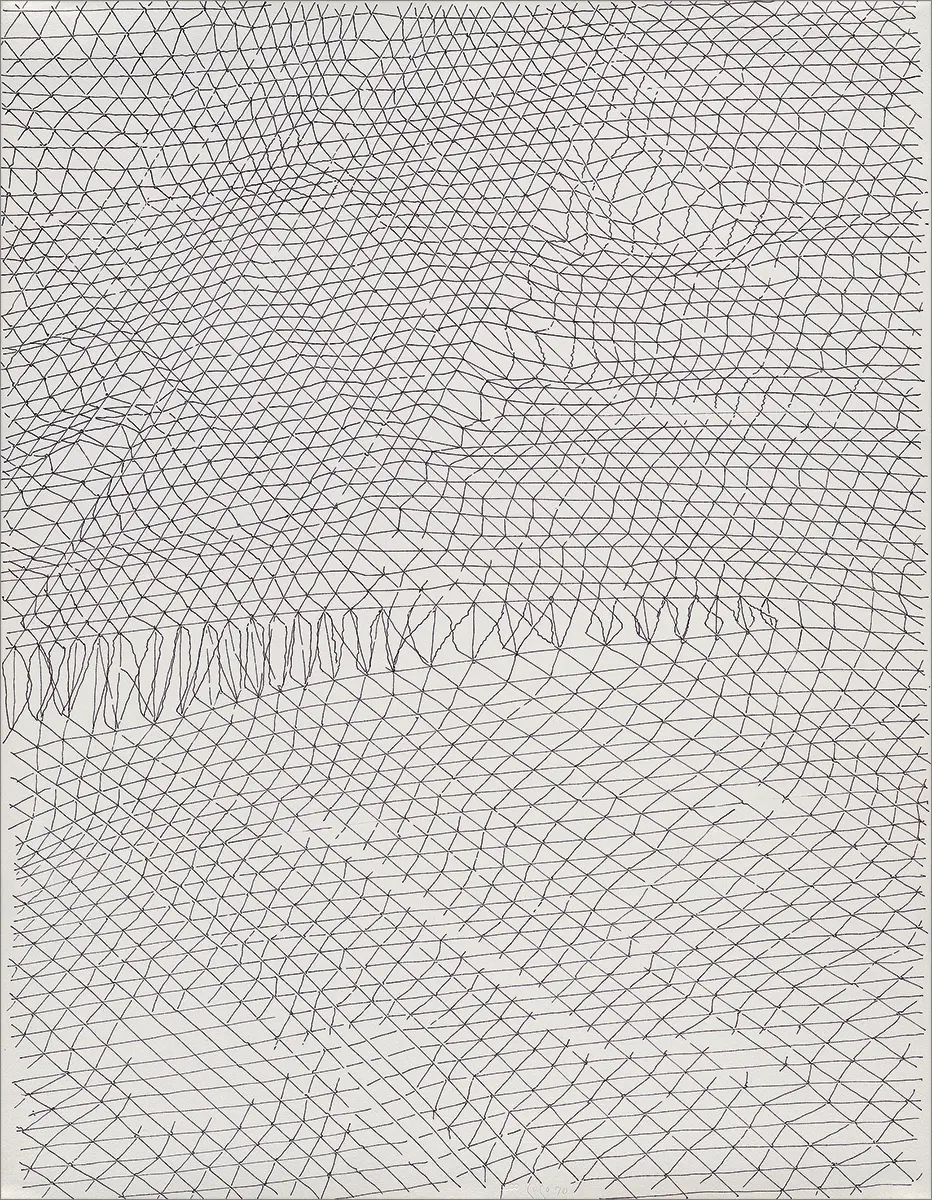
F.B.: Later on we encounter more Latin American inclusions, in the galleries devoted to minimalism and post-minimalism.
L.P.O.: In this case, these are three Brazilian works: a bicho, Lygia Clark’s Relógio de Sol (1960,) very important; Hélio Oiticia’s Relevo neoconcreto (1960,) a monochrome painting done as a counter-relief, and a bólido, also by Oiticica, Box Bolide 12, ‘archaeological (1964-65,) perhaps one of the few large-scale bólidos, which was acquired by Patricia Phelps de Cisneros. As you see, Patricia Cisneros, who has been an extremely generous trustee and a promoter of MoMA’s new Latin American initiatives, donated eight pieces, of which six are currently on display, including these pieces by Hélio Oiticica and Lygia Clark, a very beautiful Gego that is not currently on display, and an original piece by Argentinean artist Gyula Kosice, dated 1948, very interesting, which begins MoMA’s collection of Argentinean non-objective artists who until now were not represented in the context of the museum.
F.B.: I would even suggest that not only weren’t they represented in the museum; they were practically unknown in the United States until the Inverted Utopias show. 2
L.P.O.: Yes, totally. Inverted Utopias has been very important in the United States to unveil a number of Latin American movements and works that were not known in this country. I understand it proposes a new model for writing the history of Latin American post-Avant-Garde, and it would be desirable for all of us at the front of Latin American initiatives in this country, that instead of competing so ferociously, we should collaborate in the quest for a better understanding of our own art history.
F.B.: Tell us about the acquisitions that have occurred in drawing, architecture and design, and photography.
L.P.O.: Exhibited in the show of recent acquisitions organized by the “Twenty-First Century Art Fund,” where all the museum departments contribute to the process of acquisition of contemporary works, are some Latin American pieces: one by the Campana brothers, Corallo Armchair (2004); Mary’s Cherries (2004,) a video-installation by Argentinean artist Mika Rottenberg; a series of drawings by Brazilian artist Rivane Neuenschwander, Zé Carioca no. 4, A Volta de Zé Carioca (1960), Edição Histórica, Ed. Abril (2004), inspired by the story of Zé Carioca and created by Disney in the 1940s in order to have a Latin American character in his comic strips. Rivane has eliminated the characters from all the stories, leaving only the empty spaces and the dialog bubbles, and maintaining the specificity of the chromatic quality of the comic strip she uses. The earliest ones, for instance, had paler colors, and then those of the 1960s, like the one acquired by MoMA thanks to an initiative by Gary Garrels, had brighter colors, colors that were closer to Pop art. The series includes all the vignettes, and the museum acquired one of them.
F.B.: I think that one of the great successes in the inclusion of Latin American artists was seen in the photography exhibition, which included Álvarez Bravo’ Maniquís riendo (1930) and La mamá del bolero y el bolero (1950-59) alongside Cartier-Bresson; a selection from Ana Mendieta’s Untitled (Facial Cosmetic Variations) (1972,) exhibited together with the series of portraits; and especially Vik Muniz’s Mass from the series Pictures of Chocolate (1997.)
L.P.O.: Certainly, the photography collection, like the Prints and Illustrated Books collection, is enormous. Communication between its chief curators, Peter Galassi and Deborah Wye, and I has been excellent. Recently, Peter Galassi acquired one of Geraldo de Barros’ original photomontages, for instance. Deborah Wye has recently completed the representation of Gego’s graphic oeuvre, and I think I can say that today MoMA has the best collection of graphic works by Gego outside of Venezuela. The drawing galleries do not allow for an extensive display of the collection, which is why the inaugural exhibition was done in three chapters. The first chapter, which is probably what most of the public saw, included works created between 1880 and 1945, and was curated by Jodi Hauptman, Acting Chief Curator in the department; the second chapter, currently on exhibit, comprised of works between 1945 and 1975, was curated by Gary Garrels, Chief Curator in the Drawings Department until last May, one of the most tireless and brilliant Latin American art enthusiasts in the museum; the third chapter, to open in September, is curated by Jordan Kantor and comprises works between 1975 and 2005. In all of these chapters, the presence of Latin American works has been the object of careful consideration. In that sense, I must publicly acknowledge Gary Garrels’ solidarity with and support of my efforts as adjunct curator.
In the Architecture and Design galleries, there is a monographic thematic show documenting the project of a pedestrian walk that is being built over an old railway that traverses New York from North to South, on the West Side. Here are the projects that include photographic renditions of the site as it exists today, and the different proposals of what it will become. Also included are projects by famous modern architects who worked on this idea. One of the most important drawings is the project for a hospital in Venice, never built, by Le Corbusier and Julián de la Fuente, the Chilean architect. The drawing, essentially by De la Fuente, is marvelous.
Many of my Latin Americanist colleagues criticize the museum as a Eurocentric, de-contextualizing institution, and they often ignore MoMA’s longstanding vocation: to present international modern art and to do it through a series of contextual dialogs. I don’t believe it is realistic, or even positive, to expect the museum to cease being what it has always been, but nobody can deny that the institution, led by Glenn Lowry, has opened itself up to a critical reconsideration of its own past, and is ready to establish a dialog, to excel, and to share.
F.B.: For many years, we have argued, without detracting from the work’s or the artist’s identity, for the inclusion of Latin American art in the global context.
L.P.O.: I accepted the museum’s invitation to work among its curators because that is precisely what I believe. It is a way to reveal for ourselves the moment in which we live, and also a way to understand each other with a broader gaze. In the drawing exhibition that is currently on display, for instance, there is a León Ferrari from 1962, Sin título, which we acquired thanks to Gary Garrels’ support, his persistence, and his commitment to Latin American drawing of the 1960s.
He included Mira Schendel’s 1964 Untitled (Red) and Untitled; Gego’s Sin título (1970,) as well as a recent acquisition of six collages by Lygia Clark from the late 1950s, the original and inventive moment of the modulated surface. He included a metaesquema by Hélio Oiticica, a gift from Patricia Phelps de Cisneros in honor of Paulo Herkenhoff, my predecessor in charge of MoMA’s Latin American affairs.
F.B.: I understand that the Print and Illustrated Books department is one of the departments with the most Latin American works in the museum.
L.P.O.: I believe there is a moment of extraordinary graphic art production in Latin America. I think the acquisition of graphic pieces is easier because it is less expensive and because their circulation is also easier. It is likely that the tight network of professional printers made it possible for Latin American artists to work with important American printers. I’m thinking, for instance, of Gego, who worked at Tamarind Institute in the 1960s, and whose entire production from that era is now at MoMA.
F.B.: Although the museum’s contemporary-art galleries are in transition between exhibitions, I want to mention here the Latin American artists who were included in the re-opening show: Doris Salcedo, Félix González-Torres, and Gabriel Orozco. To what degree is it increasingly more difficult, not only for MoMA but for any museum, to articulate a vision of the Latin American with those unique pieces, inasmuch as there are ever more artists and more opportunities in the context of globalization? How does MoMA handle the inclusion of Latin American artists in the contemporary field?
L.P.O.: An excellent and very interesting question. It seems to me that we at MoMA need to engage in a revision of modern art and to make justice to figures that weren’t included in their time and that must be included now because otherwise, we will not have a correct understanding of modern art. In terms of contemporary art, I think geographic distinctions are less and less relevant, and those artists are not included there because they are Latin American, but because they are part of a global landscape of contemporary artistic production. The Vik Muniz you saw in the Photography department was not purchased with the notion of representing a Latin American artist. It was purchased because it is a Vik Muniz, in the same way, we purchase an Andreas Gursky. Let’s say that there is an inevitable space for globalization in our perspective of contemporary art. Also, many of the Latin American pieces in the museum were acquired following a similar formula. You read Alfred Barr’s documents in his attempt to buy a Pedro Figari in the late 1920s or the early 1930s, and you realize that Barr saw Figari’s work as relevant for that moment. Similarly, the work of the Mexican muralists is in the museum because Abby Rockefeller collected them as contemporary artists relevant to their moment and because that’s how they appeared from the vantage point of the American scene at the time, and when she donated her collection in 1935, these works became the start of the history of MoMA’s Latin American collection.
To the degree that the modern is already a category, there is the added responsibility of looking again at things retrospectively, re-evaluating the gaze of the past, and correcting it from the perspective of the present. For instance, for whatever reason, the museum never included any examples of Argentinean non-objective art. The war ended, this country’s economic potential is directed towards the reconstruction of Europe, and for a period of six or seven years the acquisition of Latin American works stalls or slows down considerably. This explains why the museum does not own any works that exemplify the explosion of the Madí group or of Argentinean concrete art.
F.B.: So, the perspective of contemporaneity has always existed in MoMA’s way of collecting.
L.P.O.: Yes, of course. I would say that today there are two perspectives: a perspective of historical retrospection that re-judges the gaze of what was acquired at a given time as contemporary art, and which seeks to fill significant gaps in the collection; and, in parallel, the natural process of collecting at MoMA, which has always been to acquire works that are considered relevant at the moment of their acquisition.
NOTES
1. At the time of this interview, the galleries held the displays conceived for MoMA’s reopening on November 15, 2004; they might have changed since then.
2. Birbragher, Francine. “Utopías Invertidas. Arte de Vanguardia en Latinoamérica”. Museum of Fine Arts, Houston. ArtNexus No. 54 – Oct. 2004
* All images illustrating this article are courtesy of The Museum of Modern Art, New York.
FRANCINE BIRBRAGHER
Art historian and critic. Editorial advisor for ArtNexus.