
For María Elvira Escallón, in the beginning, there was painting. A kind of painting that generated the connecting threads that brought her to her works of recent years. In those images—the result of several layers of paint, carved in order to finally reveal a spatial continuity of diverging shapes—a central element of her exploration appeared: the possibility of connecting two apparently antagonistic ideas, such as construction and destruction. She also explored the notion of process, which drove her further away from a conception of art as the creation of closed, permanent objects.
In pieces like Marcha reveladora (Revealing March),1 Escallón plays with the superposition of images that confront us daily, from such diverse angles as the pictorial, advertising, electronic, and industrial media. There she offers guidelines regarding the notion of process alluded to earlier: “I think of the image as a live, moving organism that incorporates elements as it moves forward, while at the same time generating and seeking a territory so that when it is displayed the viewer finds it at a moment in its trajectory or its journey.”2
The quests thus enunciated arrive at an excellent concretion in In Vitro,3 which results from a particular appropriation of the Estación de la Sabana space, an abandoned Bogotá train station now used as an artist’s salon.
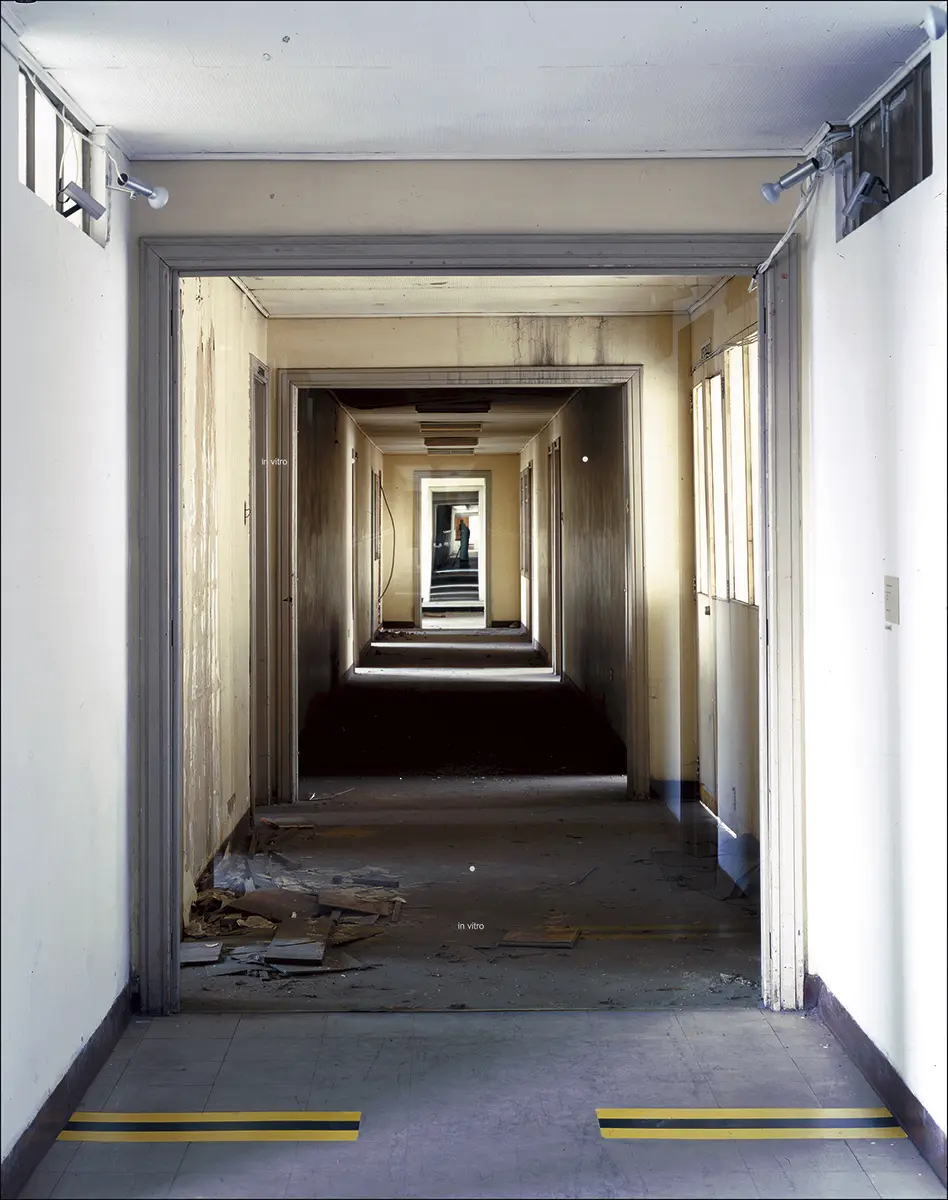
The building’s state of dereliction was temporarily covered up for the show. After arriving at the station and verifying the condition of some of its spaces, Escallón felt anguished by the desolate location that, rather than facilitating movement, remained mute and lead nowhere. Her intervention consisted of bringing to the fore things that were hidden, things apparently salvaged. A long corridor inhabited by a series of frames told a story of dereliction, with a thick layer of dust and scattered trash as witnesses to the passage of time. The corridor was closed by a mirror that repeated the image of the space and at the same time captured the viewer, who was reflected there but remained unable to enter, since a glass sheet placed inside the wooden frame that would have functioned as an entryway turned the corridor into a scene for contemplation.
Almost invisible, Escallón’s intervention showed the artist’s ability to render a hidden reality visible, one where it was possible to discover, in that perception of superimposed layers, the idea of a re-elaboration of the notion of painting.
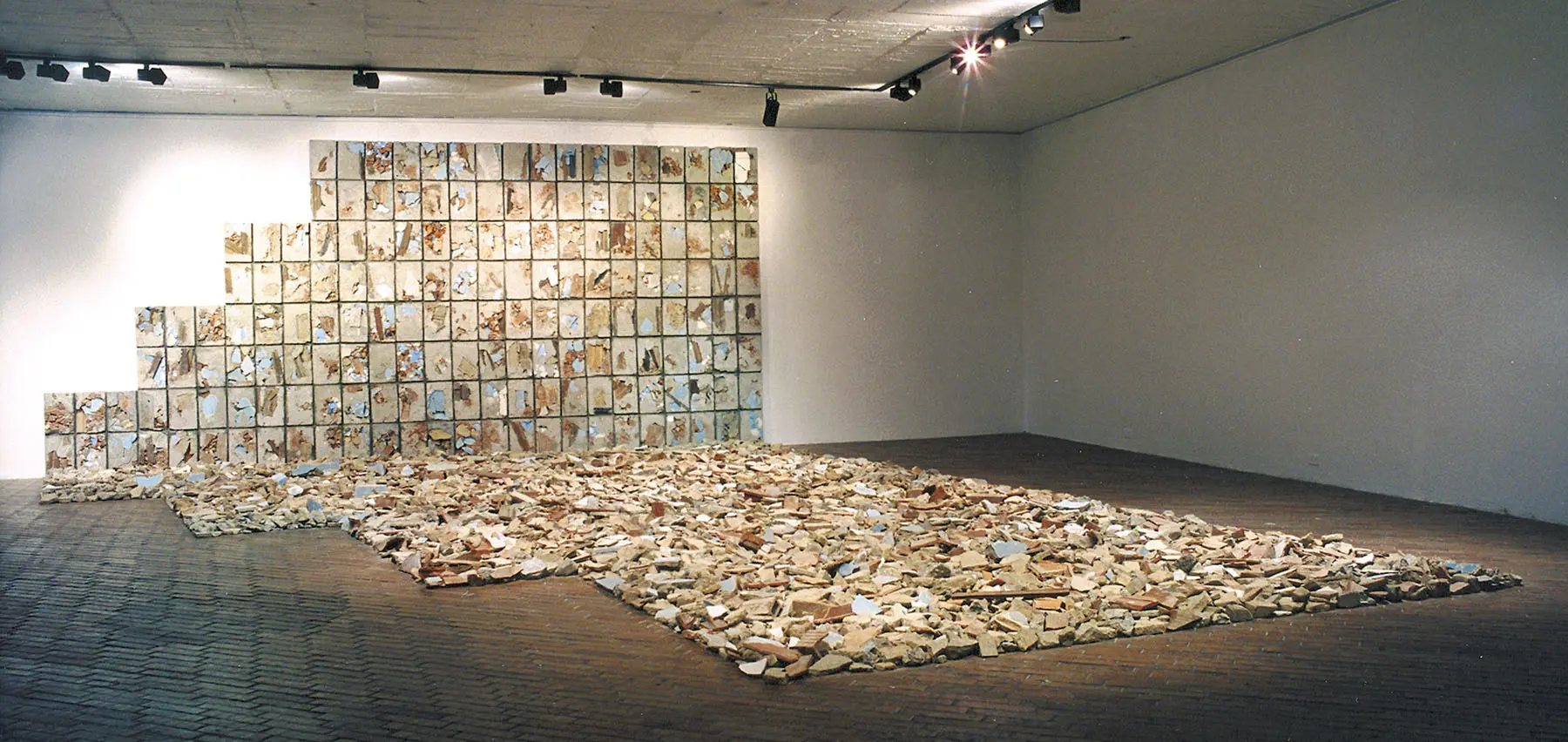
Escallón continued to explore the relationship between the real and the constructed that appeared in In Vitro in El reino de este mundo (The Kingdom of this World, 1999–2000). Her investigation started with the intention of working with debris and building from it, once again interested in that dialectical relationship between destroying and building. The materials she located belonged to a demolished house in a popular Bogotá neighborhood, and the resulting piece was a wall built using cement blocks made by the artist, to which she added the material from the house, thus leaving exposed the memory of her materials. On the ground she placed some debris as it had been found in the location, projecting a kind of shadow on the wall. But parallel to this construction, which could have remained at the level of a mere formal exercise, a different story registered.
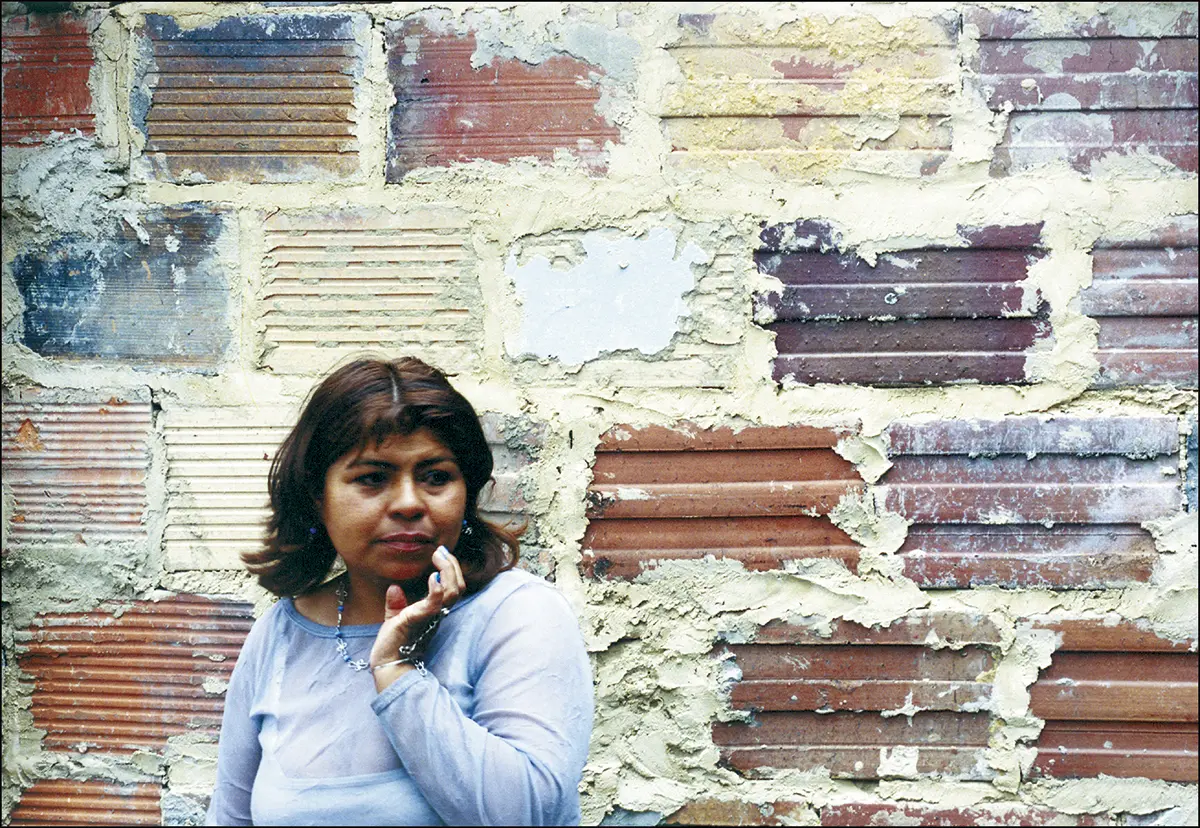
Inside the exhibition gallery, Escallón placed a text that began: “amid the demolition, I sought a signal that would tell me I was on the right track. That is when Fanny appeared.”4 The text relates the encounter among the ruins between the artist and Fanny, who told Escallón how, unable to afford the rent for her house, she decided to build herself a home in a lot she owned. The material she used was the bricks from that torn-down house, which she cleaned one by one.
Through a slow and painstaking process of recycling, Fanny was able to build new walls and create a space to be her home. Fanny’s presence, the narrative of her situation, and the use she made of the material cannot be seen as mere anecdotes. Escallón’s work and this woman’s home were both created using debris. They are two different uses of the same material, initially considered trash; two parallel stories linking the real and every day to the artist’s work, with the distinction that both of them, coming from such different experiences and milieus, built on the foundation of the previously destroyed. Thus art and everyday life meet.
Another element of Escallón’s investigation manifest in the works mentioned above is space, which plays a central role to the point that in In Vitro the artist’s actions are almost invisible and become signaling, a thematization of place.
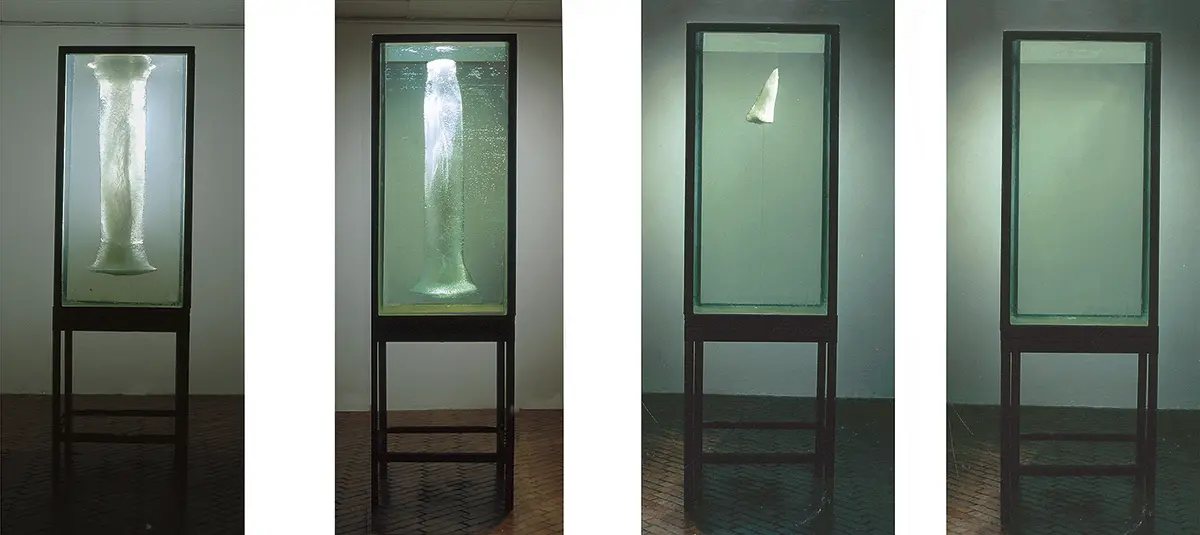
In In Memoriam,5 the relationship between space, sculptoric form, and material behavior was in constant play. It consisted of an urn made of metal and glass and filled with water. Inside it, Escallón placed a Doric column made of ice, 125 x 40 cm, which melted over a 20-hour period. Several reflections are connected in this piece. On one hand, it depicted a body that dissolves and disappears into its own essence, since melting ice returns to its original element: in the end all that remained was water. This interest in the behavior of matter refers us to some of the experiences carried out, in a similar vein, by artists linked to arte povera in the 1970s.
On the other hand, the solid sculpture containing so many cultural references underwent a change and lost its boundaries. The impeccable column of the early moments of the process changes uncontrollably, melting in front of our eyes.
The passage of time constituted an important component of In Memoriam, and it was to be revisited, from a more complex and less predictable perspective, in Nuevas Floras.6 The piece began with an investigation of dissonant images and used digital processes that run the risk of turning into mere ticks of the kind allowed by software such as Photoshop. The processing of matter as a surface that admits contradictions brought her to intervene directly in nature; there are no simulacra there because the matter in its natural state continues to undergo transformation.7
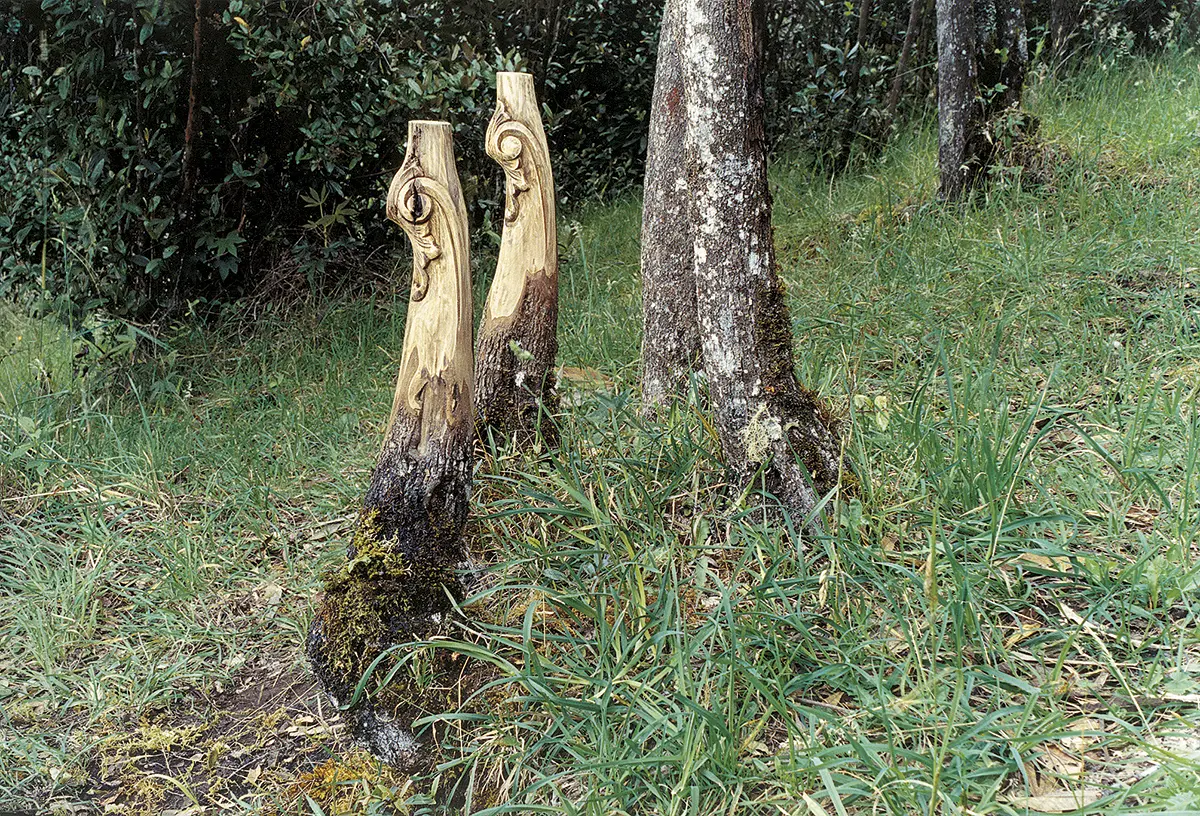
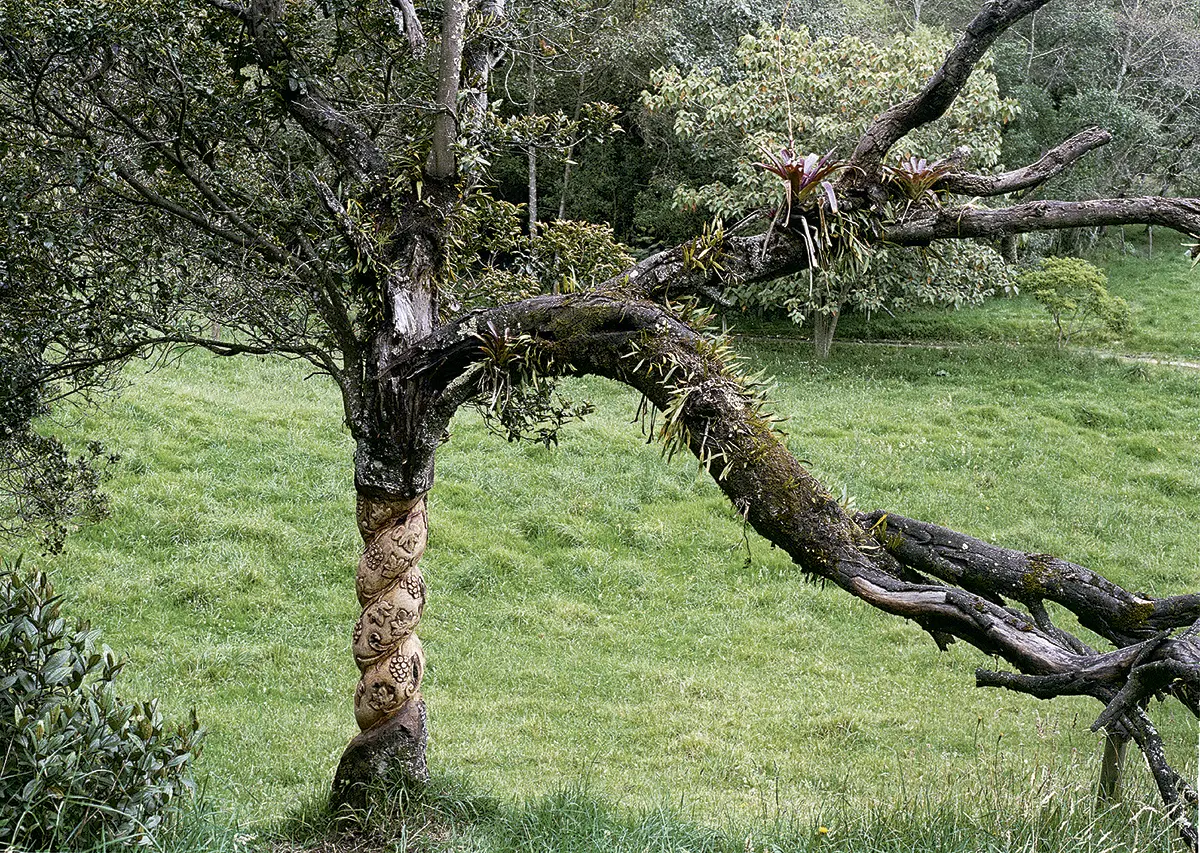
These were not, therefore, fictions; she worked on trees, on living beings, which places us far from being able to establish a logic that would fit inside dreams—we are talking about real, tangible nature. The process consisted of acting upon six trees in a native forest in Sopó, a town near Bogotá. These forests comprise a variety of small-bodied species of trees, suitable for intervention. On their trunks and branches, Escallón made grafts and carvings—inspired by the tradition of wooden furniture—in the architectural and decorative shapes that can for instance be found in the ornamentation of colonial-era altarpieces. According to Escallón, her carvings were based on architectural canons such as columns, and on wooden furniture designs, which often include plant motifs. Her intervention of a willow, a non-native species, is the only one based on the cube, a geometric body that is alien to nature.
Our simple description of the process may obscure the complex planning required that involved botanical studies, interviewing more than 25 carvers, and photographing the results.
Each tree intervention was done with a carver who worked only on one side of the branch or trunk because the precaution of preserving the bark around the plant allows the sap to continue functioning. The wound inflicted on the plant did not mean its death. The trees’ receptivity to these interventions implied that the project was carried out over time. The early registers capture the initial situation, but the artist intends to give them a photographic follow-up over months and even years, in order to see how the trees process her intervention. Escallón believes that they won’t recover their initial shape, but that dialogue will take place between the carving and the biological rhythm of the tree’s growth.8
Escallón’s proposal works with a traditional topic of artistic practice, such as landscapes; it involves the concept of sculpture, and it makes reference to earth art inasmuch as what is being acted upon is a territory.
The construction of live sculptures takes us back to the elaborate artifice of nineteenth-century French topiary gardens where trees and bushes were trimmed into whimsical geometric shapes. Another referent is the Japanese technique of bonsai, which turns plants into dwarf versions of the original by intervening to curtail their growth.
By involving all these possible approaches in their relationship to nature, the work prompts multiple readings. As José Roca puts it, “Escallón accomplishes a highly complex work that with its singular action temporarily interrupts the natural course of events.”9
Another aspect is also contemplated: the cultural relationship between man and nature. In this case, Escallón proposes a reflection about a transit we often overlook: the transit from tree to object, with the particularity that here the carving, referring to known ornaments, does not have a practical function; they remain alive and can themselves over time alter the artist’s intervention. The abrupt cut between the tree trunk and furniture disappears as a usually unperceived process is visualized. The transit from a tree, a living being, to an everyday object, makes evident the modifying role that man and his cultural practices play in nature.
Nuevas Floras comes to us as the photographic register of a series of live sculptures that tell of how man uses nature. One question Escallón poses is: What are the boundaries between the animal and the natural? With her work, a nature that is acted upon but remains in its setting, accessible to our gaze through the photographic register, makes explicit the way in which the natural order can be and is manipulated by man.
Photography and video are at the center of her more recent work. In Desde adentro (2004), Escallón posits an emotional encounter with the space in which she worked until it suffered partial destruction as the result of an attack with a high-power bomb. “... As the person responsible for the institution’s art collection, I had to go inside to verify the state of the collection... As I worked on this I understood it was necessary to register and commit to memory what I found around me. The authorities had closed the building off until that moment. Everything was as still as it had been left after the explosion as if time had frozen in its tracks. Darkness was complete and a black veil of soot-covered walls and objects.”10
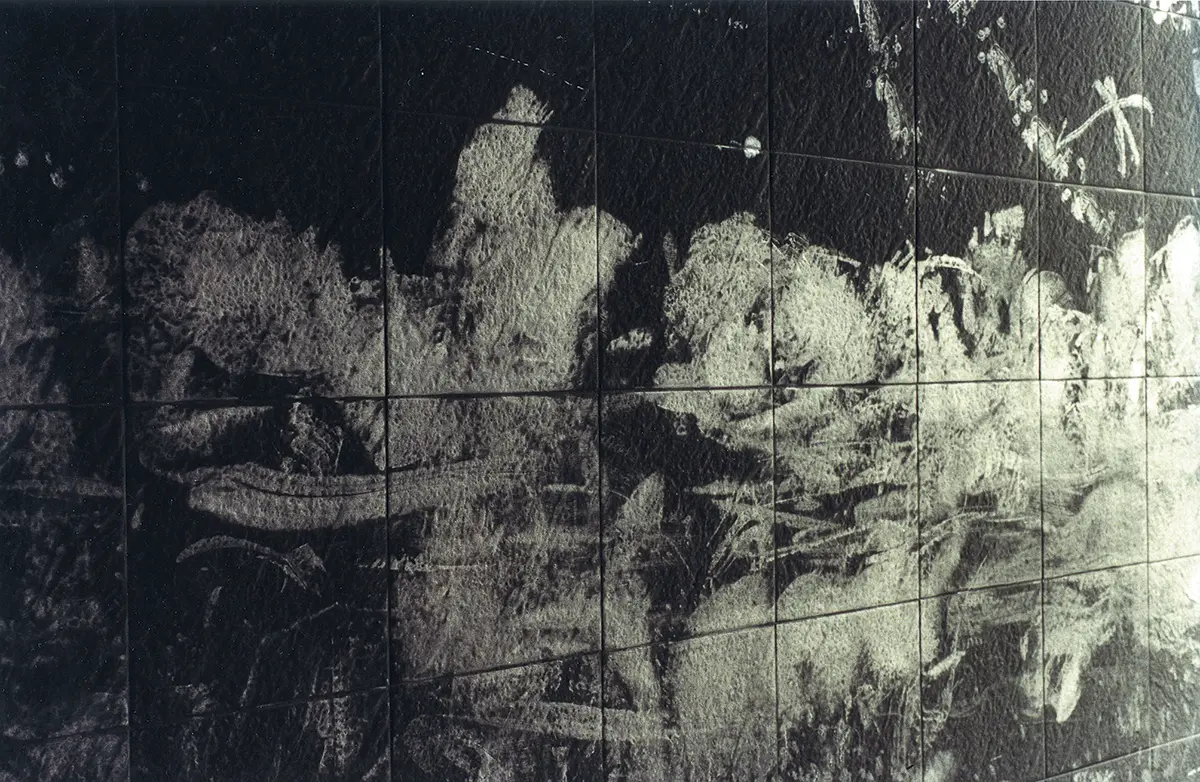
Despite the media coverage the event had in Bogotá, and despite the multiplicity of registers, Escallón is able to reveal to us a world of images never seen in the press, the dramatic testimonies of the horror. She rescues a memory that shows fragments of a reality filtered through unknown or forgotten images. There are no characters, only their traces shown in eleven photographs blown up to life-size scale. The scale brings viewers in, involving them directly in the work, acting as it does so as the mute register of a space where, in the end, all that is left are the traces of those who inhabited it at the time of the attack, traces left on the blanket of soot created by the fire. The photographs reveal the final movements, and the desperate gestures of people fleeing the flames, and also show evidence of missing objects whose imprint was left on the walls.
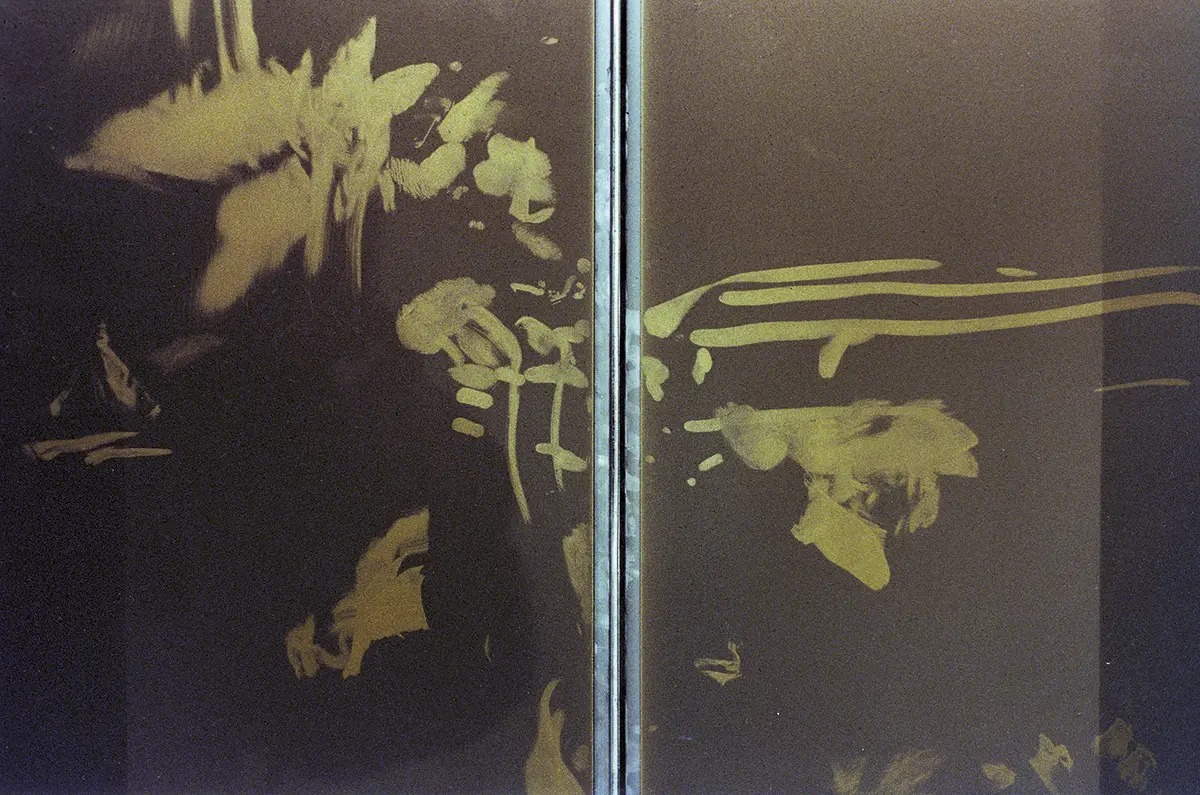
This presence of an absence of people and objects that populated the site bears silent witness to what happened there. They are a document, preserving memory by building it, not as a simple memorial referent of a past event but, in an attempt to sensitize the viewer to that event, bearing witness and bringing it into the present. They go beyond the immediate and become images destined to last in their observers. They are also the result of the artist’s experience of entering into contact with destruction and recognizing there the signals she finds in everyday surfaces like walls, stairs, and doors. To identify those places, to register those traces is to speak of the fear and the impotence of those who were there; it is to go beyond mere material destruction.
The photographs are accompanied by a 12-hour real-time video; it starts at 5:40 am, in darkness, and it ends at 6:40 pm, also in darkness. It has not been edited and is projected at a 1:1 scale. It is a single shot of the wall of the main lunch room, where we can see the outline of absent objects. The light slowly bathes the scene and the incessant sound keeps pace with the movement of the street, which is traversed by the city’s usual clatter. Inside time is still, immutable, varying only through light; outside restless time is coursing.
Special mention needs to be made of the space chosen for the show. It is an old theater, the Olympia, now abandoned and about to be demolished, its site destined for an office tower. The show is the last act to be held in this locale, an imposing structure in spite of being devoid of its function. It is a white, ghostly environment, the precise container for the world of destruction displayed in Escallón’s photographs and video.
The duality of building/destroying appears once again, and our encounter with a dramatic event like the one registered in the photographs of Desde adentro becomes a document free of political pretensions with regard to violence; what Escallón is trying to show is the suffering of those who were there, leaving as testimony the traces she brings to the fore.
María Elvira Escallón’s works present a marked formal heterogeneity while also displaying a connecting thread: her reflection on the boundaries that separate the natural from the cultural.
NOTES
1. Mancha reveladora, 1995. Painting, photograph, and digital print, presented at the XXXVI Artists Salon, Bogotá, 1996.
2. María Elvira Escallón, quoted in the catalogue of the XXXVI Artists Salon, Bogotá, p. 134.
3. In Vitro won a prize at the VIII Regional Artists Salon in Bogotá, 1997.
4. El reino de este mundo was presented at the Museo de Arte Moderno, Bogotá 2000.
5. In Memoriam was presented at the VII Bogotá Art Biennial, 2000
6. The artist submitted Nuevas Floras for the Luis Caballero 2003 Award, which she won.
7. The artist in conversation with the author, Bogotá, September 2004.
8. Ibid.
9. José Roca, María Elvira Escallón, Nuevas Floras, exhibition catalogue, Bogotá 2003.
10. Exhibition didactic text by María Elvira Escallón.
IVONNE PINI
Executive Editor for Arte en Colombia/ArtNexus. Art historian and critic. Professor at Universidad de los Andes and Universidad Nacional, Colombia.