
Historically portraiture has been one the most challenging of genres. In the categories of subject matter in painting that emerged after the Renaissance, the depiction of an individual was thought to be more difficult than still-life and landscape but not as demanding as history painting. The differentiation had to do with the notion that although the landscape was animate as opposed to still-life —or its original French appellation of nature mort or “dead nature,”— neither of these genres concerned the actual portrayal of a person, let alone a tableau from history, whether secular or religious, that was devised in the imagination of the artist. In other words, the depiction of an individual was considered a much more ambitious task than landscape or still-life for not only is each person unique, but the able portraitist was expected to extrapolate the psychological and emotional demeanor of the sitter. But portraiture is more than just verisimilitude, because willingly or not, it also captures the social, cultural, and historical dynamics of the given era of which the sitter and the artist are a part. That is why certain forms of portraiture have particular formal qualities and characteristics, as well as the various contexts that engender portraiture and in which it operates. And here I am not only referring to the type of portraiture where the political dimension is more overt, as is the case with Casta painting, for example. This debated category of portraiture glossed over the sitters’ individual traits and instead was used as a system to chart New World miscegenation.
What does seem to unify the many strands of portraiture, at least in how it has been conceived in the West art historically, is that the subject depicted should be true to life. But this approach, generally called mimesis or naturalism, is undermined by the realization that the face is anything but natural; this is especially so when it is literally and metaphorically clothed in meaning. A hand, for example, is much more than just a hand, a simple fact that was lost to a recent unimaginative exhibition on the same subject. On closer inspection, a hand may be calloused from manual labor or manicured to the degree that both examples betray social class. This certainly holds true for the face as well, for in the depicted visage are myriad signifiers that subsequently layer a portrait with a multiplicity of meanings that are cultural, social, and gendered: a specific type of coif, makeup, facial jewelry, etc. This is made even more complicated by means of other elements that appear in a portrait such as attire, and in turn is compounded by the picture’s context, which sometimes is not directly evident in the work itself: while the use of racial classification as an extension of colonialism is discernible in Casta painting, social commentary is much more subtly inscribed, for instance, in Vik Muniz’s Sugar Children. The recent exhibition at El Museo del Barrio not only offered an encompassing view of portraiture in South America that spanned some 2000 years but also questioned the rubric by including works that expanded the genre in numerous directions.
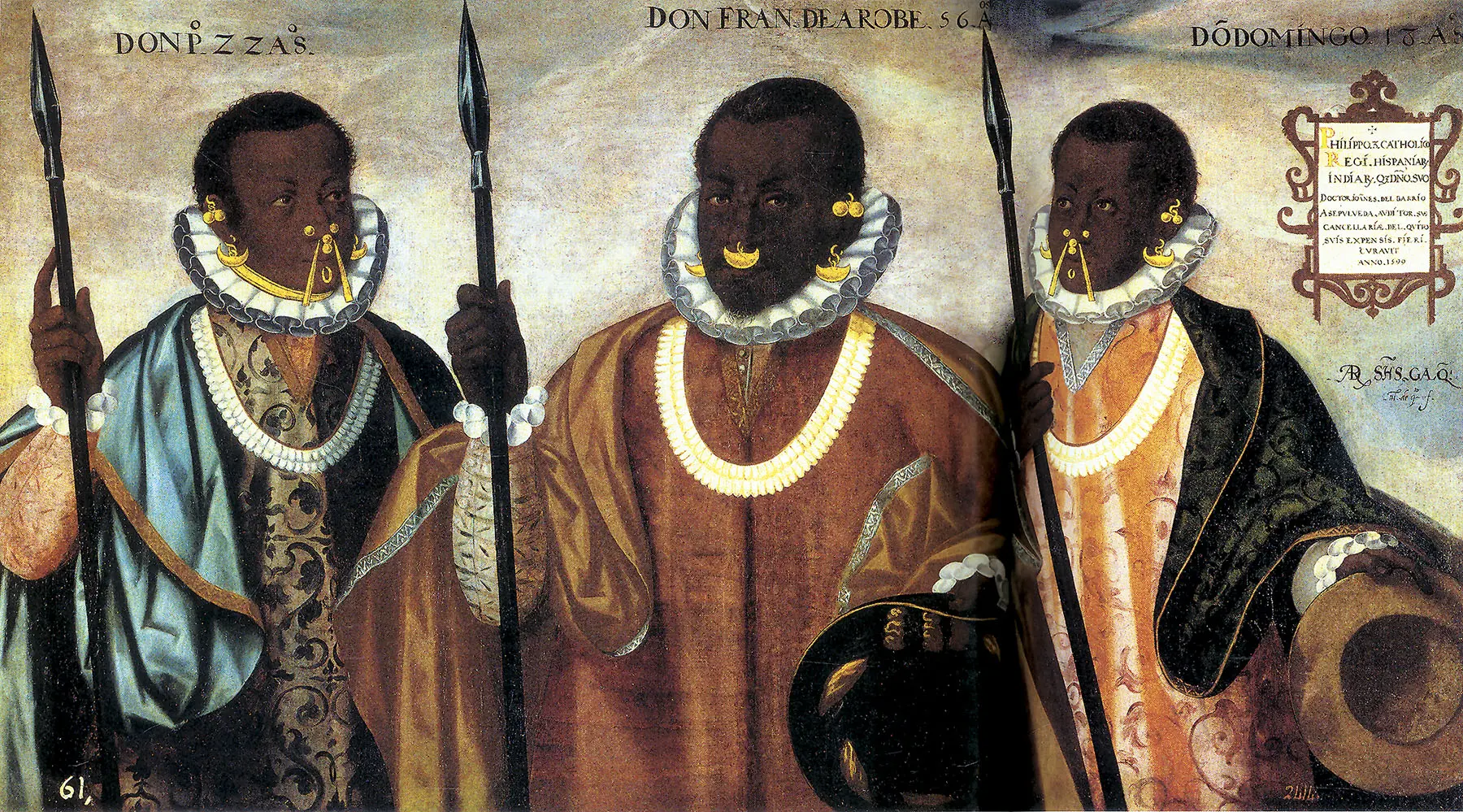
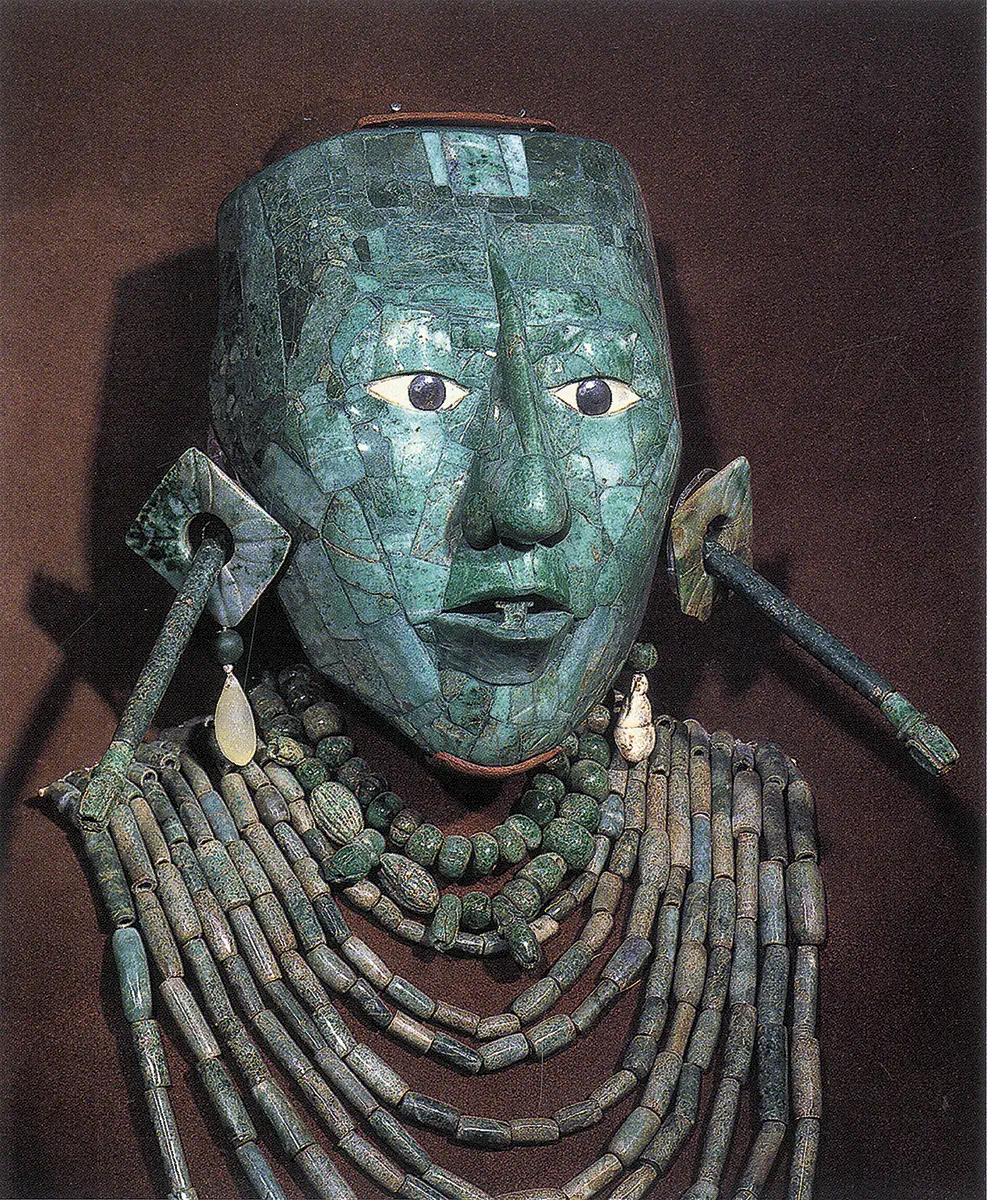
Titled Retratos: 2000 Years of Latin American Portraiture, the exhibition was divided into the pre-Hispanic, the viceregal or colonial period (1492–1810), the nineteenth century (1810–1910), the modern period (1910–1980), and the contemporary (1980–the present). Fine examples of pre-Hispanic art were exhibited including the Maya and the Moche. Of these two cultures, it is the latter’s artistic tradition that comes closer to what we understand as true portraiture in the sense that the portrayed person ostensibly resembled what was rendered. This is evinced in the body of double and single spouted vessels dominated by faces that were grimacing, smiling, or laughing. The Moche artist’s attention to emotional detail underscores the probability that the faces were indeed faithful portrayals. In Maya sculpture, this becomes less tenable because what is categorized more often is a generic depiction. The well-known corpus of Jaina figurines, one of which was included in Retratos, are less differentiated facially and are more like ethnographic dolls that represent a broad social spectrum of Maya society. In the genre of monumental Maya sculpture known as a stela, moreover, Mayan lords are distinguished by glyphic writing and attire and accouterments, rather than corporeal features. There are, however, exceptions: a wonderful mask found at the burial site of Lord Pacal, the ruler of Palenque, is evidence of the Maya artist’s high level of naturalism as depicted in the nuances of Pacal’s softly modeled, sculpted face. And it is right at that moment of contradiction in the anomaly between the Moche and the Maya approach to figuration, that the historical authenticity of portraiture becomes apparent. Historically, portraiture is supposed to maintain a likeness to what is being depicted. In religious icons, the importance of the image resides not in the veracity of physiognomy, but in what the image conveys. A good example of how signifiers are more telling of the sitter is a fascinating picture painted in 1599 by Andrés Sánchez Galque titled The Mulattoes of Esmeraldas.
This incredible work is one of the highlights of the exhibition and is considered to be the first signed portrait in South America; because the work incorporates Old and New World signifiers it is either a clash of cultures or, in paraphrasing the erudite historian of sixteenth-century Mexico Serge Gruzinski, an exquisite example of “the first globalization.” The picture depicts Don Francisco de Arobe and two other companions descended from African slaves following a shipwreck off the shores of Ecuador. The ensuing convergence of African, indigenous, and Spanish cultures produced what was called zambo. This convergence is underscored by the vestments worn by the figures in the painting: refined Old World attire is fused with native New World facial fashion accessories. One can’t help but think that this very hybrid couture is a sort of globalization avant la lettre. Fusion was also part and parcel of other works in the exhibition but was given a heady, conceptual spin in the contemporary section of the exhibition in the photo-based works of Iñigo Manglano-Ovalle and Vik Muniz.
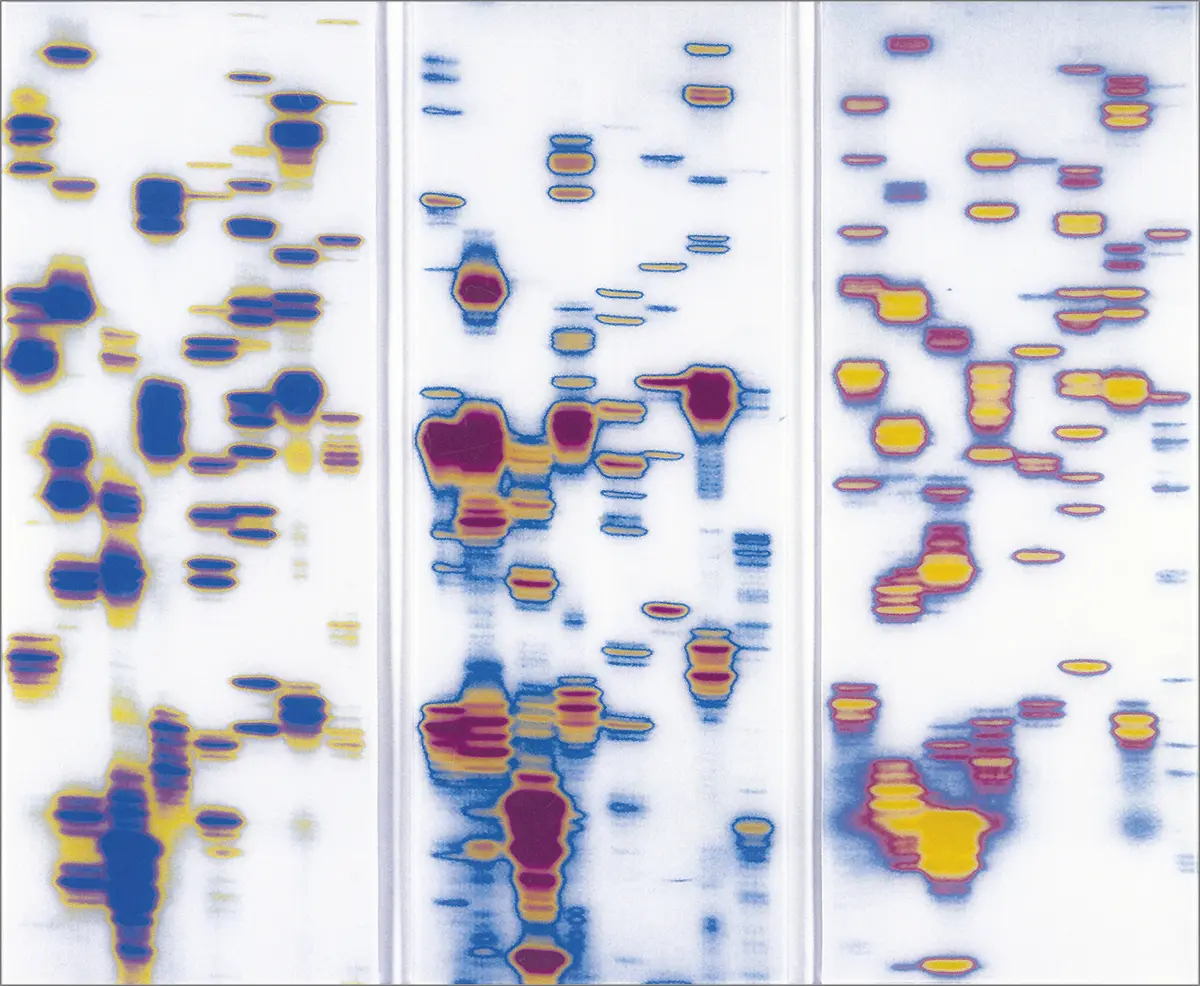
Manglano-Ovalle was represented with work from his Garden of Delight series. This group consists of triptychs of DNA samples that serve as “portraits.” In a sense, this extended the notion of portraiture to an ontological level, for there is nothing more distinct in the body than what differentiates it from another: its DNA. But the DNA pictures are made up of a mother, father, and child. Not only do they refer, in a roundabout way to Casta painting, but there is a subtext that interrogates the ostensible essentialism of cultural, ethnic, and nationalist categories from both within and without geo-cultural spaces of identity formation. The same conceptual modus operandi of Manglano-Ovalle that operates on an atomistic level also was intrinsic to two works by Vik Muniz.
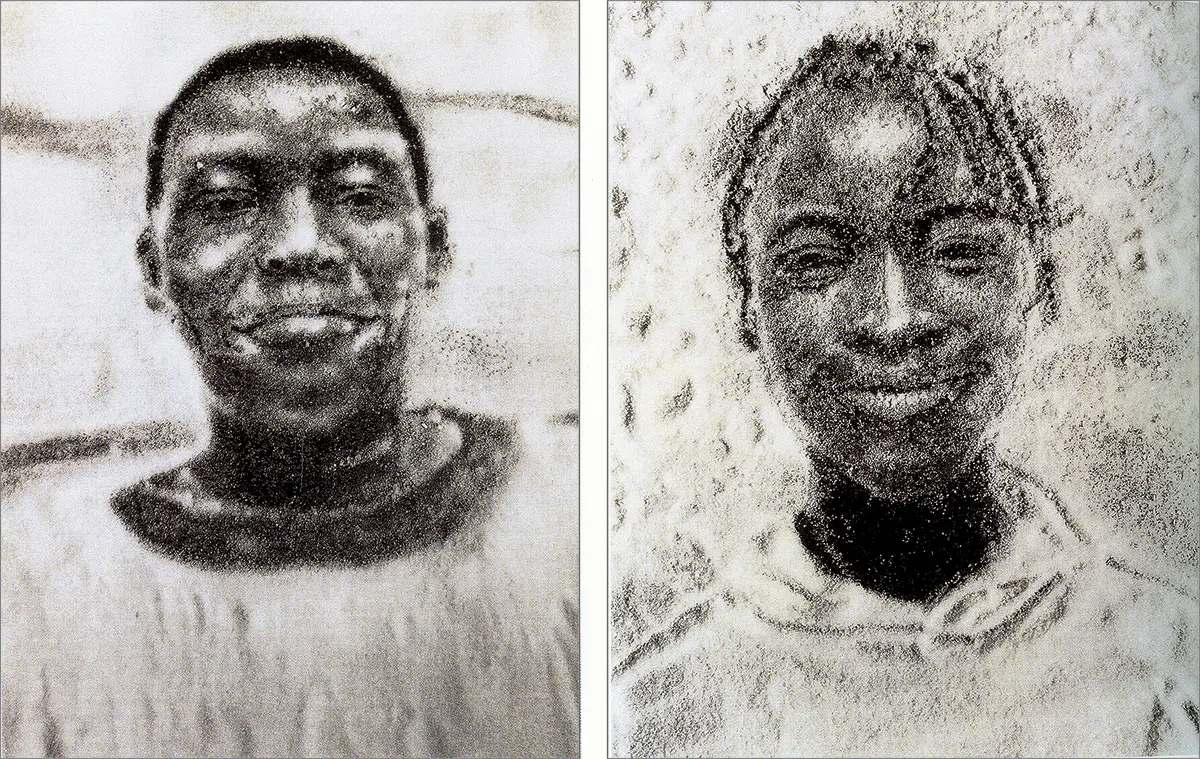
Muniz has garnered attention through his process of creating images from substances that are then photographed. The conceptual turn, however, resides in Muniz’s ability to marry form with content at a cerebral and poetic level. His image of Freud made from chocolate, for example, triggers a Pavlovian response in the viewer: the chocolate is so chromatically saturated and of such high resolution that one can almost taste it. The sense of taste as a receptor for art is as much a reference to Modernism’s so-called retinal-centrism as it is to Freud’s oral stage. But it is also about the anal stage; the viscosity apparent in the chocolate picture has a formal affinity to excrement. Continuing with this visual and semantic interplay is Muniz’s contribution to the exhibition: a picture from his Sugar Children series. In this body of work, images of the children of Brazilian sugar plantation workers are “drawn” with sugar and then photographed. As a commodity, sugar is part of a larger social and global economic circuit that obviously brings dividends to investors; yet the social disparity between the sugar worker and the commodities trader, both native and foreign, has never been so great. With Sugar Children, then, sugar becomes a bitter pill to swallow.
The complexity inherent in the works offered, whether pre-Hispanic, viceregal, modern, or contemporary, exemplified the strength of the exhibition, which nonetheless could have imploded curatorially by attempting to cover too much terrain. The organizers of exhibitions that span millennia sometimes may be undermined by their own intentions by not offering deeper analysis where it is not only merited, but absolutely necessary. And this could have been the case here, but by incorporating a team of curators who contained what might have become an amorphous exhibition and further anchored and steadied it with a finely produced catalog, the show certainly asserted what El Museo del Barrio is capable of being: an institution that can offer first-rate exhibitions.
RAÚL ZAMUDIO