
The Project Exhibition, with the work of Tomás Saraceno and Jarbas Lopes, opened on May 12 at the Collins Building (139 NE 39th Street) in the heart of the Design District and closed on May 29, 2005. This exhibition is the result of the Artists in Residence program of the Cisneros Fontanals Foundation, based in Miami. The Foundation was created in 2002 by Ella Cisneros, an art collector, and philanthropist, who is also the founder of Miami Art Central. The Foundation and MAC are housed in the same building.
Basically, the Foundation supports the work of young artists from Latin America, and the Artists in Residence program was established with this intention. It was announced in November 2004 and this is its first edition. The process of selection is done through a nominating committee and the foundation board makes the final decision later. The program offers a three-month stay in Miami to contemporary artists from Latin America living outside the States. The work created during this period is exhibited following the residency.
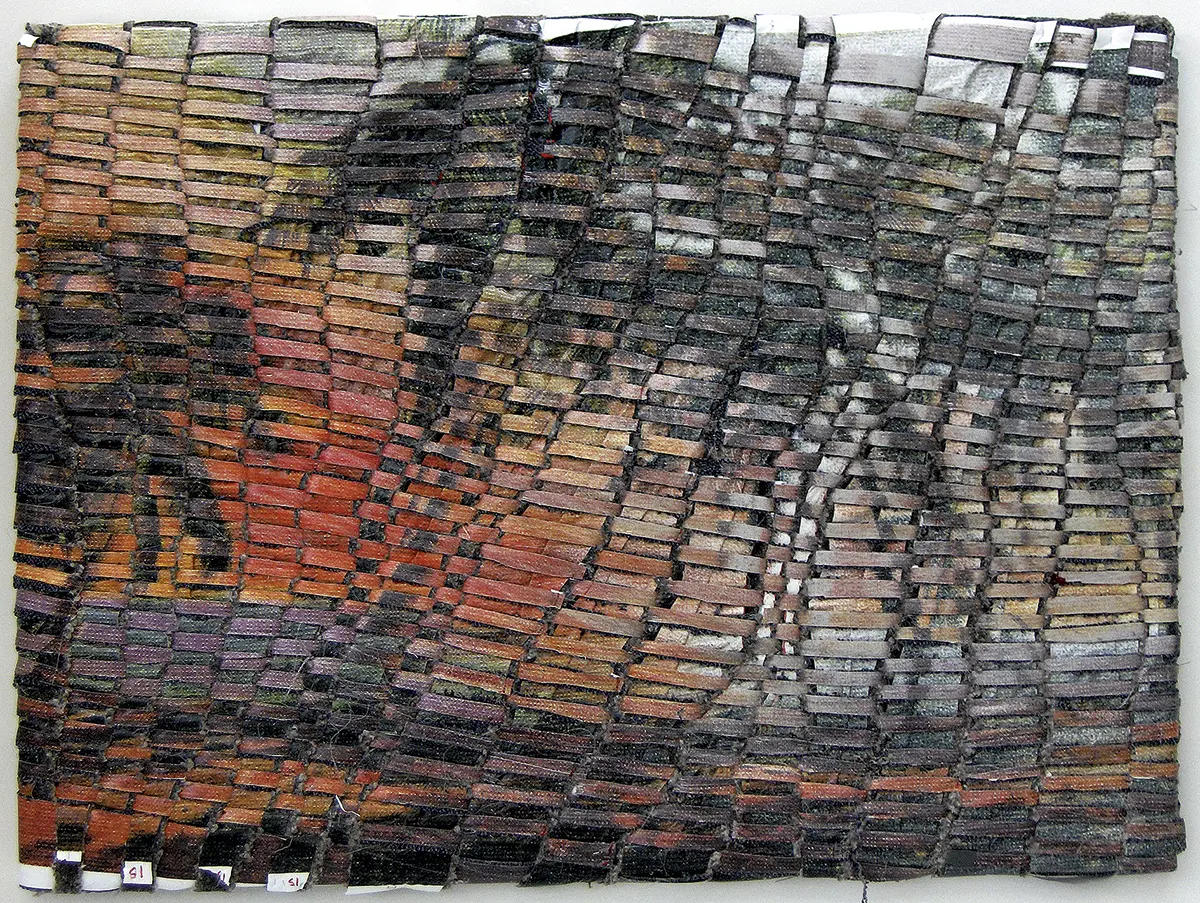
Jarbas Lopes (b.1964, Nova Iguaçu, Rio de Janeiro) is an artist known for the social connotations of his work, especially his projects where the public is actively involved. For his work as a resident artist with the Foundation, Jarbas selected a stereotypical image of Miami: the beach at dusk with palm trees and the lifesaver station. This kitsch conception of the tourist enterprise is very much in keeping with aspects of the life in the city and is a facet that is reflected in Jarbas’s works. Jarbas transferred the images to woven carpet surfaces. The result offers an optical effect of fragmentation and reconstruction of the image. This is his way of dissecting the reality of the city.
Another aspect of the city life that
attracted the artist’s attention –the Cuban exodus— has a social connotation.
The third woven piece was titled Rafters
and is a photograph of himself and Tomás Saraceno in a raft, his tribute to the
Cuban rafters.
Part of the residency program included traveling to Jamaica. While on the island Jarbas bought a bicycle and traveled around the country, getting to know the people. He completed a series of drawings, eight of which were included in the exhibition, along with the bicycle.
The last piece presented by this artist was Carpa de Gracia. This is a work in progress and is an installation of a tent built with inexpensive publicity materials for carioca music. Jarbas also did a performance within the tent.
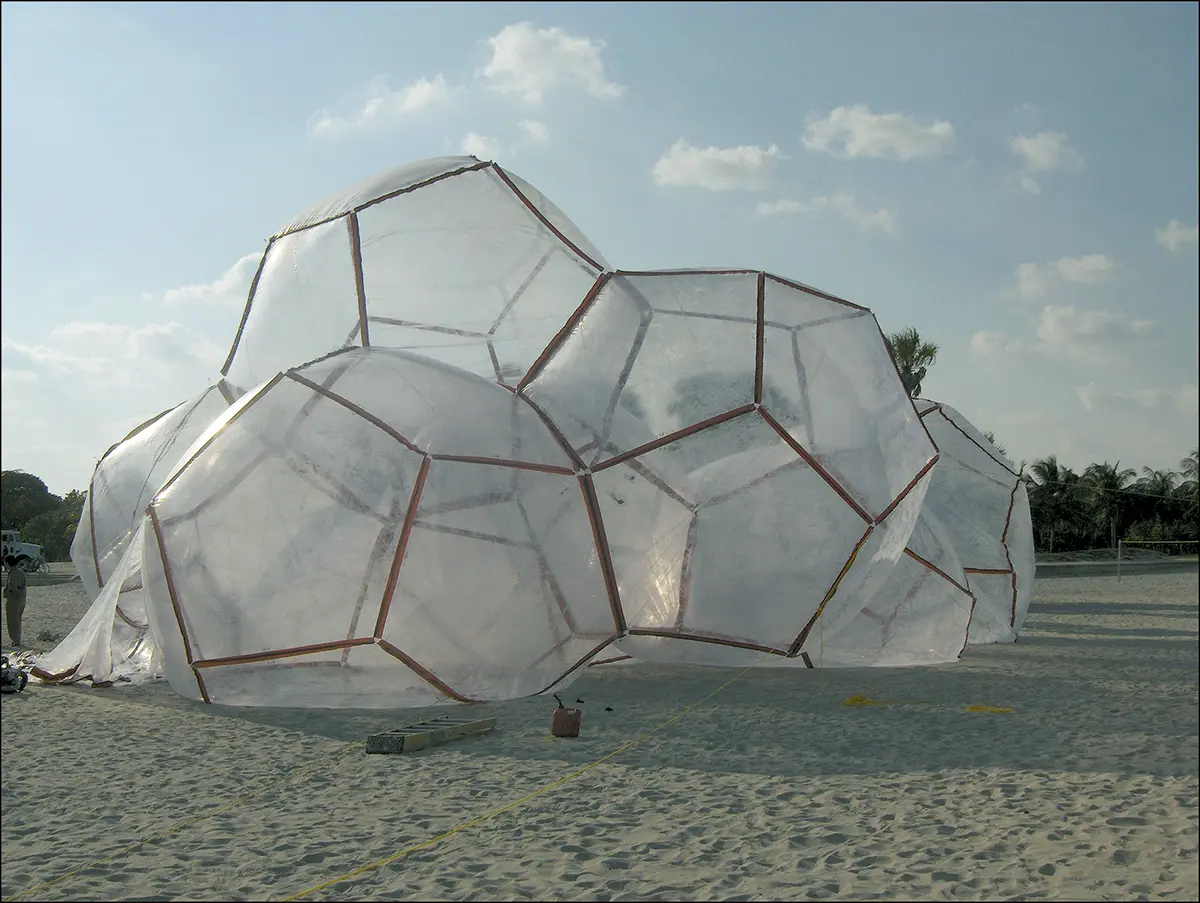
Tomás Saraceno (Argentina 1973) is known for his installations and his concept of creating international floating cities. His work for this residency was presented in several stages from the conception and realization of his installation When Spheres meet Spheres from Miami to Cuba, to the making of a video that documented the whole process, and finally to the presentation of this video. Included in the exhibition were drawings and sketches of the piece, one sphere, and the video, which was projected continuously.
The piece consisted of eight spheres constructed of a transparent material with orange borders. All the spheres were joined and technically they could float or fly and would become a means of transportation. The spheres were built and taken to the beach where the air was pumped into them. It was decided that the next day instead of air the structure would be filled with helium so it could fly. Unfortunately, the heat of the beach damaged some of the spheres and the flying part could not be completed. This is an experimental work and as such there are unexpected obstacles.
The idea behind When Spheres meet Spheres from Miami to Cuba is related to Saraceno’s previous work and his conviction of a future without traditional geographic barriers. In this instance, he is touching on the delicate relationship between the island and Miami, something that is part of the daily life in the city. Saraceno’s idea of a sphere —actually a group of them– that can float or fly is the perfect connection with the island.
The work of both artists is characterized by their experimental approach to art. They belong to a generation interested in crossing boundaries and interdisciplinary manifestations that use art as a channel to discuss more philosophical and social matters.
IRINA LEYVA