
Both biennials and fairs suffer from hypertrophy, and the 32nd edition of FIAC held in 2005 was no exception. But growth is not synonymous with dissipation, and controlled quality prevailed in two of the exhibition halls, one devoted to modern and contemporary art and the other to the youngest artists. With 219 participating galleries, 101 from France and 118 from abroad, compared with last year’s 214, this FIAC was host to representatives from twenty-seven countries and, for the first time, fifty-two new galleries. A number of factors combined to make this fair a success: the 25% growth in the number of visitors, totaling 83,000, and in sales; the air of renewal among French collectors and their growing interest in international contemporary art; the confirmation of changes employed in 2004, such as the naming of the gallerist Jennifer Flay as artistic director; an additional hall for young creators, including Perspectives and Future Quake and the opening of a Design space; and a Parisian public well known for its seriousness and real interest. FIAC will undoubtedly return to its preeminent place in the international scene. It should also rebuild Paris’s aura, which has been rather decayed as far as art is concerned. These are, at any rate, the goals of FIAC’s new president, Martin Berthenod, for whom FIAC must regain its pride of place in the Parisian scene, associating itself with high-quality openings and parallel events.
At the inauguration, following a principle borrowed from ARCO, the State bought thirty-four works for a total of 420,000 euros. With the presence of the State and the private sector, FIAC wants to establish a dialogue between the different players in the field and the collectors. During the fair, the presentation of the nominees for the Marcel Duchamp award was most convincing of the dynamism achieved in this Parisian fair. The prize, 35,000 euros given by ADIAF, a private association for the international diffusion of French art, was awarded to Claude Closky for a 25-minute video comprised of 1,000 current-event images edited in a quick barrage. The artists present were Kader Attia (b. 1970), Gilles Barbier (b. 1965), Olivier Blanckart (b. 1959), and Claude Closky (b. 1963).
FIAC also provided an opportunity to observe the recent developments in a specific aspect of French artistic life, one long dominated by the omnipresent state institutions: the growing collusion between art and luxury. The two richest French collectors, Bernard Arnault and François Pinault, have invested in the art market. For these entrepreneurs, contemporary art has become a financial instrument, two of the largest French conglomerates, Pinault-Printemps-Redoute (PPR) and Louis Vuitton-Moët Hennessy (LVMH), made possible important exhibitions: the Dada show in Beaubourg (PPR) and the Vienna 1900 show at the Grand Palais (LMVH). The luxury-products industry, whose image is symbolically associated with Paris, could become the driving force in a revalorization within an international context of the old capital of the arts, and we must remember that FIAC is a French fair that seeks to put on display French galleries and artists.
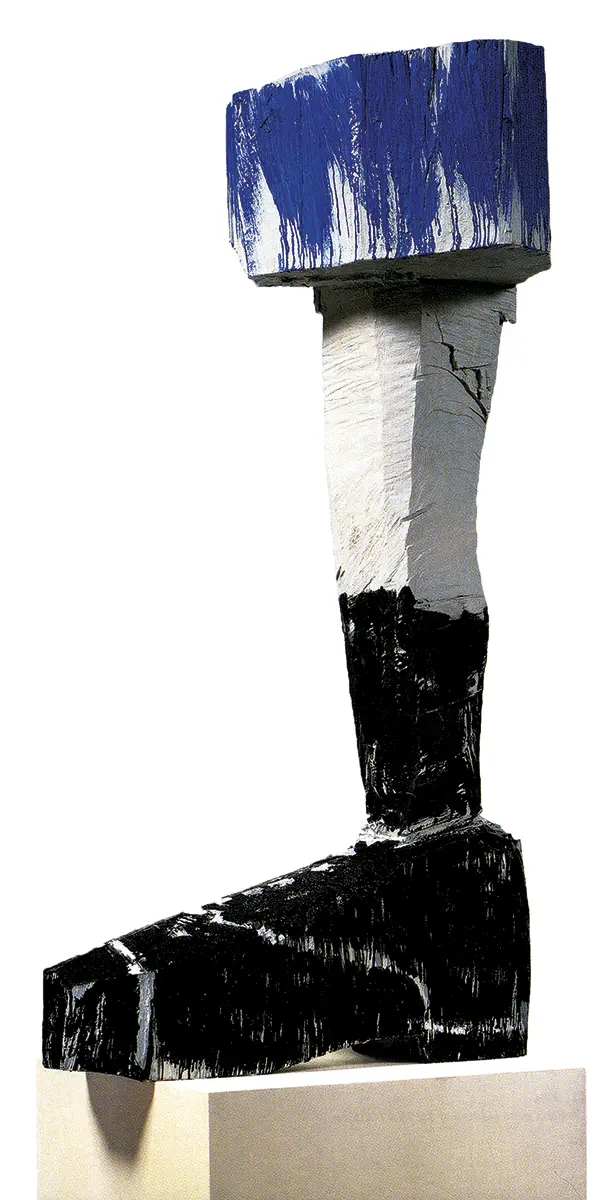
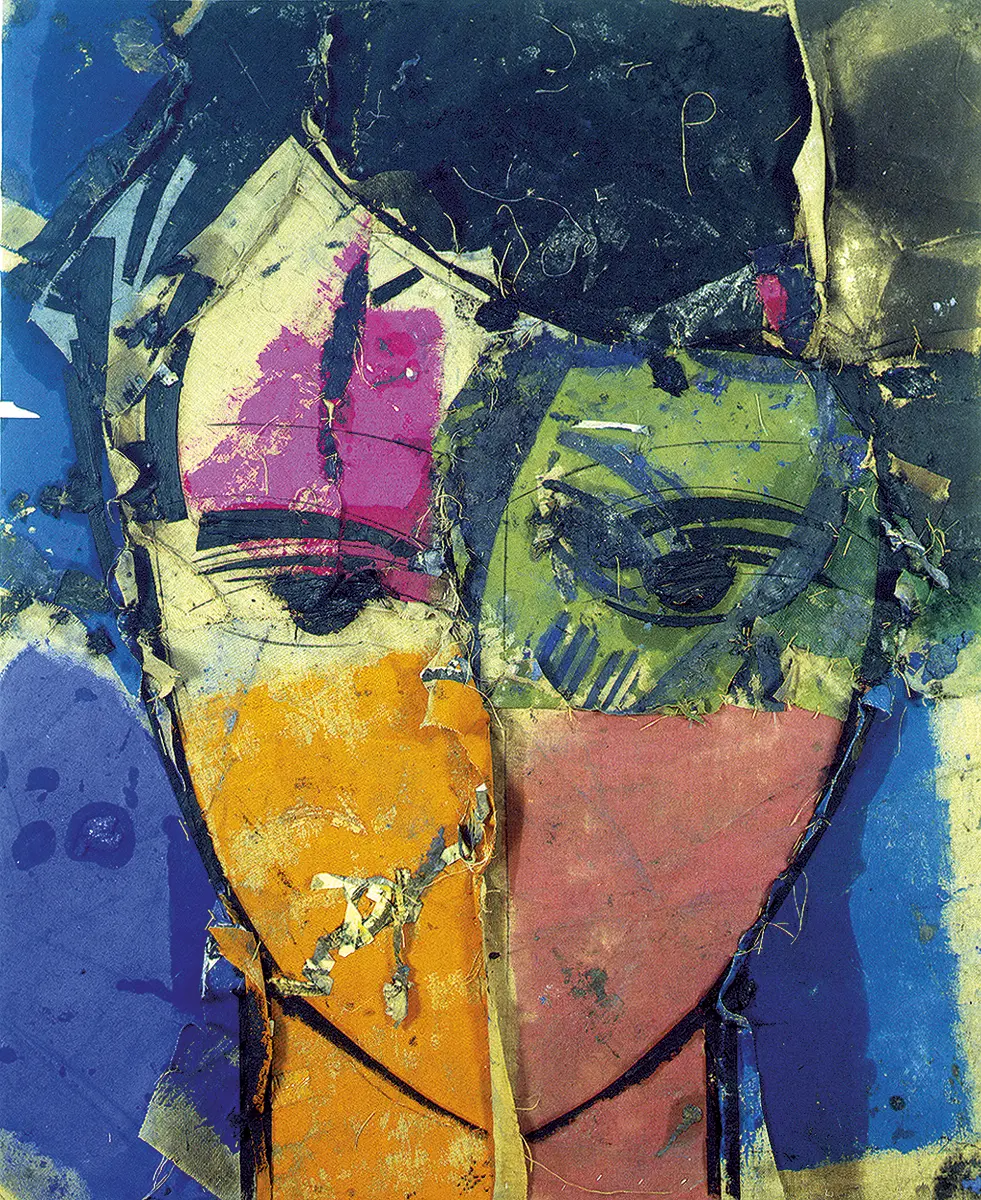
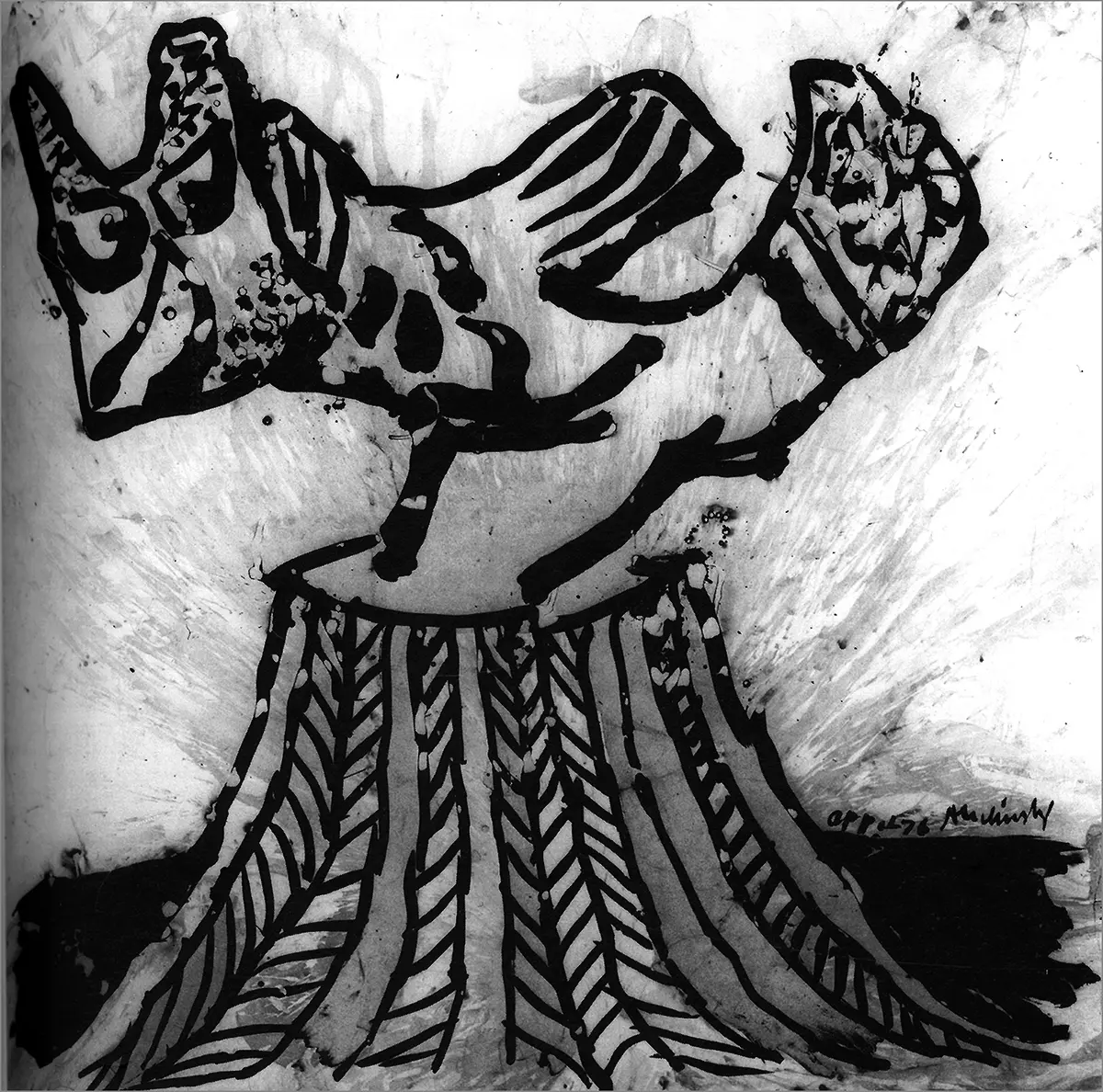
As in previous years, FIAC displayed a classical, almost ritualistic organization, one that in great measure respects the history of art and presents first the great French and international galleries and their well-established artists and then, progressively, opens up to more contemporary forms of expression with younger galleries. This specificity of FIAC, with the addition of a pavilion devoted to young artists and galleries, avoids a diverse presentation where styles and genres would rub elbows in the midst of great disorder and allows visitors to retain historical or stylistic references. We can say, then, that it fulfills a pedagogical function, which was highlighted and appreciated by many visitors interviewed. A visit to Hall 4 with modern and contemporary art revealed the prevalence of painting, photography, and figuration in all its aspects, from the most expressionistic to coolly narrative figuration, the most recent expressions making evident how advertising, photography, comics, and film have left their marks. At Claude Bernard, a one-man show by the recently-deceased French artist Paul Rebeyrolle (1926–2005), which was impressive for the explosive force of its forms, colors, and lines, rubbed elbows with the large formats of the Spaniard Manolo Valdés, at Malborough (New York/London). Christian Stein Gallery (Milan) conveyed the piece fullness with a historical curatorship of Arte Povera with the artists Kounellis, Mario Merz, Manzini, etc. This movement was also present at several other stands, such as Karsten Greve (Paris/Cologne/Milan) and Fumagalli (Bergamo). The German artist Georg Baselitz occupied alone the space at Thaddaeus Ropac (Paris/Salzburg) with large-format works from 2005. Lelong decided to present to the public for the first time some forty previously unseen works of china inks adhered to canvas and works on paper that resulted from the collaboration between the Dutch artist Karel Appel and Belgium’s Pierre Alechinsky in the 1970s. (The Parisian gallery Jerôme de Noirmont continued with its thematic presentations; this year was a rich selection of portraits, titled Tête a Tête, which included a somewhat mystical installation by Tony Oursler called The Flame, works by Basquiat, and a beautiful sculpture by David Mach (b. 1956) made of metal clothes hangers, Lanark II (1998–2004).
Four galleries caught our attention with the richness and quality of their artistic selections and the historical dimension of their presentation, which allowed them to qualify the supposed newness of a great many contemporary works. The Lara Vincy Gallery (Paris), which defends new approaches outside the fashionable and the dominant trends, celebrated fifty years of activity in Saint-Germain des Près; the organization of its stand revolved around the strong installations of the French artists Ben and Jean-Luc Parant, but we noticed a series of eight photographs by Esther Ferrer where the female pubic area becomes the center of all imagination. The 1900–2000 Gallery presented an abundant group of Dadaist works, and also surrealists, echoing the Dada show in Beaubourg. This stand enjoyed high traffic. On view were letters by Marcel Duchamp, paper cut-outs by André Breton works by Tanguy, Dalí, Hans Bellmer, Meret Oppenheim, Erik Dietman, etc., and a beautiful 1972 collage by a discreet and interesting artist, Canada’s Alan Glass, who has lived in Mexico for decades. Thessa Herold, one of the most serious in Paris, presented a thematic exhibition around Camille Bryen (1907–1977) and her friends Raoul Ubac (1910–1985), Jean Arp (1887–1966), and Wolfgang Wols (1913–1951). The selection was beautiful, and it was accompanied by works of a number of younger Latin Americans—Venezuela’s Pancho Quilici, Mexico’s Saúl Kaminer, and Gabriela Morawetz, who is Polish-Venezuelan—as well as older figures like Jorge Camacho from Cuba, with an excellent 1974 canvas. The selection at the Karsten Greve Gallery (Paris), perhaps one of the most beautiful stands, included Kounellis, Soulages, and several ceramic works by Lucio Fontana, but its unifying axis was the work by Louise Bourgeois: sculptures, bronzes, marbles, installations, and a 2005 series of eight drawings geometric texture blue or red.
There were some younger galleries, such as Kamel Mennour (Paris, opened in 1997), with a red neon work called Libertad, Igualdad, Fraternidad (Liberty, Equality, Fraternity) by the Peruvian artist Jota Castro, who had already presented it at the Tokyo Palace in 2005, and installations and photographs by the young Algerian artist Abdessemed (b. 1971) bought by the National Contemporary Art Endowment (FNAC) and the collector François Pinault (the gallery’s whole exhibition in the city). Suzanne Tarasiève’s gallery (Paris opened in 2003) presented a very interesting exhibition of works by the french Miguel Chevalier, who for many years has been creating computer programs to manipulate shapes and light. His works at FIAC had been produced using the genetic codes of plants and flowers. Istanbul’s Artist Gallery was a disappointment because of the absence of Turkish artists; it only presented internationally recognized figures like Jan Fabre, with several objects and canvases from 1990 and 2000, and Panamarenko, with several small “maquettes” from 2003 to 2005.
Raphaël Julliard, from Geneva’s Art Et Public, caused great commotion. Was it a strategy to attract the media, an artistic event, a sociological event, a bluff, or simply business? The gallerist gathered 1,000 “paintings” in red, each identical to one another, each signed on the back by a worker from the Chinese factory in which they were made, and put them on sale at 100 euros each on the day of the opening. The lot was sold out, having reached the price of 400 euros by the closing day of the fair.
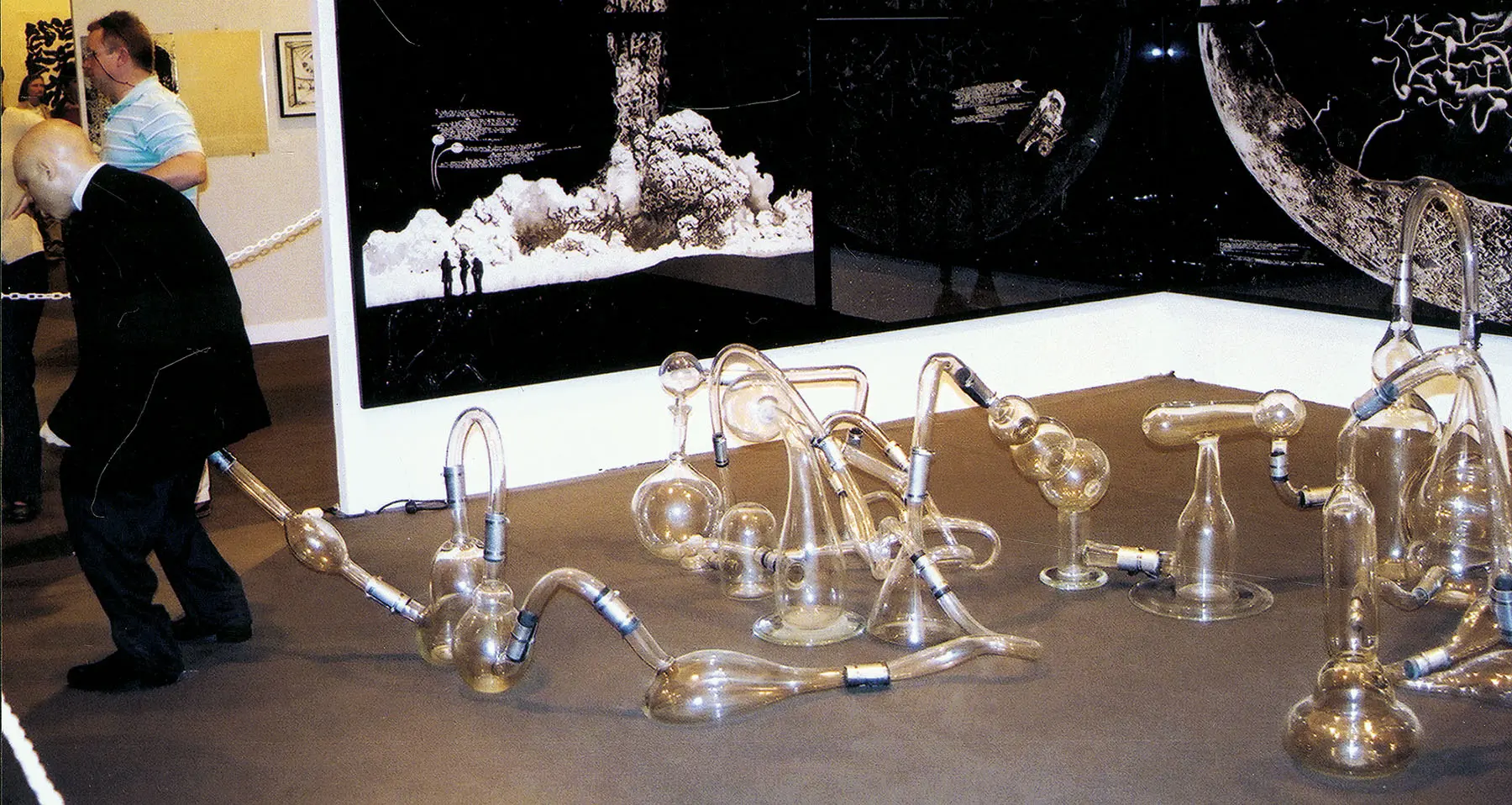
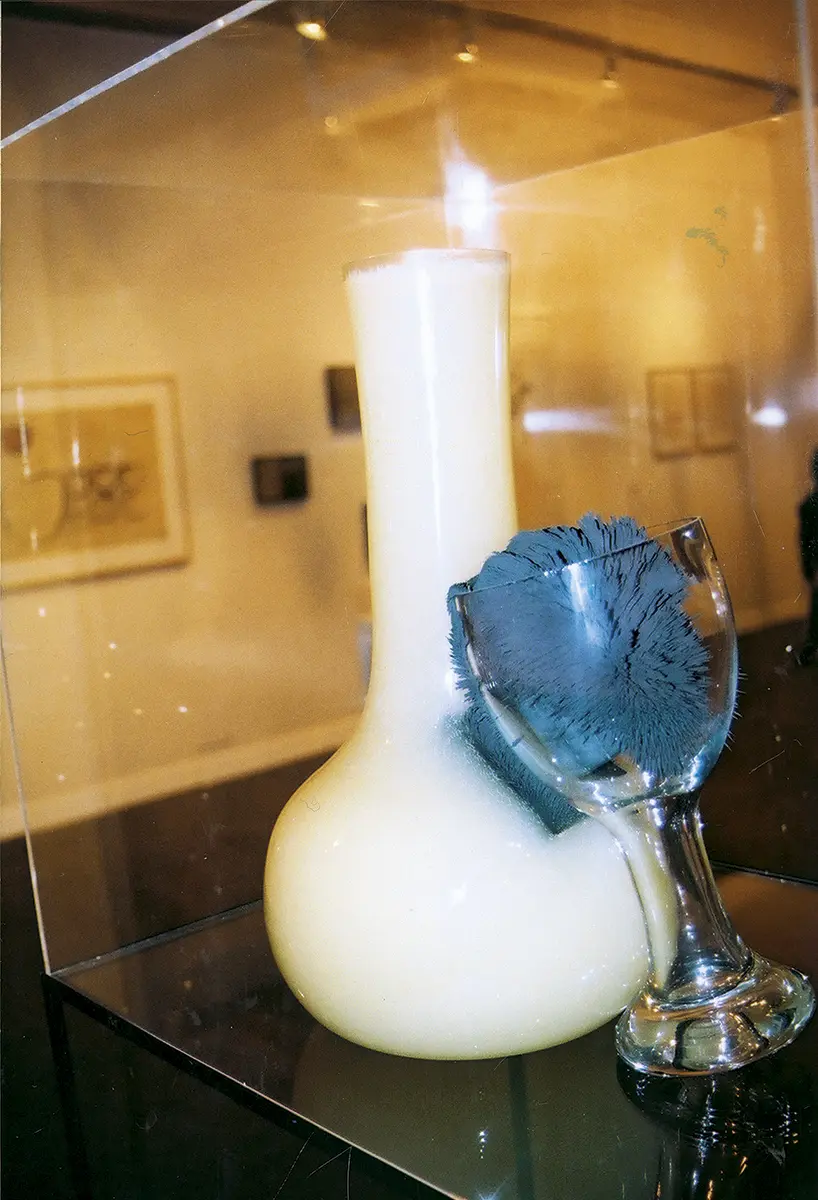
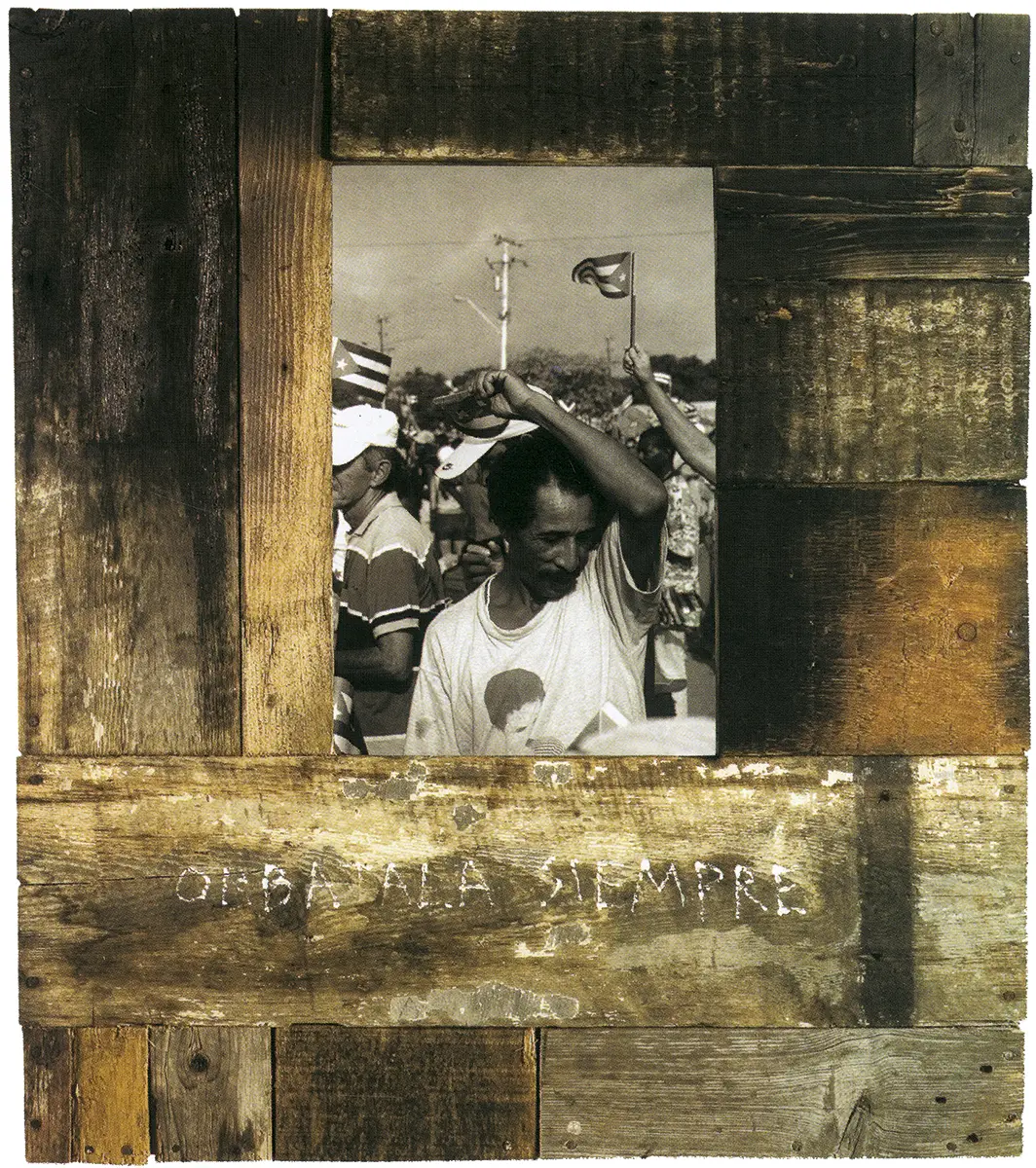
As we looked for Latin American artists, we realized their scant and dispersed presence. We found them first in the only two Latin American galleries at the fair. Antonio Millan of São Paulo presented a beautiful selection with drawings by Mira Schendel, two objects by Arthur Barrio, photographs by Miguel Rio Branco, who has a solo show at the European Photography House, and three Tunga objects; Tunga was also at Daniel Templon Gallery with two closely related works: Peine, made of brass threads, from 2005). We found Tunga once again with an installation under the Louvre pyramid and a solo show at Templon, in the city. The other gallery, Havana (Cuba), presented five photographs by Marta M. Pérez Bravo and several works by Roberto Diago (b. 1971, Cuba). With black and white prints from 2003, Antonio Seguí, who recently had an exhibition at the Georges Pompidou Centre, occupied half of the stand of the Parisian printer and publisher Pasnic. Four photographs by Jorge Macchi, a painting-object by José Dasmaceno, a series of photographs by Tunga, and a small painting by Guillermo Kuitca were present at Distrito 4 (Madrid). Ernesto Neto, had an installation at the Grand Palais, which was recently reopened after ten years of renovation. Matta was well represented at Malingue (Paris) with El objeto del diálogo (1956). Louis Carré (Paris) offered a one-man show of the abstract artist Olivier Debré, while its city gallery presented an exhibition by Kcho. Brazil’s Julio Villani was the only Latin American artist in the Design section, with an embroidered drawing and a chair at Mouvements Modernes, which also presented Artist Table (2003) by Jean-Marc Bustamente, from France.
The growing importance of photography was also in evidence with Andrés Serrano’s Objects of desire (1992) and with the photographs of Argentina’s Julieta Hanono at Samy Kinge, a series with a painting called Mater (2005). At B et D Studio (Milan) we saw more photographs than anything else. Recent self-retouched works by Orlan were at Volker Diehl (Berlin), and the Chinese artist Zhang Huan’s terrible zoophilic photographs, which were also at Goedhius (New York/London/Beijing). At Wetterling Gallery (Stockholm), Nathalia Edenmont (b. 1970, Ukraine) was represented by poetic, unexpected photographs such as Bride Black. At Yvon Lambert (Paris), there were fairly irrelevant photographs by the marvelous Nan Goldin and Claude Levêque; at Rodolphe Janssen (Brussels) we saw an excellent 1974 photograph by Cindy Sherman, an intimate group by Esko Mänikko from Finland, and the presence of Candida Höfer, also present at other several stands. Guy Bärtschi (Geneva), had a beautiful stand, especially with photographs by Marina Abramovic and Cornelia Parker. Rebecca Horn was present at Galerie de France (Paris) with a series of nine photographs from her 1975 performance Paradise Widow.
There were many artists from China, some already seen in previous fairs. Courtyard (Beijing) and Shangart (Shanghai) showed photographs and paintings. Xin Dong Cheng (Beijing) presented for the first time, a painting titled The Meeting (2005) by She Xiuning (b. 1963), which brought together the image of the soldier with a rifle from Robert Capa’s famous photograph from the Spanish civil war and an image of a young female soldier from Chinese propaganda. At Chinese Contemporary (London), there were several portraits by Zhang Dali (b. 1963), paintings built around the repetition of the formula “AK47” on modulation of blues, and, for the first time in Paris, Chinese Dream (2005), a wedding dress in PVC and fishing thread by Wang Jin. Besides the large installation Modular architecture, The unit (1966) by Lucy Orta, Continua (San Gimignano/Beijing) presented an installation by Chen Zhen, who died in Paris in the year 2000.
Three Moscow galleries made the journey to Paris. Aidan Gallery displayed a surprising polyptych, Pietà, from the 1999–2005 trilogy comprised of four large color photographs and staged similarly to Bill Viola’s videos. Raouf Mamedov (b. 1956), a photographer and filmmaker, worked with religious themes. KL Gallery presented four impressive color photographs titled Warp by Oleg Kulik (b. 1961), taken underwater and showing a man as he jumps. The Rabouan Moussion Gallery (Paris) had a beautiful stand almost entirely devoted to contemporary art from Russia: Holy family (2005), two photographs by Oleg Kulil that showed a female Chechen guerrilla wearing a belt of explosives in front of a statue of Boris Yeltsin; Alexandre Ponomarev’s two videos about the illusion of Antarctica; three fake-bomb objects by David Ter-Oganyan, which greatly impressed the French police; and an installation by Kirill Cheluskin, Snow People (2005). In the same gallery, we could see a video by Marie Sue (b. 1980, France), which seeks to negotiate the same obstacle in a fresh and playful tone, and Sandy Skoglund’s always well-executed photographs. Regarding the stand devoted to design, with new galleries, it increasingly caught the interest of collectors, and there was quality work.
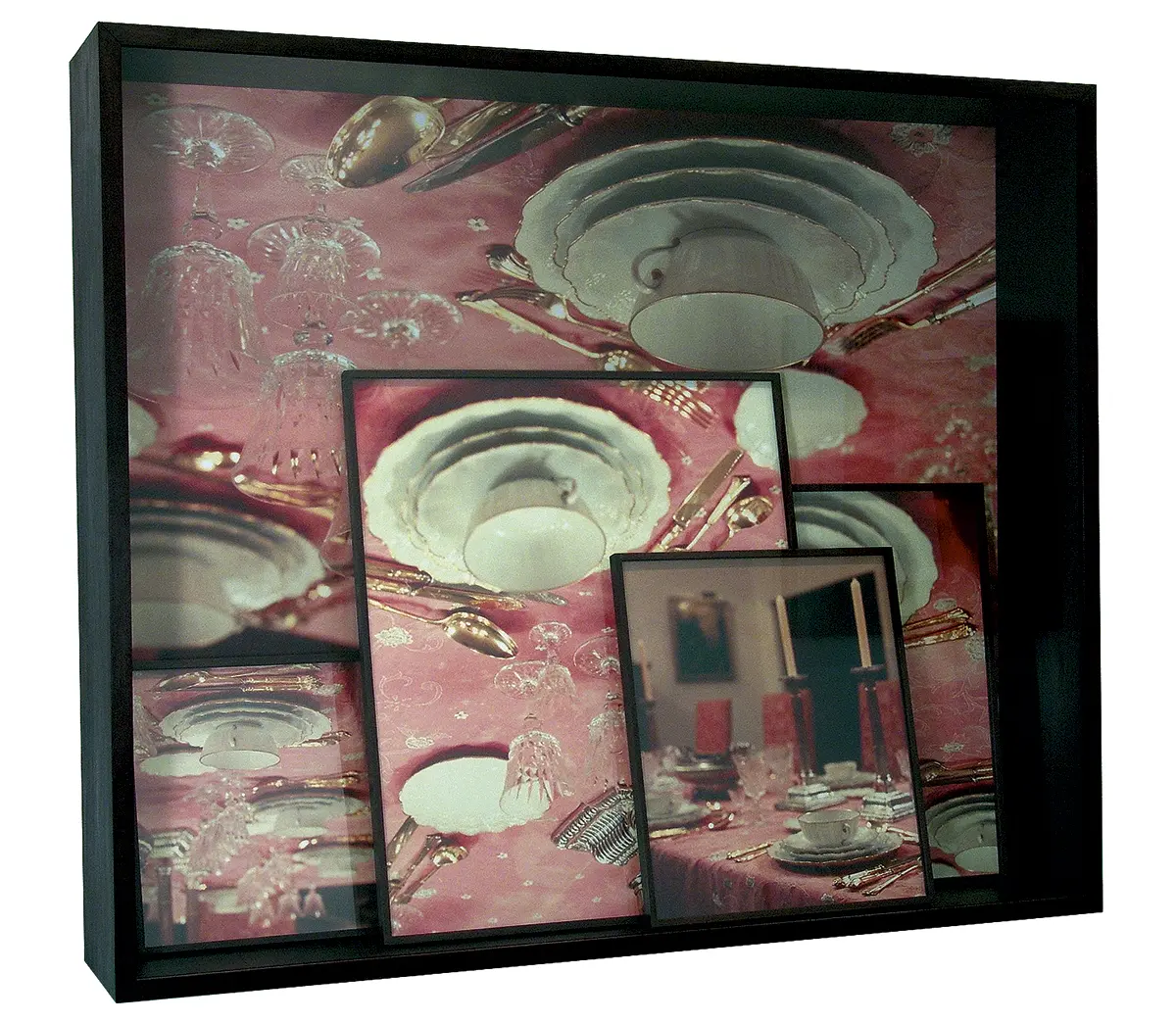
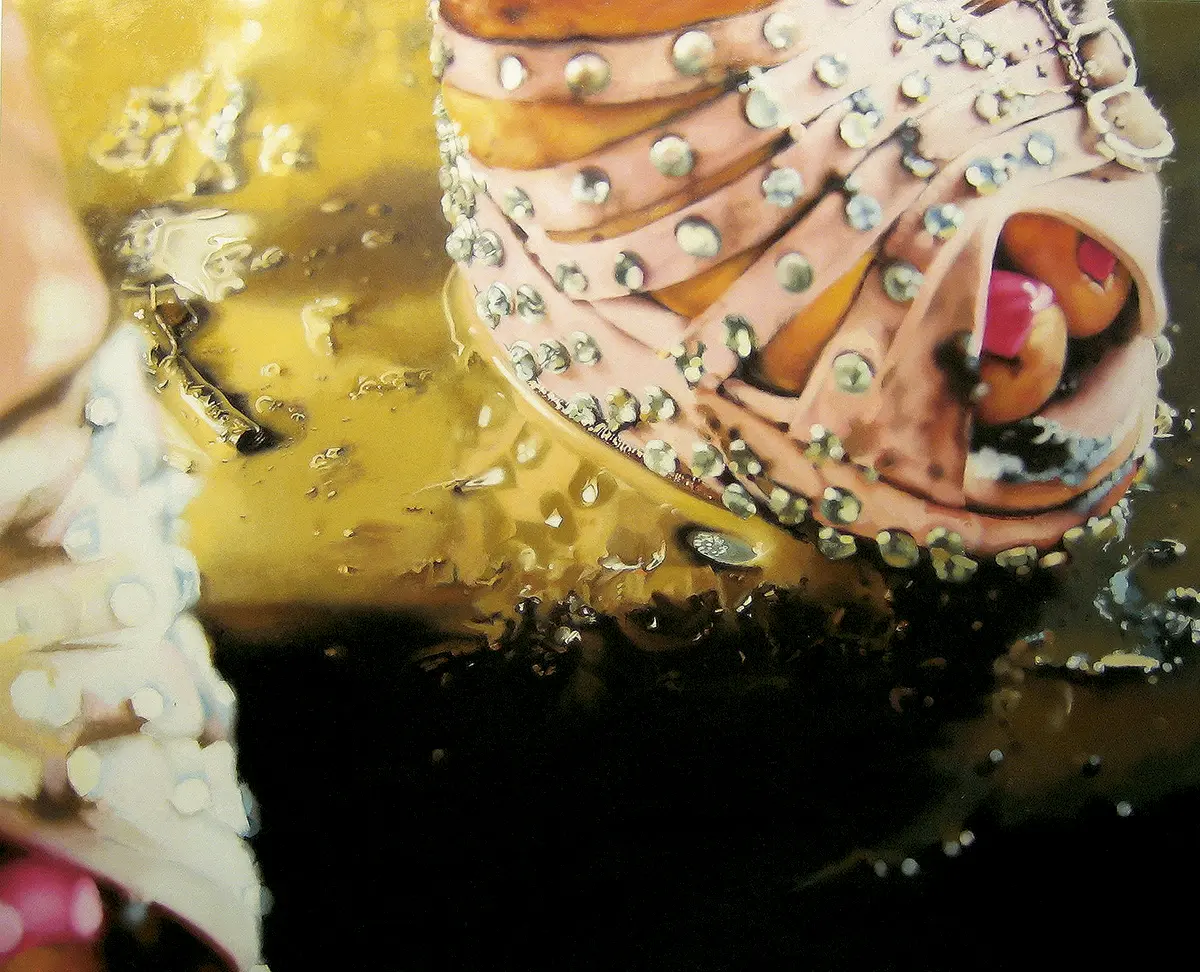
The Perspectives section consisted of thirty-four galleries with more than ten years of activity, with thematic or monographic exhibitions by artists who have emerged recently on the international scene and in the area Future Ouake. For the prizes of works in this last section, FIAC had imposed a ceiling price of 5,000 euros and less than three years of activity. These last sections confirmed the renewal of the fair and its entry into the international orbit. The area was ample, the drawings and paintings occupied good space among photographs and objects, and the curatorial designs wanted to bring the most recent art to the heights of its commercial value. We entered the hall by passing in front of Gabriel Orozco’s famous DS Citröen (1993), property of the National Contemporary Art Endowment. At Voges + Partner Galerie (Frankfurt) we noticed the U.S. photographer Marilyn Minter (b. 1943) with very Pop Art-like close-ups of a fetishized journal called Muddy Waters (2005, enamel paint on aluminum, 97 x 120 cm). Tokyo’s Mizuma Art Gallery offered a good stand, and its highlights were the traditional images reworked by Hisashi Tenmyouya (b. 1966), with ink and printed paper pieces called Ghost stories series (2005). Israel’s Dvir Gallery was less convincing this time around with an excessively eclectic one-man show of works by Elki Petel (b. 1974). Lastly, at Magda Danysz (Paris), there was a series of paintings and objects, They hope you receive me (2005), by the Clayton brothers which included a text in a comic-like style with raw and expressive draftsmanship. The brothers, Rob and Christian, advertised by the gallery as being collected by Leonardo di Caprio, have worked together since 1997 around the iconography of the everyday. In the Future Quake section, Lumas Gallery (Berlin), specializing in old and contemporary photography and also functioning as a publishing house, presented excellent works, especially Stefanie Schneider’s polaroids in acid colors of desert and beach scenes and Julie Christe’s almost deserted, white expanses called White Sands 3.
On the whole, it was an excellent fair, with a high level of quality, but it was also an expensive event, with the Euro overvalued in relation to the dollar, for North American galleries and especially for Latin Americans.
CHRISTINE FRÈROT
Art historian devoted to criticism, research, and teaching at École des Hautes Études en Sciences Sociales, Paris.