
The exhibition Dor, Forma, Beleza recently on view in São Paulo’s Estação Pinacoteca tackled the elusive subject of art and trauma. Trauma, originally from the Greek word meaning “wound,” has been the object of scholarly inquiry in various fields, including psychoanalysis, cultural studies, history, and ethics. A condition of stress or anxiety developing from a shocking and devastating experience, trauma has practically become a symptom of life in the modern world, whether resulting from historical, natural, collective, or personal calamities. Dor, Forma, Beleza meditated on the relationship between the visual arts and diverse forms of trauma from the perspective of Brazilian art, focusing on contemporary work in a variety of media. The exhibition, coinciding with the 44th International Congress of the International Psychoanalytical Association in Rio de Janeiro and the film exhibition Trauma and Representation in São Paulo’s Cinemateca, was organized by the filmmaker Olívio Tavares de Araújo and the psychoanalyst Leopold Nosek, whose diverse backgrounds surely contributed to an intriguing exhibition of a powerful and sometimes unexpected body of work.
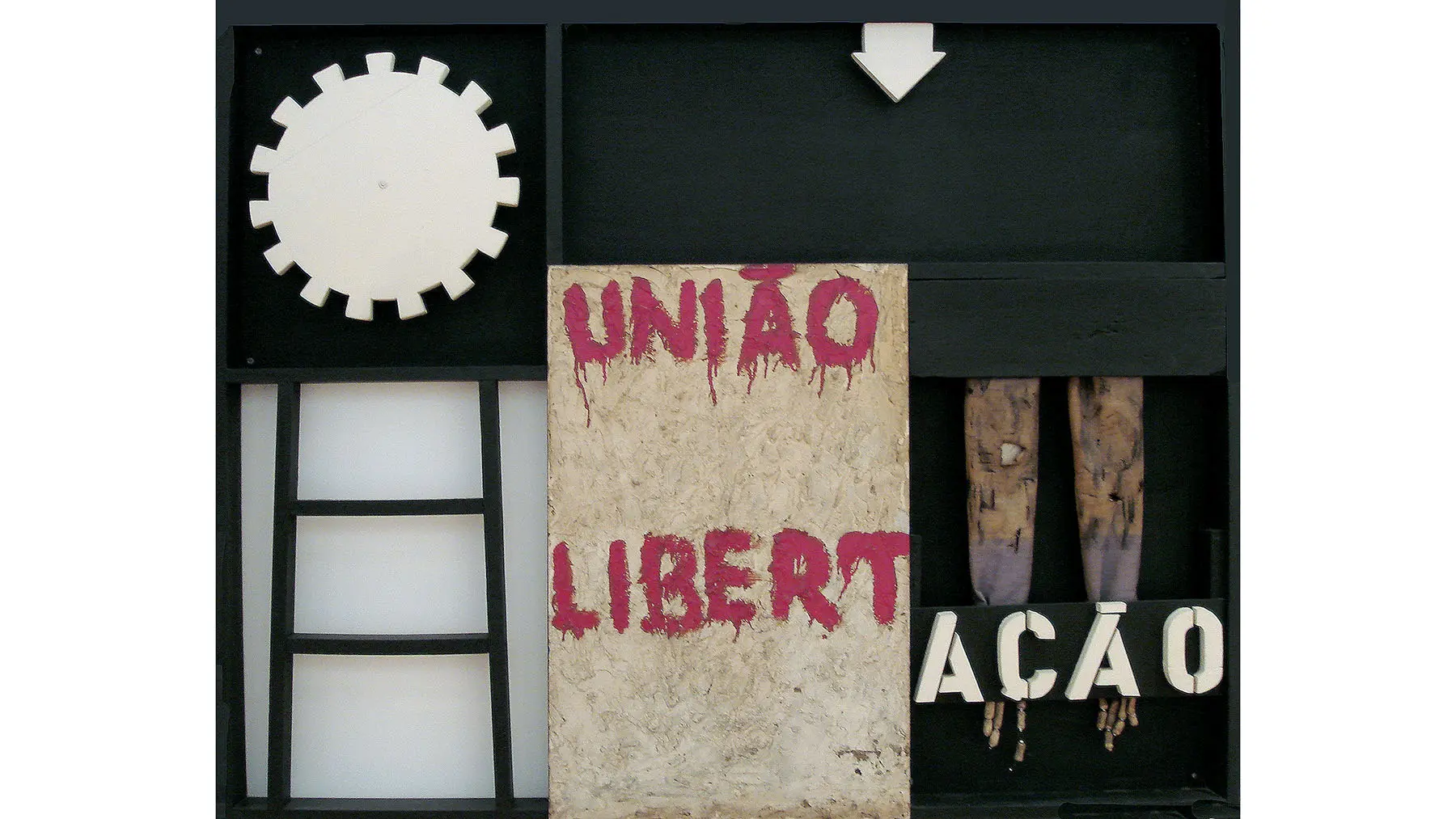
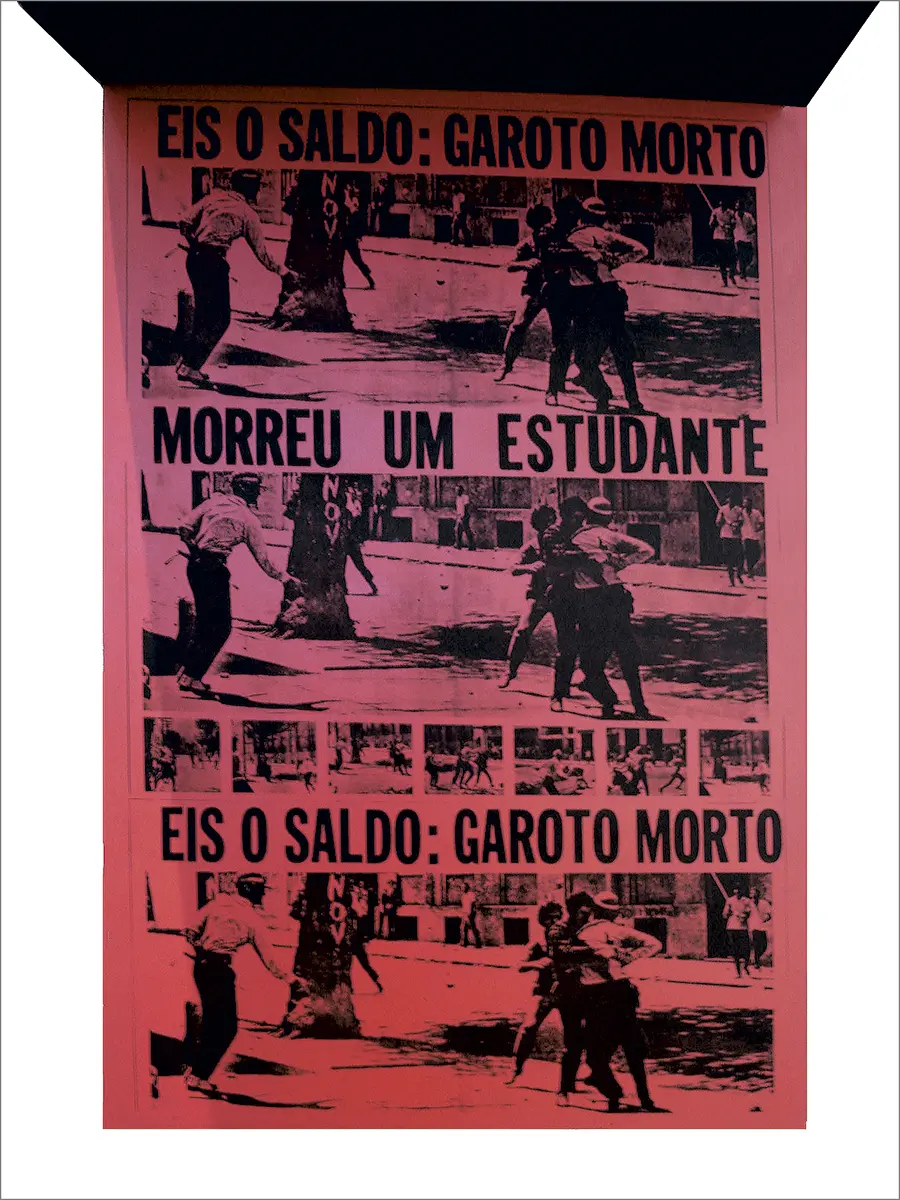
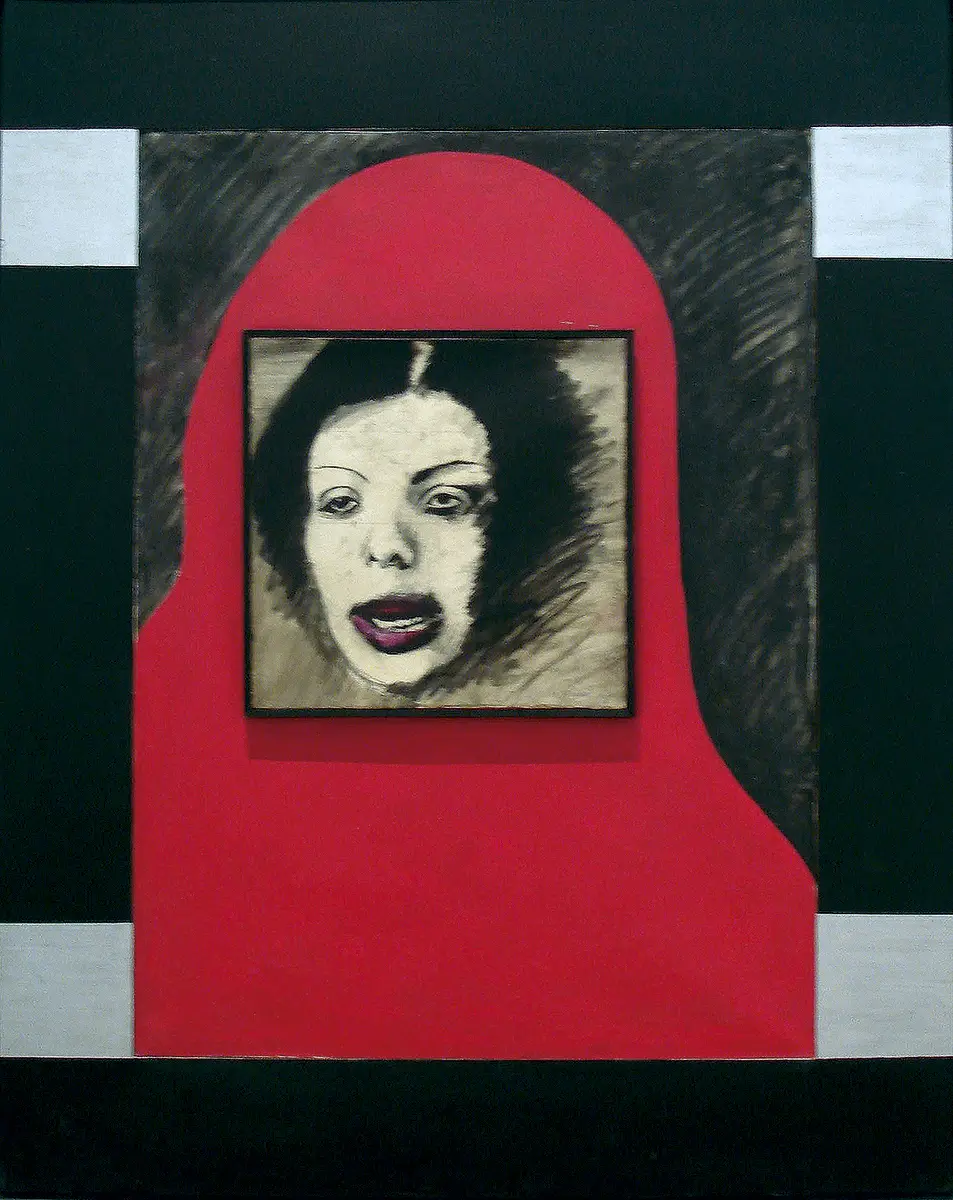
Attempting to account for the different types of traumatic experience, the exhibition alternated works of a collective, historical bent with those of a private, personal one. Emphasizing the historical, one section consisted of paintings and objects executed during the military dictatorship of the 1960s and 1970s, by such artists as Antônio Dias, Rubens Gerchman, Antônio Manuel, Pedro Escoteguy, and Nelson Leirner. Escoteguy’s mixed-media construction Ação—Linha de força (1965) updated the legacy of Concretismo with a symbolic and iconic visual language that made an urgent appeal for unity, liberty, and action. Antônio Manuel’s Eis o Saldo (1968), a red and black painting with a newspaper headline describing the death of a student, engaged the interactive legacy of Neo- Concretismo by forcing the viewer to lift a black curtain in order to see the work. Like Warhol’s Disaster series, which has also been analyzed in terms of trauma, Antônio Manuel’s paintings reference collective, public experience, though with a more overtly political message of repression and loss. Gerchman’s eerie Lou Transferência juxtaposed a freehand drawing of the face of Lou—a woman who gained notoriety in Brazil when it was discovered that her boyfriend had murdered three of her former lovers—with a red silhouette of the Mona Lisa, resembling a pool of blood. Here, low culture and high art come together in an image that comments on the social illness of contemporary life. In The American Death: Bamboo! (1967), Antônio Dias indicated the specter of the Vietnam War in a stark and detached visual language resisting empathy and even meaning.
Whereas these works related to the Nova Figuração (New Figuration) movement of the 1960s maintained a critical distance from the events they depicted or alluded to, other pieces dealing with historical forms of trauma addressed the spectator much more aggressively, such as seminal conceptual works by Cildo Meireles and Artur Barrio. Meireles’ Tiradentes-Totem-Monumento (1970) documented an action in which the artist set fire to twenty-live chickens on a platform. The work paid homage to Tiradentes, a national hero who led an uprising against Portuguese rule in 1789 and who was hanged and dismembered as a result, his body left to rot on the streets. Meireles’ action protested the military government in shocking and visceral terms, as did Barrio’s Trouxas (1970) with bundles of rotting, bloody meat left in the streets and along river banks meant to draw attention to the victims of the dictatorship.
Other, more recent work had a similarly visceral effect on the spectator, though these were of a much more personal nature and tended to use the body as the primary medium. Cris Bierrenbach’s Retrato íntimo series (2003) featured x-rays of a human body with different instruments—such as a syringe or a fork—that appeared to be inserted into the body’s pubic region. Their hard, dark outlines contrasted with the shadowy, vulnerable forms of the organs they threatened. Rafael Assef’s Cartografias (2004) consisted of photographs of cuts made on human skin in the shapes of different geometric figures and juxtaposed with a tattooed grid. The layers of cuts at different stages of healing contrasted with the black lines of the grid, juxtaposing permanence and impermanence and challenging the distinction between self-mutilation and bodily ornamentation. Whereas Assef’s photographs tended to depict expanses of skin with no other specific bodily referents, the photographs of performances by Suzy Okamoto and Karlla Girotto engaged in a similar process of bodily inscription less anonymously. In these, Girotto provides her body as the medium on which Okamoto stitches lines and patterns that are capped off with a pearl. The images are simultaneously haunting and repellent. Overall, this grouping of works of highly subjective experiences was meant to elicit deeply empathic responses.
Whereas most of the works in the exhibition were representational or otherwise narrative-based, sculptural installations by Nazareth Pacheco and Cildo Meireles meditated on the expressive possibilities of abstraction in relation to the trauma. Pacheco’s piece Quarto (2003) consisted of a rectangular space with a glass table, bounded on all four sides by wires with razors attached. Prison-like in appearance, the work put the spectator in physical danger. Meireles’ installation Strictu (1999) formed of labyrinthine chains leading to a brightly lit wooden table also brought to mind a prison while eliciting interesting formal juxtapositions. Both of these works were about institutional critique, and their placement in the exhibition raised questions on the nature of the relationship between the museum and trauma.
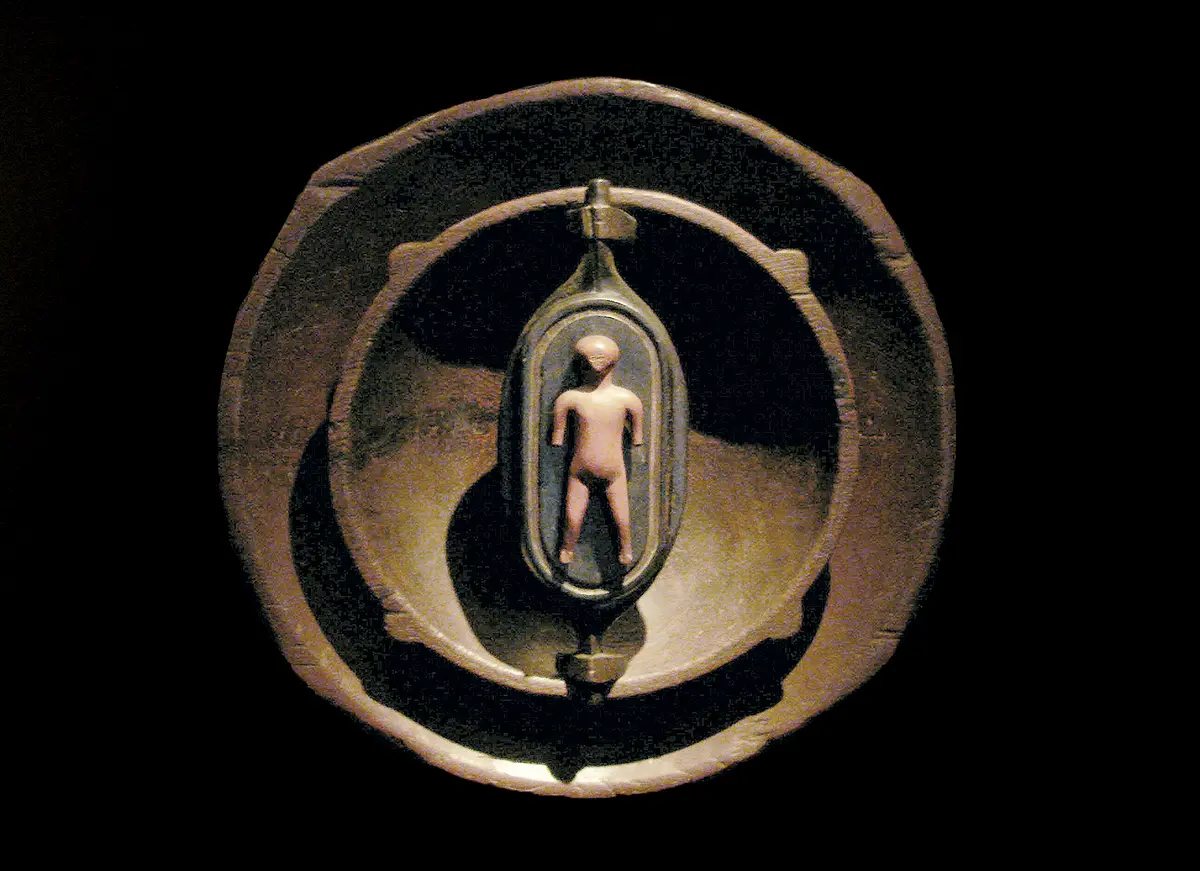
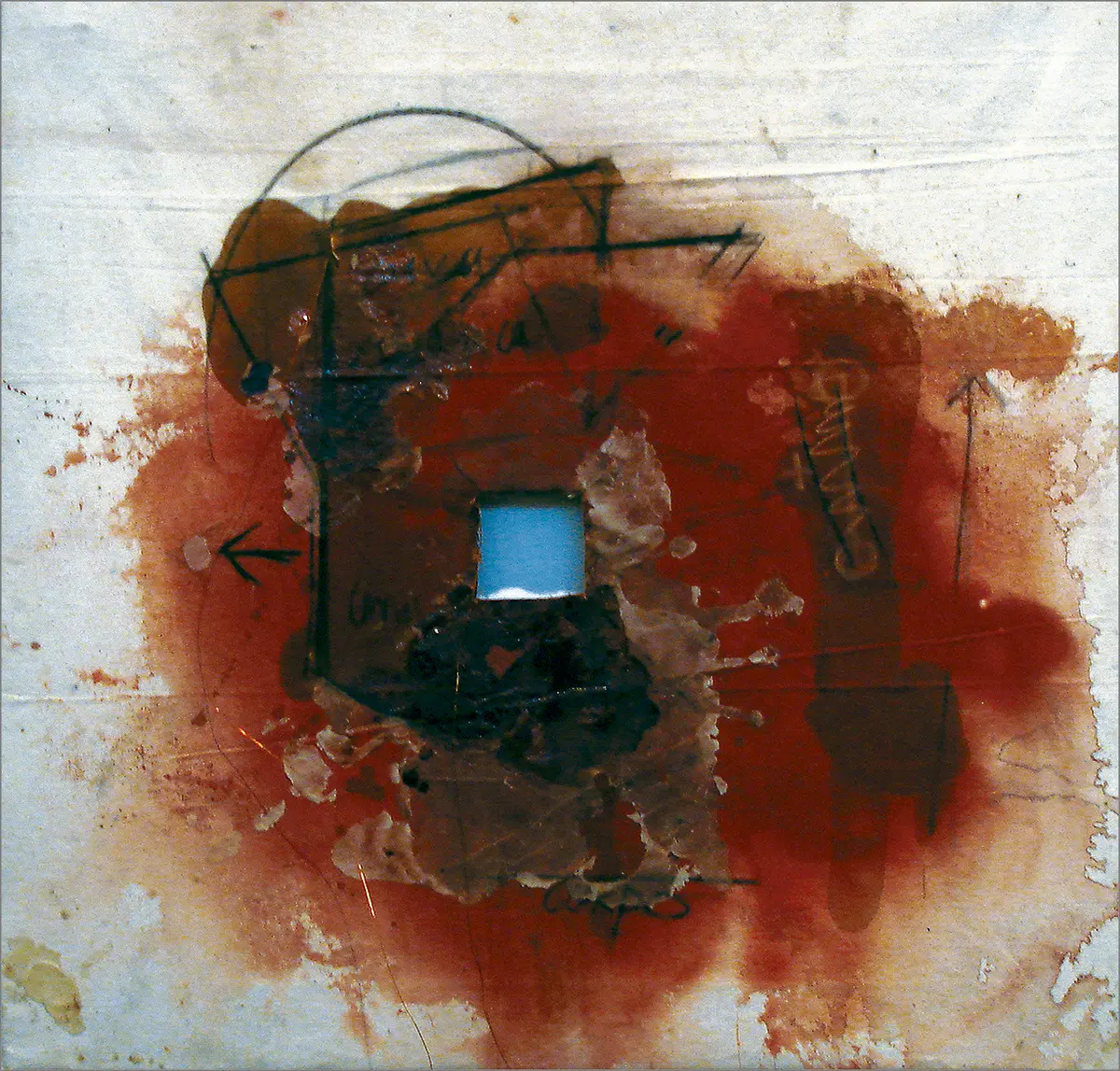
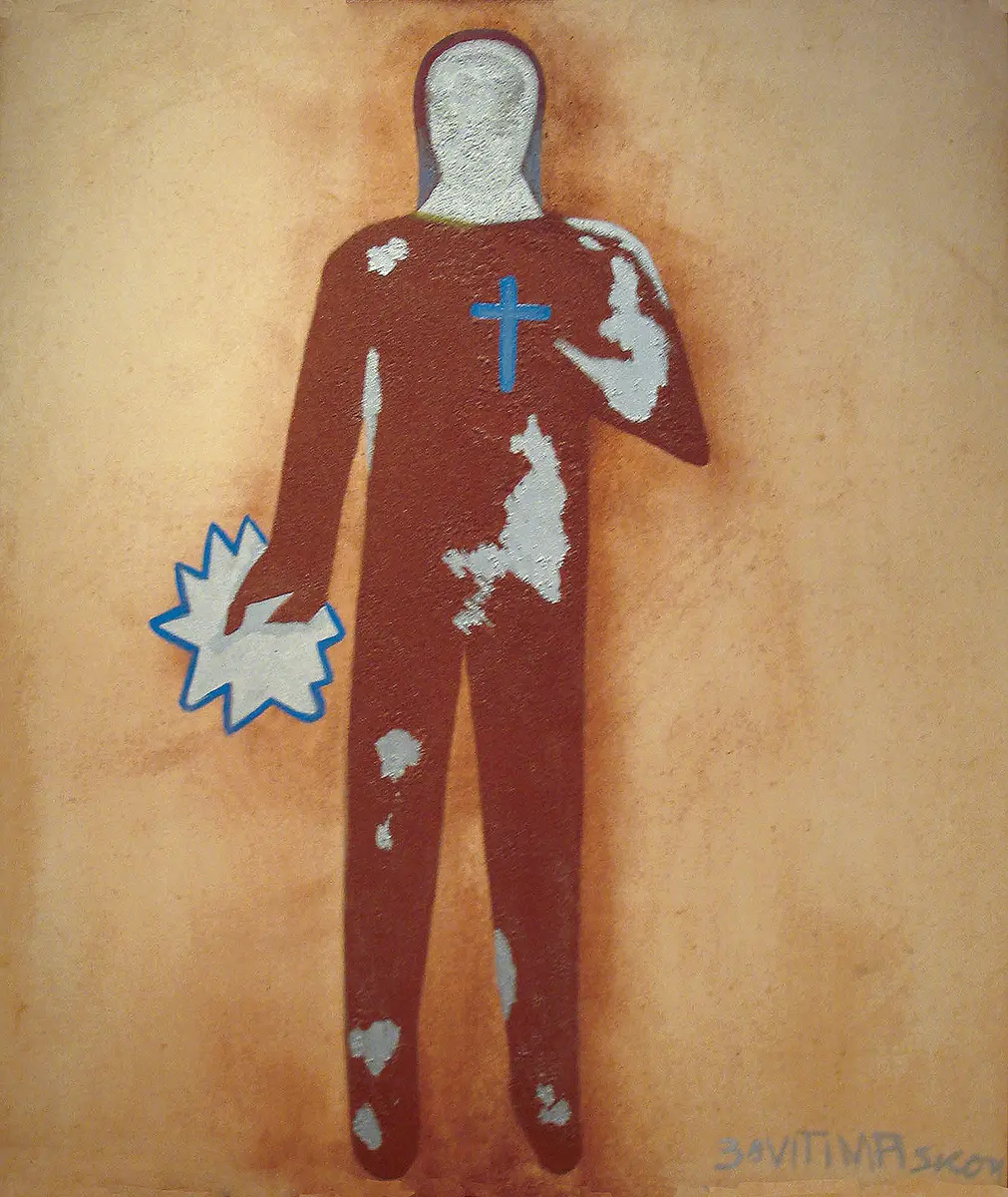
Farnese de Andrade’s strange and eerily beautiful assemblages, placed in a darkened room, introduced a section of the exhibition dealing with trauma in terms of psychoanalysis. Here, paintings by Siron Franco, Luiz Henrique Schwanke, Ivan Serpa, Iberê Camargo, and Flávio-Shiró revisited the Surrealist legacy through their gestural brushwork, expressionistic subject matter, and dreamlike atmospheres. Schwanke’s Perfil 1–24 series (1985), repetitively depicting a crudely drawn face in profile, called forth the Freudian notion of trauma as repetition compulsion, while Flávio-Shiró’s freeform paintings seemed to be delving into the artist’s unconscious. Finally, the lyrical wounded surfaces of Karin Lambrecht’s paintings, often alluding to religious experience, recalled the original meaning of “trauma” as wound and, like much of the body-based art, demanded an empathic response from the viewer.
Ultimately, the exhibition presented a fascinating array of works. It also posed and did not quite resolve the question of whether something as indefinable and intangible as trauma could be a viable category for the categorization and understanding of works of art.
TATIANA FLORES