
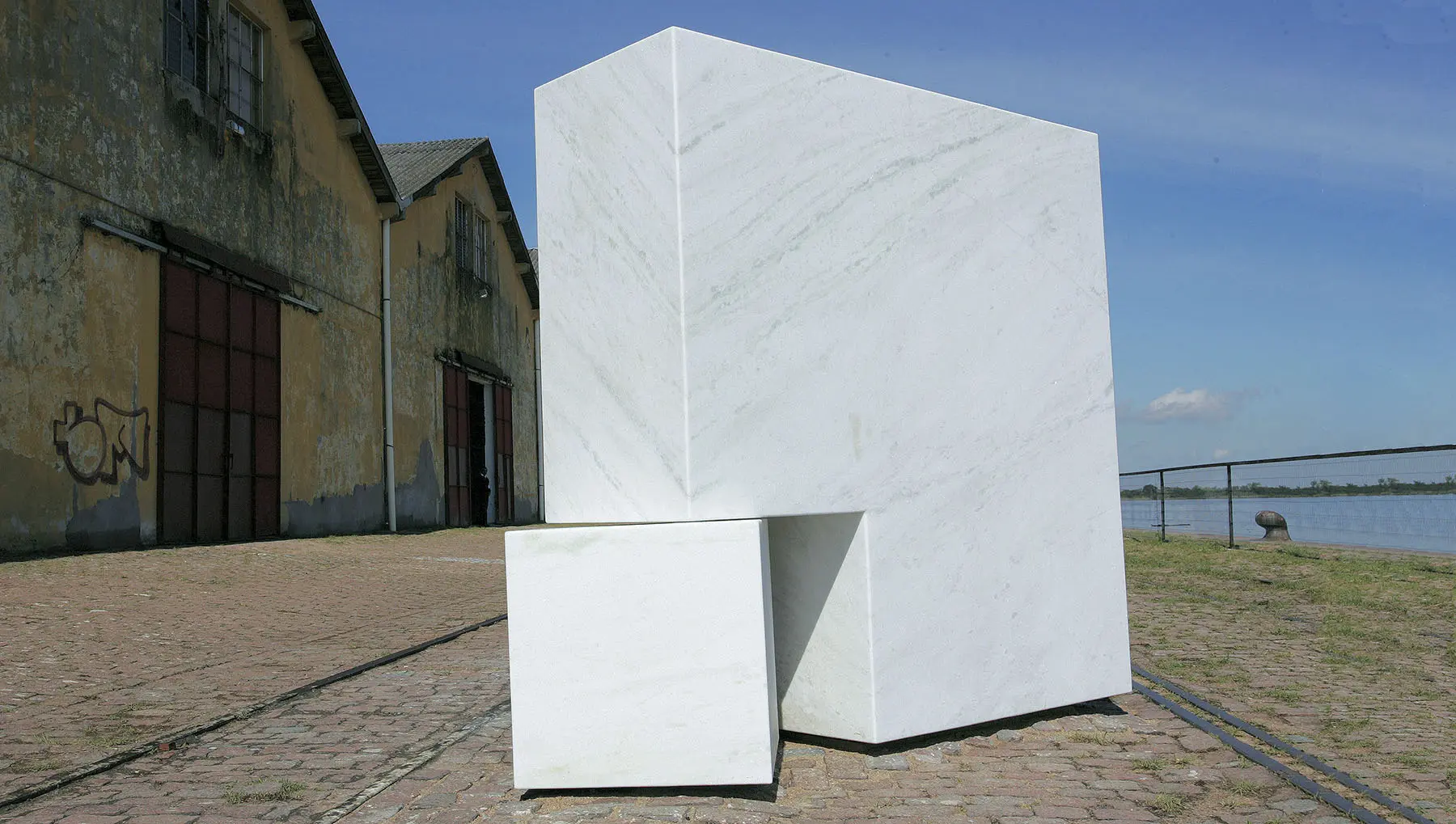
The Fifth MERCOSUR Biennial was inaugurated on September 30 in the Brazilian city of Porto Alegre and remained open until December 4. It presented four sections, with 172 artists from Argentina, Bolivia, Brazil, Chile, Paraguay, Uruguay, and Mexico. These countries from now on will take part in this event, held in southern Brazil. The various shows that comprised this mega-exhibition were held in a number of institutions throughout the city: Museu de Arte do Rio Grande do Sul (MARGS), the Santander Cultural, the Usina do Gasômetro, and locations specially conditioned for the event, such as the Cais do Porto port quayside. Some work was interventions in the urban grid, such as the Largo Glênio Peres boulevard in the city’s downtown of Porto Alegre or spaces in the margins of the Guaíba, the major river that crosses the city.1
The topic proposed for this biennial by the curator Paulo Sérgio Duarte was Histories of Art and Space. Duarte is a critic and professor of Art History and Research at the Center for Applied Social Studies of the Cândido Mendes University, in Rio de Janeiro. According to the curator’s criteria, the topic is an open one, and it gave artists and curators from the guest countries great freedom. His idea was to confront languages, to take space as a classic problem in the history of art, and observe the resulting transformations and the relationships established with contemporary art. Duarte’s team included Gaudêncio Fidelis, the adjunct curator, and José Francisco Alves and Nevia Bohms, the assistant curators.
The foreign curators who participated in the Biennial are important Latin American critics and essayists who had been present in previous editions of the Porto Alegre show: Cecilia Baya from Bolivia, Justo Pastor Mellado from Chile, Ticio Escobar from Paraguay, and Gabriel Peluffo from Uruguay. Mexico’s participation was made possible with the collaboration of Felipe Ehrenberg, the Mexican cultural attaché in Brazil.
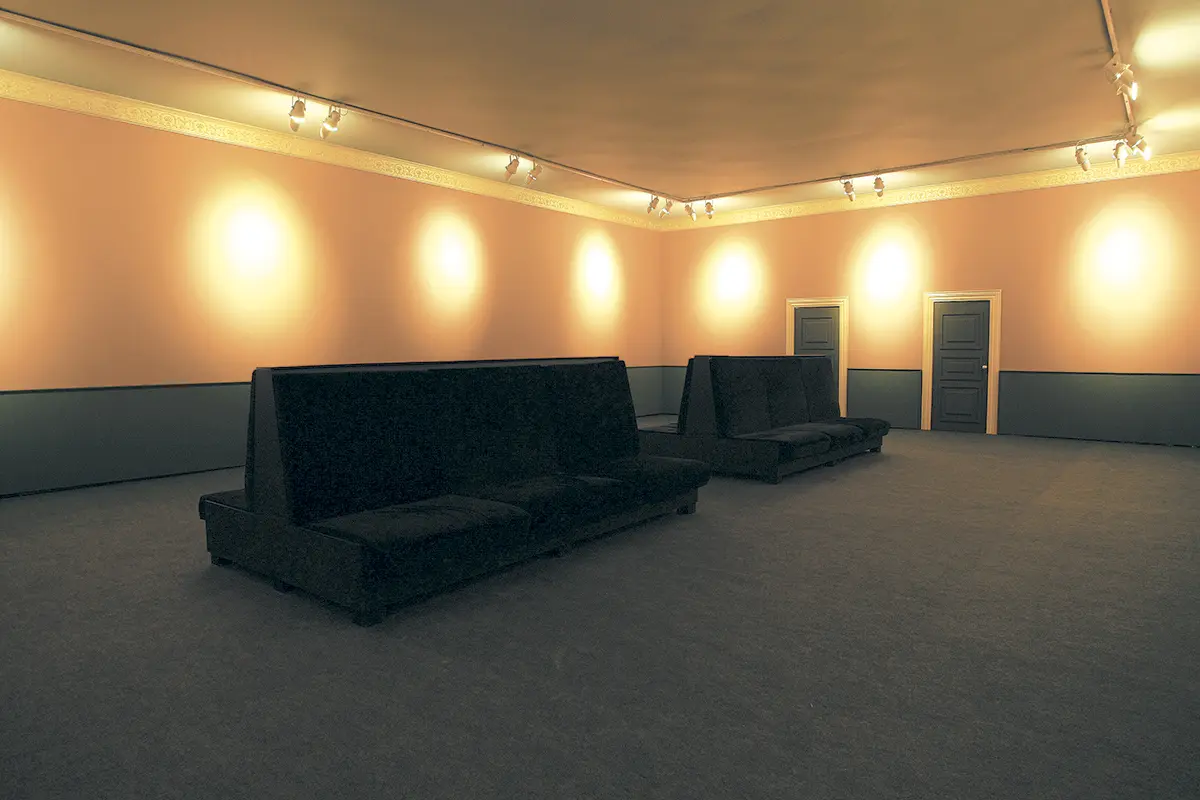
Arguing that contemporary aesthetic issues have nothing to do with the political and geographical borders that separate nations from each other, and that they can be approached by artists from different parts of the world, Paulo Sérgio Duarte abolished the distribution of works by the artist’s country of origin and mixed artists in the exhibition spaces, even avoiding any indication of the exhibitor’s background in the technical information for each work on display.
The general curator proposed four vectors or conceptual themes) for the biennial: “From Sculpture to Installation,” “Transformations of the Public Space,” “Directions in the New Space,” and “The Persistence of Painting.”
“From Sculpture to Installation” introduced the debate about artistic production in three dimensions, noting the transformations to which it was subjected in the past century. The starting point for this theme was a historical nucleus built particularly around the experience of Brazilian Concrete Art, which emerged and consolidated in the 1950s. This historical nucleus, titled “Reinvention of Space,” seems also to have been structured as a support for the Biennial project as a whole.
The idea of space conceived by the curator is one that emerges from the Concrete aesthetics, and it is on that basis that the story of the Biennial is to be told. The intention seemed to be to unfold the historical nucleus in a chronological sequence, arriving at those contemporary expressions that have the issue of space as the structural strategy of their artistic language.
“From Sculpture to Installation” suggested observation of the epistemological changes effected in the field of art in the late 1960s and early 1970s. It wanted to show that, as a consequence of minimalist practices, site-specific works finally transferred to the realm of three-dimensional forms the possibility of moving into the space of landscape and architecture, effecting a consequential semantic change in the language art and transferring the value of the signified from the object to the context.
The section presented its historical works in the Santander Cultural Center and the contemporary works in the A3 and A4 warehouses at Cais do Porto.
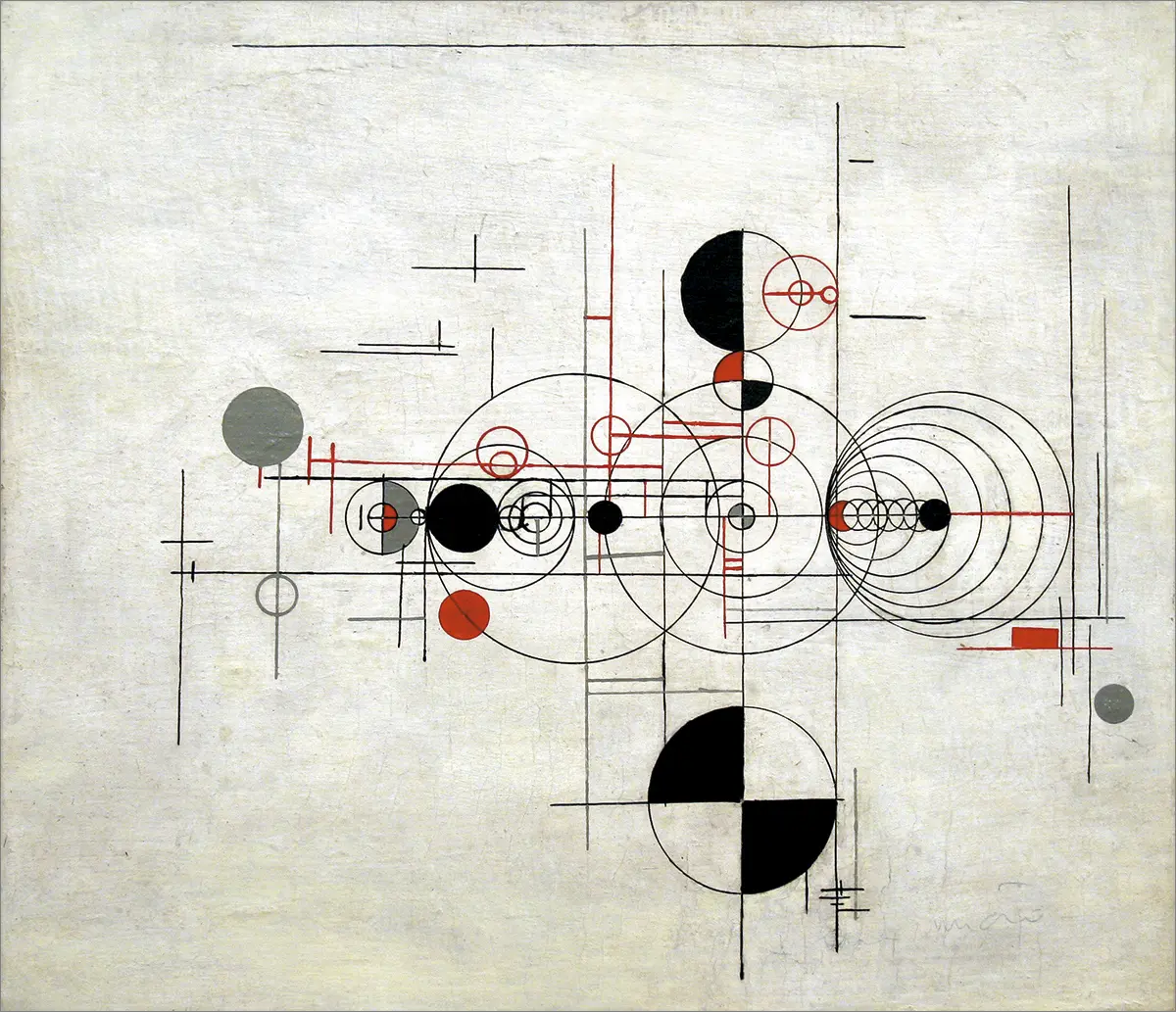
The theme titled “The Persistence of Painting” brought to the fore the fact that, despite having had the death of painting declared numerous times over the last century, artists continued to explore the surface of the canvas with audacity and creativity, thinking up new modes of representation. Once again, the historical exhibition, presented at the Museu de Arte do the Rio Grande do Sul, placed special emphasis on painting along constructivist lines, and the selection exhibited was dominated by Brazilian historical figures. Among the artists in this segment were Waldemar Cordeiro, Hércules Barsotti, Aluísio Carvão, and Abraham Palatnik. The contemporary nucleus of this theme was on display at the Cais do Porto’s A5 and A6 warehouses and included names like Adriana Varejão, Antonio Dias, Bernardo Krsniansky, and Carlos Colombino, Daniel Senise, Franco Aceves Humana, and Juan Tessi, among other artists from the various participating countries.
In “Transformations of the Public Space,” the curators observed the insertion of the city environment in the creative process behind the work of art. The works of four of the eleven artists present in this section, Carmela Gross, Mario Fuke, José Resende, and Waltércio Caldas, will remain in Porto Alegre permanently, and in this way, the city increases its public art patrimony.
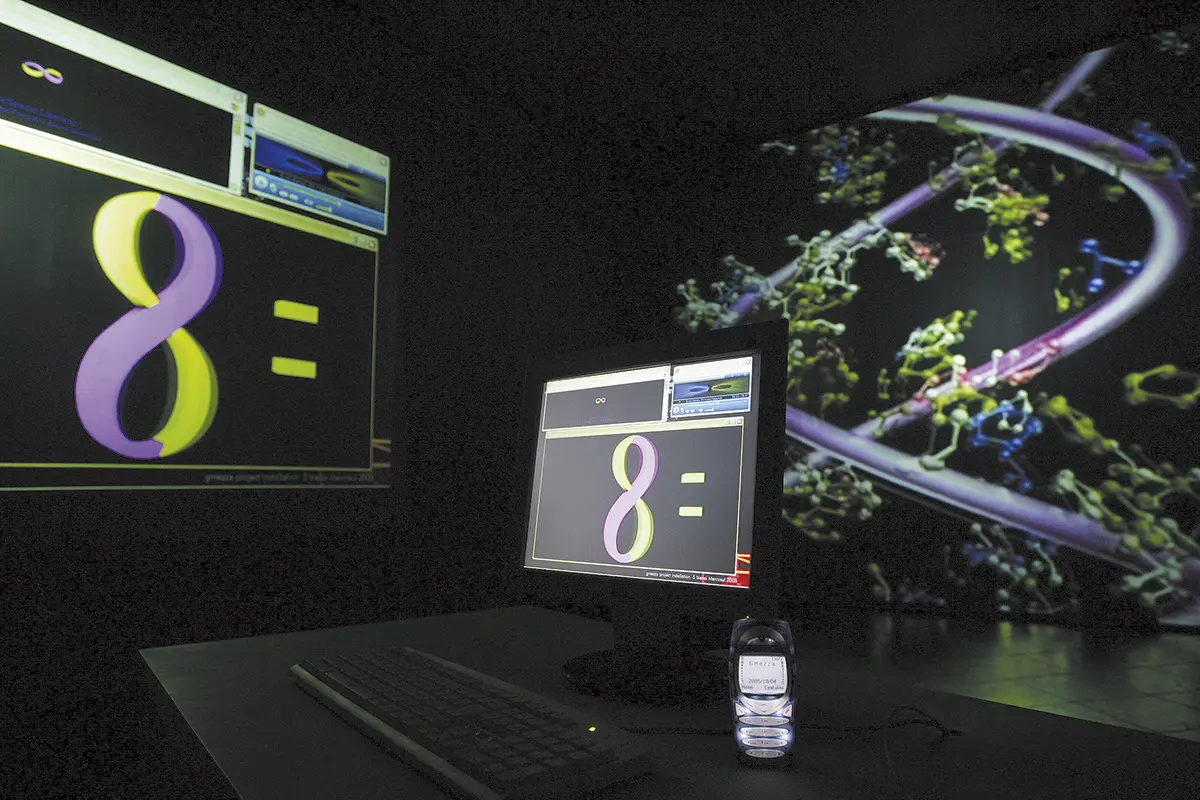
The segment titled “Directions in the New Space” brought to the biennial experiences that use technological media such as photography, film, video, computers, and the Internet. Among others, the highlights were the works of Bia Medeiros, Diana Domingues, Gonzalo Mezza, and Joaquim Sanches. This sector of the Biennial was presented at the Usina do Gasômetro.
This biennial included a tribute to Amílcar de Castro, with a retrospective divided between the Museu de Arte, do the Rio Grande do Sul and the Cais do Porto. Some of his works were also presented in a city square. The artist, who died in 2002 at the age of eighty-two, had a significant presence in the Neo-Concrete movement. Amílcar de Castro began his career in the state of Minas Gerais, studying with Alberto Guinard. Later, he moved to Rio de Janeiro and participated in Neo-Concrete investigations, leaving an important body of work for Brazilian culture. The Fifth Biennial presented the public with an opportunity to see fifty-eight of de Castro’s sculptures, including works in steel, stone, and wood, as well as twenty-four medium- and large-format paintings, and visual-programming projects he developed, and jewelry he designed. Works from more than forty-four public and private collections were gathered, and a book about the artist was launched. There were also videos about his life and work. The show was well organized and had vast pedagogical support.
Besides the artists from the countries that were part of this MERCOSUR Biennial, four others were there as guests: Ilya Kabakov, with an installation, and Stephen Vitello, whose installations concern issues of space and sound, were both from the U.S.; Pierre Coulibeuf, from France, uses video and film in his works; and Marina Abramovic from Serbia-Montenegro presented performances and video-installations.
Specialists developed important educational programs, offering activities for teachers and students. Monitors were trained to help the visitors to the mega-exhibition. Special kits were produced for public and private schools. A series of seminars and conferences was programmed to take place concurrent to the biennial.
Likewise, books about each segment of the Fifth MERCOSUR Biennial were presented during the event. At the opening, the book Compass Rose: Positions and Directions in Contemporary Art, with critical essays by the curators, was available.
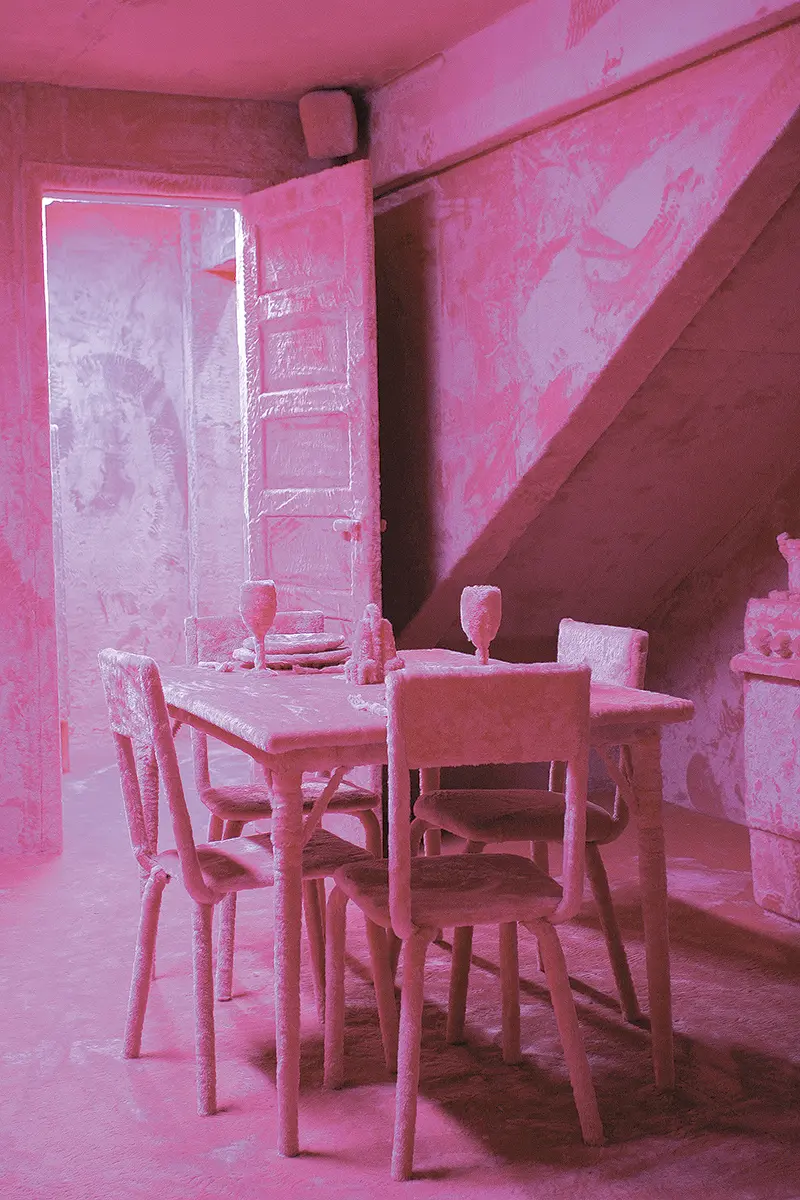
Among the works on exhibit, one that generated great interest was Raquel Schwartz’s installation, titled Ilusión. The Bolivian artist has been working with metaphors about reality and fantasy. For this biennial, she built a small house covered with rose-colored plush, including a living room with a couch, a table, and a chair; a dining room with a table, a chair, and other objects; a bathroom; and a bedroom. All of the rooms contained typical everyday objects entirely covered in pink plush. The artist used sound in these environments; a recording of birdsongs provoked the viewer’s sensitivity. Schwartz explores sensations caused by material and color, along with sound, to create an illusory fantasy environment. Visitors were invited to take off their shoes and enter the house and, as they walked around it, to live this experience in a playful way. Many visitors interacted with the environment created by the artist, writing words directly with their fingers on the plush-covered walls.
Another work that grabbed the public’s attention was by Erick Beltrán, from Mexico. Beltrán intervened an edition of the local daily paper Zero Hora, on the day of the Biennial’s opening, presenting four pages printed in negative, with white letters against a black background, and photographs of distorted color. One of the pages was placed in the sports section, two were in the culture section, and one was on the back cover of the "Vida" section. His intention, Beltrán declared, was to work with surprise readings, to generate a break in the everyday process of habitual contact with the mass media, and, somehow, to interfere with people’s day-to-day experiences, calling their attention to how the structure of the texts and images found in a daily newspaper determine socially conditioned gestures and behaviors. Beltrán’s intervention was also exhibited inside a traditional white exhibition space, arranged in the Usina do Gasómetro.
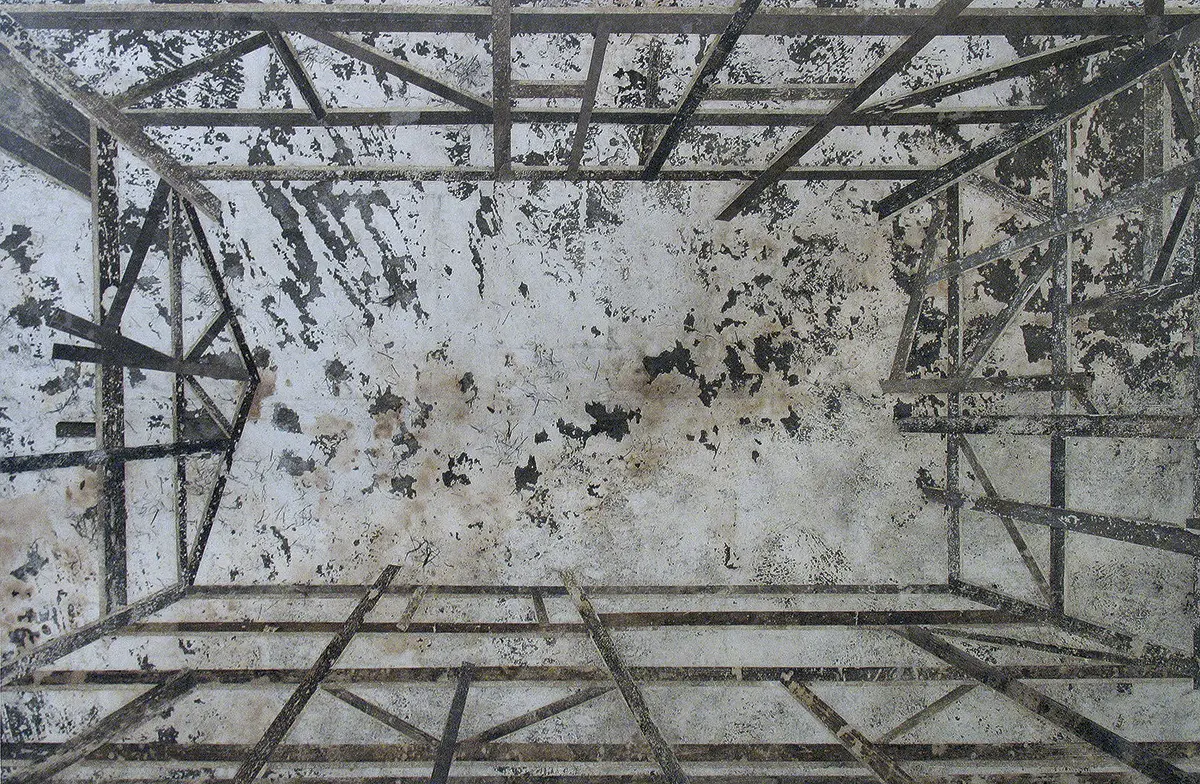
The Brazilian artist Lole de Freitas came to the Biennial with Study for Surface and Line, a work of great visual force, made in stainless steel and carbonate. Seemingly floating lines and rhythmic shapes extended throughout the area devoted to her work, an eighteen by thirteen by almost four and one-half meter high area located in the warehouses of Cais do Porto. The artist works with the topic of fluidity and rhythm; she explores the lightness and the suspension of forms, transparency, movement, and transition, and creates a dense space and time relationship.
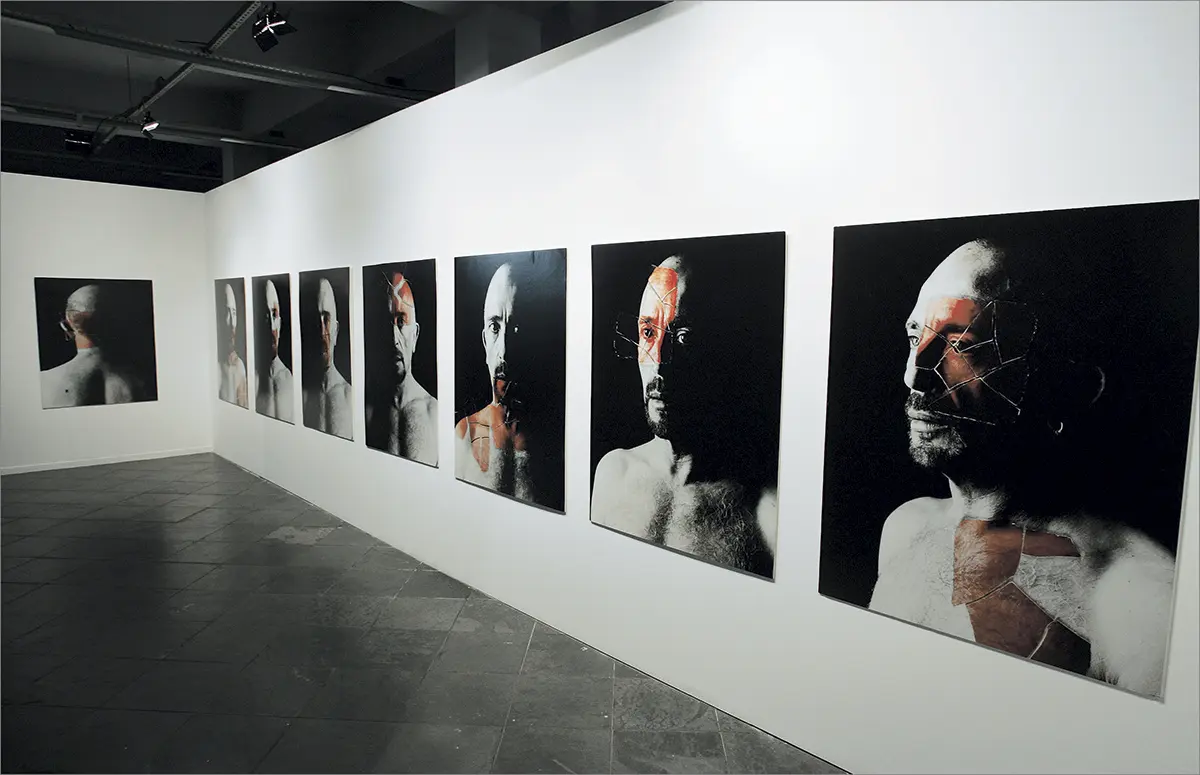
The problem of subjective identity appeared with certain momentum in this biennial, as has been seen in previous editions and also in the most recent biennials in São Paulo and Venice. In the MERCOSUR Biennial, the issue could be found, for example, in Ricardo Migliorsi’s photographic investigation El banquete inconcluso. The Paraguayan artist takes the body as his theme, marking it as if to highlight its different regions; Migliorsi intervenes with photographic self-portraits and then photographs the results, building superpositions and metaphors with the repetition of his own image, such as showing and exposing himself in the work Yo interior.
The issue of subjective and social identity could likewise be felt in the work of Marina Abramovic. Her video installation titled Count on us was built around several coordinated projections, and its theme was peace and the union of all countries, yet it afforded glimpses of marginality. The work was structured by a choir performance conducted by a skeleton.
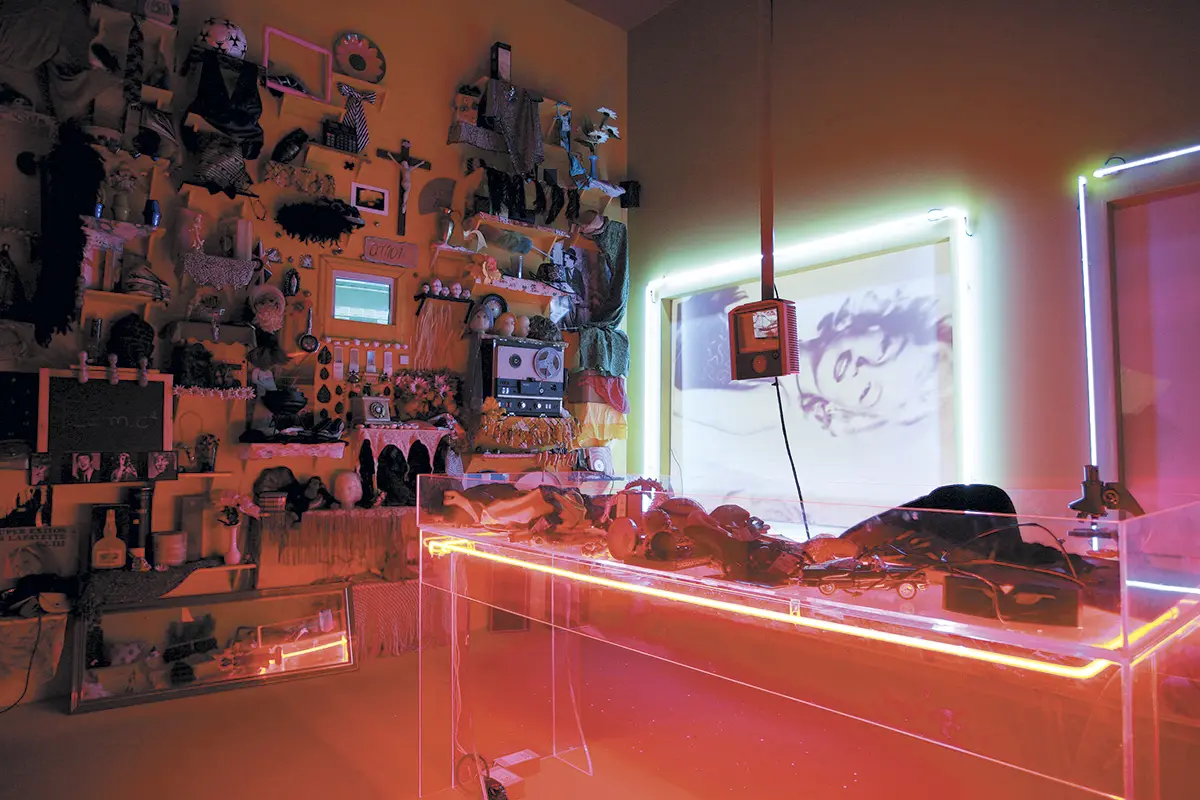
In the sector “Directions in the New Space,” the highlights were an interactive proposal by Diana Domínguez of Brazil and a project by Gonzalo Mezza of Chile. Domínguez has for years been in the field of art and technology and for the Fifth MERCOSUR Biennial, she prepared an installation titled I mito: zapping zone, a room filled with consumer goods, with walls covered in colors and textures, where the visitor had access to information about twenty celebrities, including Marilyn Monroe, Cleopatra, Princess Diana, Carmen Miranda, Ayrton Senna, Pelé, Charles Chaplin, and Ché Guevara, with the option of combining any two of them to generate a new individual. According to the artist, the point of the installation was to find a relationship between the real and the virtual, creating art in sync with our times.
Gonzalo Mezza presented his project 8=8 Espacio Liberado. This artist, who stood out at the latest São Paulo Biennial with a work titled Pacífico, once again captured the attention of the public with his digital investigations and cyberspaces.
Some of the performances took place during the inauguration of the biennial. Elvira Santamaría from Mexico was among the artists who presented works in this genre. The artist explained her project: “I am an artist who wants to understand death and its exchange with life. This leads me to wonder about the way in which a concrete death relates, in its alliances with life, with human societies. I concluded that in a society nobody dies of natural causes. I believe that all experiences build nature outside of the species, in continuous evolution, and becoming aware in our actions can alter the process of evolution.” Santamaría’s actions create ritual spaces around her. Using materials like fire, water, mirrors, and glass, the artist wants to project onto her viewers a process of revelation.
Silvia Rivas, from Argentina, presented a video installation where performative action was essential. She presented several works, Distorsión, Un grano de polvo and La superficie no suelta, which constitute a series starring a group of actors from the Puertas al Arte center, supported by the community foundation Crear Vale La Pena. Directed by the artist, who filmed the actors and then slowed down the film, the video showed men and women piling up, forming an almost abstract mass of human bodies that push each other, fall, and struggle. Their gestures were accompanied by sound, without establishing a coordinated reference between them.
The greatest interest in this most recent MERCOSUR Biennial centered on the installations, which used a variety of media and materials, the performances, and the interventions in the city and along the banks of the Guaíba River. These modes of contemporary art were presented to the viewer as a process of critical immersion in relation to the existence of society in our times, stimulating imaginations and producing experiences and reflections for those who entered the world projected by this biennial.
The revisiting of the historical corpus of the Concrete art movement as a guide for the vision of space reminded visitors of the First Biennial when Federico Maroais presented an anthology show on that topic. The First Biennial was an incomparable work that presented this constructive current as a fundamental dimension of Latin American reality and showed works by the artists who marked this investigation in several countries of the region.
The decision not to indicate the nationality of the artists in the identification of the works on exhibit reduced the amount of information offered to visitors. In a context in which the history of Latin American art is so little known, it was a mistake to demand that visitors consult the information in folders that were not accessible in the space that they were visiting or in a panel with the names of the exhibitors at the entrance of the space. This expectation is far from the ideal visit to an art exhibition, when perambulation, direct experience, and information must fuse in a single process that leads to aesthetic knowledge, differentiated from experience.
Taking into account that the purpose of the show was to stimulate a broad and intense formative action, the artists’ identities and their cultural insertion were fundamental. History was not only built in the language of art as such; it results from the cultural dimension, with its symbolic processes in a wider sense. The observation of a cultural juncture needs to be a priority in a project such as the MERCOSUR Biennial.
NOTE
1. Largo Glênio Peres, located across the central public market, opened in 1922 as a public place devoted to artistic, cultural, and political expressions.
LISBETH REBOLLO GONÇALVES
Professor at the School of Communication and Art, Universidad de São Paulo, President of ABCA, and Vice-President of AICA, International Association of Art Critics.