
We frequently approach the work of Gordon Matta-Clark through his glossy photographs of the holes and slices he carved from abandoned buildings and through their remains as sculptural fragments positioned in sanitary museum spaces. In front of such monuments, our mind’s eye may resurrect ideas of formalism or process and remind us that his work stood in a vague position relative to architecture and sculpture. But this refreshing, well-conceived, and well-timed exhibition spread over two venues brings some of the life back into this moribund legacy, to return us to and extend the breadth, vibrancy, and relevance of his artistic thought. But to review the exhibition is necessary to rewrite a piece of Matta-Clark’s history.
In the early 1970s, Matta-Clark discovered that New York City auctioned small, weirdly shaped pieces of land—“gutter spaces”—leftover from changes and misalignments in zoning, survey, and construction. He realized these anomalous bits of curbside, yards, and driveways could be seen as mergers of Conceptual and Land Art: physical eruptions that redirected our awareness to the rationalized grid not simply as city plans but to a system that used generalizations, suppressions, and absorptions to complete its uniform appearance. These were sites deconstructed by the constructive system itself, self-produced fragmentary evidence that testified to a self-colonizing society. Once realized through an artistic act, they could become metaphors for the larger picture, the greater grid within which we live and the one we internalize and use to understand, process, and project back into the world. The impractical parcels also neatly illustrated the issues of tangibility and value/ownership referred to in the non-marketable products of Conceptual and Earth artists. Matta-Clark then added layers of meaning as he developed his project.
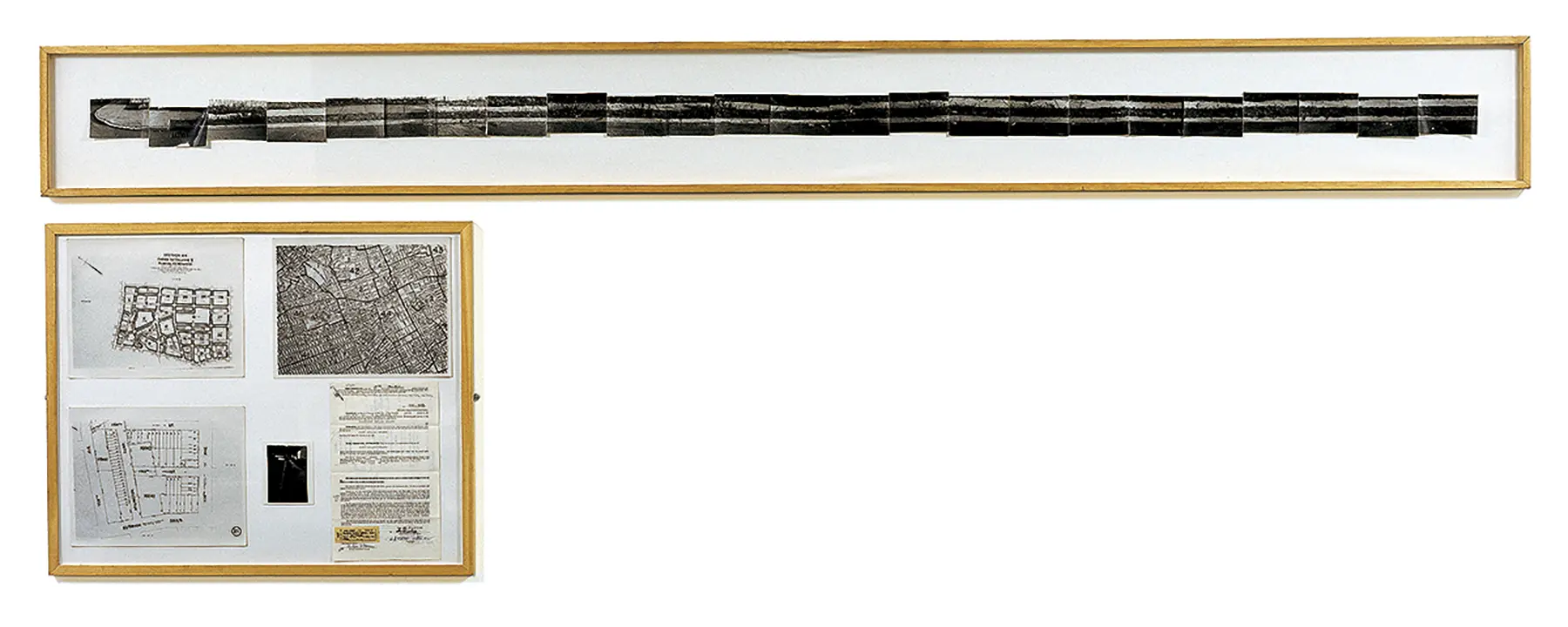
He bought fifteen lots at auction for about $25 each, with the intention of selling them—the photo of the lot, survey map, and the actual deed of land collaged together as self-conscious manifestoes. The project was never fully realized beyond a film made showing him going from door to door to chat with the “real” landowners to locate and photograph the pieces. The artist died of cancer in 1978 and the land was returned to city ownership due to unpaid taxes. His “left-overs” of the project remained in boxes until resurrected in the early 1990s by his widow Jane Crawford, whose arrangement and sale of the paper trail into boxed collages added another level to the dualities of presence/absence, real/fake, owned/not-owned.
Known as Reality Properties: Fake Estates, the project came to the attention of the editors of Cabinet, a magazine of art and culture, as part of their 2003 edition on property. They convinced the city, which no longer sold such odd lots, to license with renewal the ten lots still available as long as they “maintain a conceptual relation to the land.”* The magazine was thus able to lay a temporary “claim” of non-ownership while the city became a temporary partner in conceptual art as both entered into the spirit of and expanded the project. The expansion of concepts continued into the two exhibition sites: White Columns, the oldest alternative space in New York City and one co-founded by Matta-Clark in 1969, and the Queens Museum, whose reputation for exploring alternative histories is well established.
The Queens Museum marked on its famous 9000-square foot Panorama of the City of New York the original sites purchased by Matta-Clark, fourteen of them in Queens, for viewers to see from the walkway above. And the museum presented archival material that traced the development of the micro-parcels as well as several of the Reality Properties collages. However, the best idea was also the silliest. The museum offered a series of bus tours to selected Fake Estate sites, many measuring two feet wide, to bring people face-to-face with the reality of the concept, which draws you not to the land itself but to the living environment that frames it, from cars to gates to “owners” who protested the supposed trespass. For my tour, the continuing partnership of Jimbo Blachly and Lytle Shaw, performing as the Chadwicks, two nineteenth-century dandies, hosted and extended Matta-Clark’s project in the best postmodern sense by mixing real and invented histories and intentions for the sites, none of which the artist had seen prior to purchase.
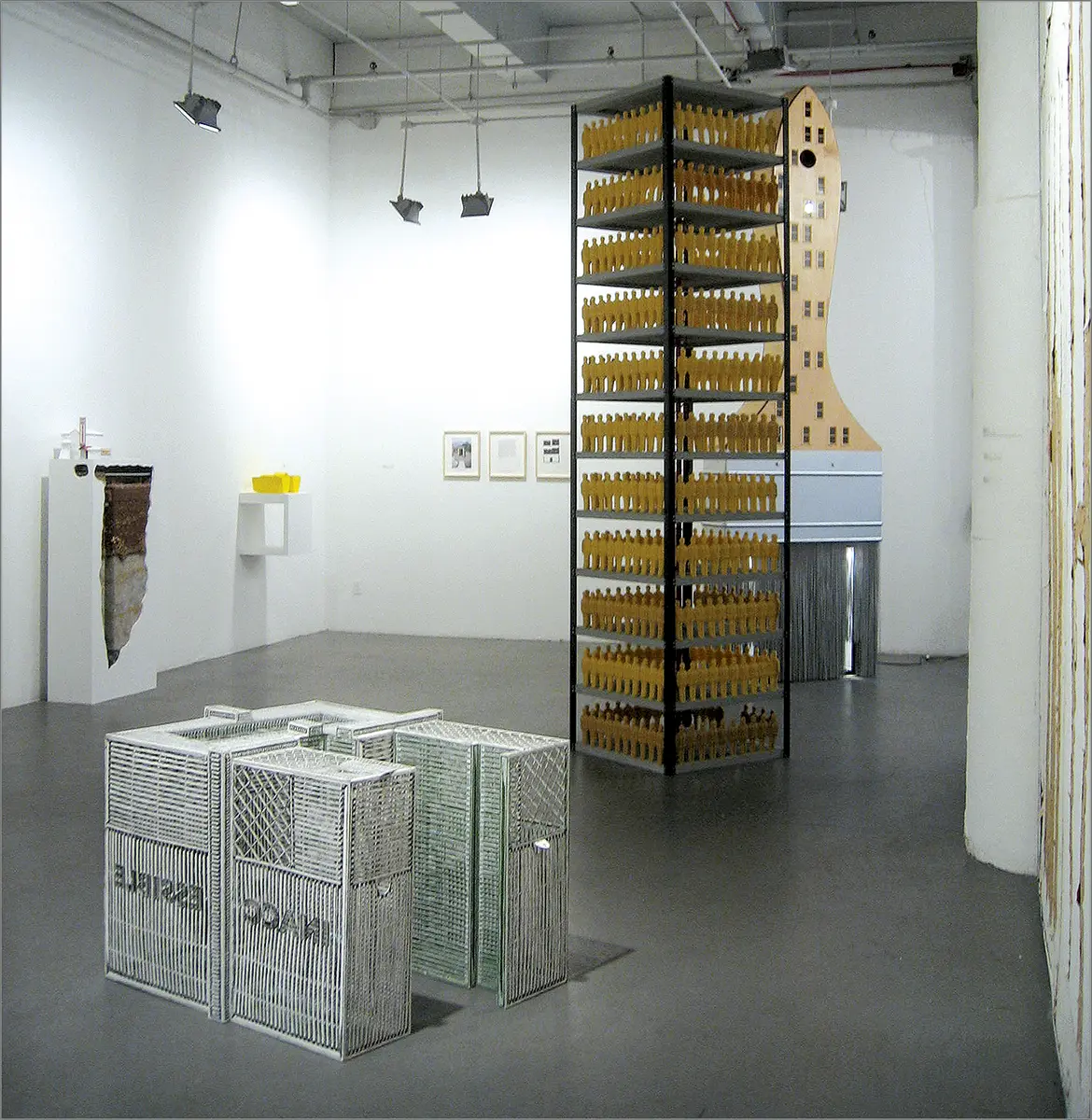
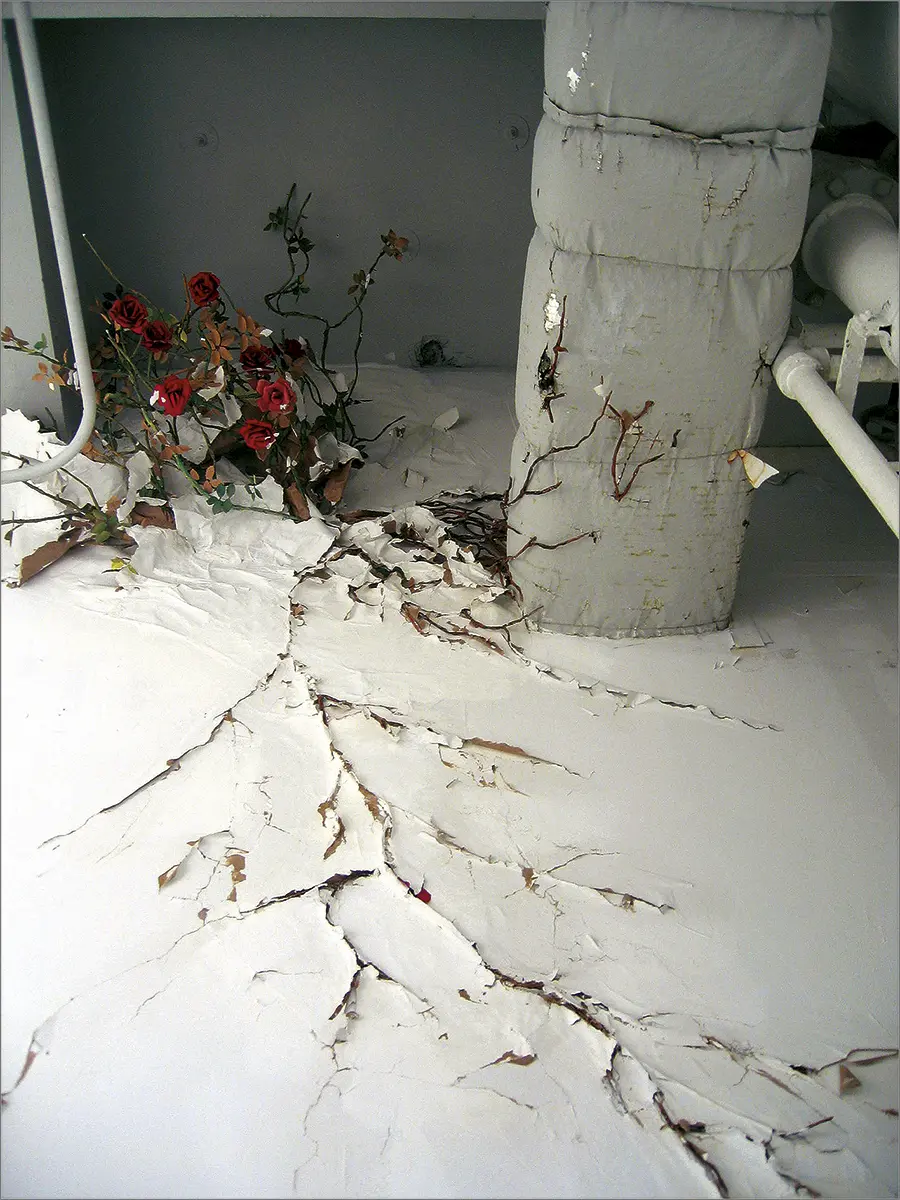
At White Columns the guest curators—Jeffrey Kastner, Sina Najafi, and Francis Richard, all editors of Cabinet—commissioned nineteen artists to explore and extend Matta-Clark’s ideas. Their goal throughout was to have us rethink his legacy, to move away from the physicality of dismembered buildings to the consequences of his thinking. Compare this concept-driven liberation of Matta-Clark’s aesthetics to the recent and expensive realization of Robert Smithson’s river barge Floating Island, which focused on the work as a fetish object in the name of a missing original and its status as object. This Modernist approach remains at odds with the intentionality of Smithson, Matta-Clark, and other artists in their historical period.
Jimbo Blachly, Matthew Northridge, and Clara Williams were the first to implement the curatorial concept in the Spring 2003 issue of Cabinet, which published their projects. Blachly projected images of parking meters along the 2-by-350-foot strip, paying a local gang to enforce parking rules and using the projected revenue to purchase a ruined architectural fragment he located in Manhattan. Clara Williams conceived a mailbox on her micro-sliver of land with the name No Body.
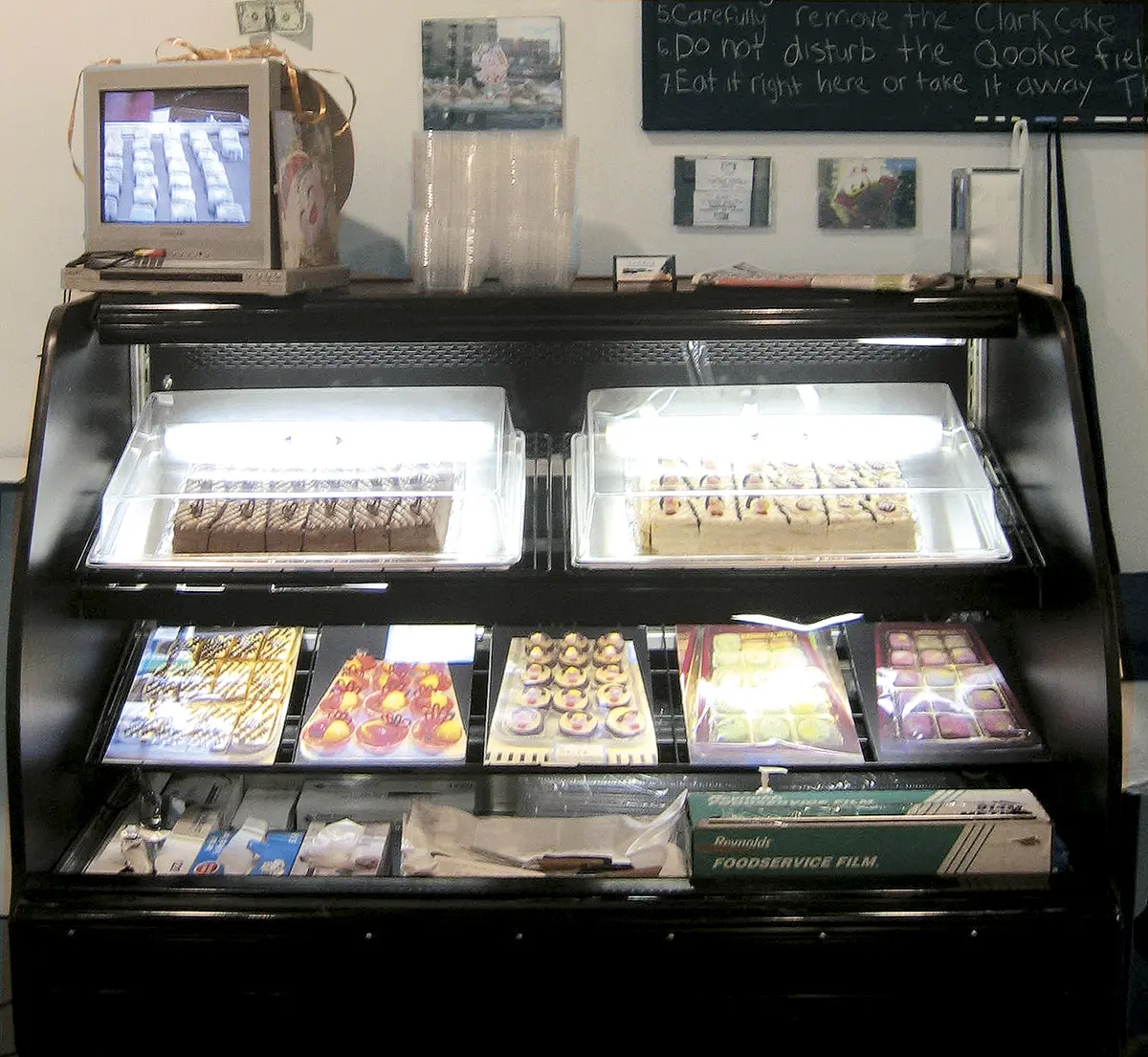
Works created for the current exhibition did not deal directly with the property but with the underexamined ideas of Matta-Clark. For example, Mierle Laderman Ukeles created the project Queen’s Qookies/Sweet Splits as an extension of Matta-Clark’s strong sense of community, especially of group dining. She asked bakers to visit the nearby odd-shaped sites as she told them about Matta-Clark’s ideas and to convert their experience into Queens Qookies to be purchased and eaten by the customer/viewer at the gallery while their process of making presented in videos. Francis Alÿs, based in Mexico City, seemed to best relocate Matta-Clark’s deconstructive concepts by retracing the environmental history of a very small store, la merceria, that likely began as a footpath, became a covered passage between two buildings and now stood at the center of two open spaces—in much the same way Matta-Clark’s odd lots meet in the middle of current driveways. By treating the local as a locale and history as a transient slide show with the title Next Slide Please . . . , Alÿs neatly demonstrated the normalcy of unstable roles and meanings, such as those that shift from the outside to inside to “metaphors of resistance.”
*My thanks to Sina Najafi and Francis Richard for their rather joyful explanations.
RICHARD LESLIE