
The seventh edition of the Panama Biennial was held between October and November. The organizers, the general director Walo Araújo and the founding director Mónica Kupfer, invited the Guatemalan curator Rosina Cazali to select the artists for the exhibition. Of the sixty-eight proposals presented through an open call, thirteen projects were chosen.
This process opened the possibility of gathering a group of works that showed the artists’ concern for experimenting with new media, centered around a variety of approaches to Panamanian reality.
Rosina Cazali did not base her work on a pre-established problem. The perception one has of the exhibition is that she was guided by the proposals to achieve an internal coherence for a show that had as its central axis the question of what living in Panama means.
Along this line, there is a concern for the construction of imagination, with reiterated themes such as the Canal, immigration, and consumerism. In this approach to the country’s history, everyday life is introduced with singular critical stances contributed by the artists on various topics.
Video had a strong presence; of the thirteen works selected, five were videos denoting an indisputable knowledge of the medium. Enrique Castro Ríos (Panama, born 1967), Donna Conlon (the U.S., born 1966) and Ana Luisa Sánchez Laws (Panama, born 1974) opted for critical discourse on Panama’s situation, showing that the problem can support a diversity of approaches. Castro Ríos’s video installation Naciones Moebius was projected onto the roof so that, to observe the three simultaneous sequences that comprised it, one needed to lie on a wooden platform. His central concern was the relationship between humankind and the social framework, comparing the experience of living in a country with a significant immigrant population with his own condition as a traveler. The images revealed the indisputable presence of globalization that crosses the Atlantic and Pacific oceans and has the Panama Canal as its physical, ethnic, and cultural meeting point.
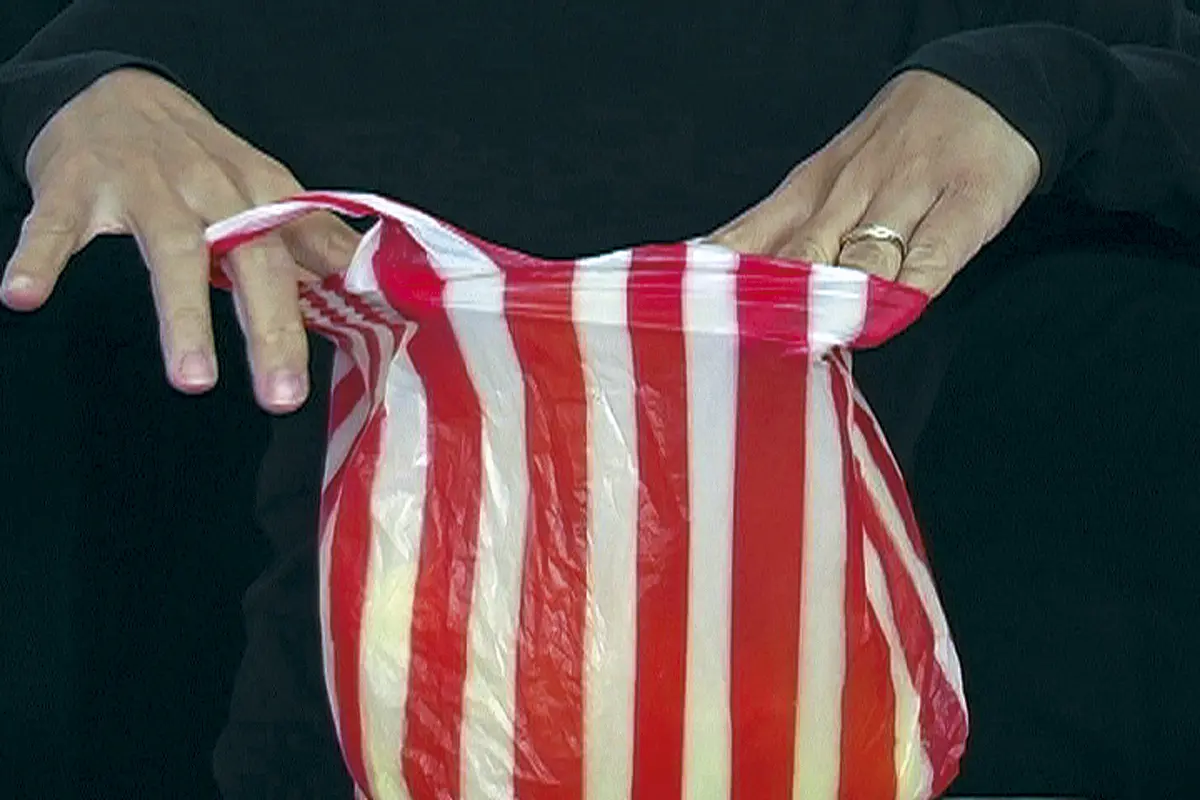
Conlon’s video started with a large black garbage bag and ended with a tiny one of the same color. In between these states, one saw hands taking out bags from inside other bags, most with logos of well-known commercial brands. Consumerism, commercialization, and garbage were presented as an insoluble triad.
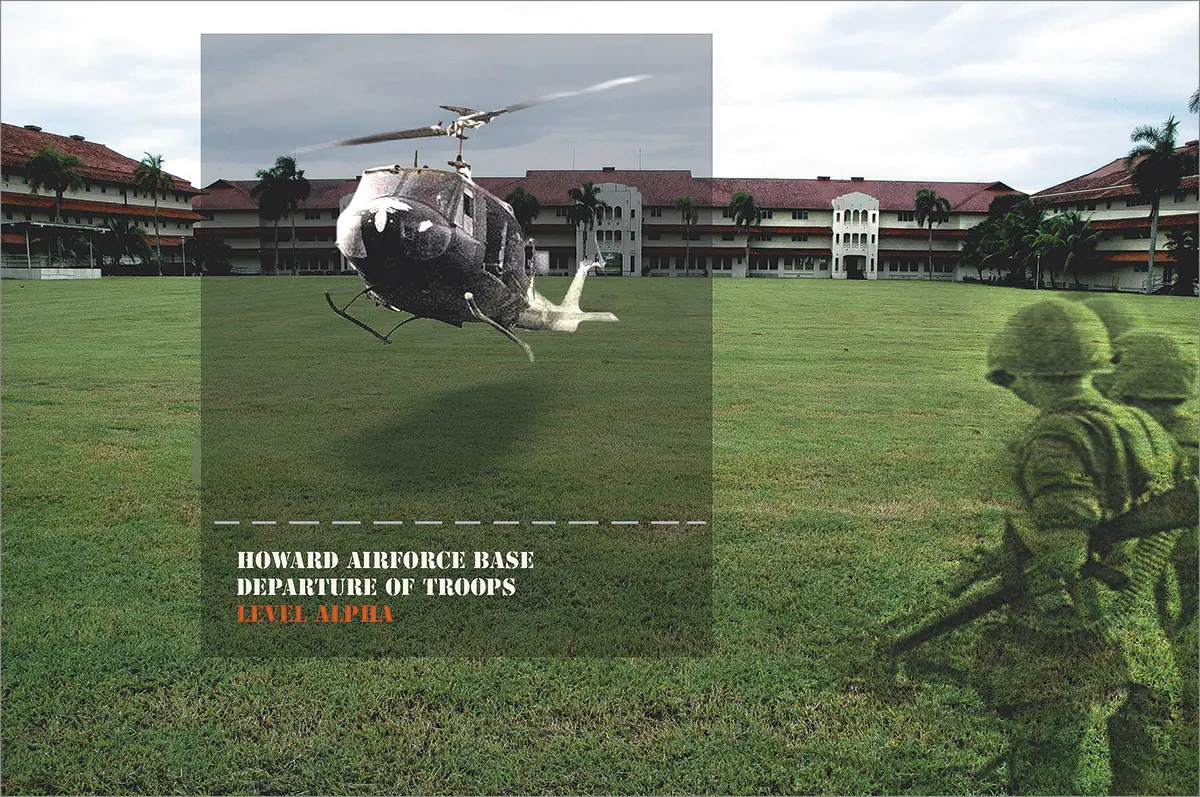
Sánchez Laws’s Angie contra el mundo was a videogame offering an analysis centered on rethinking the meaning of living in Panama during the 1989 invasion. The event is becoming diffuse in the collective memory, and the game’s central character, Angie, comes out of a fictional world, one reconstructed materially as if nothing had happened, to uncover a dramatic recollection of something that time and indifference have not only left in the past but also erased.
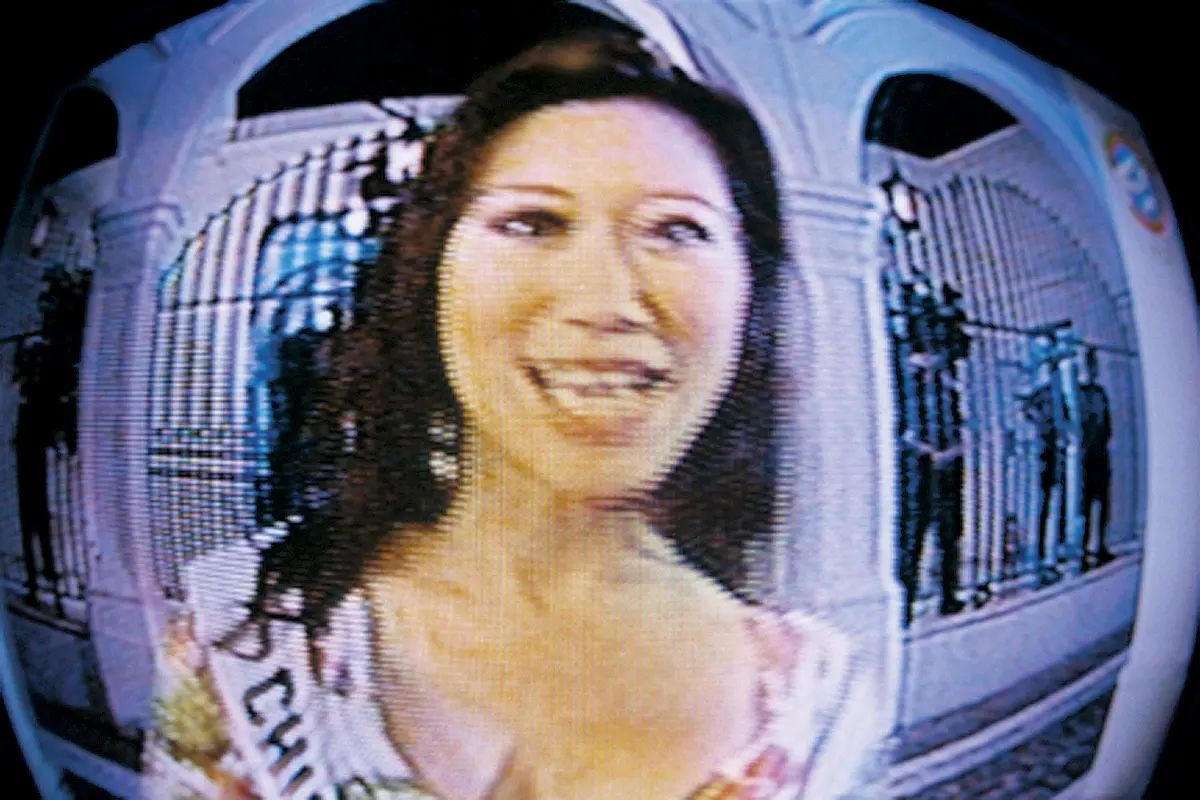
In the work of José Manuel Castrellón (Panama, born 1980), this interest in thinking critically about events that occur in the country finds a particular focus. The photographs in the series Welcome to my country ironically commented on around an unusual event that took place in Panama during the festivities for the first century of independence; the Miss Universe contest was held as one of the central events in the celebration, a clear signal that the promotion of tourism was the goal. The photographs featured the candidates, Donald Trump, who holds the concession for the contest and charged Panama ten million dollars for hosting it, and President Mireya Moscoso, all taken directly from TV screens. Obviously, the distortion suffered by the images reflected the irony of the situation: one hundred years of independence celebrated with an event based on frivolity and the exaltation of a female prototype distorted by the event and by the image.
Other participants displayed from different perspectives their thoughts about Panama. The work of Humberto Vélez (Panama, born 1965) pointed toward horse racing, a sport of great relevance in the country, and the narration by the announcer Junior Fernández, a true institution in the field. Based on the names of its imaginary horses, the text of the broadcast alluded to everyday characters and situations that identify a significant portion of Panama’s population.
Panama was also represented in the reinvention of characters who are part of the local folklore, such as the diablicos. Cisco/Francisco Merel (Panama, born 1981) is the author of a sculpture titled El diablico blanco. The reformulation of this traditional character started with its large size and the elimination of its intense colors. Proportion, geometrization, and whiteness were three elements that led us to think about the reformulation of an iconic figure such as the diablico, which is not exempt from the effects of hybridization in a context where the processes of identity loss are more and more frequent.
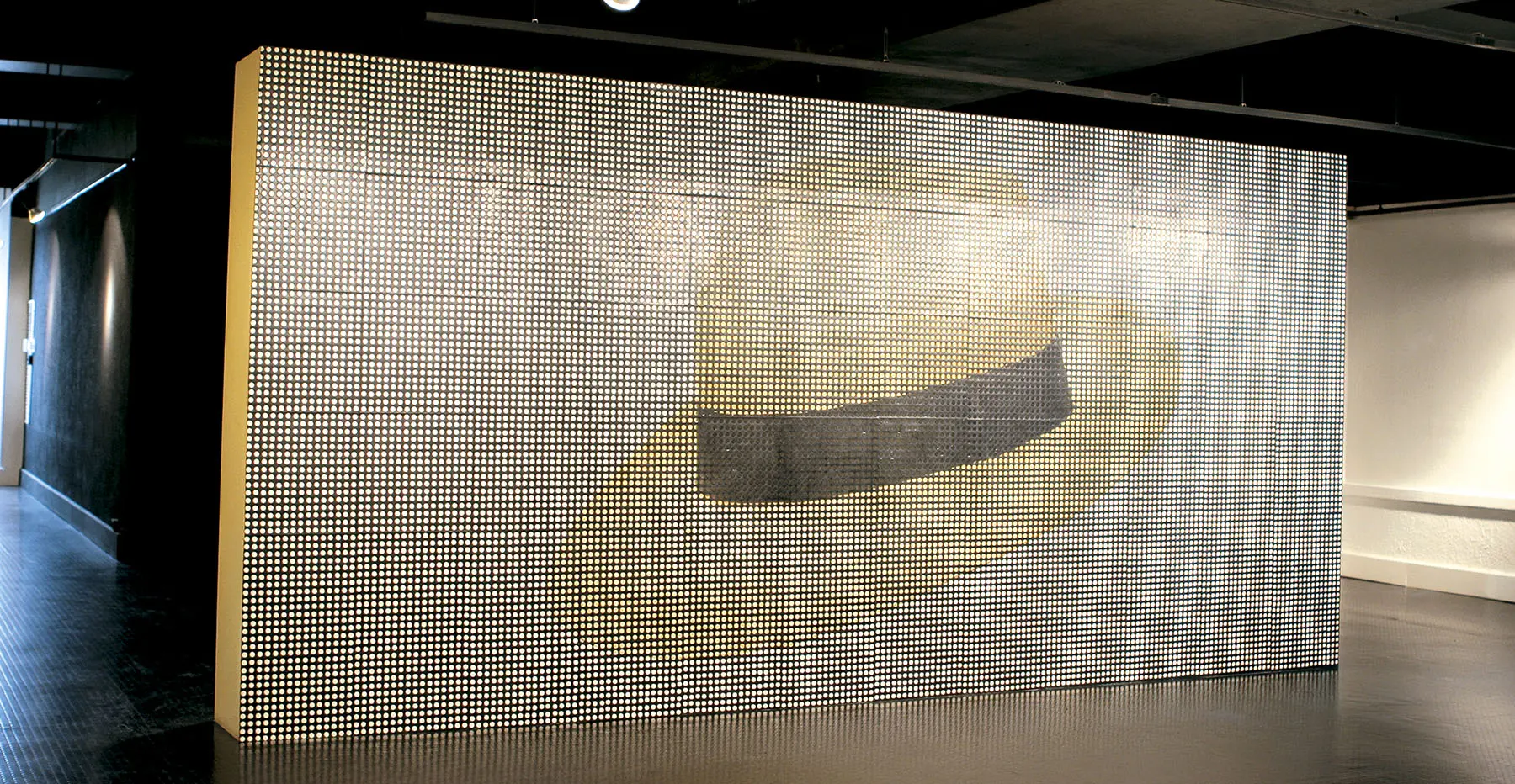
Jonathan Harker (Ecuador, born 1975) offered in his Panama Hat a meditation based on the physical features of the museum space where his installation was located. The anti-skid floor material was the starting point for the work. A large panel referred to the small circles on the floor and achieved by intervention an optical effect, an image of the famous Panama hat. The intervention was proposed by the museum space with the presence of a characteristic item of Panamanian dress and Panamanian culture, although these hats are made in Ecuador. A singular image was established to tie down a space seen as a container of culture to an object that also represents culture, if differently.
Another group of artists had more intimate, even self-referential offerings. In El hilo rojo, Ramsés Giovanni (Panama, born 1974) reconstructed aspects of his personal history and emotions, referring to the particularities of the landscape that contains them and exploring the emotions of a homosexual couple in a solitary natural scene.
Reflexiones silentes, an assemblage by Beatriz Cecilia Paredes (Panama, born 1967), was a wooden structure comprised of sixty-four identical units, built like a chest of drawers. The hermetic structure opened up a suggestive world. When viewers pulled each small drawer and looked inside, they found a variety of poetically arranged objects linking personal experiences to everyday objects of shared meanings. The small objects that populated the drawers were an invitation to peek and to meet our own individual memories.
Rochelle Mozman (the U.S., born 1972) presented a series of unsettling photographs in her American Exurbia. Based on carefully chosen environments and characters, she created an ambivalent atmosphere with excessively white figures of girls placed in a context that homogenizes them. It was as if there existed a perverse relationship between figure and container, one making them equal, part of a homogeneous, closed model from which leaving is impossible.
In his video Cambios, Víctor Mares (Peru, born 1976) played with an elaborate movement between two figures that alluded to the passage of time, the change of roles, and the concept of the cyclical. The slow-motion work rendered our perception of that circular time even subtler.
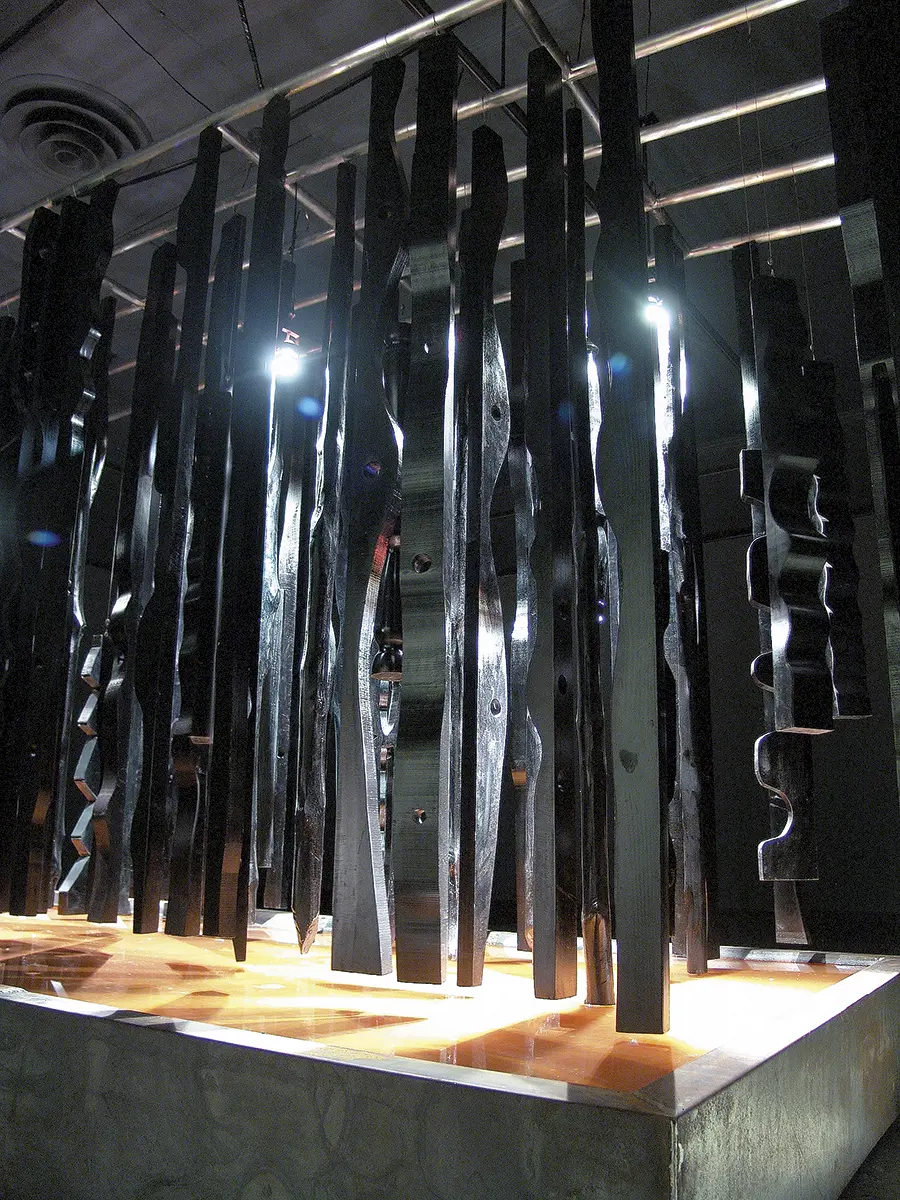
The installation presented by Lezlie Milson (the U.S., born 1958) was an exploration of diverse materials: wood, water, metal, and rust. The artist’s interest in states of being and the world of the unconscious was reflected in the work, titled La formación del “yo.” Here, her intention of exploring the illusions of a being that thinks of itself as a unit but is also a fragment led her to propose an intervention that was excellently articulated in space and time and which evinced unity and fragmentation.
Mirna Valencia (Argentina, born 1967) proposed a singular approach to painting with her digital prints on canvas, linear paintings based on color planes, made with a computer that plays the role of the brush and using printer’s ink as oil. The result was a work of art that confronted the public with something that is strictly technical terms was not painting but was precisely that in visual terms.
This new Panama Biennial, conceived from the perspective of a peculiar but very effective curatorship, offered a series of reflexive, well-executed projects that opened up the space to riskier proposals more fully linked to the context that generates them.
IVONNE PINI
Executive Editor of Arte en Colombia/ArtNexus. Art historian and critic. Professor at the Universidad de los Andes and Universidad Nacional de Colombia.