
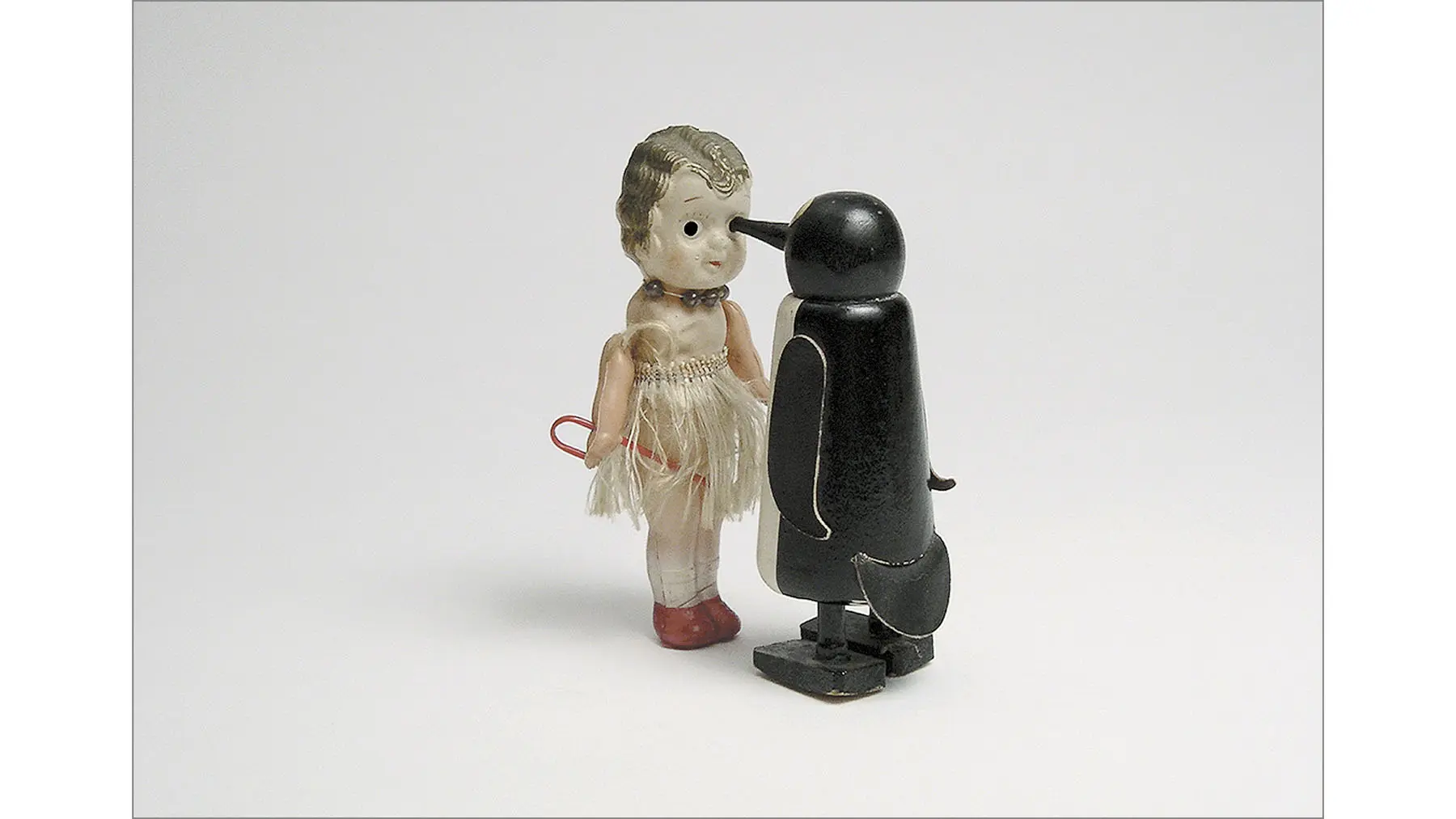
Liliana Porter’s study is located inside a red barn behind her Rhinebeck, New York home. We had made an appointment to plan an interview, but that conversation ended up being (after much editing) the interview itself. Sitting at the table with a tape recorder, a notebook, and a cup of tea, my computer on, I am ready to play the role of the interviewer when Porter notices we don’t have any sugar. She comes back from the kitchen with a honey jar in the shape of a bear, places it on the table, and says, without any solemnity: “Because we need a witness.”
Proudly, I pose my first question: Does watching a film with the lights on remaining a good metaphor to talk about your more recent work? Liliana thinks for a moment and replies, smiling effusively, with a laconic “yes.” We then begin by talking about Ellos y algunos otros (Them and Some Others), her show held in March and April of 2005 at Galería Ruth Benzacar Gallery in Buenos Aires.
Liliana Porter: I presented a series of prints, digital photographs, and installations. A few of them I’d already shown in New York, but I wanted to see the work in a different context. I believe what is important is to see how the work changes according to the place where it is shown, how the works are organized, with whom and how they are exhibited.
José Luis Blondet: It depends on who sees them, on who their audience is.
L.P.: Exactly. And I don’t know how to say this without sounding trite, but it seems to me that when I see them over there, I see them at home. I am always curious about the Buenos Aires context because I think that the works are going to reveal something else to me, that they are going to reveal themselves in a different way.
J.B.: Has that happened, or is it mere romanticism?
L.P.: I don’t know. It is as if over there my works said more. For example, the place where I liked watching my movies the most was at Ruth Benzacar; many things in them could be understood more clearly. At least, I understood many things more clearly.
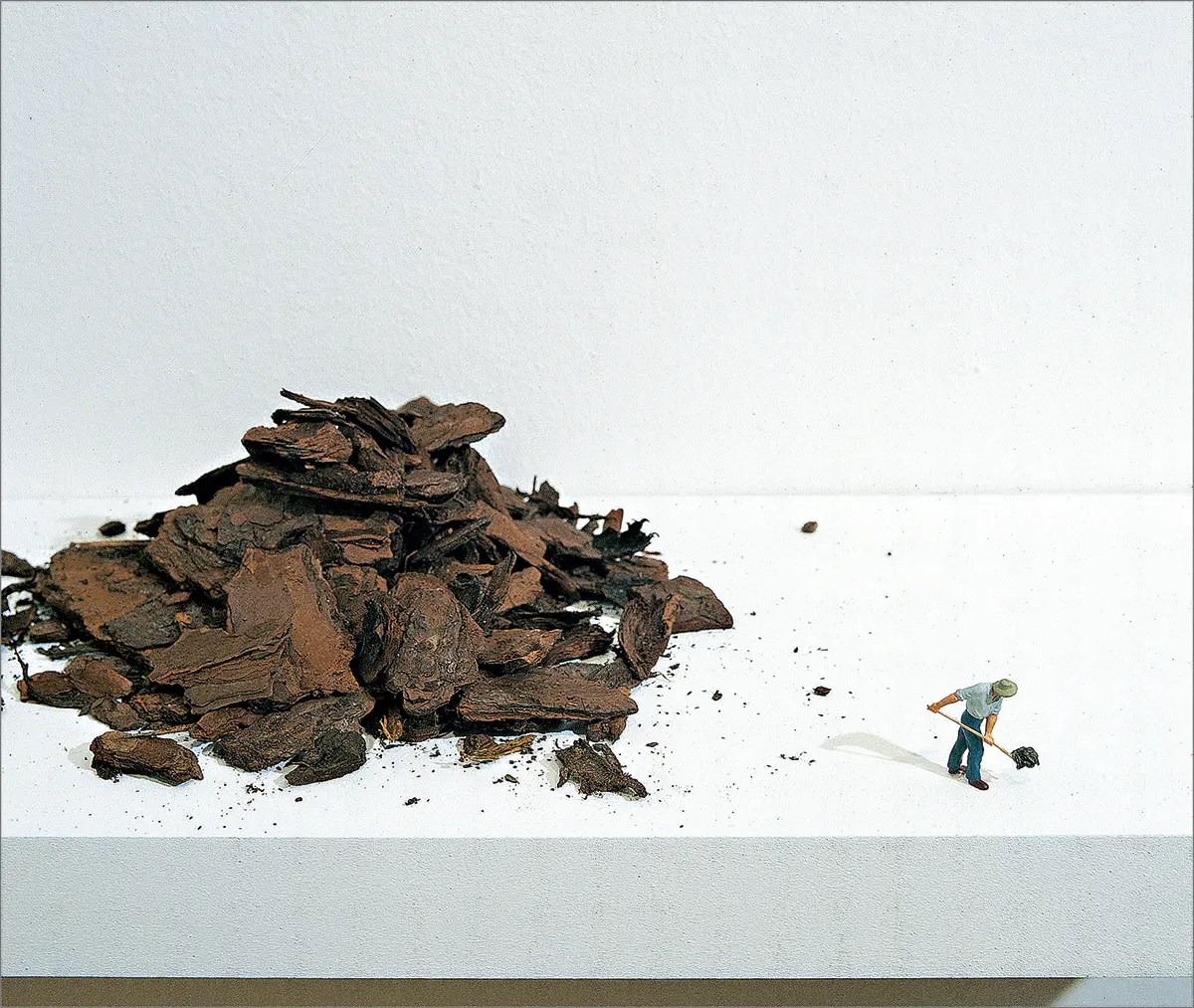
J.B.: In the Trabajos forzados [Forced Work] series, lonely characters face tasks of a scale that goes beyond his or her powers: a sweeper cleans a surface that is one thousand times bigger than she is, a farmer uses a tiny shovel to move his own weight in dirt, a weaver threads fibers into a red cloth a thousand times her size. Everything in these scenes alludes to the disproportion between a character and his or her job.
L.P.: What that disproportion refers to is the imbalance between our knowledge and the ultimate explanation, between what we grasp and what escapes us.
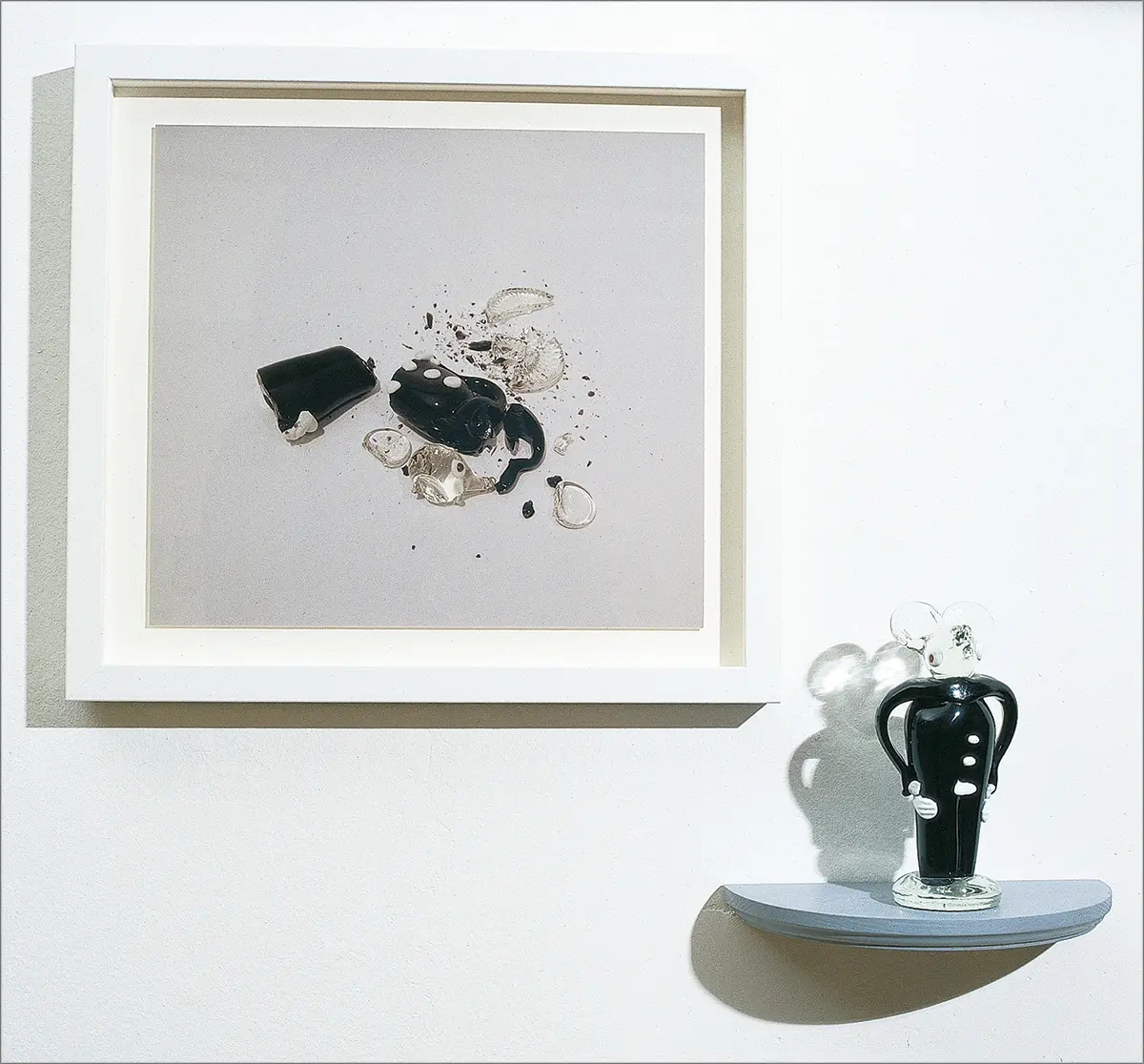
J.B.: That imbalance also affects the viewer who is confronted with two versions of the same object, as in Reconstrucción [Reconstruction], where a digital photograph of a completely destroyed glass Mickey Mouse is presented on the side of a shelf where the same glass Mickey Mouse rests intact.
L.P.: I saw a lady who was very moved, her eyes welling up, looking at Reconstrucción. In a country where everything has so often gone to pot, such an absolute reconstruction can become a hopeful metaphor. I hadn’t let the work say that to me until I got to see it in Buenos Aires.
J.B.: The sad thing is that the reconstruction is a joke, Liliana, pure artifice. Should I say that there are two Mickeys, one broken and one intact? The reconstruction is fictional; extreme makeovers only happen on TV.
L.P.: I also think what moves people is that the reconstructed Mickey is real, you can see it, you can touch it. It is not a photograph. The evidence is right there before your eyes.
J.B.: The photograph is perceived as a document of the “before” and the Mickey as the happy evidence of the “after,” but each is as real or as fictional as the other.
L.P.: It seems like magic.
J.B.: But it is a trick. What supposedly comes before happened after. And seeing it reconstructed like that helps viewers realize the artist’s painstaking work. Ironically, your painstaking work does not resemble what people imagine; the artist does not rebuild anything but instead breaks an object to stress a point.
L.P.: Many people marveled and asked me how had I done it. After a while, they realized it, of course.
J.B.: And then disappointment comes? The hopeful metaphor is one of the evils hidden inside Pandora’s box. Something we have to be wary of, but which is immensely attractive to us.
L.P.: Many of my works in this show move between two very different things.
J.B.: Like a striptease, halfway between the ridiculous and the tender. It is an almost comic book-like sequence where we see this character (the bust of a Nazi soldier) disrobe very slowly from his delicate pink attire…
L.P.: After he disrobes, he is still wearing a disguise, as if there were no way of seeing him naked.
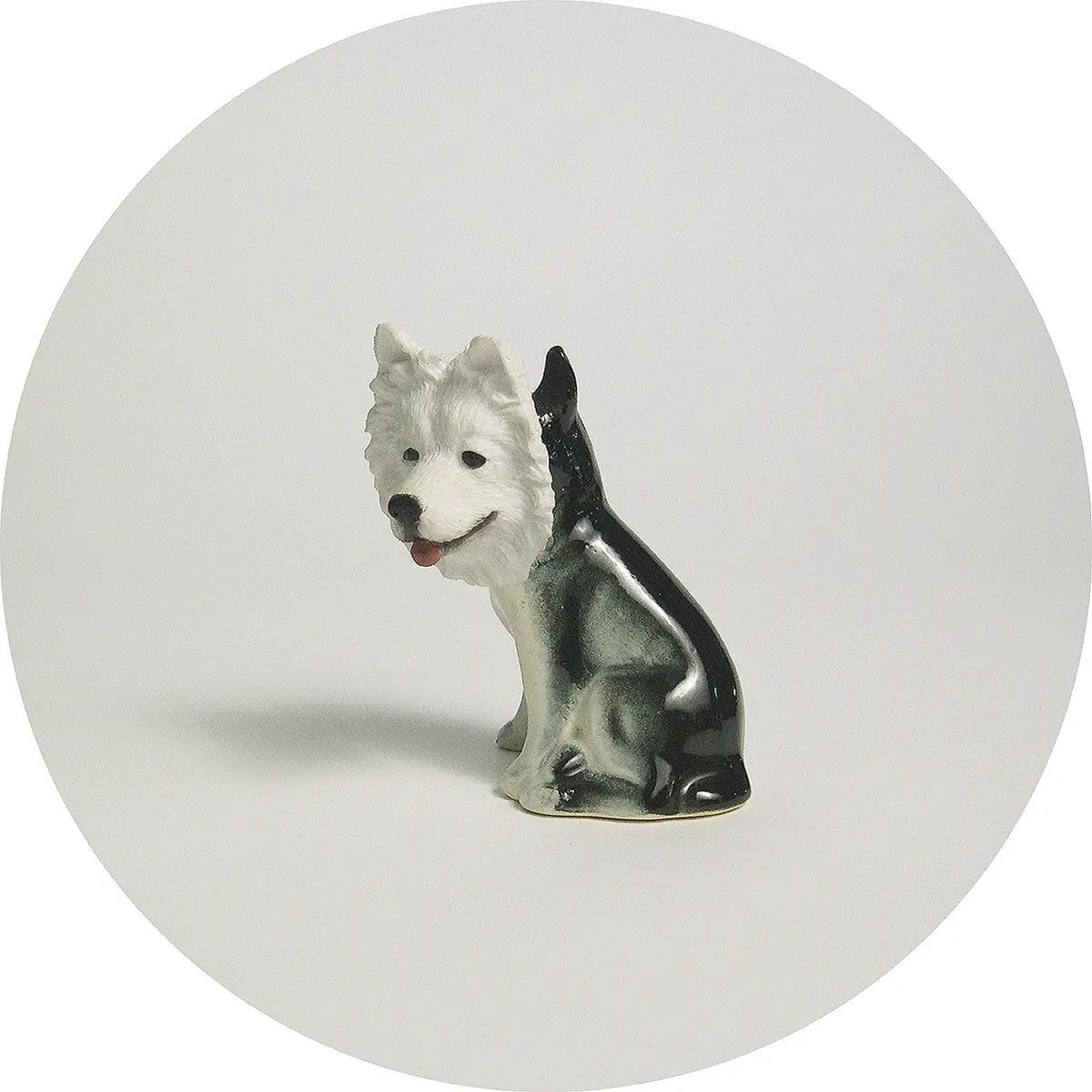
J.B.: Everything is a travesty, a fake identity. It is the same with Dog, a fog that wears a mask in order not to be recognized. What is revealing, at any rate, is the mask itself.
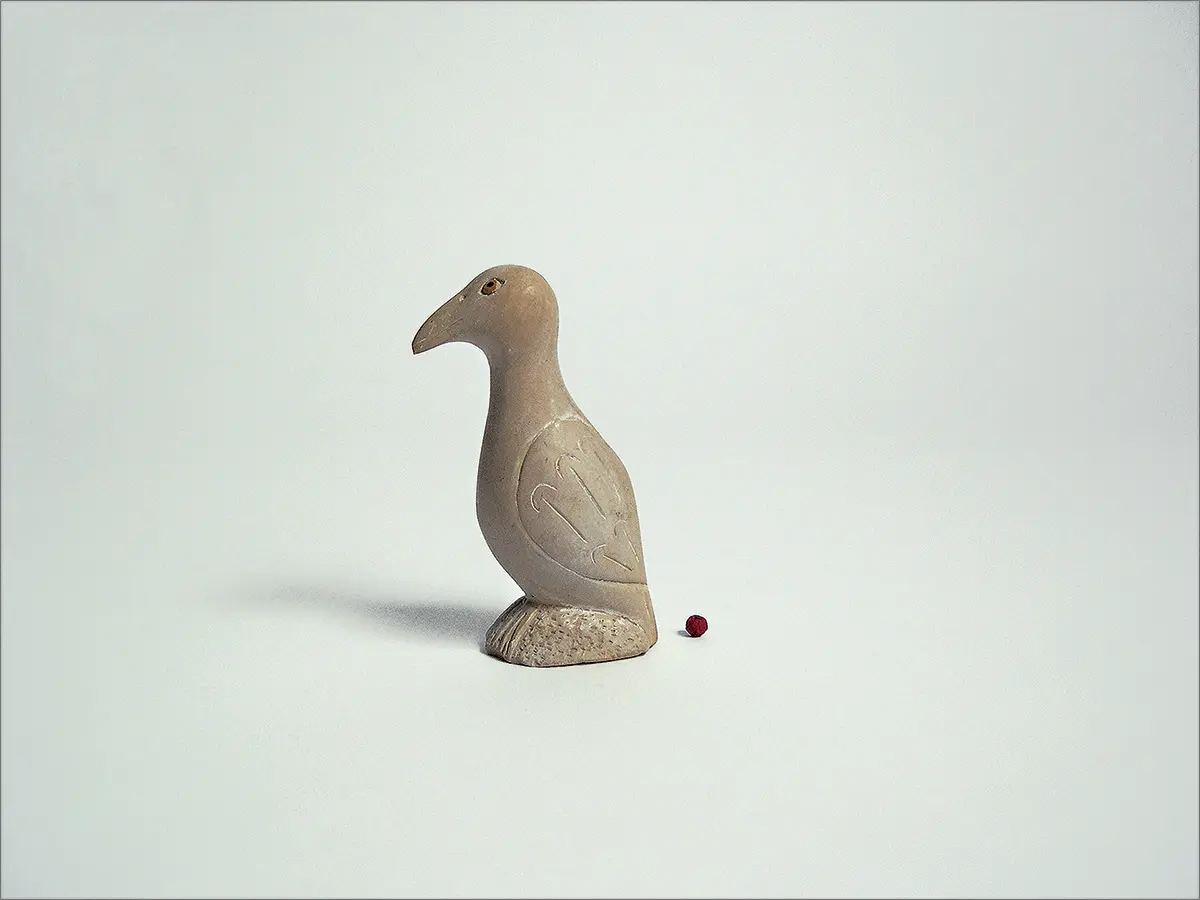
L.P.: Yes, there is the idea of finding these characters as they do something that is very private. Shit is a series of works I really like, and there were three works from this series in this show: the etching of a small deer that made a black dot of excrement, a shelf with a bear that shat gold, and lastly a museum bird that “made” a red pellet. I am amused by the seriousness of the etching technique with the topic of the deer shitting. And with both the little bear and the bird there is also something funny and dramatic at the same time: modesty. The contrast between the seriousness with which the situation is presented and the situation itself is disconcerting.
J.B.: These are very clean works because shit is very punctual. Someone expels a little gold ball. Precious shit.
L.P.: I like using the word “clean” to talk about these works. This is the only work with an English title because in Spanish it wasn’t the same for me. Shit is a softer vulgarity in English than it is in Spanish.
J.B.: As if shit were different in Spanish than in English. And we are still talking about context, aren’t we? Is it difficult for you to work outside of your studio?
L.P.: In 1999 I was invited to an artists’ residence in Civitella, in Italy, and the idea of working for a while in a place that wasn’t mine worried me somewhat. So I decided to do something that wasn’t too complicated and took with me a box with photographs that I used as base materials for my works. I also brought a couple of Rivadavia notebooks. I started doing collages and small drawings until the series started taking shape and I realized that was the right work to do at that place. I think I would never have started that series in New York.
J.B.: The funny thing is that you are invited to a studio and decide to do something that could be done anywhere, but in the end, it turns out that you produce works that could only have been produced there. That series includes your drawing ¿Dónde estás?, wherewith a striking simplicity you once again intimate your question. In a notebook page, two quickly drawn rabbits are barely separated by a fold in the paper, and they don’t meet.
L.P.: I was falling asleep and I thought of those two isolated figures, searching for each other. I thought of the quickest way to make a sketch and then go to sleep, thinking, I’ll work on that tomorrow. The next day I realized that the sketch was the drawing, and it was done.
J.B.: The whole notebook series has that provisional, sketch-like quality. And now that you mention it, also of a half-awake state, that state of attenuated awareness that suggests a different kind of clarity. Many of those notebook sketches later become slower or larger works. Small events drawn on the page are later “amplified” and projected in space. It doesn’t happen with all of them, of course, but I can recall the small plastic man firing his weapon and scorching the page a little, transformed later on into a sniper who destroys a gallery wall
L.P.: Yes, there are works that I make and remake. And I decided that I will continue remaking them until I can do no more. There are things I need to say again.
J.B.: A printmaker’s tick, perhaps?
L.P.: I don’t know if that is the professional defect of a printmaker who prints thirty times the same image. There is something good in such repetition. There are works where making a single copy makes me feel that something is missing. What I do now is a kind of editing not only of the work itself but also of the idea. For example, every time I am at a flea market I look for things that I can use in a work that I often produce versions of, To Go Back.
J.B.: The title seems to fit with your obsessive way of posing the same question. What is the key to stopping?
L.P.: The work is always the same. It is the same throughout a life: one topic, a single one. What mine has going for it is that it is unsolvable, and that is why it will last so long.
J.B.: And that single topic has to do with articulating two planes that otherwise would not connect. There are many ways to formulate it and each formulation articulates different angles of the problem, but there is a point when the whole thing is exhausted, isn’t there?
L.P.: I don’t think there is. All the work is an awareness of the fact that there is something we didn’t get, of the fact we didn’t know what the whole thing was about. And then the suspicion arises that the explanation is in a different order. As though we were missing our glasses.
J.B.: Or as though we had too many inefficient glasses.
L.P.: The feeling is of something being very clear, but inaccessible.
J.B.: That’s tragic. How, then, does humor appear in your work?
L.P.: Because everything is so logical that it becomes hilarious. Everything, deep down, is like that. Any issue you confront. You always have the feeling that something escaped, that there was something you didn’t take full advantage of.
J.B.: There is a scene in Solo de Tambor where an ornate cake topped with a wedding couple is cut into pieces while the couple shakes and finally is drowned in frosting. The music also gives it a fairy-tale air.
L.P.: Yes, and the lyrics are great. Sylvia Meyer, who wrote the music for the film, adapted a children’s song and changed the lyrics. In the original version, the prince dies and the princess decides to marry another suitor: “and so the Princess married the Alpine soldier.” There is no grieving there, nothing, the princess is happy right away. But Sylvia closes the deal with a crazy sentence: “and thus the beautiful Alpine race was born.”
J.B.: Another sequence where music plays an important role is Trabajadores, included in your first video, Para usted. There, a series of utilitarian objects —a pin cushion, a bottle opener, a salt shaker— are diligently used while we hear the Internationale. By virtue of the music, those objects become in front of our eyes the members of a combative labor union.
L.P.: That sequence was conceived like that from the beginning, with the music and the images. A great majority of the public is unaware of the song’s political undertones, but in Latin America, it is easier to notice it. But it works equally with or without the reference. As a child, I also sang songs in English that I didn’t understand.
J.B.: And you even thought for years that Mickey was from Argentina. Why did you start making videos? What attracted you to this medium?
L.P.: Time. And also the fact that in the video, as in printmaking, you can edit and copy, so that works reach many more people. What happens with printmaking is that it is….
J.B.: Outdated?
L.P.: A technique is not outdated per se, but ideas are or can be. What happens is that, sometimes, traditional printmakers hold on to technique so much that they forget to say something...
J.B.: That happens with any of the fine arts.
L.P.: Yes, but it is more a matter of how to be free despite the technique. See, the best printmakers weren’t originally printmakers. Warhol for instance, with his silkscreens. That was a technique that was considered commercial in the world of traditional printmaking, but it was exactly what Warhol required to do what he wanted to do.
J.B.: I am still curious to know how you made the leap, if it was a leap, toward video.
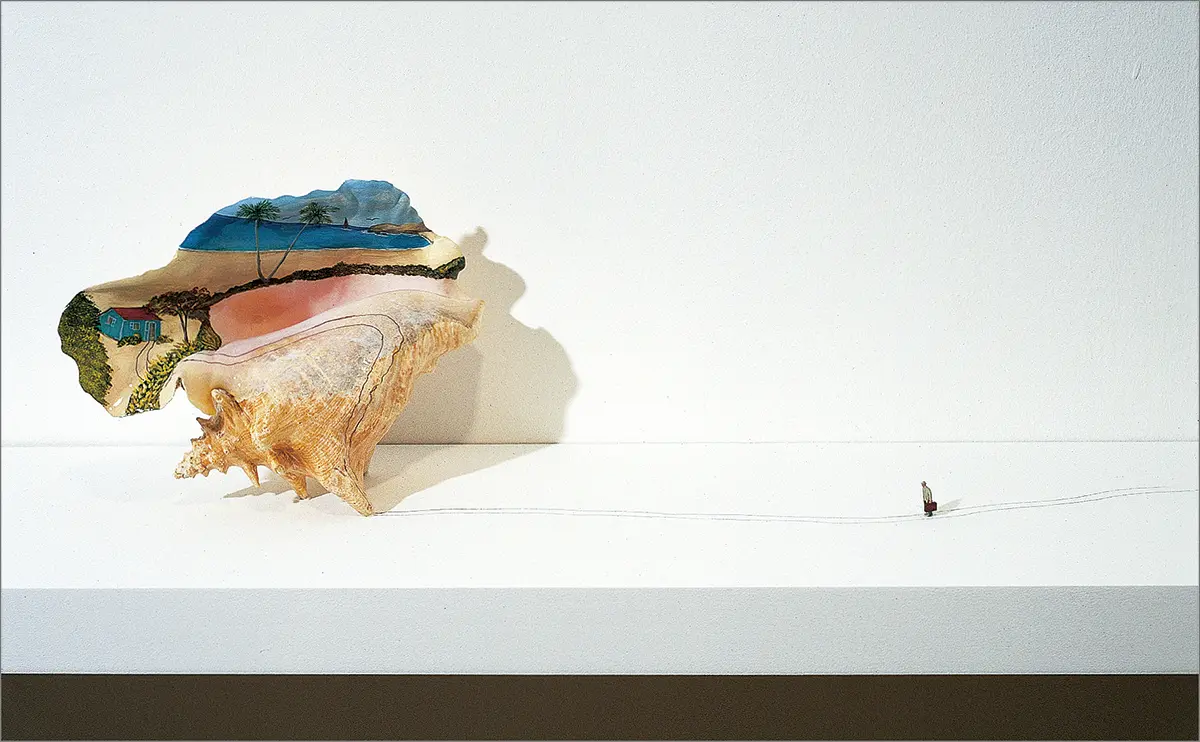
L.P.: It wasn’t a leap. It was something I needed for what I wanted to do. All my life I have moved between different techniques, without meaning to say that I have mastered them. In the mid-1970s I started to paint again and I started with the topic of traveling. At that moment I was unconcerned with whether what I was doing was art. I was concerned with it being true. I started doing those paintings that had something of silkscreens but were paintings. That period allowed me to reconnect with painting through printmaking.
J.B.: How were those paintings made?
L.P.: They were fun. Because you become that painter who is enthusiastic about what she is doing, without losing her sense of irony. The painting included its model and the work moved from reality to representation.
J.B.: You started to incorporate, in a literal way, what you thought about what you were painting into the painting itself. And you also painted the tool you used to paint.
L.P.: Yes, the crayon that made the tracing you were seeing. But for me, it made a lot of sense, conceptually, because I was talking about moving in and out of painting. I was aware of the artifice, and I enjoyed it thoroughly.
J.B.: There also appears aware of the artifice.
L.P.: That’s a very important issue for me because it is the issue of awareness of limitations.
J.B.: How do toys appear, then?
L.P.: They appear with the ship and the traveler. Then I started finding these characters in toys or whatever you call them.
J.B.: And these characters come in more strongly in scenes from the 1990s.
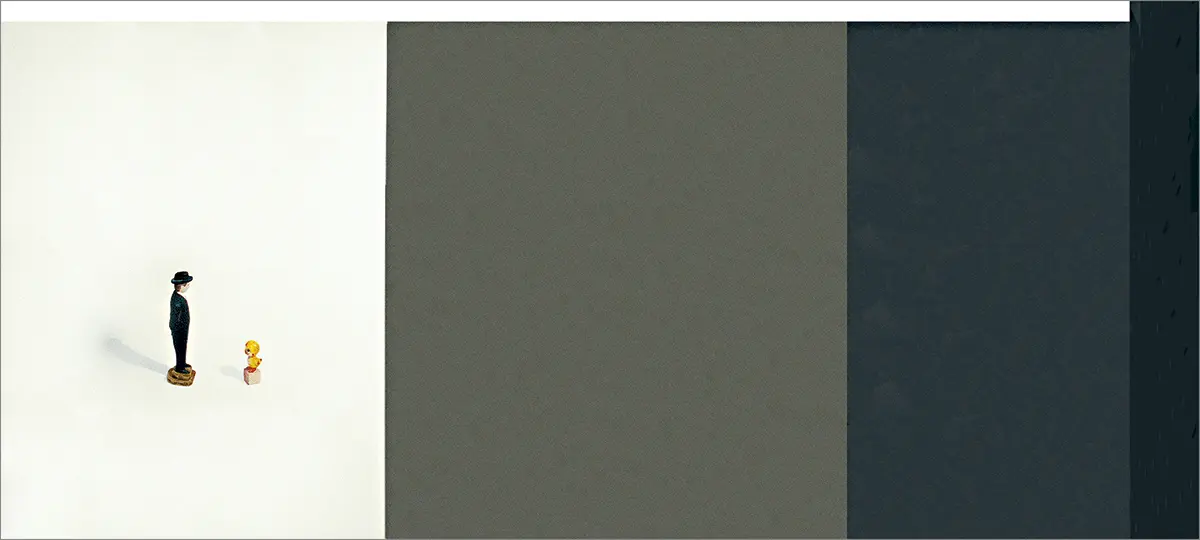
L.P.: Yes, I am thinking for instance about a 1991 painting, La Explicación.
J.B.: It is a large-scale polyptych with monochrome, very neutral panels. In one of the panels, very lonely, we see two figures facing each other. They are, absurdly, a José Gregorio Hernández and a little chicken. We don’t know who is explaining what to whom.
L.P.: The good thing is that, even though we will never hear the explanation one is giving the other, we know that that is what is happening, and so it is real.
J.B.: The explanation occurs in a plane that is inaccessible to us. After years spent collecting characters, moving on to film seems natural.
L.P.: One day I found a wind-up Pinocchio that played the cymbals. When I saw that it was winding down I said to myself that was the moment that interested me. I called a filmmaker friend—he had made a documentary about my work for the Bronx Museum of Art—and asked for technical help. He didn’t understand why I wanted to film those dolls when they were no longer moving when for him movement was the thing. Of course, then came editing, and that’s another story. With video, I realized I was able to control the timing in which the public viewer saw the work. You control time.
J.B.: The time of the toy and the time of the viewer. Do you feel your current interest in exploring performance art is a consequence of your work on video? What do you expect to find in performance art?
L.P.: Yes, I want to work with people, not only with objects. It is like when I moved from silkscreens to photographs, trying to find a more objective medium, which is stupid. Then I found video, which seemed more even closer to reality than photography. And now it is even stronger, because these are people, not actors, moving in a given space. Sure, I can’t be too naïve, and I know that I’ll reach the conclusion that you can’t really represent, that the closer you get, the more evident the artifice becomes.
J.B.: That everything is representation. Is it worth it?
L.P.: Yes, even so, it is worth it, because we still have that sense of humor, so much as hope.
J.B.: Finally, I want to ask you about Alejandra Pizarnik. Borges is often mentioned as one of the literary influences (or passions) that impact your work and your interest in his resources to articulate and disarticulate narratives, tweaked mirrors, and fictions within fiction. Everything within the play of narrative. But it also seems to me that there are coincidences between Pizarnik’s poetry and your work. Your work also has an element of anguish when talking about language and its ineffectual nature, of the trap of the literal.
L.P.: As a matter of fact, I finished some work for a show held in September in Buenos Aires, based on texts from La Condesa Sangrienta. I chose one text, El espejo de la melancolía, transcribed it, and on top of it placed a really weird, rather sinister mirror I had. It has been a good chance to reconnect with Pizarnik’s writing.
J.B.: I think that her poetry—her clarity, her despair at the incommunicable, and her obstinate literalness (“If I say bread, will I eat? If I say water, will I drink?”)—has issues you deal with in your work, but from a more luminous vantage than Pizarnik, perhaps one gained through humor. You mentioned before how even if a landscape seen through a window fascinates us, we can’t really connect with it. Pizarnik said: “At the bottom of everything, there is a garden.”
L.P.: The thing is how to reach it.
JOSÉ LUIS BLONDET
Administrator of Education Programs, Dia: Beacon, New York.