
In the catalog for Made in Mexico—ICA Boston’s “up-to-the-minute,” 2004 survey of Mexican contemporary art—Sebastián Romo makes this revealing statement about his homeland: “In contrast to other countries where the ‘everyday’ is based in mass media, in Mexico, the ‘everyday’ can be recuperated and transferred to another context without having belonged to a publicity campaign or as an article of export for use in any place.”
These qualities—freshness, independence, adaptability—thoroughly inform Romo’s exhibition. Loosely translated from German, zauber means a kind of magic or charm. Indeed, this charming selection—including mixed-media works, chalk drawings, and a photography installation— draws together a variety of information, sources, and forms into an unusual grouping that benefits from its quirky combination.
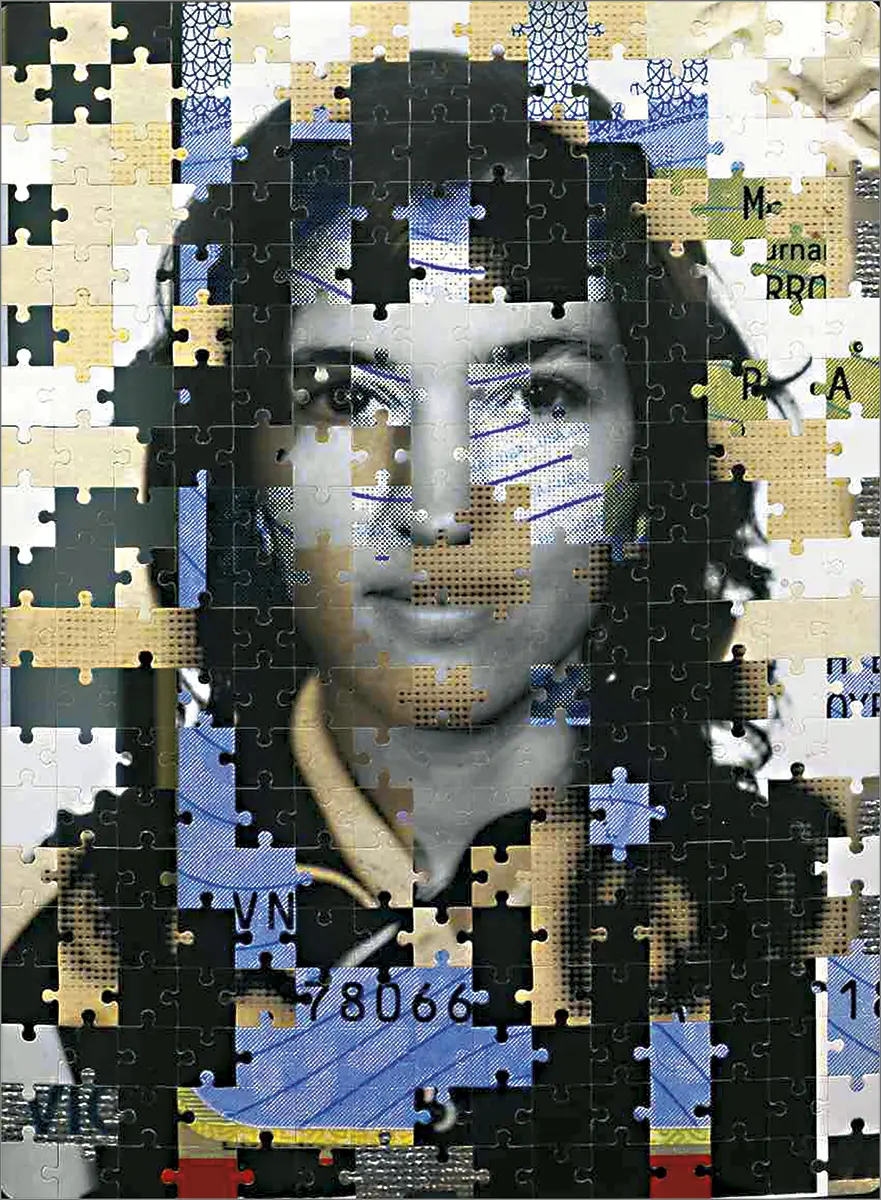
One subset of the work is constructed in a jigsaw format. Applying inkjet images to medium-sized, rectangular sheets of the puzzle board, Romo has recomposed a handful of photographic images so that each work contains bits and pieces of the others. This is a nifty trick on the eye, which tries to focus on the primary images—mostly prim portraits of young Latinas—but which nevertheless gets caught up in fragments of trees, landscapes, signs, and skin (from porn magazines, perhaps). These combination images are all related, in a fashion, yet hover in a kind of imagistic purgatory. They slide from register to register but never fully resolve as the eye moves across the otherwise neatly made puzzles.
Another group of work is composed of medium-to-large, chalk-on-blackboard drawings, each mounted on simple wooden supports. Some of these are hung; others are casually leaned against a gallery wall. The white chalk on the black surfaces complements the enigmatic subject matter—a human skull, a Maltese cross, a tree branch with blossoms, a long dagger, and swirling smoke. Like freehand doodles on a schoolroom blackboard, though of a higher order, these drawings convey that freshly made feeling. They recall chalk works by other artists, of Gary Simmons in particular, and carry the uneasy but thrilling sensation that a swipe of the hand or a cloth could erase them. This transitory, imperiled elegance is accentuated by the mysterious, gothic imagery.
Arrayed across one length of the gallery, and in several other places, are combinations of photographs, pinned directly to the walls. These well-recorded snippets from the life of an itinerant, international artist depict an eye on the move, a porous sensibility in motion and in flux. Random views of airports, doorways, street corners, highways, rain-streaked apartment windows, tabletops, etc., coalesce into a detached, fluid mood of wistful longing. It is the emotional diary of the artist as a voyager, told in snapshots.
These photographs are all the same size and displayed in a linear, grid-like fashion, with a few random offshoots. This neat presentation imparts order and rhythm to what is no doubt a disordered jumble of experiences, locations, and memories. The tidy schema creates a hospitable context for this random collage and extends its influence to the other work in the show. Romo’s light, orderly touch allows this eclectic selection of work to mix easily, suggesting that a refined eye can wrest an aesthetically pleasing order from both visual culture and peripatetic life.
JOHN EWING