
A random review of the many contemporary artistic practices deploying photography as a tool for sociological and aesthetic investigation would lead us to realize that photography is increasingly devoted to the formulation of misleading strategies of representation on the basis of performed accidents. These act as a force against the epistemological guards of concepts held by the dominant cultural discourse. In many cases, recent photography reveals a semantic density that attempts to challenge unilateral perspectives, hegemonic constructs, deterministic identity models, and the axioms and a priori ideas that justify hierarchies in the social, cultural, and artistic orders.
By virtue of this, a discursive and morphological travesty establishes itself as a self-reflexive functional operation, from which it is possible to interrogate the most offensive modern schemes that find in antinomy and in the orchestration of opposite categories, the evil resource of exclusion. The established perceptual model that ensures undisturbed frontiers or borders between reality and fiction, between true and false, and between the real event and its simulation is questioned by a wide set of poetics that debate, loudly, the signs of power by means of positioning ambiguity and transformed images as an effective method to focus on doubt. Veracity, understood as the highest value of photography as a register of the real and a legitimate copy of the objective world is suddenly used against itself. And with that, representation, even those representations that supposedly possess an authenticity based on a reflection that the gaze can trust, is nothing but simulation, a mask, a trick gesture.
It is in this direction, and in the orders defined by cultural clandestineness and cimarronismo with regard to the reductive model of the Subject that Modernism imposed with force,1 that the photographic discourse proposals of many Latin American and international artists acquire their true meaning. Precisely at the random assembly of the intersection where the deterministic constructions acting as arrogant mechanisms of power favoring certain voices are revised, their proposals can truly accomplish to re-dimension their proposals as legitimate scenarios of deep vindications. The space of their visual poetics then becomes a privileged site for critical commentaries about certain paradigms that unfavorably reinforce difference, by a supposed justification of ontological character. The critical gaze, charged with a strong dose of seductiveness as a weapon, is able to unmask all authority status, void meaning from pet canons embraced by the dominant sectors, and posit a more flexible and human model of perception.
For these reasons and responding to these new discoursive needs, one of the most significant phenomena in these acts and re-signified manipulations is that the use of photography widens its categorical borders and releases it from its traditional roles. Photography of a postmodern accent is no longer just a medium for the fixation of reality, and therefore its condition as the visual register is put into question. The transvestite practice of photography, where the medium is subjected to whimsical processes of masking and staging, is opposite the use of the form as document and proof of truth. The modern obsession with representation as a cultural category and a marker of authenticity cedes terrain to the construction of narratives and fictitious identities and to the advent of a self-reflexive status that regards the photographic exercise as a practice of provocative elements in the realm of aesthetics and of social anthropology.
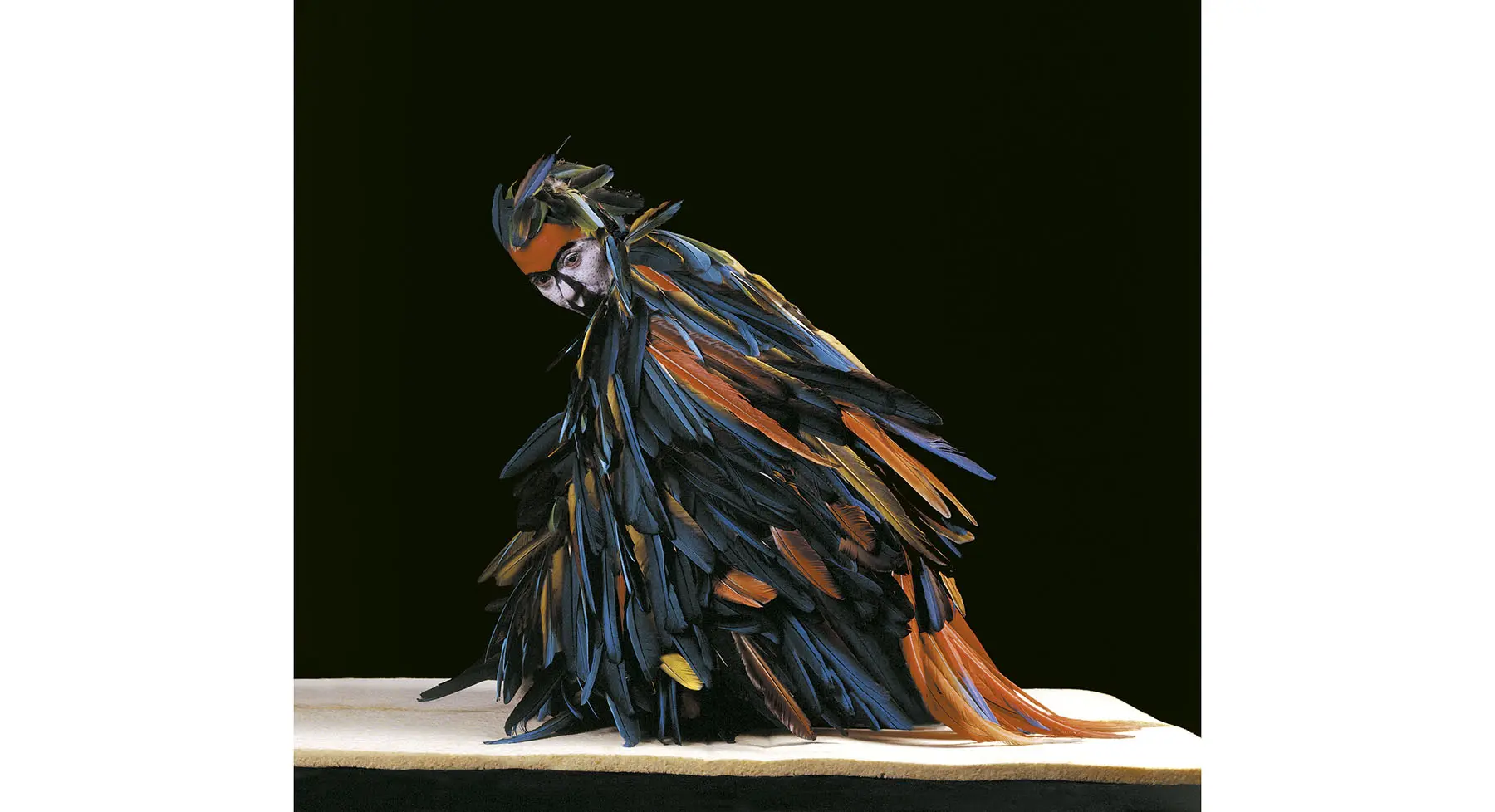
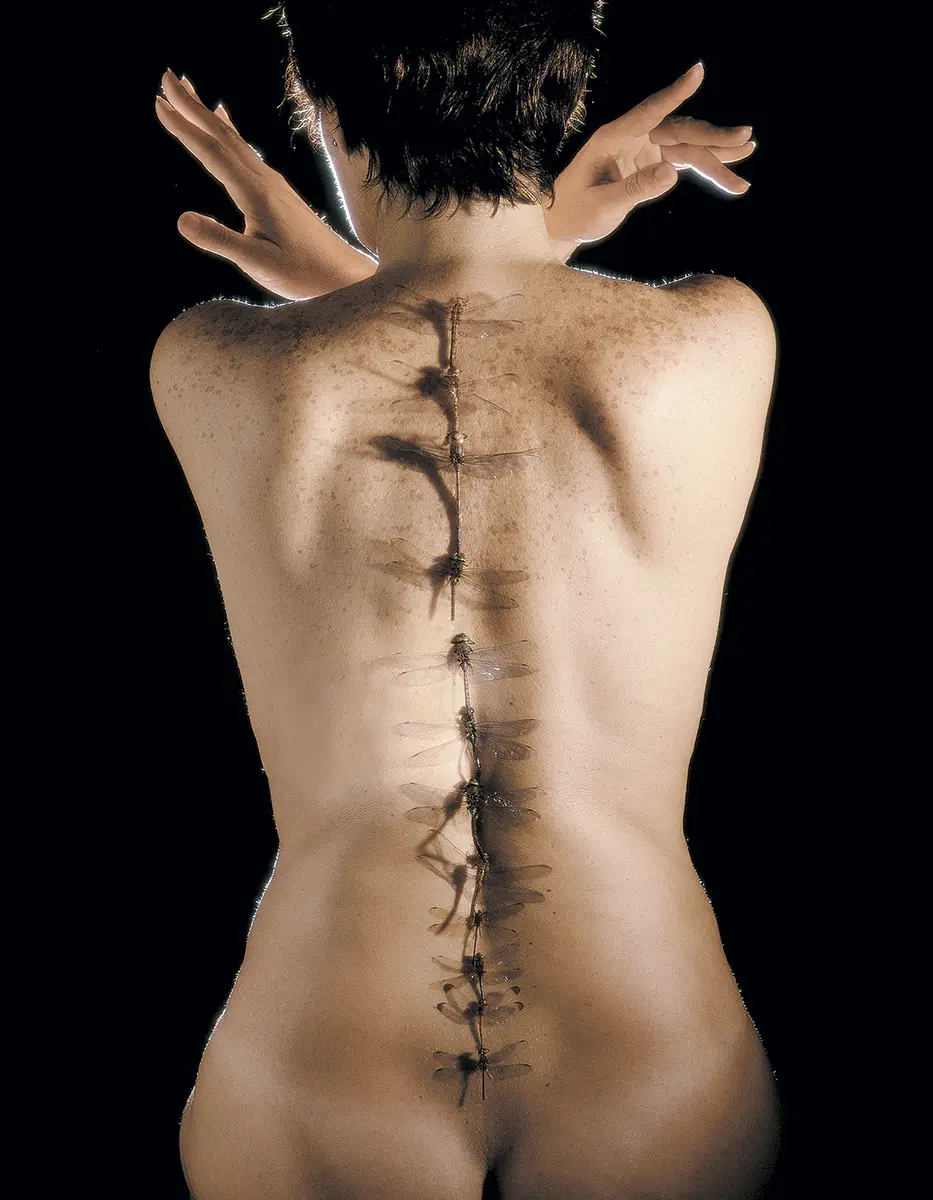
In that sense, the work of the Peruvian artist Cecilia Paredes, based in Philadelphia but with a markedly nomadic history, is a clear example of how metamorphosed self-representation acquires a relevant aesthetic-cultural dimension, insofar as the latter presupposes an aesthetic exercise of contestatory positioning both to a social and political level. Even though a reading of her work has been established recognizing ecological or humanistic preoccupations, Cecilia Paredes’s work by far transcends the horizon of such references and raises questions in the domains of aesthetic feminism, anthropology, and the debates around photography’s functions and strategies of meaning. A certain critical perspective has emphasized somewhat the hedonistic aspects that are revealed in some high-impact images, above and beyond the perception of many concepts and processes hidden in her work. Paredes is an artist of concepts. As much as one may wish to point out the incongruence between thought and beauty, this is precisely one of the many antinomies that her work revises and therefore dis-articulates.
It would be prudent to mention that, in the re-structuring of her narrative system, erected on fragments of an apparent reality that is pure fiction, three moments intervene that could be presumed to be unconnected but which, in the context of her poetics, act in a closely interrelated way. Let us say with this that Cecilia Paredes activates a model of aesthetic operation that ends up in her process combining and creating coincidence between moments of performance, staged self-representation, and the definitive photographic register as permanent states of a creative act that begins even earlier, with stubborn labors of collecting and aesthetic exploration of the natural environment and its intricate interstices and corners.
The same gathering practice, which one could speculate as to a performative gesture in itself and which recalls the pre-historic passages where a dominant matriarchal hierarchy ruled, opens up different critical and interpretive gaps that will in the end enrich the realm of reflection around this singular artist’s work. On this path, it is not outrageous to presume some possible relations of proximity to atavistic behaviors with notions of a mythical primitiveness in which the human element is paradoxically transcended in its animal nature. For many ancient non-Western cultures, the estrictu sensu demarcations between the human and animal kingdoms as irreconcilable realms were not even imaginable. Thus, Cecilia Paredes’s work is strongly directed toward vindications or merely toward recurrent visits to a pre-logical cultural stage where instrumental rationality had yet to achieve the painful excisions that would mark the later history of Man. From those similarities between narratives of a pre-historic action in Parede’s oeuvre, other perspectives derive on the female subject in the art that is more culturally oriented than investigations that ground themselves in the psychology of art.
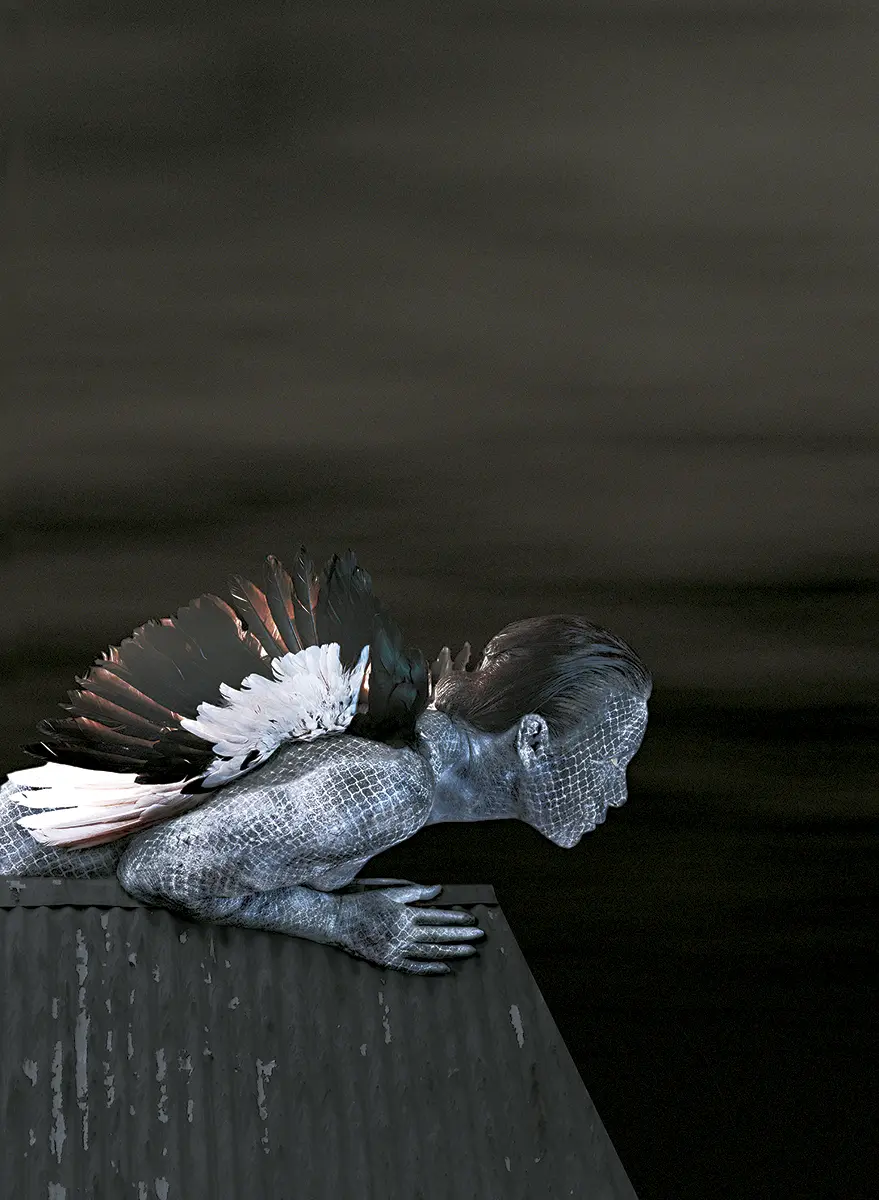
The physical actions that precede the final fixation of the image unveil a centrality of the “I,” of the artist herself who talks exclusively through her body, perpetually metamorphosed through the unending search for new identities, where opposites aren’t conceived as contradictions as in Western philosophical tradition but as stages and moments of a single identity. From this cosmologically-based, unified conception where the artist is a bird, almiquí, octopus, fish, gargoyle, butterfly, and everything else, all at once, with these identities intensely and poetically reconciled, it needs to be pointed out that her “I” is plural and postmodern, not in the least skeptical or exclusionary. In Cecilia Paredes, there is no part or fragment orphaned from the whole. In any case what occurs in each one of the newly collaged and borrowed entities created from collage is a new being who rejoices in the expansion and the freedom that can only be embraced once we have outgrown the cultural limits of our anatomies, once we have moved past our strictly designed and defined parcels of territory. One of the weightiest themes in the work of Cecilia Paredes is the integration of the self’s complimentary elements through a reconciling gesture of justice that is largely erotic in the endless search for its fleeting object of desire.2 Possessed with an agile intelligence and a proven sensibility, Cecilia Paredes is not used by art; rather, she uses it as an effective discursive element not to unveil the profiles of a fictionalized identity but to show that identity is an imaginary construction highly indebted to the processes of cultural mediation and conditioning.
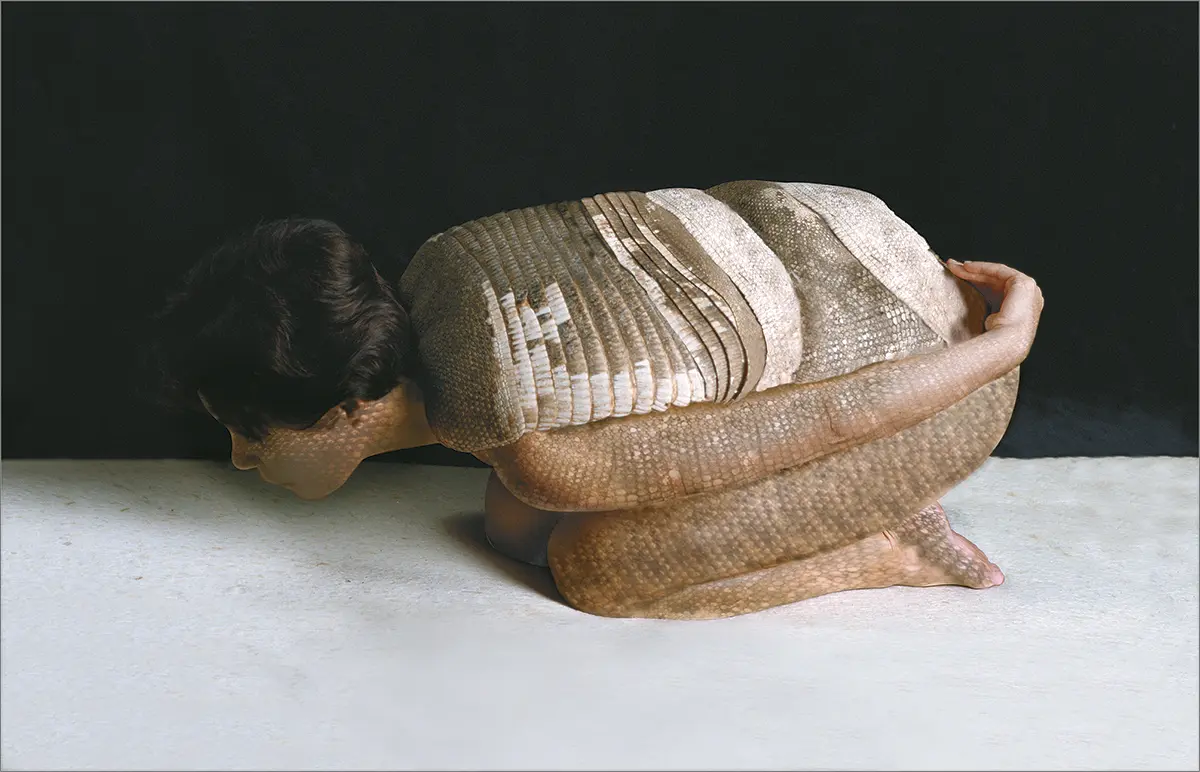
Perhaps, without implying a deterministic thesis, this is the reason why the endless configurations of her “I”, expanded to other skins and inscribe in the mutating space of photography have the desire to confront the limited models of representational possibilities offered by the cultural and contemporary paradigms of which the artist herself unreservedly partakes. Cecilia Paredes does not appear in her images as one who plays the central role in the scene, from a narcissistic self-gaze in the style of some of her colleagues. Rather, we discover in these extremely beautiful prints the staging of entities that respond more to an inner impulse toward honest and coveted reconciliation between human beings and the natural environment. From the beauty and silence contained, these new identity constructions offer a somewhat novel model of self-representation, without seams and without the asphyxiating barriers imposed by the platforms of what ought to be. In that collision between the self-gaze and the need to find new complementary visions, an almost liturgical moment of the interface is localized between the many subjects that inhabit the work and the artist’s own self. Revealing layered identities allows for the simultaneous establishment of several discourses and guarantees for Cecilia Paredes the privilege of a dialogue with herself (at various levels of intensity).
Silence is, in that sense, another deluxe protagonist in the artist’s work. There is an unsettling silence, one that is full of suggestions and signs—a silence transformed into an imperceptible substratum, into a strongly intuited silence with an inexorably poetic character. Any photograph by Cecilia Paredes, even one where the composition reveals a certain neo-baroque flavor, hints at a silence that may contain many questions capable of reasonably explaining the meanings that are just barely resolved in the shifting photographic surface. Seen in this way, the silence, the loneliness, and the apparent quietude of each scene act as eloquent metaphors for a contemporary world where hurriedness and an excess of rhetoric could drive people to suicide.
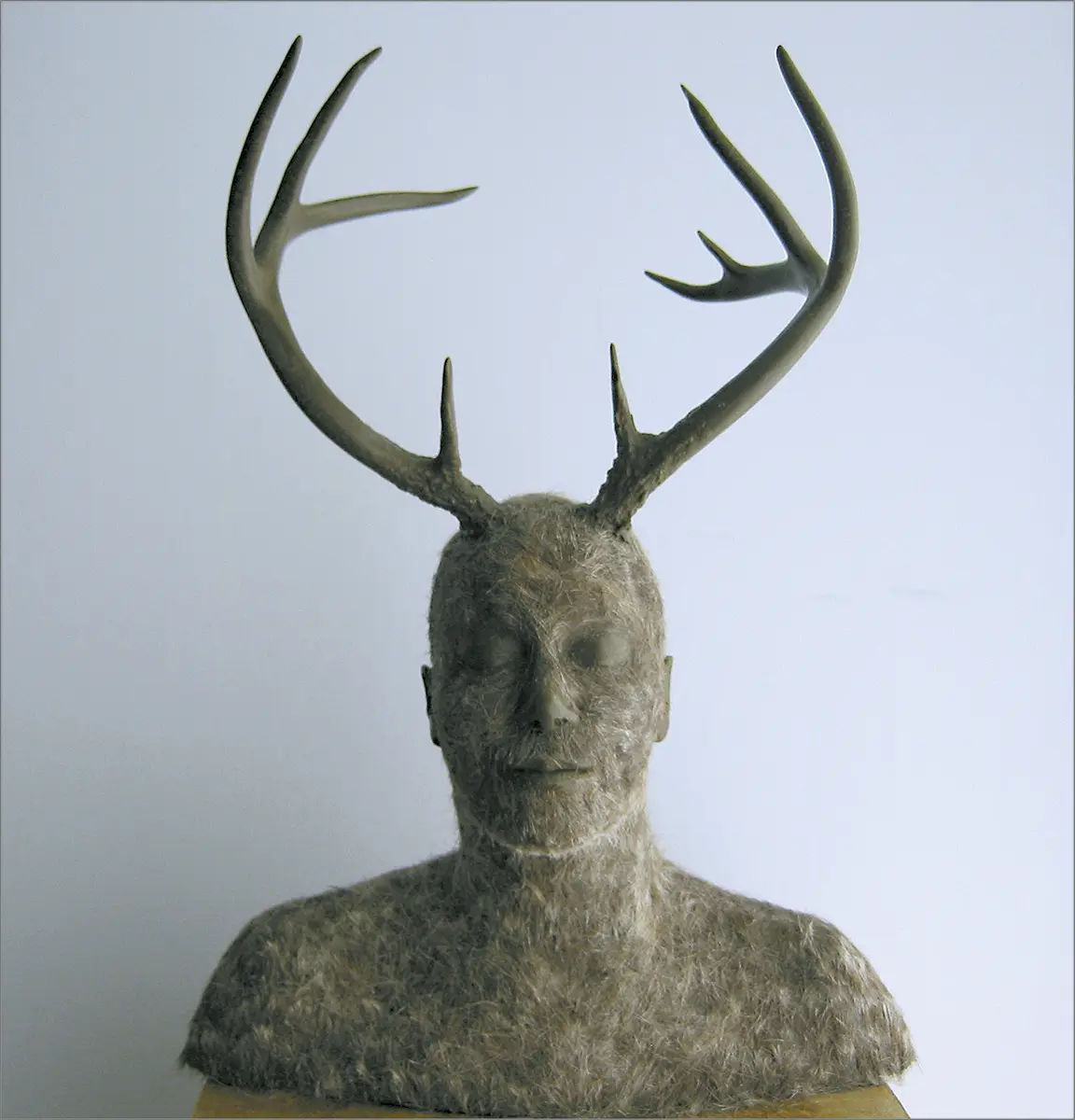
Each and every single one of Cecilia Paredes’s works seems to rightfully situate themselves within a somewhat subtle humanistic line, a trend that is rather infrequent in the, at times, disappointing terrains of contemporary art. Without abandoning the hedonistic posture, that never gets to be disguised, adopted by others who pursue a questionable rehabilitation of beauty, her works are oriented toward the practice of a kind of universal exorcism not necessarily related to phenomena in the religious field but to certain ethical demands. Ecological alarms and protectionist demagoguery are triggered, while an artist from the margins builds beautiful metaphors that, despite their beauty, remain as solid proof of a reality rife with cannibalism and depredation, with a heavy cost for the uncertain future of life itself. Thus, although I prefer not to reduce the work’s true polysemy and to exhaust the discernment of her sensibility to such references, Cecilia Paredes’s proposal insists on directing the gaze toward a conflict where the accumulated disgraces of man and his egotistical path have accomplished to transform the natural environment into little more than a preserve. Appealing to these connections, her instant photographs can be read as an aesthetic attempt to persuade the arrogance of those who on a daily basis commit crimes against nature and fuel panic as a form of control.
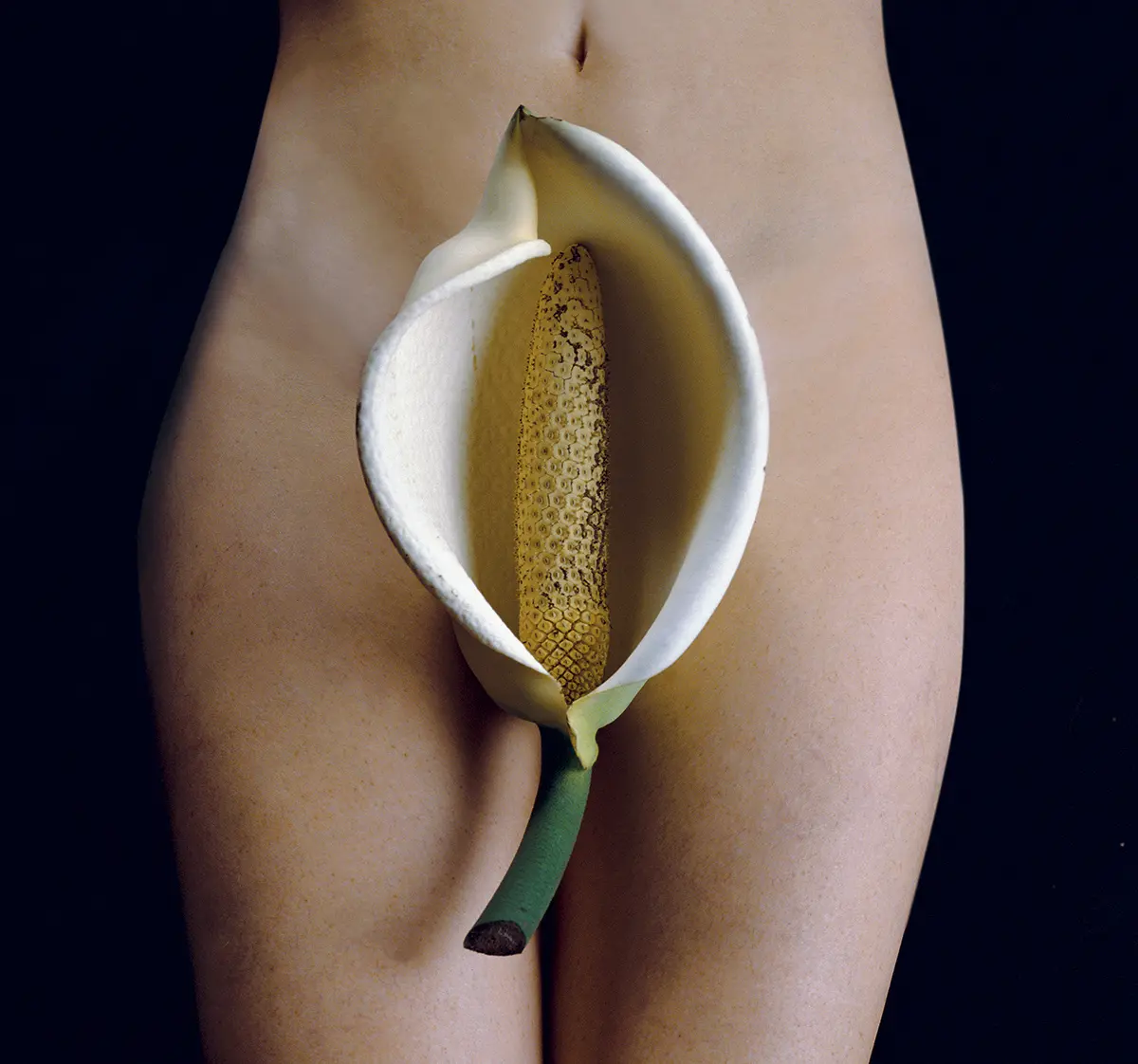
The connection to these social concerns has its counterpart in the formulation of a personal symbolism within the context of the work. The hermeneutical center of Cecilia Paredes’s work is defined by the anthropomorphic image and the enigma of metamorphosis from animal to human. The body of the artist is thus revealed as the stage of furtive simulations where the hedonism of the image becomes cultural depth. This is where some glimpse a certain danger in her creative proposal. By transforming her body, she confers a certain density to it, turning it into a device of semantic allusions. Her collage of morphogenetic indicia leads to highly symbolic, poetic prefigurations that guarantee recognition of her work and an equally legitimate telluric interpretation. This in part explains why the centralized body, with its altered human profile, acts as a zone of confrontation and discrimination between past and present, reality and fiction, and myth and history. The representation of the body is, then, beyond any gaze of sexist intentions, a way of intervening in zones from the field of art and interstices of the collective imagination that are often not accessible through other discursive positions. The artistic image is here an effective instrument of psychoanalytic exploration, a poetic pretext for a denunciation. With subtle grace, Paredes visits our spaces where the animal has left its mark and one can intuit its new attack.
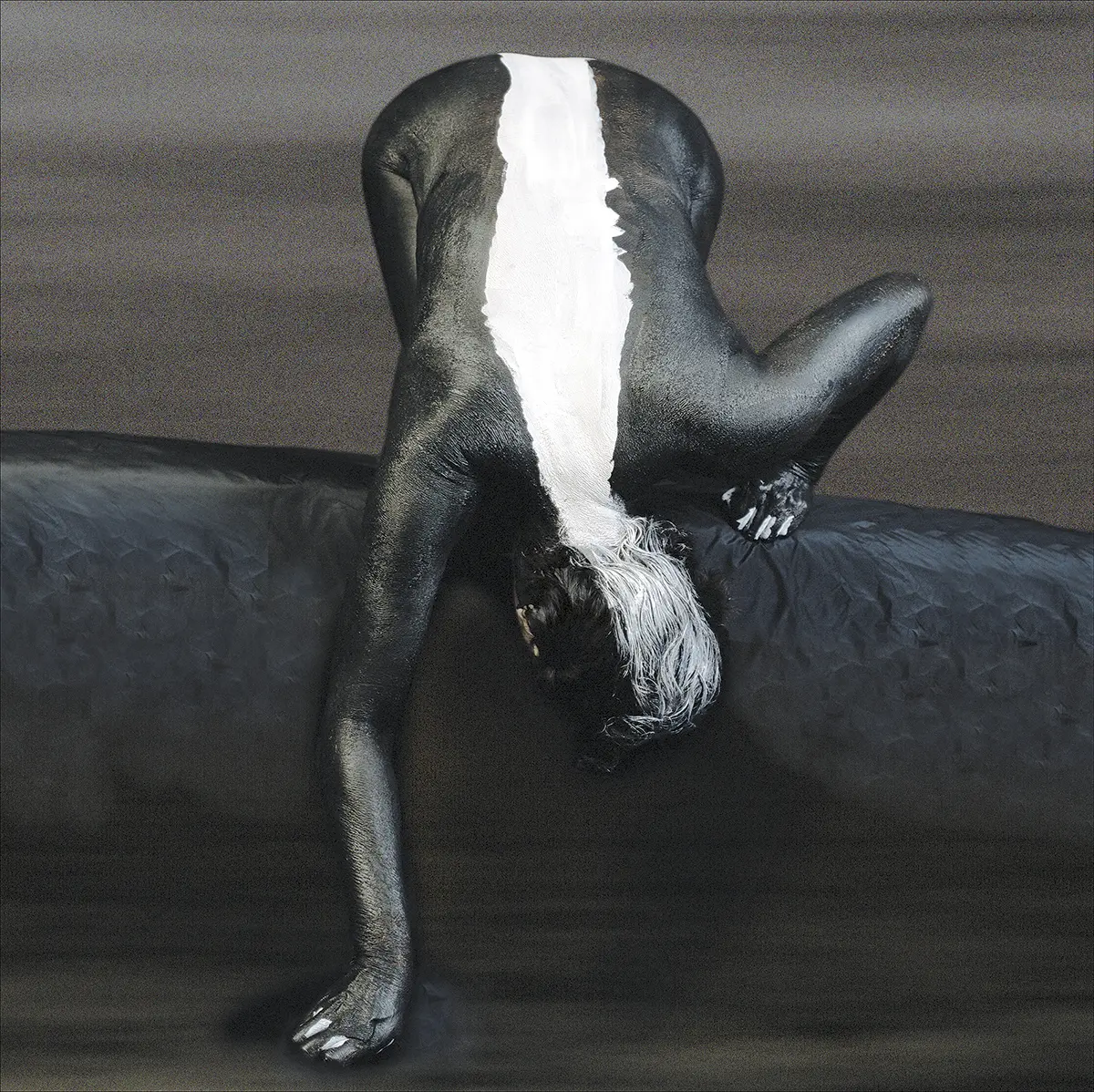
Nature, the animal kingdom, and the presumed and desired links between them and human beings, constitute the starting point for these zoomorphic narratives. Far from other discourses of abjection that also touch on it, exploration at the very limits of the body subjects it to continuous changes in which the pre-established taxonomies and borders between nature and culture are interdicted. What Paredes creates is a true revision of teleological and cultural statements with the purpose of expanding their narrow fields of understanding. Her passages through the threshold of the natural and the metaphysical are nothing more than a warning and propose a return to an abstract origin, a return to certain essential forms that were part of our existence. Her images are able to transform organic matter into true works of art, and in them, the body becomes an emblem of universal, cosmic existence, one that clamors for a fractal vision, a vision that is not hesitant and doesn’t vanquish the multiple identities that may inhabit a single body. Transcending its borders and giving it the grace and vitality of a trope, Paredes locates herself at the height of the temple like a nervous gargoyle, waiting for the horizon to reveal new presences.
NOTES
1. A model that, as we know, worked as the irreducible sign of an exclusionary power, situated in sexual, racial, gender, religious, and cultural superiority; in other words, the model of a white heterosexual male, in relation to which any kind of difference, including the manifestation of the female voice, was placed in the plane of otherness with regard to the centralized, hegemonic position of the model.
2. Appeals to the furtive universe of the erotic are a constant in the work of Cecilia Paredes, but not in the way in which other artists use them as a fundamental structure. In her case, the prosecution of eroticism doesn’t seem to be at the base of a conscious program directed toward seduction. Eroticism happens in Paredes’s work as the accidental result of a vision that channels with touch and delicate poses. The search for a paradigm of freedom from certain cultural precepts gives these images an erotic halo more associated with the culture than with what occurs in the space of seduction and desire. There is no doubt about the use of nudity in her work. Here, the nude body is not aimed at seduction; rather, it wants to establish readings that, without diminishing the value of sensuality and beauty, are directed toward more conflicted zones of contemporary culture.
ANDRÉS ISAAC SANTANA
Critic and essayist, author of Imágenes del Desvío, Madrid correspondent for ArtNexus, and a contributor to Art-es.com and Atlántica International.