
inSITE 05, known as the most complex curatorial challenge in the Americas, was held in the Tijuana/San Diego border region with public presentations over four weekends from August to November. The goal of this edition was to abandon the site-specific temporary sculptures or symbolic urban monuments that have been its distinguishing characteristic since its beginning, in order to approach artistic practice beyond what is understood as public art.
If, in the words of its artistic director, the Cuban curator Osvaldo Sánchez, inSITE sees that border region as a social fabric whose survival depends on the flow of people, products, and information, then the art event blends mimetically with its surroundings and becomes an experiment in which art—beyond the aesthetic experience, the objectified or mercantile character, and spectacle—is transformed into a series of actions that impact certain social collectives, with processes that develop over two years and where relationships are key to the construction of new realities.
Situationist theories of unitary urbanism, for new art and psycho-geography, permeated this edition of inSITE, with a multi-headed curatorial structure that materialized in four sections. Conversations, directed by Sally Yard, offered open dialogues, publications, workshops, and conferences. Farsites: Urban Crisis and Domestic Symptoms in Recent Contemporary Art, was an exhibition curated by Adriano Pedrosa, who coordinated five adjunct curators in São Paulo, Caracas, Mexico City, Buenos Aires, and New York, and which traced a discourse about the crisis of the idea of urban modernity. Scenarios centered on temporary events (i.e. experimental audiovisuals), experiences that are mobile (a traveling Archivo Transfronterizo), or lack physical support (web sites). Interventions, curated by Osvaldo Sánchez and the historical nucleus of inSITE since its first edition in 1992, was the most radical section in terms of its intellectual underpinnings, with twenty-two projects oriented toward the conception of situations that produced meaning in the social contract.
The interventions—the fruit of several residencies, contacts with the community, and workshops with local curators and artists as part of the “procedural”—were carried out using methods ranging from mass-media subversion, utopian group therapies, and reinventions of the urban space and extending to political practice understood as an exercise in negotiating common space, a move away from the spectacular/mediated framework toward insertion into the social fabric with varying levels of invisibility.
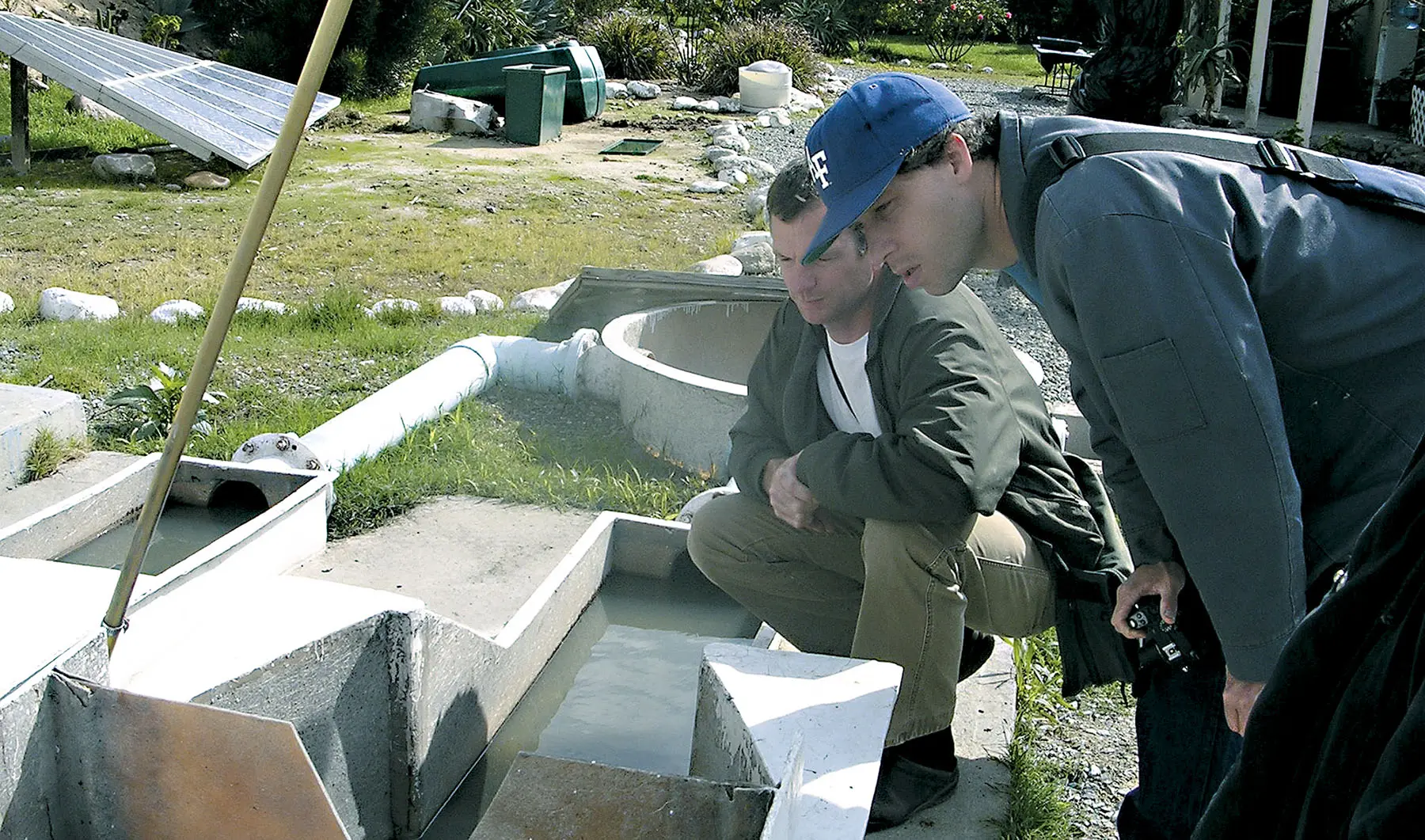
One of the works that best illustrate this concept of invisibility was Rubens Mano’s object/process. Without much explanation, Mano distributed pins with the word “Visible” inscribed to pedestrians crossing the border. In the work called Dirty Water Initiative, the Simparch collective placed thirteen mini-water purifiers in the pedestrian crossing between the US and Mexico which, when the event is over, will be brought to marginal neighborhoods where water is a problem. Max Bradford, who also took part in Farsites, provided vests, ID badges, carts, and a small office to the baggage handlers in the region, who are to this date unorganized and lack any union protection.
The same object/process quality was shared by Maurycy Gomilicki’s Aerial Bridge that linked airplane-model hobbyists from both sides of the border with the creation of new model planes. Paul Ramírez Jonás’s work, Mi casa, su casa, tested the public’s trust by having them blindly exchange copies of the keys they carried.
A project that seemed half-complete was Brinco. Judi Werthein designed a sports shoe with a money compartment and a place for maps, accessories for those who cross the border illegally. On one side they were given free to migrants and on the other were sold in a San Diego store, where the illegal immigrants, if they crossed successfully, could bring their shoes for resale.
Keeping a record of processes is essential. In the work La tienda de ropa by the Tijuana collective Bulbo, a socially heterogeneous group of seven people created consensus-based clothing items over a period of one year; the record is part of the work, as they produce live webcasts of their workshop. Bulbo also produced the video On translation: Miedo/Fear, a project by Antoni Muntadas, which consisted of interviews—some with celebrities, some with common people—about fear, the border, and the “other,” broadcast by a local TV station.
Itzel Martínez presented two documentary videos. Que suene la calle, a project started in 2002, is based on the testimonies of four formerly drug-addicted adolescents from Tijuana’s poor neighborhoods. Ciudad recuperación captures the group dynamics between several patients from a rehabilitation center, who, with active participation in the handling of the camera, create a design for social utopia based on their desires and projections.
Another work of process and documentation is Osmosis and Excess, a video by Aernout Mik, which shows images from the vast yonkes (automotive junkyards) in the canyons around Tijuana and was projected in a San Diego parking lot.
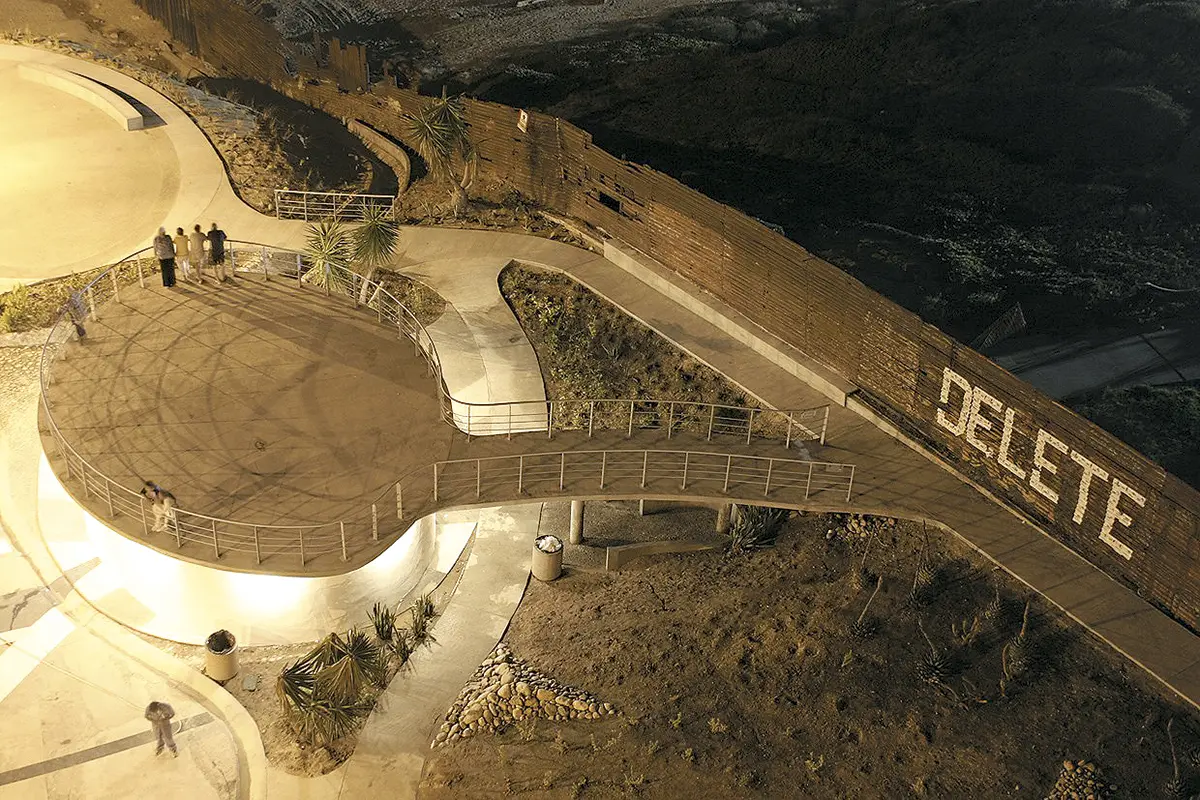
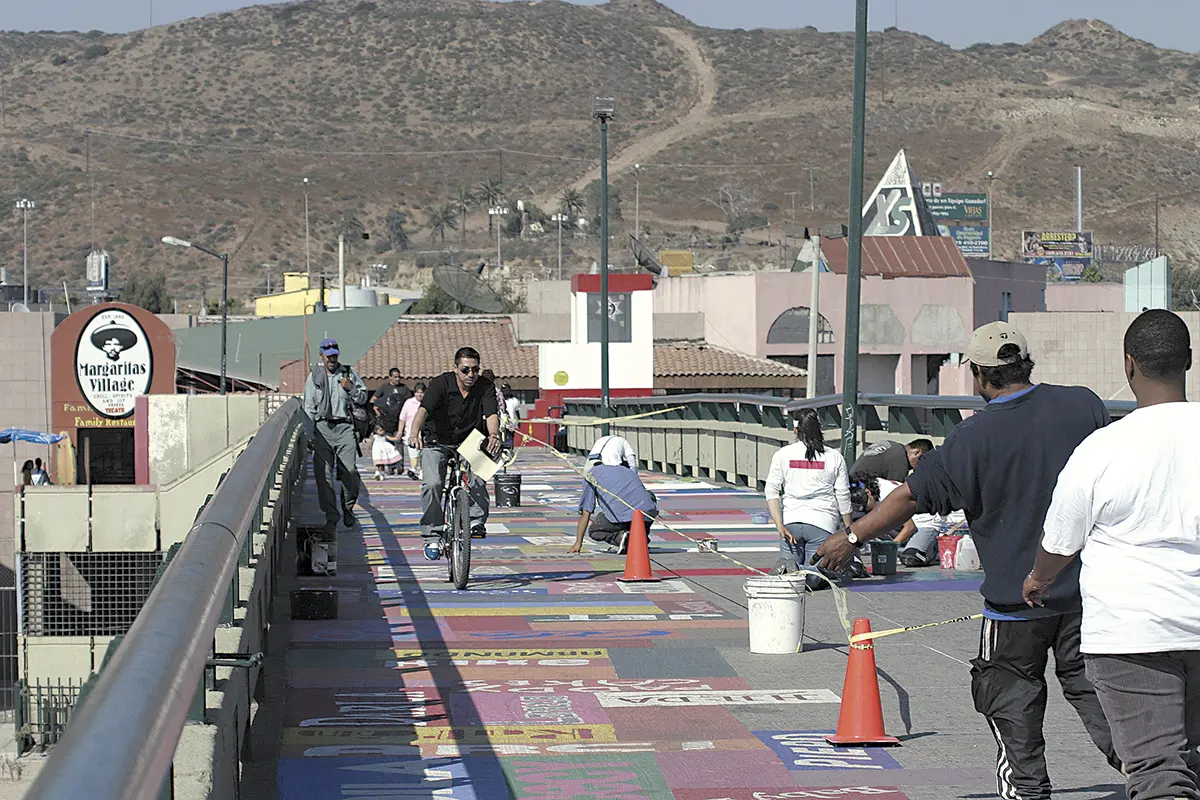
The only project that could be considered commissioned was one by Thomas Glassford and José Parral. Alongside the border fence that stretches into Tijuana’s beaches, they designed a highly symbolic, very unkempt area with bathrooms and a small garden for the beach-goers. Hospitality, created by Barbosa and Ricalde, on the heavily used Tijuana River pedestrian bridge, consisted of a carpet painted in different colors and inscribed with different names.
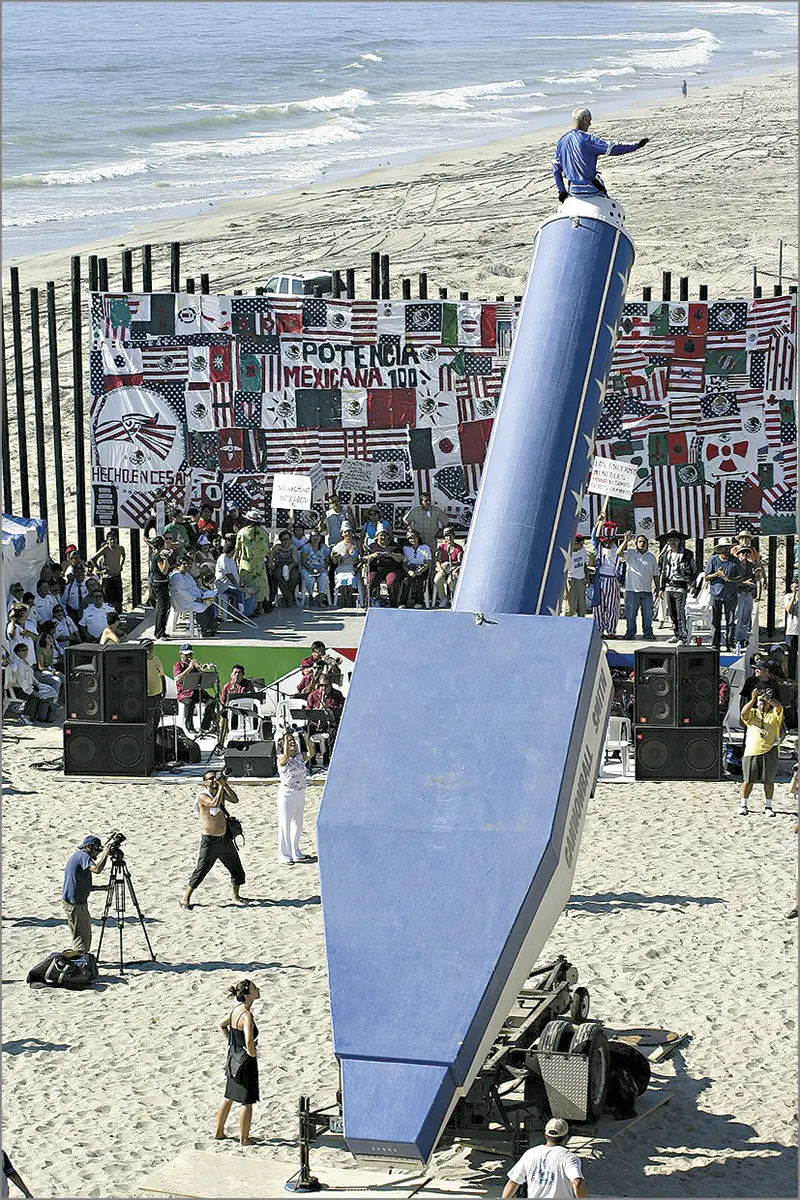
Like all experiments, inSITE is riddled with contradictions. Despite the invisibility of most of the projects and the desire to escape the white cube, objectification, and spectacle, inSITE’s representation to the media was One Flew Over the Void (Bala perdida), an intervention by Javier Téllez in collaboration with the patients from a mental-health center: their idea of crossing the border by air was executed as a circus act by Dave Smith, the world-famous cannonball man. Joao Louro’s The Jewell / In God We Trust consisted of finding a luxury car in a Tijuana junkyard, covering it in gold leaf, showing it in a Ferrari-Maserati dealership, and finally auctioning it. The sole visible and visitable trace of inSITE 05 was the Farsites exhibition, which gathered the work of fifty-two artists from twenty-three countries and was held at the two most important art institutions on each side of the border, the Centro Cultural Tijuana and the San Diego Art Museum. The region’s first exhibition with such a clearly bi-national character was also a novelty for inSITE, which has usually stayed away from museum institutions as exhibition venues.
This show’s subtitle is Urban crises and domestic symptoms in recent contemporary art. The central topic of Adriano Pedrosa’s curatorial discourse in this “white cube” exhibition focuses is the crisis of modernity’s urbanistic models, as exemplified in five cities from the Americas.
Santiago Navarro, commissioned curator for Buenos Aires, speaks of how the crisis generates new relational models in the affected communities and illustrates his point with works by Taller Popular de Serigrafía, protest pamphlets, and a video of an assembly of the Palermo Viejo neighborhood association, one of many that emerged from the Argentine economy’s debacle.
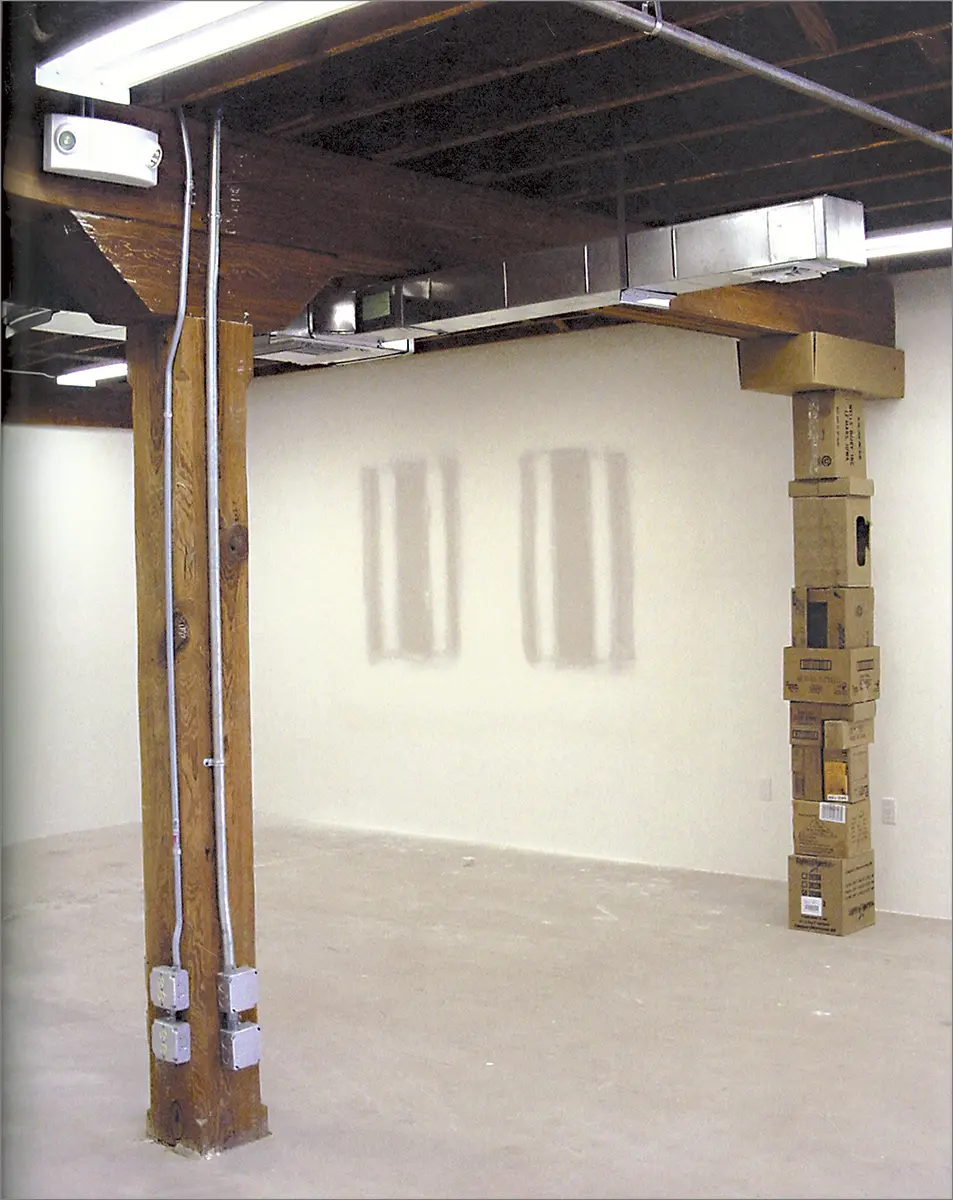
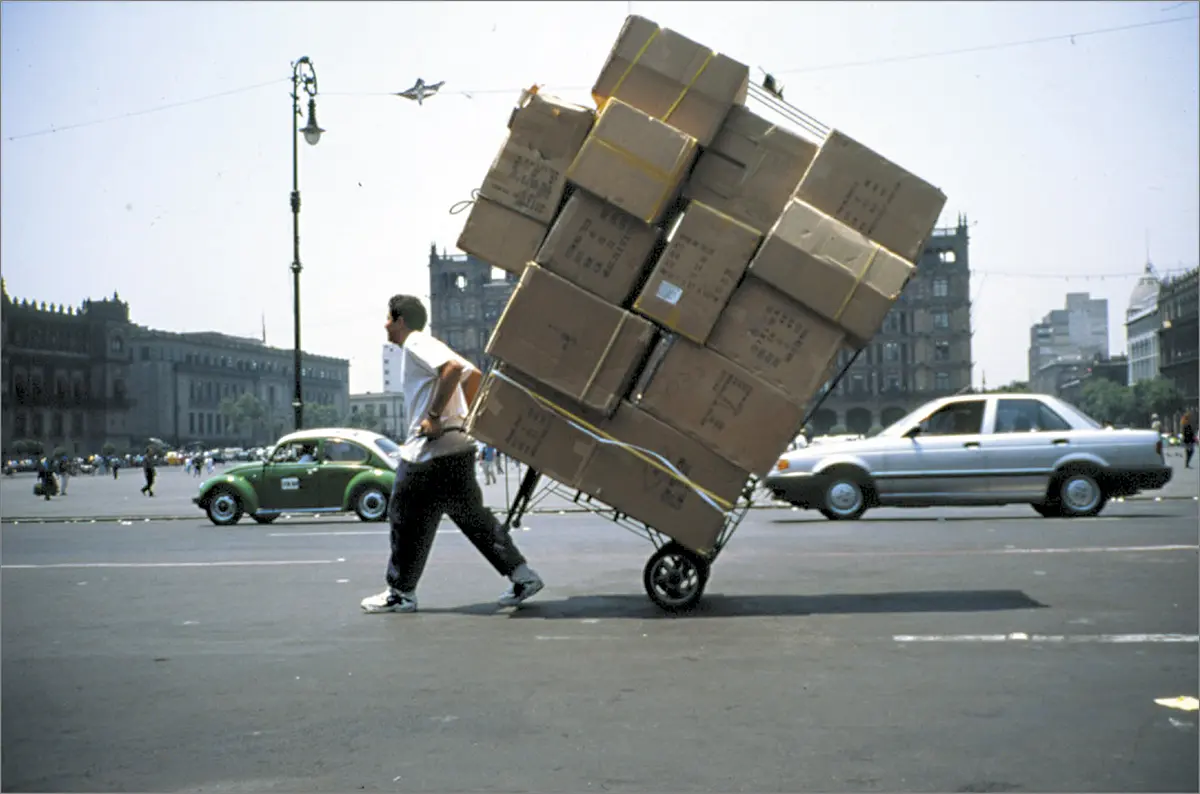
Julieta González, for São Paulo, develops a discourse titled Art and architecture facing the urban informal, which she illustrates with Ambulantes, by Francis Alÿs, a series of photographs abut mobile structures of informal commerce and services, or with Dávila’s sculpture Fake column, columns made out of cardboard boxes that mesh with the exhibition gallery’s architecture.
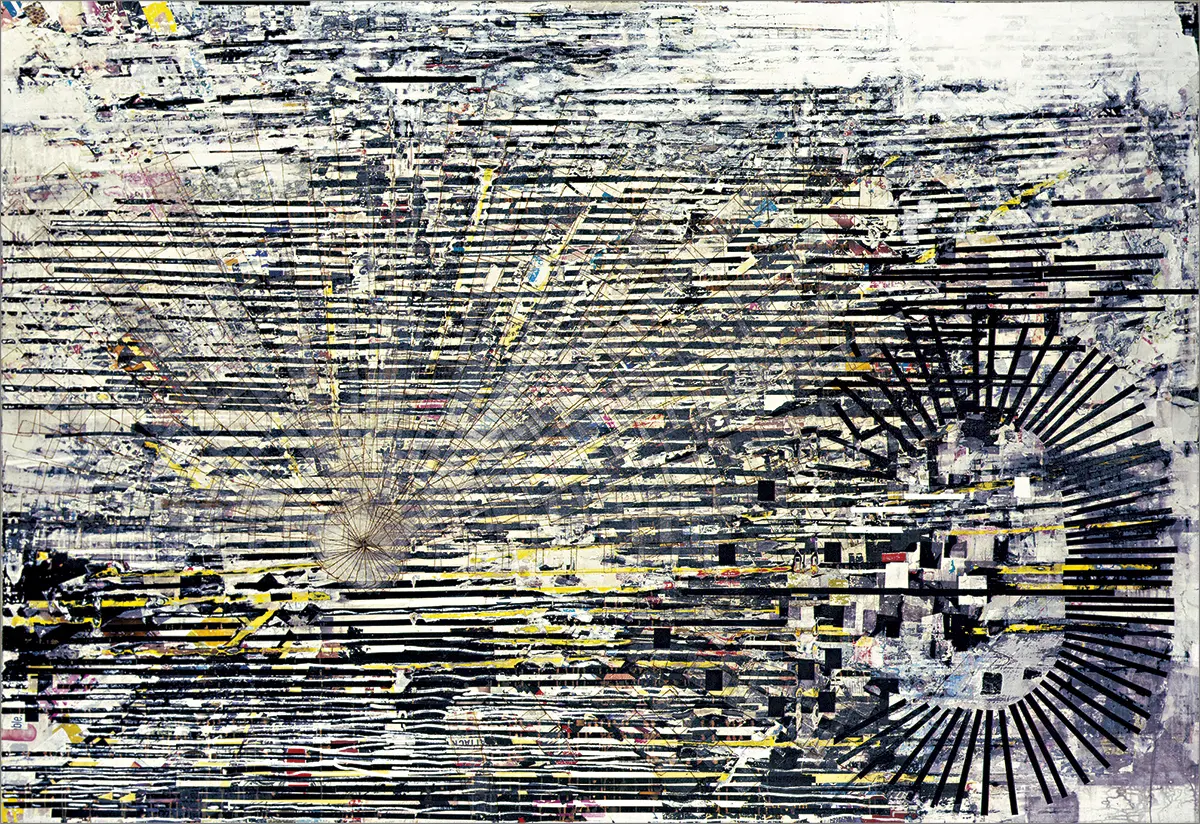
Ana María Mallet speaks of how in Latin America modernity was declared a failure before it reached its utopia and offers as an example the city of Brasilia, a symbol of ultra-modernity and progress erected in the 1960s that was never able to populate its streets, normally deserted, which she illustrates with urban photographs by Cao Guimaraes, Zamora’s urban intervention at the Carrillo Gil, and one piece from Damián Ortega’s series Construcciones consisting of severing chairs and one table in a difficult vertical balance.
Carla Zaccagnini's discourse, Restless Cities, centers on the moments and places where things that seem inapprehensible, slippery, and fleeting come to be crystallized, from roadside stalls, outdoor tables with utensils, to freeway junctions as valuable spaces for advertising communications, as shown in Sean Snyder’s photographs.
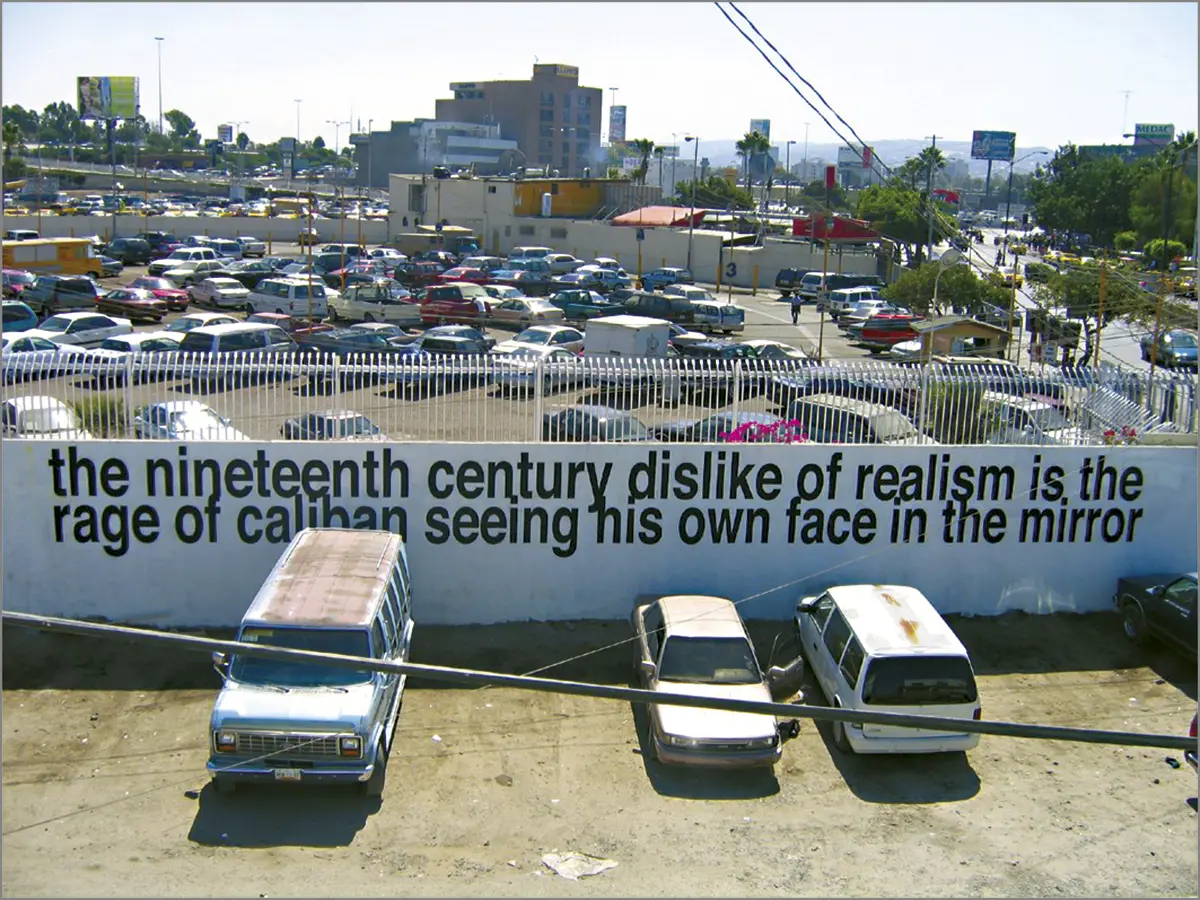
On his part, Betti-Sue Hertz centers her contribution on the architectural fragment, extractions from and cuts of the urban, quoting the work of architect Gordon Matta Clark, an idea that also encompasses the work of Pedro Cabrita Reis and Rivane Neueshwander/Cao Guimaraes, for example.
This exhibition is atypical because it doesn’t attempt to show the most recent work of the invited artists, but is in many cases structured on the basis of older works that fall within the curatorial profiles, which here have great weight. As documentation of a moment of crisis, we are shown registers of the three historical blackouts suffered by New York City, and even an austere life-size bathroom, Marjetica Potrc’s Escusado Seco, which could have been transported from a poor neighborhood in any Latin American city to one of the galleries in the elegant San Diego Museum of Art, in the architectural complex of Balboa Park.
inSITE 05 cannot be considered a traditional contemporary art event. Open in time, with precise curatorial and ideological intentions, it is perhaps planting the seed that will change the notion and the practices of public art. These premises not only build a new space within the artistic practice but also function as a forceful critique of art that is unable to activate social discourse.

Counteracting inSITE’s overwhelming curatorial display, the group show Touch of Evil opened at the alternative space Estación Tijuana, which also serves as Marcos Ramírez's “Erre”’s study. At the far northwest corner of Latin America, in the Federal neighborhood, six artists each presented one piece on the theme of Tijuana as a reality to be explored. The show comprised photography by Teresa Margolles, a triptych of autopsy scars that together form a line; video projection by Carla Herrera-Prats, who interviewed Mexican students abroad on scholarships, and Andrea Bowers, whose work presented readings of letters received by a U.S. feminist organization that provides information about abortion-friendly places, with Tijuana being one of them; textual intervention by Daniel Joseph Martínez, who reflected on “otherness” with We Are All Baader-Meinhoff; a projection of historical slides about the Magonista Revolt by Sam Durant; and an installation by Rigo 23.
In Touch of Evil, a reading of the whole is achieved through different subjective interpretations that appear unconnected but which form a precise critical vision of the border condition, its historical precedents, and its possibilities of representation.
RUBÉN BONET
Director of the Adopt a Writer Foundation.