
More than ten years ago, the exhibition The Soul in the Body, presented by the curator Jean Clair at the Grand Palais from 1993–94, aimed for an encounter between the sciences and the arts. The recent exhibition Melancholy was another installment of the same intellectual and aesthetic project. With similar characteristics—extreme care in the selection and presentation of objects and artworks, exemplary erudition, and a multidisciplinary nature—this show continued a reflection on the convergence of the earthly interests of men of wisdom and artists faced with questions about life, death, and mysteries such as “the soul.” Engaging in a philosophical investigation of melancholy, this exhibition was designed to show how artists represent that “movement of the soul,” understood in different periods as a mortal sin, the manifestation of genius, or an illness.
The show was both a history of expressions and representations of melancholy by Western artists and scientists and an exploration of the meaning of creation. Since Aristotle, melancholy, the cause of suffering and madness, has traditionally marked the temperament of great figures, of heroes and geniuses. As Philippe Dagen pointed out, this show was also a meditation on creators who violated the established order to express their singularity.1
The chronological and aesthetic curatorial path unfolded over eight sections covering the fifth century to the present, juxtaposing periods, styles, and techniques of artworks, scientific objects, and books. Starting with ancient stelae and ending with a large number of contemporary works—and including such great artists as Durer, Poussin, Goya, Friedrich, Delacroix, Rodin, Van Gogh, Munch, De Chirico, Picasso, and more modern ones like Anselm Kiefer and Ron Mueck—the show gathered over 250 works culled from fifty-one museums in France and abroad and offered a panorama of representations of melancholy in the West. The Western soul has been filled with melancholy, which medical science today calls depression and which the contemporary world cultivates with a certain dose of masochism as it slowly sinks into hopelessness.
While visiting the show was primarily a visual experience, other senses were engaged as well. There were many fragments of emblematic texts by writers and philosophers—such as Thomas Aquinas, Sophocles, Plato, Hugo, Nietzsche, Lacan, Sartre, and Houellebecq—placed around the galleries, offering a dialogue with and reinforcing the meaning of the artworks. Music also accompanied the works on view: in space for repose and meditation, selected excerpts by Mozart, Vivaldi, Schumann, Handel, Monteverdi, and Mahler were heard.
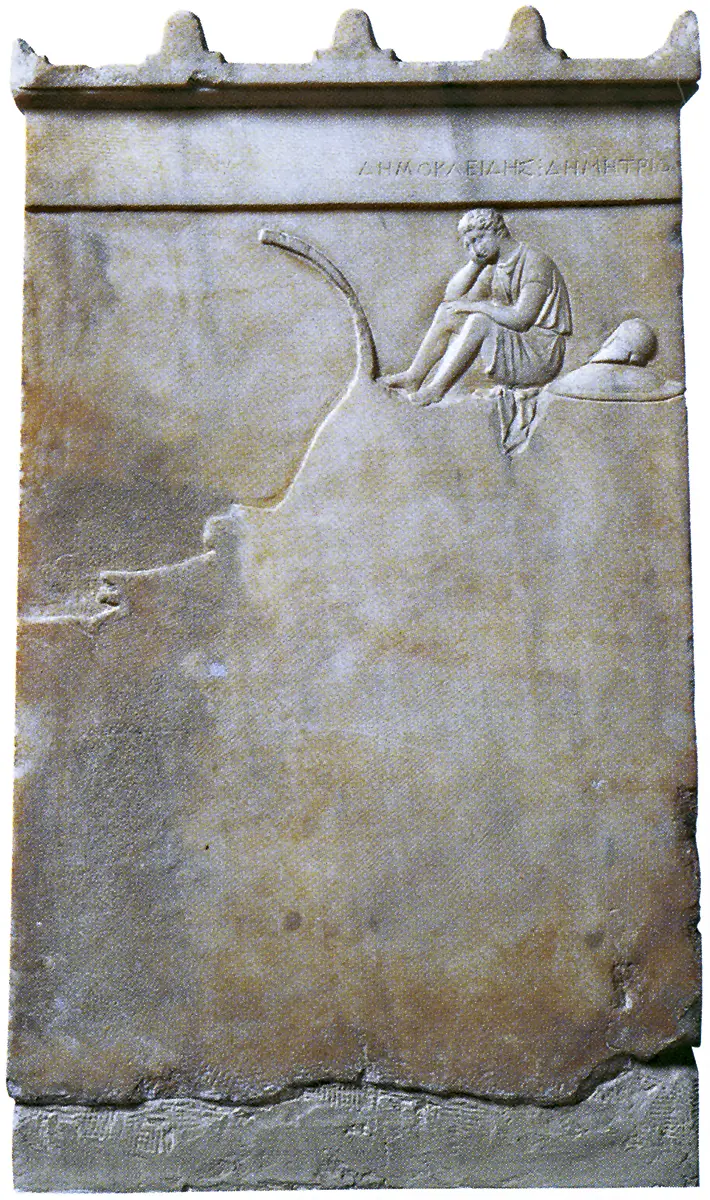
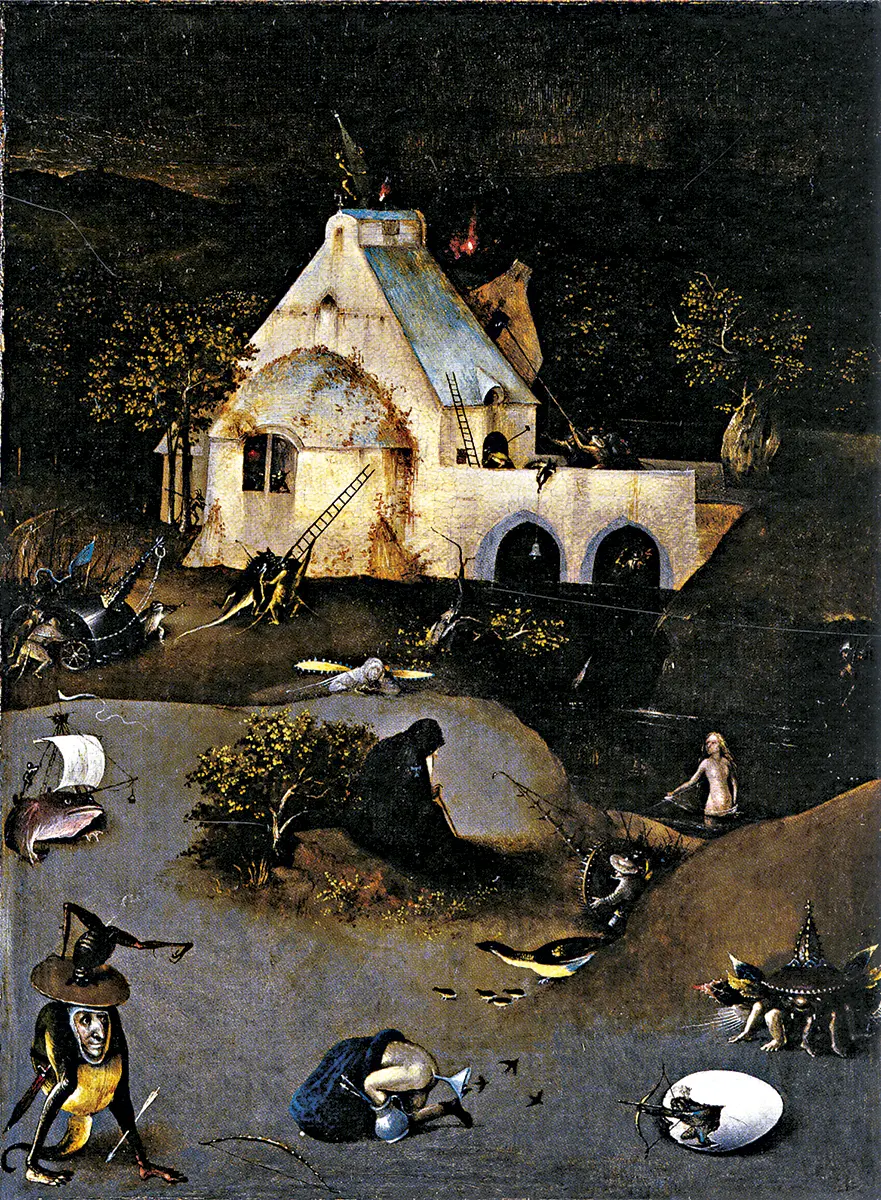
In the first gallery, titled “Prologue: Ancient Melancholy,” the large Greek funeral stelae conveyed a posture of a prostrate figure trying to protect himself from the world. The second gallery titled “The Devil’s Bath” approached the Middle Ages through religious works. Images by Gérard de Saint-Jean, Martin Schongauer, Lucas Cranach the Elder, and Hieronymous Bosch’s workshop illustrated the Christian iconography that multiplies images of grief and affliction. Often described in this period, acedia or spiritual laziness was long considered among the mortal sins.
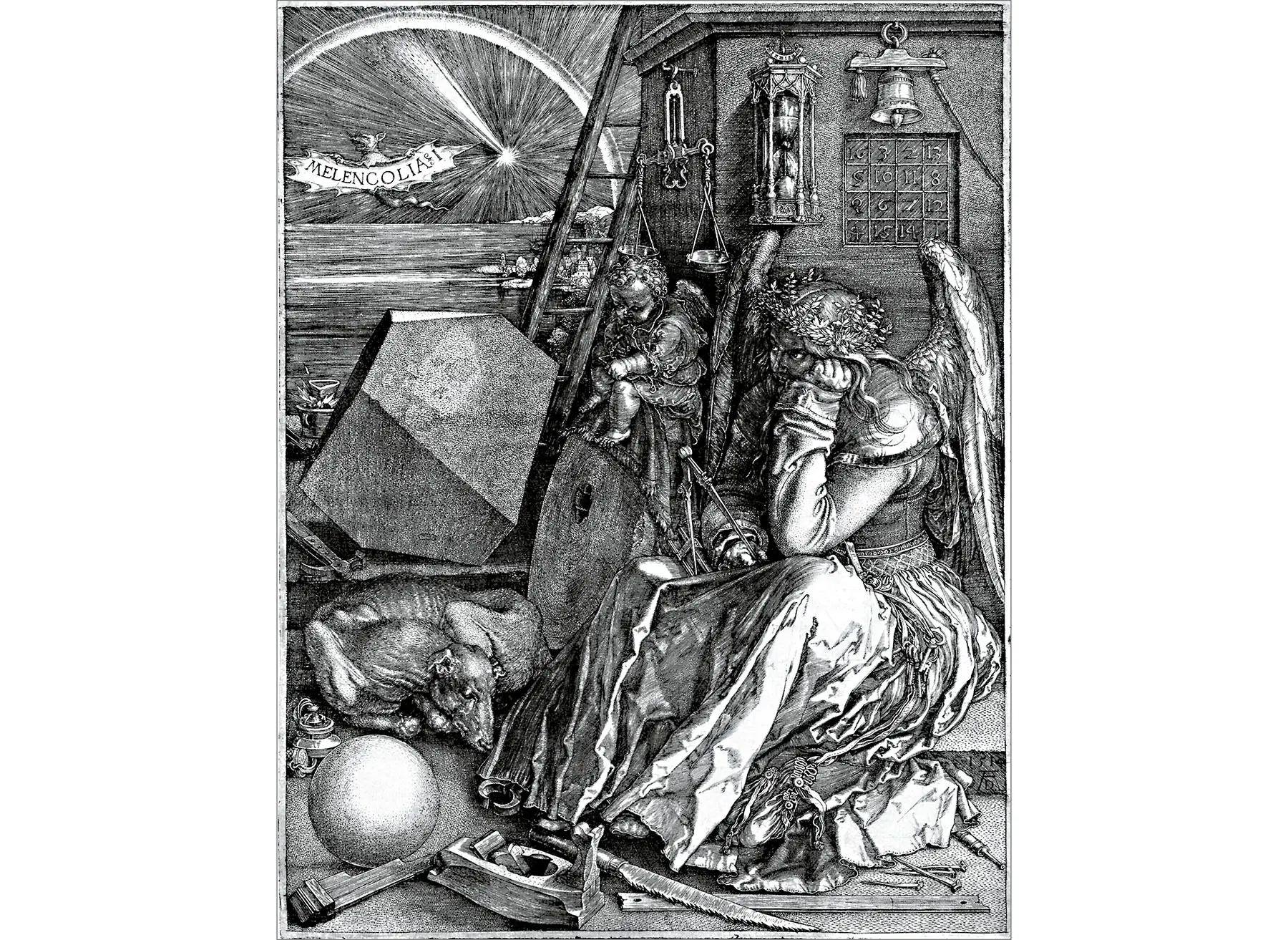
In the Renaissance, those dispossessed and marginal to society, including artists, were known as “Children of Saturn,” the title of the third section. On view at the center of the “Golden Age” were Dürer’s famous engraving Melancholy I (1514, engraving on paper, 24 x 18.9 cm, Jenisch Museum, Vevey, Switzerland) and Lucas Cranach’s painting Melancholy (1532), along with works by Giuseppe Arcimboldo, Nicholas Van Leyden, and Nicholas Hilliard, engravings by William Blake, measuring devices, mechanical clocks, sand hourglasses, astrolabes, globes from 1502, and the surprising figure by the Strasbourg Master, Bust of a Leaning Man (last quarter of the 15th century). The gallery was a somber green, and the objects were placed in arches and niches, creating a feeling of a cabinet of curiosities.
In the Classical period, melancholy lost its specificity in the artistic realm and suggested only solitude and meditation, as addressed in “The Anatomy of Melancholy.” In Cesare Ripa’s Iconology (the first edition from 1593), Melancolia is a young woman who has been left sitting on a rock by herself, and this model was repeated through the seventeenth and eighteenth centuries. An excellent vanitas painting by Philippe de Champaigne (Vanity or Allegory of Human Life, first half of the 17th century) echoed Georges de la Tour’s famous Magdalen with the Smoking Flame (1640–45).
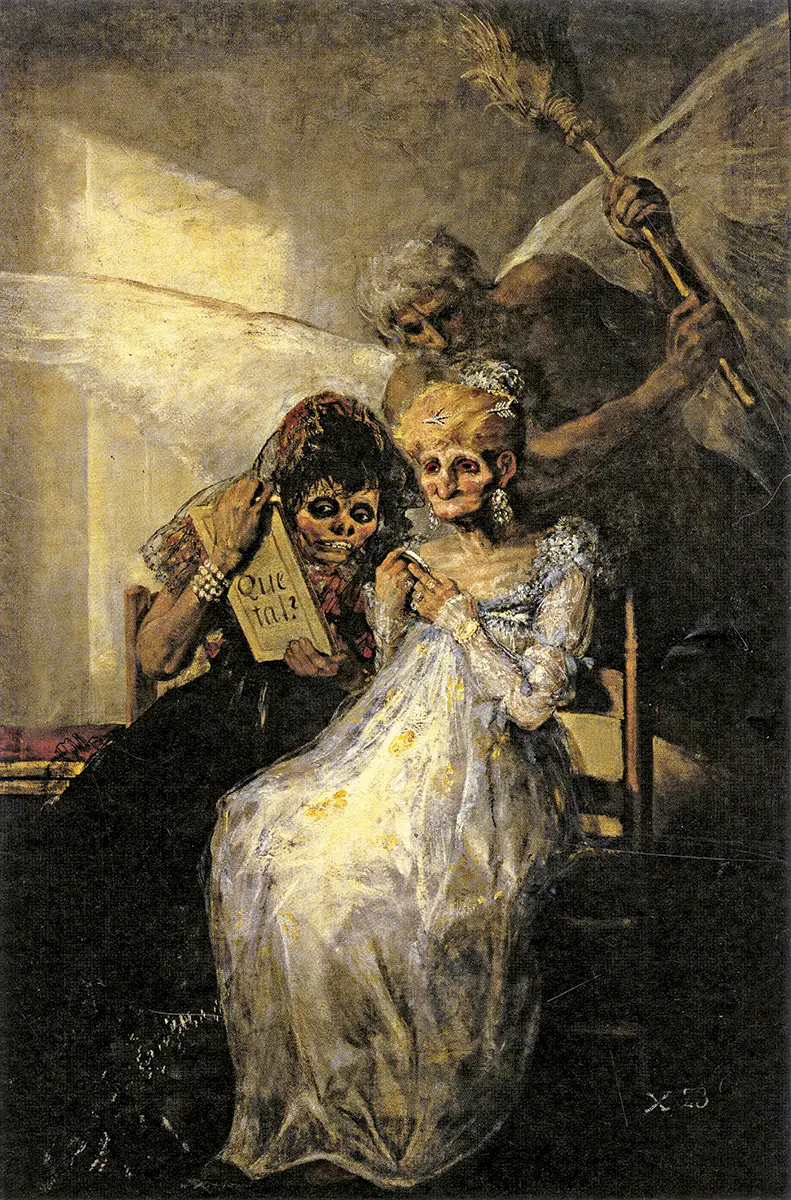
With the section “Lights and their Shadows,” the show presented the eighteenth century. While the Age of Enlightenment initially classified melancholy with irrationality and madness, it was to treat it later in asylums or hospices as an ailment of the spirit. Eighteenth-century bourgeois melancholy became a generalized pain of being alive or sentimentalism. Its backdrop was Nature, which provided opportunities for solitude that allowed the subject to retreat from the world and gains awareness of himself, as shown in works by Antoine Watteau, Francisco de Goya (El Tiempo llamado las Viejas, c. 1808–12), Johan Heinrich Füssli, and Giovanni Battista Piranesi.
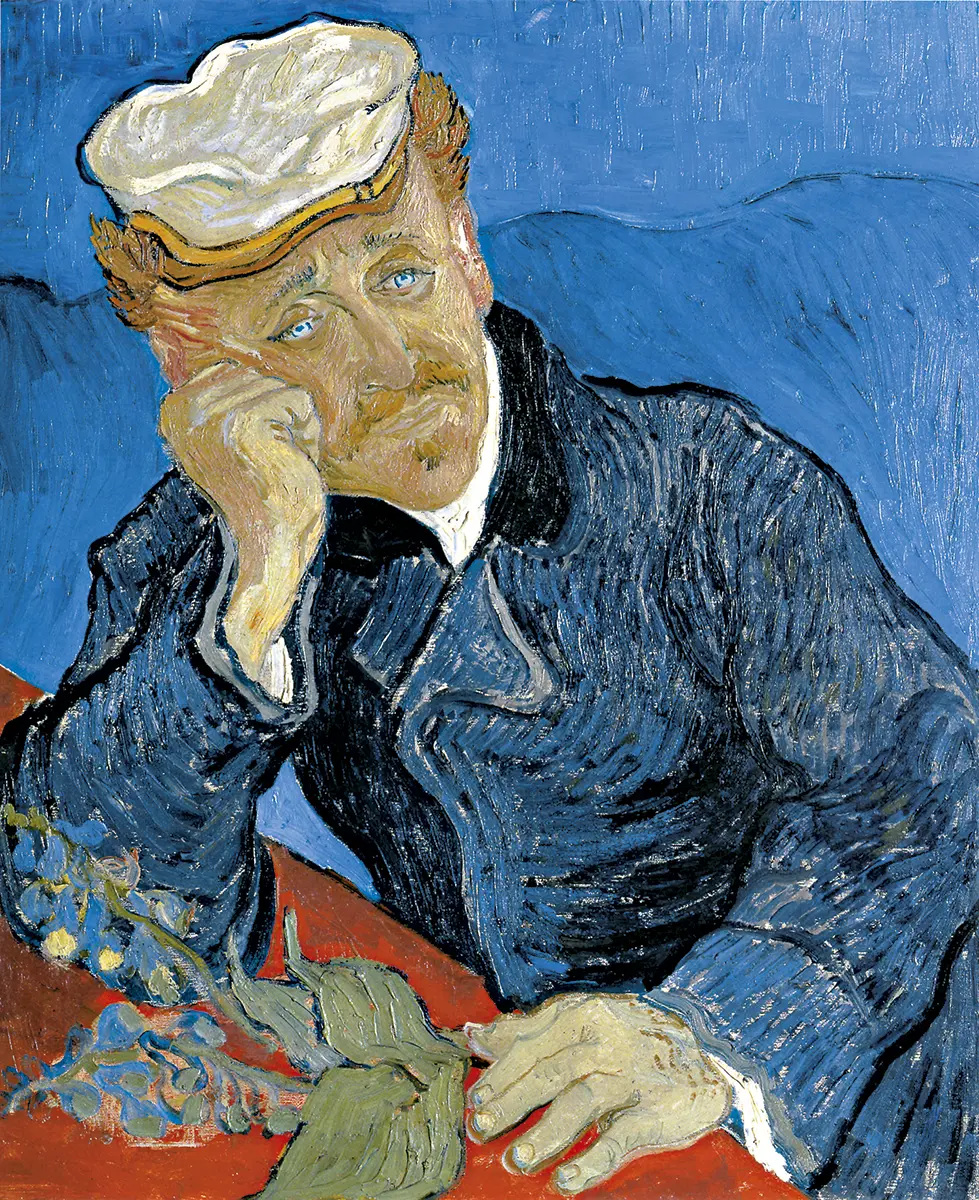
The next section was titled “God is Dead: Romanticism.” With Nietzsche proclaiming the death of God, the long history of a world based on faith came to an end; from that moment, man’s loneliness in the world was sealed. Just as strolling and wandering made evident the subjects’ boredom and laziness, the spleen became melancholy’s modern expression. The works on view by Eugène Delacroix, Théodore Géricault, Caspar David Friedrich, and Arnold Böcklin spoke of the mysterious, frightening immensity of the world, of the unknown, of sovereign nature. In “The Nature of Melancholy,” science appropriated melancholy: psychiatry and psychology from Charcot to Freud turned melancholy into a theme of the new science of the soul; in this gallery were works by Franz Xavier Messerschmidt and Van Gogh (Portrait of Dr. Paul Gachet, 1890) and a large number of photographs and engravings.
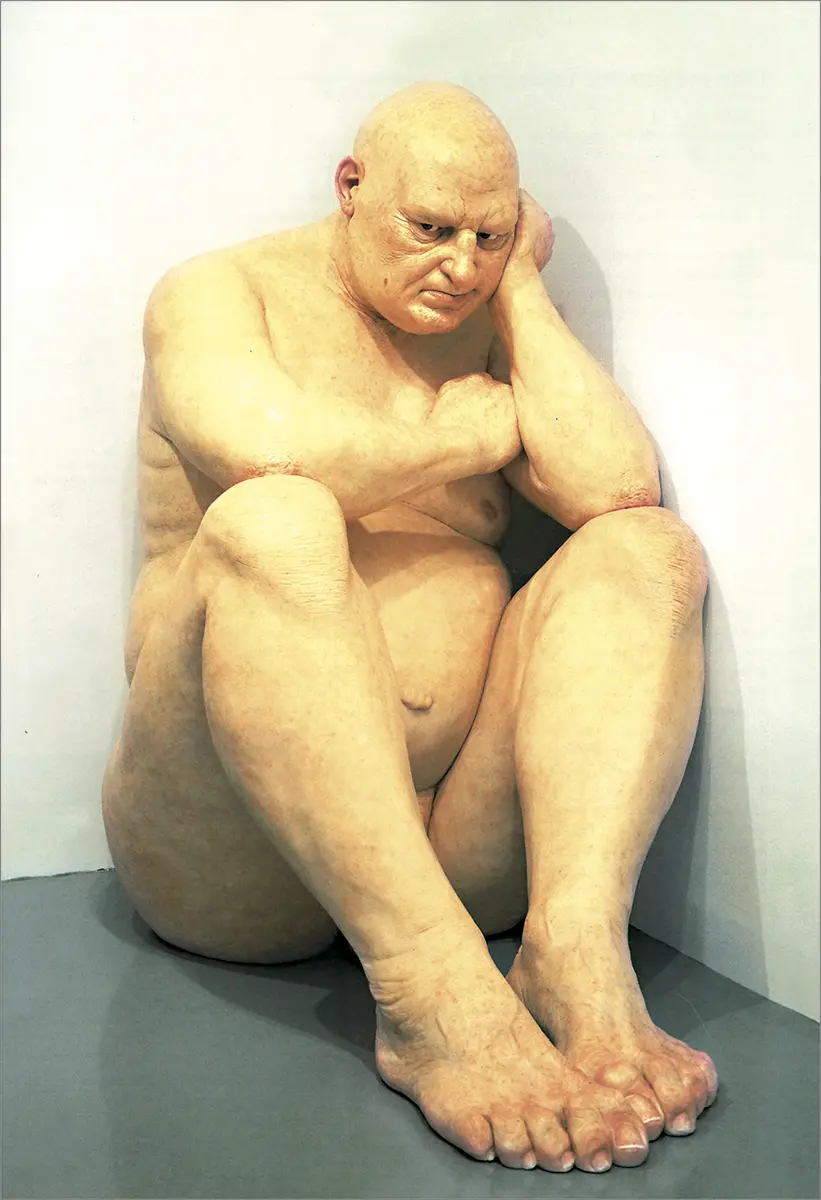
With works by Odilon Redon, Anselm Kiefer, Otto Dix, Antonin Artaud, Rodin, and Ron Mueck (Untitled (Big man), pigmented polyester resin on fiberglass, 203.8 x 120.7 x 204.5 cm, Hirshhorn Museum and Sculpture Garden, Smithsonian Institution, Washington, D.C.), “The Angel of History: Melancholy and Modern Times” concluded the exhibition. Questioning, probing, enthusiastic, or aware of their own melancholy, visitors could not avoid identifying with the aesthetic and philosophical discourses that confronted them with a consciousness of their reality, of the fleetingness of life and all things.
NOTE
1. Le Monde (October 13, 2005).
CHRISTINE FRÈROT
Art historian and critic, research-scholar, and teacher. School of Advanced Studies in the Social Sciences, Paris.