
When you consider South Africa’s place in the political, sociological, and psychological upheavals of the twentieth century, it is no surprise that those who chronicle and ruminate on the nation’s recent history have a complicated task. What it all has really meant—the brutal imposition and decades-long maintenance of a totalitarian colonial regime, the regime’s eventual overthrow, and dismemberment, and the country’s diligent effort to come to a restorative understanding of this dark period through the Truth and Reconciliation Commission hearings—can not be simply or emphatically stated.
The country’s poets, novelists, and other artists having so much to chew on, offer reflections on the situation that are redemptive in their own way. Who can fail to heed the bone-deep reach of the plays of Athol Fugard, the novels of Nadine Gordimer and J.M. Coetzee, the artworks of Marlene Dumas, Zwelethu Mthethwa, David Goldblatt, and William Kentridge, among so many others?
The best moments from this diverse group are penetrating, lyrical, and often furious, matching the harshness and the complexity of their circumstances. If they share any single idea, it might be that an unflinching gaze is a key to power. Yet several of these artists deal with apartheid very obliquely, if at all. The enforced separation of the population may have been the most glaring fact of mid-twentieth-century South African life, but it was hardly the only one. The oppressed and the oppressors, besides being citizens of a particular—and particularly savage—state, are also dwellers in a landscape, lovers, and otherwise fleshly humans.
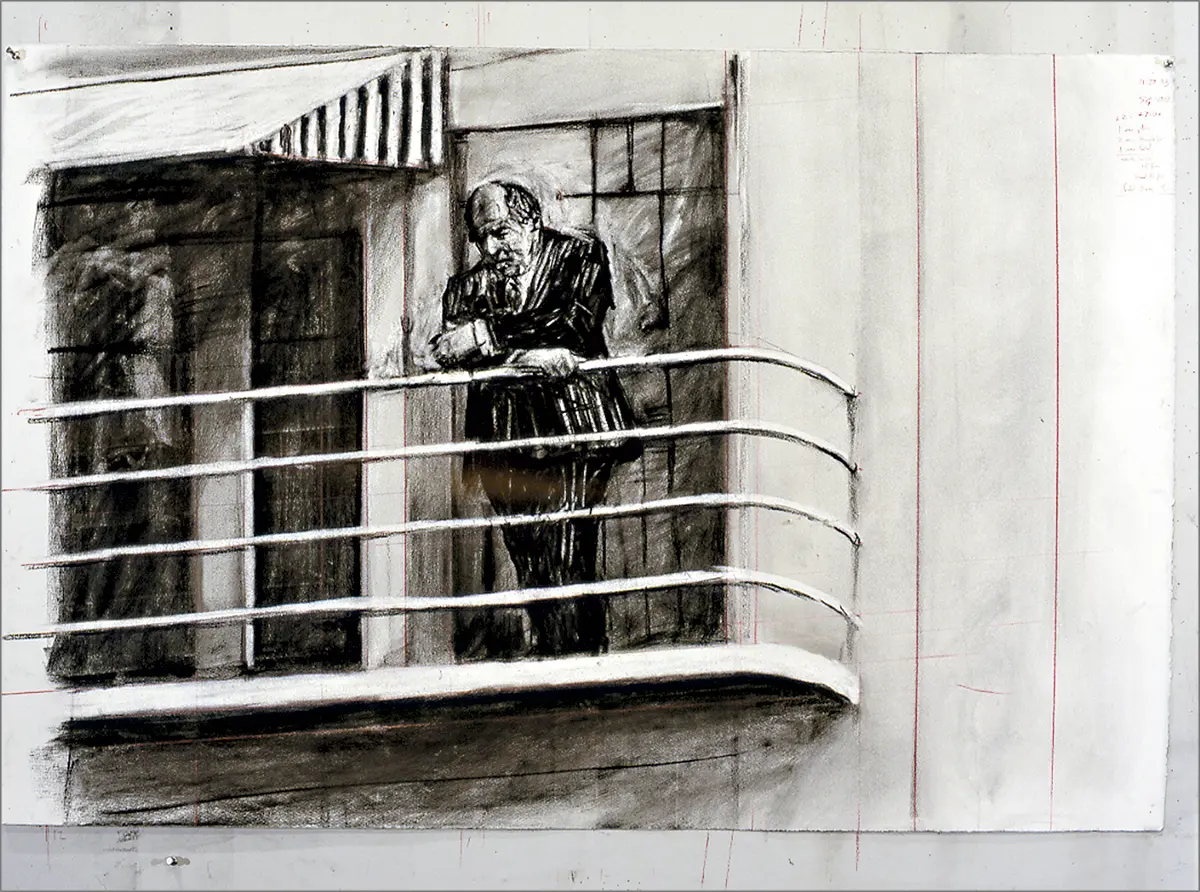
Over the course of his prolific and immensely varied career, William Kentridge has not only recognized how nuanced the truth of any matter is, but he has also come to be a connoisseur of what we used to call “the human condition.” His animations, unpolished and antique-looking, frequently tell anxiety-ridden stories about the ordinary and often unseemly behavior of the industrialist Soho Eckstein, his wife, and her lover, Felix Teitlebaum, in episodes with titles like Sobriety, Obesity and Growing Old, and History of the Main Complaint. The brutalities of apartheid frequently intrude—frighteningly, grotesquely, in the form of beatings and torture glimpsed, observed, or perhaps dreamed by Kentridge’s doppelgängers—and you might conclude that much of the purely interior inquietude of their existences derives from the asphyxiating socio-political atmosphere that surrounds them.
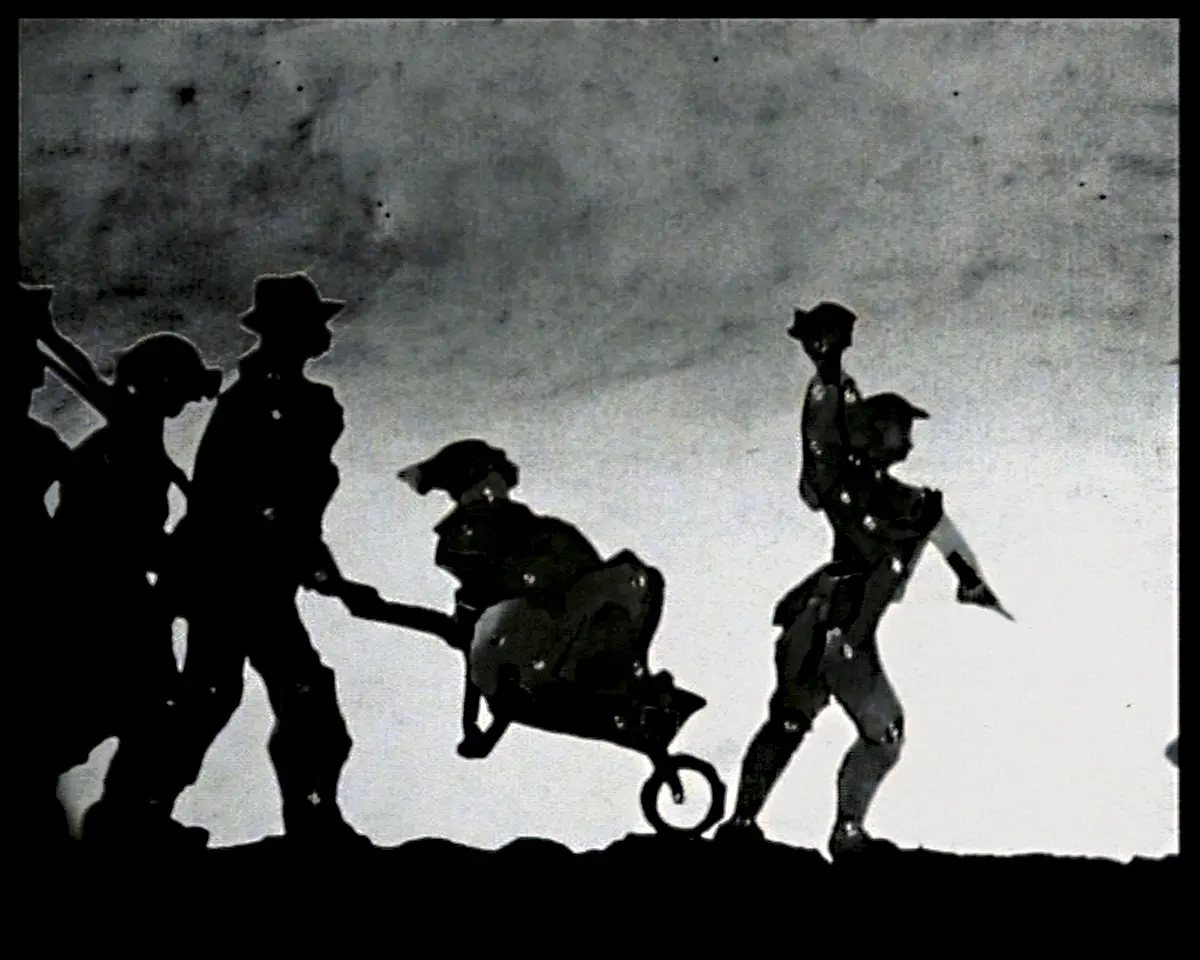
But more than the work of most artists working today, Kentridge’s hand-drawn and filmed meditations are filled with varying degrees of dark, tender humor. The sagging flesh of his characters is often exposed, and their ungainly bodies are frequently probed by ricocheting vectors of one kind or another. Machinery and furniture waltz and minuet, a pigeon mutates into a fish inside a medicine cabinet, or a ragtag line of disfigured shadow-puppet refugees crosses an arid landscape to the wheezing, off-key melody of What a Friend We Have in Jesus.
Perhaps the best aspect of Kentridge’s very keen sense of humor is his fondness for the old, the hand-made, and the individual. Each animation consists of a handful of images made from drawings that he has repeatedly erased, redrawn, and photographed. There is an element of self-abnegation in this process that seems, in artistic terms, almost saintly. In one video, he works with a gorgeously rendered, life-size self-portrait which he has torn to pieces, and several of his other films feature similar acts of self-destruction.
Amazingly, this process never calls attention to the sacrifices of the artist. Rather, the effect is one of quaint but thoroughly believable magic, as when numbers and complicated curlicues appear the moment the artist touches pen to paper. Kentridge may have objections to twentieth-century life, but he seems as offended by the crushing perplexities of mechanized urban mass culture as by apartheid and the post-apartheid world.
Viewers might know Kentridge best from his devastating Ubu Tells the Truth (1997), in which animated cats and camera tripods are the agents of official surveillance, torture, and murder, or from the more peaceable but equally troubling chronicles of Soho Eckstein and Felix Teitlebaum. How charming and genteel the series 7 Fragments for Georges Mèliés (2003) seems in comparison—little dramas featuring the artist in the throes of purely artistic conundrums: seeking inspiration from a blank page, creating characters who run away, or making paintings that disappear as he works. In Auto-Didact, Kentridge, in his studio, reaches into his pants pocket and extracts the page of a book, then another page from another pocket. Pages then fly into his hands from the floor, then book after book, until he walks away with an armload of tomes.
Near this group of works, in the darkened MAC downstairs gallery, was a related film, Journey to the Moon (2003), a lovely, hilarious story involving an espresso pot that goes to the moon like a rocket ship, with our interlocutor, the artist, watching its progress through an espresso cup. There are many astonishing objects and sequences in this work, including books with wavering vertical text, drawings that spring to life, levitating furniture and artworks, and a wonderfully familiar man-in-the-moon, which Kentridge borrowed from the very Georges Mèliés he pays homage to in his 7 Fragments. Mèliés was an early-twentieth-century animator, whose own Journey to the Moon featured a cigar rocket ship that famously crashes into the eye of the man-in-the-moon.
In Kentridge’s usual way, this is atmospheric, wildly inventive, precisely rendered, and fun, but it is also haunting to a degree that Fragments is not, because there is a ghost, a naked woman, who pads about the artist’s studio, watching as he watches, touching his shoulder, but who disappears as he turns around to greet her.
JOEL WEINSTEIN
Lives in Miami and writes about visual arts for national and international magazines.