
Palmbeach3, with Natalia Hnatiuk as its new director, continued in its 2006 edition to work around the concept of grouping three areas of the arts in a single site: Contemporary, Photography, and Art+Design.
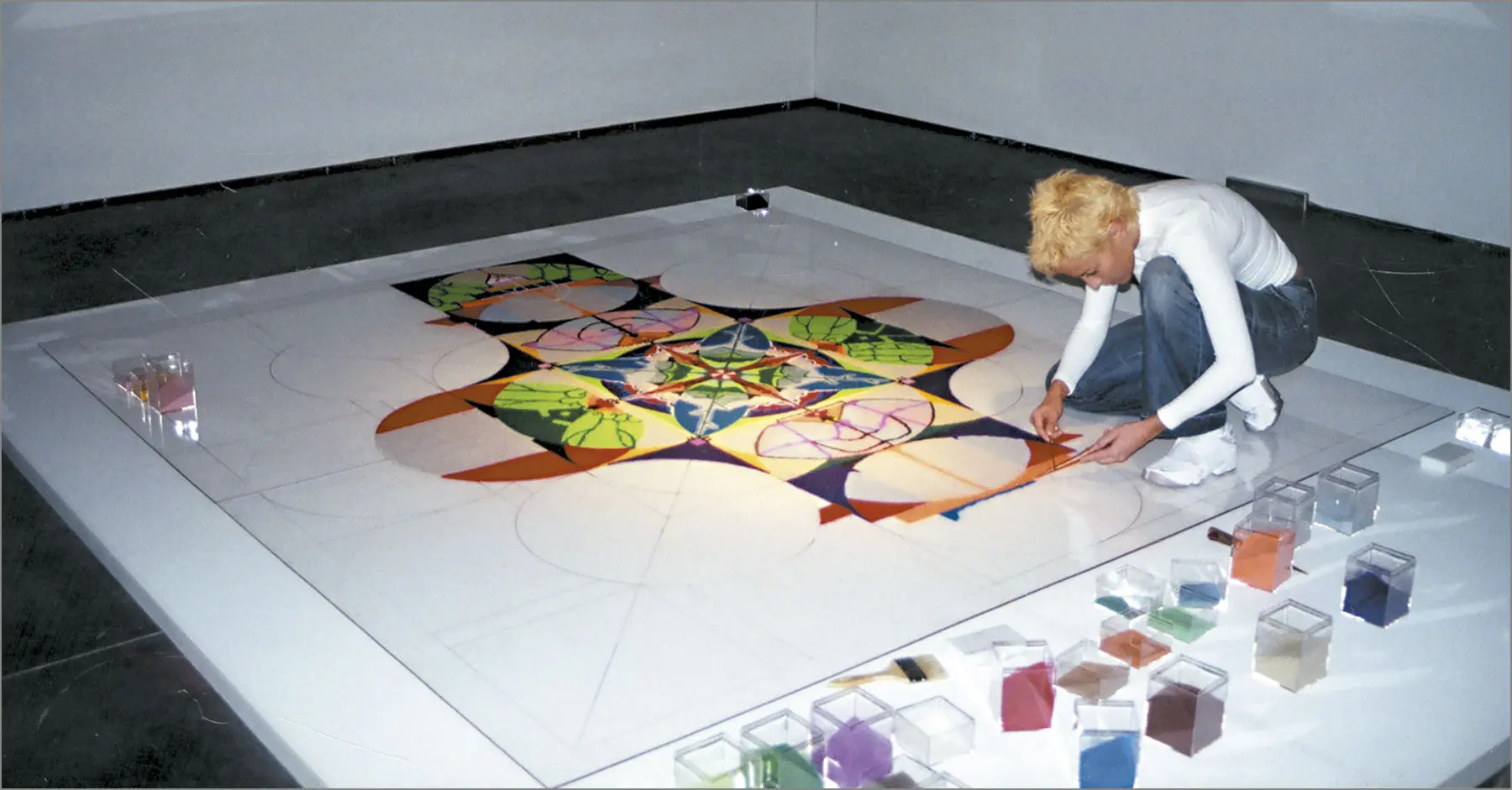
The fair was well organized, by perfectly defined areas, which allowed visitors to find various places according to their priorities and interests. Contemporary —grouping everything related to the visual arts— welcomed visitors with a performance by Maria José Arjona, represented by Bernice Stainbaum. In the booth, every day the artist began, with unending patience, her work devoted to the beaches of Palm Beach. Her efforts were on the ground, where she had previously made an outline to be filled as she scratched and blew colors. Undoubtedly, the interaction between the public, present at the time of creation, and the artist works very well in terms of the visual spectacle facilitated by this kind of event.
The Photography section gathered everything from works that may be considered antiques to contemporary works. Staley Wise Gallery/New York displayed photographs of big Hollywood stars such as Marilyn Monroe and Fred Astaire, by Andres de Dienes, alongside sophisticated images of fashion models by the well-known photographer David Lachapelle.
Other galleries devoted the entirety of their space to a single artist, as is the case of DPM/Ecuador, exhibiting a group of works by Luis González Palma, recreating the artist’s poetics, which alludes to very intimate spaces and figurations. In a separate space of the same gallery were works by Pablo Cardoso, who with Lejos, cerca, lejos recreated in painting a photographic register he had made of the route from his home to São Paulo Biennial. What is impressive in this work is the interplay with the observer, confused between the extremely realistic painting’s impeccable execution and the documentary theme provided by the genre of photography. German artist Bertien Van Manen/ Yancey Richardson Gallery/New York came with an intimist concept, exploring the role of photography in our lives in his shots of interior spaces with family portraits.
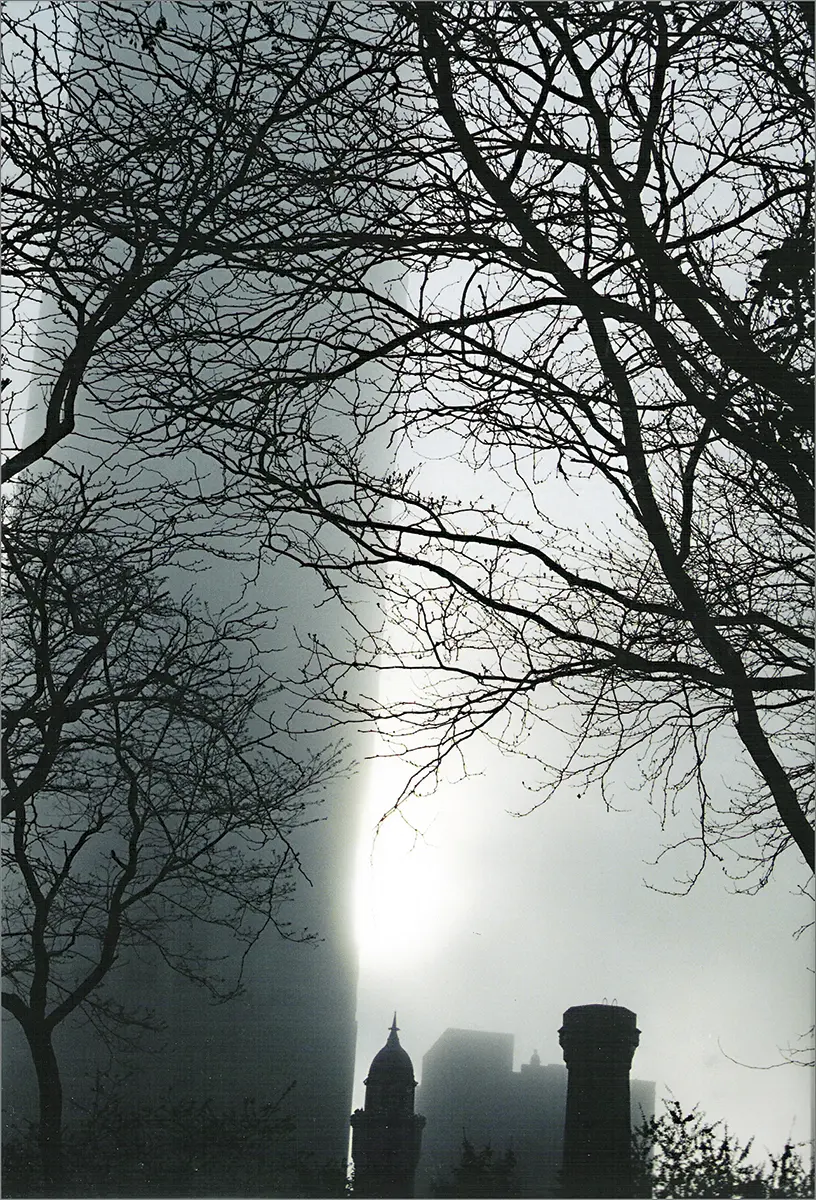
Casa D’Arte San Lorenzo/Italy displayed a formidable group of works by Karina Chechick. The artist’s intention is to foreground the beauty of an everyday landscape in any city where the high skyscrapers fade into the sunlight. The simplicity of her shots, and her excellent framing, suffice to communicate the images’ visual plasticity. Néstor Arenas was at Ambrosino Gallery/Miami with a different photographic concept, to create realities and scenes. His photographs recreated theater sets where the main characters were well-known comic book figures.
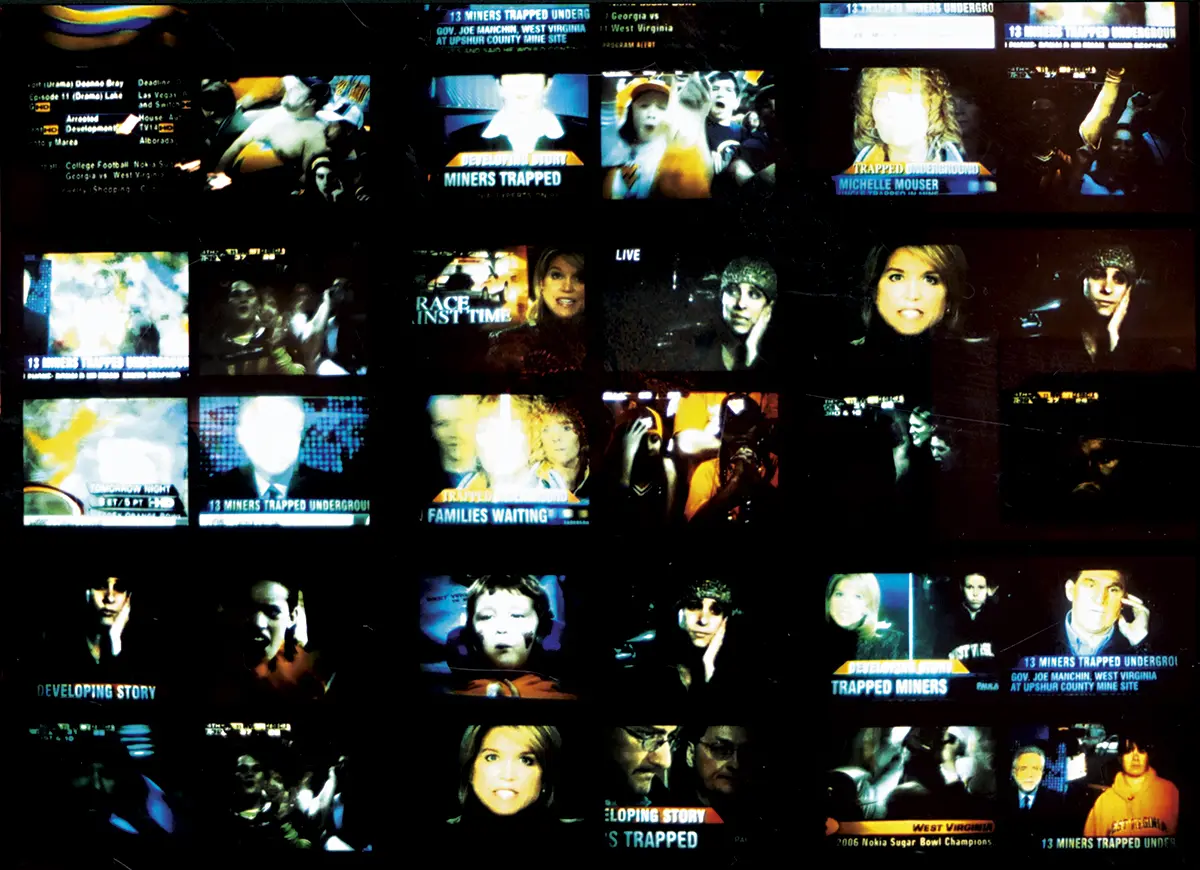
Complying with a different conception of photography, that of using it as a document and an ideal instrument for the dissemination of reality, Eric Payson/Kapio+Fachini Gallery presented American Piece, a forceful comment on two events that took place in West Virginia practically at the same time, on January 2, 2006, the terrible drama of 13 miners trapped in the Sago Mine and the Sugarbowl game. Through the expressions of the public present in the stadium and the families of the victims, as well as prime-time news anchors, the emotion of these events is etched in Payson’s shocking images. Undoubtedly, this work brought into the fair an important moment of social commentary on American reality, reflecting on human passions and attitudes.
On its part, Contemporary included a roster of those ever-present artists who contribute to make fairs the place par excellence for collectors. From works by Erro, Keith Haring/Galerie Ernst Hilger/Hilger Contemporary, Mimmo Paladino/Art of this Century, Tom Wesselmann/Robert Miller Gallery, to classic Fernando Botero sculptures/El Museo.
Among the spaces, we noticed both for the excellence of the works and the balance in the presentation of artists was Bernice Stainbaum/Miami. This gallery brought a well-rounded representation of the artists they handle. First, we need to mention Paul Sarkisian, whose interesting works captured the public’s attention, both the representation of a car and the two inks projecting a woman as she bathed on a milk-like liquid. Similarly impressive were Tatiana Parcero’s works; her photographs explore the geography of the human body. Also from Miami, Cernuda Arte offered a varied representation of the Cuban art it handles, from works by young artists to some of the most well-established figures, among which we can mention a beautiful work by Wilfredo Lam, one of the masterpieces to be seen in this fair.
From Cuba, Galería Habana brought several of the artists it represents, such as Roberto Fabelo, Marta María Pérez, Juan Roberto Diago, and Carlos Quintana, with a vast array of works that presented part of these artists’ current efforts. Galería El Museo and Fernando Pradilla shared one space, a large portion of which was devoted to the work of Fernando Botero, with drawings, paintings, and sculptures, while Fernando Cantero’s and Aurora Cañero’s work were on display in the other section.
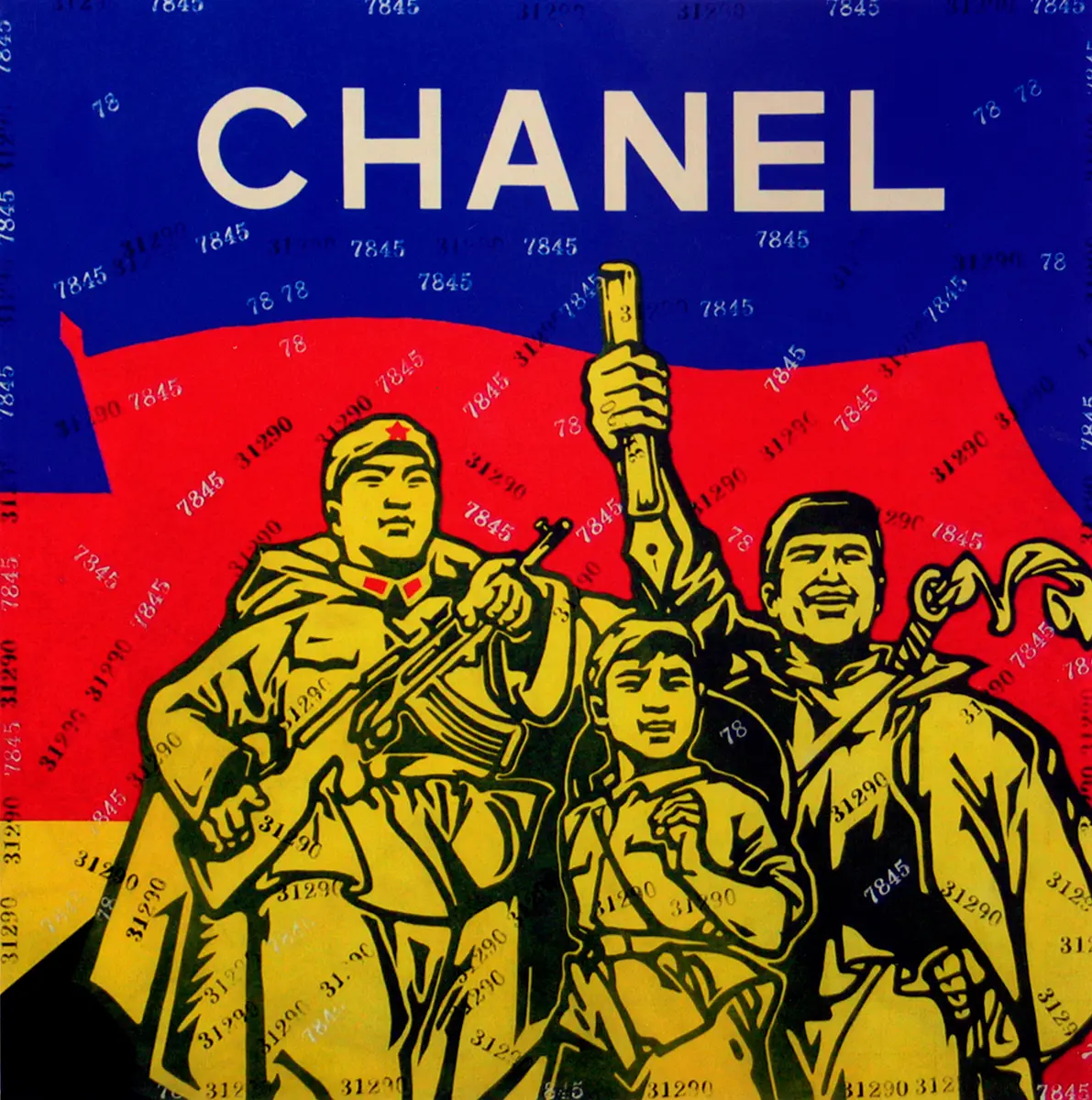
The presence of Asian art is already common in art fairs. Many of these works represent social observation and are a commentary about the way in which artists channel the confrontation with Western culture as it invades Asian countries through fashion and television. Alexander Ochs Galleries, with locations in Berlin and Beijing, specializes in contemporary art from East Asia. One highlight in its booth was Wang Guangyi’s Chanel, which uses the iconography of socialist propaganda during the Cultural Revolution and raises a flag featuring the Chanel logo, a la American Pop art. Another gallery displaying Asian art was Ethan Cohen Fine Arts/New York with works by Qiu Zhijie, who is also a curator, art critic, and professor. Zhijie works in different media, such as video, photography, and painting, among others, and his discourse explores human individuality. Many other galleries made excellent presentations, as was the case of J. Johnson Gallery/Jacksonville Beach, which devoted its entire space to Mexican artist Javier Marín’s bronze sculptures or Jerald Melberg’s always impeccable booth, where, aside from bringing good works, take care to show them in environments that favor them. Among the galleries participating for the first time with works by young artists were Remy Toledo Gallery/New York and Luis Adelantado/Miami.
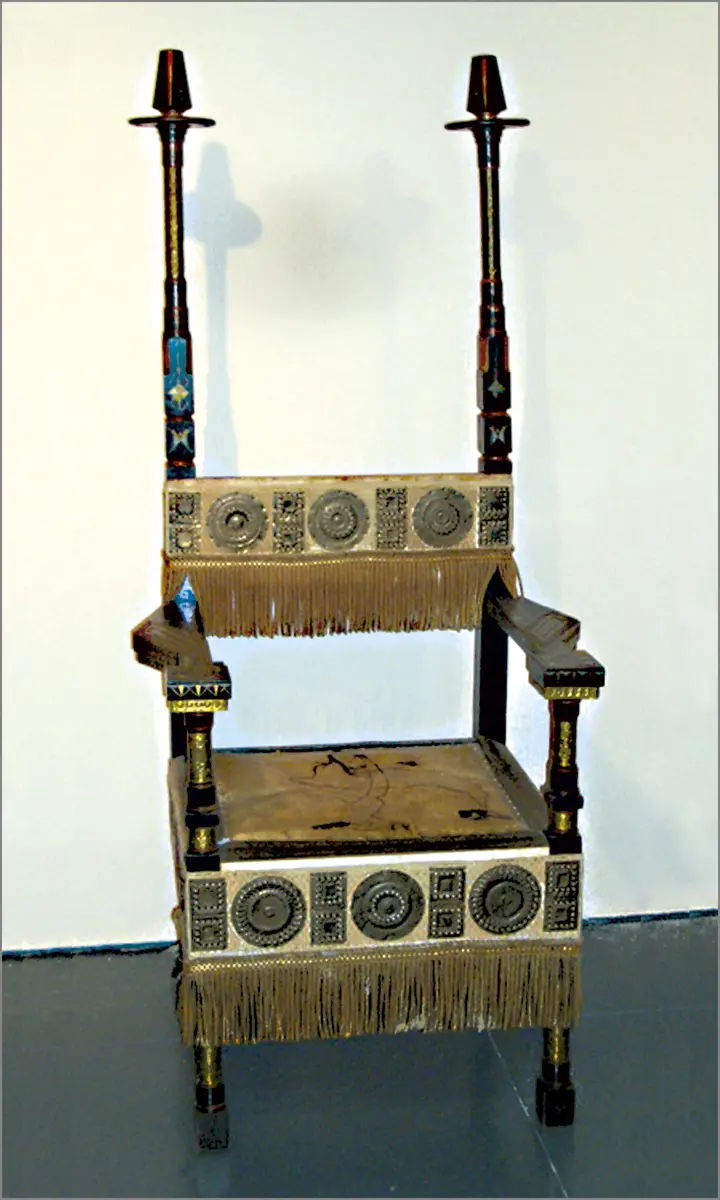
In turn, the Art + Design section gave space to decorative arts, furniture, and design in every sense in which these concepts can be understood. Already a staple in this fair is the presence of Habatat Gallery, with works that raise the bar of quality for such a sui generis presentation in the midst of a fair that shares its space with the visual arts. Two other galleries signaled important landmarks due to the quality of their proposals: Ferrin Gallery/Massachusetts and El Pelicano/New York. The former with works by Mark Petrovic, who uses blown glass as one of his materials for the creation of boxes, balls, and objects to which he adds birds, boats, leaves, and letters to produce works of high artistic level. El Pelicano, a project of gallerist Ramis Barquet, who has spaces devoted to the visual arts in New York and Mexico City, came to Palm Beach with excellent furniture pieces, such as tables inspired by Yves Klein’s designs, and works by the famous Italian designer Carlo Bugatti. Bugatti is known in the history of design as one of the first Italian designers who broke away from the tradition of creating furniture using historical European traditions and started imprinting on his pieces evident Islamic and Japanese accents.
We must commend palmbeach3 successful efforts to maintain the balance and the quality of its three segments. It is a very special fair among the group of fairs that take place in South Florida.
MARISOL MARTELL
Art historian, critic, and assistant to the Editor of ArtNexus.