
Arteaméricas has consolidated itself as a fair focused on Latin American art, and on this occasion, it boasted the presence of important galleries representing internationally renowned artists. As a parallel event, the Miami Dade College programmed a series of conferences that took place before the fair, where collectors and experts from the art world attended as guests and gave lectures on the subject of Latin American art. Also during the fair a new initiative was presented, Young Professional Night, with the participation of numerous Miami museums that brought part of their public to the fair.
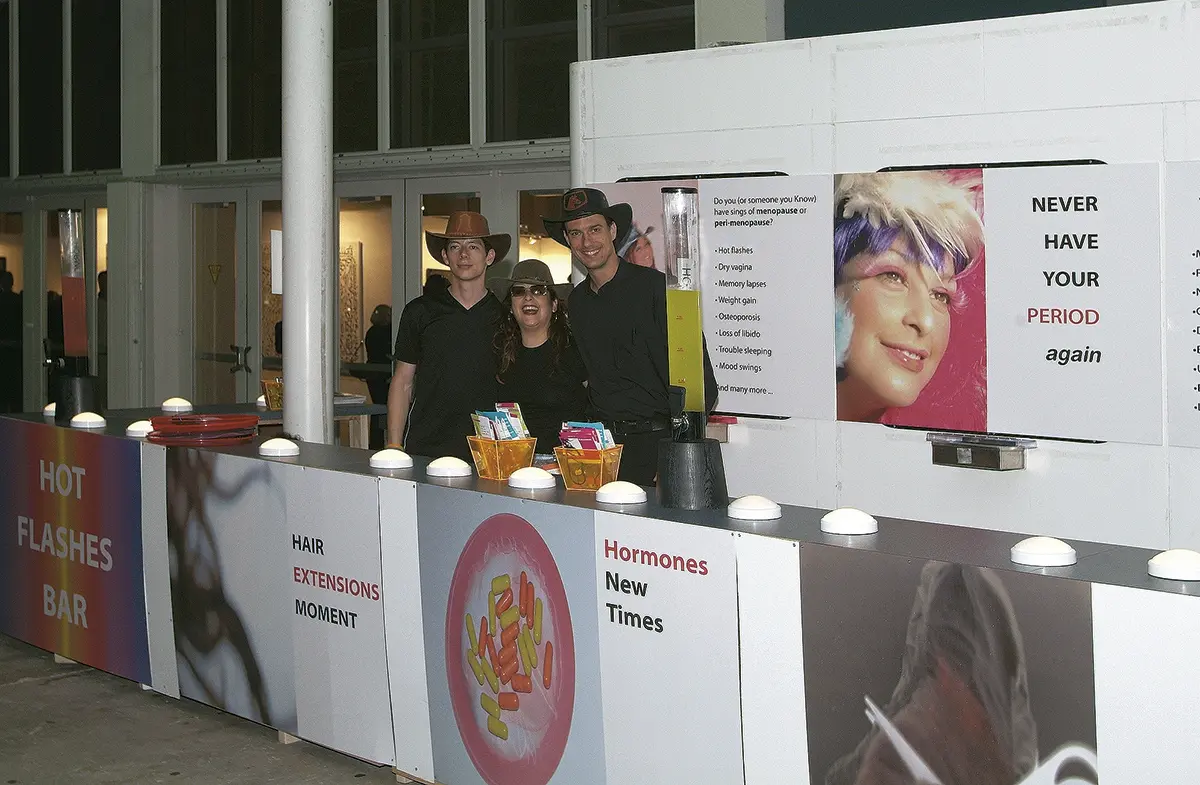
Among the fair’s achievements is the continuity of the Trends section, curated by Milagros Bello, and in this edition, one of the main attractions was Hot Flashes Bar at Hard Core Arte Contemporáneo, by the artist who uses the pseudonym Nina Dotti. The idea was to establish a dialog with the public about the symptoms that afflict women of a certain age when menopause arrives. The bar was tended by two youths who gave out samples such as hair extensions or bottles with pills that would supposedly prevent women from having their period and proclaimed the advantages of menopause, which allows for sex without the risk of pregnancy. The bar, located at the entrance to the fair, helped create a more uninhibited mood as the public approached the event. Another installation welcoming the public was Enchanted Garden, by Mexican artist Perla Krauze. A booth inside of which visitors found themselves surrounded by artificial plants, with sounds that recreated nature. Giving continuity to her work, once again Krauze seeks to explore different materials, in order to, as she puts it in her artist’s declaration, confront the differences between the natural and the artificial, the rational and the emotional, the permanent and the precarious. Other works included in the Trends section could be enjoyed throughout the fair, becoming an interesting pause as one visited the booths.

Over 50 galleries were present, most with high-quality works both in conceptual and formal terms. There was a tendency to show abstract art by the best representatives of the School of the South, with artists whose careers have been signaling in the development of our continent’s artistic movements. Alejandra Von Hartz presented works by León Ferrari, Enio Iommi and Danilo Dueñas, while Durban Segnini and Cecilia de Torres presented works of the highest quality by Jesús Soto and Magdalena Fernández. Many galleries exhibited works by Joaquín Torres García, among them Sammer Gallery/Miami and Galería Sur/Montevideo, the latter also with works by José Gurvich.
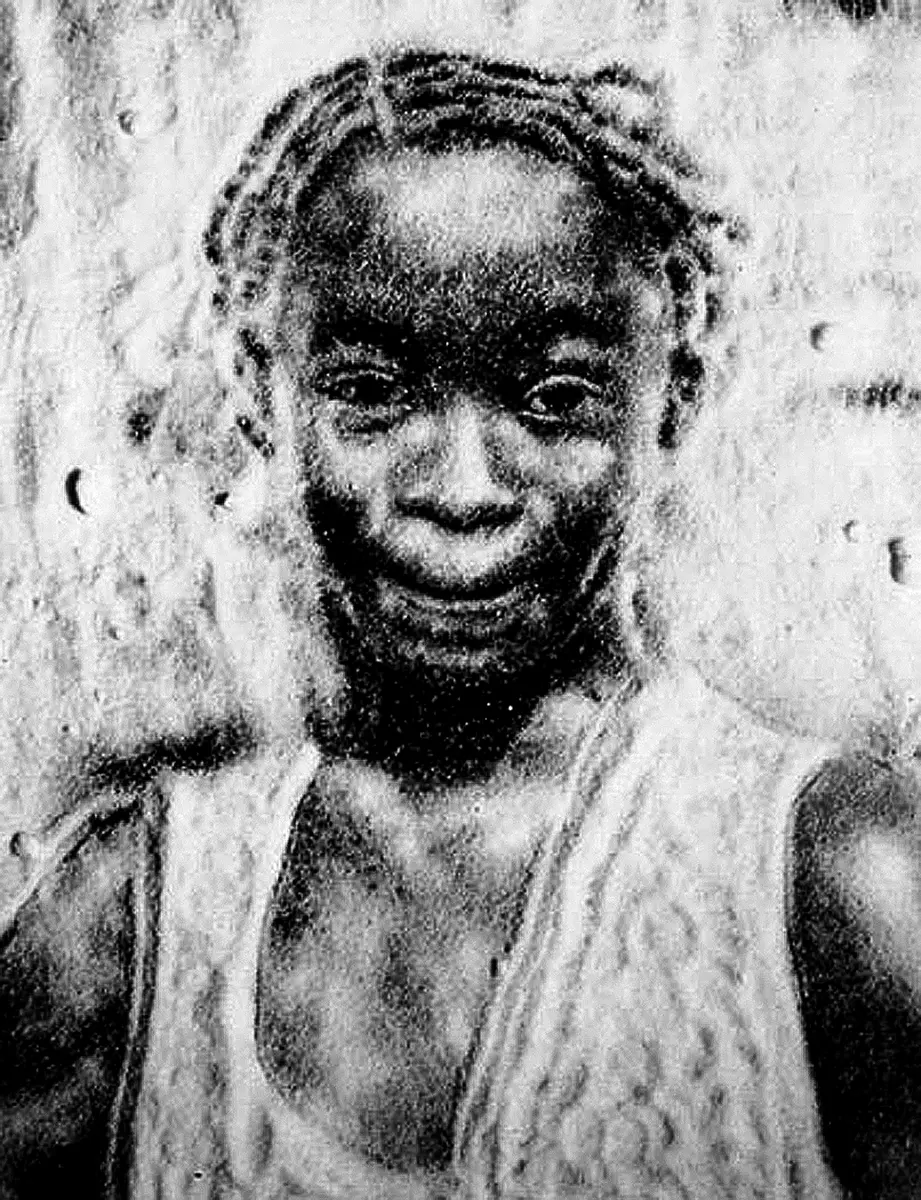
The fair was complemented by the presence of galleries like Ruth Benzacar/Argentina, with works by Andrés Compagnucci, Liliana Porter and Pablo Siquier; Mary-Anne Martin/New York, with an excellent selection of works by Latin American masters, among them Francisco Toledo, Fernando Botero and Armando Morales; From Brazil, Thomas Cohn brought works by Oscar Oiwa, Carlos Gorriarena, and Cuban artists José Bedia and Rubén Torres Lorca. On her part, Diana Lowenstein Fine Arts/Miami exhibited striking photographs by Carlos Bentancourt and Cecilia Paredes, alongside works by José Bechara and Tulio de Sagastizábal. And from New York, at Leon Tovar Gallery the highlight was Vik Muniz’s series of Sugar Children.
At Kuntshaus/Miami, there were fresh proposals, with an excellent variety of works, such as Rafael Rodríguez’s canvases and Flor Bosco’s amusing little boxes. To be noted at Alonso Art/Miami was the work of Francis Acea, with an excellent conceptual proposal based on the recreation of well-known icons. Galería Galou/Williamsburg, a space that declares itself open to formal and conceptual freedoms, provides space for emerging and well-known artists to exchange ideas. In that sense, Rodolfo Graciano’s transgressive works shared space with Patricia Cazorla’s and Irene Pressner’s interesting work. From Puerto Rico, Viota Gallery presented a refreshing group of works, such as Melquíades Rosario Sastre’s wood constructions and Rigoberto Quintana’s works on linoleum.
The excellent display and selection of works presented by Brito Cimino/São Paulo reassert this gallery’s recognized quality; the highlights here were Regina Silveira (with some very beautiful porcelain works,) Liliana Porter, and Nelson Leiner. Iturralde Gallery/Los Angeles included, among others, a series of works by Oscar Muñoz, under the title Proyecto para un memorial, representing the process of creation of his video of a face from its formation to its disappearance. Raúl Cordero’s work, in the same space, spoke of creation, a direct reference to the expenditure of energy in the production of a work of art.
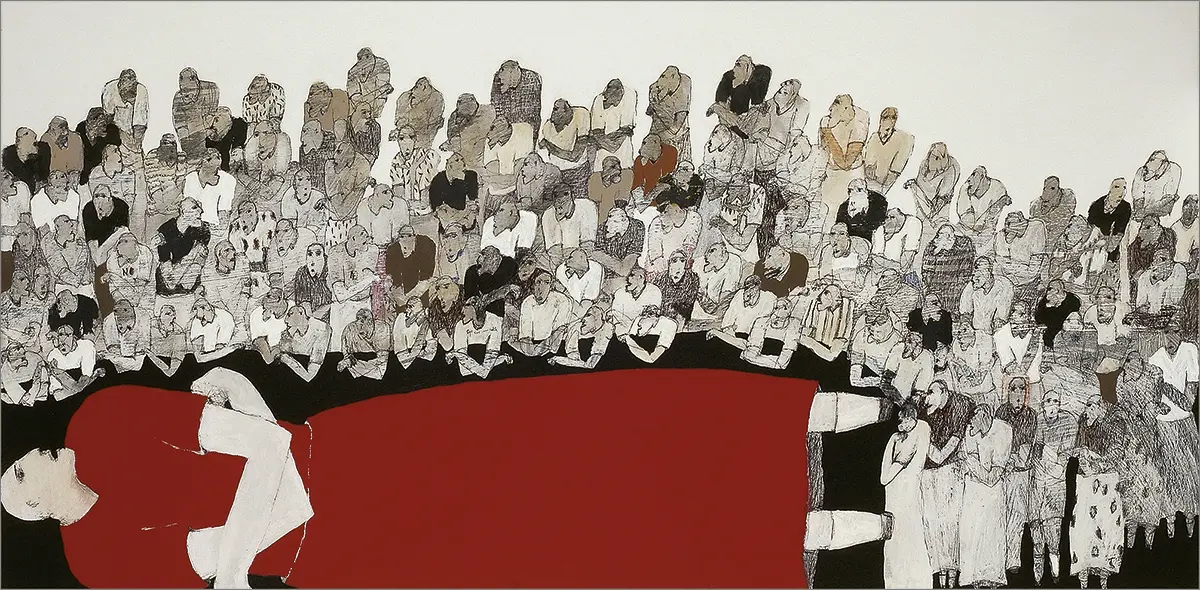
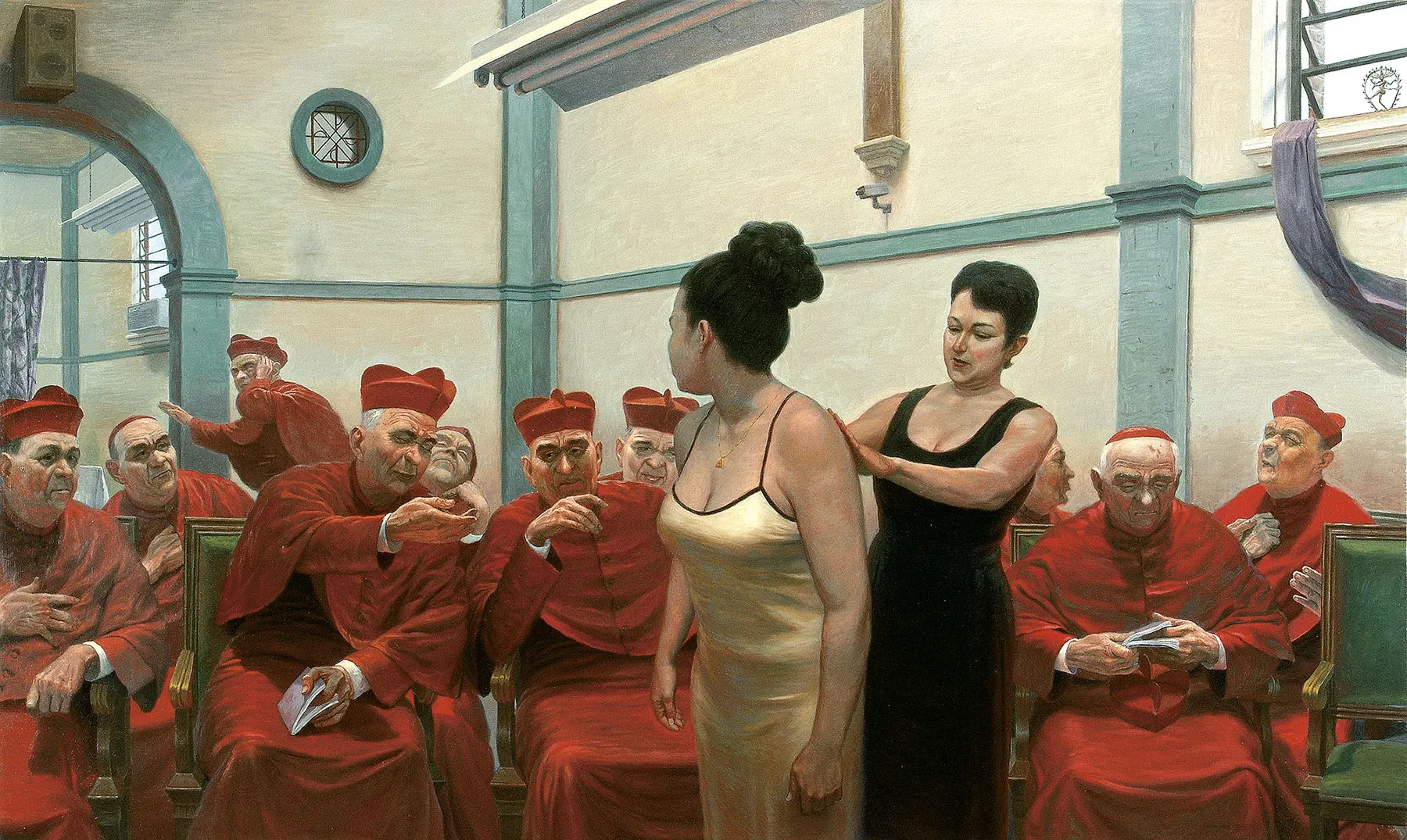
Other artists with individual shows worth mentioning are Gustavo López Armentía and Pablo Cardoso, the former at Galerie Yoramgil, and the latter at DPM arte contemporáneo with large canvases that imitated landscape photographs. López Armentía presented a varied number of works in different techniques, expressions, and themes; salient among them was an evocative work titled La victoria perdida. Also present with very good works was Via Margutta Arte Contemporáneo/Córdoba, whose two artists at the fair, José Benito and Mateo Argüello Pitt, work on wood but in different ways. Within the selection of works on exhibit, Argüello Pitt’s La despedida II, mixed technique on wood, evokes a funeral, which serves the artists to play with the proportion of figures and with color. Alfredo Arcia’s works, presented by ArtSpace/Virginia Miller Galleries, had a de-sacralizing character, questioning above all religious and social issues. One of the most attractive canvases, for the characters it brought together, was The Scarlet Room, a group of cardinals —recognizable by their scarlet-colored outfits— displaying different attitudes to the presence of two women, whose actions remained not entirely defined.
From Los Ángeles, Couturier Gallery presented a booth comprised of Cuban artists, with among others works by José Manuel Fors —alluding to memory and remembrance through his photographs— and Carlos Estévez, also represented by Galerie Bourbon-Lally and José Alonso Fine Art.
Another point of interest in this fair was the presence of many artists. Here on this occasion were not only several from Miami, but it was possible to interact with artists who arrived from Puerto Rico to show their work at Galería Viota, and with artists like Pancho Quilici who had an interesting selection of works recreating aerial landscapes, very successful at Latin Art Gallery, which sold its entire inventory. Complementing the fair were Spain’s Joan Guaita, with Manuel Mendive’s multiple sculptures, alongside Latin Art Gallery, both in the representation of the European continent. Also to be noted was the presence of galleries like Arte Consult/Aleman and Moreinis from Panama, as well as Ambrosino Gallery from Miami, here for the first time.
For its next edition, Arteamericas will move to the Miami Beach Convention Canter, due to the closing of the Coconut Grove Center. The fact is that this move is generating new expectations and will make possible the entry of some galleries, although the fair plans to retain the boutique concept, as a small and selective event.
MARISOL MARTELL
Assistant Editor, ArtNexus.