
Patrick Hamilton (born in 1974, Louvain, Belgium) lives in Santiago de Chile and works as a conceptual artist in several disciplines. Developed from forms and techniques, his works are dictated by the concept and the process of researching issues of interest. Educated as a painter, Hamilton has an equally significant career as a photographer and a sculptor and has also worked in public art. Diverse explorations are combined and various disciplines are articulated in his work, without losing their specificity or eroding their register; on the contrary, forms are sustained and languages flow. Theoretical and formal threads draw relationships between works or series of various works, even when the disciplines seem very different. Among Hamilton’s formal investigations and resources, what stands out is an appropriation that relates dynamically to visual culture—entertainment, fashion, advertising, news, and propaganda—as an inventory and as the framework that informs art in our postmodern era.
Although the interdisciplinary practice has become the lingua franca and modus operandi characterizing a generation of contemporary artists that emerged during the 1990s, and although it articulates issues produced by nomadic investigations in our global era, some nuance is required to highlight localisms and regionalisms that mark current artistic production and globalization. Such a discursive strategy emphasizes operations of translation and difference and makes it possible to resist the push for homogenization.
Guillermo Machuca, who has studied Hamilton’s work in the greatest depth, describes the artist’s place in and his contributions to the Chilean scene. In his curatorial presentation for Hamilton as the Chilean representative to the 26th São Paulo Biennial in 2004, Machuca writes: “ . . . he belongs to the most recent cohort of artists emerged into Chile’s artistic scene identified with the art of neo-conceptual filiation… his work has gathered and assimilated a large part of the formal and expressive possibilities opened by the progressive art developed in Chile under the military dictatorship, in the 1970s and 1980s. In formal and material terms, this tradition moves toward the use of the body as support of expression, the urban space as a grid or weaving of inscription, and, finally, a reflection on the language of photography and its subsequent renovation of painting, engraving, and the graphic arts."1
Such theoretical dynamism and formal experimentation open pathways and contaminate an established tradition that argues for formal purity and defends artistic hierarchies rendered obsolete by current artistic practice and by the visual culture that feeds it. In Chile, pioneers such as Eugenio Dittborn (born 1943) and Arturo Duclós (born 1959)—who are also the teachers of Hamilton’s generation—expanded the conceptual and practical horizons of art. In particular, avant-garde art in Chile was marked by postmodern explorations and theorizations in the field of photography and other creative languages. By challenging disciplines that were comfortably settled into traditional niches, postmodernism changed the artistic scene, which then defined art as a mode of knowledge, ideas, and concerns of a social and political nature, and artistic practice was rendered porous.
A precocious provocateur who avoids the pitfalls of fashionable curatorial or commercial spectacle, such as the Peter Pan syndrome or the Dracula effect, Hamilton established his territory in conceptual painting. Other equally precocious artists devoted to painting, such as Federico Herrero (born 1978) and, to a lesser degree, Guillermo Kuitca (born 1961, Buenos Aires), have painted with exceptional traditional talent from an early age and have been able to revitalize expression with novel themes and experiments on different supports and site-specific interventions. Unlike them, Hamilton paints from the vantage of a promiscuous, impure site of enunciation, which is to say, not from the painting’s autonomy.
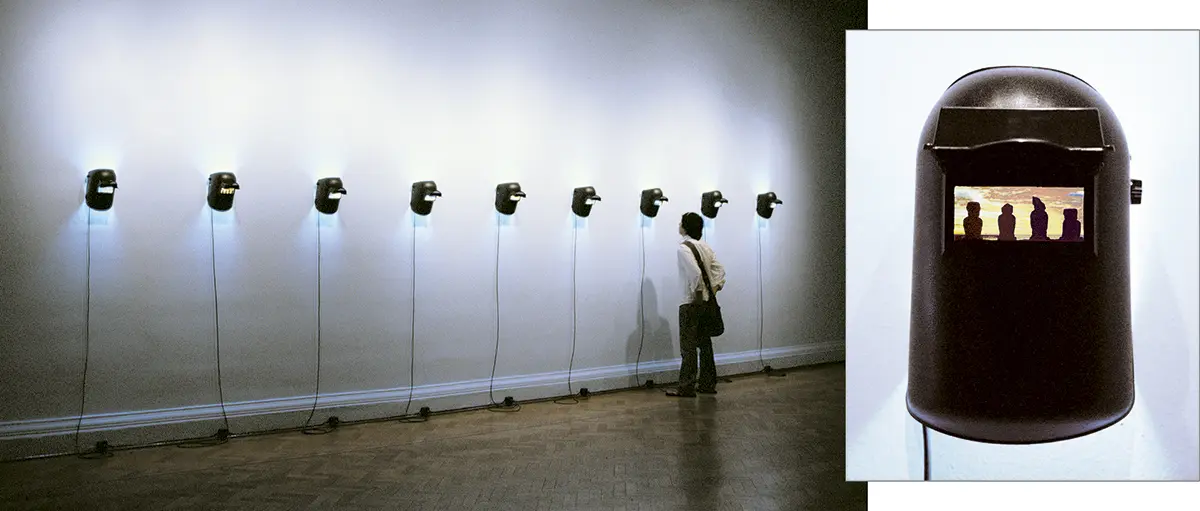
It must be underscored that, while painting has been influenced by the debates among artists in other disciplines, many of which argued for painting’s obsolescence, the vindication of its autonomy rests on its resilience as a way of thinking, as brilliantly proposed by the Belgian painter Luc Tuymans (born 1958, Mortsel). This revitalizing concept liberated painting from the debate that began in the 1980s about its agony and death, opening the field up to other debates about its life and its eternal character—think about the seminal writings of Benjamin Buchloch, Douglas Crimp, the late Craig Owens, Thomas Lawson, and later of Yves-Alan Bois. Now painting could be seen in terms that were congruent with its own practice, an approach only made possible by the accumulated, high-quality debates that preceded it but which already seemed obsolete; the rules of the game changed. Luc Tuymans argues for painting as a way of thinking rather than a style or an emotional, therapeutic expression that obfuscates and separates lyricism from its social context and its political potential, a theme elaborated by Theodor W. Adorno in his 1957 essay “On Lyrical Poetry and Society.”
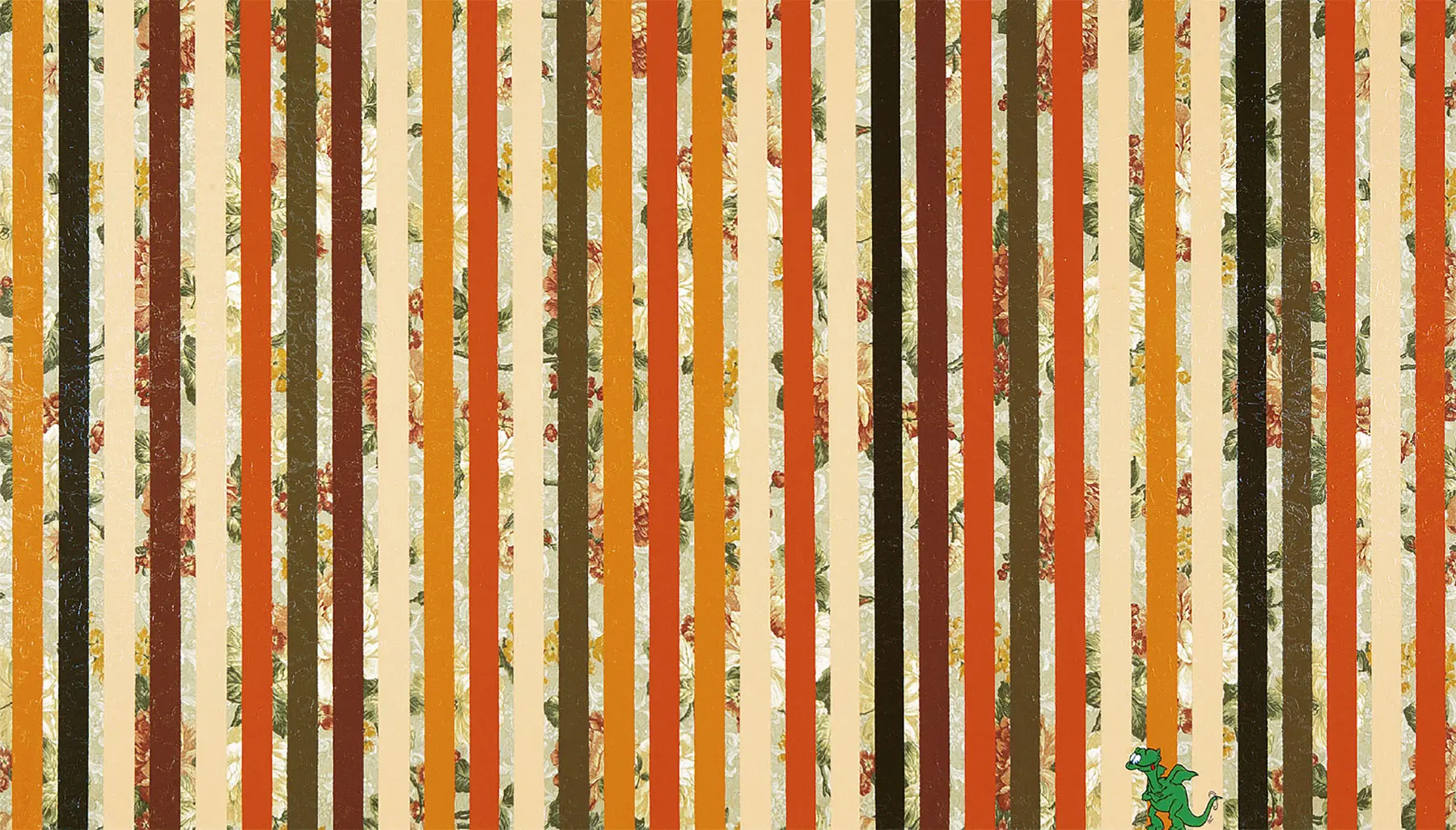
Hamilton’s work presents us with the idea that the craft and practice of painting—traditional virtuosity—is not what matters. What is key in his work is how he visually conceives it, based on a fundamental definition of painting—a flat surface on which an image is formed—and how this procedure emerges in other visual practices, allowing the discussion of the pictorial character of a photograph, a video piece, a sculpture, or an installation. In his pictorial practice, Hamilton combines various references or direct appropriations of the history of abstract Modernism, a resource that lets him suggest its relationship to architecture and design, from Piet Mondrian (1872–1044) to Kenneth Noland (born 1924) and Brice Marden (born 1938), among others. For support, Hamilton doesn’t use linen canvas; he paints geometric patterns directly onto found decorative cloths—many of them rather kitschy—and adds small figures taken from comic books. Besides being reflections about painting and its context of visual culture, which combines ethnography and art history, these are objects in which images generate metaphors and allegories leading to an exercise of cultural critique.
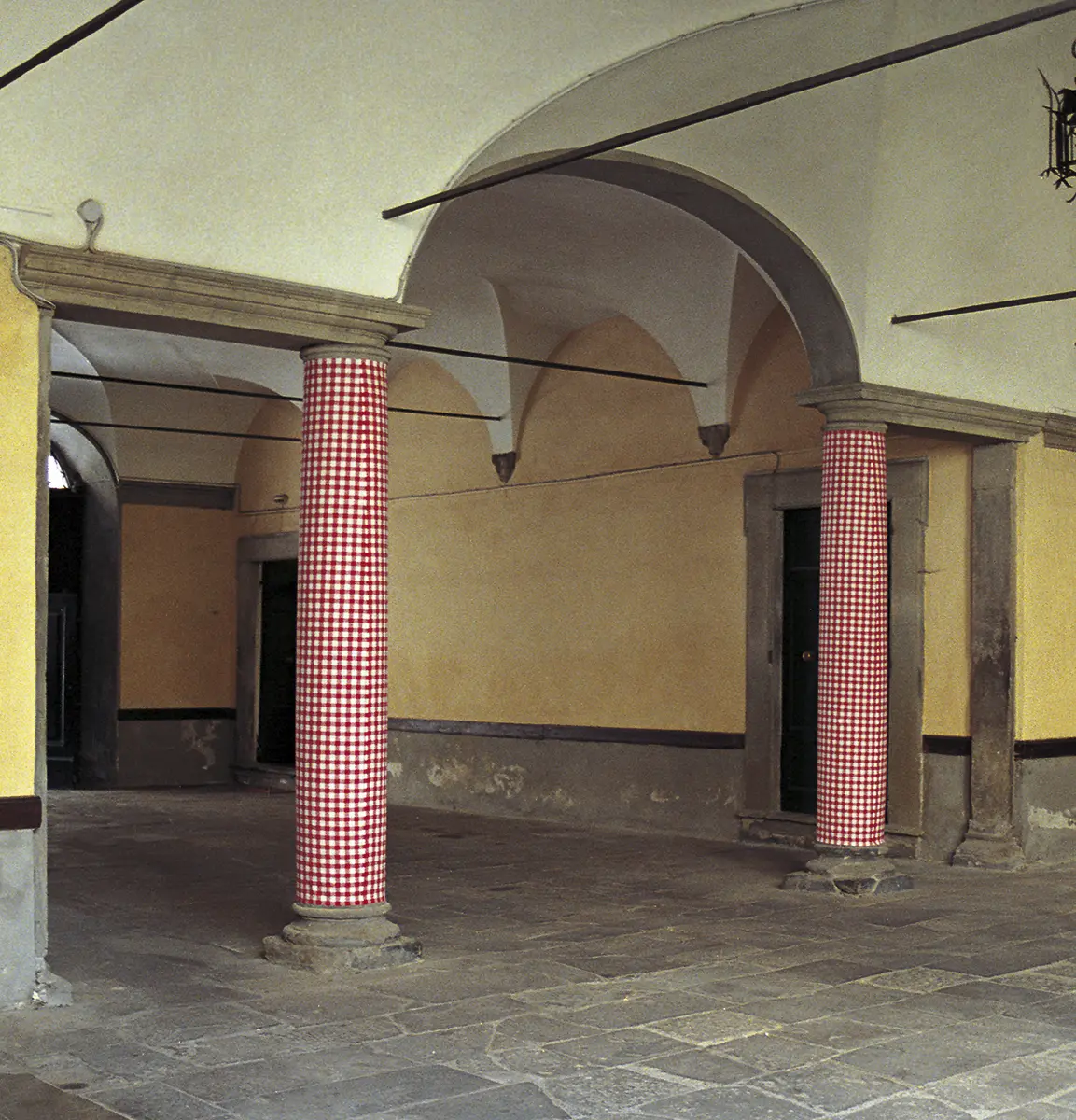
As Machuca points out, “In Hamilton’s case, this expansion [of painting] has privileged a critical and ironic position directed towards the various prescriptions of formalist aesthetics (in particular, that promoted by what is known as abstract or non-figurative art.) In that sense, the issue here is not to promote a presumptuously transgressive mixture of so-called ‘high’ and ‘low’ culture; nor is it a matter of canceling modernist purism to the benefit of a frantic exaltation of mass culture; what is medullar to his work needs to be understood on the basis of a permanent oscillation between the rigor of critical art and the presumed banality of the aesthetic disseminated by our consumer society."2
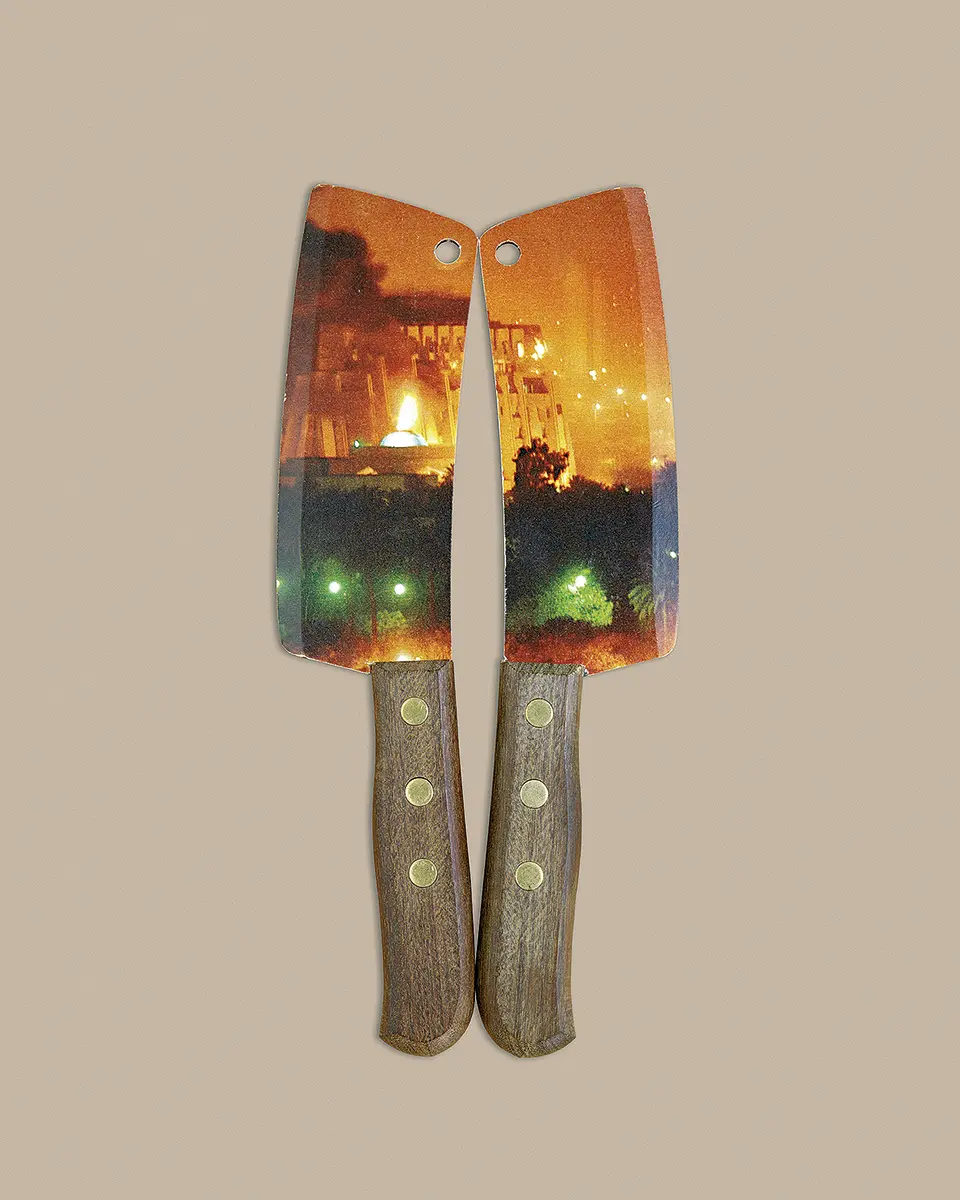
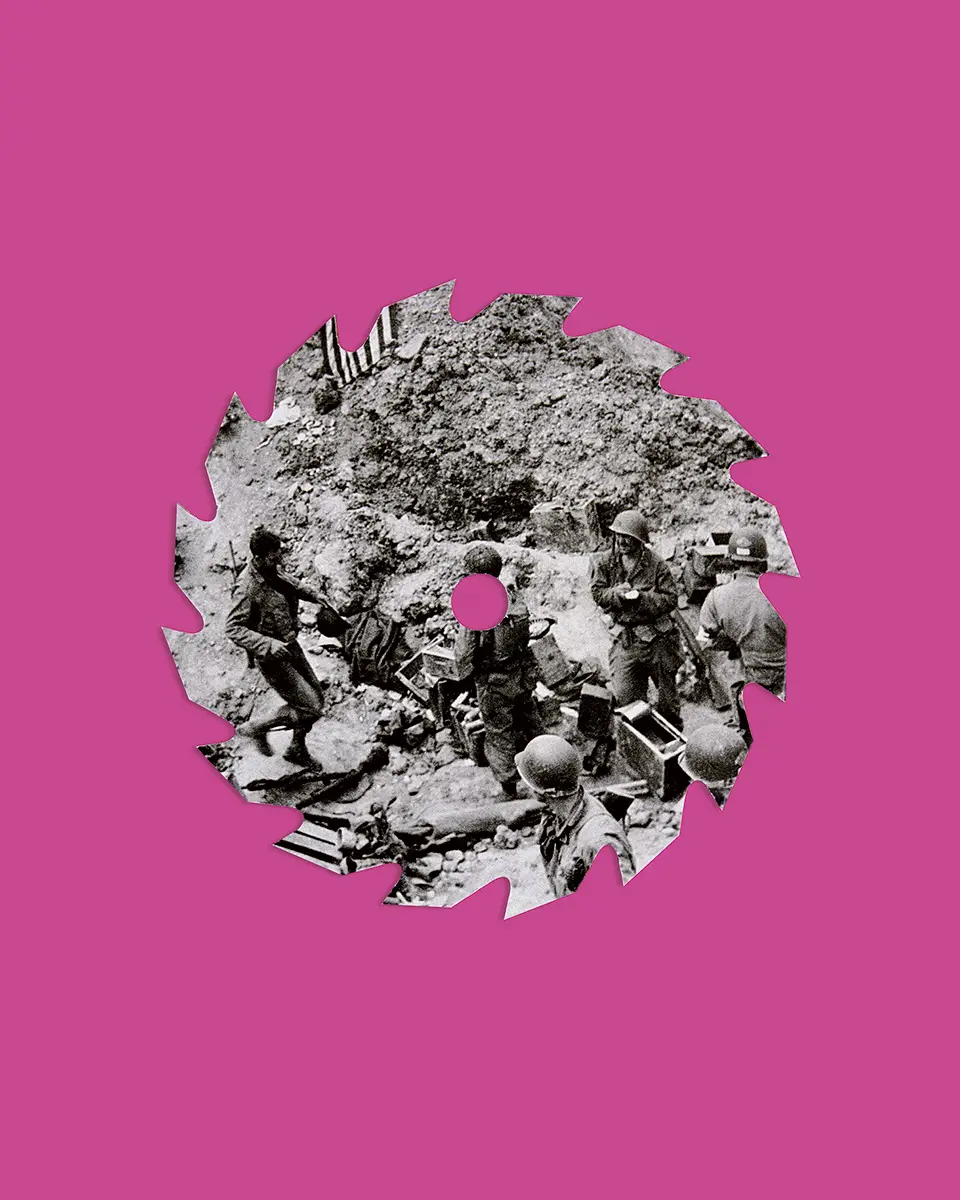
In recent years, Hamilton has worked in photography and has incorporated photographic images in sculptures and installations, where he uses the strategy of appropriation to a greater degree. But unlike his paintings, where appropriation takes advantage of a very precise inventory, the trove from which his photographic work draws is wider and more complex: newscasts, advertising, fashion, and entertainment. While one finds the mark of individual craft despite this appropriation in his paintings, in his photographic works the artist acts like a surgeon who finds images in the cultural corpus, dissects them, and pastes them together to form an image or central emblem.
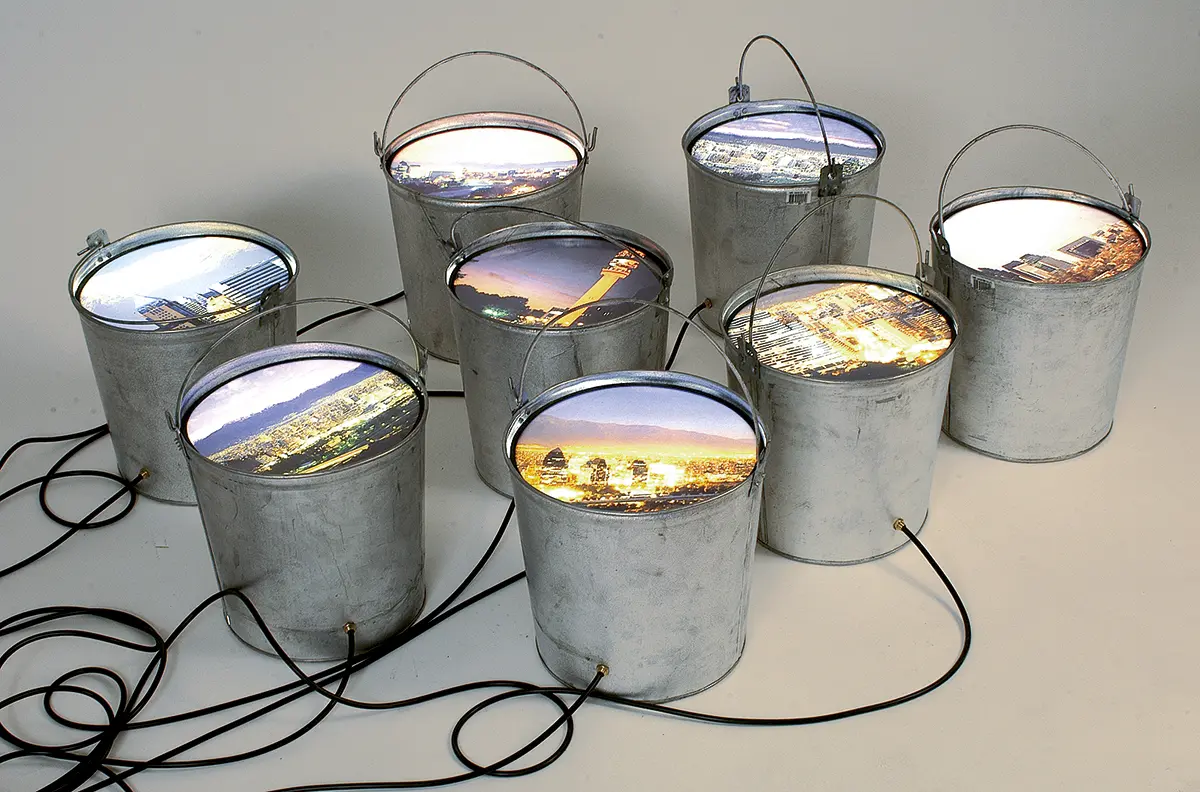
As the Chilean representative at the 26th São Paulo Biennial in 2004, Hamilton presented photographs on a theme of recent interest to him. In this series, the artist builds images on decorative motifs, global media references like military conflicts, signs from the entertainment and tourism industry, and cultural stereotypes. The production of this work has several stages. Once the images and motifs of the inventory have been collected, they are adjusted and attached to the surface of a tool. The supports chosen for these images—saws, knives, spatulas—both organize their presentation and generate metaphors. By producing networks of meaning, they frame and allegorically shift the concept, allowing multiple and contradictory readings. Another key moment is when the photography of the object is made and its chromatic background is decided.
Queer Tools was presented at the 8th Havana Biennial in 2003. Configured in the same fashion as the works in São Paulo, this body of work features floral decorative motifs covering the tools. No less political or poetic than other series, Queer Tools involves signs of gender stereotypes, in relationships where socio-cultural power frameworks and representational frameworks are uneven. For Hamilton—as for other conceptual artists who use photography as a medium, such as Andrés Serrano (born 1950) and Vik Muniz (born 1961)—the still image summarizes elements of the research, of the process, and of its performative aspects. Frankly and ironic, Queer Tools also refers both in form and in content to the transvestism deployed by ideologies and institutions of power to assert hegemony, in the increasing complexity of the private and the public, in the monument and the ornament, in the sublime and in the horrific.
* Images illustrating this article are courtesy of KBK Arte Contemporáneo.
NOTES
1.Guillermo Machuca, “Patrick Hamilton: texto de presentación,” catalog of 26th São Paulo Biennial, 2004.
2.Guillermo Machuca, “Patrick Hamilton,” Nuevo Diseño magazine, Santiago, 2005.
VÍCTOR ZAMUDIO TAYLOR
Independent curator and researcher, based in Mexico City and more recently in Paris.