
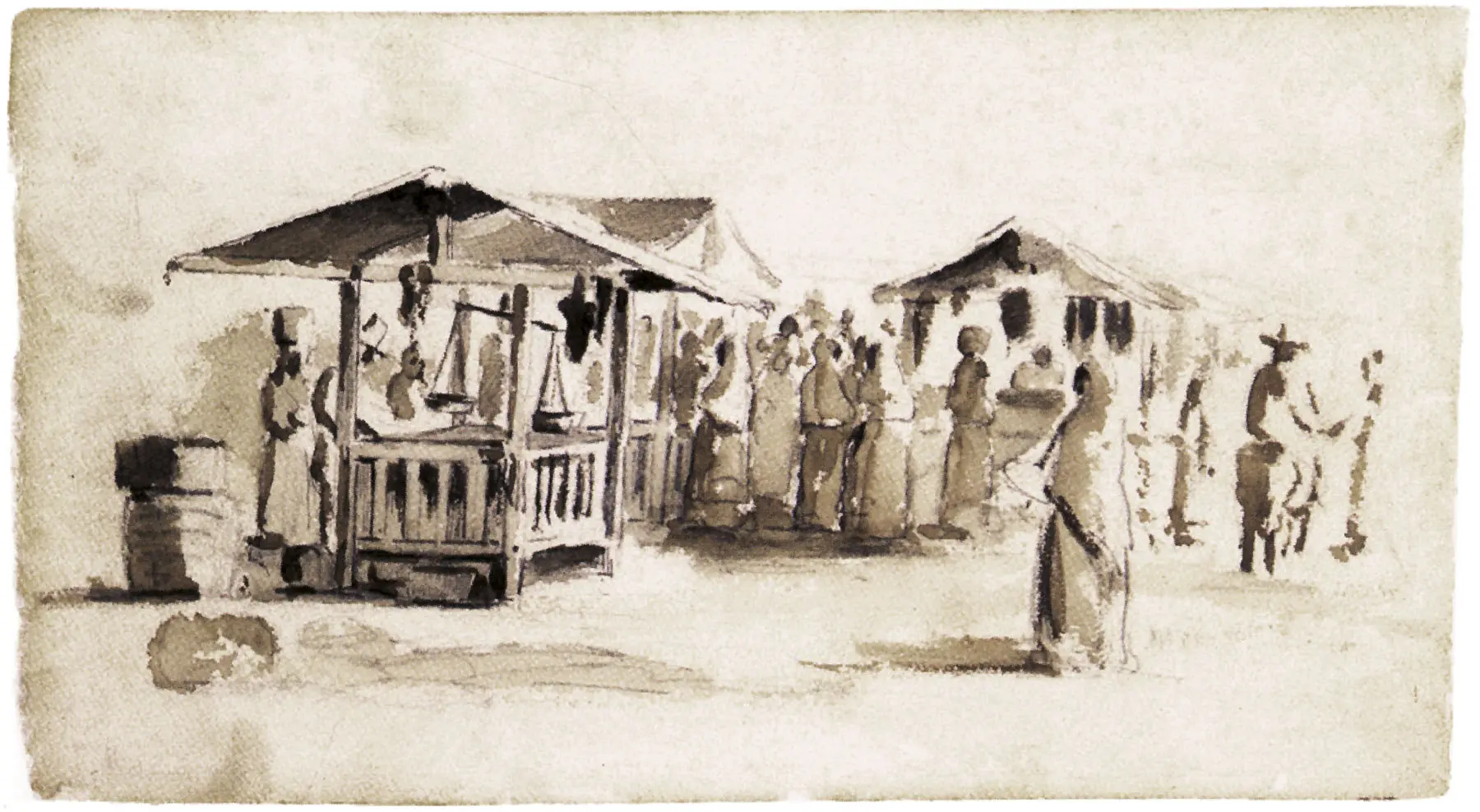
From October 3, 2005, through February 21, 2006, the Museo de Arte Contemporáneo de Zulia exhibited Uno a la vez. Dibujos en la Colección Mercantil, which gathered 191 works representing the various styles, movements, and directions followed in Venezuelan drawing from the Colonial period to the present day. This has been, undoubtedly, one of the most densely elaborated exhibition projects presented in the country today The curatorial idea started with a wide notion of “drawing,” combining the classic ideal –which privileges lines— and the modern one —which understands it as “unique work on paper” and as the “most basic and elemental medium”—. The curatorial structure rejected a chronological treatment, avoiding the possibility of a traditional reading f the works exhibited, and opted for an organization based on thematic nuclei that allow the visitor to access, free of historicist biases, the complexity of proposition activated in each work. In that sense, the curators –Jesús Fuenmayor, Lorena González, and Tahía Rivero— divided the exhibition into five parts: “Appearances of the Real,” ‘The Symbolic Order,” “Anthropomorphism,” “Exploring the World,” and “The Expanded Terms of Drawing.” The latter was a transversal axis running through the other four nuclei and included experimental works where the principles that define drawing were widened. This alteration was verified regarding the traditional support —as in Diego Barboza’s intervened photographs, where the support is the photographic register of a collective action—, because the works have been created using mechanical means of reproduction —as in Magdalena Fernández’s video, which reproduces innumerable linear shapes, in the way of an audio-visual drawing—, or because they are, in fact, sculptoric objects —like Marcel Floris’ mobile of thin metallic rods, or Gego’s “paperless drawings”—.
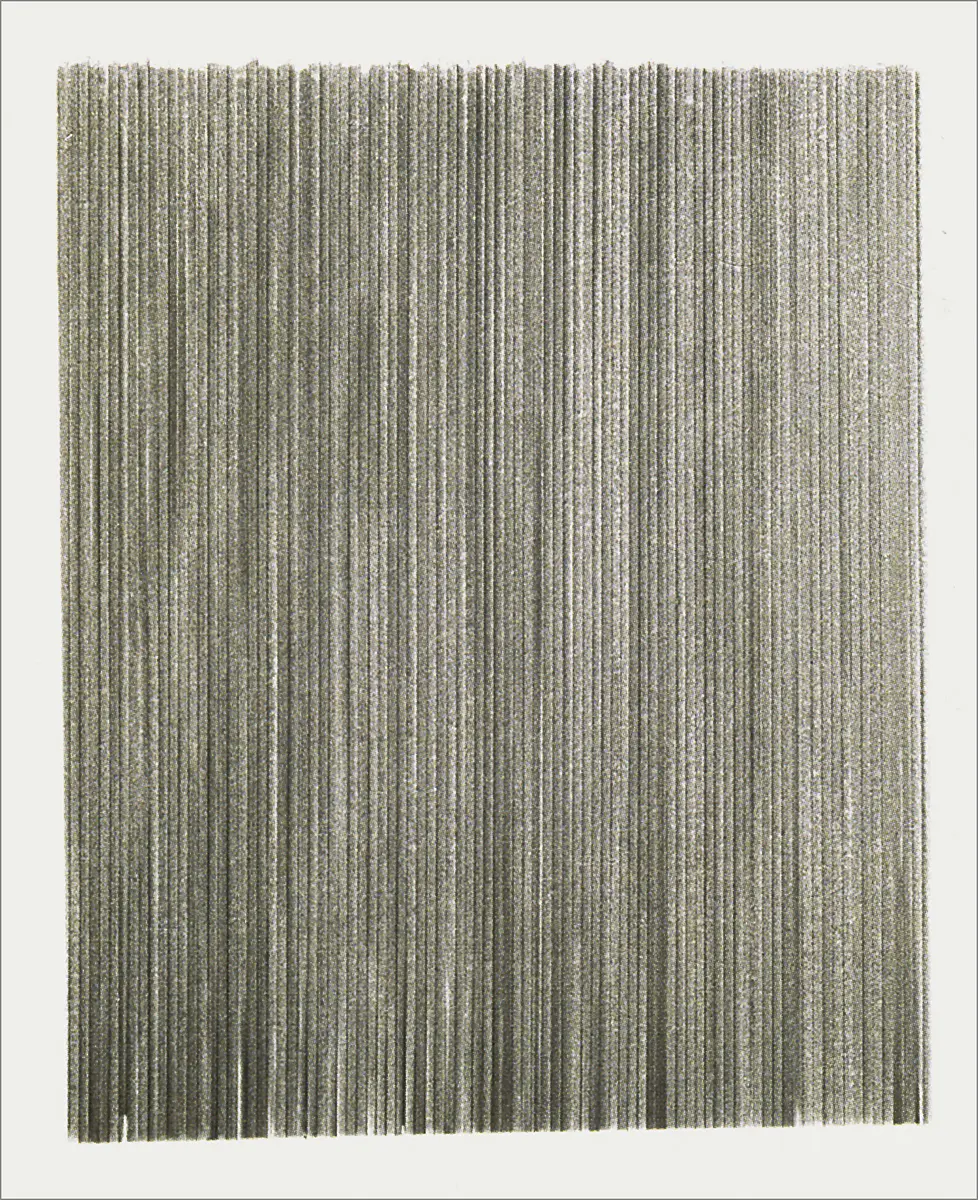
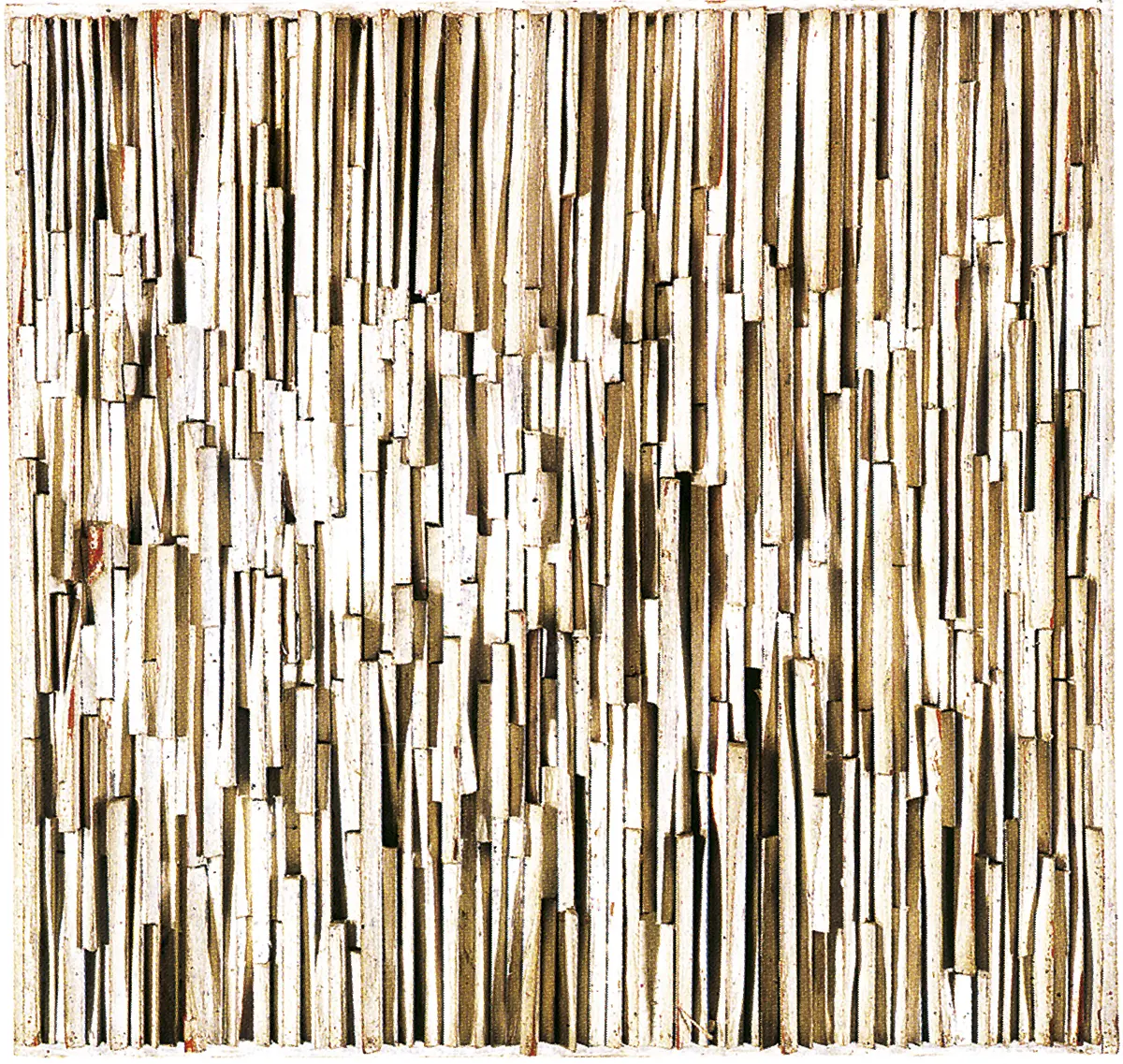
The “Appearances of the Real” nucleus presented works where drawing is the builder of the world, the creator of tensions between representation and reality. It encompassed five groups —“the absent/present,” “sublimation,” “person,” “the illusory space,” and “the fold”— that analyzed subconscious resolutions to hide, the strategy of appearances, discourses “on which the performance of [Man’s] social role gravitates,” the resources that allow for the creation of an illusion of depth, and the movement of the real through a form. Héctor Fuenmayor’s triptych Líneas verticales, for example, done using vertical tracings that cover the entire paper and in the third segment of which the artist has glued a piece of the charcoal pen, involves —as Jesús Fuenmayor pointed out in the show’s catalog— “in the fictive limits of art a real trace of its making, [transforming] the work into a document that narrates the history of its procedure.” Other artists included here were Armando Reverón, Jacobo Borges, Juan Calzadilla, Claudio Perna, Eugenio Espinoza, Sigfredo Chacón, Pedro Terán and Carlos Julio Molina.
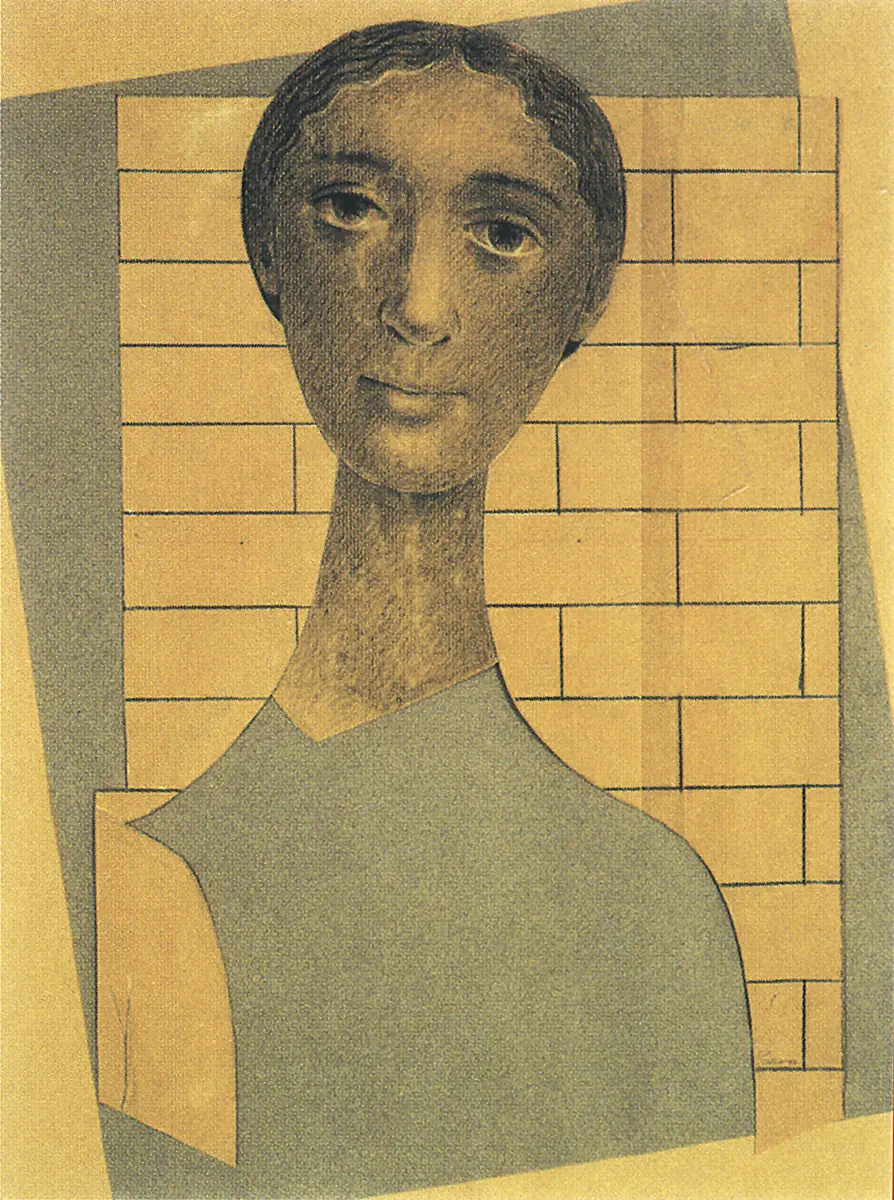
The “Symbolic Order” nucleus encompassed works that explore the symbolic aspects of what is represented. It analyzed the symbolic in relation to the human and the natural. Bárbaro Rivas’ Pastor de ovejas and José Gabriel Fernández’s La muleta exemplified the vastness of this concept. The former represents a biblical theme, transformed by the intense gaze of the great Venezuelan popular painter; in the latter, the artist draws in the realist manner a bull-fighting move under a grid of points, approaching bullfighting as a pretext —also formal— to work on the theme of the body. The symbolic/natural was present in drawings where the imaginary signifier enters into contact with the environment. Manuel Ovalles’ works _a self-taught artist active in the late Nineteenth Century—, in what are “seemingly” their execution defects, are an example of the inversion of meanings produced in art, a clue to a connection between every day and the profound. This nucleus included also works by Alberto Egea López, Tito Salas, Oswaldo Vigas, Mateo Manaure, and Luis Romero, among others.
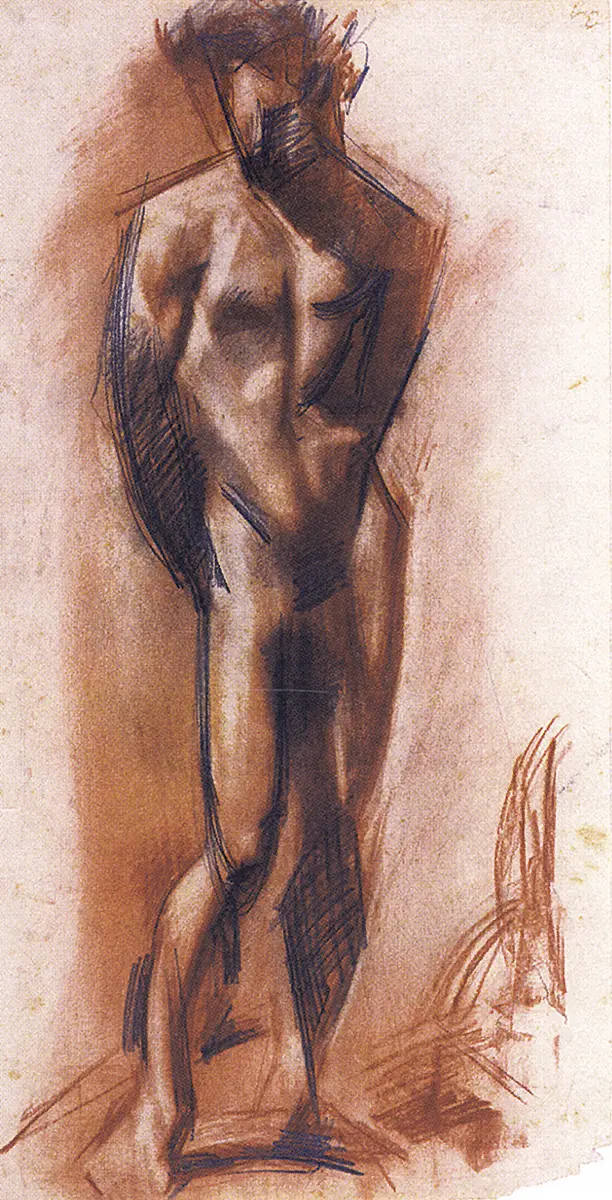
“Anthropomorphism” examined the issue of the representation of human figures and their ideological implications. It was divided into: “figure,” “the space of the figure,” and “gesture.” Fundamental to the first section were Alejandro Otero’s school-period drawings, where an aspiration to modernity can be discerned. Juan Calzadilla, Mariana Bunimov, Alí González, Pascual Navarro, and Héctor Poleo complete this group. The second section brought together works where space is the protagonist, on the principle that every work of art retains traces of the illusion of depth. Works like Julio Pacheco Rivas’ Área de protocolos inconfesables —which creates an imaginary urban space— or Nela Ochoa’s ATCG —which serially repeats figures of small baby bottles— show the diversity of relations between man and the space of art. Lastly, the section titled “gesture” gathered works that reveal the traces of the very act of creating on paper. Here we saw a range of works from the frankly “gestural,” like Francisco Hung’s, to more “conceptual,” like Alexander Gerdel’s.
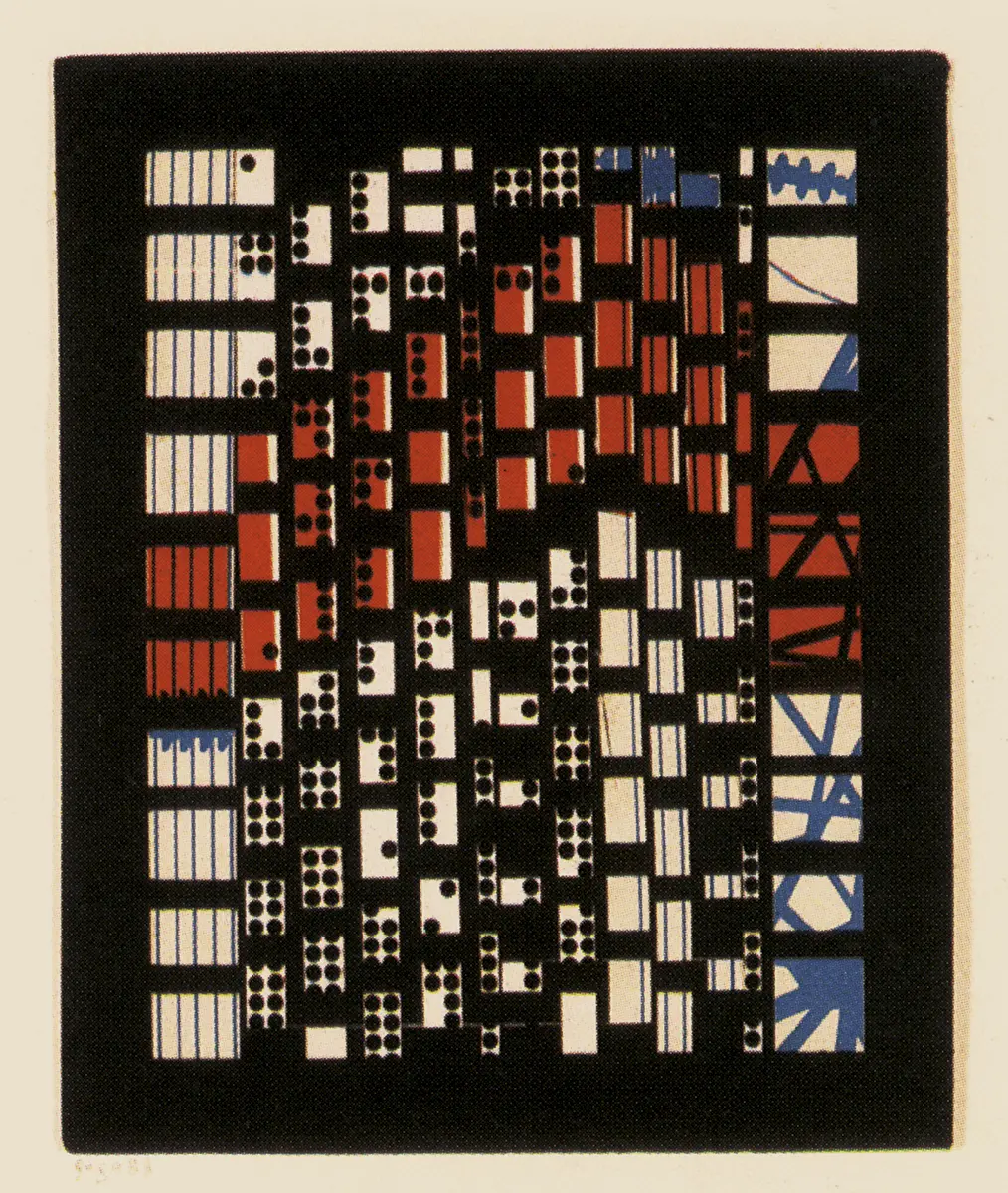
The “Exploring the World” nucleus, understood on the basis of the fact that drawing is a consequence of the immediate contact between artist and reality, an instrument for its register, was divided into: “Taxonomies,” “Archaeologies,” and "Specific Objects and New Realities.” “Taxonomies” gathered works where the artist’s classificatory impulse is evident — Camille Pissarro, Roberto Obregón, Ernesto León, and Dulce Gómez—. The exploration of time as the shaper of reality was noticeable in “Archaeologies,” through works by Antón Göering, Víctor Hugo Irazábal, Claudio Perna and Pedro Ángel González. Finally, among the “Specific Objects” there were works by Marcel Floris, Gego, Carlos Cruz-Díez, and Meyer Vaisman that, as real objects in themselves, are shapers of a new reality.
KATHERINE CHACÓN