
The 11th Central Zone Regional Salon took place last December, in the city of Tunja. For this edition, the Ministry of Culture sent out a curatorial call to the country’s different zones. In the Central Zone, comprising the departments of Cundinamarca and Boyacá, two projects were chosen: Natalia Gutiérrez’s Un lugar en el mundo, a convocation for Bogotá artists, and Paisaje: una cartografía contemporánea en Boyacá, a proposal by Gabriela Numpaque and Jairo Moreno shown at the Universidad Pedagógica y Tecnológica de Colombia. In this review I will discuss Un lugar en el mundo.
This Salon turned out to be different from prior ones, both in its montage and in the nature of the works exhibited. The curatorship, as Natalia Gutiérrez argued, took as its starting point “art as a way of thinking through which artists relate lived experiences and daily events in another way, different at any rate from that of the mass media and the system of power, which are I charge of re-signifying them.” On the other hand, she decided not to impose a theme on the artists, but rather to “enchase the works —like jewels if possible— with a correct statement in space.” The selection of works was guided by one of the many definitions of art by German artist Joseph Beuys: “Art is that place where Man experiments and tests his place in the world, and where something emerges that inserts itself into the world and sets it in motion"1.
In previous salons, one often perceived that artists “created Salon-type works” in a rather forced way; this is to say, they put great effort into making themselves noticed among a large group of participants and inside the enormous halls of the Corferias, where these events were usually held. They sometimes used grandiloquent languages and materials, creating works at exaggerated scales and, at times, attempting to fit into imposed categories that were alien to their intentions. Although this time around most of the participants executed their works for the Salon and for a specific site, their strategies were the opposite of what I just described. This relationship with the site was also attempted in the 8th Regional Salon, held at the old savannah Train Station in Bogotá and a common theme was established: memory. The imposition of the topic was evident in the majority of the works, with one important exception, María Elvira Escallón’s memorable intervention In Vitro.
For this edition, artists and curators visited the city of Tunja on several occasions before the creation of their works, walking around the city and studying each of the spaces chosen for the event, so that the first exercise was one of reconnaissance and appropriation of place. Through these visits, they achieved an intimate and particular approach, which allowed their proposals to emerge from their every artist’s own experience. In terms of the montage, indeed the works were “enchased as jewels,” and that insertion set the city in motion. Seeing the Salon meant following a path through the colonial section, and throughout this section, the works emerged, one by one, establishing an open dialog with the space and the viewer, rekindling Tunja’s historical past from the circumstances of the immediate present.
Tunja was a greatly important city in the colonial period, and it has buildings of great historical value. Over the years, the city lost its relevance, becoming a small, cold-terrain town, one of the coldest in the country, where, amidst a broken topography and under very intense light, a minor, poor, anodyne architecture developed to surround and in a way hide the splendors of the past.
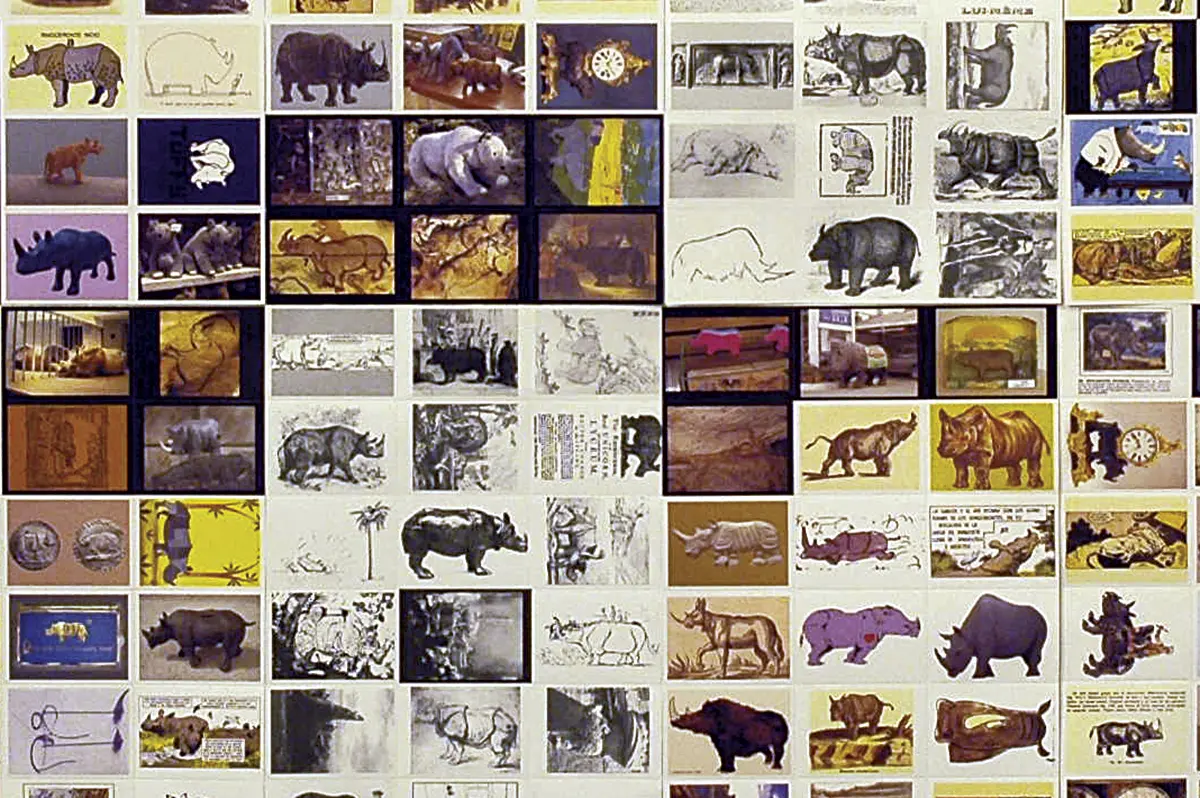
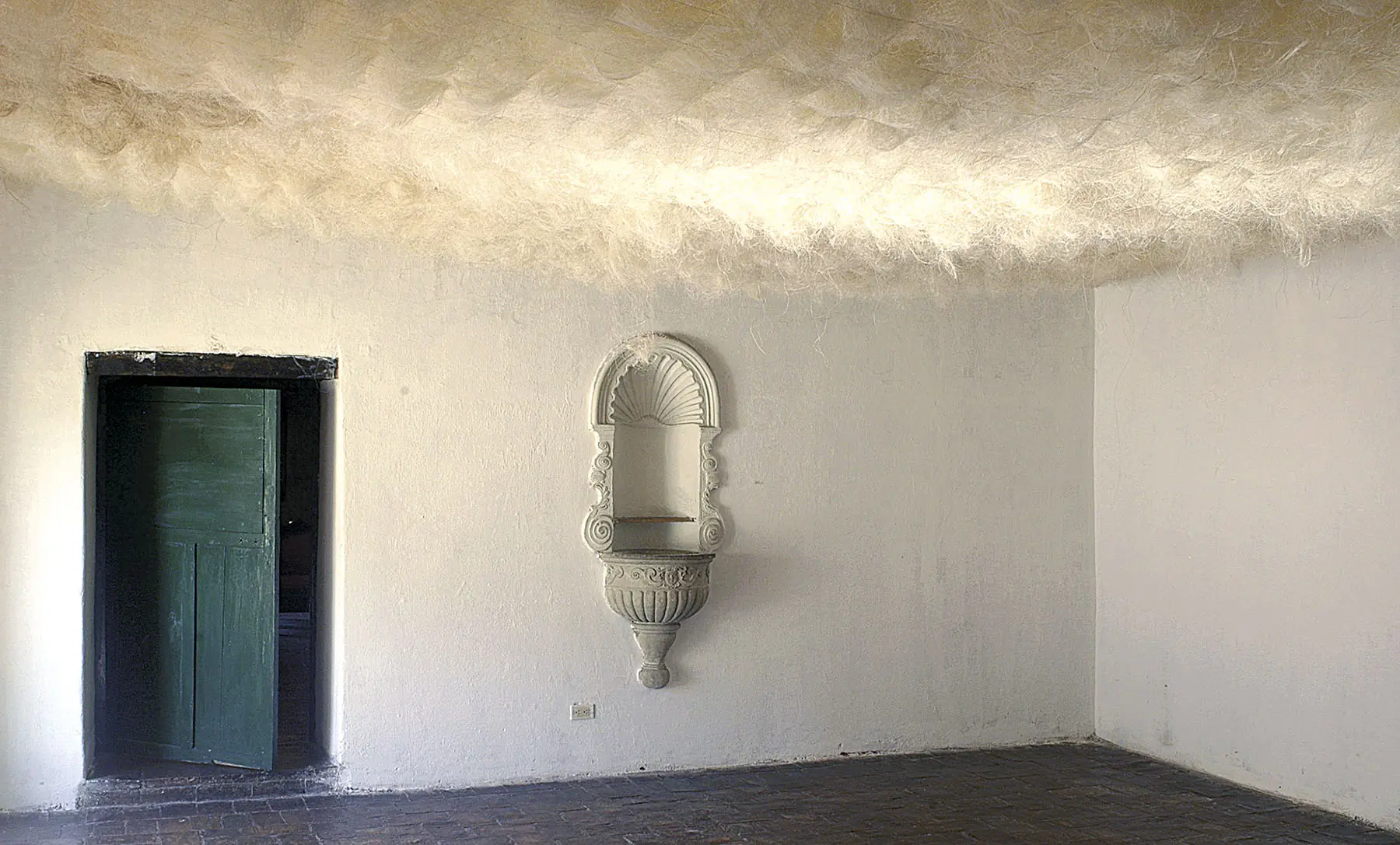
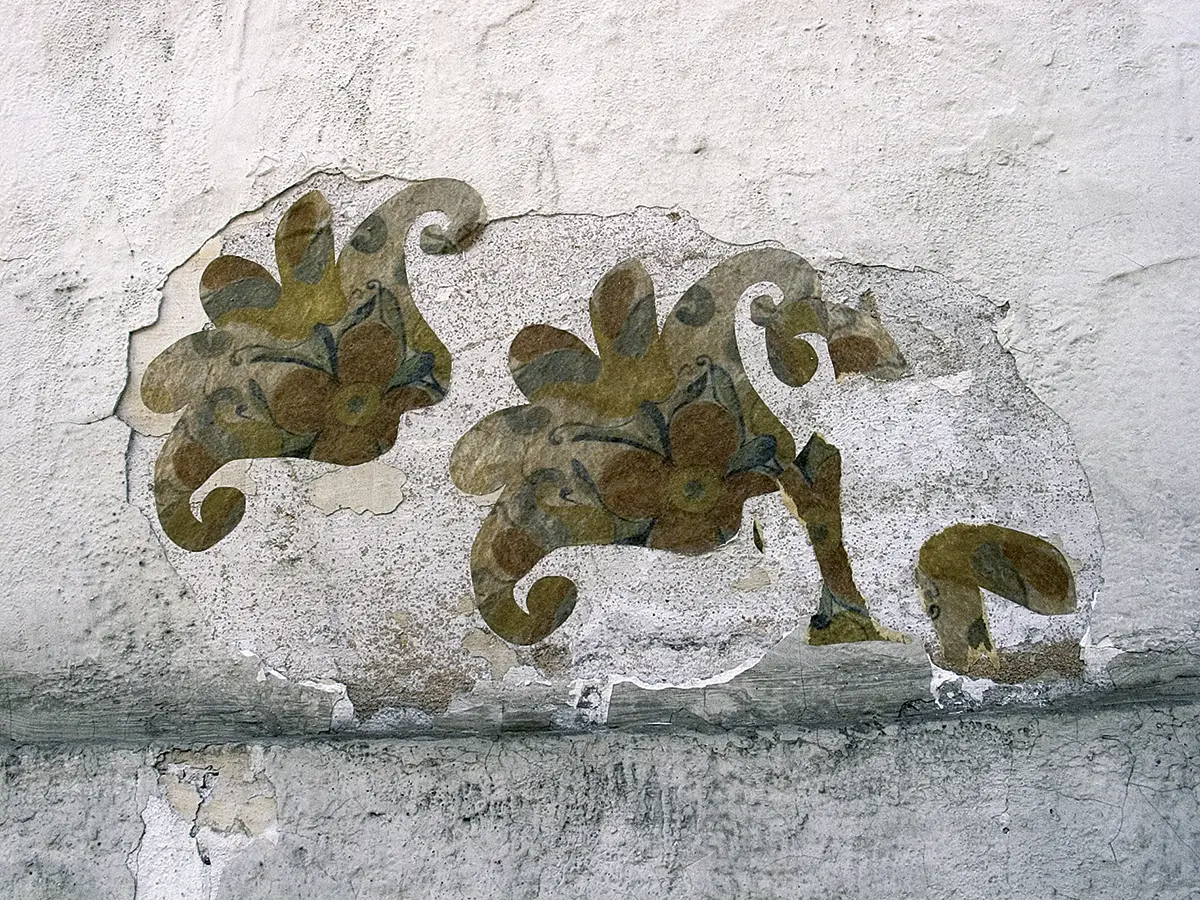
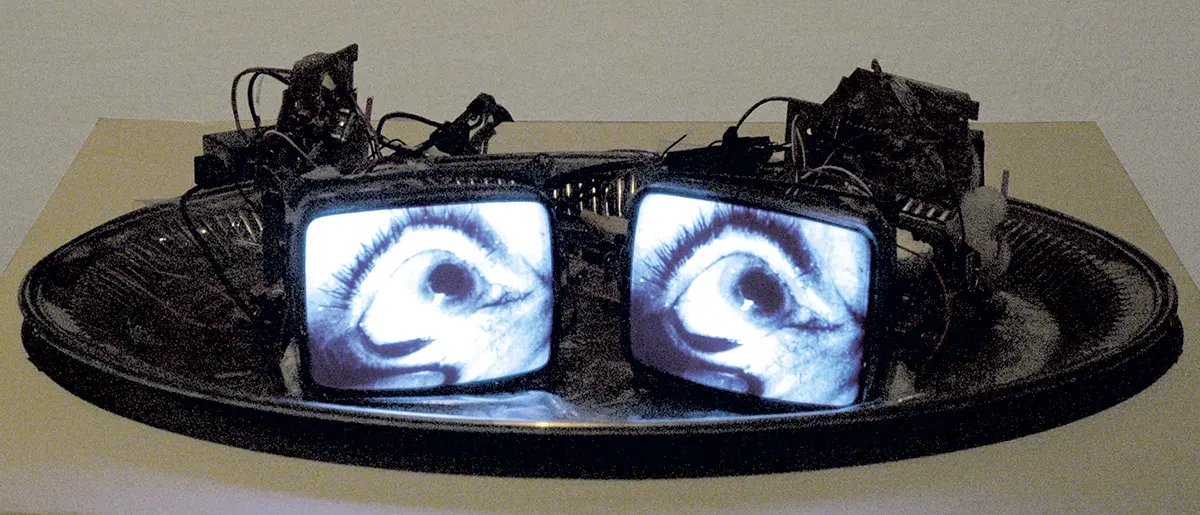
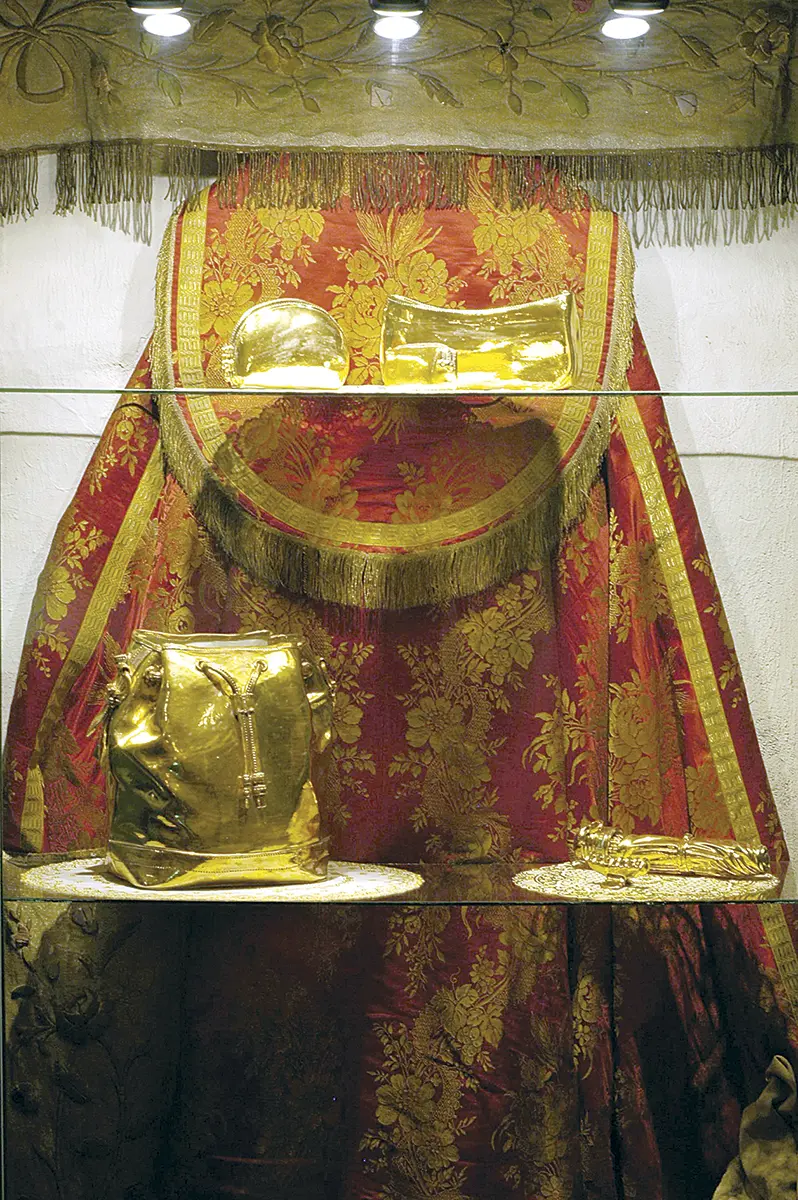
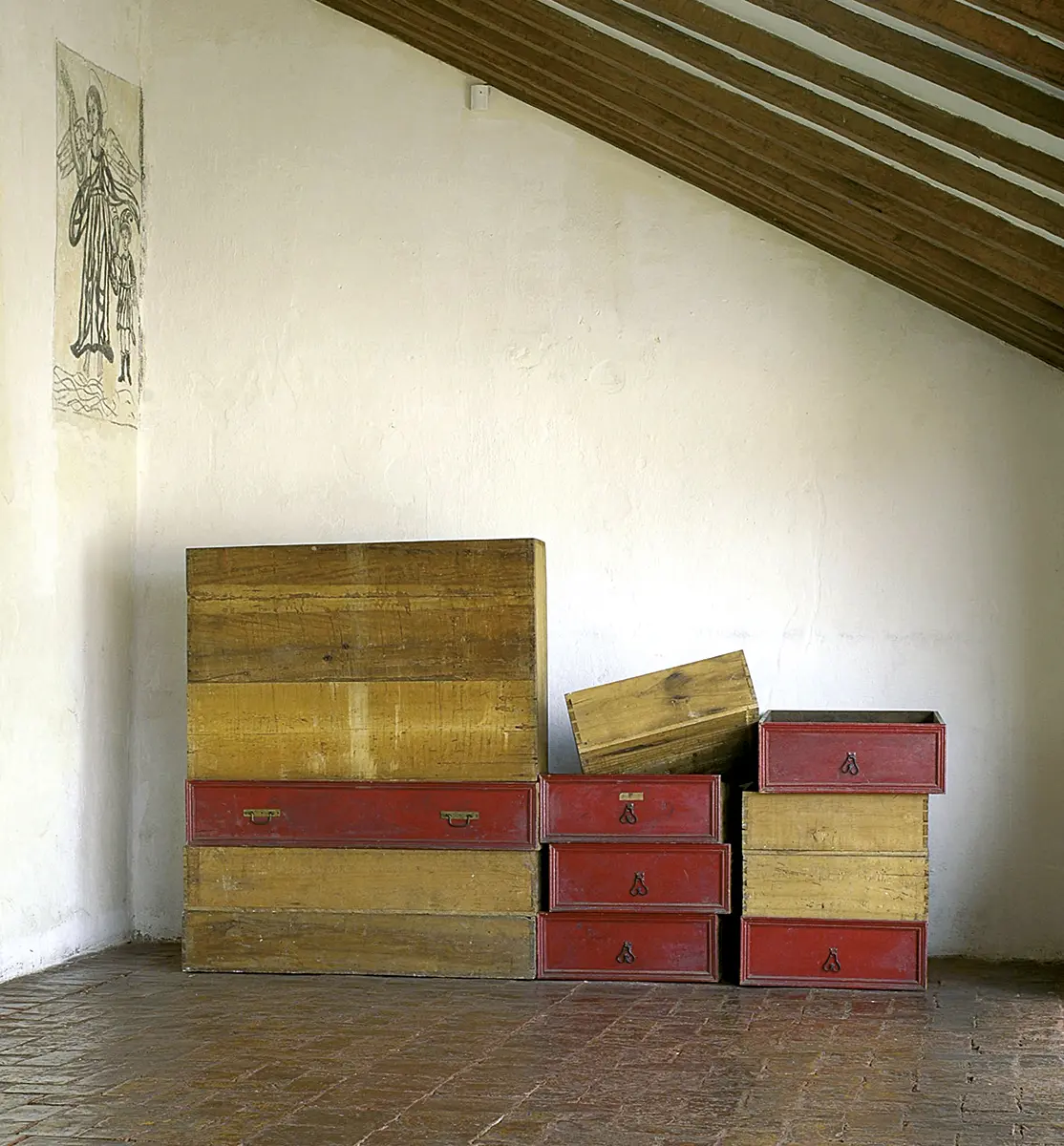
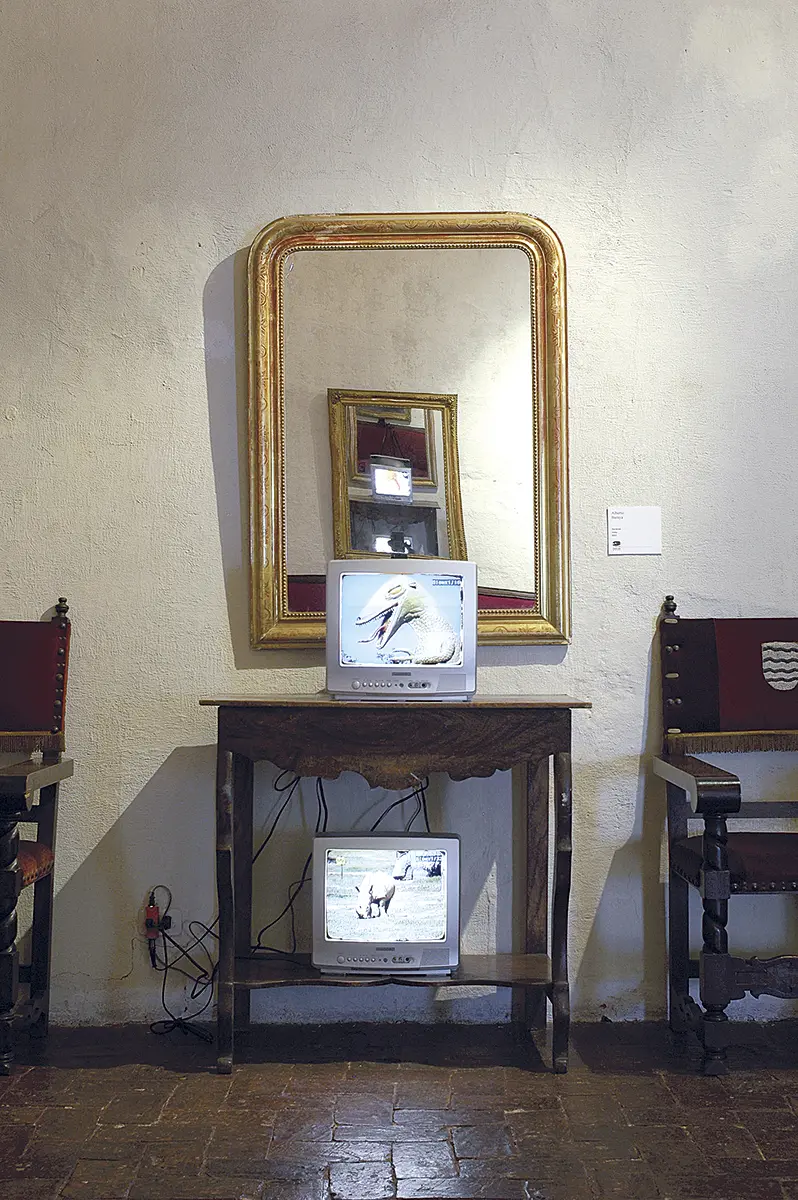
The show was distributed around different colonial-era buildings, and one of this Salon’s achievements, thanks to the “enchasing” of the works presented, was the creation of a particular atmosphere, closely linked to the spirit and the history of each one of the spaces chosen; one of these buildings was the Casa del Escribano Don Juan de Vargas, today a museum. At the entrance to this house, Jaime Ávila, a Tunja native, offered a workshop with a group of young people from the city, who developed a project for a hotel in Tunja; the participants created their project using narratives and photographs, revealing with a great sense of humor the city’s imaginaries. The house has as one of its interesting features a fresco-covered ceiling displaying rhinoceroses, elephants, and exotic fauna inspired on European murals that are ingenuously transported to the colonial world. This gave the dominant note for several of the works exhibited there. The representation of rhinoceroses was the main theme in Juan Mejía’s work; Mejía has researched for years the representation of animals in the history of art, and on this occasion, he brought a well-known album showing different versions of the rhino. On a large, solid, dark-wood table and other tables from Tunja’s vast library. Giovanni Vargas arranged humorous reproductions alluding to this strange, heavy, ancient-looking animal that is used today to comment on sexual diversity, on “the normal and the abnormal.” For Alberto Baraya, the mural was an opportunity to bring to memory, through videos, the famous Hacienda Nápoles in the outskirts of Medellín, where at the peak of his glory Pablo Escobar built a large zoo stocked with elephants, rhinoceroses, hippopotamus, and giraffes. To exhibit these videos, the “museum arrangement” of the furniture was transformed into a family-style room, conducive to TV-watching. The Casa’s display cases exhibiting religious colonial objects became favorite sites of intervention: Alberto Baraya’s metal horns, alluding to the rhino’s; Barbarita Cardozo’s handbags and umbrellas in gilded porcelain; Carolina Calle’s deers, objects created with the irony that characterizes the contemporary world, shared the space with elaborate cassocks and other items of the Catholic liturgy, part of our religious tradition. The architectural features of a square room with austere white walls, with a pile of pink-hued rocks, became even more visible with Rosario López’s intervention of a soft ceiling, and Johana Calle’s wire drawings; the delicateness of these works gave the room a particular strength. Luis Roldán intervened with a drawing that brought the design of one of the Cloisters of St. Augustine’s fences to the displays where pre-Columbian work is exhibited. Danilo Dueñas, who deconstructs spaces and objects, took a large piece of furniture out of its normal context and placed it unexpectedly atop the library’s tables, using its drawers to create a “geometric-colonial” construction, merging in this way a contemporary practice with the furniture of the past. One of the strongest works at the Casa de Don Juan de Vargas was José Alejandro Restrepo’s, which alluded to religious imagery, specifically to the head of John the Baptist and St. Lucia’s eyes, showing the saint’s head and eyes unattached to their bodies, via video images placed on silver trays. All the cables and connections were out in the open, which created a strange relationship between technology, religion, and the human body. Manuel Romero also alluded to religious images: he covered the pained faces of saints and virgins, icons of a religion that founds its faith on martyrdom and horror, with very simple designs embroidered in linen. Mauricio Bejarano alluded to colonial-era religiosity by means of a sound work that superimposed prayers and voices created using recordings made in a church. Mario Pazo presented a video, projected on some yellowing walls that were crumbling due to humidity, in which he makes an impossible sculpture on the banks of the Magdalena River. A moving video in which the artist painstakingly excavates a hole in the sand to hide a sand-covered box on which he has written the word “forgetting,” while the sound of the river accompanies the action, repeated time and time again. Also at the Casa de Don Juan de Vargas were María Isabel Rueda’s photographs depicting photographic cameras made by her students in poverty-stricken neighborhoods, in workshops sponsored by the IDTC. In the kitchen, Carolina Rojas installed her sophisticated drawings of functional contemporary kitchens, which established a dialog with the colonial-era wood-burning oven and with Víctor Escobar’s video showing, step by step, the ritual of eating a tamale.
The church of Santa Clara la Real offered a very different environment than that of the Casa, where, with a few exceptions, the intervention was mediated by a sense of humor. Te artists intervening in the church and cloisters were committed to the spirit that animates the lives of the cloistered nuns. Beatriz Eugenia Díaz, who works in sound interventions, captured the female spirit of the cloisters, her voice irradiated from the choir, intervened almost imperceptibly with representations of sound notes; the sound was built carefully on the basis of a historical revision of the place and maintaining a relationship with the number seven, as is often the case in her work. In this chapel, Mother Josefa del Castillo wrote some of the most important pages in the history of Latin America’s religious literature; there we find her prayer cell, her room, and her desk. In this last location, Clemencia Echeverri carefully transferred the features of her calligraphy and wrote in invisible ink, discernible only in the dark, a literary fragment where the nun speaks of body and soul torments; the first encounter with this writing made it seem as if it had always been there, and that only darkness revealed its presence. Miguel Ángel Rojas’ fish were only visible when the viewer studied carefully the molding covering the chapel’s walls. Amid the gilded volutes adorning the red alls there appeared three gilded fish, and as one came closer it became evident that they were taxidermized bocachicos. The fish established a dialog with a series of somewhat strange drawings, imperceptible at first sight, that superimpose the language of the Spanish baroque with the indigenous labor force. María Elvira Escallón’s video, projected on one of the choir’s windows that opens towards the cloisters, revealed the abusive appropriation of this colonial work by the National Tax Agency, which has let the magnificent building attached to the chapel ruin and decay.
The Cloisters of Sat. Augustine is the largest and most significant of all the buildings chosen for the event; currently, it houses the Banco de la República library. Very diverse were exhibited here, also in frank dialogue with the site, such as the “office” set up by Fernando Escobar in the “Tunja Archive,” a space filled with piled-up chairs and papers. In his intervention, all kinds of objects, old books, toys, sheets of paper, fans, showed with great humor the “Tunja Archive.” Juan Mejía’s blue spherograph drawings, depicting all kinds of beard-wearing characters, from Dührer to Marx, with their simple frames, appeared to be part o the building’s official furnishings. Jaime Iregui’s photographs, part of his investigation about urban ways of the exhibition, gather images of very traditional stores in downtown Bogotá selling religious figures; they were located inside the display windows, fusing into their site. Fernando Cruz’s large photographs seemed to depict some majestic Eastern architecture, but these images, surprising in their sharpness and the handling of light, are of Bogotá’s sand-processing plants, where thousands of children work in infra-human conditions. These sand-processing plants were also present in Cruz’s installation in a raw-brick staircase. The Trailer collective arranges in various spaces large photographs showing fragments of buildings in ruins. The Tangrama group reproduced the characteristic flower designs that decorate colonial architecture and distributed it throughout the city, on tin enclosures, street lamps, and walls, under the suggestive title of Prohibido poner avisos (Post No Bills.)
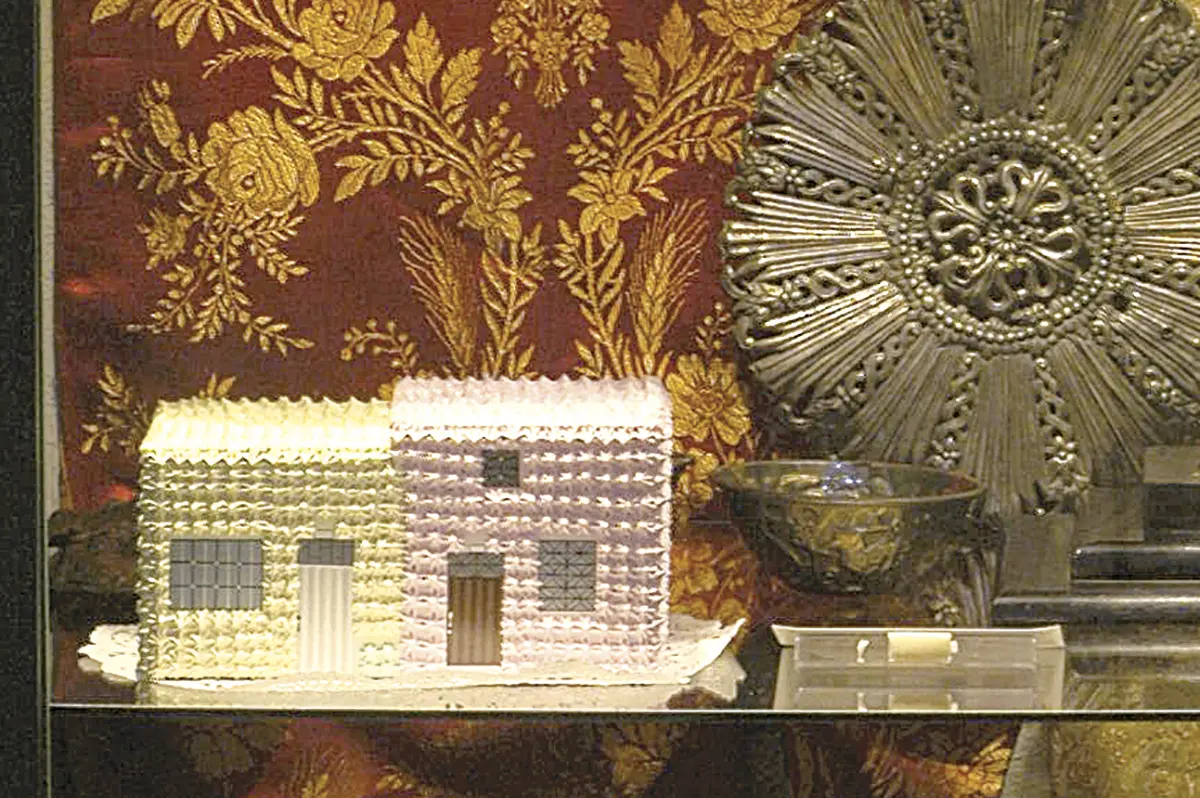
At the house of the founder, Gonzalo Suárez Rendón, Manuel Santana presented his work Echando lápiz, and at Café Andalucía, a large colonial mansion now housing a restaurant and a bakery, Pablo Adarme showed his houses, seemingly made in plaster but really plastic, on a continuously spinning cake display.
The experience of this Salon corroborates what I said a year ago, commenting the National Salon: the work of today’s artists are inscribed as “footnotes” to the external world, as comments on what takes place in the world. On this occasion, the “world” has more precise boundaries: Tunja, today that small, rather anodyne city with a splendid colonial past, marked by the politico-religious power imported by the Spanish. Its history, assumed from the immediate present, became the theme behind the personal motivations of 52 artists who, alongside the curator, decided to make Tunja into “a place in the world. In this Salon something really occurred, something was “set in motion,” generating an unforgettable experience, a path made possible by the artist’s sharp, surprising gaze. What took place can be summarized by Carolina Calle’s action. She traversed Tunja with a frame in her hands, framing various objects and places; the frame and her hand holding it were photographed, and the photographs were distributed in the various spaces. This action gives our eyes a different perspective, it shows us fragments of the world —in this case, Tunja—, as it changes our frame of reference: the world, the present, and its history appear under the point of view of today’s artists, revealing a world in which we require for there to be more places in the world.
NOTE
1. These concepts are taken from the curatorial project presented by Natalia Gutiérrez to the Ministry of Culture.
Photos: Serviteca (Service Box).
MARTA RODRÍGUEZ