
A first-time visitor to the Havana Biennial this year might be forgiven for being confused: why had an event purportedly about the “dynamics of urban culture” turned its back on the very city in which it was staged? Why were artists known for staging public acts represented with photographs and ephemera rather than life works? The Ninth Havana Biennial was a mystifying event, complicated by disorganization and rumors of problems. Shows did not open, artists and their works did not arrive, and projects did not materialize. These difficulties were variously attributed to illness and staff changes in the biennial leadership, storm damage to exhibition facilities, and the recurring budgetary constraints that have made the biennial an ever-precarious proposition. The production values of the catalog, however, were the highest yet and the text was translated into English for the first time.
The dust has settled on what was the feisty and experimental nature of the earlier biennials. Despite the avowed interest—both this year and in the eighth installment in 2003—in interaction with the surrounding urban and social spaces, the biennial has become an established and routine event. It has become a large exhibition of artworks. These works are arrayed in both indoor gallery spaces and outdoor venues. The tension between the two approaches seems increasingly acute. In the galleries, photographic documentation of social-intervention projects abounds—lending an odd, secondhand quality to those displays—and coexists uneasily with the works displayed as primary objects such as paintings, installations, and so forth. This fragmented exhibition occupied center stage in the biennial’s efforts, while various projects of intervention or community art were planned to occur elsewhere in the city. Leaving aside the fact that information about these projects and how to find them often proved to be wrong, and that some projects didn’t happen, these events seem to be verging closer to becoming gallery-oriented art and moving further from the spontaneity and unpredictability that might be expected as a key ingredient of such efforts. For example, Omni Free Zone from Alamar “...appropriated it, disturbing its balanced order... with performances that were all bewilderment,” according to Dannys Montes de Oca, writing in the project’s leaflet from the last biennial. This time, it was part of the biennial proper, and its chaotic interventions were declared to be “the aesthetic street utopia come true... an authentic way to make art and urban culture.
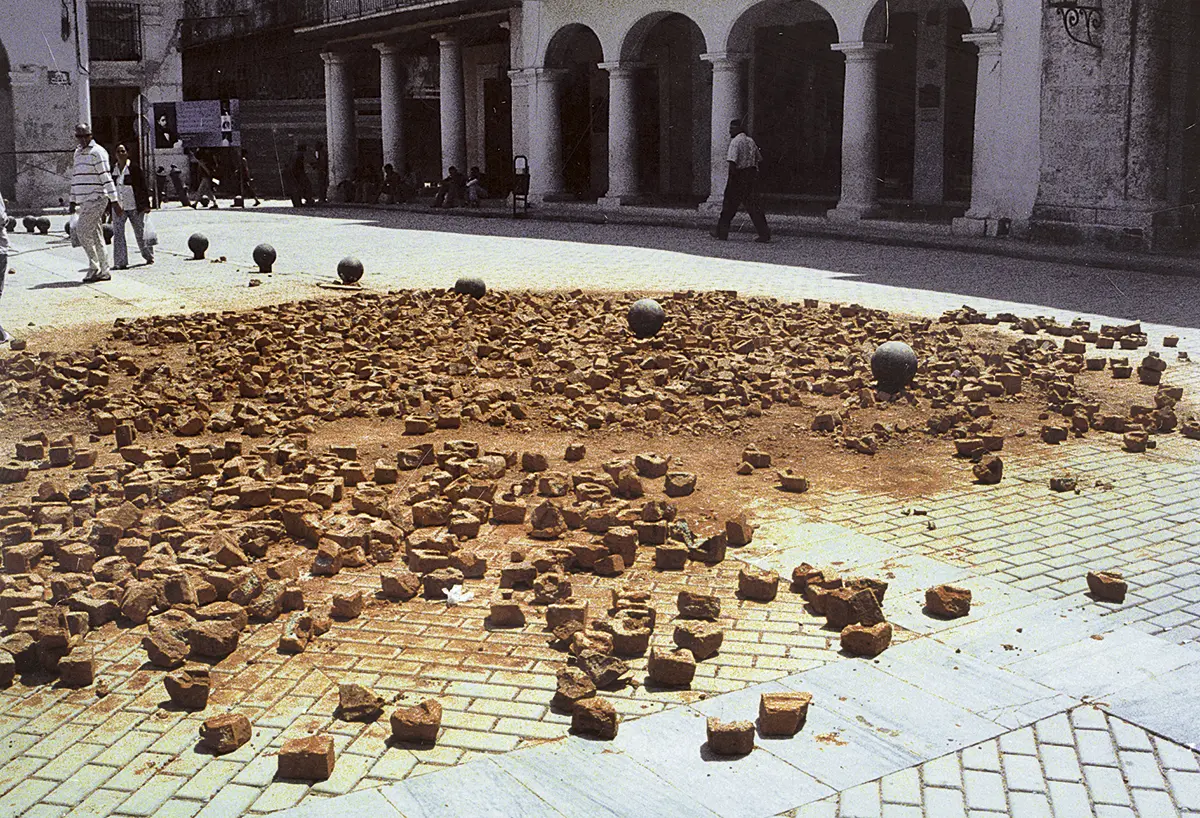
”The biennial has evolved into a two-headed creature, each one leaving the other largely unruffled. This disconnection was most sharply seen in Live and Let Live, a work presented by Kcho. Trucking a gigantic pile of specially manufactured bricks—stamped with his trademark little boats—to the Plaza Vieja, the artist oversaw the erection of a large tower. As coyly suggested in biennial publications (Arte en la Habana/Suplemento Especial, Novena Bienal de la Habana: “And what is the destination of those bricks? Don’t worry about that. Live and let live.”) and as proclaimed patriotically by the Cuban Vice President and President of the National Assembly Ricardo Alarcón on the front page of Granma, Kcho’s bricks were installed with their use-value in mind. Apparently, it was intended that people in the neighborhood who were short on both living space and building materials could make use of them. Many saw this as inappropriate, since migration, especially by raft, is among the most painful themes in contemporary Cuba and not something to be taken lightly. Beyond this fact, however, the piece turned out to have another kind of value, as tourists grabbed bricks for the artist to sign, in order to have an original Kcho of their own. The sad confusions of Kcho’s little bricks were stamped repeatedly across the biennial’s project.
Aside from the biennial’s conceptual fracture, it has another disconnection that becomes apparent as it tries to not only address but dwell within the city. The main space of the biennial is located in the colonial-era La Cabaña complex on the far side of the harbor, where it is largely inaccessible to the city’s inhabitants due to the continuing scarcity of transportation. In fact, the complex is a major tourist attraction and, as the tenant, the biennial had to play by the house rules: at the opening, visitors spent two hours watching a stage show and drinking until sundown when the nightly ritual of the cañonazo took place. Every night at 9:00 p.m., a cannon shot sounds from the ramparts of the fort that, in earlier times, signaled the closing of the city’s gates and the raising of the chain across the harbor mouth. “Prior to the ceremony,” notes one Internet guide, “this tour includes a guided walk around the fortress with visits to the Museum of Arms, Che Guevara’s military headquarters, and the San Carlos chapel.” The biennial’s opening, reduced to a portion of the kitschy, torch-lit cañonazo drama, ended only forty-five minutes after the gallery doors were finally opened.
The relationship between the biennial and the city remained polite. The intermediary spaces—both physical and performance—that existed for some years have been fully incorporated and digested by the exhibition apparatus. The collateral projects were all sanctioned by the biennial office, or they evaporated. A few artists showed work in their own homes. Much of the energy of past biennials related to the question of politics, or of Cuba as a central concern, but this biennial clearly wished to engage itself otherwise. It is no longer about showcasing the revolution or Cuban culture to the world—for the first time in the event’s history, the Cuban artists did not steal the show—or creating an anti-capitalist zone of cultural solidarity or any of those previous ideas that are tinged with antiquity and uselessness. The biennial is not looking at Cuba. It’s not about Cuba anymore, it just happens there. It is an art show in its middle age, enough of an institution to have clear orders and borders but without enough money or vision to accomplish much within these.
There were, of course, artworks. Perhaps the most striking impression is that there were few works of note despite the participation of ninety-nine invited artists from thirty-seven countries—but some never made it to Cuba. An interminable procession of photographs occupied the walls of La Cabaña’s galleries, many of them tracing the congestion, deterioration, and disorder of an urban environment. Examples of these were images of street stalls brimming with goods behind unsmiling vendors, by Raquel Schwartz from Bolivia; aerial views of an unnamed metropolis, staggering in its enormity and anonymity, by Dimitris Tzoublekis from Greece; images of archetypal broken African streets lined with buses, by Akindobe Akinbiyi from Nigeria; and multiple-exposure views giving form to the invisible electronic networks coursing across the urban “Netropolis,” by Michel Najjar from Germany. Amid this cascade of images, the starkness of a suite offered by Alejandro González of Cuba was striking. Portraits of a sort, his black-and-white photographs record confrontational exchanges between the artist and the subjects, whose gazes and postures seem on the edge of civility. Above all, the pictures invite one to question the relationship between the subjects and the act of being viewed. This transaction is already complicated between the subjects and the artist but, with confusion about the identity of the viewer, the images were made darkly potent. The pictures were installed in two facing rows, each of them concluding with a pair of similar images—the same subject at a slightly different moment—that provided structure and punctuation to the installation and a sharp sense of how the photographs collapsed lives and time into a presentable form.
Another interesting work was the Arquivo Brasilia project by Lina Kim and Michael Wesely, for which they digitally restored over 4,000 images from a total of around 100,000 very deteriorated negatives. In generating their portrait of one of the twentieth century’s strangest urban plans, the artists concentrated on images of the people who built Brasilia and who clearly were not destined to be its inhabitants. The result emphasized the sense that Brasilia’s utopianism had yielded an eerily evacuated urbanism. Margarita Pineda of Colombia similarly brought a very biographical and small-scale approach to bear on the abstract concept of a city. Pineda’s project also ventured to bridge the biennial’s split-site mandate by using her interactions with Havana residents as the source of real and imagined maps that she embroidered onto used shirts and presented in a gallery space.
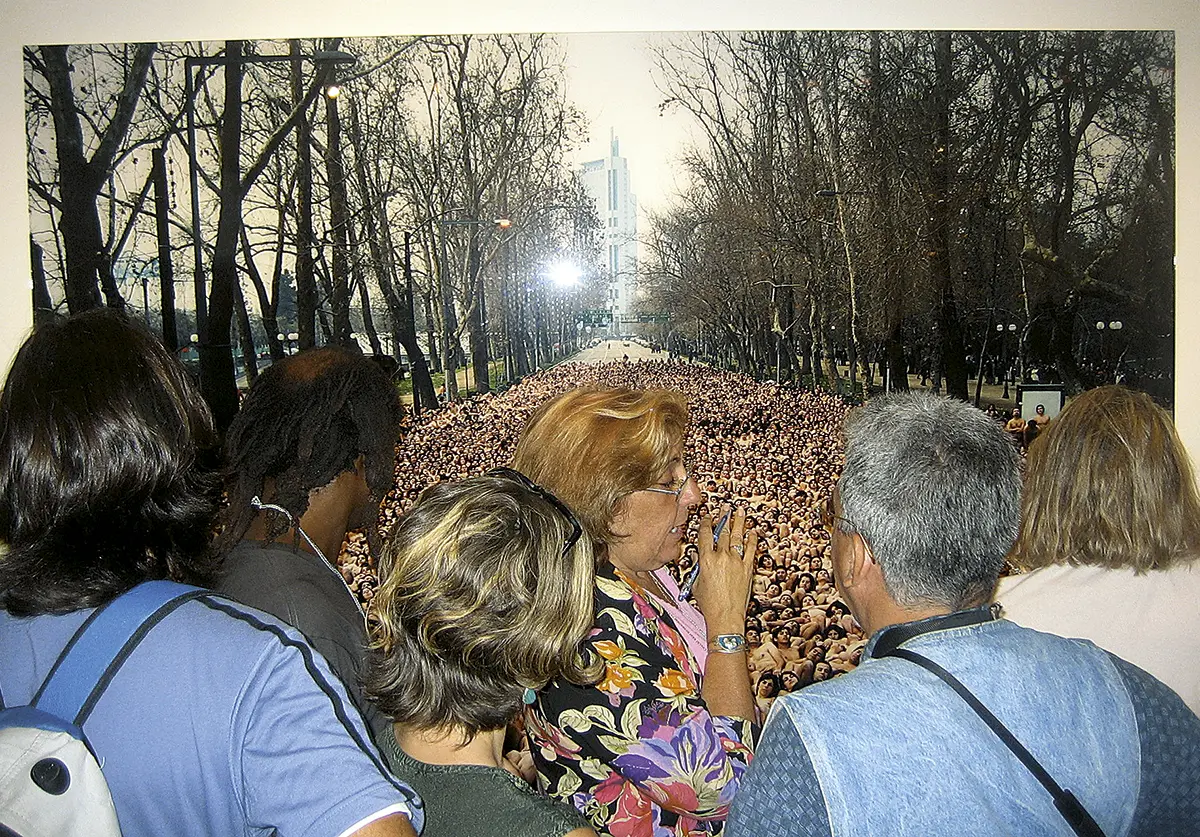
Several artists were invited to present solo exhibitions, including Guillermo Kuitca (Argentina), Antoni Miralda (Spain), Shirin Neshat (Iran/U.S.), Jean Nouvel (France), Lucy Orta (France), Anne and Patrick Poirier (France), Carlos Saura (Spain) and Spencer Tunick (U.S.)—a collection with an enigmatic curatorial logic. However, Kuitca’s work was nowhere in evidence, nor was that of El Anatsui, Ana Tiscornia, or Rivane Neuenschwander. Neshat’s work arrived but she didn’t: apparently, the holder of an Iranian passport cannot obtain a Cuban visa. Lucy Orta’s “heterotopic” interventions in city streets, generally consisting of people yoked together by her costumes, were present in the form of documentary photographs and one of the suits laid out on the floor. Spencer Tunick, who made his name by persuading thousands of people in various cities to pose nude for him, was represented by photographs of those live actions, and his audience in Havana remained entirely clothed. Neshat showed another gorgeous and highly dramatic fable, this time about an absolutely destroyed woman, the victim of literally faceless men and subjected to hushed gossiping at the public bath.
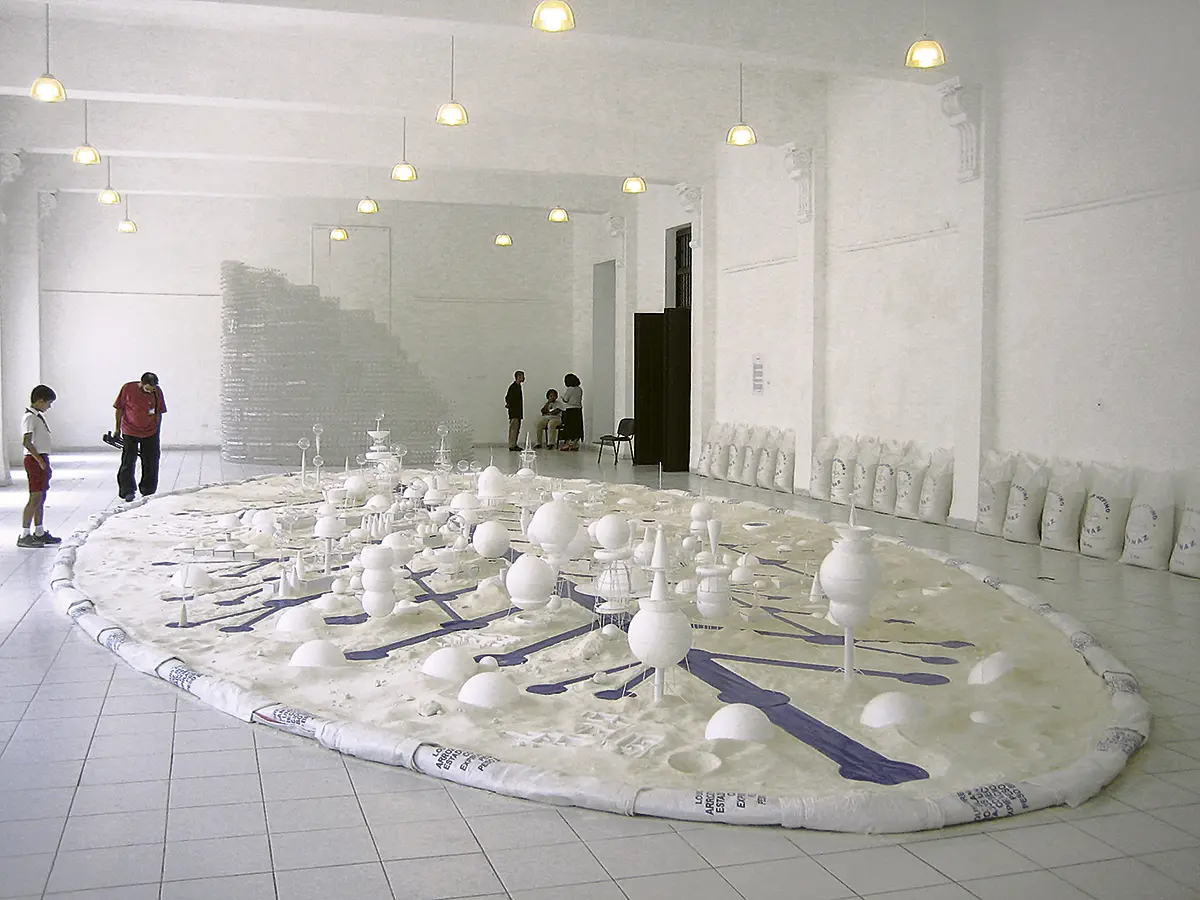
The French team of Anne and Patrick Poirier is from an earlier generation of site-specific artists, and their inclusion in the biennial provided a sense of the historical trajectory of this genre that has aspired to ever-greater penetration into each work’s location. “Instead of transporting works carried out in other places and moments,” they wrote, “we prefer, whenever possible, to reside in the place, to meet with the inhabitants, to watch their way of life, their landscape, their cities, their environment, their architecture, their memory, their industries, etc.” The pair seems to have been carried away by the white expanses of the Salon Blanco. This led them to emphasize Havana as a city of whiteness, which reconciled poorly with the grime and rubble of the surroundings.
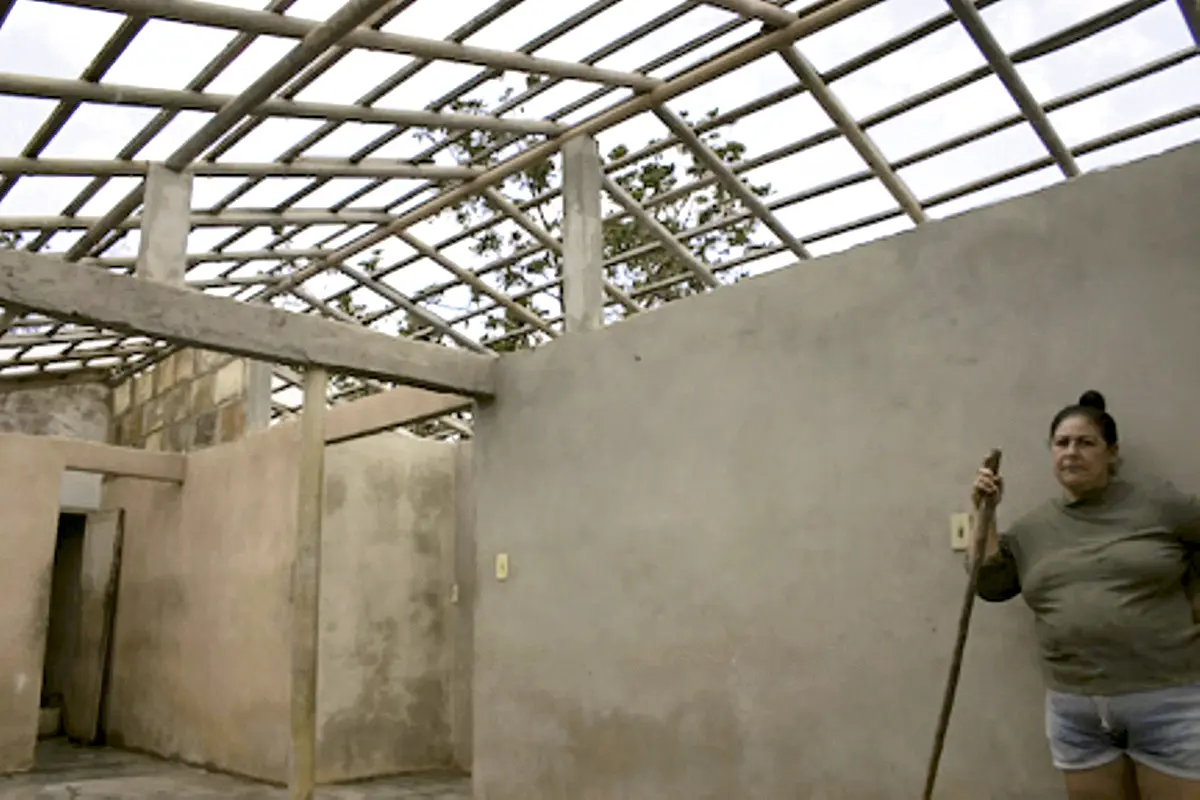
The more current cadre of interventionist artists included FA+, Ingrid Falk, and Gustavo Aguerre of Sweden, who applied gold leaf to little spots of filth on the streets of Old Havana. Carlos Fernández Montes de Oca from Cuba produced t-shirts reading “El arte purifica” that were worn by men walking the streets with garbage cans and brooms, and Álvaro Ricardo Herrera of Colombia presented documentation and paintings from the project Oferta de Empleo, which revolved around street notices advertising temporary employment and the conversion into artwork and generator of employment. For his part, Lázaro Saavedra of Cuba had sent email announcements for the project Techo pa’ lo guajiro, a proposal from the “recently-created collective Robin Hood” for which “campesino families in the Peralta batey and other zones of Jagüey who still remain without roofs since Hurricane Wilma, ‘will receive help’ from a collective composed of young artists and economists. An investigation that awakens curiosities in the distribution of resources, and reveals the plastic qualities of nylon conceived through the optics of the popular imagination of the Cuban peasant.” Sadly, no further news of the project surfaced during the opening week of the biennial.
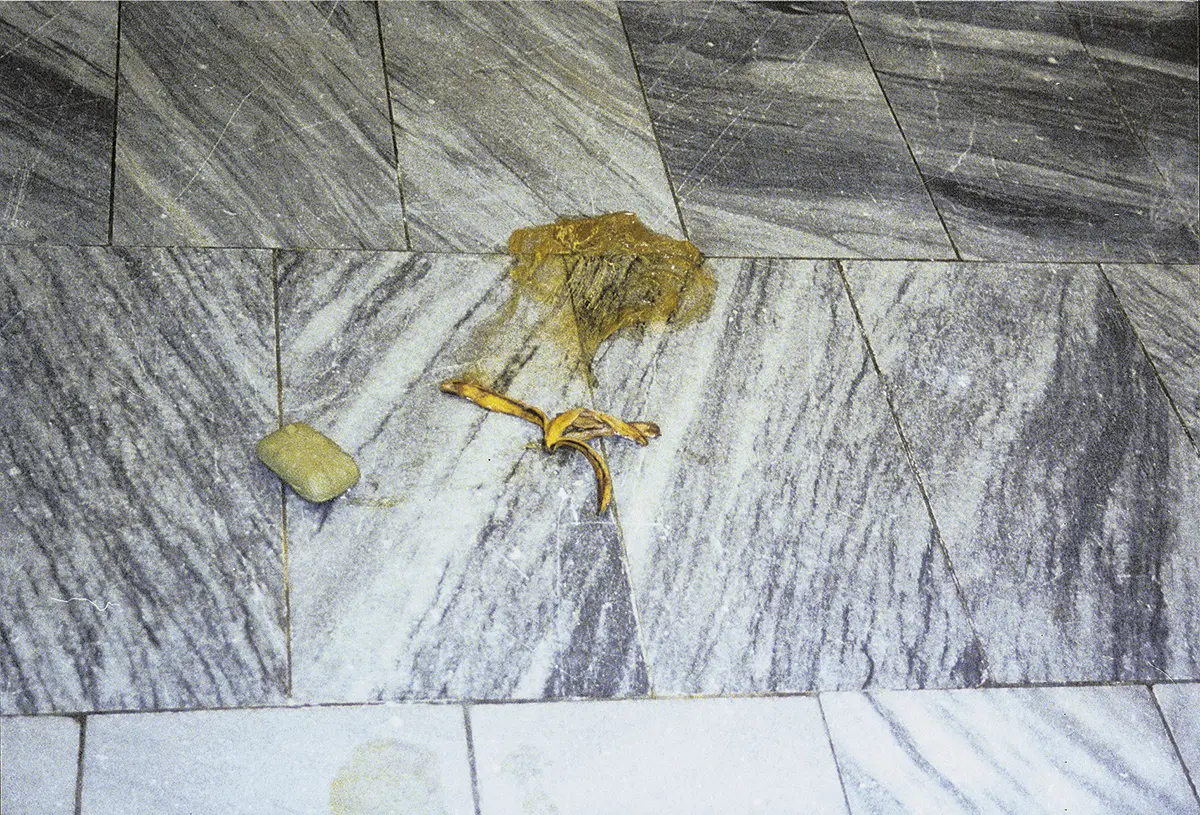
Some of the work by other participating Cuban artists was uncharacteristically wan. Los Carpinteros tipped over a model of the Morro lighthouse in Galería Habana and left it on the floor, with its beacon rotating pathetically. Wilfredo Prieto’s Grease, Soap, Banana—probably the most anticipated of the biennial’s collateral projects—consisted of “the most minimal operation possible,” clad in a maximal inauguration replete with cocktails and canapés. Prieto, commenting in his brochure on “the evident and literal qualities of things,” lamented their loss: “I feel that these tools are being lost due to our firm belief in the metaphor and in the artist as producer of metaphors... We tend to make complex readings about things when there’s nothing to read. I am interested in taking a concept, in working with a philosophical idea which is already contained in the image.” The work consisted of a grease spot, a bar of soap, and a banana placed in the middle of the gigantic floor of the gallery at CENCREM/Convento de Santa Clara: in Phase One the banana was intact and in Phase Two, which depended on a spectator for its realization, the banana was squashed and the spectator slipped. The work’s nonsense quality seemed to be a reflection not only of the artist’s views about Cuba but also about Cuban art and about the biennial and its professionalizing hoopla.
A couple of the smaller group shows of Cuban work were more energetic. La Huella Múltiple, a project organized by the artists Abel Barroso, Ibrahim Miranda, and Sandra Ramos—and also Belkis Ayon, until her death—celebrated ten years of the project in the Convento de San Francisco de Asís. In a nice piece of history, the exhibition included a display of artists’ books made over the years by the writer Orlando Hernández in collaboration with a list of artists that reads like an abbreviated history of the period: José Bedia, Gustavo Acosta, Carlos Garaicoa, Ibrahim Miranda, and Lázaro Saavedra. El museo tomado, organized by the National Museum of Fine Arts, included video works by several artists, including Saavedra’s witty El síndromo de la sospecha, in which a quartered screen is filled with images of his own eyes, suspiciously peering up, down and across at themselves in the other quadrants. Toirac’s video loop Tengo showed a sign-language version of the famous revolutionary ode by the national poet Nicolás Guillén. “I, Juan with Nothing only yesterday, and Juan with Everything today” begins the verse, a love poem to the Revolution. In this work, the poet, who was a black man, enumerates the many benefits received thanks to the Revolution: to pass freely through the island’s landscapes and institutions, to read, write, think, and laugh. Toirac’s silencing of the poet’s rapture was the sharpest commentary in the biennial.
Pacemaker, organized by the independent curator Magda González, showed promise but could not live up to its potential. It was reduced in status from an “exhibition” to a “project” and then canceled by authorities—after it was approved and rejected by three separate venues—for reasons that were never evident. Although they were not a part of the biennial, the student presentations from the Arte de Conducta workshop led by Tania Bruguera coincided with the biennial’s week of events. Some of the student's works ë"owed promise, that of a possible resurgence in the restorative spirit and commitment in Cuban visual art.
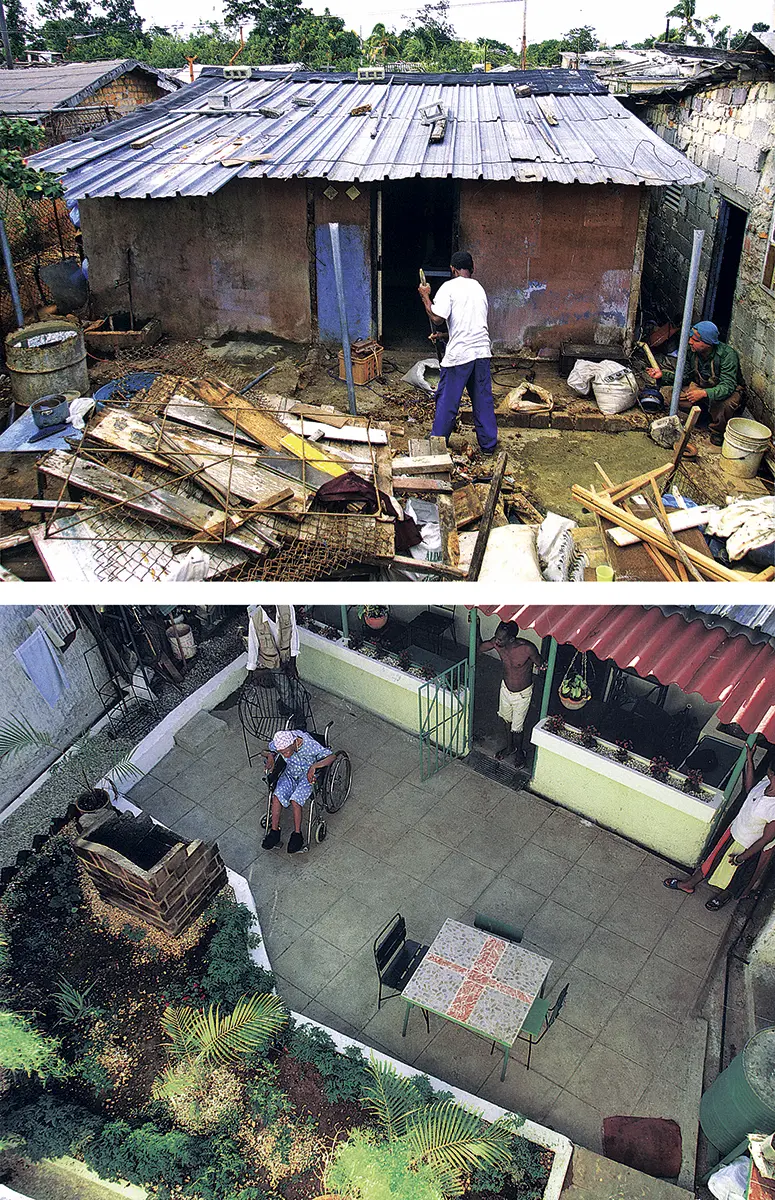
A pair of projects by artists who emerged as central figures in Havana during the 1980s provided an interesting frame for the Ninth Biennial. René Francisco showed the photo and video documentation of his project El patio de Nin, in which he transformed garbage- and rubble-strewn patio into a lovely garden as a gift to the elderly and wheelchair-bound Nin. This lovely gesture of generosity to an old woman with so few possibilities in life became somewhat paradoxical when presented as an artwork: viewed on gleaming flat-screen TVs—an extraordinary luxury in Cuba—the project’s humility underwent a kind of conversion. In the context of a biennial packed with evidence of social remedies—the art of repainting and reclamation and repair—René Francisco’s project stood out as a masterwork, the result of a technique and persona honed carefully over the years and presented in exquisite detail.
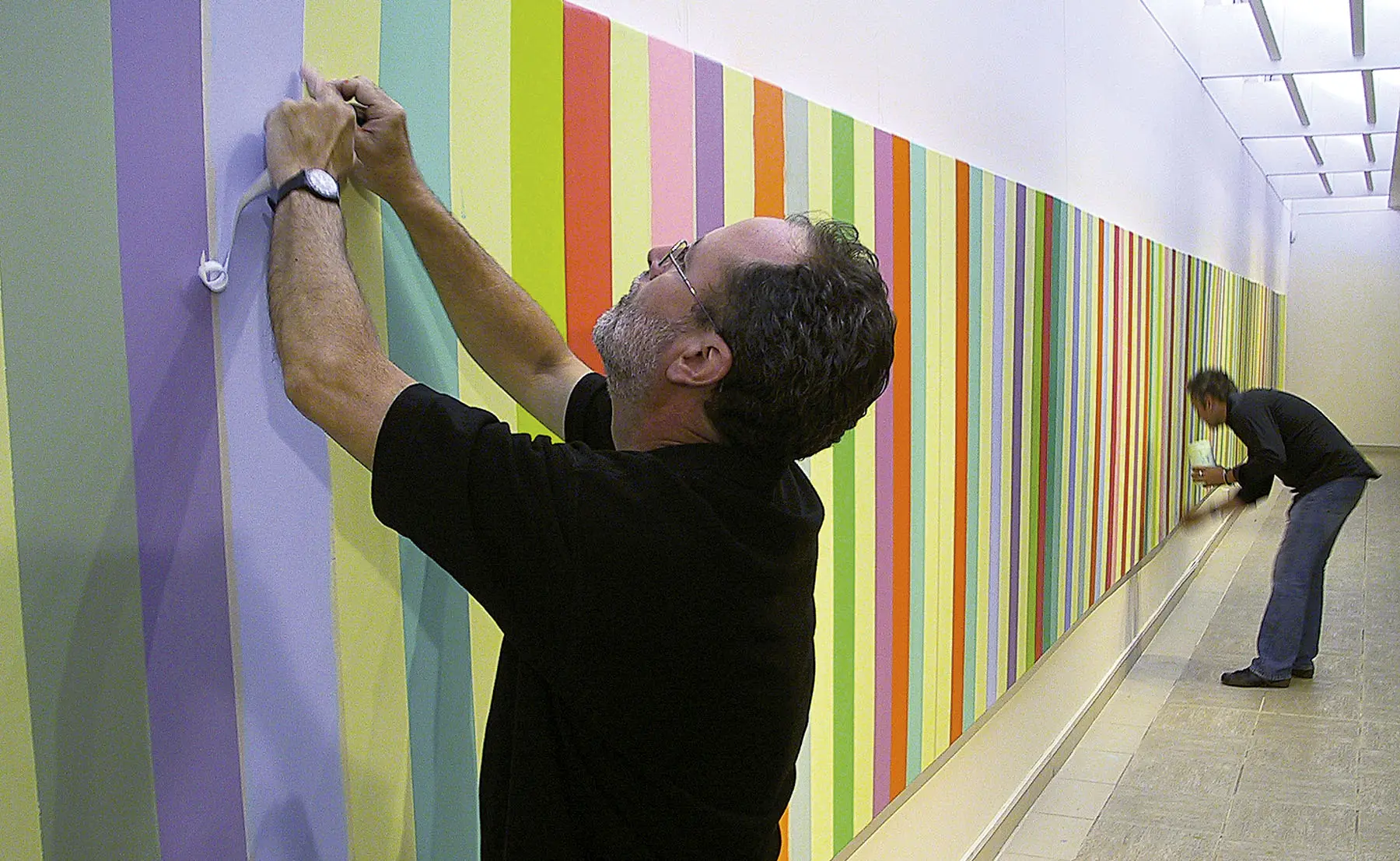
If René Francisco’s project signaled changes in Cuban art toward work conceived, directed, and dedicated without irony or pretension to address the immediate impossibility and poverty of daily life, and especially the daily life of those who are most marginal and vulnerable, then the collective mural orchestrated by Flavio Garciandía in the National Museum seemed to signal the final evacuation of Cuban art. Auge o decadencia del arte cubano was a twenty-meter-long canvas painted with stripes, with colors determined by roughly 150 Cuban artists of various generations and tendencies, from a palette of options that Garciandía provided. The extravagant reach of the project underscored its deep cynicism. The final phase of Cuban art, it seemed to be said, consists of this—it is nothing, a non-piece. Bringing everyone together felt not like an act of reclamation but rather a swan song. The project generated considerable discussion among artists, some of whom denounced it on various grounds in a vituperative piece in the Miami El Nuevo Herald. But museum officials were well satisfied. Perhaps they were not concerned with the work’s inspiring such a conflict between the fundamental refusal of the gesture and the unity and enthusiasm of the seeming reunion. There were at least two large, happy moments in the Ninth Havana Biennial, moments filled with a sense of energy and congratulation: Garciandía’s and René Francisco’s openings. The first was a coda, a eulogy for the whole movement and process, a grand wake. The second was a fully realized confirmation of New Cuban Art’s passage through its tempestuous voyage, to and from utopia, undertaken with extraordinary intelligence, cultural acuity, and brio. Such complicated moments: at the National Museum, the artists both present and gone and the palpable diaspora; and at the Miramar Trade Center gallery, Nin, tiny and quiet in her wheelchair—a figure who in other contexts would probably be a frightening presence, one that promised everyone’s eventual vulnerability—was in this setting simultaneously filled and emptied both of promise and its negative corollary. Nin was an icon, presiding over the biennial.
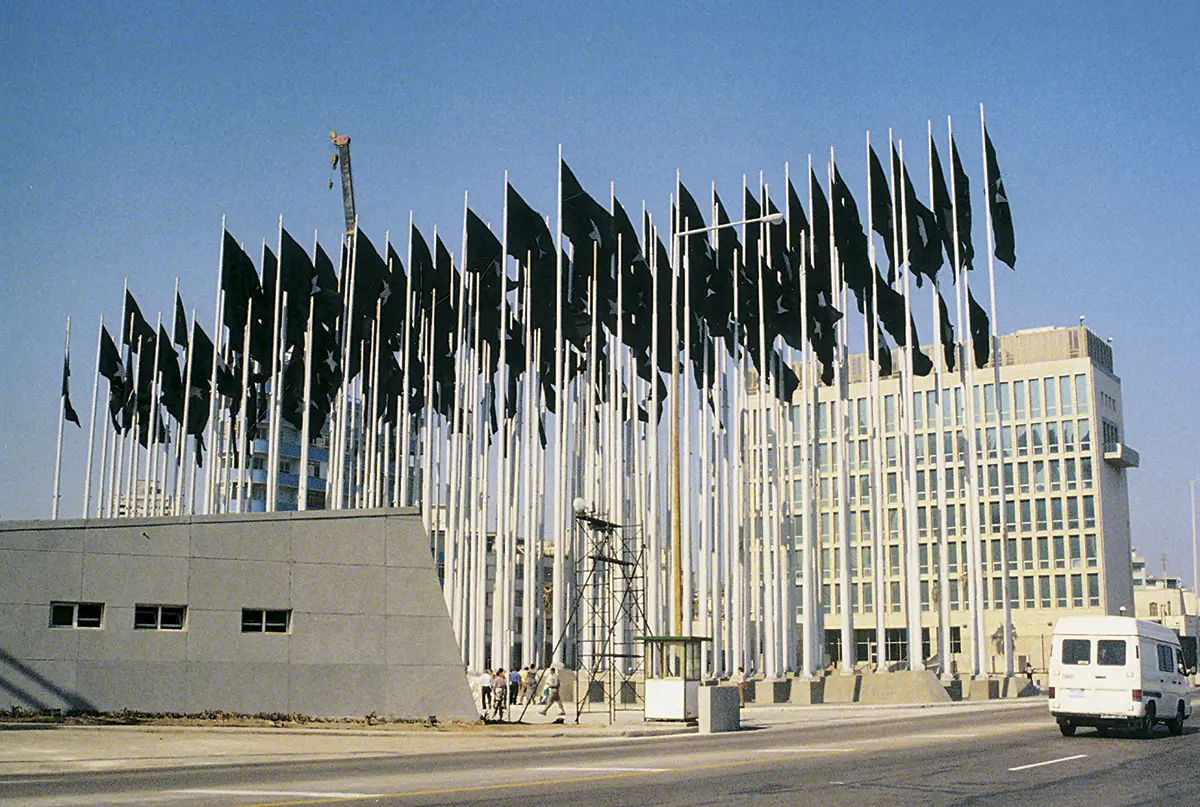
The Havana Biennial is a fully governmental operation. So it is only appropriate that the best installation in the city that week was one authored by two governments, those of Cuba and the U.S. Back in January, the staff of the U.S. Interests Section—which is the functional equivalent of an embassy in the absence of diplomatic relations between the two nations—set up a gigantic LED display on the façade of its headquarters and began transmitting propaganda in favor of U.S. “democracy” and against the Cuban “dictatorship.” By the time the biennial opened in March, the Cuban government had installed a forest of black flags atop giant flagpoles—it was said these were memorials to the Cuban heroes who have fallen “at the hands of American terrorism against Cuba”— that almost totally obscured the streaming, red LED messages. Some artists claimed, perhaps jokingly, that the idea came from artists, from Jenny Holzer for the Americans and from Wilfredo Prieto—whose work in the last biennial was a baldly cynical stand of black, white, and grey flags titled Apolítico—for the Cubans.
RACHEL WEISS
Writer, curator, and Professor of Arts Administration and Policy at the School of the Art Institute of Chicago.