Thirty-six years ago, in 1970, almost the same year of the founding of the Basel art fair, Joseph Kosuth presented his work Information Room in a seminal exhibition of conceptual art. This installation consisted of a room with two tables on which Kosuth had placed a number of books mainly about linguistic theory with passages he underlined, as well as some newspapers and materials available for the public to consult. Like a play in multiple billiards, Kosuth performed a gesture that eliminated any trace of the art object, pointed to reflection as the privileged site for creation, and transferred the responsibility of producing the work to the viewer, who was charged with the task of reading and elaborating the material presented by the artist. In the context of the time, this was a decidedly radical political gesture that sought to transform the traditional art system rather than be marginalized from it.
Peter Schjeldahl, then the New York Times critic, highlighted this transformation in his review with the exhortation “Don’t Just Stand There, Read!” The reticent critic granted the benefit of the doubt to conceptual art that, in his opinion, was engaged in a search for purity in its immateriality, in its connection to linguistics, and in its demands on the public.
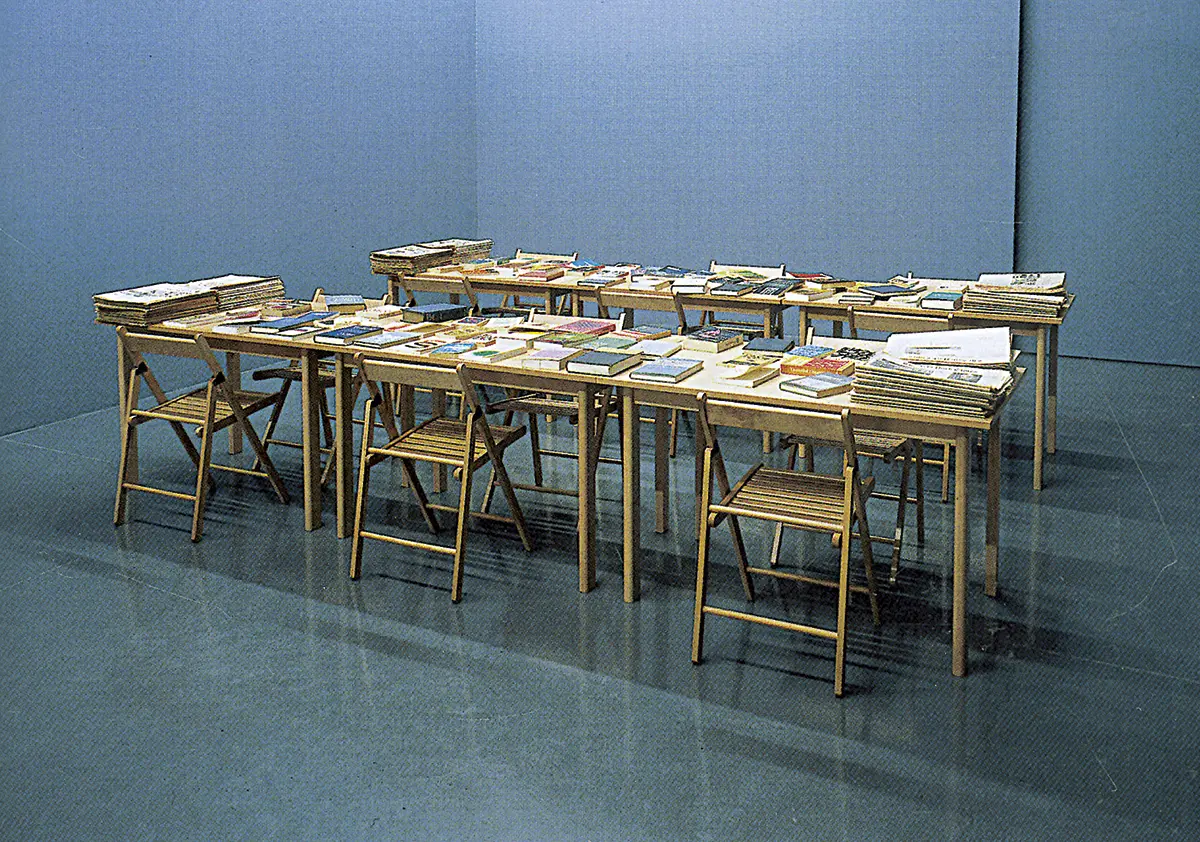
Seeing Kosuth’s work at Art Basel is not new; for years he has been well established in the art market with works derived directly from his original conceptual postulates, taken to extremes of aestheticization. In principle, the presence of Information Room at Art Unlimited—a space at Art Basel where most prices are only given upon request—should not be a great surprise. However, it was presented as the collapse of two worlds that three decades ago seemed antagonistic but today coexist rather happily under the influence of the stronger one. The tables, the books, and even the newspapers were there; everything had the appearance of being on a stage, reinforced by two slight differences with the original instantiation. First, the newspapers dated from the period when the work was first presented and was too brittle to be read, so they were really just props; second, the whole display was preceded by Schjeldahl’s note, enlarged inside a lightbox that was placed atop a display case containing various documents referring to the Information Room and the context of its first exhibition.
I have taken the time to describe this scenario because it signals an endemic situation in today’s art: the market sells history. The recreation of Information Room is indeed a recreation, a staging that does not pretend to—since it could not—have the same purpose and function as its predecessor did. The montage that integrates the gesture of the work and the critical context of its reception in the newspaper review and the display case is not available as artwork but as a piece of history, frozen in time and rematerialized only in order to be sold.
Kosuth’s work is an extreme case, but this phenomenon is repeated throughout the fair, and it is interesting to note the ease with which these materially non-apprehensible gestures are “frozen” only for commercial consumption since they can be recreated and reactualized infinitely in the present as “gestures.” That was conceptual art’s authentic contribution, and that is what is eclipsed with each conceptual work of art processed by a virtual taxidermist and placed inside a booth at an art fair.
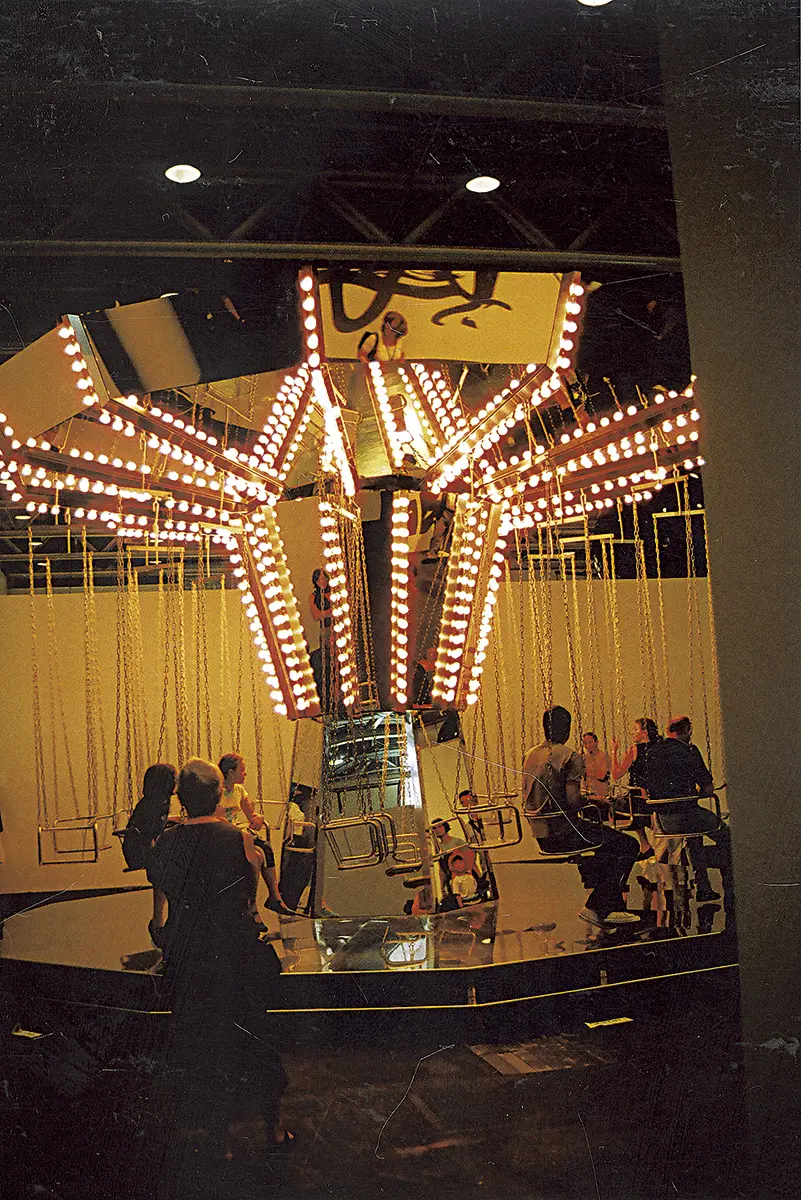
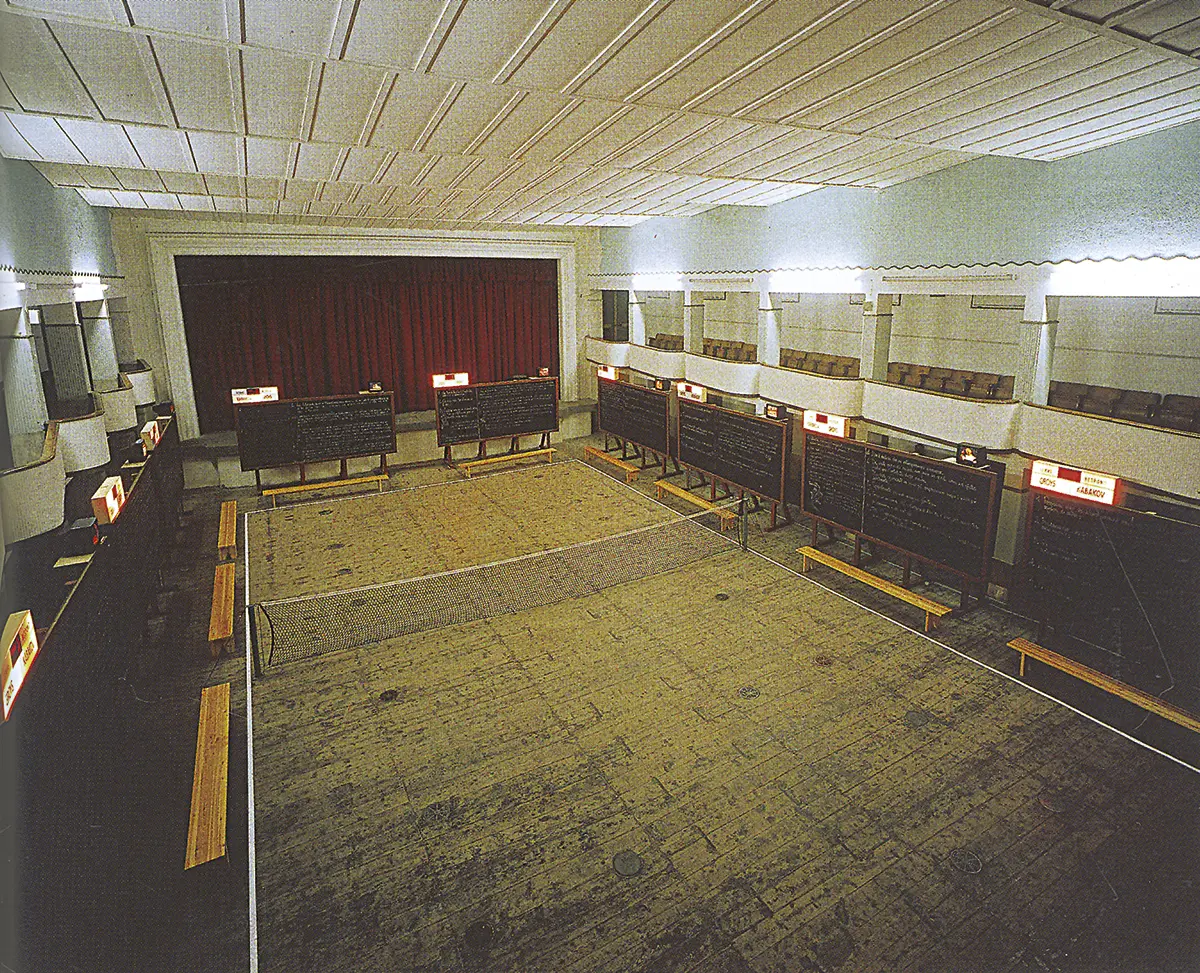
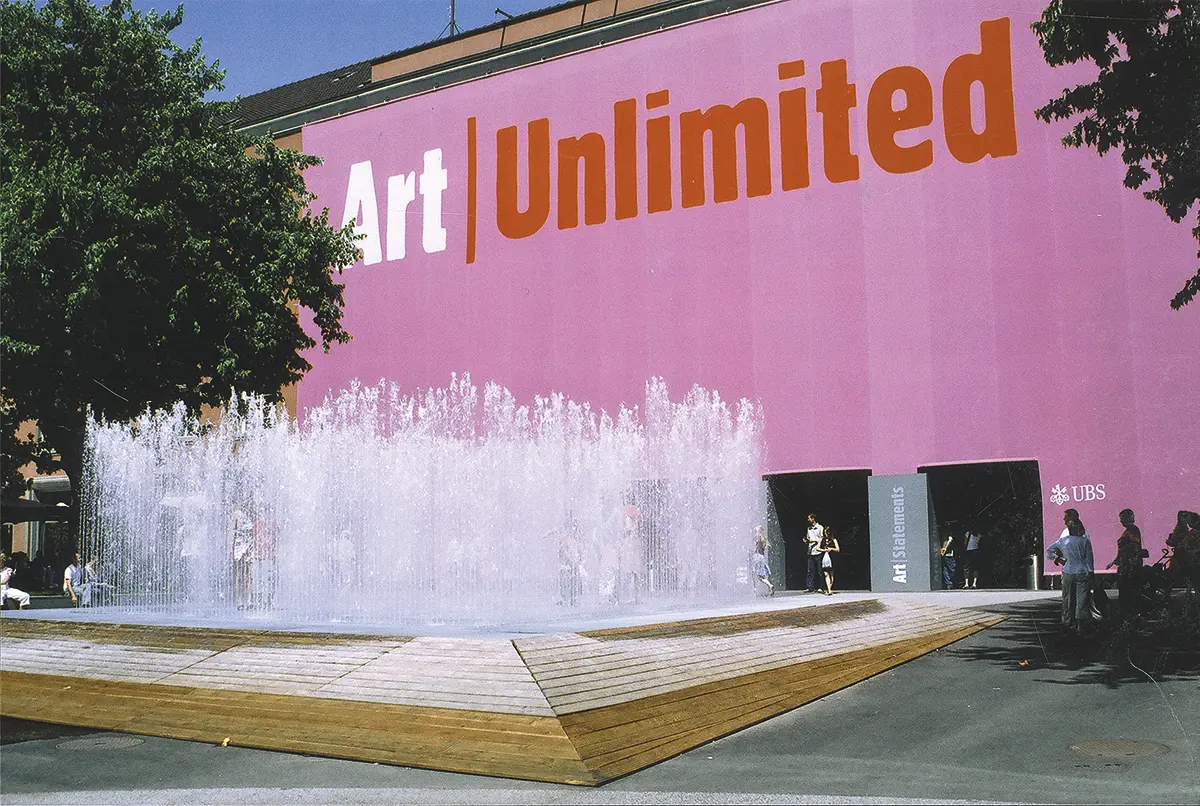
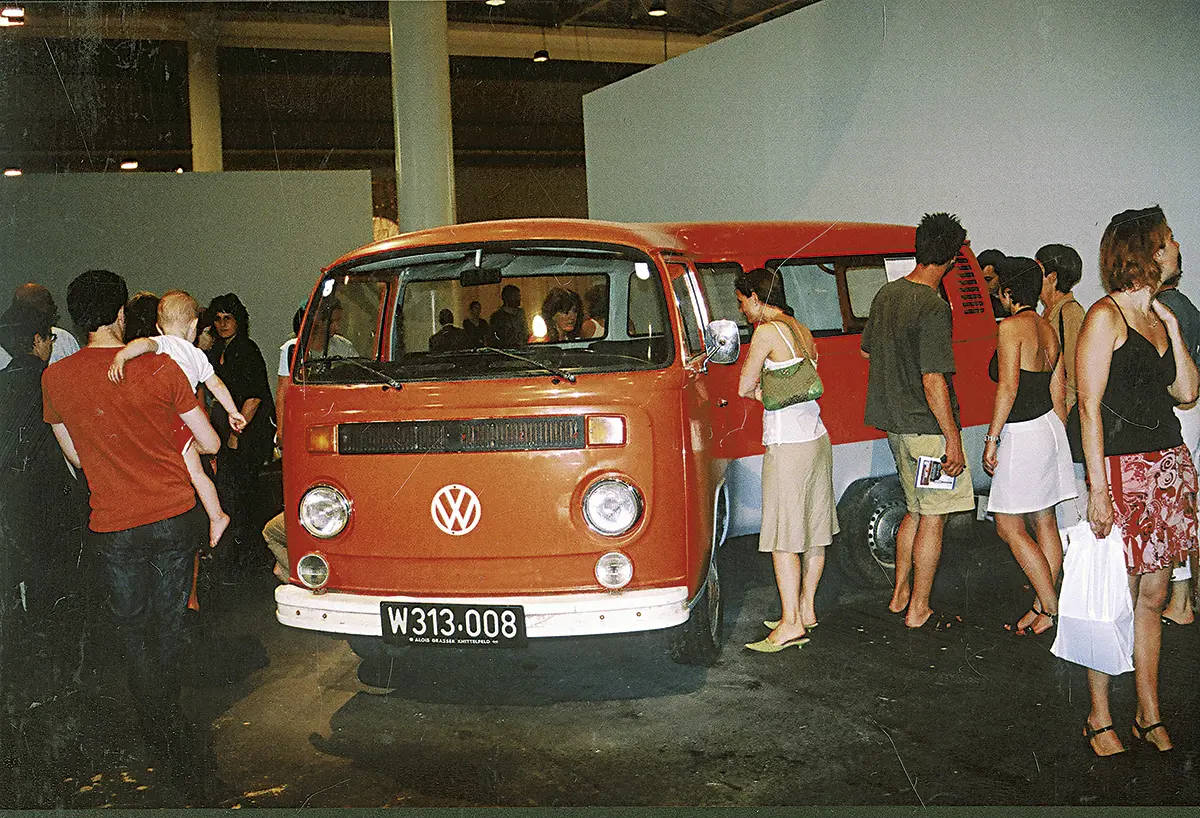
Paradoxically, contemporary art’s spectacular character and its experiential aspect are increasingly exacerbated. This year more than ever, Art Unlimited had many works that were closer to carnival attractions than purely aesthetic and reflective proposals: Kader Attia’s giant drills, Carsten Höller’s mirror carousel, two spinning rooms presented by Martin Kersels and John Bock, and even more magical pieces like Erwin Wurm’s “telepathically” bent truck or Juya Ishigami’s very thin oscillating table, which all referred to a kind of circus or amusement park. Perhaps this exaltation of spectacular art was deliberating, affecting even works as beautiful and useless as Julius Popp’s Bit.fall or as intelligent and complex as Ilya Kabakov’s The Tennis Game. Among them all, however, none was better received than Jeppe Hein’s Appearing Rooms: a fountain that spat water in different directions, creating spaces where one could cool down without getting entirely wet. Like Kosuth’s work, and possibly even more so, all of these works require that they be experienced, but they are already the product of a post-conceptual context where the dominance of the market has eradicated immateriality. Thus, at a technical and technological level, these works are extremely complex, which guarantees the impossibility of their future recreation.
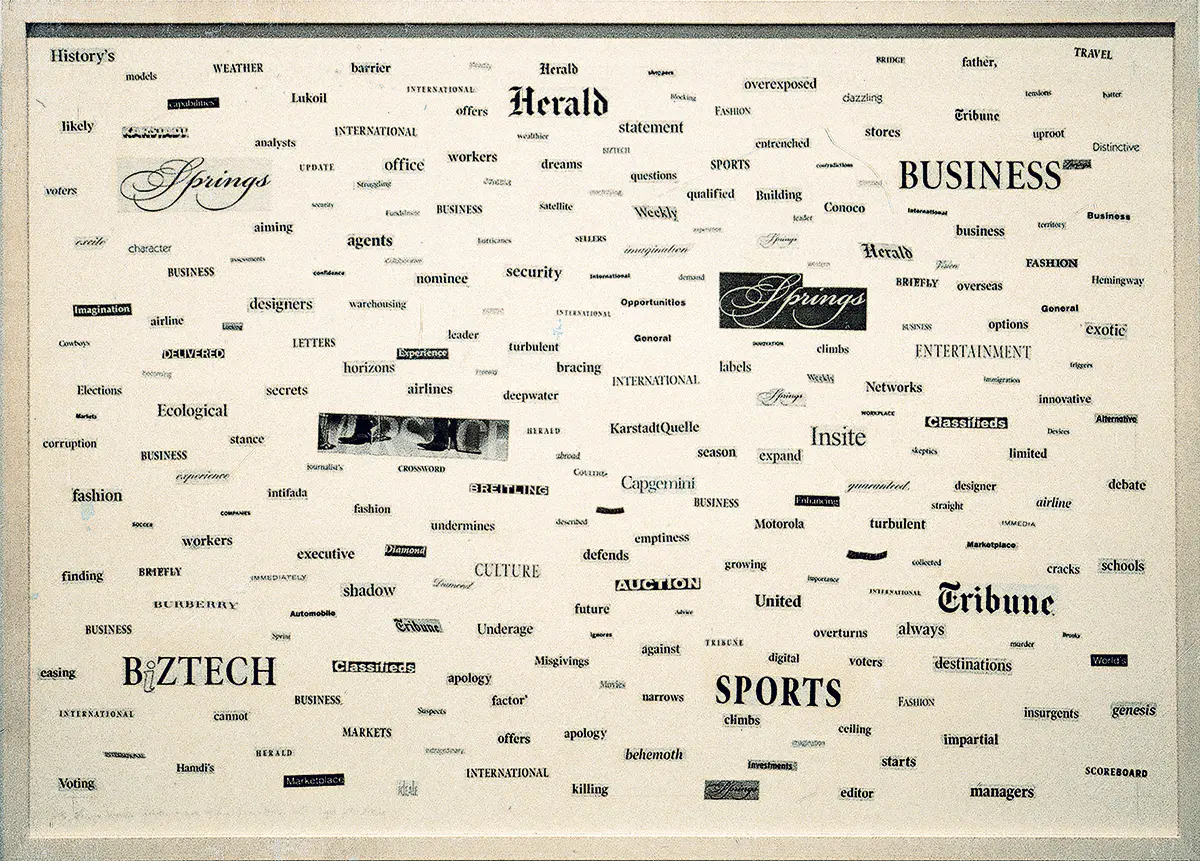
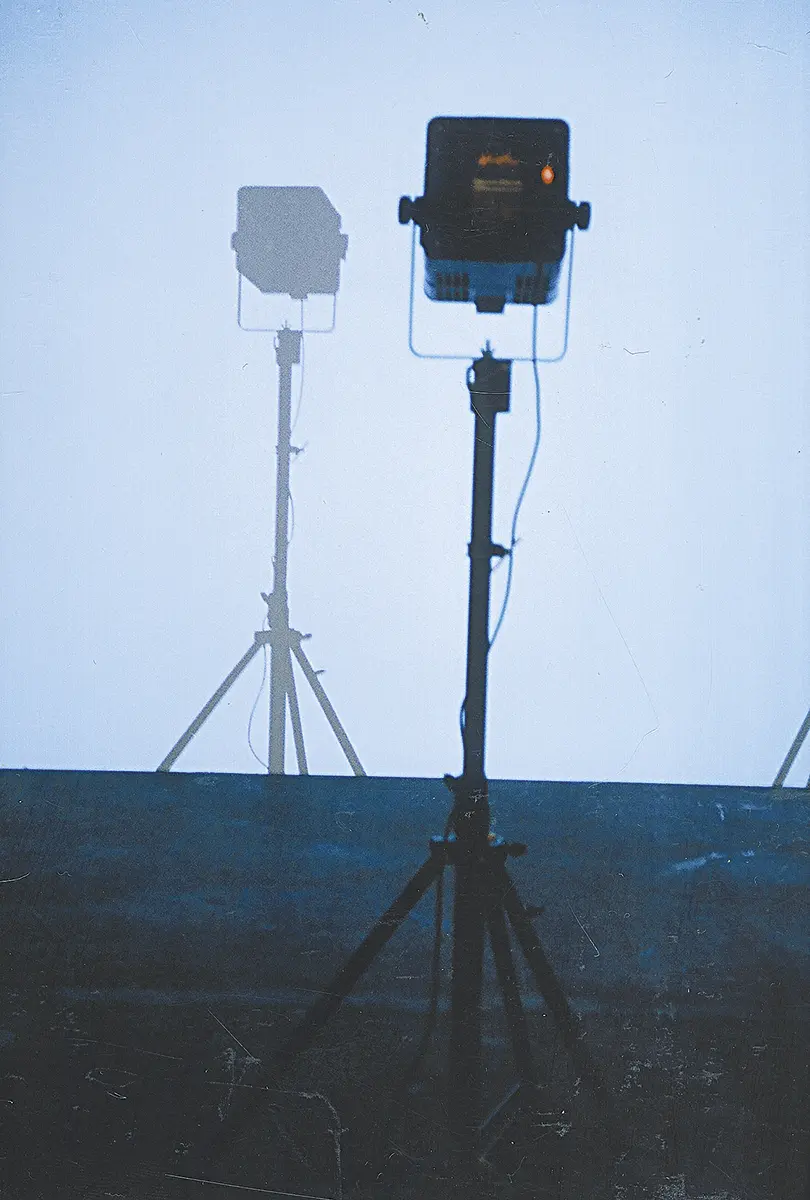
Despite the prominence of these works for the fair’s visitors, their radical opposites were found in some examples of art that can be provocative and attractive using the most basic resources. Vibeke Tandberg presented a series of forty-six collages made with clippings from a single day’s edition of The International Herald Tribune. Tandberg’s simple gesture acquired a poetic and evocative character at both the conceptual and visual levels. Fernando Bryce’s series of ink drawings titled Revolución presented a historical compendium of political and ideological conflicts from the era when Kosuth first developed his radical proposals. Christian Andersson’s F for Fake had a similarly electrifying simplicity, where the real object, its light, and shadows, were mere mirages. Finally, inside an empty room, Ceal Floyer presented an acoustic work that transmitted the sounds of its own construction. This work also recovered and reactivated the work of classical conceptual artists—Marcel Duchamp’s Secret Noise and Robert Morris’s Box With The Sound of Its Own Manufacturing came to mind—but not without a certain irony since it is integrated into the current art system.
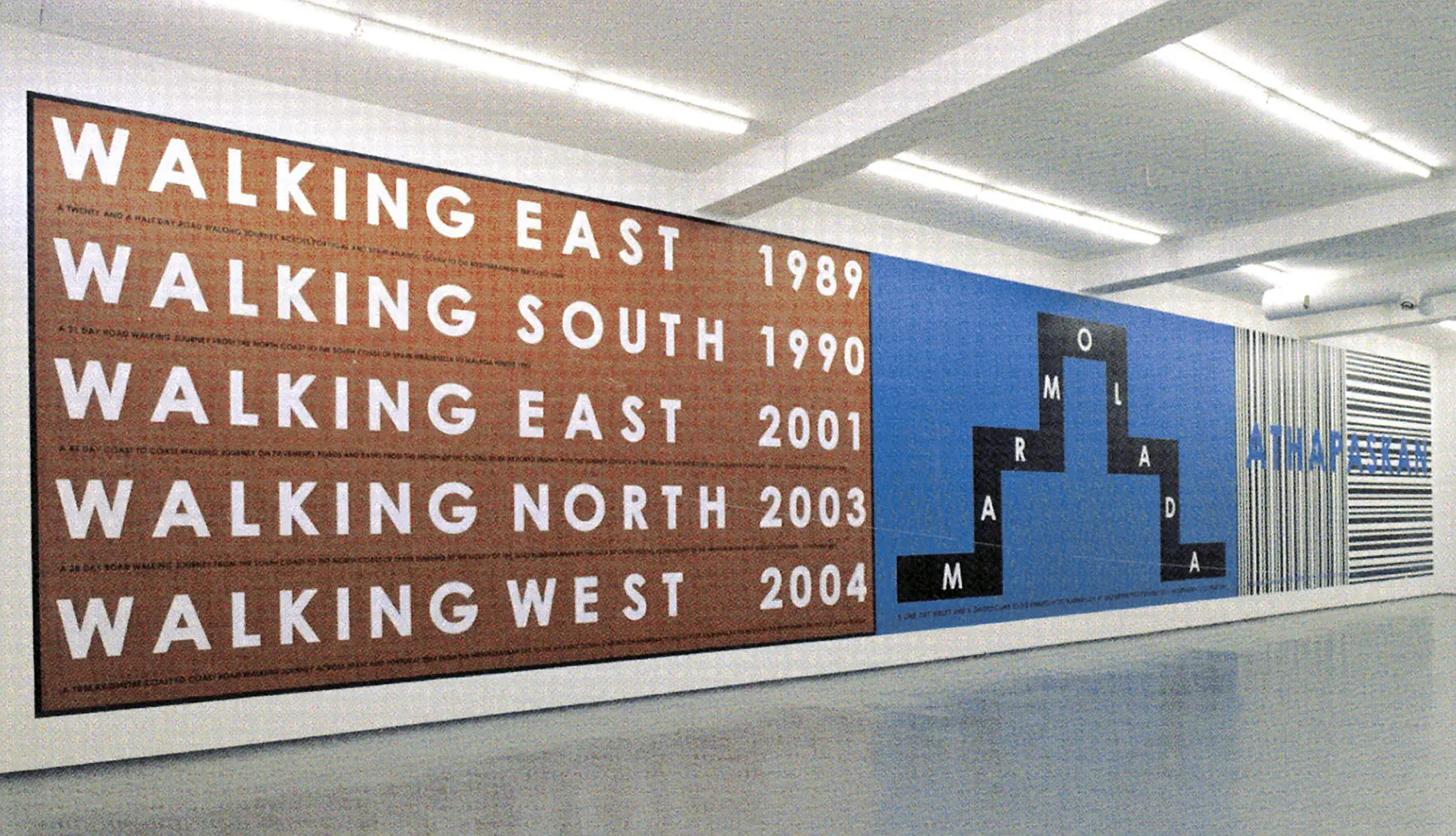
The fair proper had a slightly more conservative feel than Art Unlimited, mainly because of the hall’s features, but this was not an obstacle for its once-and-for-all definitions of the new Great Masters. Robert Rauschenberg has of course an important place in this revision of the history of modern art, and one suspects he will have a presence similar to Picasso’s in coming years. A more hermetic artist such as Bruce Nauman continues to slowly assert his place in the scheme proposed by the fair. The decades of the 1960s and 1970s are, clearly, the source that nourishes the current market for artists of sufficient age to become important and enter the pantheon of contemporary art. Thus, one saw Robert Filliou at Chantal Crousel, Hamish Fulton at Galerie Riis, or Donald Judd, Dieter Roth, Ed Ruscha, and Kosuth all over the place.

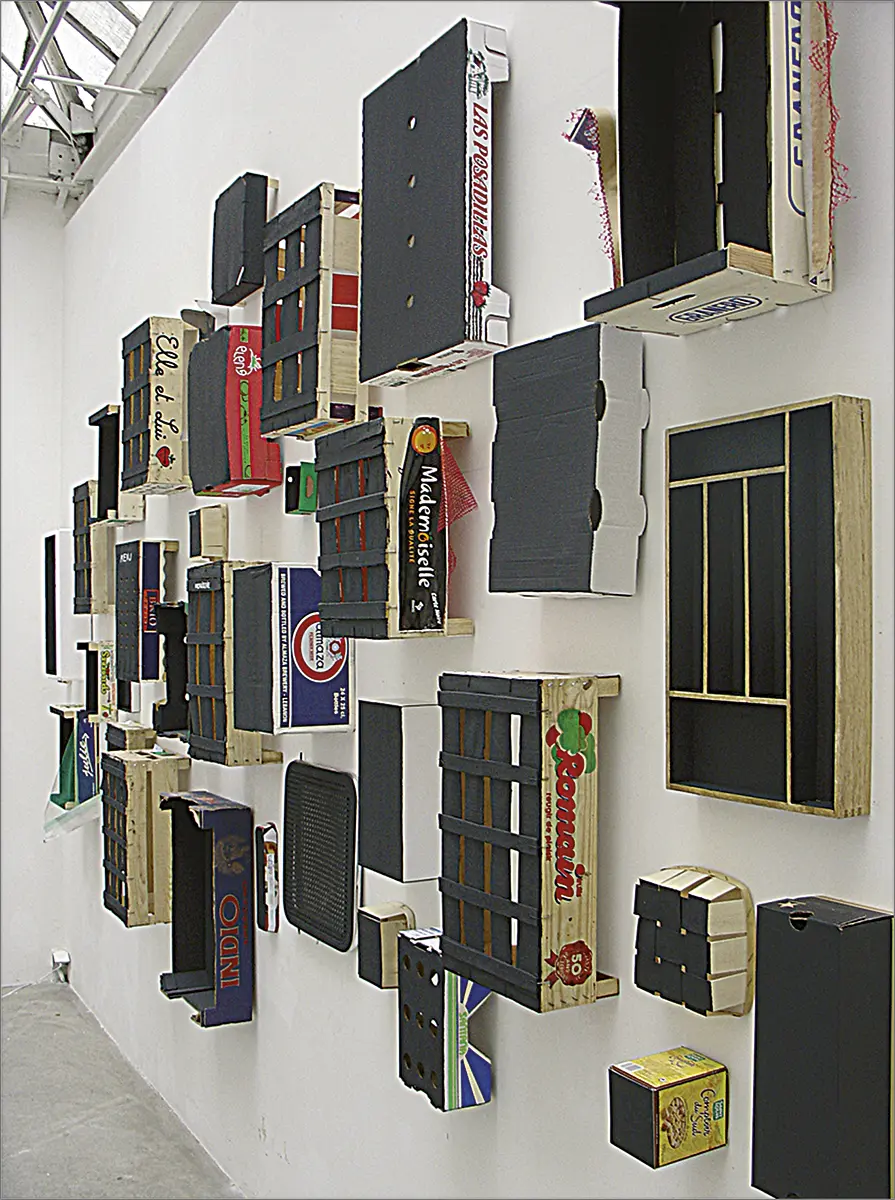
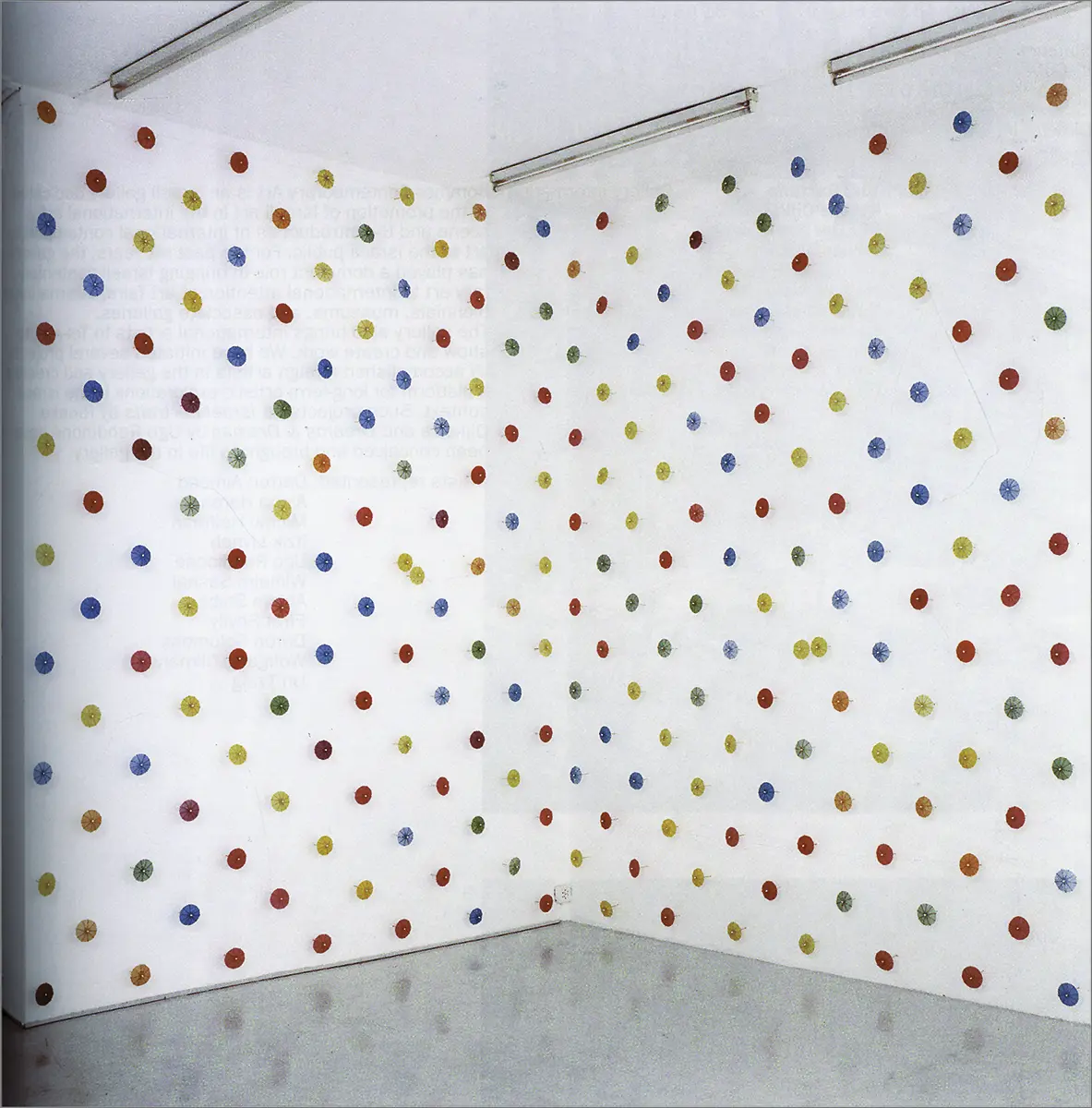
The high level of quality demanded by Art Basel makes it difficult to find new names. In general, what one sees is the consecration of more or less known entities. This obviously implies a subsequent revision of prices, which shot up this year, following information and rumors that circulated through the fair. From this perspective, one should mention specific works such as Beatriz Milhazes’s magnificent painting at Friedman Gallery, Abraham Cruzvillegas’s excellent Menu in Progress at Kurimanzutto, Irán do Espiritu’s traced drawings at Fortes Villaça, or A.K. Dolven’s marvelous video Amazon at Carlier I Gebauer. There were a number of more poetic and lighter works, such as Alexandre Bianchini’s large installation of colored paper umbrellas, Lonely, at Skopia; some works are seen before but equally good, like Frank Thiel’s photographs of crumbling walls; and even some works of an ironic bent such as Christian Jankowski’s futuristic video Galerie de Gegenwart 20097 or Martin Kippenberger’s container for paintings at Petzel.
The Basel art fair has reasserted itself as the event of the year and places growing emphasis on the social aspects that surround it. Within its borders, it would seem that the growth of the art market has no ceiling, and the number of artists multiplies accordingly, generating a clash of feelings: on one hand, the commercial euphoria; on the other, the exhaustion of ideas and references. The loop symbolically closed with the presence of Kosuth’s Information Room for sale should provoke a reflection about the paths that current art desires or is able to take. It must decide whether the only path is to be subject to the dictates of the market or whether it is still possible to recover any ingredient of art in which thought, creativity, and non-ironic critique had primacy.
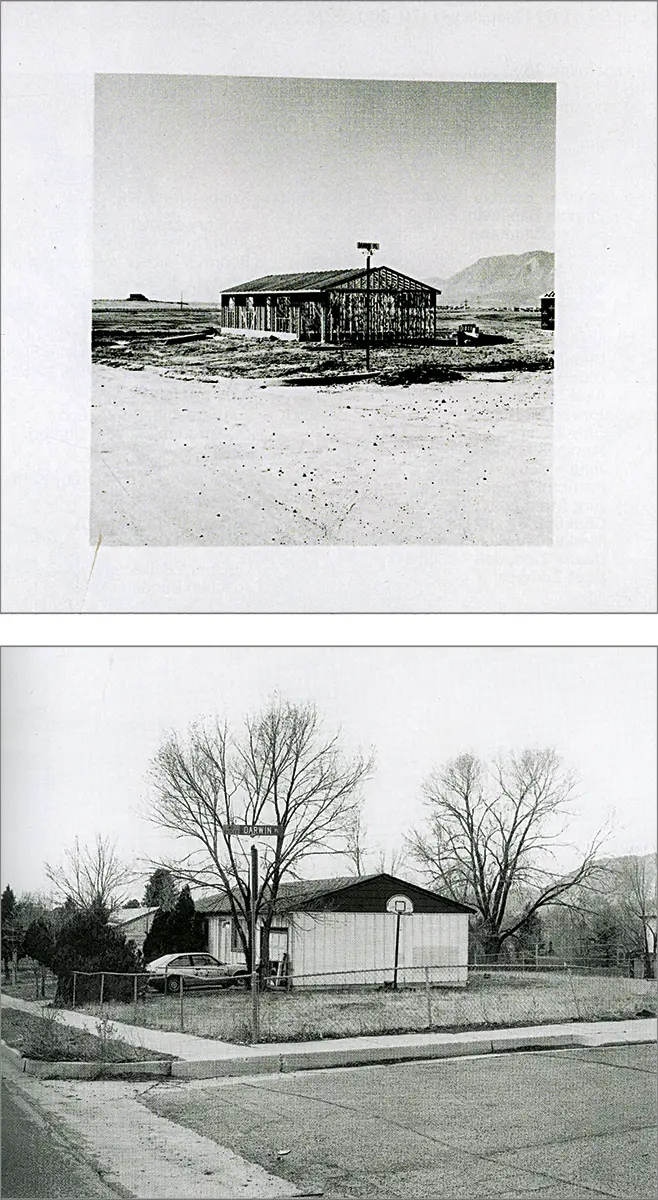
I am not really sure that there remains a space where this kind of art could be possible once again. But, perhaps as a metaphor, at Jan Mot Gallery there were examples of other paradigmatic conceptual works reinterpreted and reinserted into the voracious art fair system. In a commendable research effort, the Danish artist Joachim Koester revisited some of the locations “objectively” photographed by conceptual artists like Bernd and Hilla Becher or Ed Ruscha, which have become paradigmatic images of 1960s art. Koester’s works were presented as diptychs that include reproductions of the two original photographs and photographs taken by himself of the buildings or sites in their current state. These images produced a mixture of estrangement and nostalgia in confronting decayed buildings or buildings transformed into hotels or dive bars or abandoned outright and left to ruin. Above all, these images were presented as new versions of the same things, and the splendor they once had was irrecoverable. What is worse, it was difficult to decide in favor of one or the other version—to opt for what was once new and is today only nostalgia or for the romantic ruin of a time that will not return.
ISSA MARÍA BENÍTEZ DUEÑAS
Art historian specializing in contemporary art and the theory of art.