It’s easy to imagine writing an article on assume vivid astro focus (from here on avaf) in the neophyte’s style that graces the liner notes of CD compilations: “The first time I saw Cabaret Voltaire in a small, damp club in Sheffield, it was my first encounter with a negative sublime. My blood curdled, but for all the wrong reasons...” or “That night at CBGB’s, four street kids with leather jackets, the very antithesis of glam rock, climbed on stage and played their instruments as if they were taming lions...” Concerts are memorialized as enchanted experiences and embalmed as vessels of secret feelings that refuse verbal translation. First encounters always happen in some other, not-quite-quotidian time and space that is impossible to duplicate and available only to those who were there. These are the secret apotheoses of pop culture, which the money machine can never take away. Opening night events by avaf are charged in this way, filled with live performances, all-night DJ sets, and throngs of cute, ecstasy-fueled boys and art-world hangers-on, and one can see them passing into this pop-culture tradition: “That night, after a few drinks and a few pills, we drifted until we came upon a stylish store sign that read CONTAGIOUS. We walked in and it was as if we’d walked into another world: a post-camp camp fag-land; a psychedelic grotto where the only thing that desire surrendered to was artifice. And I have the tattoo to prove it...” I missed that opening, so I’ll have to write this in a different way.
The intersection of art and entertainment or, better, the collapse, whether imminent or already in process, of art into entertainment may provide one of the most fertile dilemmas that engage contemporary cultural production. Fertility lies in two interrelated problems and the pressing need that has arisen to address them. The first problem has to do with choice and the second with the new paradigm that arises from this choice. The choice is not whether one is for art or for entertainment—this question comes too late, at least in most North Atlantic democracies, which gives the problem an interesting geopolitical slant—but, rather, how one is to position one’s practice within a new paradigm that positions artistic production as a subgenre of entertainment. Is one going to embrace this wholeheartedly or attempt to navigate it in some critical fashion that attempts to mark and uphold the difference between art and entertainment? Of course, it isn’t even clear if this choice is a viable one within this new frame of reference. (Maybe real dissent, the possibility of an effective adversarial stance, is assumed foreclosed.) This leads to the second problem, that of mapping this new situation. I think we’re at a point where younger artists are still attempting to figure out exactly how to work within the new set of rules. The contour of available practices is still being shaped. It is within this context that one has to look at the work of avaf.
Avaf is a project and a product, a platform, and a party. It’s what the Brazilian artist Eli Sudbrack does in order to not be Eli Sudbrack; in other words, in order to function culturally at a more complicated or relevant level than that of artist or producer. He has often expressed a desire for his name to go unmentioned whenever talk of avaf is taking place. If I’m acting here against his wishes, it’s only because this is the easiest path to explain the loss of identity that he strives to attain.
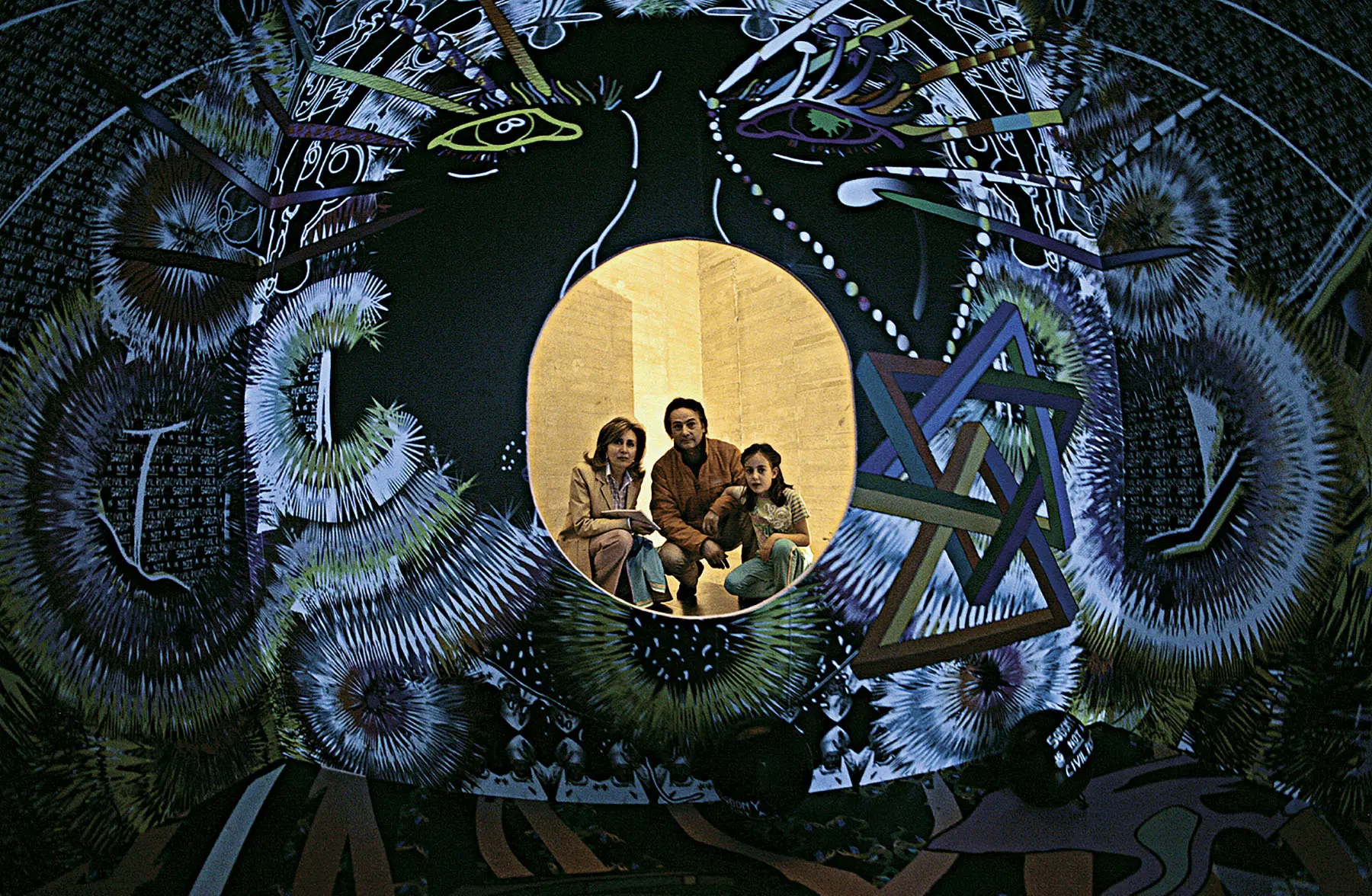
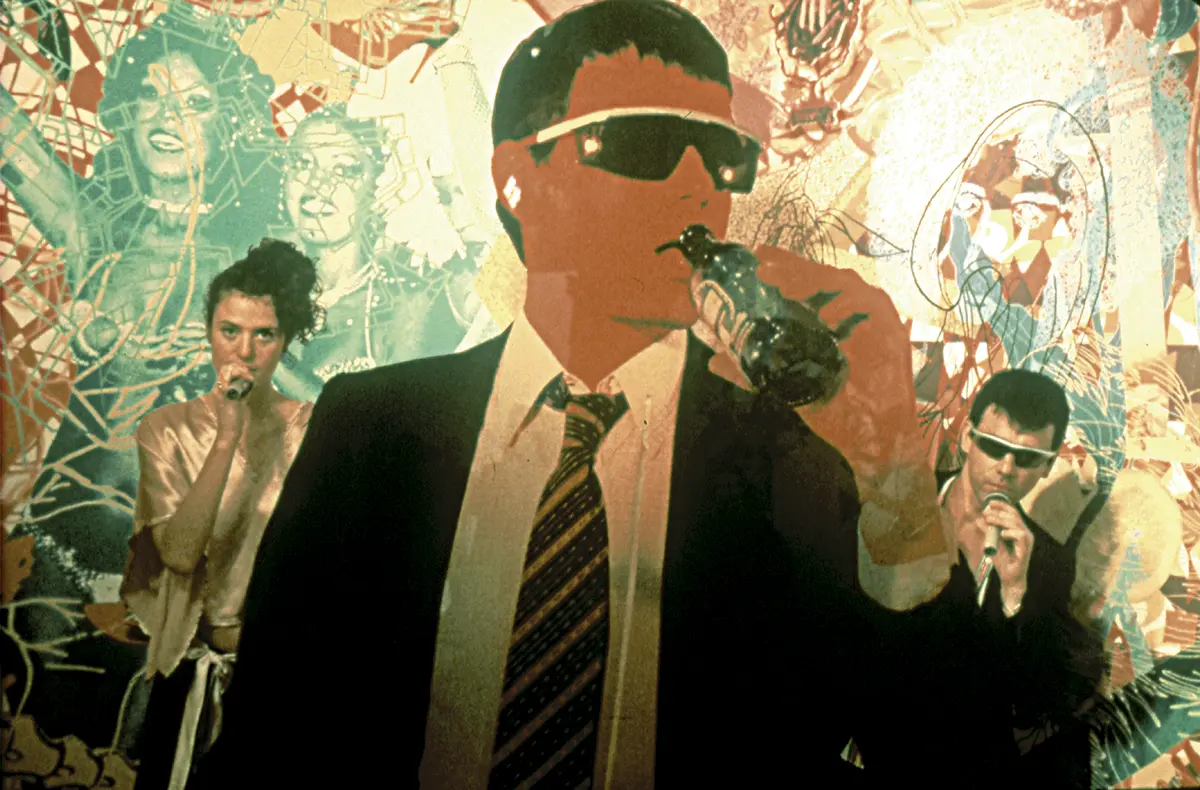
So, what is avaf, if it isn’t Eli Sudbrack? Unlike so many younger artists that have chosen to work collectively or to rely on a certain level of anonymity, avaf doesn’t ironically appropriate a corporate model (like Bernadette Corporation or Mejor Vida Corporation). At least, it doesn’t at first glance. But, considering that avaf inhabits a lacuna between a post-studio practice and a disregard of site-specificity, an interstice that the post-minimalist efforts and institutional critiques of the 70s and 80s cautiously avoided, perhaps it behooves us to not discard this notion of the corporate model too quickly. For, like some of the other artists that use it, avaf’s installations are constructed employing an organizational or administrative logic. avaf gathers preexisting material to the point of overload and redeploys it in an exercise where the baroque meets the bootleg through a series of installations, wallpapers, decals, altered photographs, videos, and drawings. And it isn’t a matter of appropriation if we think of appropriation as necessarily armed with a critical and ironic edge. It’s more like casting out sensibility’s net, bringing in things that already circulate in the culture, and organizing a new, vamped-up structure for the catch. This is why the range of references in avaf’s work runs along a particular line of queer sensibility: psychedelia, Victorian decor, Audrey Beardsley, 80s glam, The Coquettes, camp, Jack Smith, tapestry design, Helio Oiticica, maybe a little Tropicalia, soft-core porn, disco, club culture, etc. But these things don’t come together to synthetically morph into a yet-unseen visual vocabulary. avaf brings a plethora of signs from this field of queer sensibility and production into the gallery and reassembles it into intensified arrangements, multimedia total sensory overloads, and kaleidoscopic trip-out rooms. I think the name assume vivid astro focus, which is a composite of Throbbing Gristle’s Assume Power Focus album and the band Ultra Vivid Scene, is a perfect emblem for the organizer’s employed processes of “production.”
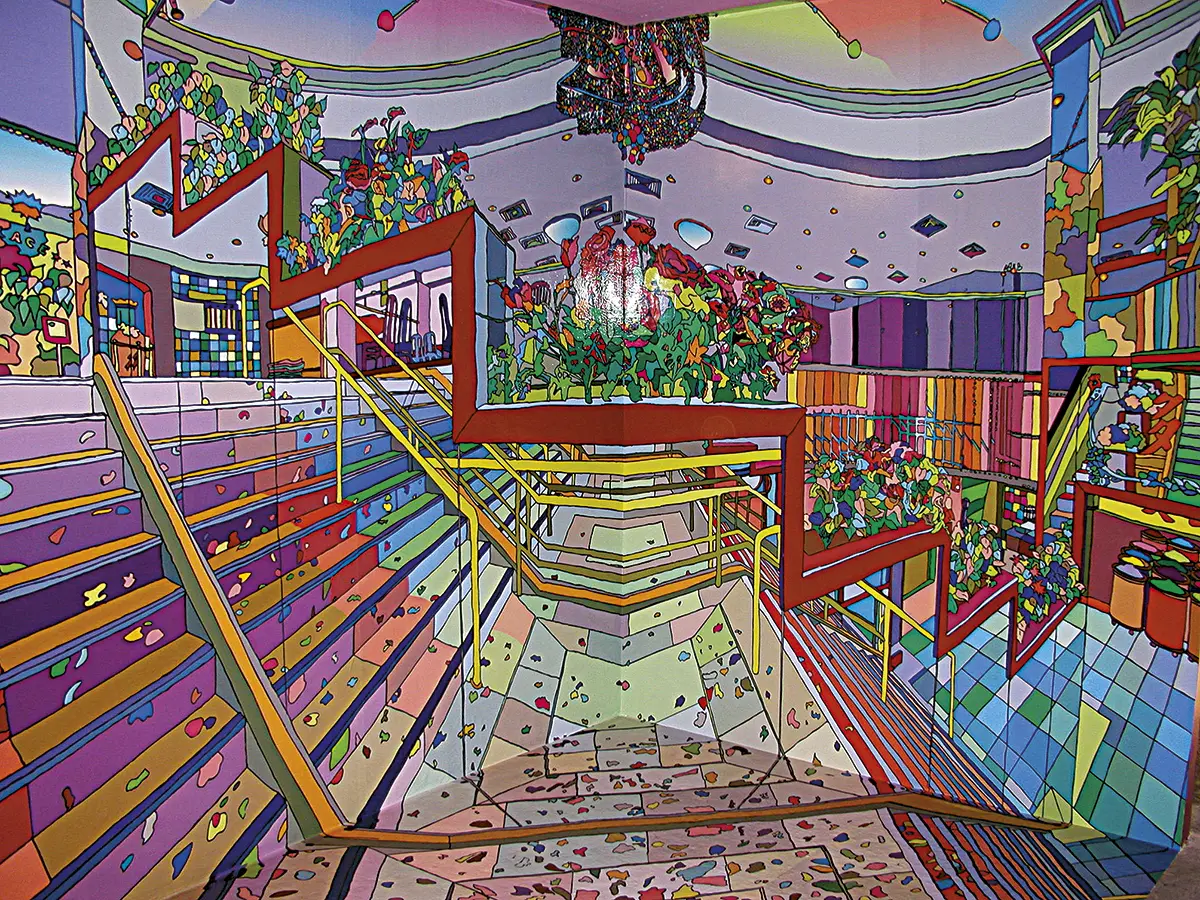
An administrative or organizational logic, softened by an earnest collaborative drive, is also hinted at in the countless invitations that avaf extends to other artists to contribute work to its installations. In assume vivid astro focus XVII, 2004, a section was lined with wallpaper produced by General Idea. A beautiful painting by the New York painter Michael Lazarus was also included. These things were in a sense swallowed by the installation as they became a part of it; they were other visual products dropped into the mix, contaminants that altered the body to which they were introduced. avaf has also collaborated with the L.A.-based duo Los Super Elegantes, and their image pulsated on the walls of the installation at the 2004 Whitney Biennial, under shifting colored lights and the onslaught of house music spun by a DJ perched atop a spiral staircase. In assume vivid astro focus VII at Deitch Projects in 2003, the following artists were invited to participate: Matthew Brannon, JK5, Gerard Maynard, Slava Magutin, Michael Wetzer, Los Super Elegantes, action daddy, honeygun labs, and Dearraindrop, not to mention a tattoo parlor that was active through the run of the exhibition. These “foreign” objects are like prostheses that grow into vital parts of avaf installations, and this raises an interesting ambiguity. For as forceful as avaf seems in incorporating pre-existing material and other people’s work, its products are shaped by these external things, surrendering certain self-sufficiency and bowing to a logic of contamination. A comparison to the figure of the DJ may be appropriate because both avaf and the DJ forfeit the desire to produce the historically unique, opt for reorganizations of what already exists, and place us not only in the realm of post-media specificity but in that of post-production.
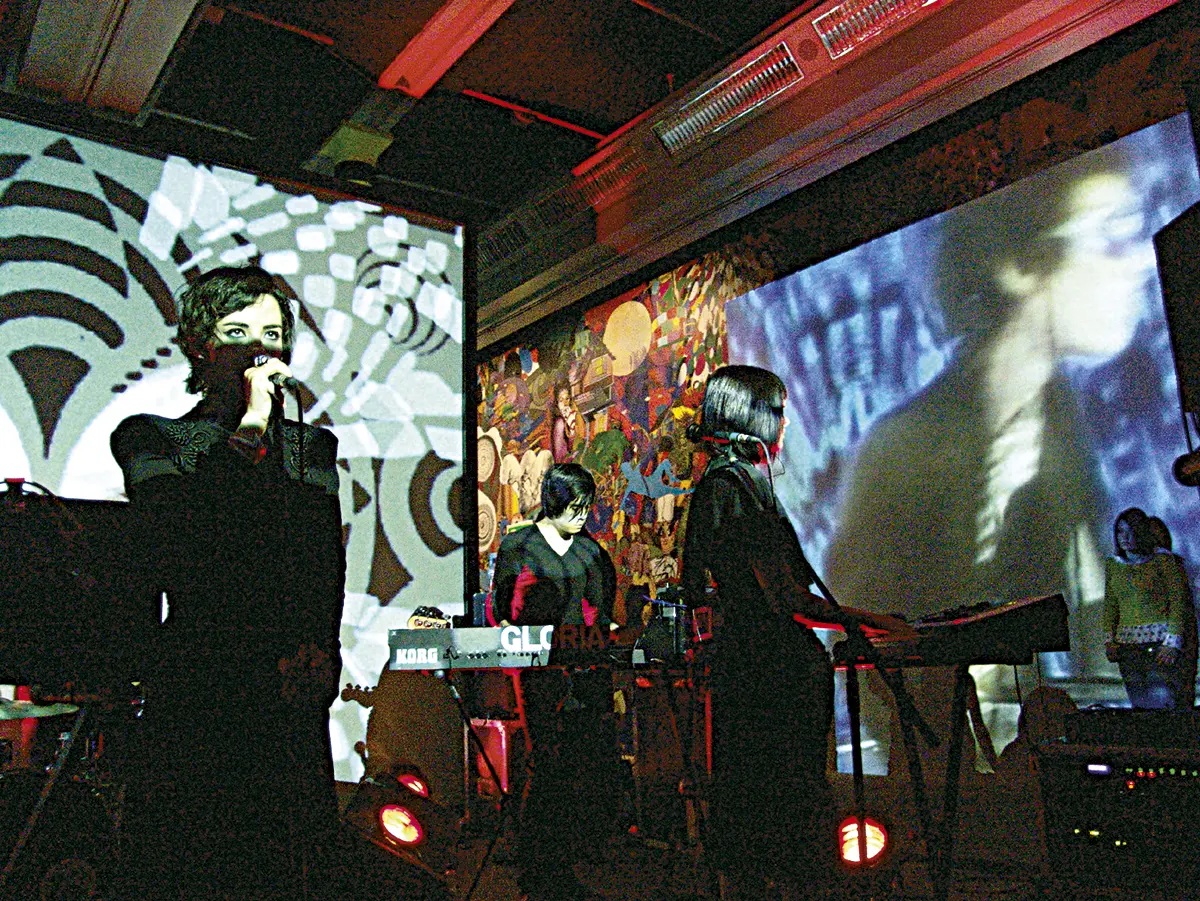
avaf installations also give up internal self-sufficiency in another way—they are intended to be performance spaces. Things are supposed to happen in them. They are installations as much as they are stages, supports, and platforms. The parties, events, and performances that take place in them have to be taken into account, as does the sexy and insouciant atmosphere. One’s experience in an avaf installation is obviously incongruent with the usual experience one has in an art space. There seems, initially, to be a pressing need to account for it, too; hence, the temptation to turn neophyte chronicler. If I only mention this social aspect in passing, it’s because I think it is more scripted than it may seem; it’s a part of the story that the installations convey rather than an actual space of what we now call relational aesthetics. Here, the spectator is an actor rather than an agent, an extra rather than a protagonist.
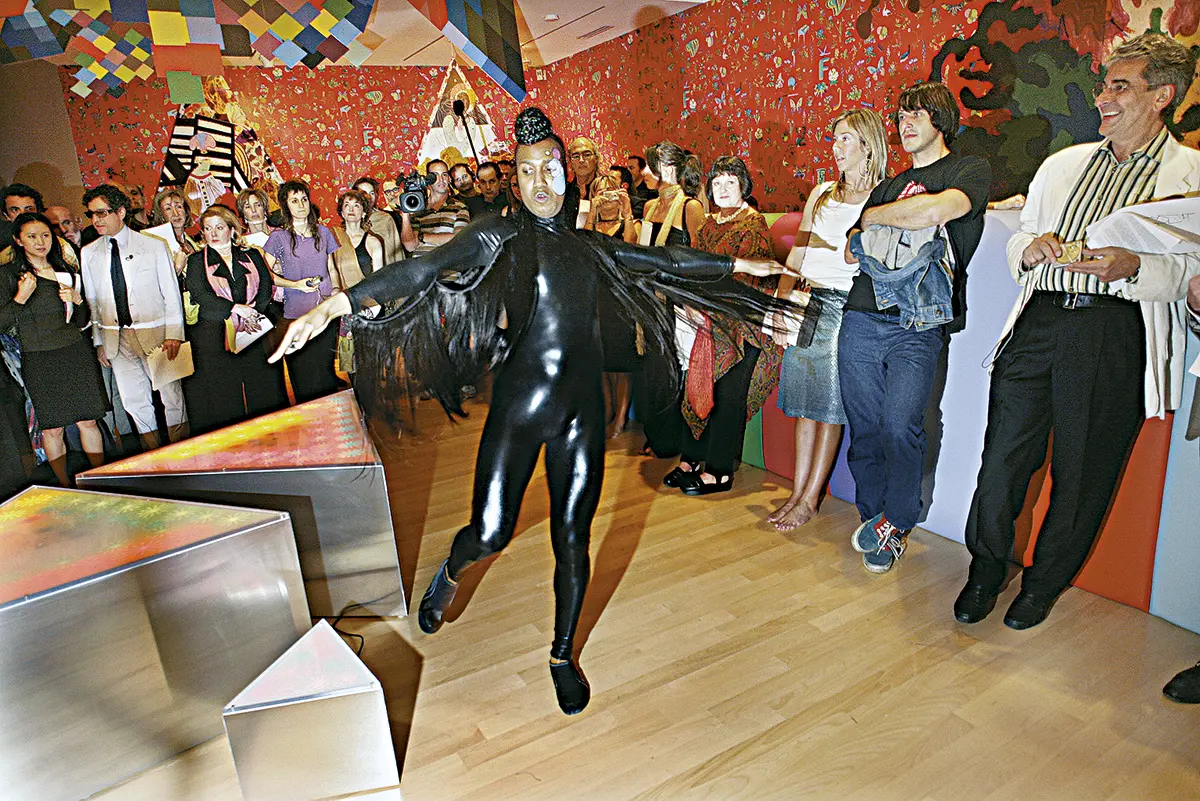
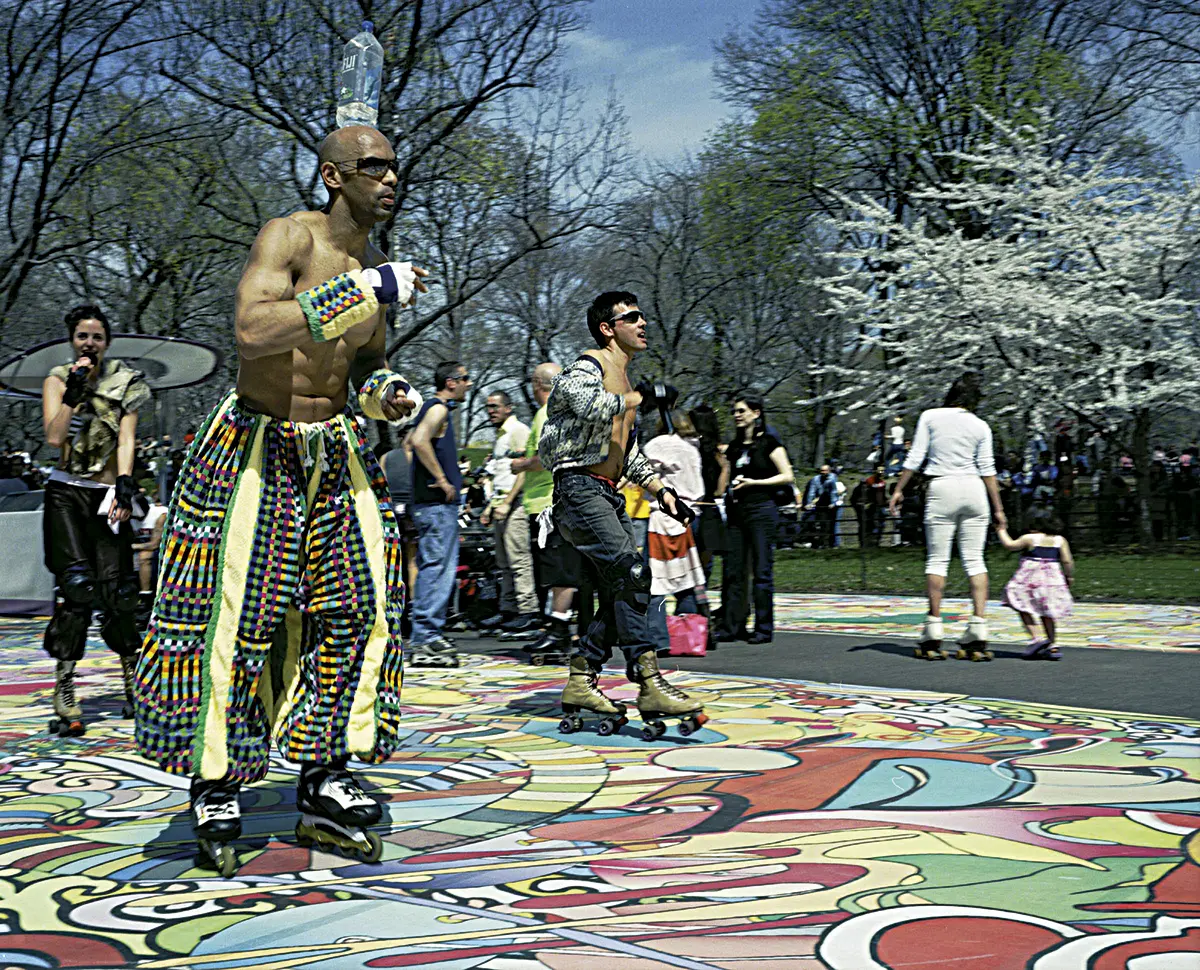
Ultimately, avaf’s installations are scripted spaces, sites where the narrative is registered on the physical environment and the structure of the experiential dimension—the party, the roller-skating rink (in New York’s Central Park, as part of the Whitney Biennial), etc. avaf organizes material into immensely seductive installations, and this is always done to convey a particular story. Although we usually associate the idea of scripted spaces to sites of highly mediated spectacle like Disneyland or Las Vegas, they can be found anywhere that reality is being stage-managed. In place of the 18th-century fort is its replica in the amusement park; in place of the harem is the Arabian Nights-themed nightclub in South Beach; in place of the joyful squalor of gay youths making it in New York after having escaped the Midwest, or the stuffy bourgeois sphere of São Paulo or the vilely macho culture of the Philippines is the avaf installation that carries the narrative of their conviviality, trash glam, and dollar-store glitz in its structures. Of course, every viewer’s participation is also already scripted into that space as well. One is a part of the party but as a necessary body rather than a real guest, more of a prop and a witness. This control of the narrative—the fact that it is always more a masquerade than a spontaneous party—is precisely what separates avaf from the participatory aesthetics that prevailed in the 90s.
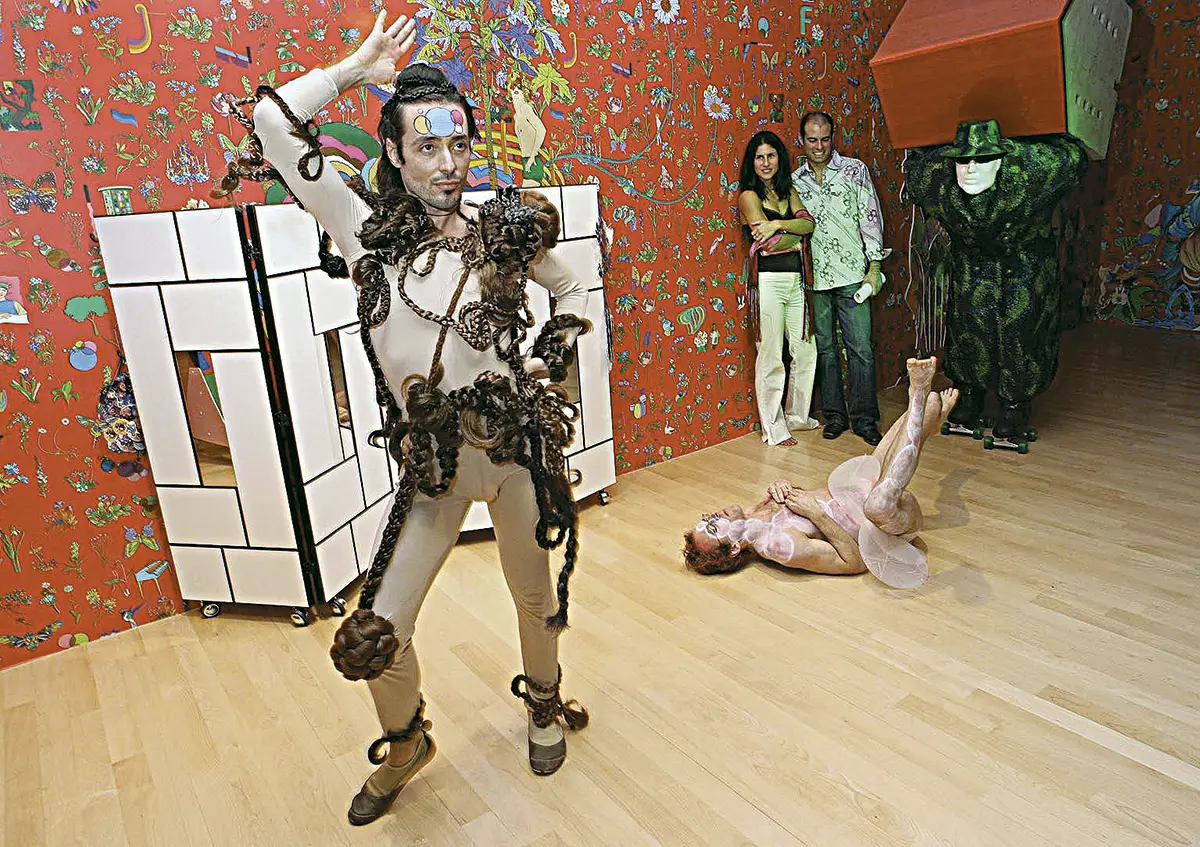
There are, of course, different kinds of scripted spaces. Or, there are spaces built specifically to manufacture desires for the spectator—these stand as some of the most visible outposts of the corporate colonization of everyday life—and there are spaces that are used for other ends. Avaf borrows the scripted-space model of entertainment architecture but “misuses” it. In avaf’s hands, it becomes an engine that gives visual presence to a marginalized queer history and the possible social manifestations that it may foster in the present. So, while avaf borrows the structures that Disney-fy the real, it does so in order to negate the very middle-class, heterosexual value system that underscores Disney. avaf proposes, instead, queer sensibility as the basis for an alternative mode of living; it blurs the notions of authorship and private property; it destabilizes the hierarchy between object and experience; it takes seriously both the decorative and the déclassé; and, with the rumble of all the boys inspired to dance in stilettos, it awakens the ghosts of Jack Smith and The Coquettes to be positioned as the patron saints of the micro-utopian demimonde that we may be able to construct when we can learn to value our “deviances.”
*All images illustrating this article are courtesy of John Connely Presents, New York and Peres Projects, Los Angeles/Berlin.
GEAN MORENO
Visual artist. Lives and works in Miami, Florida.