
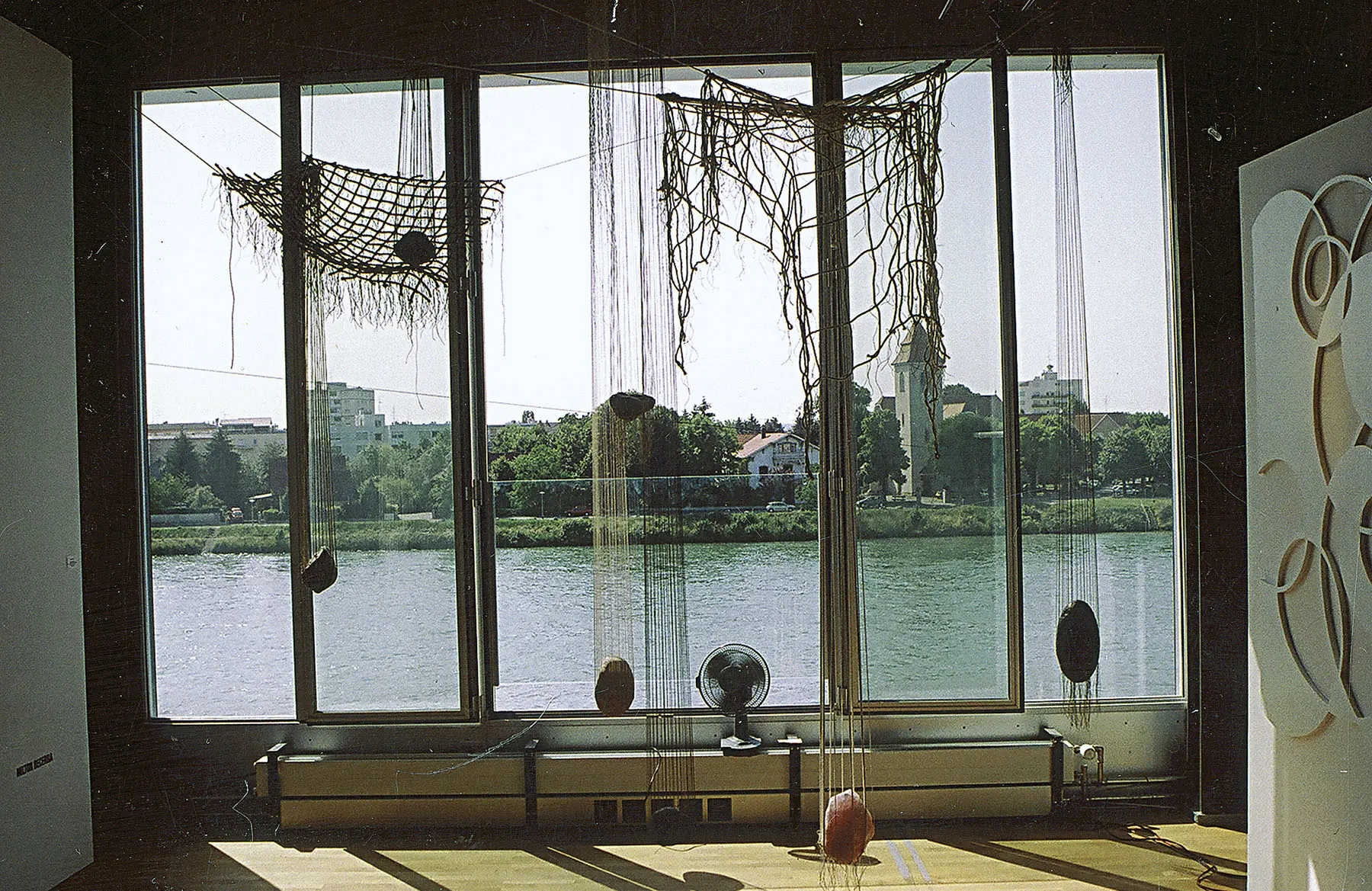
The first edition of bålelatîna took place this year to coincide with the most important art fair in Europe at Basel, from June 14th to the 18th. Showing 60 artists from 28 galleries, it specifically concentrated its emphasis on emerging artists.
The location for the art fair at Brasilea Kulturhaus was an ideal setting. It was surrounded by an industrial area, and on the back of the building, trucks came by in the morning to dump recyclable glass, which made the mountains of bottles look like a gigantic Felix Gonzalez Torres installation. The space, which was used for industrial purposes since its construction in 1964 had only been recently modified as a Cultural Center, inaugurated last year in May. The combination of roughness and simplicity is ideally suited for the display of contemporary art, and it offered an attractive terrace on the top floor where visitors found a welcoming bar serving caipirinhas and other tropical drinks that were much needed under the attack of unexpected high temperatures.
The galleries that came for this first showing of Latin Contemporary art have a trajectory of showing a variety of artists from across the continent, which essentially referenced their native contributions to an international language and bålelatîna would be an ideal venue for the dialogue between these galleries and the most important market presentation of Contemporary art, which has been based at Art Basel for quite some time. As Ms. Mariangela Capuzzo, artistic director states in the welcoming remarks of the catalog, bålelatîna would be: “An array of international contemporary galleries, exhibiting artists in living parts of the world whose perspective, artistic language, vision, and profile create a dialogue on Latin Art”.
This international lingua of Contemporary Art is as well established now as the language of the French Academy in the 19th Century. These standardized, and to us moderns, kitsch concepts of classicism, were well established internationally then, as the pinnacle of excellence by the time the Impressionists arrived on the scene and caused havoc by opening the doors to Modernism. I think that we are arriving at the same level of uniformity in the artistic production, except that now, with the huge variety of media available, and the same artists using several of them simultaneously, it is certainly much more challenging to understand what could be now causing havoc, or for that matter opening doors to a future path. Certainly, the most important and visible feature of bålelatîna is that unless one looks at the names on the labels closely, the art could have been produced right now anywhere in the planet.
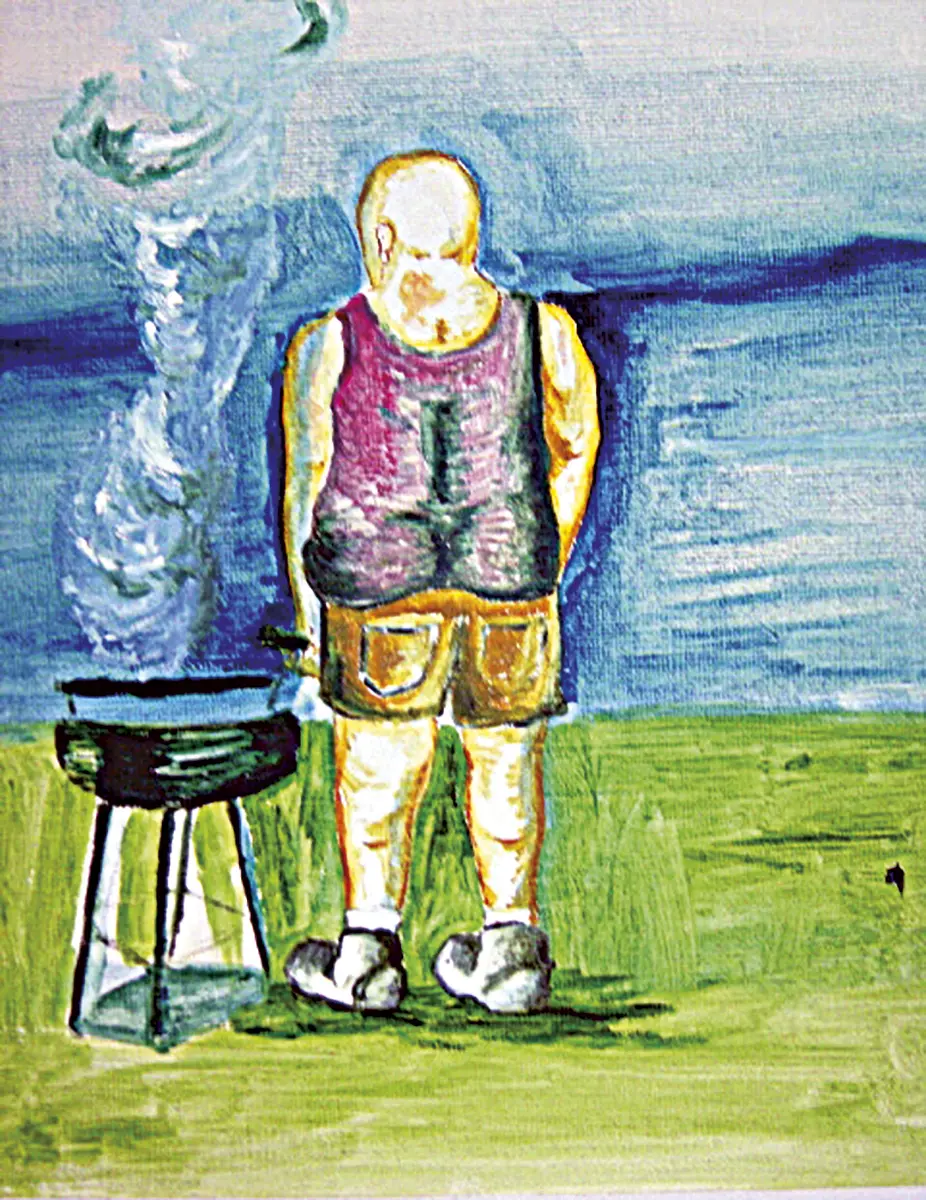
The gamut of galleries that attended the fair are well known in the international scene for showcasing Contemporary artists, and many of them had exhibited at international fairs, like ARCO or the New York Pier shows. Nina Menocal from Mexico City, who was also one of the organizers of the fair brought Contemporary Mexican artist Alvaro Verduzco who is giving graffiti version of his Urban reality, he also painted a temporary chalk fresco by the terrace café that he encouraged the visitors to touch and deface, thus commenting on the opposite behavior that is expected of the visitor in a museum or gallery, where the reverential treatment of objects has become a standard ritual. Another interesting artist from Menocal’s gallery well as the ironic work of Oscar Cueto that featured an animation My girlfriend (with her Takashi Murakami handbag) helps maintain my inspiration a delicious critique of contemporary arts’ references to fashion, that portrayed the artist vomiting as his girlfriend swung her stylish bag. Ángel Delgado’s soap wall was a great eye-catcher at Menocal’s booth, a poignant commentary on the compensation of creativity over the availability of materials in the strained circumstances of third-world countries.
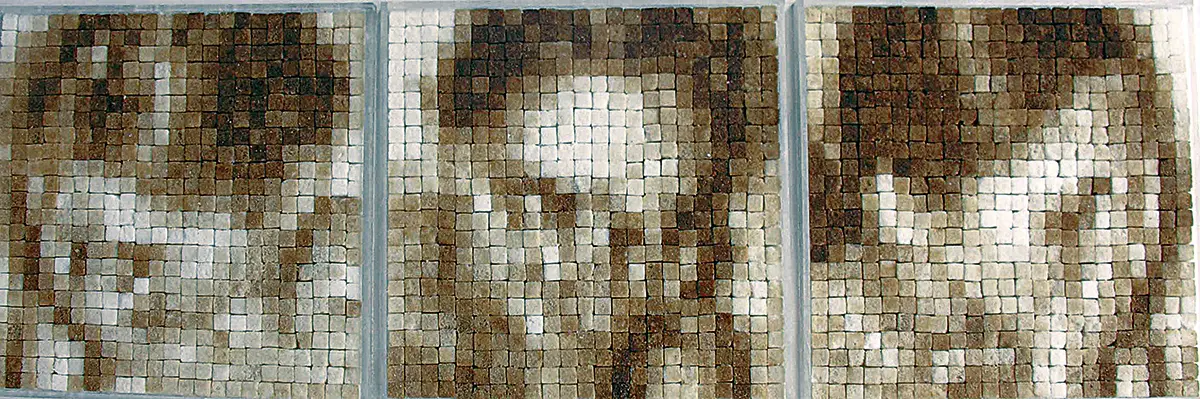
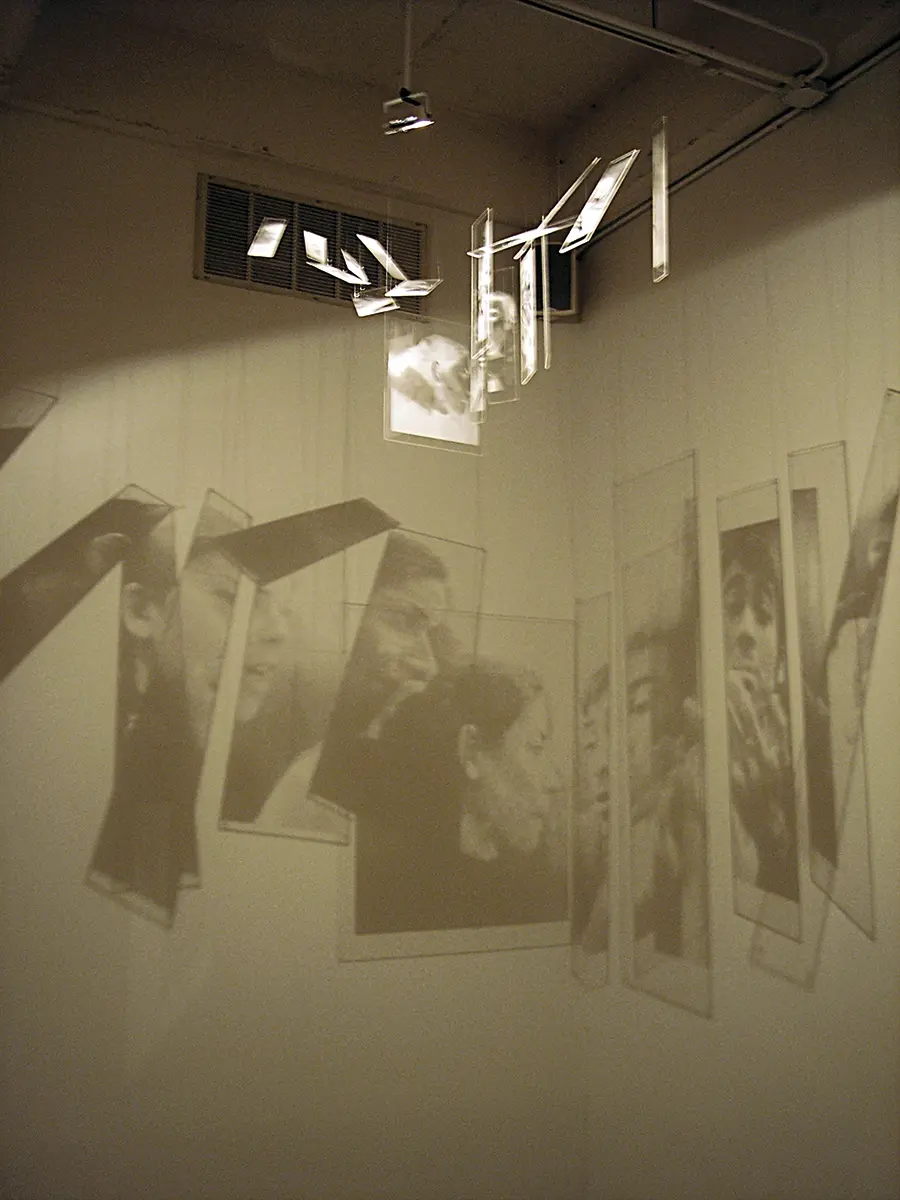
Galeria Fúcares from Madrid concentrated on photography, memorable amongst the selection was a serene series of photos of the interior apartments of the Palace at the Alhambra by the Spanish team Bleda y Rosa, whose visual remembrance of the past was devoid of nostalgia or sentimentalism. Diana Lowenstein, one of Miami’s best quality venues for emerging artists showcased the work of Argentinean photographer Graciela Sacco, which features sliced images of sequential stills in sepia tones, as well as a colorful installation by Carlos Betancourt of ruby red sneakers on a clothesline.
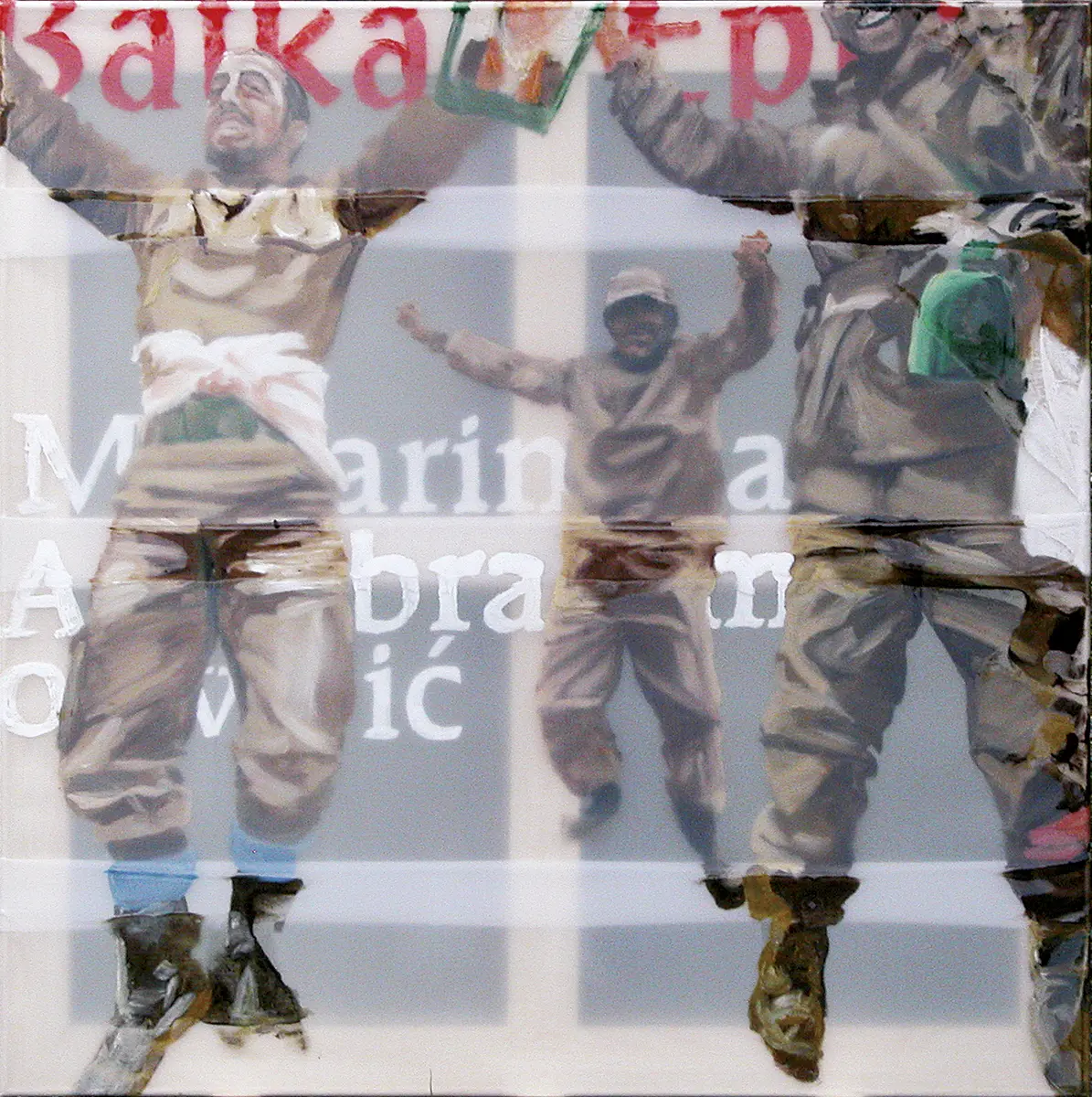
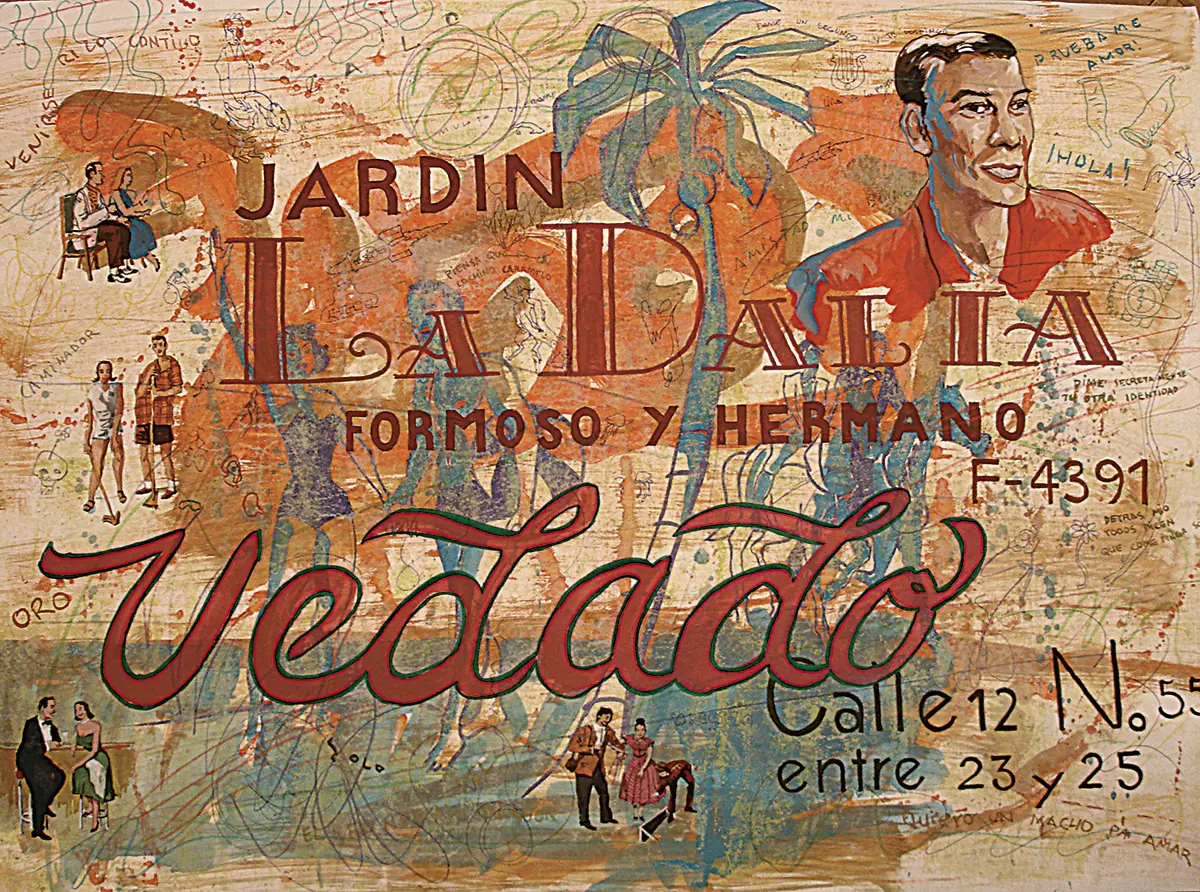
Daniel Abate’s gallery from Buenos Aires had excellent financial results with two artists from Argentina, Sebastián de Ganay, who had a series of photographic paintings on the Balkan conflict, and Andrea Maccio’s constructions of recycled paper. Casas Riegner Gallery from Bogotá brought what was perhaps the most visually challenging piece of the fair: two mannequins dressed in chasubles of embroidered silks by Colombian artist Barbarita Cardozo that looked like costumes for a horror film ritual, but were featuring the symbols of Metal Rock bands, now international imagery that is familiar to teenagers from South America that have no idea of the original meanings for these mysterious symbols. There were also wall hangings of ‘flags’ made of Emu feathers by María Fernanda Cardoso, an artist that has used vegetable and animal material extensively in her work that remind the viewer of animistic magic and the origin of fetishism. Distrito Cuatro Gallery from Madrid was featuring and actively selling a series of small-sized posters from Cuba that had the familiar cliché images of the 50-s and 60’s tourist iconography recycled with a touch of nostalgia, the artist Douglas Perez carries within his own name the hybrid mixture of his native culture and American post-war consumerism.
Garash Gallery from Mexico City brought an interesting series of drawings by Monica Espinoza, from Venezuela akin in style to Murakami, Durban Segnini Gallery was very successful marketing the abstractions in stone and cord by Milton Becerra, a Venezuelan artist that has continued working in the structures familiar to art collectors through the work of Gego, whose work has been highlighted by high prices of late, at the Contemporary art sales in New York in the past two years.
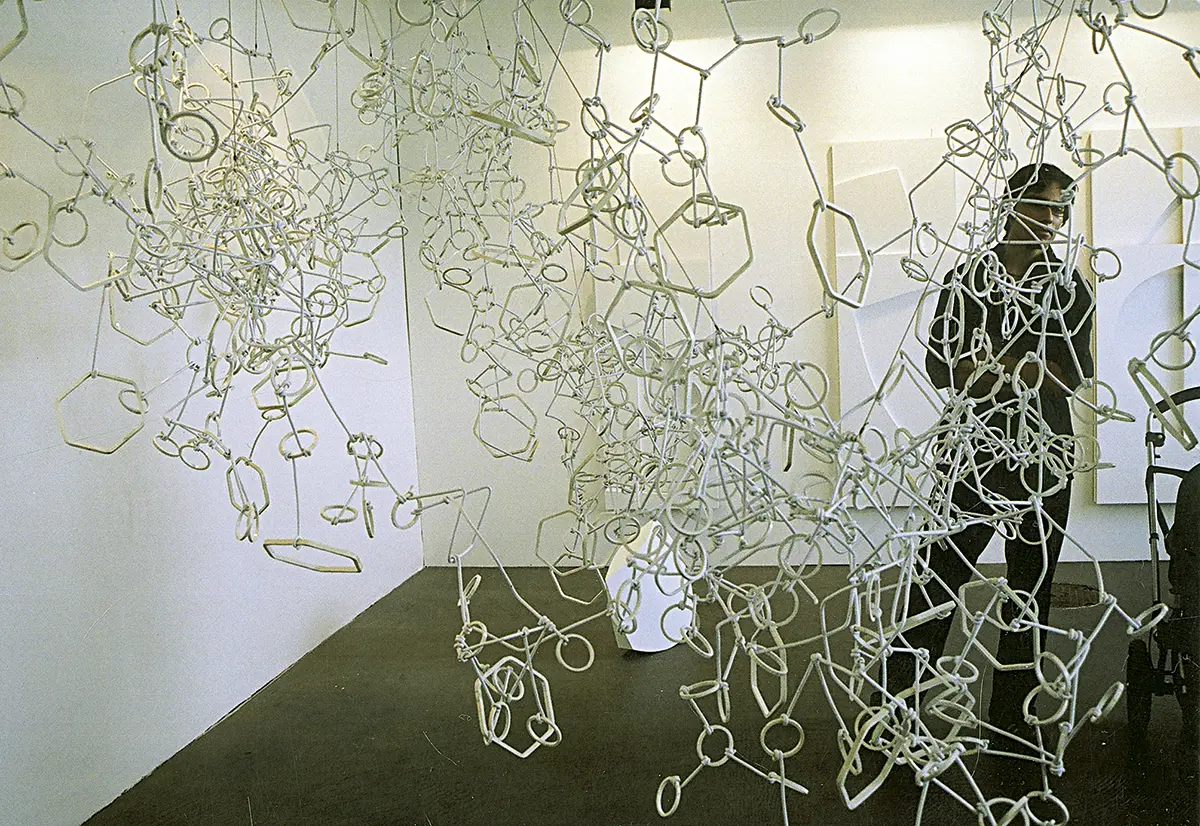
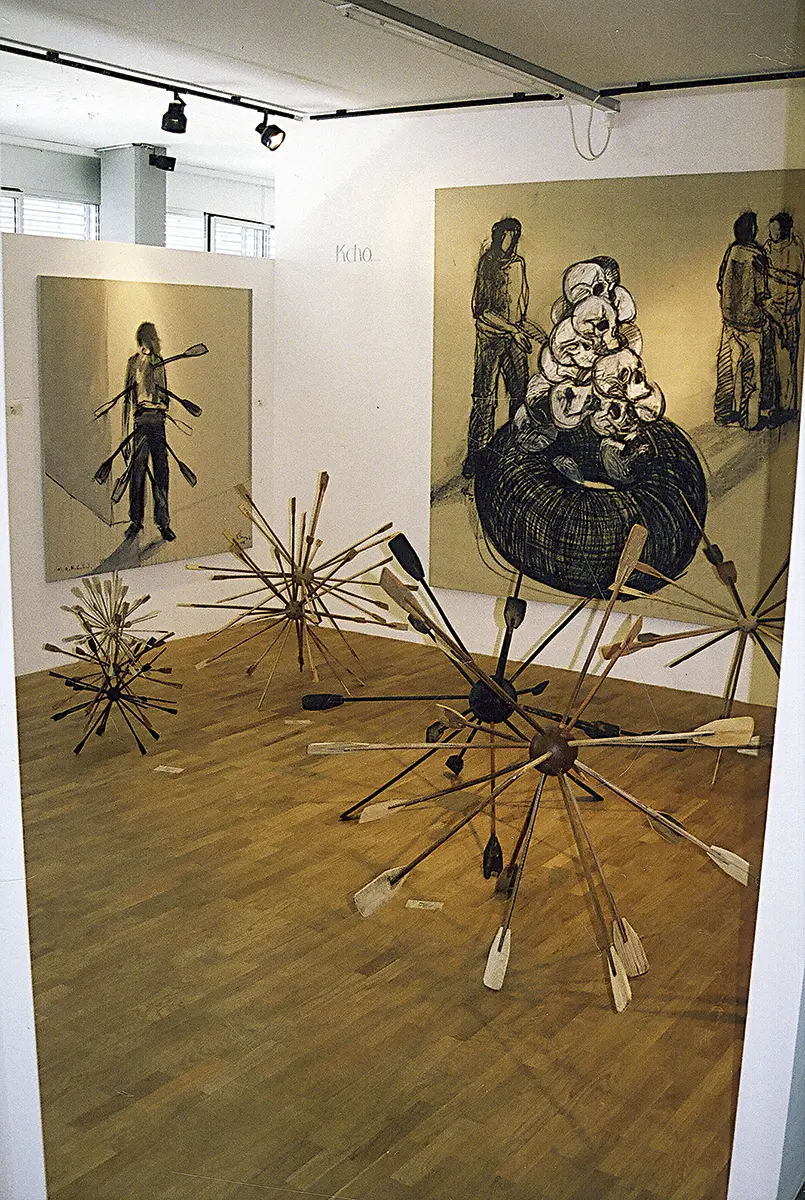
New Yorker Henrique Faria featured Eric Schroeder’s Pericolarea a fragile-looking sculpture of stainless steel wires that reproduce the chemical formula for cocaine (the title is also a pun name on drug’s street name perico) and the lyrical blue-toned glass-derived photographs of Alessandro Balteo that draw interesting commentaries to the beauty of decay. From Caracas, Juan Ruiz Galería had a single-artist exhibition of sculpture and works on paper by Kcho, a Cuban artist working with themes of emigration and alienation that filled the entire floor space with sculpture work and the walls with the works on paper from which they derive. Latin Collector Gallery from New York also concentrated on a single artist: Carmen Herrera, whose beautiful primary-colored abstractions were appreciated by buyers on the very first day of the exhibition. Leon Tovar’s New York gallery featured a selection of art curated by Ana Sokoloff. Colombian artists Alberto Baraya and Juan Manuel Echevarría complimented each other perfectly, they are both inspired by the Botanical drawings of 18th Century classicist Mutis, who recorded Colombia’s flora for the Spanish King’s library in magnificently illustrated folios, Juan Manuel’s appropriation translates the floral images through the bones of victims of Colombia’s violent street deaths, while Baraya utilizes synthetic materials and found objects to simulate the botanical drawings.
Galería Nara Roesler from São Paulo brought an exquisite selection of minimalist artists; Artur Lescher showed his smooth resin sculptures, and Laura Vinci her monochrome excavated walls. The same purist aesthetic was present with the selection of Andersen's Contemporary, from Denmark that presented the work of Tomás Saraceno. In the same taste, Alejandra von Hartz Fine Arts from Miami showed Silvana Lacarra’s monochrome wall constructions and Danilo Dueñas wood constructions.
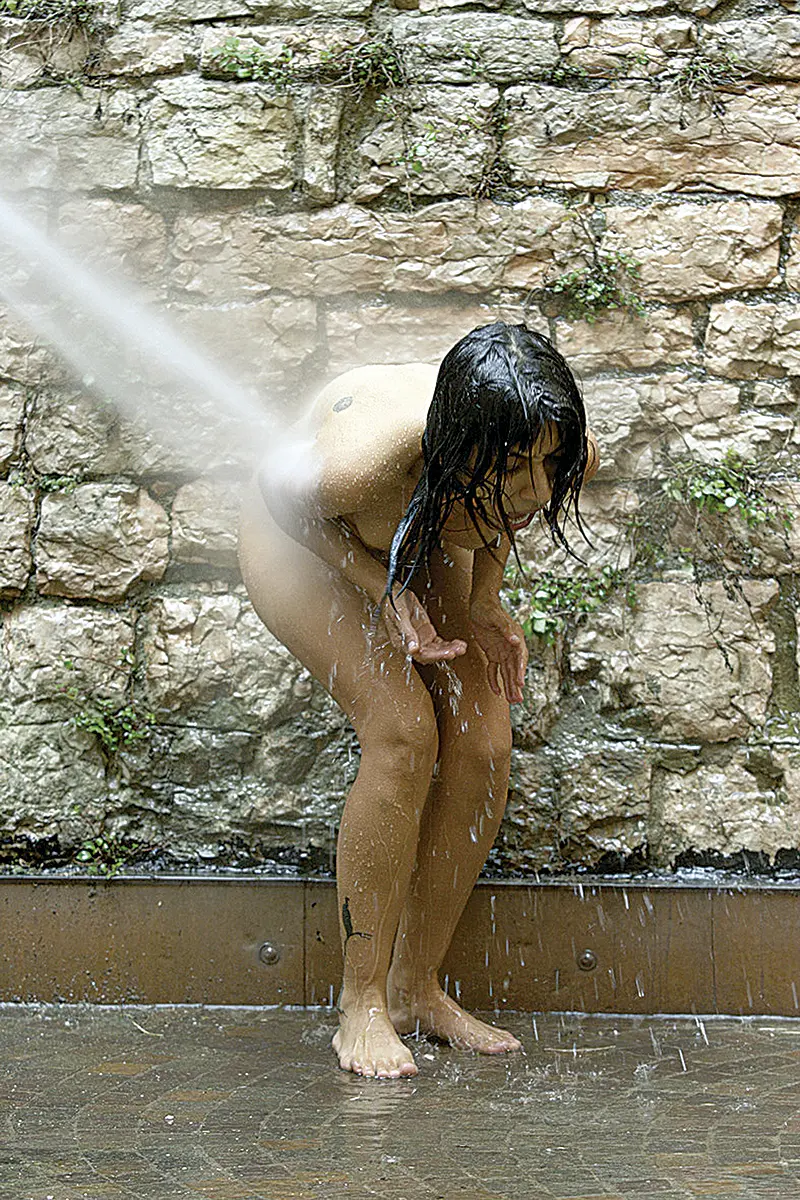
Galería T20 from Murcia presented a large sculpture by Eugenio Merino that was a great study on ironic recycling of post-pop culture material, Galería Travesía Cuatro from Madrid presented a large selection of works by Máximo González, an artist that works at making images with expired banknotes that look like early Surrealist cadavre exquis. Sicardi Gallery from Houston TX featured Colombian artist Oscar Muñoz. His installation took up the space’s entire floor with shattered safety glass over aerial photos of urban grids, while next door Milan’s Prometeogallery had social-conscious photographs by Regina José Galindo that dealt with current the political correctness in current racial relations.
Like with every other art fair on its first venture there were many areas that needed improvement. One of the transportations, the horse carriage, while charming, was additional stress for time-conscious visitors that need to see too much material to take in a 19th Century promenade. Everyone agreed that the invitations and catalog needed more panache and that the publicity and marketing efforts need to be upgraded in order to compete with the other two alternative fairs, Volta and Liste, that have already well-established roots in Basel. It was however an extremely attractive addition that was blissfully removed from the grand hauteur of the official fair, now transformed largely into a rather long and laborious obligation of duty for the visitor authentically interested in the art. bålelatîna was felicitous in missing the poseurs, the repetitious crowds of uninterested, yet chic tourists that repeat the same ‘mantra’ of meaningless words of approval over the same artists, in the same booths year after year, yet it managed to attract the collectors, the curious and the interesting and that is no small feat indeed, and in that respect, the organizers of bålelatîna should be more than satisfied with this first attempt while also looking forward to an even better rendition for next year.
ALBERTO BARRAL
Art advisor, New York.