
This year’s FotoFest biennial featured two themes: “Artists Responding to Violence” and “The Earth.” They could have been joined, as violence to the earth may result in environmental injury as much as in human conflict. However, with few exceptions, each theme was treated independently. “The Earth” is a natural continuation of the water theme that was the focus of the previous FotoFest. In spite of the serious environmental concerns that inspired the themes of nature, viewers of FotoFest 2006 might be justified in sensing that violence was somehow the timelier subject and thus more notable. Although violence to the earth has more calamitous long-term consequences, the immediacy of violence to humans makes its representations more poignant. Moreover, violence toward humans is ubiquitous; you find it at home, in sports, in war, and in society.
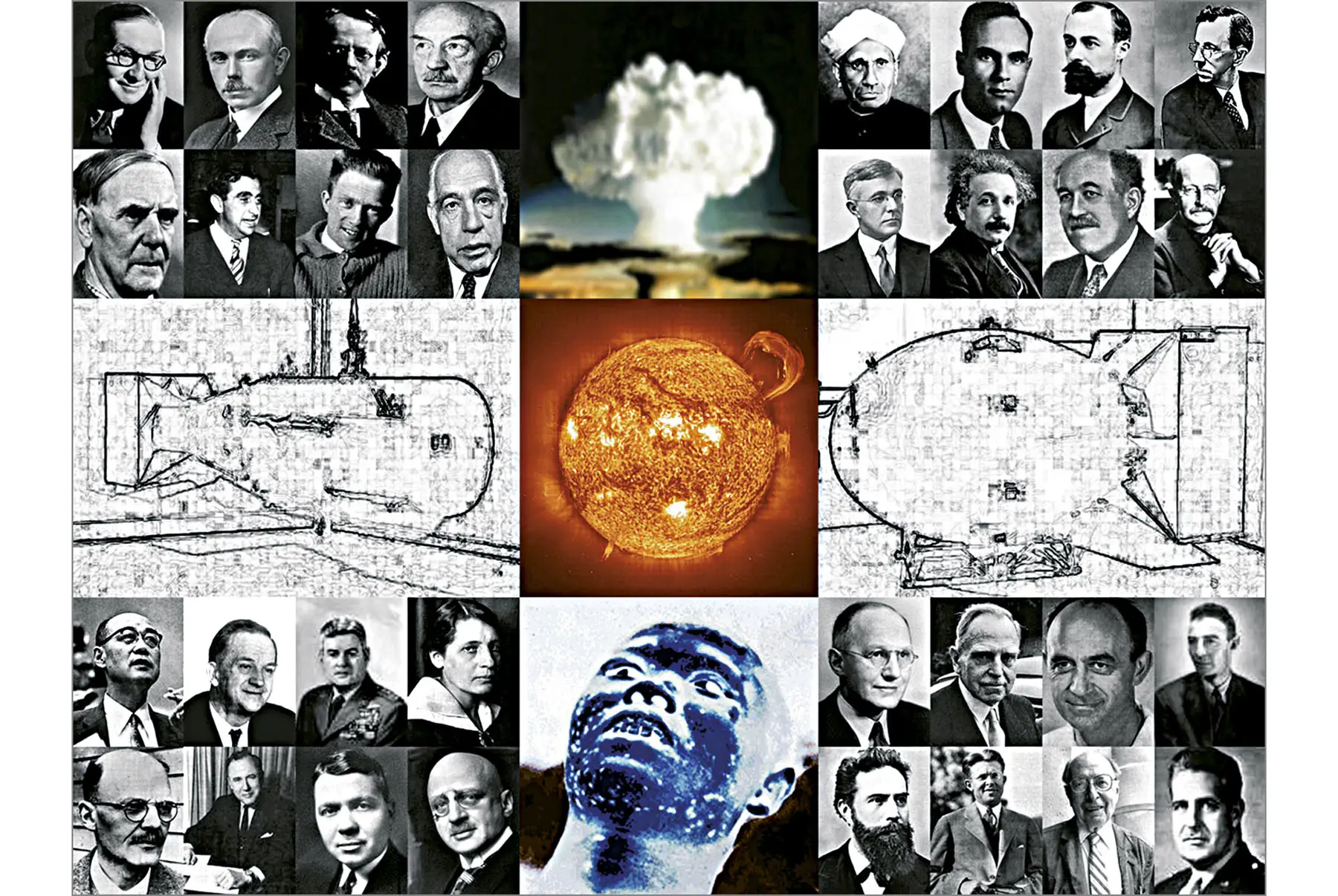
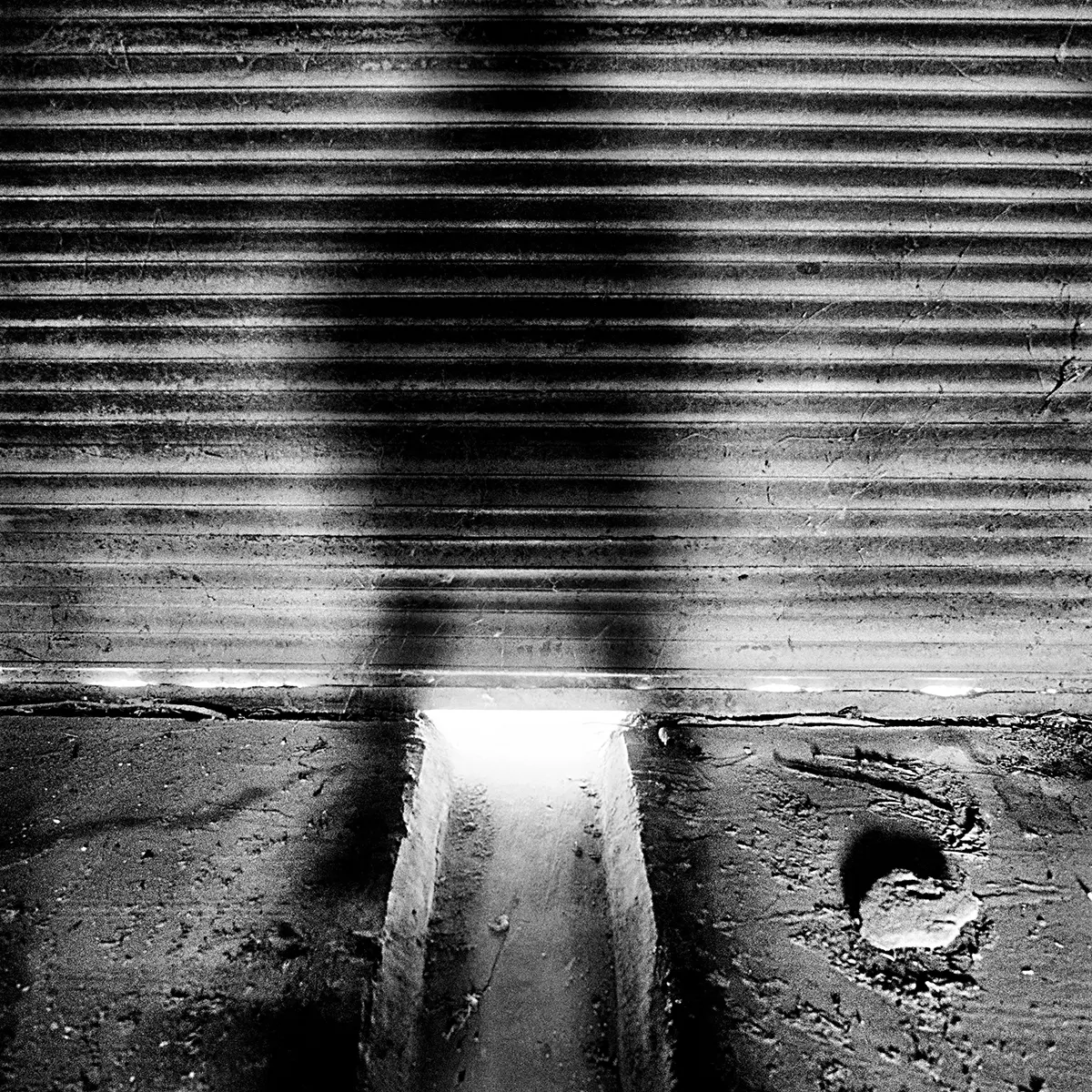
The journey across images of violence started with a fourteen-person exhibit at the FotoFest headquarters in Vine Street Studios. There, Paula Luttringer, an Argentine artist who was herself a victim of political abduction and torture, presented a series of works titled El Lamento de las Muros (The Wailing of the Walls): somber black-and-white photographs, mostly of cells in which the abductors of the Dirty War held their victim’s captive and/or tortured them. Testimonial texts of surviving victims contextualize the images. Innocent Landscapes, a similar project by David Farrell featured at the Art League of Houston, depicted the clandestine burial grounds of victims of the assassinations perpetrated in Ireland by the IRA. Luis Delgado’s Unfathomable Humanity at Vine Street Studios was a series of composite images that connect warfare, terrorism, genocide, torture, and other human atrocities to the faces of people who were and are directly or indirectly responsible for them. Delgado’s hunt for accomplices to crimes against humanity is uncompromising and plays no favorites—at times involving people generally held in high regards, such as Albert Einstein.
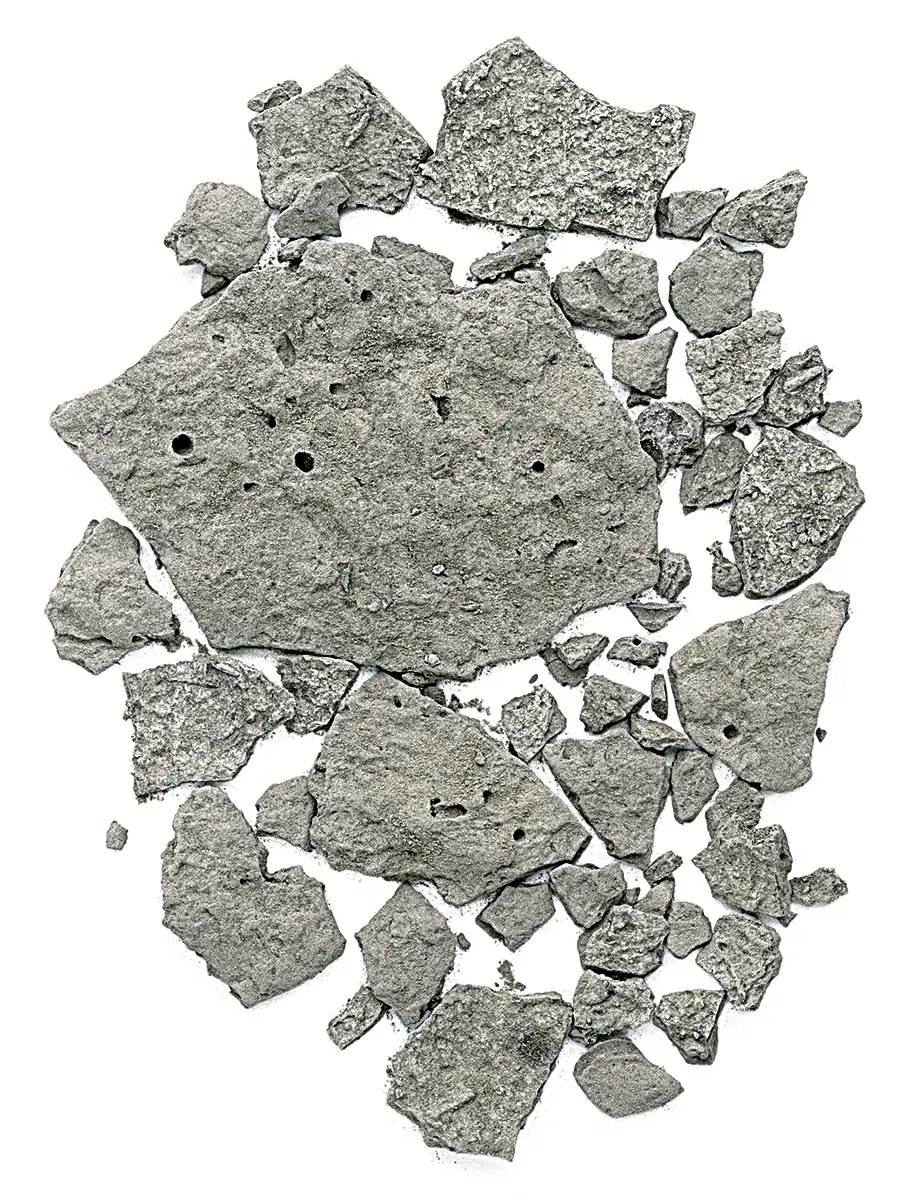
However, in the Vine Street Studios exhibit there were also works whose contribution to our understanding of violence is ambiguous at best. For example, Juan Manuel Echevarria’s Flower Vase Cut series comprises black-and-white prints of fictitious flower specimens made from human bones. Are we to infer from these works that Colombia’s violence is so rampant and, therefore, human bones are so plentiful there that they are used as art materials, and that is what makes these taxonomic illustrations so compelling? Or is this handling of human remains just one artist’s “response” to violence? The series Action Half Life was made by a group of Russian artists under the collective name of AES+F. In these digital color prints, handsome children hold futuristic weaponry against a background of desert landscapes and wear what appear to be white undergarments or gym clothes. Helicopters and UFOs hover over them. The title of the series refers to a war-themed video game, the likes of which millions of children play. Do these works help us to understand the connection between violence and video games? What is disconcerting about these works is that the semantic vehicles they employ take the viewer away from violence. In contrast, Liza Nguyen’s forensic works from the series Surface deliver us to places with a history of violence. Her images are of heaps of soil taken from battle sites or places affected by wars in Vietnam: the color and texture of each pile connote how the land and the people who lived there were violated by the bombings and spraying of defoliants. In Nguyen’s case, the semantic vehicle is so concrete and basic that it does not take the viewer anywhere else than toward the original act of violence.
It is an intelligent choice to portray violence implicitly rather than explicitly. It avoids the gratuitously violent image and the media saturation of morbid violence familiar from television news, video games, and movies. However, a curator ought to consider the following questions. Does an image of explicit violence add to the violence in society? Can an image be a revealing and/or effective tool against violence without showing explicit violence? The FotoFest 2006 answer to these questions seems to have been decidedly affirmative, whereas this author believes it is not necessarily so.
Francisco Goya’s aquatints called Disasters of War are testimonial accounts of the horrific atrocities perpetrated during the Peninsular War by both the French invaders and the Spanish insurgents. They evidence a moment of revelation for Goya when he began to doubt the ideals of the Enlightenment. That skepticism is expressed in his famous capricho, The dream (or sleep) of reason produces monsters. Showing explicit violence in the Disasters is so essential to Goya’s revelation that to exclude it would have entailed his acquiescence and/or partiality in the war. Explicit images of war atrocities (although not all in the photographic medium) by Goya, Alexander Gardner, Otto Dix, James Nachtwey, Nick Ut, and Sebastião Salgado were part of The Art of War exhibit at Gremillion & Co. Fine Art. This exhibit was a part of FotoFest, but it was not organized under its aegis.
Goya’s growing skepticism about rationality did not lead to producing reportorial or fantastic images. From Homer to Natchwey, the depiction of violence has served less the enjoyment of the sadist than the sources of the historian and the conscience of the moral thinker. Why then abstain from showing violence? One sensible answer comes from the Chilean artist Alfredo Jaar, who in 1994 photographed the atrocities of the Rwandan genocide. However, upon seeing the images of mutilated bodies and corpses, Jaar found them offensive to the dignity not only of the victims but also of the survivors of the genocide. In the installation Real Pictures (1995), Jaar showed only black boxes containing the pictures with a brief text describing what was in them. The text is more revealing about who these people were than the pictures of their demise. Real Pictures is worth mentioning even though it was not shown at FotoFest because it may help one understand the work that Jaar was commissioned to do for the biennial.
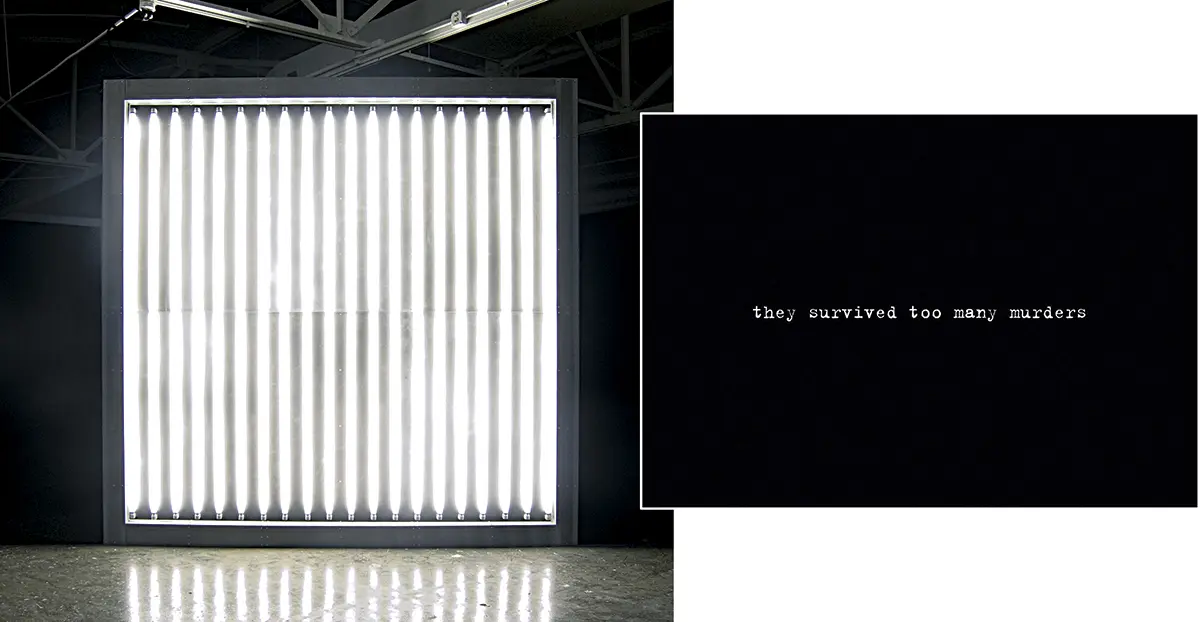
For technical reasons, Jaar’s installation The Sound of Silence (1995) was never produced before it was built at DiverseWorks for FotoFest 2006. The crux of the work is a silent visual projection of a text that reads like an epic ballad, a blinding flash, and a single photographic image that appears for a second: Kevin Carter’s photograph of a prostrate, starving Sudanese girl and a vulture that awaits her demise. Carter was a member of the Bang-Bang Club, a group of four photographers who risked their lives documenting the brutality of South African apartheid. In 1993, Carter traveled to Sudan to photograph a rebel movement. That country was undergoing famine and thousands of people were starving. The photographic act for which Carter was so harshly criticized is described in Jaar’s text as: “he saw a tiny girl trying to make her way to a feeding center / he crouched to photograph her / but a vulture landed in view / he was careful not to disturb the bird / he positioned himself for the best possible image / he waited 20 minutes / he was hoping the vulture would spread its wings / but it did not / he took his photographs / and chased the bird away / he watched as the little girl resumed her struggle / he sat under a tree and lit a cigarette / talked to God / and cried.” After the picture was published around the world, hundreds of people wrote to ask what had happened to the girl and why Carter had not helped her.
Ironically, for that picture, Carter was awarded the Pulitzer Prize for Feature Photography in May 1994; two months later, he killed himself. Jaar’s ballad suggests the main cause for Carter’s suicide was his remorse for that incident. However, to be fair with Carter and to explain his suicide, one must add facts not present in Jaar’s text. For example, Carter’s coldhearted behavior may be explained by the fact that journalists at the time had been warned not to touch famine victims in order to avoid contracting diseases. As far as his suicide is concerned, it is important to know that in spite of winning the Pulitzer Prize, Carter’s career was going downhill, that he was abusing drugs, that he was not able to pay his bills or child-support payments for his daughter, that he had conjugal problems, and that one of his best friends (Ken Oosterbroek, another member of the Bang-Bang Club) had just been killed while covering township violence. To be fair with Jaar, one must understand that his work often includes something in his pieces that involves a community, be it an action or a discussion. FotoFest arranged a panel to entice the public to participate in such an element. The panel included Jaar himself, Wendy Watriss (Artistic Director and Co-Founder of FotoFest), Anne Tucker (Curator of Photography, Museum of Fine Arts Houston), Mark Sealy (Director of Autograph, London), and myself (a soccer dad). In the discussion that ensued, there was as much said about Carter’s failure to help the girl as about his courage for being there, where his accusers were not. The discussion expanded to the topic of the commercialization of photography of human suffering in the art world. Perhaps it was the ambivalence of all the crucial, moral acts implicated that incited this community—more prone to exonerate than to condemn—to seek justice for all involved. In a personal conversation with Jaar the following day, he urged me to note how the issue of the thousands of starving people had been overlooked. We wondered if Carter would have acted differently if the little girl had been European. We have unsuccessfully tried to learn if Carter’s picture had any positive effects in bringing relief to the Sudanese. Carter himself once reflected about his work: “ ...people started talking about those pictures ... then I felt that maybe my actions hadn’t been at all bad. Being a witness to something this horrible wasn’t necessarily such a bad thing to do.” A verse of a Paul Simon song with a title echoed in Jaar’s reads, “The vision that was planted in my brain still remains within the sounds of silence.”
Another panel discussion took place at the Menil Collection to address the issues arising from David Levinthal’s exhibit Insistent Objects. Levinthal’s Blackface series comprises large Polaroid photographs of figurines depicting African-Americans. These figurines show what may be called “ideological stereotypes.” They are what many pink people think African people look like: coal-black skin, huge lips, bulging eyes, and servile attitudes1. The panel allowed Levinthal to confront the accusation that these works help to perpetuate racist stereotypes. He admitted that the African-American conceptual artist Fred Wilson once asked Levinthal, who is Jewish, how he would feel if Wilson made works about the Holocaust. The right question would have been: how would Jews feel if a gentile artist-made works that depicted the Jewish physical stereotypes that have existed from Shylock to Nazi literature? What the Blackface exhibit made clear is that no matter how much one insists on the beautiful rendering of a subject, photography is not an ideologically neutral act.
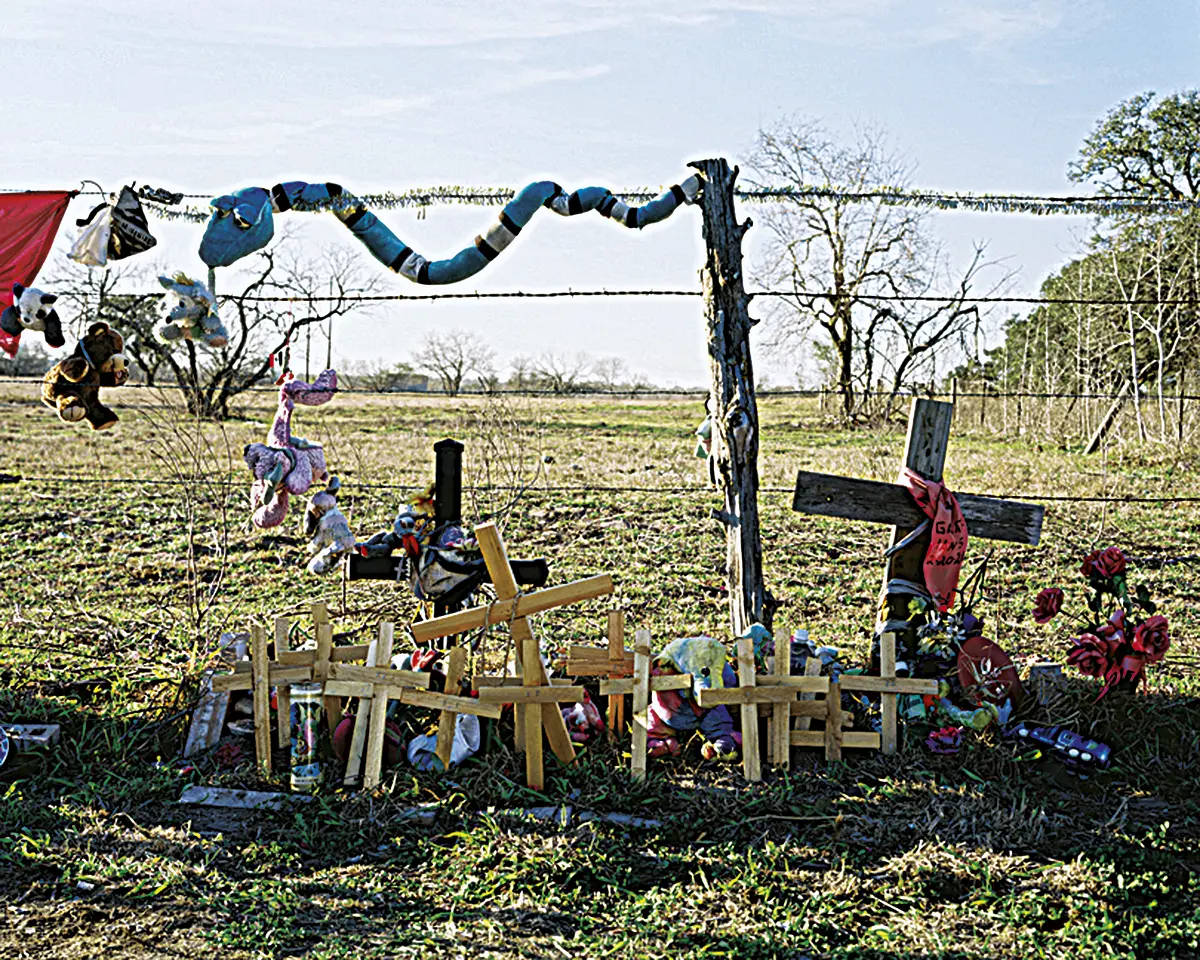
Nancy O’Connor and Michele Grinstead’s installation Contained (2006) at their studio on Feagan Street was most relevant to the current controversy about illegal immigration. It consisted of an aluminum container resembling the cargo section of the truck in which nineteen people died in Victoria, Texas, on March 14th, 2003, as they were smuggled into the country. The smugglers abandoned them in front of an Exxon gas station and the victims—men, women, and children—were killed by the extreme heat and lack of oxygen. The truck was hermetically shut and the victims were unable to get out or even see where they were. The noises they undoubtedly made and their screams were not heard because the truck was far enough from the regular traffic of people. O’Connor and Grinstead’s installation also included the video Immigrant Memorial / Exxon truck stop (2006). It showed the indifferent passing of time at the Exxon gas station taken from the place where the “American dream” of the unfortunate immigrants ended.
Although it was not part of FotoFest, Mel Chin’s exhibit Do Not Ask Me was on display at the Station Museum of Contemporary Art and addressed the theme of “Artists Responding to Violence.” One of the main pieces in the exhibit was a life-size bamboo replica of a 15,000-pound dumb bomb (BLU-82) titled Our Strange Flower of Democracy (2005). Its threatening size contrasted with the precariousness of its materials, which recalled the dwellings it frequently destroys. Another Chin piece, Terrapene Carolina (Hillbilly Armour) (2005) was a makeshift version of underbelly armor for a Humvee that referenced the improvised protection the U.S. troops use in Iraq. The accompanying caption by Donald Rumsfeld read, “You go to war with the army you have.” Render (2003) was a white room with walls splattered with what appeared to be burned flesh and body parts—as if a bomb had exploded in there. On one of the walls, the picture of a man wearing a black balaclava was hung, rendered in kitschy velvet. Although one could only see the mouth and blue eyes of the masked man, he was eerily familiar.
I will conclude this review with a discussion of another work in The Art of War exhibit: the emblematic image of a girl photographed during the Vietnam War. We know her name because of what transpired the day when a South Vietnamese warplane dropped napalm on her village. The author of the photograph, the Associated Press photographer Nick Ut, recalled that Kim Phuc was running along Route 1 and screaming “Nong qua, nong qua” (“too hot, too hot”) as he photographed her. When the girl stopped, Ut and the ITN correspondent Christopher Wain poured water from their canteens over her burns.
Ut heard her saying to her older brother Tam, “I think I am going to die.” Urged on by the girl’s uncle, Ut carried her onto a minibus. Other members of her family got into the vehicle as well. Ut climbed onto the overcrowded minibus and asked the driver to speed toward the provincial hospital in Cu Chi. “I am thirsty, I am thirsty, I need water,” Kim Phuc kept crying. Each time the van shook, Kim Phuc would scream in great pain until she fainted. Even then, Ut continued to repeat, “Don’t worry, we will reach a hospital very soon.”
When they finally reached the hospital, Ut knew the doctors would first help those whose lives could most likely be saved and put others aside for later treatment. He pleaded with the doctors and nurses to take care of Kim Phuc. Only when Kim Phuc was on the operating table did Nick Ut leave. He headed toward Saigon to bring his film to the Associated Press lab. When a newsman later debriefed him for what he had experienced on Route 1, Ut did not mention the part about helping Kim Phuc. Only twenty-eight years later in London did Kim Phuc say about Ut, “He saved my life! He’s wonderful, isn’t he? I am so grateful that he didn’t only do his job, but he’s a human being helping another.”
NOTE
1. There are no white people, only pink and brown people.
FERNANDO CASTRO R.
Artist and philosopher.