After only two editions, SP Arte, São Paulo’s young and dynamic international modern and contemporary art fair, has become a point of gravitation for the Latin American art circuit. Its curatorial strategy centered on specialized collecting, bringing together a total of fifty prestigious galleries from Brazil and abroad, with innovative proposals by artists from around the world. Also of note were high-quality institutional booths, as well as a larger number of specialized publications and a busy program of conferences, round tables, and debates.
For Fernanda Feitosa, organizer of the fair, “especially substantial was the fact that 83% of the participating galleries made new and important contacts, of which 61% closed auspiciously during the event itself, and 85% achieved exchanges, expanded their area of influence in the consolidation of several collector profiles, both public and private, equally dynamic and selective.”
The iconic building of the São Paulo International Biennial’s pavilion, located in Parque de Ibirapuera, received more than 9,000 visitors during SP Arte’s five intense days; it held about 1,000 works of art.
In its second year, SP Arte took a turn toward internationalism, supported by the substantial presence of a broad group of prestigious galleries from Argentina (Alberto Sendrós), Chile (Isabel Aninat), Uruguay (Sur), Germany (DNA/Die Neue Aktionsgalerie), Spain and the U.S. (Luis Adelantado), and Portugal (Baginski). The fair linked all the actors on the art-world stage: private, public, and corporate collectors; art dealers; galleries; museum and institution directors; historians; critics; curators; cultural operators; established figures; and new creative talents.
Many dealers had to replenish their exhibits, revising their curatorial angles and exhibition schemes, after selling out during the first few days.
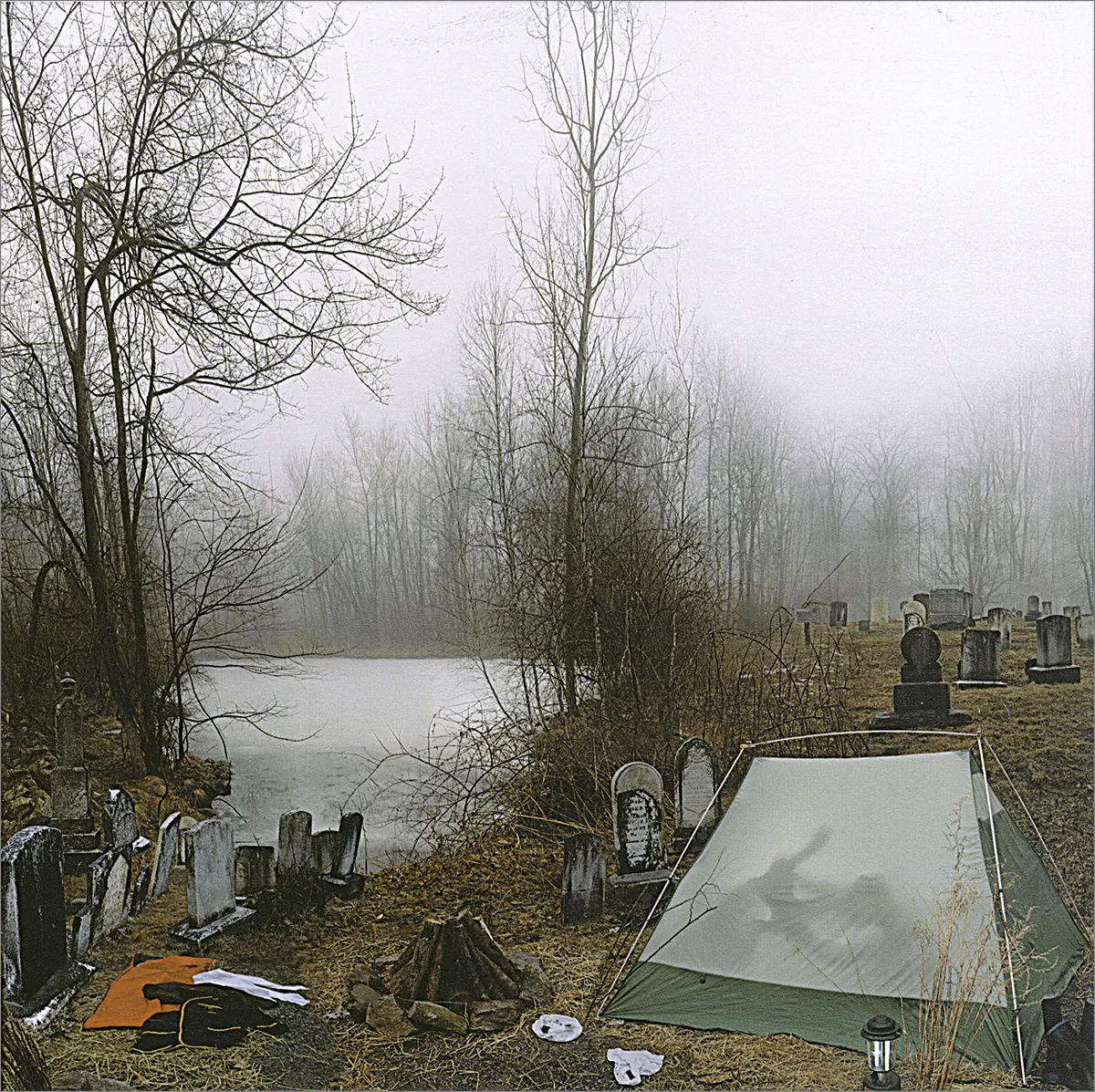
The openly pluralistic spirit and the cosmopolitan character that distinguished the fair signals the tone of the current art market in Brazil, which is no longer merely national and/or regional but is becoming a space for the circulation of Latin American and international art. This prognosis assumes the risk and the challenge implicit in starting collections of contemporary art, beyond the stereotypes and clichés of cultural and racial borders and beyond the nationalisms of every stripe. For example, the Luis Adelantado Gallery, with headquarters in Valencia and Miami, participated for the first time with an impeccable booth that exhibited works by Anthony Goicolea, Priscilla Monge, Richard Orjis, Oswaldo Ruiz, Abdul Vas, Aggtelek, and Miguel Angel Tornero, among other renowned figures.
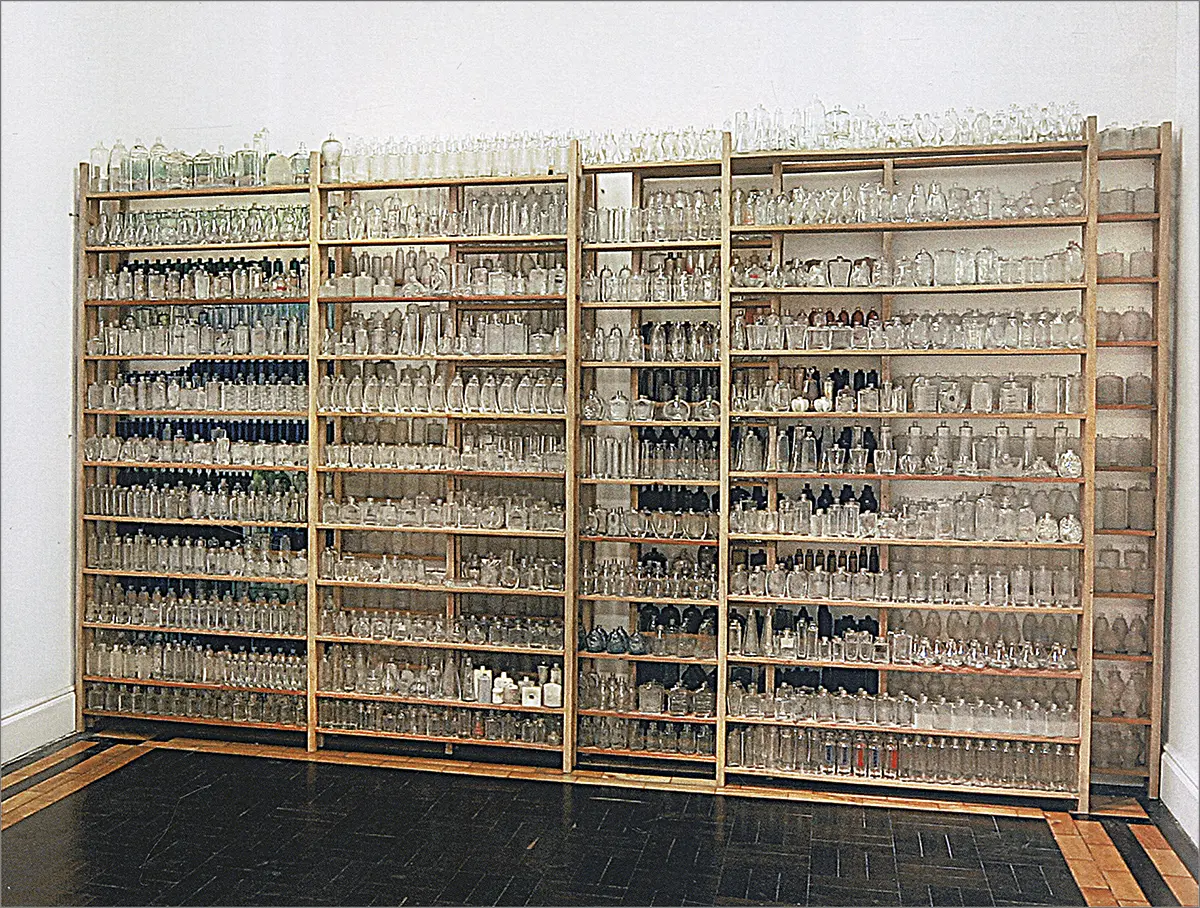
Fundamentally important in this process of self-problematized spaces in which new works of art are inscribed is the role of contemporary photography, as could be seen in Monge’s Sin título (2006) and Goicolea’s Lago (2004). The reproduction technique (through photography) disconnected the landscape format from a traditional space and territory, creating an altered, anomalous narrative simulacrum with darkened veils repeated in three areas of the image: the lagoon, the sky, and the tent. Eros and Thanatos combined in the paradoxical coexistence of sexual and vital games in an anonymous abandoned cemetery, a metaphor for a “ghost city” with tombstones as ruins and traces of time past.
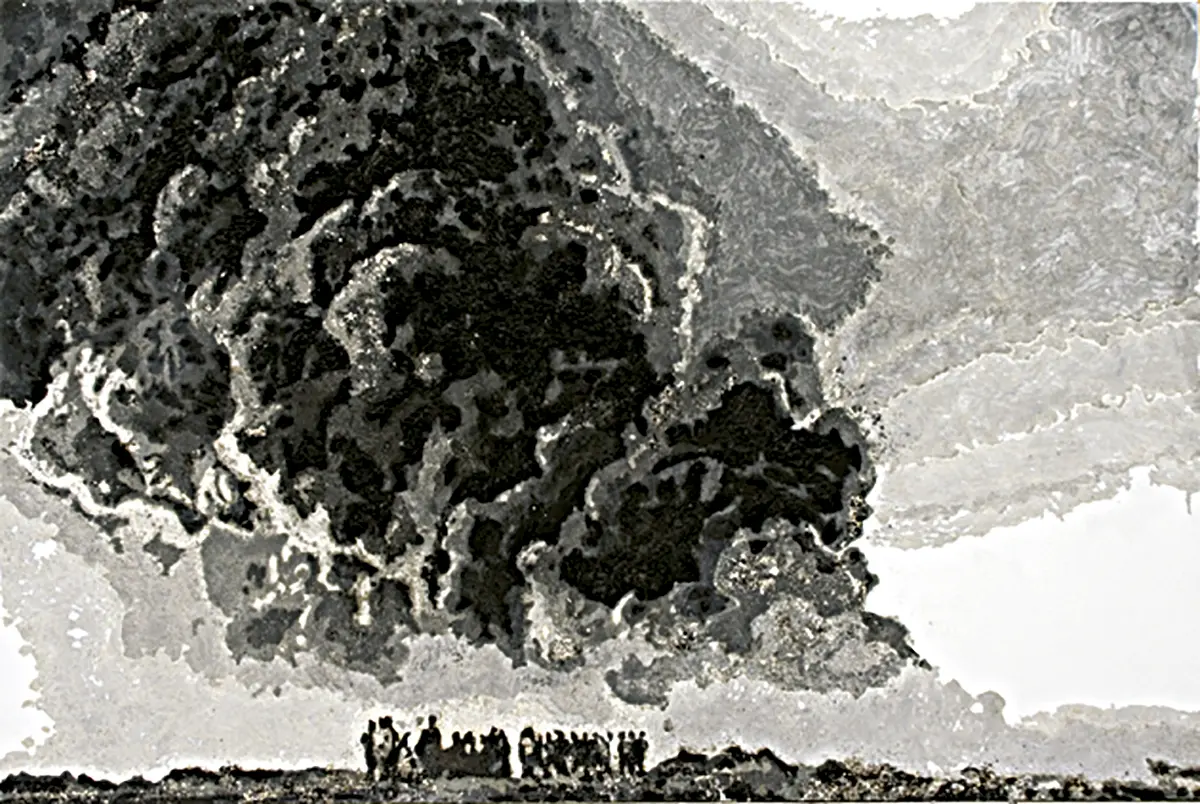
Tomás Espina showed magmatic and proliferating “non-pictorial paintings,” represented by the Buenos Aires-based Galería Alberto Sendrós, a first-time participant in this fair. His canvas, Big Bum (2005), was the product of the artist’s performance of oxidation and combustion mechanisms that literally wounded and carved the two-dimensional surface. In this work, the fluctuating, overpowering “lava” became more and more abstract, and its ambivalent identification wavered between varied strata of meaning and a search for different embodiment. Espina’s iconic earlier works using gunpowder began with an appropriation of documentary photo-journalism that referred to the events of the Tragic December (2001) that took place across Argentina. His new works, while still catastrophic, alluded to the Big Bang theory and the presence of black holes in the universe. In that respect, it is best to keep in mind that an “act of reading” a work always moves from inside out; it is a historical explanation that leans more toward the work’s social dimension and communicability than toward the merely individual and private. The giant drawings of the young Mar del Plata artist Matías Duville, also exhibited in Sendros’s booth, found their grounding along the lines of the vortex, entropy, and both centripetal and centrifugal movements, as did Marina Caro’s sculptures and site-specific objects.
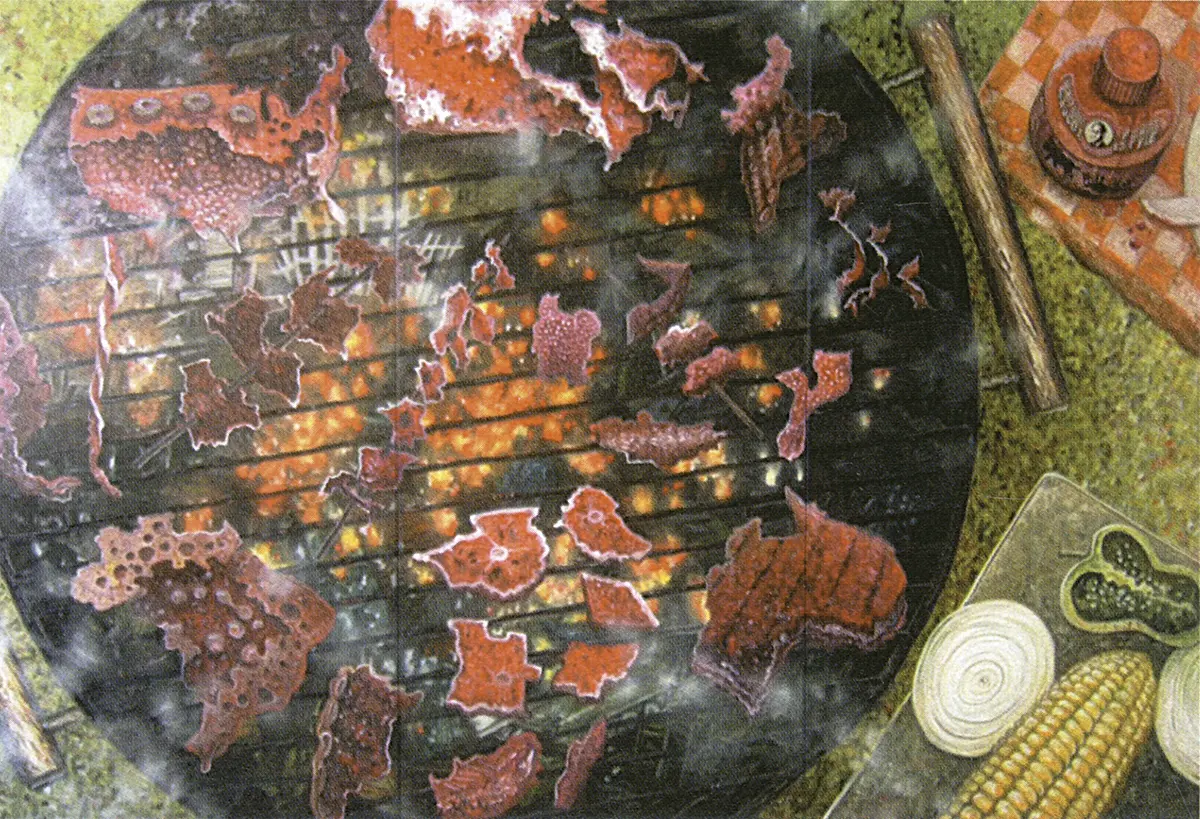
Contemporary art is in itself a critical act. Abstract or figurative, realistic or fantastic, utopian or political, conceptual or neo-expressionistic, it is always a “critique of life.” George Steiner—author of the celebrated Real Presences: Is There Anything in What We Say?—thinks that the arts also embody a reflection, a value judgment about “the legacy and the context to which they belong.” It is difficult not to find in the works of even the most disparate artists an affirmation of the fact that things could be or have been very different. The proof was in the uncompromising paintings of Hildebrando de Castro, José Bedia Valdés, Oscar Iowa, and Thales Pereira exhibited by the prestigious Thomas Cohn Gallery. The first three artists have a post-apocalyptic tone that implies that painting is a signifying practice in which trace and glance coexist to exceed fixed representation. Hildebrando de Castro’s cycle of Desastres naturales, Bedia Valdés’s “black paintings,” and Oiwa’s Meat Market Eating, with their resplendent chromatic multiplication, did not summarize anything but saturated our attention with their insistent figures to warn us about brevity and the impossibility of creating a unitary image.
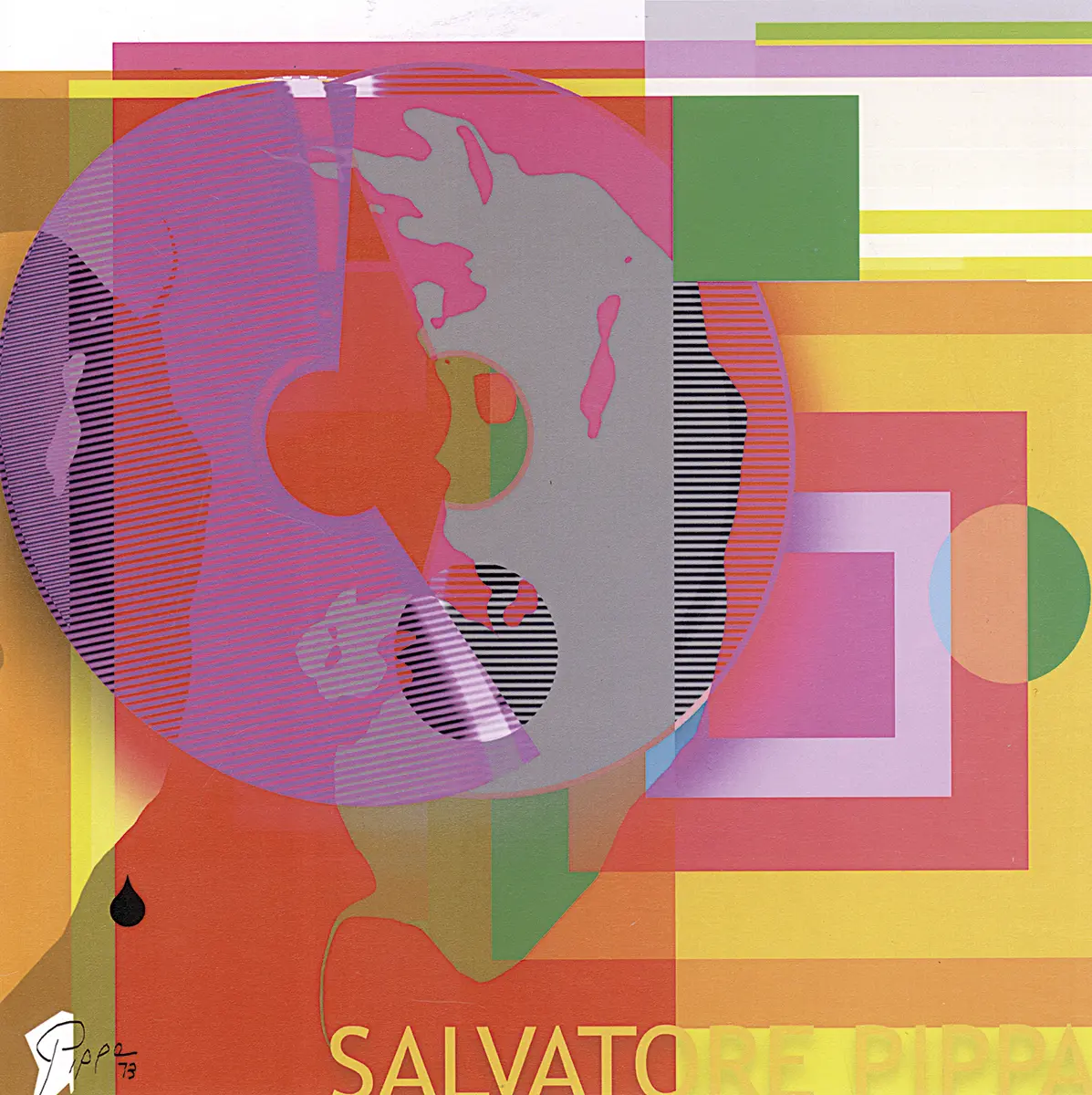
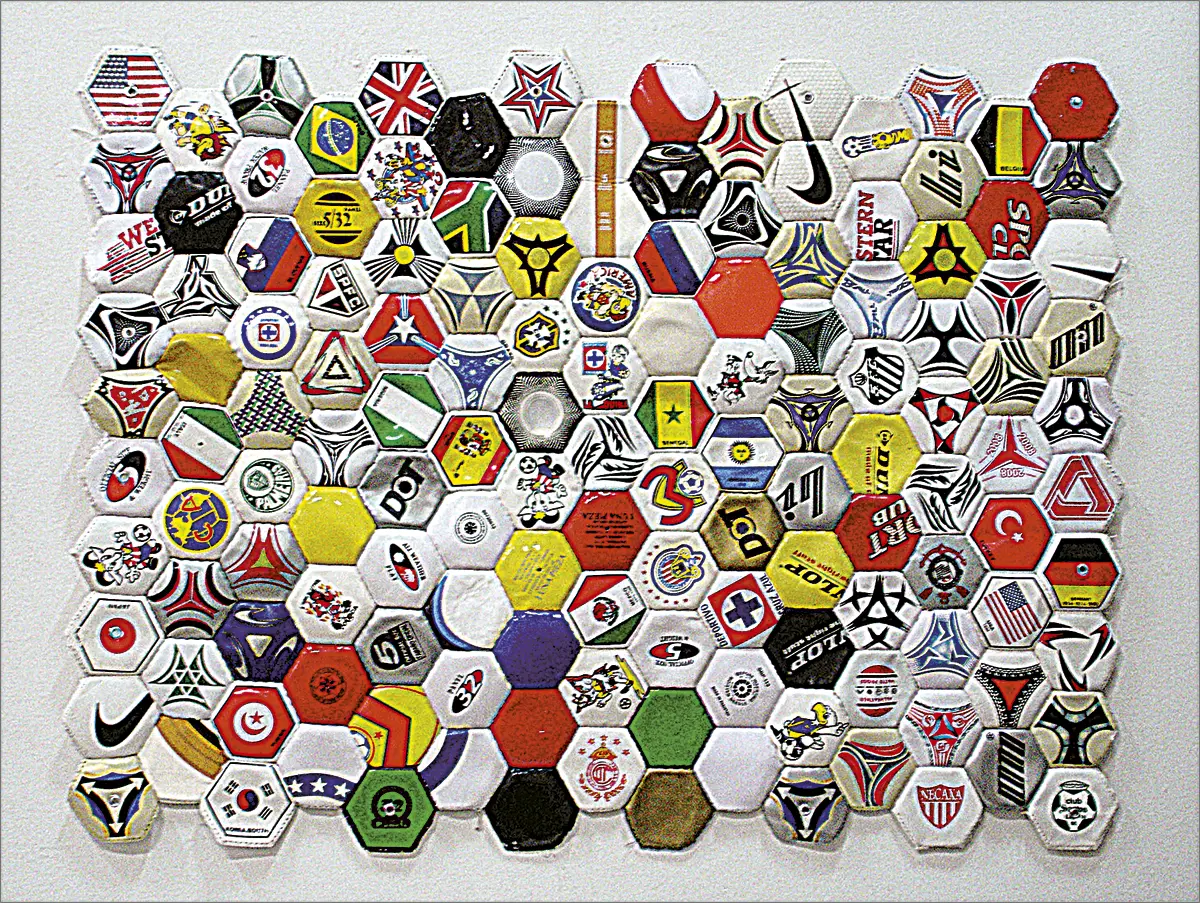
Part of the contemporary artist’s task is anticipating his meta-discursive language, giving viewers a fragment of thought. This was the case of Alberto Simon with the works Screens & Sticks and Squared from his series Os anos 70, presented by Baró Cruz. These lambda prints, featuring strident, shocking, and anachronistic color combinations in superimposed figurative and abstract patterns, established a dialogue between the artist and the fictional Italian artist Salvatore Pippa, who “signs” the works falsely dated in the 1970s. The Baró Cruz booth had an openly international character, including works not only by Alberto Simon, Jac Leirner, Mira Schendel, Damien Hirst, and Michael Wesely but also by the Argentinean artists Martín Di Girolamo and Sebastián Gordin, among others.
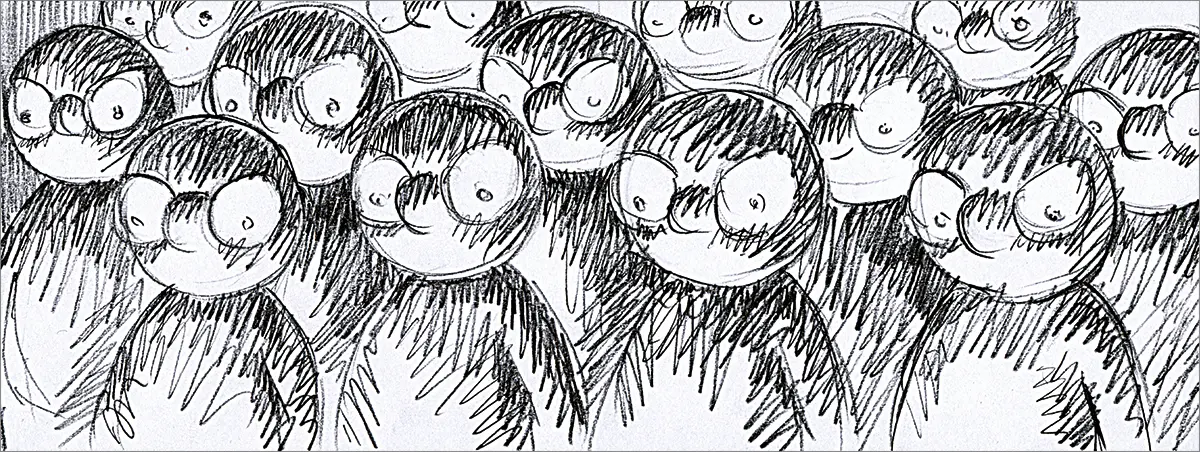
Leme Gallery proposed an exhibition with photo-performances and a video work, Tube-Tunnel, by Paulagabriela (the Rio de Janeiro artists Paula Boechat and Gabriela Moraes); morbid inflatable sculptures by the Canadian Max Stricher; a white light-sculpture, titled Idiot Stick XX (2005) by the British sculptor David Batchelor; and the video animation Prehistoria by Gabriel Acevedo Velarde, from Peru, created on the basis of 300 animée drawings in 2005, thanks to a system of artists residencies promoted by the gallery. For Velarde, thinking about the present implicates a more complex, multi-vocal reading that does not end in an idyllic vision. Freedom, comfort, and a higher quality of life do not eliminate the tragic aspect of existence, the existential angst proposed by Kierkegaard; on the contrary, they make that contradiction crueler.
The artwork is no longer merely a thing that is made to gratify the eye. Even the art with the greatest optical and sensorial pull is a vehicle for meaning that must be unpacked, as could be verified in the work of Felipe Barbosa, Marcia Xavier, Sandra Cinto, and Albano Afonso at Galería Casa Triángulo.
At Galería Mariana Moura, the works of Marcelo Silveira, Gil Vicente, Jeanine Toledo, José Patricio, Nazareno, and Renata Lucas asserted their right to build a vision apart from taxonomic models.
Nara Roesler’s booth exhibited important works by Abraham Palatnik, Tomie Ohtake, Artur Omar, Artur Lescher, Laura Vinci, and Niura Bellavinha, who reinforced continuous feedback established between artists and gallery owners.
At SP Arte 2006, there was a communitarian spirit oriented toward relationships with Latin America and the rest of the world that did not obliterate fruitful differences. Examples of this operation were the exhibition proposals of the galleries Fortes Vilaca, Virgilio, Laura Marsiaj, Baginski, Brito Cimino, Leo Bahía, Artur Fidalgo, Bergamin and Berenice Arvani, Arte 21, and Oeste. These galleries demonstrate a mature reflection about the role of the gallerist, who is not a merchant but—in the best of cases—a co-creator. They show an interest in recovering that role, which perhaps has been forgotten.
We must once again “contaminate” art, break clannish behavior, and merge the aesthetic experience with the ocean of pluralistic diversity in a new theater of operations: wider, expanded, and more effective.
CLAUDIA LAUDANNO
Ph.D. in Art History and the Theory of Art from Universidad de Buenos Aires (U.B.A). Latin American Art Professor at the Philadelphia Institute for Advanced Studies.