
According to Freud, Leonardo painted his mother’s smile in the Mona Lisa’s smile. The New York Academy of Medicine is currently presenting an overview of Freud’s own drawings, and it is impossible not to want to take a shot and criticize the work he produced when he ventured into artistic territory1. After his life of analyzing people and guessing reasons and motivations hidden in the work of artists, it seems only fair to turn the tables on him.
The show is curated by Lynn Gamwell, the director of the Binghamton University Art Museum, where the exhibition subsequently will be shown and is more biased toward scientific research than toward art. Gamwell is a historian of both art and science and seems ideally suited to organize this material. Picking up on the scientific angle, The New York Times dedicated a full page to the exhibition in the science section rather than in the arts section. In fact, it was not really a review but a description that was intriguing enough to make one want to go and see it.2 At the Academy, the exhibition is not located in a gallery space, but in the library. The display turned out to mostly consist of photocopies and books open to pages that reproduced drawings and diagrams. All of the work was modestly placed in glass library cases, bearing a strong aura of memorabilia. Thus, any expectation of a traditional and framed collection of original drawings was seriously disappointed. But this probably was another of the reasons for the Times article to appear in the science section.
It did not take long to be at peace with this situation: a viewer was forced to do some serious looking and thinking, much more so than what is required from the casual, quick scanning of images usually performed in art galleries.
To criticize Freud’s drawings from an art point of view is of course patently unfair. When Freud used art as a configuration of symptoms to explore psychological pathologies, no matter how right or wrong his theories ultimately might be, his pursuits made a lot of sense. Ideas or issues seep through art, where the artist does not have the same control as one might have to present a logical discourse. Theoretically, some problems are then exposed and become open to interpretation. The validity of any challenge of psychoanalysis, therefore, is not really against the potential of interpretation but against the correctness of the interpretation itself. For some, the temptation to analyze Freud’s drawings from a psychological point of view might be the one nearest at hand. For us, it is to discuss his drawings from the point of view of art. This process of reciprocity, however, is not a given, and discussing the artistic value of Freud’s drawings may be suspected of being an exercise in revenge rather than a sound exercise. And yet, Freud’s drawings are skillful and competent enough to merit some consideration and to explore some (artistic) issues.
The minimization of any artistic pretensions in the exhibit correctly shifts the attention toward documentation. But since the objects are drawings, one of the first and more obvious issues that come to mind is if there is any fetishism involved in showing Freud’s drawings. If they really were intended in any way to be seen as art, would these drawings have any artistic appeal were they not drawn by Freud or by somebody famous? Many exhibitions made under the rubric of art only hold interest thanks to the author’s fame developed in other fields. One of the favorite areas for this practice is politics, which helps explain the organization of exhibitions of work by Hitler or Churchill. Although their “art” may serve as an anecdotal appendix for other documentation as well as may help untangle some character traits, the psychology underlying the normal public interest is in the same category of wanting to see or own a strand of Napoleon’s hair or a pebble from Jacqueline Onassis’s beachfront.
Freud, unlike Hitler or Churchill, at least should be credited with artistic humility; he didn’t intend to make art, and yet he produced drawings of some interest. They would provide interesting viewing even if he were somebody unknown. All through his life, when he drew, Freud was only attempting to document and clarify information coming from other sources. The drawings first show renderings of cells and later diagrams about relations. But while Hitler and Churchill—to stay with the earlier examples—labor and fudge in their work, Freud seems to enjoy his drawing activity; he is sure about what he does, and he provides us with evidence of an interesting conceptual evolution.
During an early period of his studies, while he was focusing on biology, the drawings were used to record his observations using a microscope. Clear, to the point, efficient, and within the “objective” tradition of scientific illustration, they do exactly what they are supposed to without hesitation or regret. It is during a second and more theoretical period —when Freud’s attention left bodies to enter minds— that the drawings become diagrams. With the same previous skill of his realistic renderings, he now produces visual models of translations of his theoretical insights. Art-historically speaking, one can say that he went from realism to conceptualism, which makes this exhibition interesting from an art point of view.
Surprisingly, Freud’s visual records and musings are attractive. Some of the reasons for this are unrelated to the formal practices as he understood them. At the time he made them, the drawings were taken for granted as what they were intended for: a relatively impersonal tool for communication. But today, in a visual culture strongly affected by conceptualist aesthetics, we look at renderings of information differently than people did during Freud’s lifetime. For the last several decades, both our perception and taste have been conditioned by a conceptualist style. We look at Freud’s drawings through what has remained from that cultural conditioning. The mixture of language with image has become an aesthetic standard. For our eyes, the information Freud presents today is as much a form as it is content. To this, we have to add the nostalgic pleasure stirred by careful handwriting, calligraphy that is closer to drawing than to today’s hurried and scribbled writing, one that reflects a different and irretrievable sense of time. Altogether, Freud’s drawings satisfy an aesthetic sense we project onto his work, a sense that is of our time and would have been alien and unintelligible to Freud himself. All of this brings his drawings much closer to the art of today than when they were produced.
If one is interested in Freud as a scientist and psychologist, one is rewarded with much information, if somewhat arcane. An excellent catalog assists this data very well and allows for a more leisurely study of facts. Among these is that Freud dissected 400 specimens of eels in search of a testicle.3 It turns out that he couldn’t find one because eels are intersexual, a fact that no one knew in 1876.
While Freud’s drawings of cells in his biological studies are extremely precise, the sketchy drawings he makes in his letters or as preparations for his books are impressively strong, expressive, and secure. Freud’s appropriate use of drawing skills seems to remain constant from his earliest renderings to the end of his career. The problem is that consistency, strength, and expressiveness in drawing skills do not prove that we are talking about art.
The term “drawing” is exceedingly blurry since it is indiscriminately used to refer to a variety of unrelated products. Among them are personal doodles and notations lacking any meaning for anyone else; instructions to oneself, such as sketches for the production of something else, the intelligibility of which survives time; instructions to others, such as blueprints, intended to ensure that production follows specifications; descriptions of events or ideas, for which a visual rendition seems more efficient and effective than a verbal explanation; personal communications to other people with the intent of establishing a dialogue, for which the drawings serve as a stimulus to imaginative response; communications that meet museum standards and are desirable as collectibles. Finally, and probably most importantly, there are notations made to expand the borders of knowledge.
In Freud’s case, his drawings clearly fit into the category of renderings of ideas that would not be as clear if expressed in words. During his biological period, his drawings were illustrations for the purpose of clarification. Effective in his time, these drawings would be anachronisms if done today, since micro-photography would provide images much more revealing and useful. In these drawings, we may admire Freud’s craft, especially in light of the fact that he had no real artistic training. But our admiration cannot go much further than admiring someone’s handwriting without attending to the text.
When Freud starts diagramming, he breaks into something closer to “art.” Making diagrams was nothing new—he had always used them—but in Freud’s work after 1885, diagrams become particularly important. This was the year when Freud arrived in Paris to study with Jean-Martin Charcot. It was also when, for the first time, “unseen, psychological causes of mental derangement were being studied” and given scientific credence.4 It is this acceptance of non-physical causes—a departure from Charcot’s own previous beliefs and something new in Freud’s trajectory as an observant biologist—that makes Freud’s diagrams particularly interesting. The drawings start to expand the borders of knowledge, which, however unintentionally, brings them closer to art.
During this period of Freud’s work, the connections between reality and the perception of reality were changing radically. X- rays had been discovered, and Wilhelm Röntgen was starting to use them to image bones still in the body, providing details normally invisible to the eye. Röntgen opened the door to what advertisements soon after would proclaim the “photography of the invisible.”5 A cartoon from 1896 shows several silhouetted profiles of politicians’ heads containing symbols for different character traits (such as a crown, a donkey, etc.) under the general title of The Latest Photographic Discovery. Credit is given to Röntgen.6
In the history of art, there was a parallel process. Strict realism as the only acceptable rendition of reality was being abandoned. The first step took the form of a search for hidden structures, seen in movements like impressionism and cubism. Eventually, the boundary between rendering and concept was crossed. Appropriately, Francis Picabia (who, like Duchamp, was fascinated with X-rays) wrote in a catalog for his show in New York in 1913: “The qualitative conception of reality can no longer be expressed in a purely visual or optical manner.”7
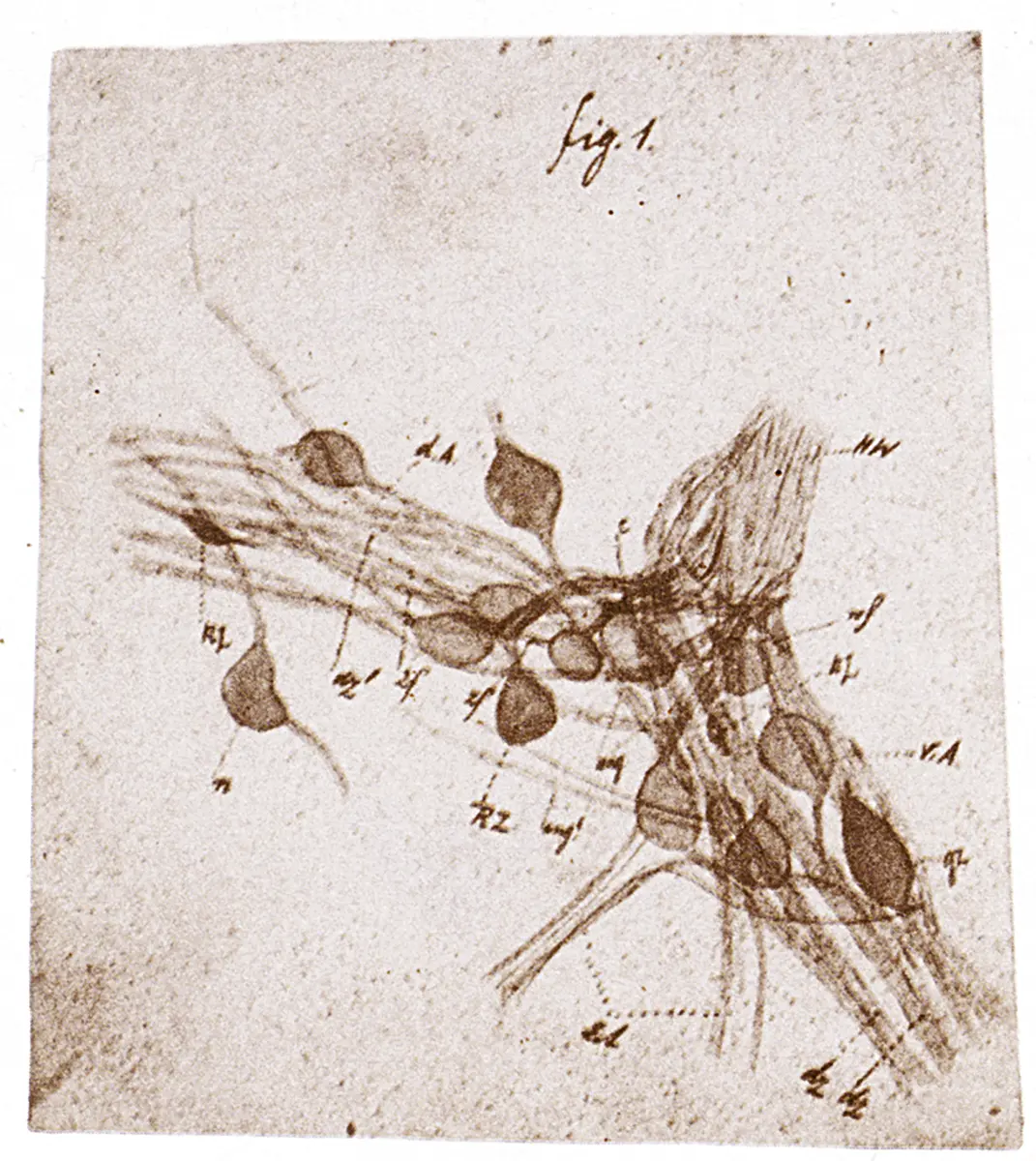
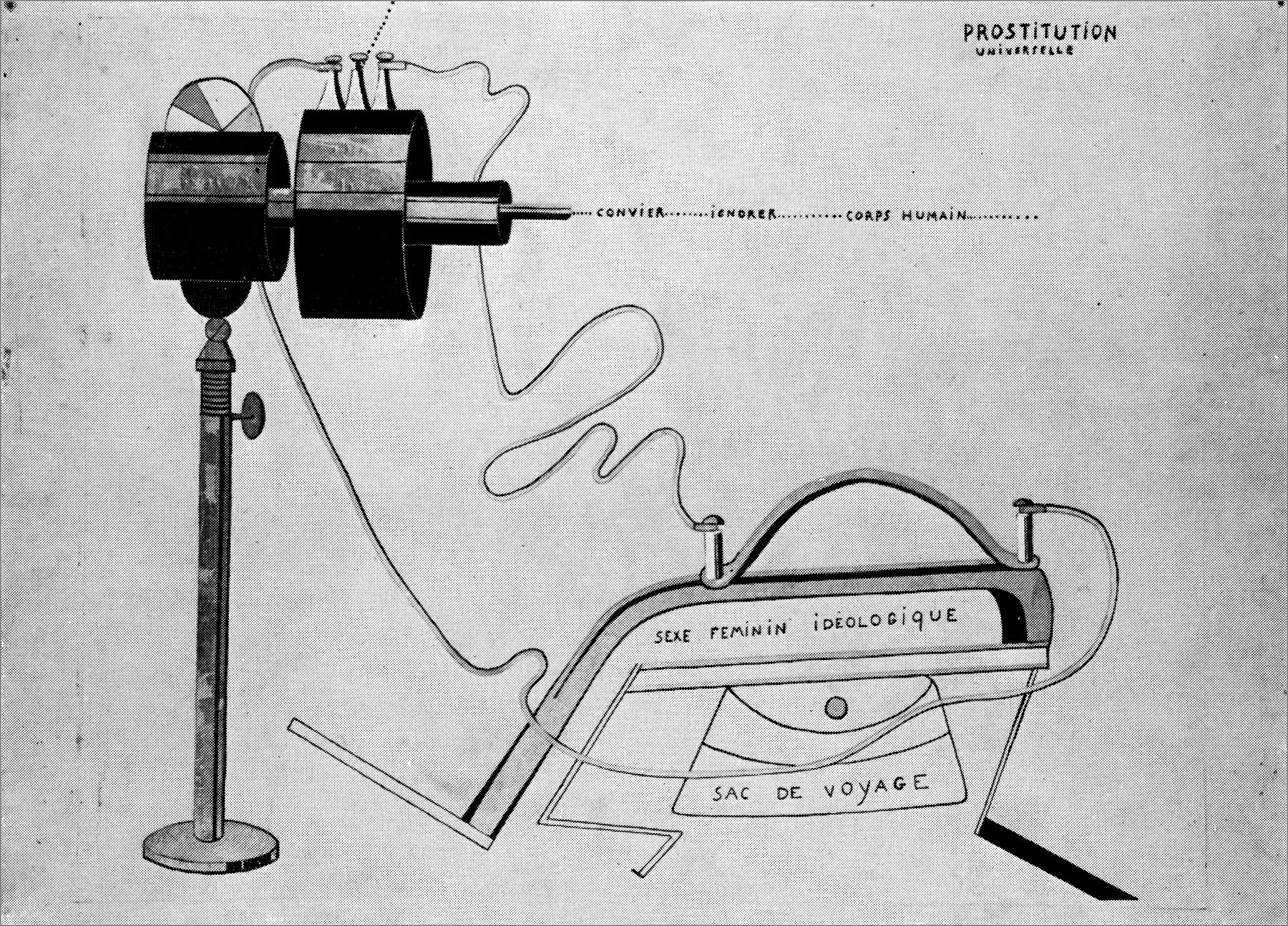
Consistent with this view, Picabia developed what is usually referred to as his “machinist” drawings, chiefly dating between 1915 and 1920. While they were formally related to mechanical diagrams, many of them included strong psychological allusions. Working with the emphasis given to these references, the label “machinist” seems misplaced, serving as little more than a bridge to familiar formal categories. In fact, the diagrammatic setup of Picabia’s drawings may have been the symptom of an aesthetic that reflected not so much a mechanical view of the world as a mechanistic one. One of the later critiques leveled at Freud’s theories was precise that he took criteria from hydraulics and applied them to psychology, a mechanistic approach that failed to create a real system of insights. Freud’s use of diagrams to visualize his theories may have helped that view.
Freud was obviously interested in objectification while Picabia was not. Both, however, shared the wish to reach and elucidate the invisible. With or without humor and irony, an issue that clearly distinguishes Picabia from Freud, both used comparable formal elements. They shared a way of encoding images that favored the use of conceptual devices over sensorial ones. These devices better reflect the complexity underlying what we see and help us come closer to whatever truth is being sought. Not only Freud and Picabia but others as well were fascinated by this, such as Max Ernst and other Dadaists, the futurists with their visual poetry, and of course scientists in biology, chemistry, and physics, not to mention practitioners of pseudo-science. Diagrammatic rendering became a collective manner of representation—a sign of the times.
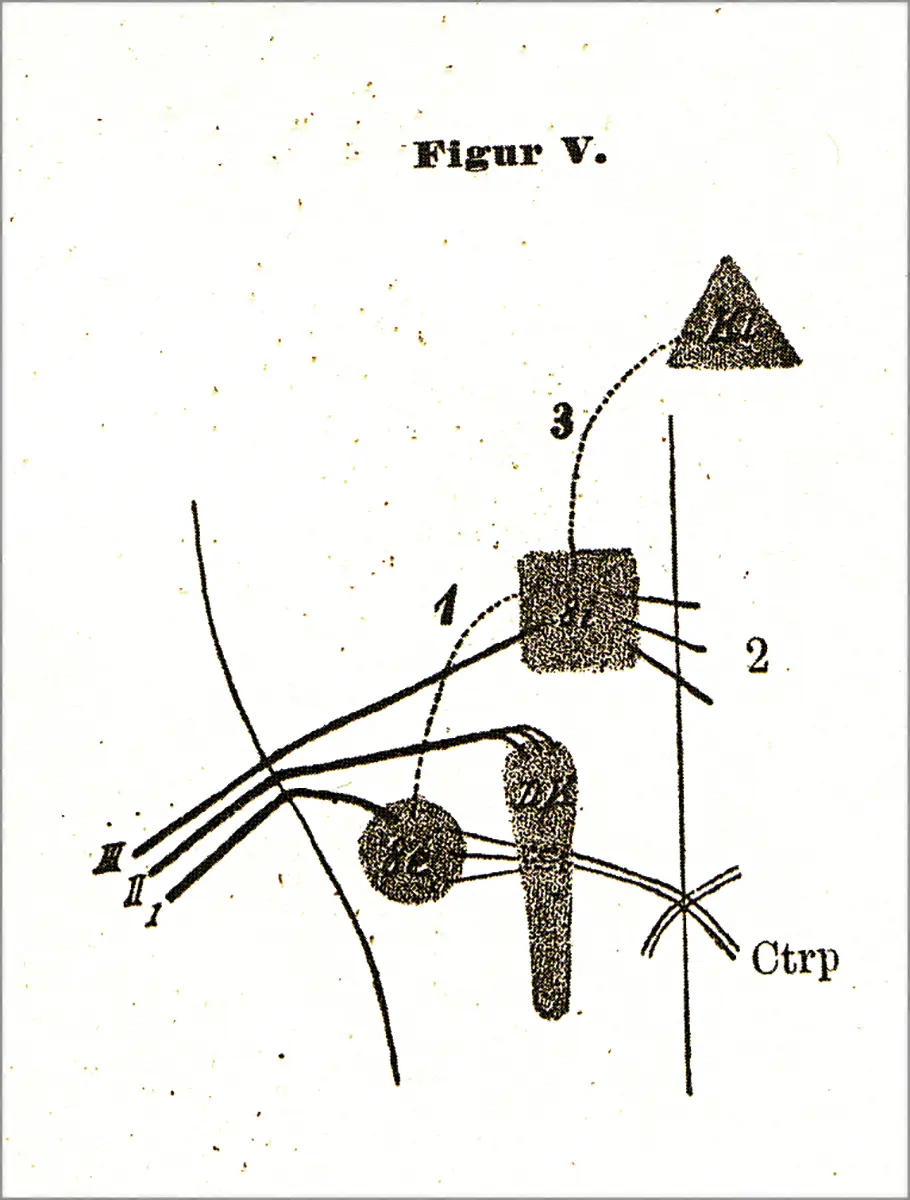
In his comments on Freud’s drawings in the catalog of the exhibition, Mark Solms calls attention to a series contained in Freud’s text "On the Origin of the Nervus Acoustics" (1886), in which “Freud traced the origin and connections of the auditory nerve in the human medulla oblongata.” (The medulla is the piece that transmits nerve signals from the spinal cord to the brain and vice-versa but, among other many things, it also helps in the process of sound localization.) Looking back on this work forty-seven years later, Freud wrote: “The medulla oblongata is a very serious and lovely object... Today, however, I must remark that I know of nothing that could be of less interest to me for psychological understanding of anxiety than knowledge of the path of the nerves along which its excitation pass.”8 And yet, the fifth drawing in this series cited by Solms seems to be emblematic of Freud’s passage into conceptual visualization, making it “art-historically” one of the more interesting pieces. Solms comments “From this point onward, Freud’s anatomical writings become increasingly abstract and theoretical.”9
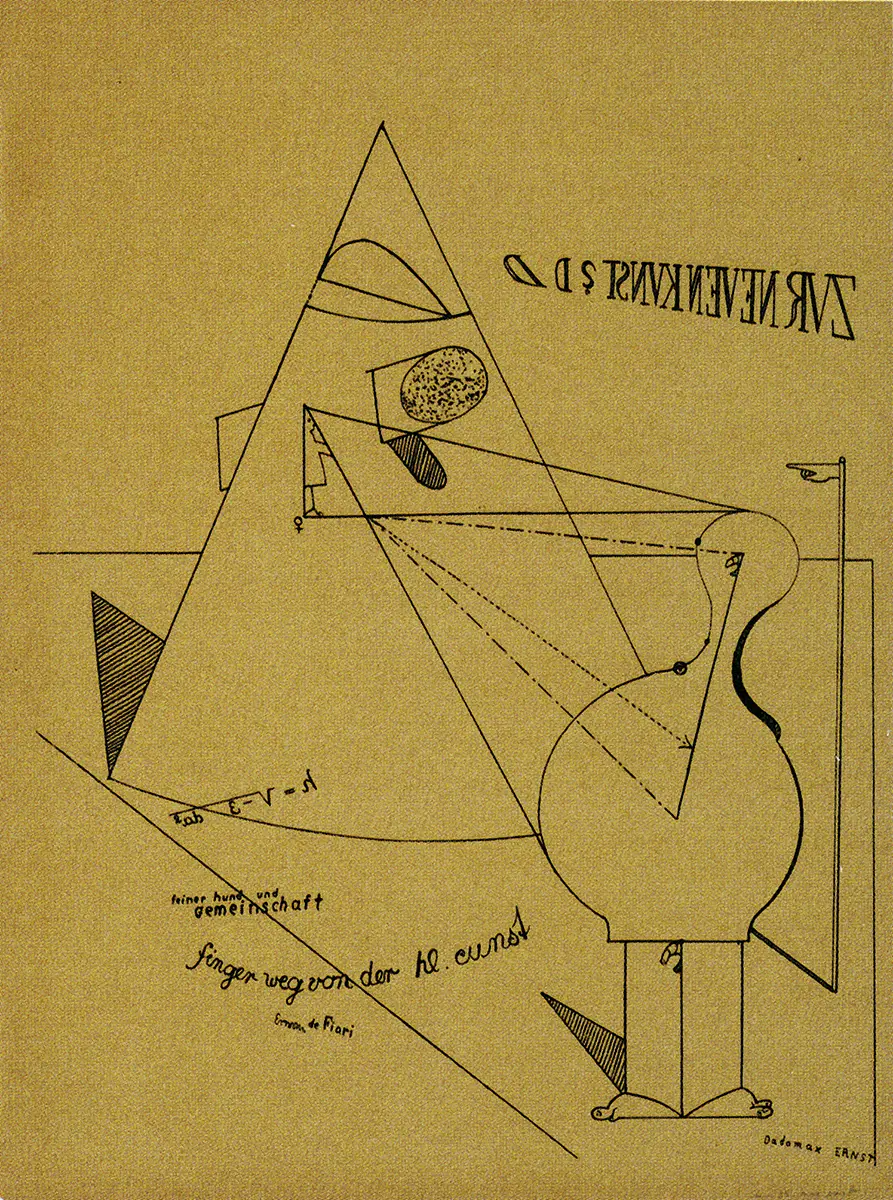
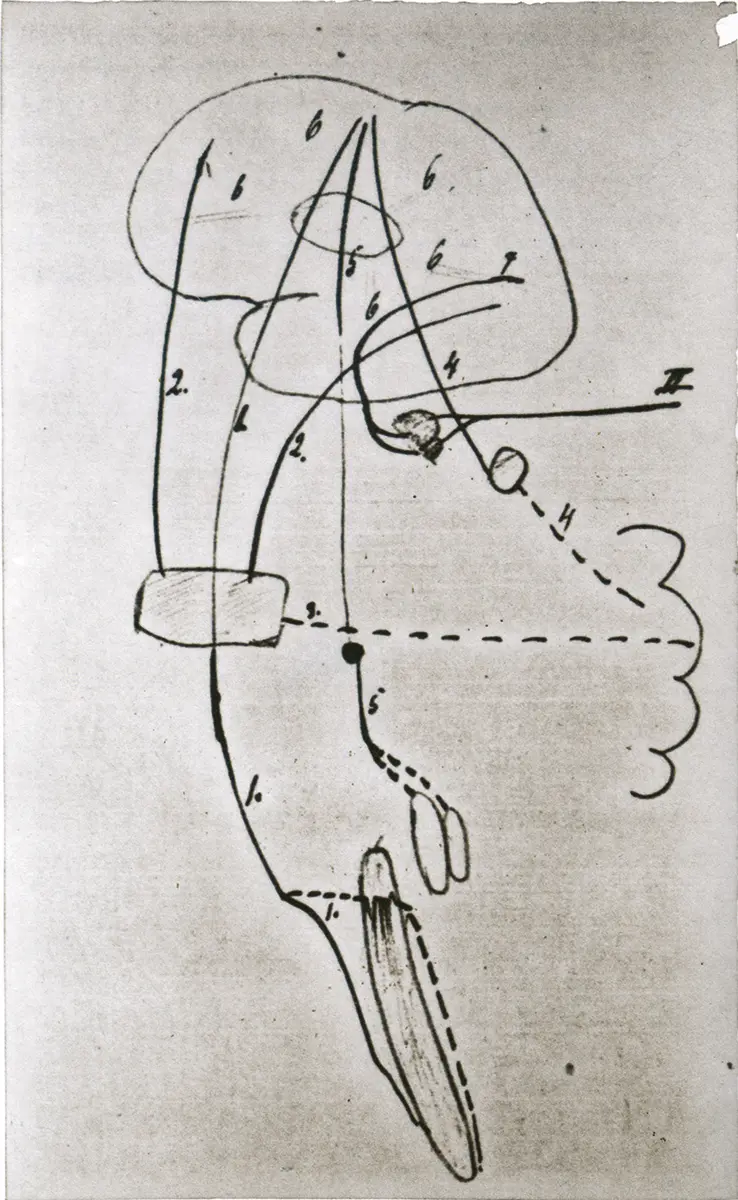
Also in 1886 were the drawings Freud made for his Einleitung in die Nervenpathologie (Introduction to Neuropathology). This unpublished work is described by Solms as the culmination of Freud’s contributions to neuroanatomy. And while Solms describes the sketches as “rough,” they are also among the most vibrant in the show and showcase Freud’s draftsmanship.
The drawings after 1886 are more interesting in terms of biography than in terms of art. What is evident is a steady and growing departure from neurological mechanisms and a greater emphasis on elucidating mental processes, a break Freud seems to have fully achieved by 1896.
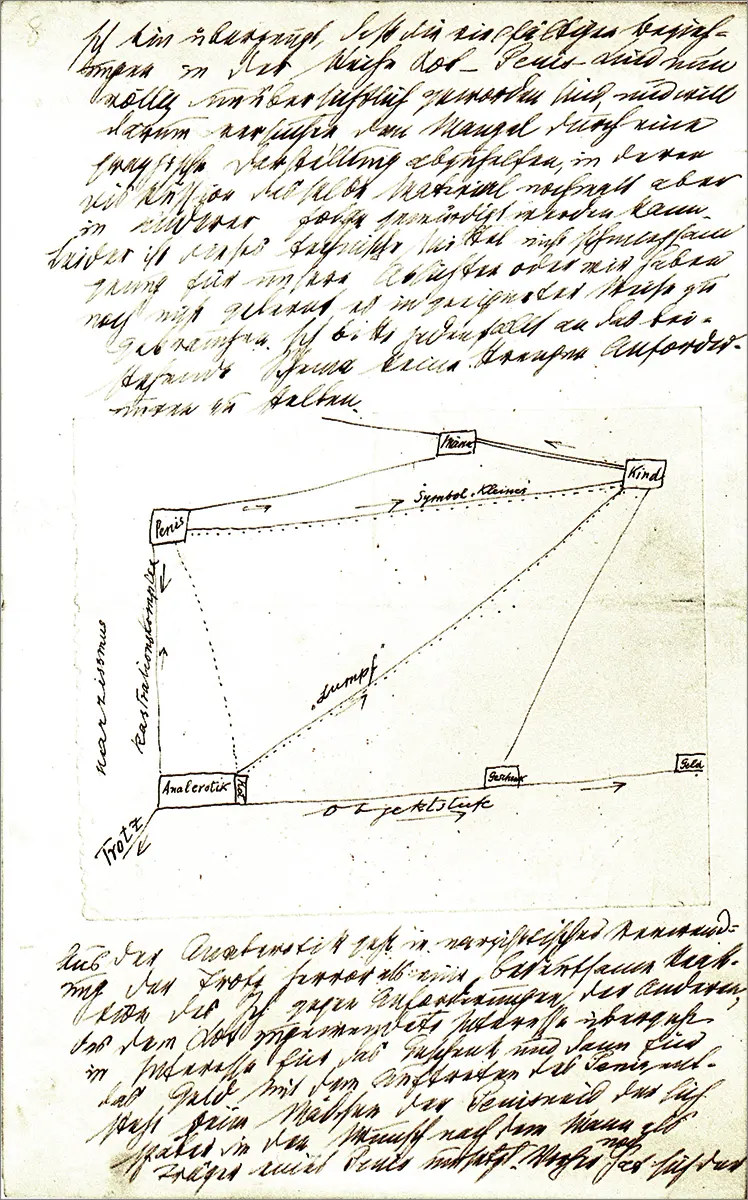
Freud’s concern about precision in his visualization was constant. In 1917, prompted by revising one of his drawings, Freud complained about the limitations he felt were frustrating his efforts to express exactly what he wanted. Referring to one particular diagram he commented: “Unfortunately this technical device is not sufficiently pliable for our purpose, or possibly we have not yet learned to use it with effect. In any case, I hope the reader will not expect too much from it.”10
In time, Freud reached a high level of clarity and confidence about the role of visual illustration in his work. In 1923 he wrote: “The state of things which we have been describing can be represented diagrammatically; though it must be remarked that the form chosen has no pretensions to any special applicability, but is merely intended to serve for purposes of exposition.”11 Economical and accurate in its description of Freud’s drawings, it is a statement that could equally have been written by Picabia and many other artists.
NOTES
1. From Neurology to Psychoanalysis: Sigmund Freud’s Neurological Drawings and Diagrams of the Mind, at the New York Academy of Medicine, May 6–August 26; at Binghamton University Art Museum, State University of New York, September 8–October 20, 2006.
2. Benedict Carey, “Analyze These,” The New York Times (April 25, 2006): F1, F7.
3. Gamwell, Lynn, and Mark Solms, From Neurology to Psychoanalysis: Sigmund Freud’s Neurological Drawings and Diagrams of the Mind. Binghamton, NY: Binghamton University Art Museum, State University of New York, 2006, p.28.
4. Gamwell and Solms, p. 9.
5. Linda Dalrymple Henderson, “Francis Picabia, Radiometers, and X-Rays in 1913,” The Art Bulletin (vol. LXXI, #1, March 1989): 117.
6. Henderson, p. 122.
7. Henderson, p. 116.
8. Gamwell and Solms, p. 84, 85.
9. Gamwell and Solms, p. 83 (italics original).
10. Gamwell and Solms, p.123. From Über Triebumsetzung, insbesondere der Analerotik (On Transformations of Instinct as Exemplified in Anal Erotism).
11. Gamwell and Solms, p.127.
*Edited by Selby Hickey.
LUIS CAMNITZER
Emeritus Professor at the SUNY College, Old Westbury.