
The idea of having an exhibition of ceramic works in the traveling exhibitions gallery of the Museo de Art del Banco de la República was an excellent one. Amidst so much experiential work using all kinds of materials, it is always good to open a space and revisit a traditional craft—one that dates from the sixth millennium before the Christian era—that still has innumerable practitioners throughout the world. Curated by the Venezuelan art historian and critic Juan Carlos Palenzuela, the show titled Ágora de fuego brought together twenty-one artists, ten from Colombia and eleven from Venezuela, representing several generations and great formal, thematic, and technical variety. According to the curator: “On the basis of avoiding mixtures, and the heterogeneity of contemporary art, we opened ourselves up to all the possible convictions of the present, to adventures of heavy individual accent, and to investigations in history, in tradition, and in symbols of the plasticity of clay.”
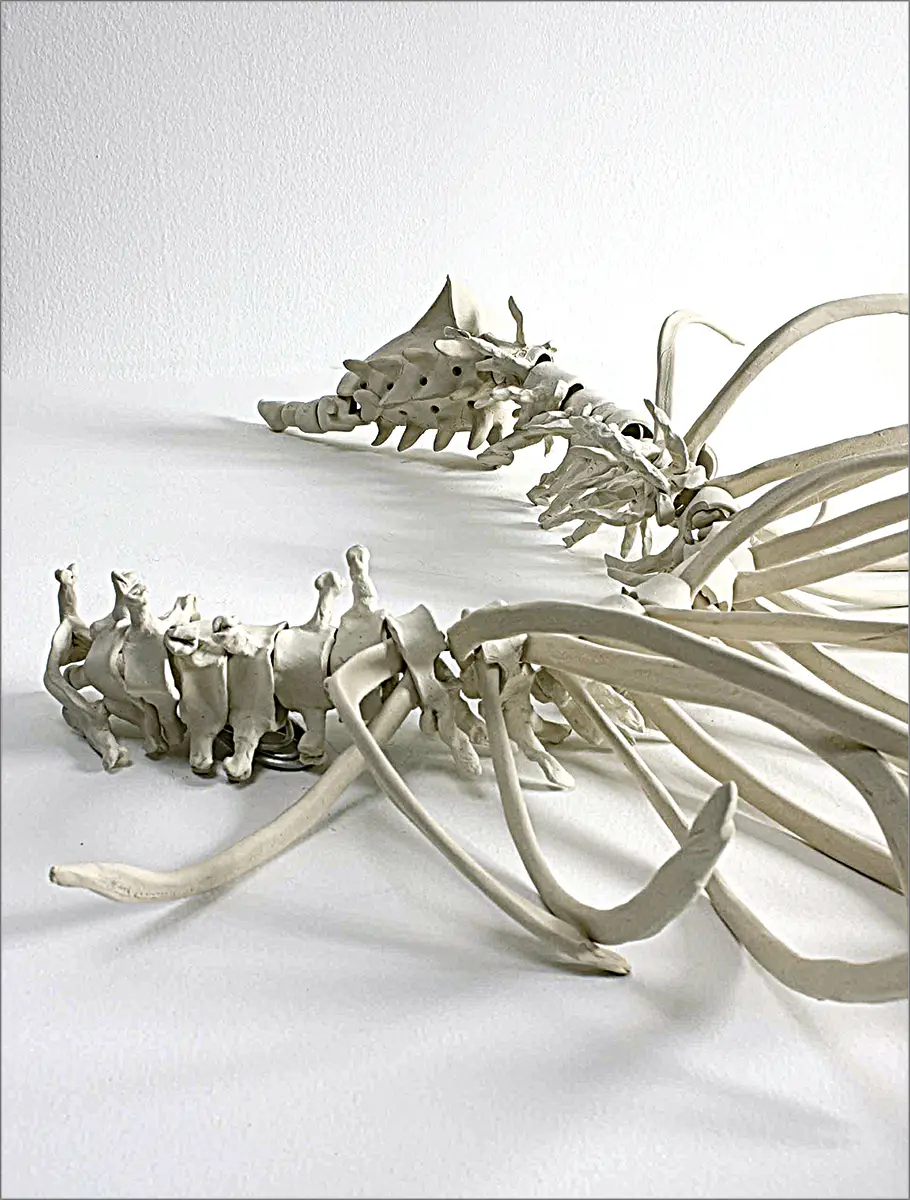
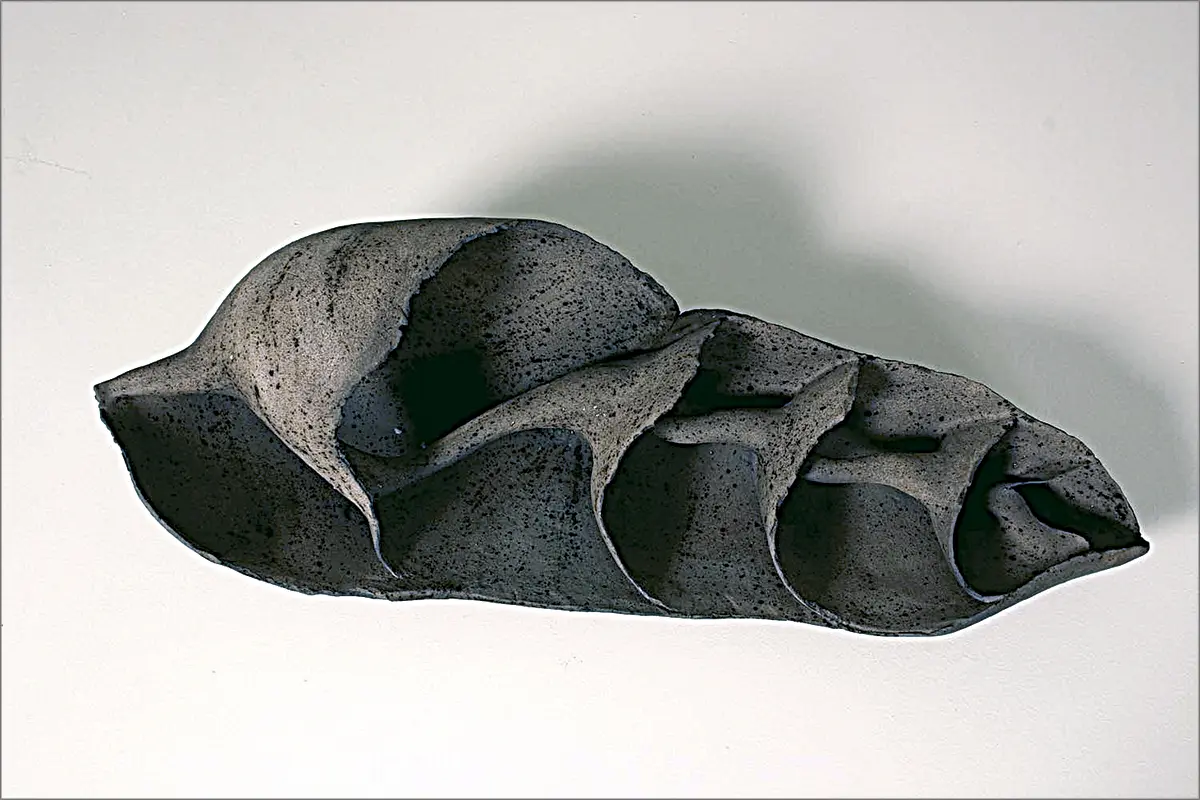
Of the artists working between abstraction and figuration, one should mention: Doménica Aglialoro, with her impressive skeletons of mysterious animals made using sometimes branch-like elements of glass beads on aluminum wire; Valerie Brathwaite, who placed in a colorful garden seventy-five small-format works with surprising excrescences where the vegetal subtly fused with the sexual; Isabel Cisneros’s Como agua de río, a beautiful installation based on a small triangular module, with which the artist alluded to “the eruption of river waters through the unevenness of the rocks, as well as the outline of the rows due to topographic differences”; Noemí Márquez, with her well-known tall stellae, on which appeared irregular textures as well as calligraphy and signs of various origins; Dalita Navarro, with several fine pieces from the series Erosiones with clear allusions to snails; Cecilia Ordóñez, who gathered floor and wall tiles covered with irregular waves—some concentric, some with grooves or clashing trajectories, and some with radial elements; Belén Parada, who presented an installation with large cones both on the ground and hung from the ceiling with the points facing each other, all with carefully worked surfaces covered by delicate collages, incisions, signs, textures, and colors; Nijole Sivickas, with a typically severe production devoid of aesthetic concessions—an installation of Hung bodies made of clay, dark oxidation stains, and iron rods; and Carol Young, with a 280-piece installation titled Blanco Ascendente, of hand-modeled clay with rolls that seemed to multiply, ascend, and transform into almost evanescent shapes.
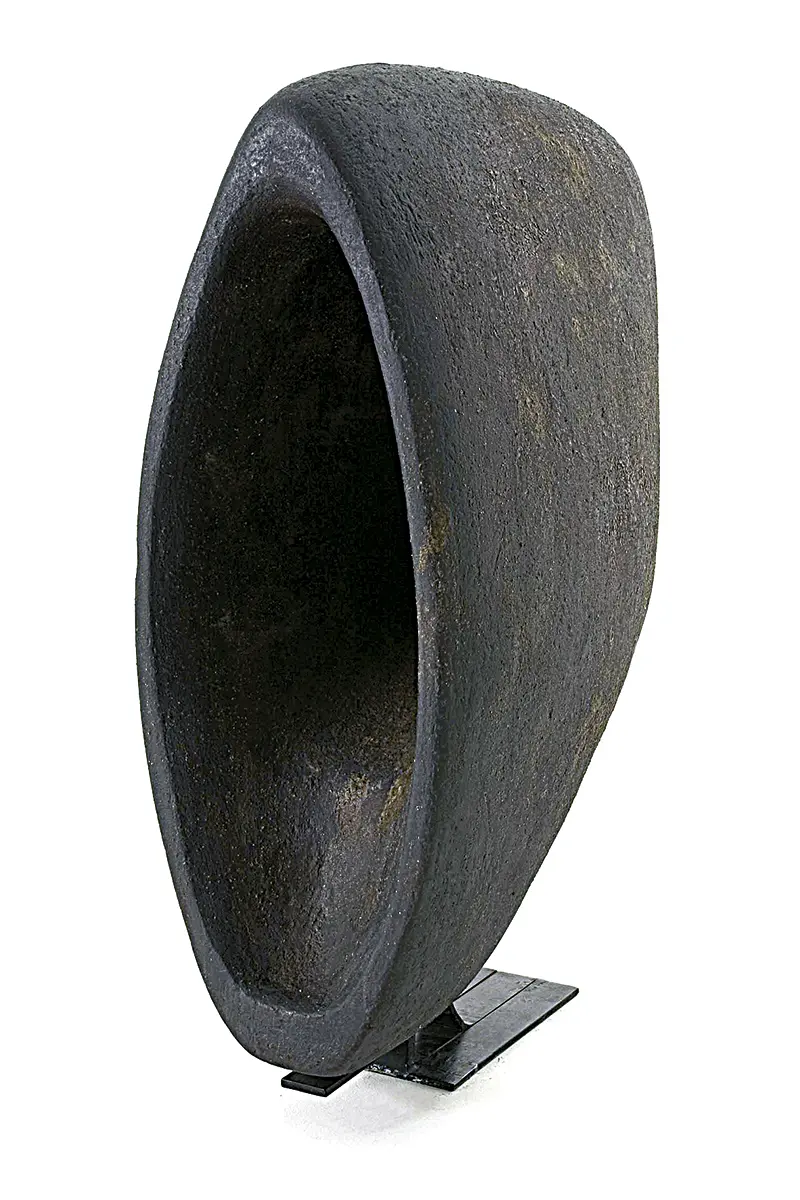
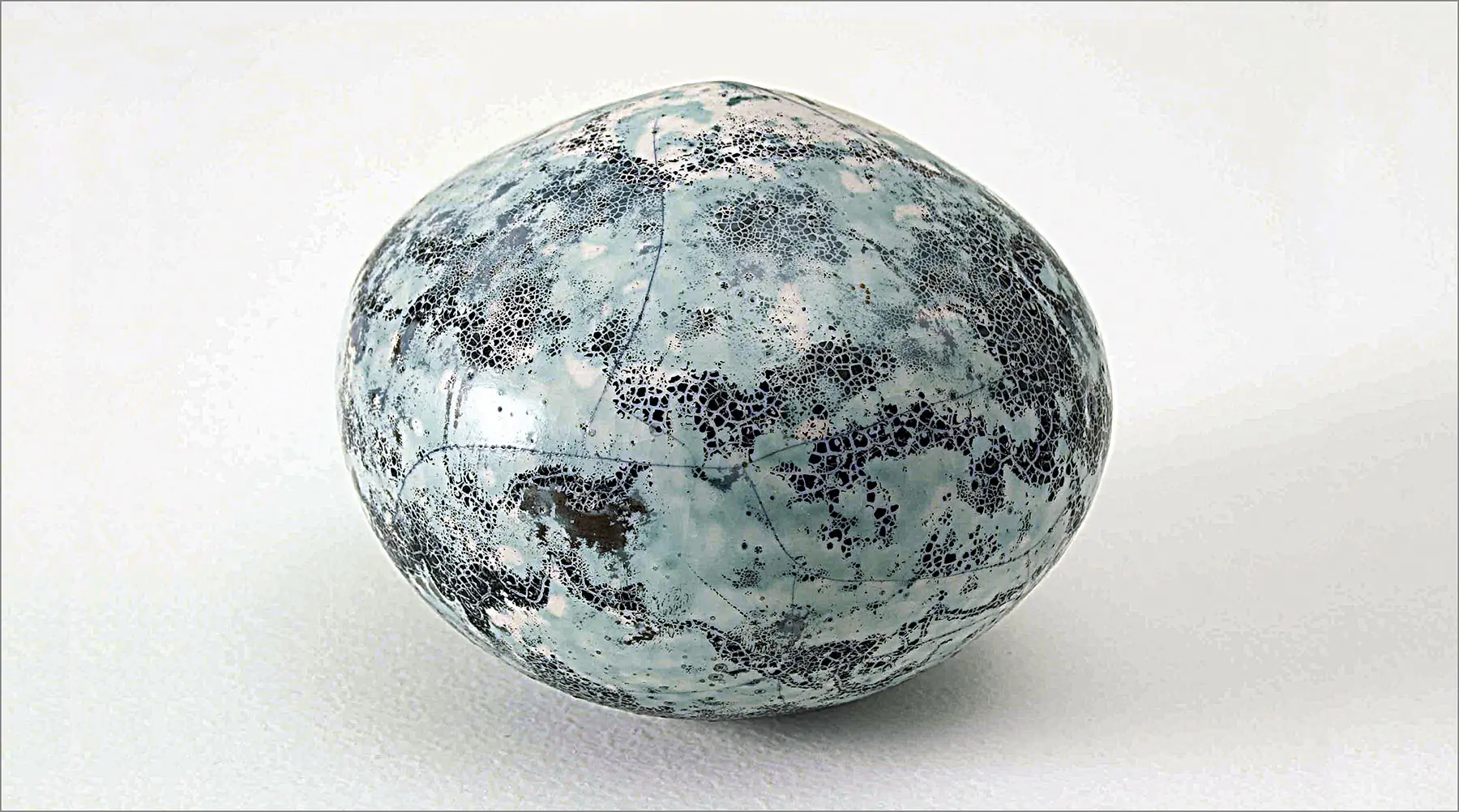
The group of artists with ceramic objects included: Carolina Encinales, whose plates and vases had figurative and abstract motifs, beautiful color, and iron oxide enamels; Enrique Margulis, whose works displayed thick scabs, products of the double-faced crafting of the pieces; Marina Salazar, whose vases stood out due to their surfaces being stained by several fires in primitive kilns; Andreína Umérez, whose plates were simple objects with sober, elegant decorations; José Ignacio Vélez, who showed a powerful group from the series Inundaciones, in which the artist represents villages, neighborhoods, towns, fields, swamps, canoes, and dead fish all covered in water; Gisella Tello, who is known for pure and refined forms and who presented families of ovoid porcelain works all in white except for one painted red; and Seka, another refined creator of pure forms, with works spanning several years in a mini-retrospective. This reminded one of the words of Roberto Guevara, the Venezuelan critic to whom the Ágora de fuego exhibition was dedicated: “The first thing we are reminded of by Seka’s conclusive, synthesizing work are André Malraux’s concepts. According to the brilliant French writer, we are the heirs to humanity’s entire history and cultural patrimony. This makes us witnesses supported by a creative vastness . .. Seka’s global forms, which closed up one day to become small worlds of marvel, contain the sum of millenary skills.”
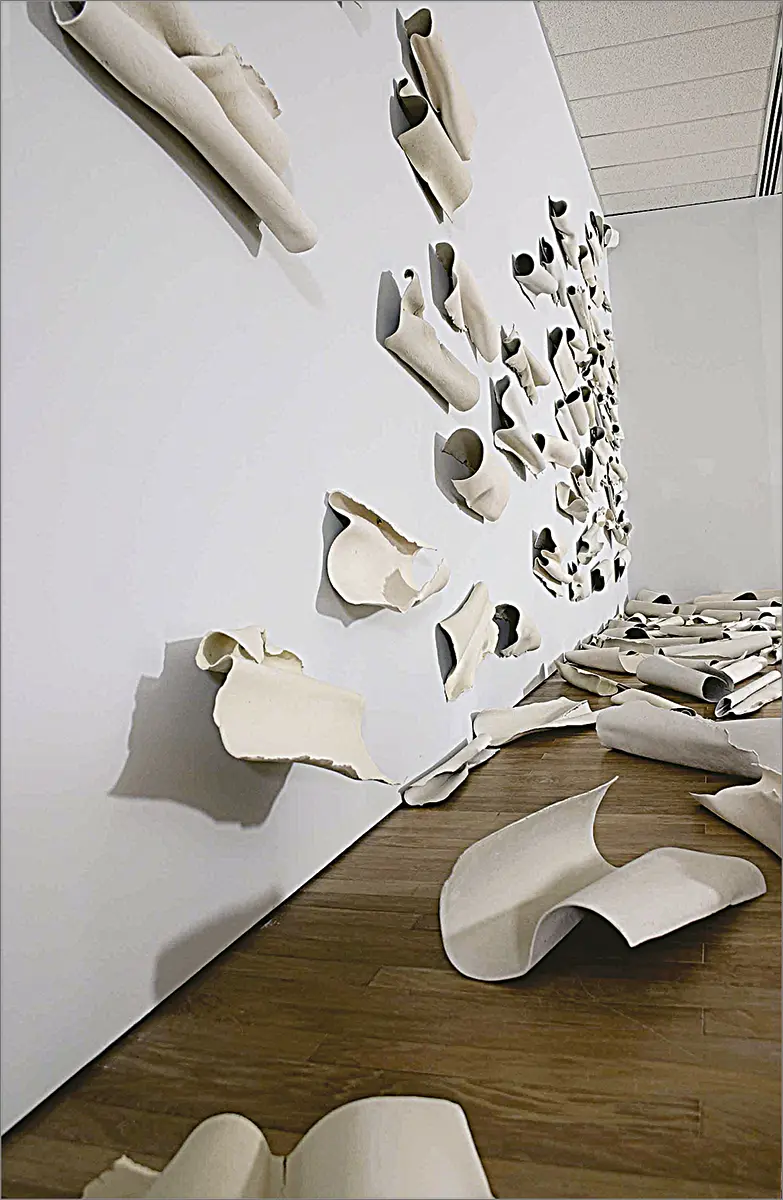
The show at the Museo de Arte del Banco de la República was a good experience; Venezuela and Colombia have important ceramists, some of them excellent. However, it was a pity that not all the participants were the best of the best. A few should not have been there, and perhaps some others could have presented fewer works. Lastly, the exhibition’s general presentation left a lot to be desired. The museography team at the BLAA, which usually does an excellent job, failed here. Some works, like Carol Young’s, were lost in the open gallery. Many works were crowded closely together; at times, some more space between the works of an artist and that of his neighbors would have been better. The leveling of several works atop a long catwalk covered by small rocks was not the best choice, and the acrylic display cases for Seka’s work looked awful.
GERMÁN RUBIANO CABALLERO