The set of video installations that composes Luz sobre luz, an exhibition by Alexandra Meijer-Werner (1972–2002) at the Museo de Arte Contemporáneo in Caracas, from March 12 to June 18, is a particularly attractive offering. The works use elements from a variety of artistic languages and combine space with images, sounds, and movement within the darkened site. In this environment, the viewer is submerged in a kind of large, mutable movie theater in constant activity. This trajectory retains its interest while suggesting visual experiences that mark the viewer as the protagonist and sole recipient of what is being shown. As a conceptual proposition, encountering the works on exhibit can arouse in the viewer processes of introspection, reflection, and daydreaming. Meijer offers an aesthetic, poetic proposal, and her video images and the ideas that are articulated become stimuli for feelings and sensations.
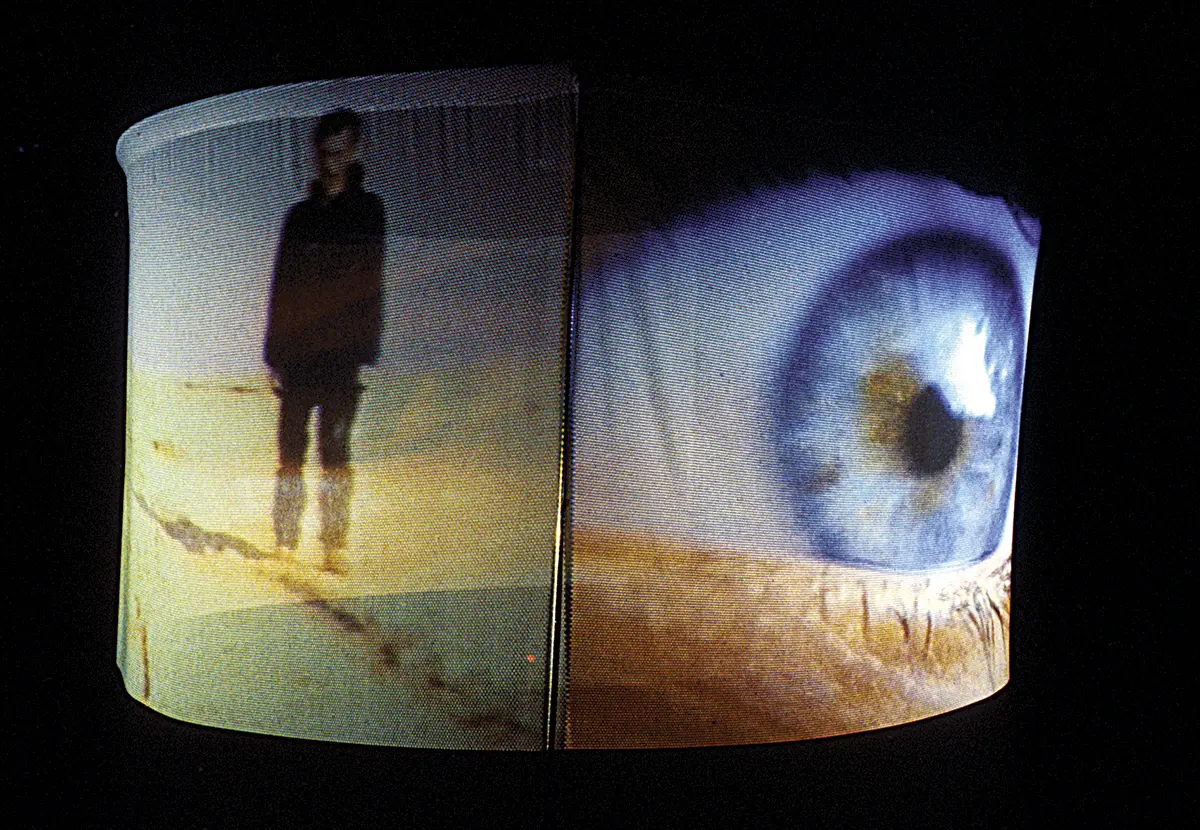
Luz sobre luz posits an interpretation of existence as a single, unique fact that deserves to be understood in its endless amplitude, an experience that is meaningful in itself. Ouroboros (1998), which depicts five rituals of birth or five ways to interpret origin, offers a circular reading of the human life cycle—the transition from life to death and from death to life, initiating the passage anew. It can also be understood as a vision of Man from a cosmic dimension and therefore a transcendent one: Man’s life is marked by fate and fate is nothing more than a continuous process of change, its overcoming verified in the being again, a flow that transmutes the negative experiences that emerge through successive existences. Having begun life in common with Myth, humans are a unique type of creature resulting from the fusion of the four fundamental elements—air, water, earth, and fire. As presented by the artist, the predetermined fate that will forever accompany us is a permanent cycle of transformations. The matter that constitutes us is transfigured; it is energy that is purified to become matter and energy again.
The installation Kreislauf, ciclo… revolución… circulaciónn… (1997) uses the circular as a reference to the cyclical, to the beginning and end as connected realities joined in a singular eternal instant. Here, Meijer points toward the notion of existence reconstructed on the basis of dream-like images, forms that allow her to bring together different life experiences to articulate an interpretation of the eternal, a fact that is repeated with a constant certainty, a path that human beings traverse as the eternal travelers that they are. Man is the active force in his own destiny, according to the artist, by recognizing that the most significant thing in life is the act of living itself. This individual being is at once part of a multitude, of humanity as a whole, and therefore an essential component of existence: a filament in a vast weaving, a grid of individual experiences that dissolve into the collective, as in Telar invisible (2000). For Alexandra Meijer, it is not that things themselves are illusory, but their separation/independence within the grid of reality is illusory. Life is a constant, eternal interaction promising permanence. It takes place amidst extreme situations like harmony and violence and clashing feelings of love/hate, a cycle of repeated experiences that mold human existence, tempering our consciousness and feeding our growth as sensible beings. These cannot be understood as independent, isolated realities, alien to what surrounds them; on the contrary, their being is in permanent interaction with what is beyond them, what is part of their own nature, and what exists outside of them and belongs to them, as seen in Osmosis (2001). The spaces that demarcate the interior and exterior existences communicate and switch in the osmotic process that is life, as the artist understands.
From Alexandra Meijer’s point of view, human beings move forward in an incessant acting, a life experience accompanied by powerful forces that have been present from the beginning of time and continue into eternity. As Benjamín Villares points out in the show’s catalog, Meijer attempts to reach new artistic forms capable of generating emotive processes and expressive freedoms. She is interested in people and their feelings as resources for artistic creation. Luz sobre luz is a beautiful metaphor for life.
FREDDY CARREÑO