
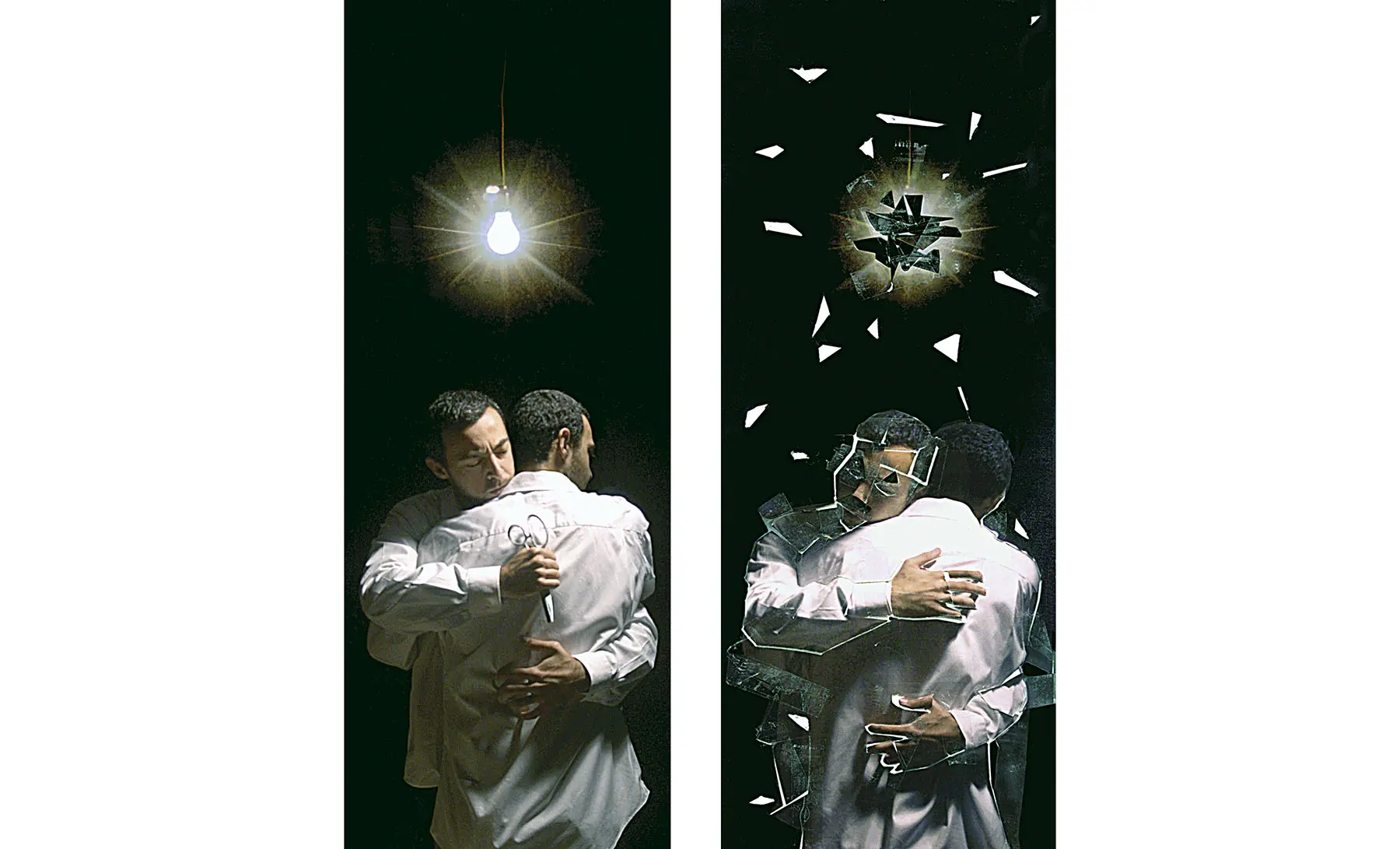
Last April 28th, in the northern Mexican border city of Tijuana, the jury of the Fourth International Banner Biennial, ES2006, organized by Olivier Debroise, Álvaro Medina, and Rachel Weiss, unanimously granted First Prize to Aldo Guerra of Mexico for his work titled El Idiota (autorretrato). The Second Prize went to Mónica Arreola, also of Mexico, for Desinterés Social, and three honorable mentions were given to Gabriel Boils Terán of Mexico, Pablo Guadiana of Mexico, and Ana Patricia Palacios of Colombia.
As usual, ES2006 was held in the facilities of Centro Cultural Tijuana (CECUT). Given the space’s characteristics, Marta Palau, the event’s curator, and director since its beginning saw the opportunity to present works with dimensions of 180 by 500 centimeters that could be presented hanging from the ceiling.
On ES2006’s opening day, the number of visitors was greater than in previous years. Unusually, the participation of local artists was a significant highlight in this year’s edition. The total number of participants was thirty-seven, from several countries in the region: twenty-three came from Mexico, two from Colombia, and one each from Canada/Mexico, Peru/Costa Rica, Korea/USA, Guatemala, Brazil, Paraguay, Cuba, Canada, Curaçao, Puerto Rico, Chile, and Peru.
It was a special celebration because it was the tenth year of this important visual arts event in northern Mexico. Palau celebrated this anniversary with the participation of specialists and artists like Francisco Reyes Palma, José Luis Barrios, Teresa Vicencio, Enrique Ciapara, Olga Margarita Dávila, and myself, who took part in a debate forum-related not only to the existence and work of this biennial but also to Tijuana’s intense cultural life in a city that hosts, among other events, the highly promoted inSITE and Tijuana, Third Nation.
In deciding the prizes, the jury took into account the concept of the banner as an object of communication, public vocation, and scale, without necessarily considering the technical specifications and materials indicated in the initial call for entries.

The first prize, given to the Tijuana artist Aldo Guerra for El idiota (autorretrato), caused great surprise since it had been several editions since such a distinction had gone to a member of the local artistic community. Guerra’s digital print seems to be on the topic of self-love. But the artist’s embrace of himself—surely a recurring fantasy for many people—is in truth a betrayal. On one side of his banner, Guerra embraces himself, holding a menacing pair of scissors to his double’s back; on the other side, the image seems to be a reversed view of the embracing couple, made of broken glass fragments. The artist comments “I am the one in the photograph and attempted something impossible, to embrace myself, which can have many meanings; for instance, we can’t tell whether is a farewell embrace, or a greeting gesture.”
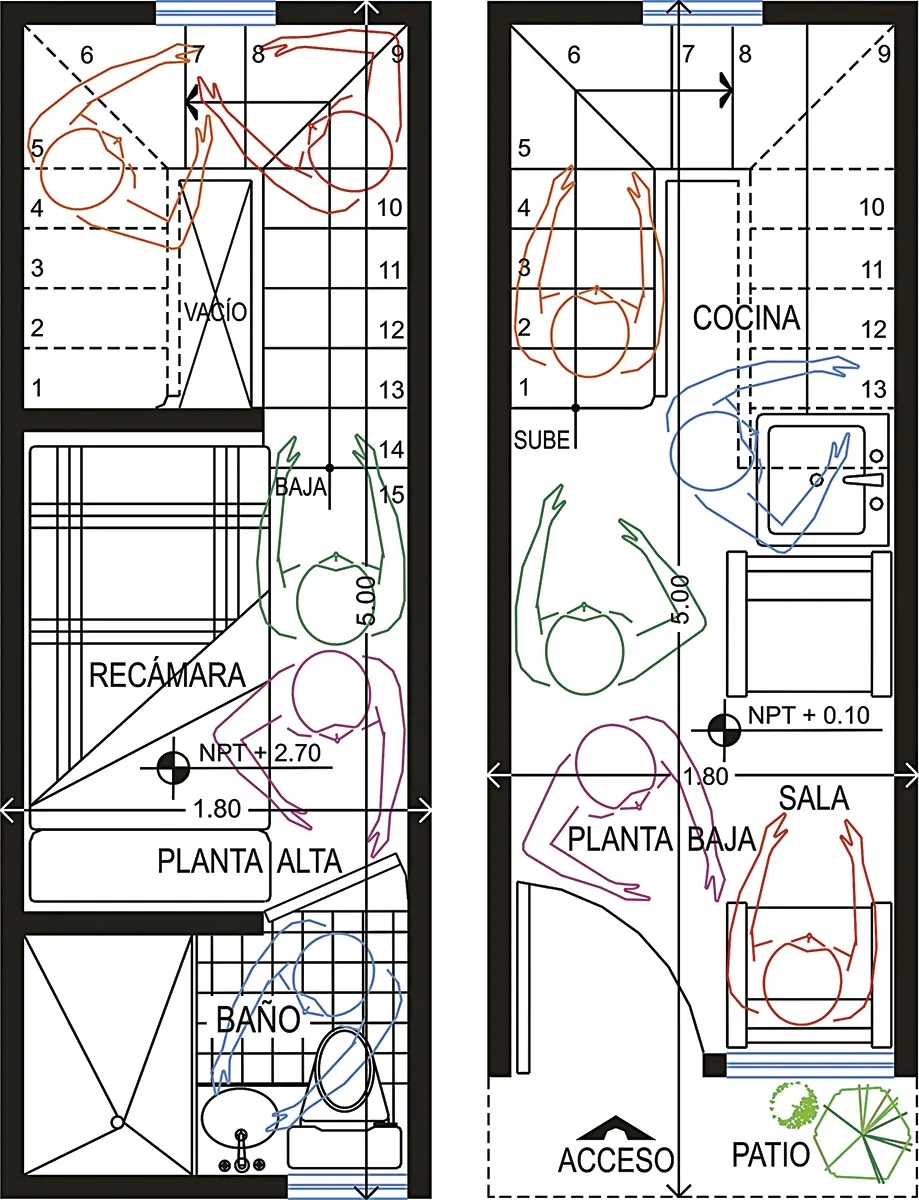
The second-prize winner, Mónica Arreola’s Desinterés social (Escala 1:1), is a well-aimed critique of the astoundingly fast construction in Tijuana—as in all big Mexican cities—of what is known as social interest housing units. In reality, these are subhuman lodgings that can be as small as forty-five square meters in area. In an ironic and critical way, Arreola’s work suggests the idea of living on the area of the banner; it proposes a floorplan that, although it is contrary to any logical use of space, makes clear that it is possible to live in an eighteen-square meter space divided into two levels, with each side of her banner representing one floor of her lodging.
Gabriel Bois Terán’s work cuts across time from the oldest tradition to today. His Cut Pile Grass Cipactli originates from a Central American creation myth of the Earth deity as an alligator. The deity’s belly is the ground, since alligator bellies always touch the ground, and the deity’s mouth leads to the underworld. Terán’s banner, made with synthetic grass, is a post-industrialized version of the original ground. It intersects a narrative about the origin of the Earth with a simulacrum or representation of the Earth in cut pile grass, revealing mestizaje as a cultural survival strategy.
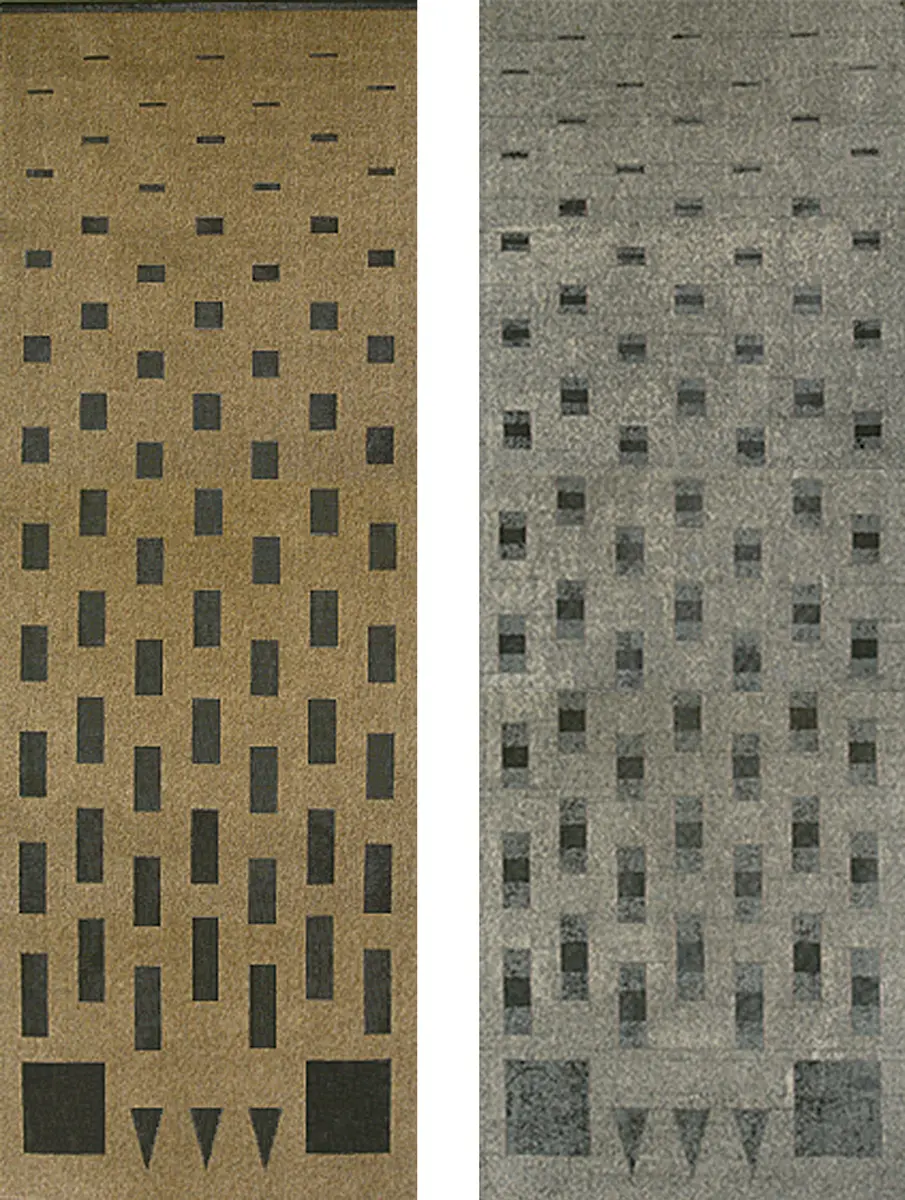
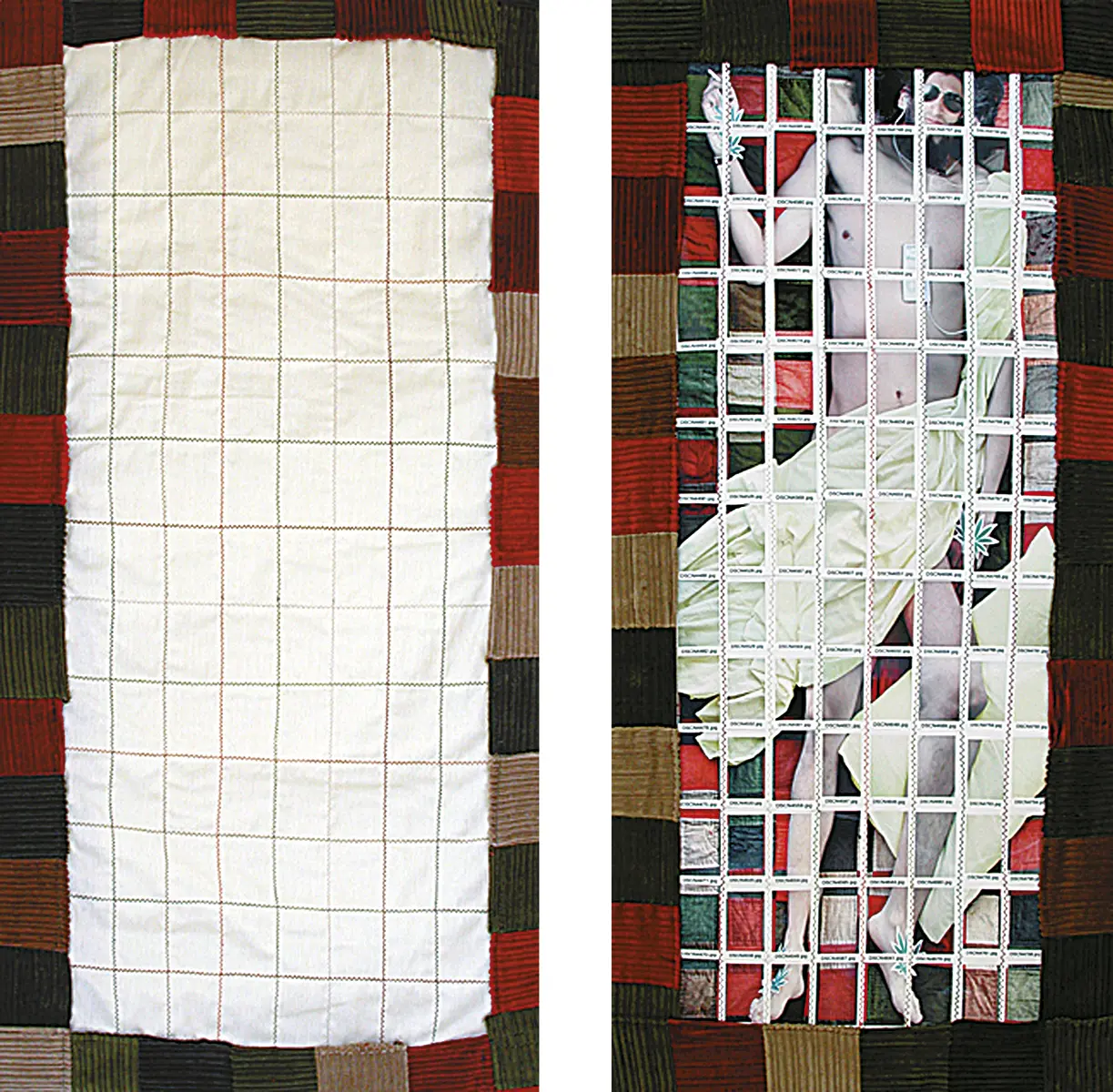
One of the works receiving an honorary mention was Pablo Guadiana’s El sueño del gallo. In this work by the artist from Ensenada, Baja California, a man holding a cigarette is represented in square photographic fragments in such a way that he refers to the images of Christ’s third-day descent on Michelangelo’s Sistine Chapel ceiling. His feet and hands are partially obscured by marijuana leaves that cover the stigmata. On his chest and over his heart is an MP3 player, connecting him to a world of advanced technological consumption. On the other side of the banner, a grid responds, “…to the design of blankets made of cloth squares sewn by hand or machine. Each photographic square is a section of the blanket, and all of them together reveal the image of a post-modern Jesus Christ, as in the Shroud of Turin,” says Guadiana.
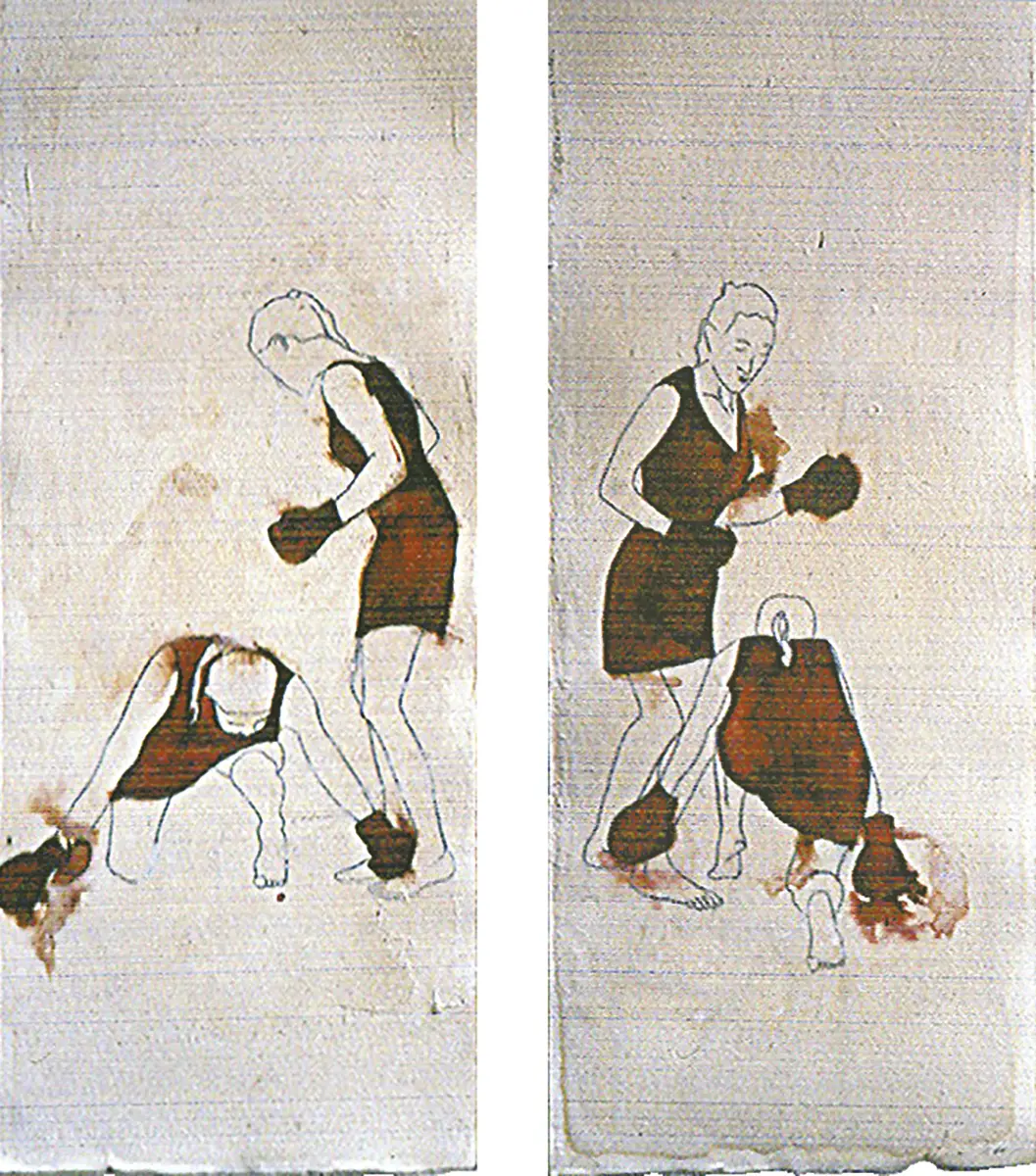
Ana Patricia Palacios’s work addresses the subject of fighting and also received an honorary mention. Entre golpes is more symbolic combat than a real fight. In this work, two women wear dark red boxing gloves and short dresses; the color refers to blood. This substance coheres to cultures and races and supersedes existential accidents that separate the fortunate from the poor and those who think of themselves as better than others. The work speaks also of the need to protect identity, and the depicted one-on-one battle is the confrontation of two superficialities.
Another work worth mentioning is by the Guatemalan artist Verónica Riedel. Libertad condicional confronts a Latino woman with prototypical American iconography, and it is an especially pertinent work at a crucial time in the history of U.S.-immigrant relations.
Mónica Dower’s poetic Ingravidez proposes the sublimation of an ethereal woman. She levitates in an urban space guarded by a corpulent man who appears nullified by impersonality and contrasts sharply with the woman’s intensity.
Undoubtedly, ES2006 has already become a point of reference in terms of taking the pulse of contemporary Latin American artists. Although it is true that some of the names that are well established in fairs, salons, and biennials were absent from this edition, it is also true that such circumstances favor the circulation of fresh voices. The stage is thus ceded to emerging artists who see this biennial as one of the most atypical and therefore very attractive and challenging. At the same time, they are able to interact with contemporary mid-career artists, such as Carlos Aguirre, Tony Monsanto, Marisa Lara y Arturo Guerreo, Arnaldo Coen, Alfonso de Luca, Mónica González, and Arnaldo Roche.
Besides those already mentioned, other participants in ES2006 were Claudia Algara, Juan Sebastián Beltrán, Sergio Brown, Bulbo-Colectivo (who also produce outstanding TV shows, true video-art works), Ismael Castro García, Lucía Chiriboga, Mónica Dower, Demián Flores, Fonthor, Máximo González, Nan González, Hey Yeuny Jang, Jaime Jiménez Cuanalo, Fredy Jiménez, Glenda León, Jennifer Macklen, Pepe Maya, Richard Moszka, MARTES (the collective Mujeres por las Artes), Aurora Noreña, Cecilia Paredes, Raúl Quintanilla, Javier Ramírez Limón, Verónica Riedel, Mónica Rosas Reyes, Soledad Salame, Santistevan, Martha Soto, Ximena Somoza, Alicia Tsuchiya, and Mario Ybarra, Jr.
SANTIAGO ESPINOSA DE LOS MONTEROS