
During the nineteenth and twentieth centuries, Galicia was one of the main sources of Spanish migrants to the Americas. Hundreds of thousands migrated to Argentina, where the name gallego became synonymous with “Spaniard.” Although large numbers also migrated to Cuba, Puerto Rico, and Venezuela, the organizers of the new edition of Pontevedra’s biennial focused on the relationship between Galicia with the three countries—Argentina, Chile, and Uruguay—of the Southern Cone, the destination of Galicia’s most important migratory flows. They further decided on the context of a curatorial project, designed by the Argentinean art historian Victoria Noorthoorn, that centered more on the current situation than on the history of the links established by migration between Galicia and these countries.
Thus, with only a pair of notable exceptions, the twenty-nine artists in the biennial presented works and interventions regarding both the contemporary migration of people from the Southern Cone to Galicia and the economic globalization that has reversed the migratory flows linking both regions. Another important aspect of Noorthoorn’s strategy was to make it impossible for awareness of migration to be reduced to facts and positive documentation, leaving it open to allegorical or metaphorical approaches and to exploration of its biographical, cultural, psychological, and imaginary dimensions. It was even proposed that migration’s unending displacements and mutations affect us all in such a fluid situation as contemporary society.
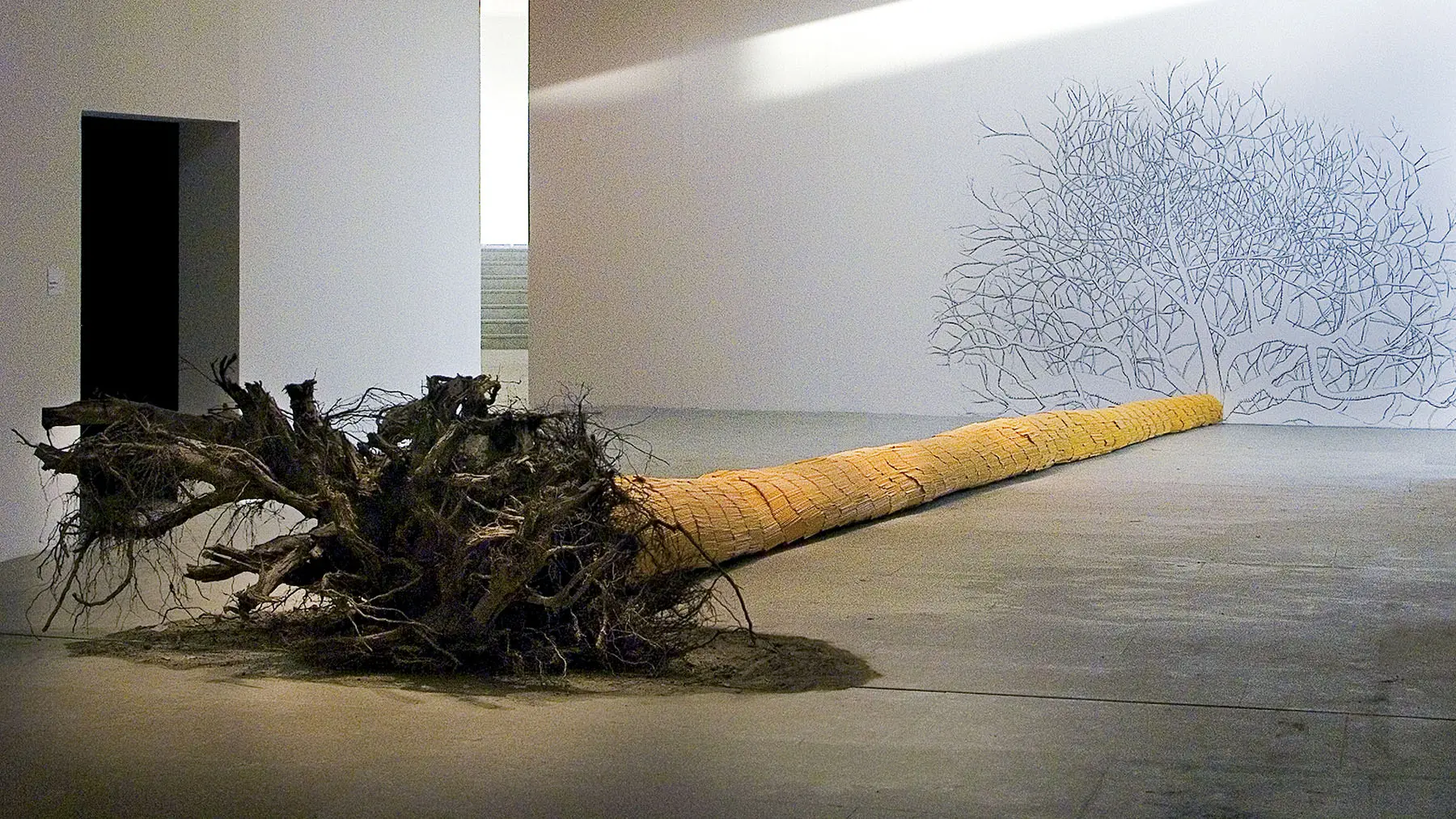
The figure of the artist and theoretician Luis Camnitzer is key since his own biography is an excellent example of migration. Camnitzer was born in 1937 in Lübeck, Germany, and migrated with his parents to Montevideo, Uruguay, where he was educated and lived until 1964; in that year he moved to New York, where he currently resides, producing works with strong international links and implications. At the Pazo de Cultura, one of the biennial’s three sites, Camnitzer mounted a powerful work consisting of a fallen tree with its roots exposed and its trunk covered with yellow pencils. The branches were drawn on the contiguous wall with a gesture that complemented the thesis of this work: the source of art is the condition of being uprooted—that of the tree, that of the pencil, that of the artist.
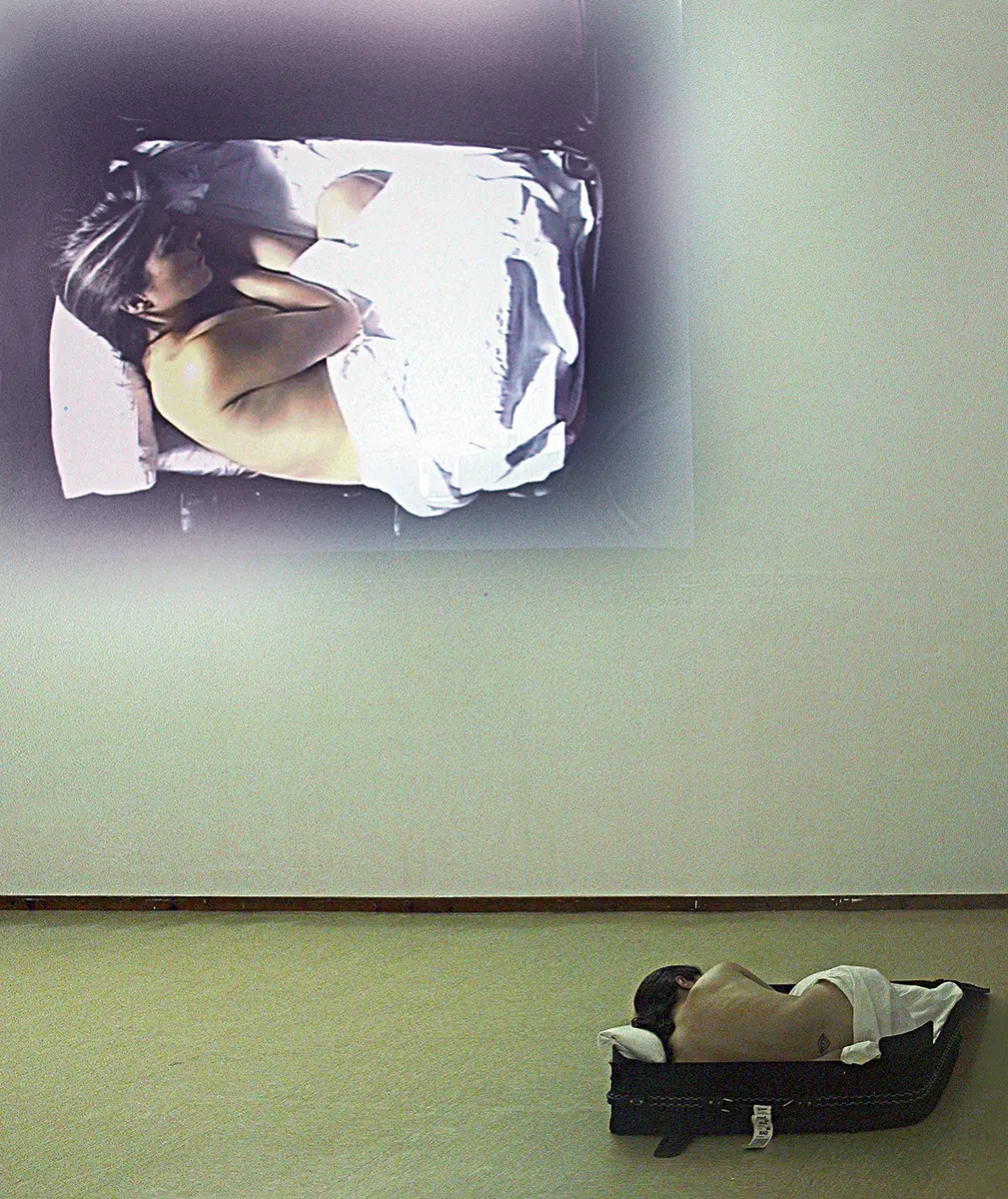
Similarly, the Uruguayan artist Cecilia Vignolo pointed toward the symbols of migration with an installation of an open suitcase placed on the ground, inside which she folded herself, naked and barely covered by a bedsheet, for several four-hour sessions. A video projection on the wall duplicated the image of the artist inside the suitcase, underscoring its association with the provisional, unending displacement, and perpetual travel. Argentina’s Roberto Jacoby took the question of what migration means in terms of a change in terrain and radicalized it to the point of metaphysics; his Darkroom III subjected the viewer to a temporary state of blindness and the recordings of short narratives read by a half-dozen artists. The experience tested one’s ability to form images in even the most complete darkness.
Back and forth
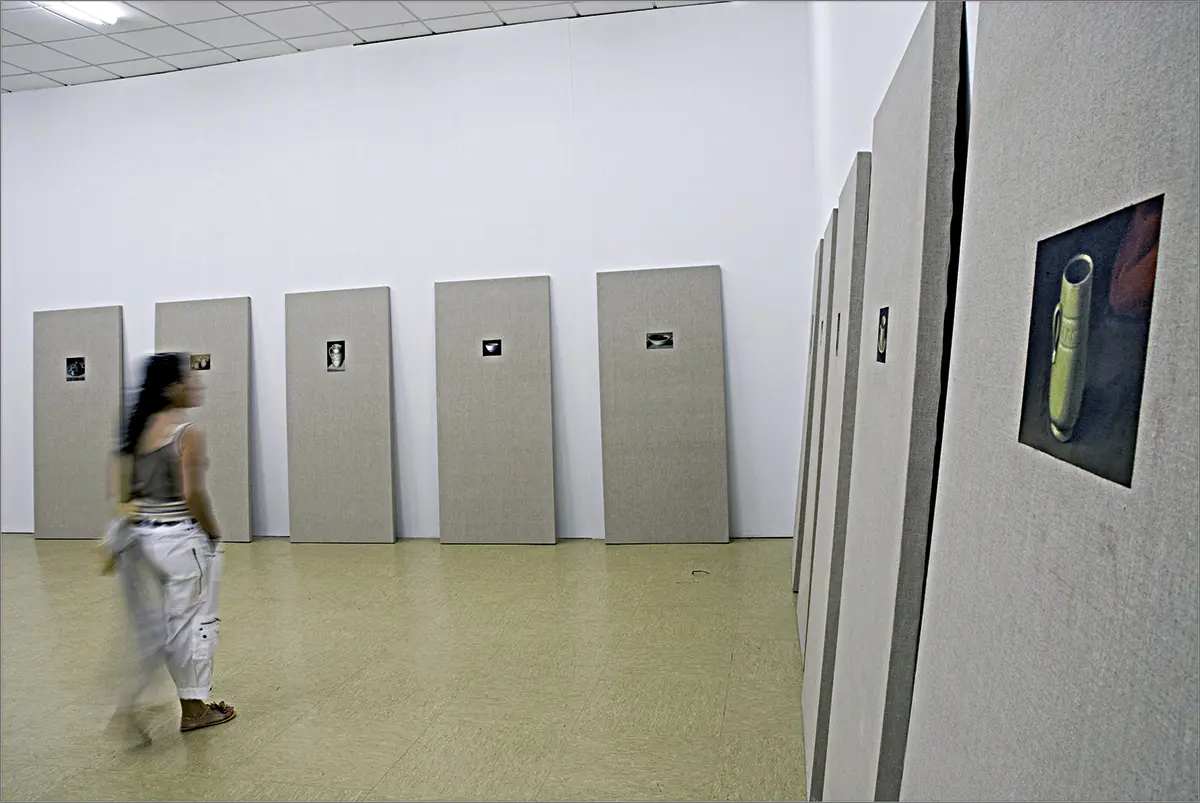
The second important group in the Biennial comprised artists who engaged a back-and-forth strategy—like the musical rhythms of Cadiz that were taken to Havana and returned transformed to Cadiz during Spain’s domination of the Americas. This group included Josefina Guilisasti, from Chile, who exhibited a group of works, each consisting of a large untreated canvas set directly against the wall; on the upper third of each, she had painted a common everyday utensil, faithfully copied from the works of Fernando A. Sotomayor, a Galician artist who was an important teacher in Santiago’s Academia de Bellas Artes between 1908 and 1915.
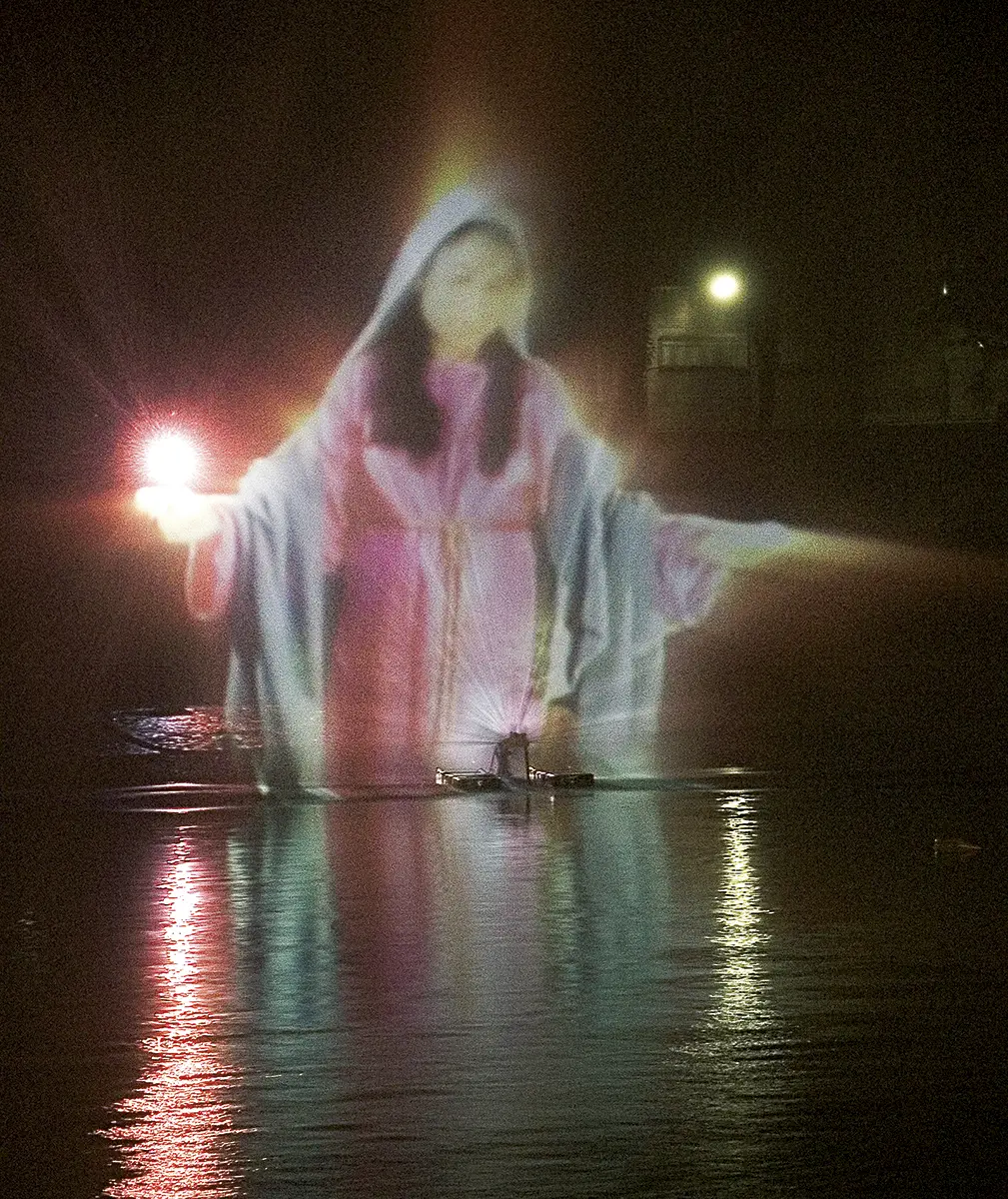
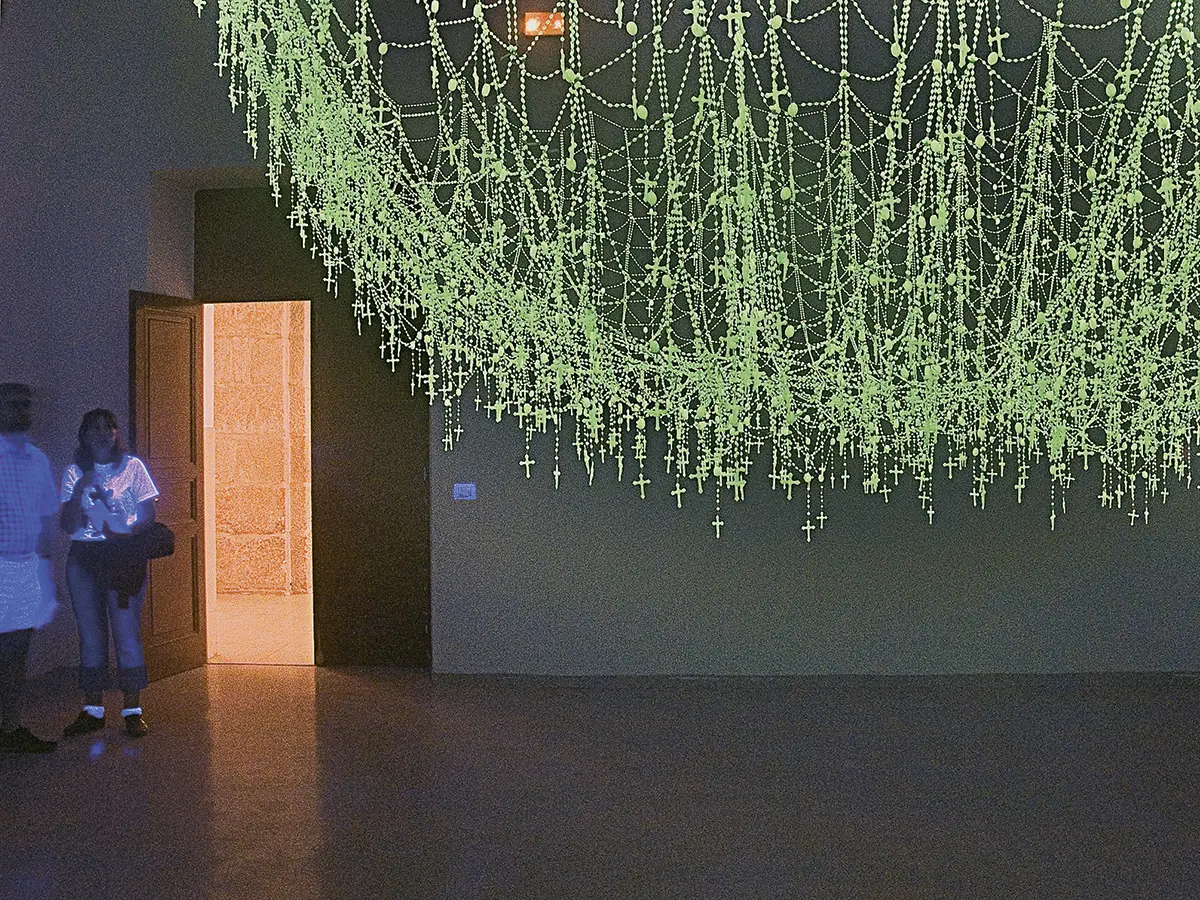
Daniel Joglar and Judi Werthein, from Argentina, opted for more provocative tactics. Joglar created a large chandelier—which could also be read as a net—of stridently green, plastic-bead rosaries. But the evocation of admixture and hybridization in Latin America with the symbols of Spanish Catholicism—the spiritual capital of which, Santiago de Compostela is located in Galicia—was even clearer in Wertheim's intervention. She designed an image of the Virgin Mary with an Indian face and body and projected it on the waters of the Pontevedra River at night and during the biennial’s opening. For the remainder of the biennial, in a room with documentation of Werthein’s other projects, visitors had access to small cards with the image of this Virgin of those who return, printed with the same pattern used in popular stamps of the Virgin Mary.
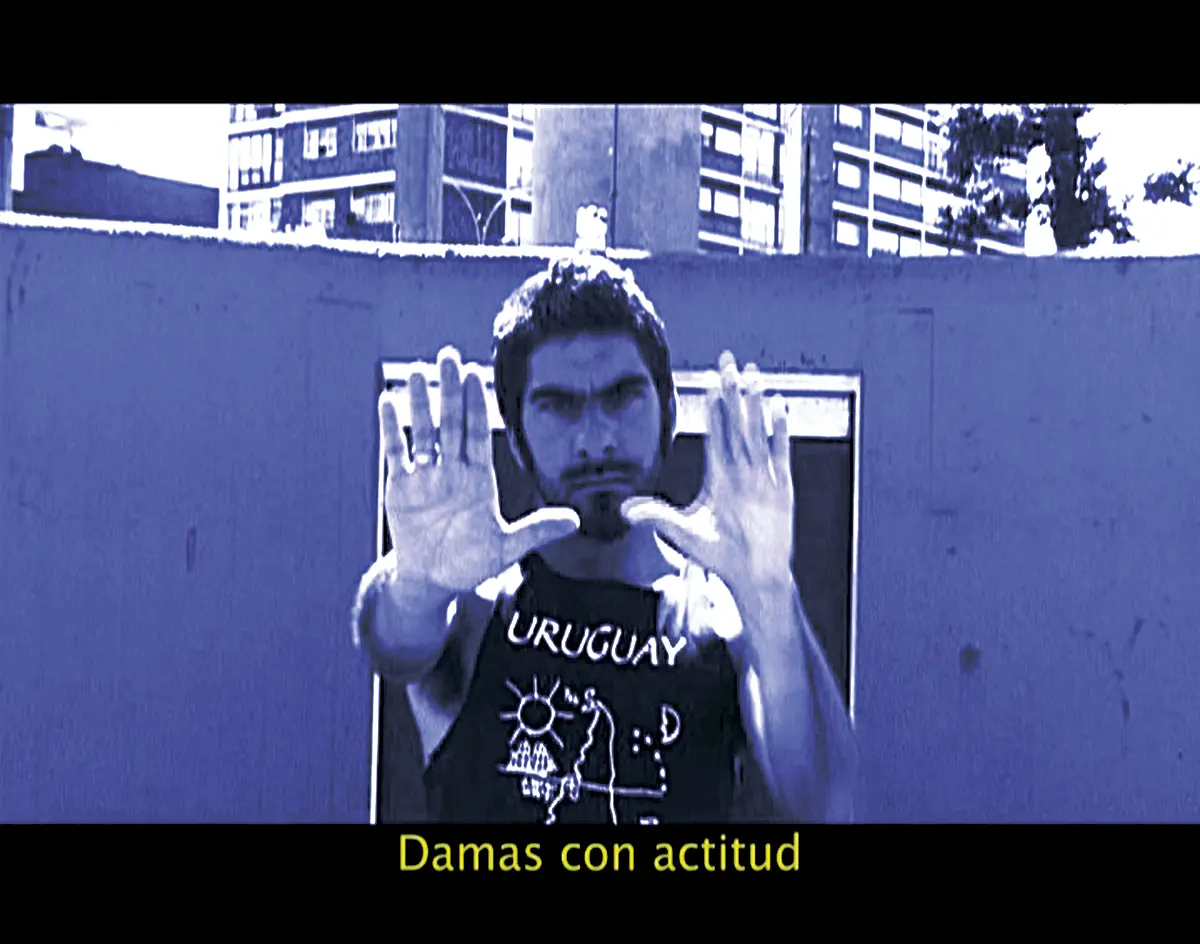
But the highest honors for provocation went to the Uruguayan artist Martin Sastre, who presented a series of audacious, daring videos. Sastre, who currently lives and works in Madrid has embodied the character of the World-famous Latin American Video Artist and interprets it with a sense of humor and irony that boldly appropriates the aesthetic of the video clip or, if one prefers, MTV’s psychedelic/Pop aesthetic.
Sastre works with the caveat that his videos, as well as his character, both parody the Eurocentric attitude of the Southern Cone’s dominant classes in the region’s alleged “golden age” and bring to light the underside of violence and abysmal inequalities obscured by the dazzling media packaging of globalization. The videos also unveil the hidden miseries in the current promotion of the Latin American in Europe.
Forgotten Histories
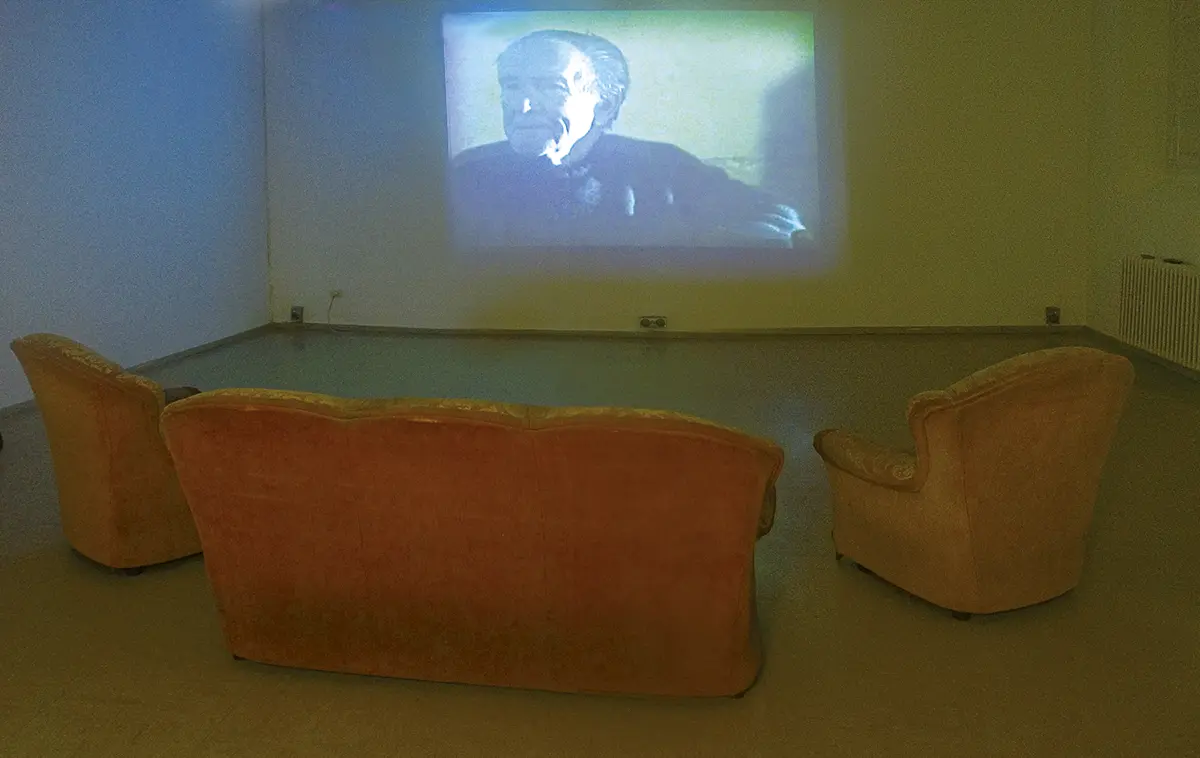
The idea of the return journey acquired painful and even tragic undertones in the work of artists like Nury González from Chile and Ana Gallardo from Argentina. González built two installations. El mercado negro del jabón traced the itinerary of González’s Spanish grandparents after the Spanish Civil War, when they sought refuge in a France governed first by Marshall Petáin and then by the Nazis; they later settled in Chile. Sic transit followed the artist’s path toward reclaiming her Spanish citizenship, a common move among descendants of European immigrants in the Southern Cone. But Gallardo best-brought closure to the back-and-forth cycle, or she was at least the one who did so in the most elegiac manner. Her video installation resembled a middle-class home’s living room, presided over by a TV showing a video of the artist’s seventy-eight-year-old uncle; fifty-two years ago, he left his native Granada and migrated to Rosario, Argentina. His niece asked him to reconstruct the places of his childhood and youth and, with his directions, diagrams, and drawings, she traveled to Granada and recorded what those places had become since he left them. In the video installation, the visitor saw Eduardo Gallardo in the living room of his Rosario home, watching the video made by his niece in a city he hadn’t seen in a half-century. It was truly moving.
The Galician Quota
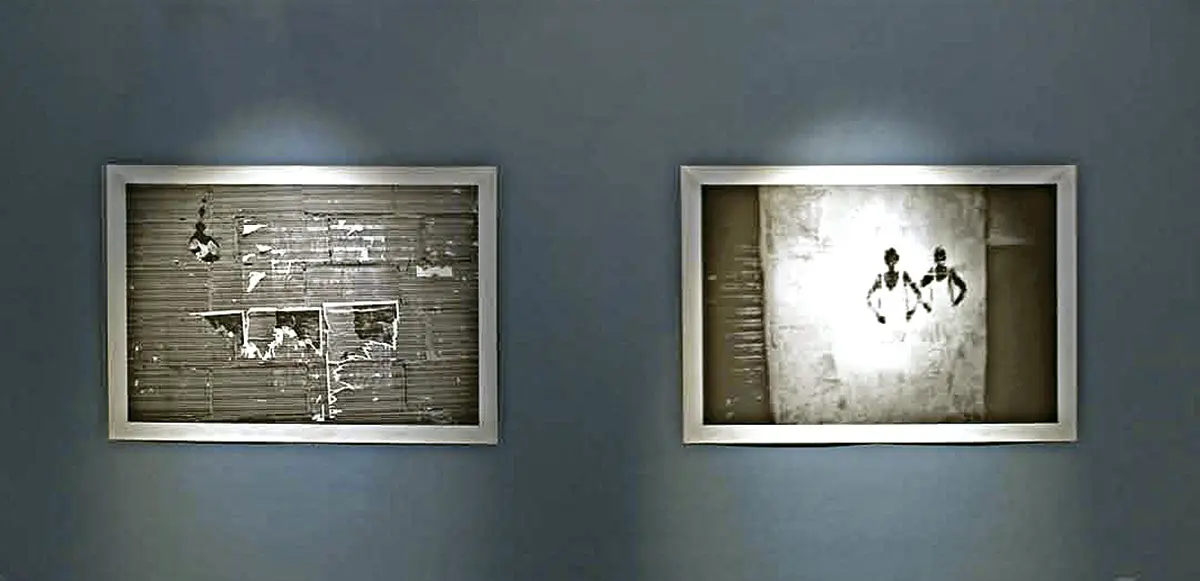
Vari Caramés was perhaps the only one among the eight Galician artists represented in this biennial who touched directly upon the topic of migration. No longer a concern of his fellow Spaniards, this topic affects South Americans in general as well as the North African, Sub-Saharan, and Eastern European citizens who over the past decade has chosen Galicia, and Spain as a whole, as the place to realize their dreams and ambitions, which are an impossibility in their countries of origin. Caramés exhibited a series of color photographs documenting the less visible but certainly controversial and heart-rending aspects of migration. The rest of his Galician colleagues presented works that, while not lacking interest connected elliptically to the topic of migration and imagination. This was also the case with some other Latin American artists in the biennial, such as Ricardo Lanzarini, Marina De Caro, Marco Maggi, Eduardo Basualdo, Pablo Chiuminatto, and Bernardo Oyarzun.
*Photos by Xenaro M. Castro.
CARLOS JIMÉNEZ
Writer and art critic, independent curator.