There will never be a door. You are inside
and the citadel contains the universe;
it has no outer wall, it has no obverse
nor a secret center does it hide.
Jorge Luis Borges
Colloquially, it is said that “there is no bad faith,” and the new exhibition of the Jumex Collection makes this statement plain and clear. The exhibition’s title speaks metaphorically of its basic concept, an incongruous image, born from the aphorisms by the French writer and painter Henri Michaux in his 1972 book Poteaux d’angles. His phrase “skier in a bottomless well” evokes a confusing and impossible image that nonetheless aptly describes the experience of walking through this exhibition and discovering some ninety artists from very diverse origins and more than 220 works of art, most never seen in Mexico.
The exhibition was curated by the collection’s registrar, Michel Blancsubé, and the result is rather unusual for two interconnected reasons: the use of space and the playful tone of the works and curatorial plan. The curatorial concept attempted to break from a conventional, linear trajectory and adopt a more curious approach. This was successfully achieved, as many possibilities were opened with an equal number of interpretations. Since there is no overriding theme, visitors can establish their own connections between works and galleries, even though there are no actual galleries but only small rooms, hallways, and corners that were created specifically for the works on exhibit.
This last fact is particularly striking because it is usually the museographic discourse that adapts to the space and the material resources found in the exhibition area. Here, the opposite takes place: these spaces were specifically built for the selected works and in particular to foster closer interactions between viewers and the works. For instance, a large painting is used as a revolving door between exhibition areas.
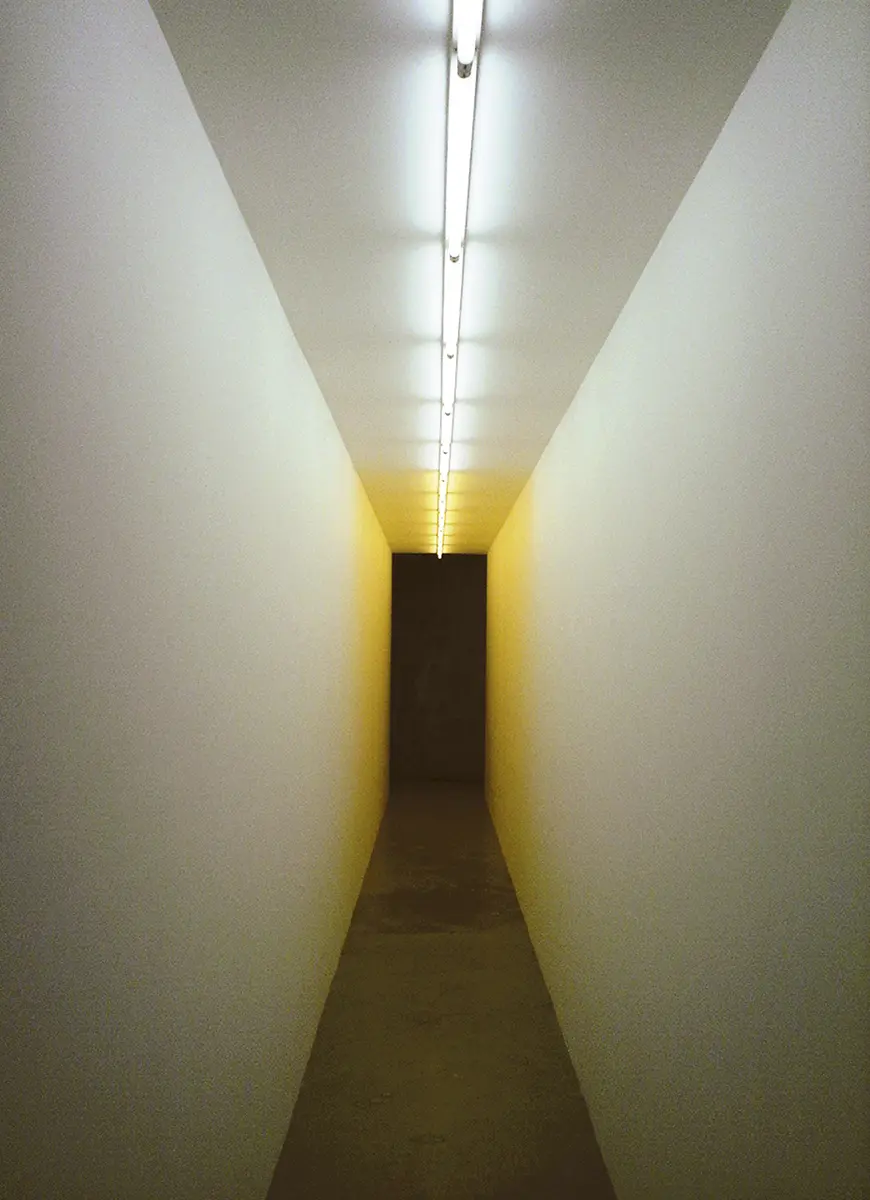
Similarly, there are hallways designed to isolate particular works, which can only be seen individually due to the smallness of the space. Such is the case of Iñaki Bonillas’s Corredor de luz, in which one sees a very interesting small tunnel that has a special atmosphere based on light, is a recurring aspect in the work of the Mexican artist.
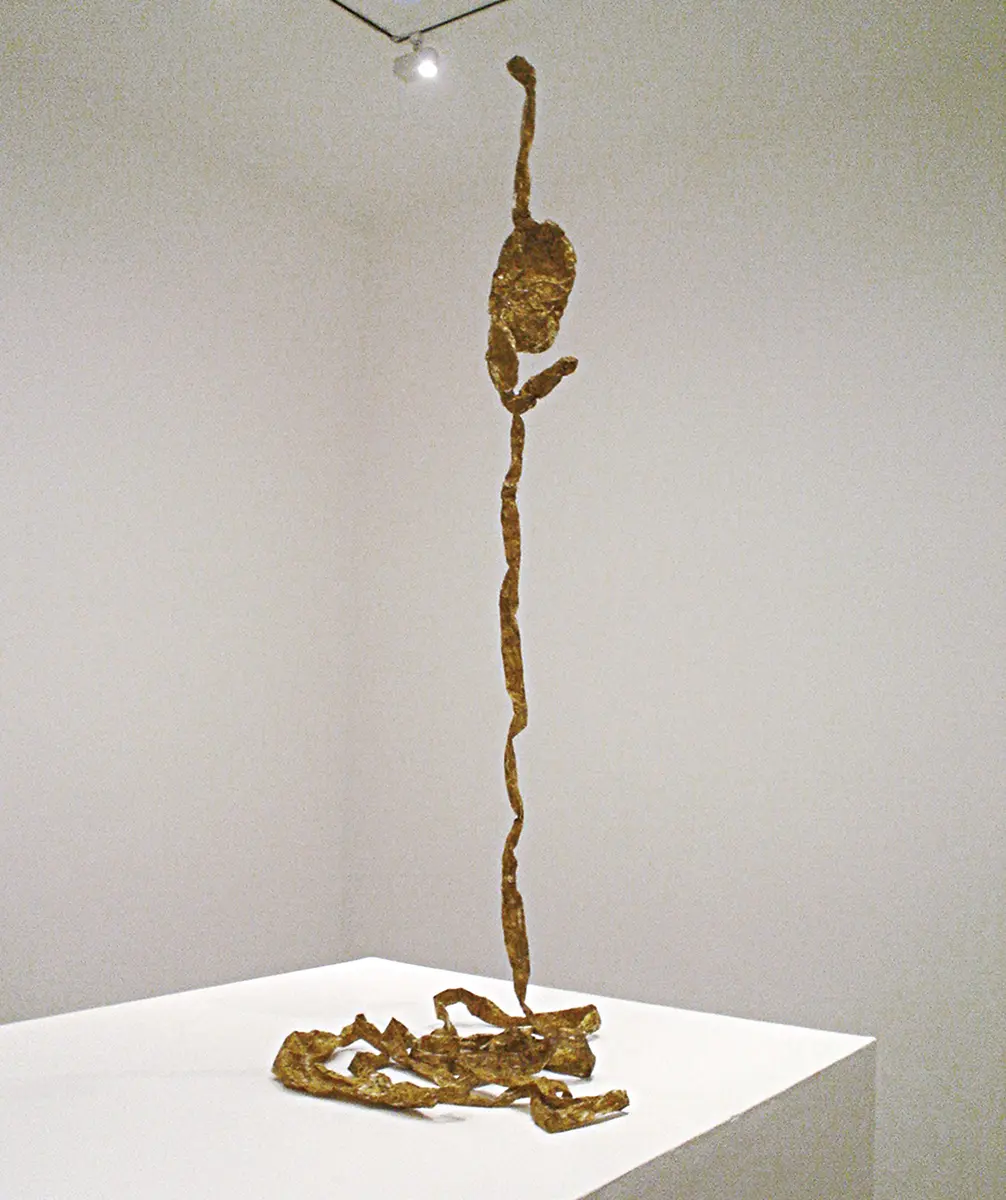
Another curatorial intention was to feature drawings, either as an autonomous medium or as a resource for the configuration of three-dimensional works. Yet, despite drawings being present throughout the exhibition, the diversity of the proposals is such that drawing is not the most salient element. One also finds painting, sculpture, and many installations, which in general are more attractive among the clusters of works. One example is the work of the Mexican artist Jorge Méndez Blake, a graphic deconstruction of Herman Melville’s Moby Dick placed in a large permanent gallery on the collection’s second floor.
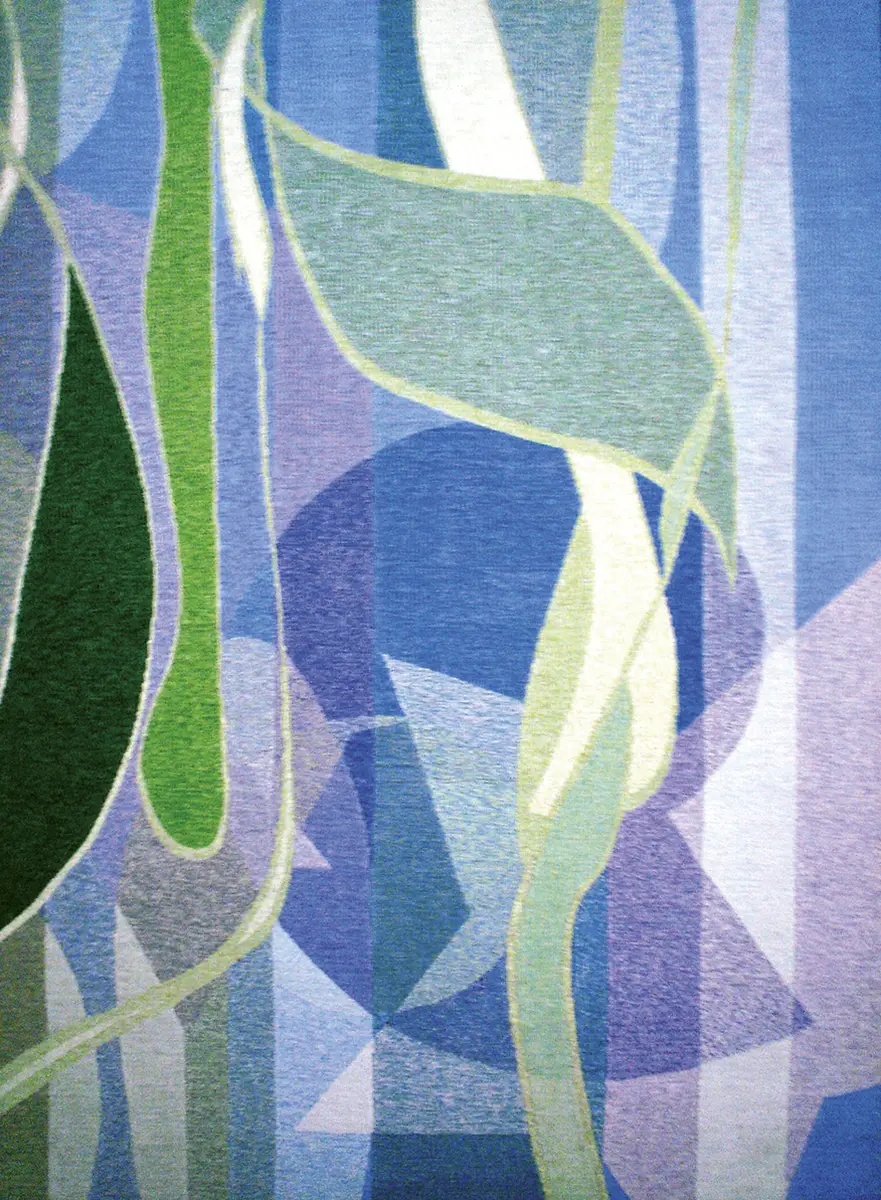
Another work that explores the relationship between language and the visual is Il Pleut, a calligram by Guillaume Apollinaire was first published in 1918. The chronological range of the exhibition extends from 1903 to 2005; although there are few works dating from the first half of the twentieth century, they all reflect a contemporary discourse and participate in this dialogue with the newer works.
The only video in the exhibition, The Band, is by a young Polish artist, who creates an installation with four Super-8 projections showing a musician. With this work, the space is the protagonist, a small room with columns on which the images are projected. Thanks to this artifice, the work is not lost among the large selection presented but rather interacts with each of the other works. The design of each space generates an intimacy between the work and the viewer, who gradually discovers new elements.
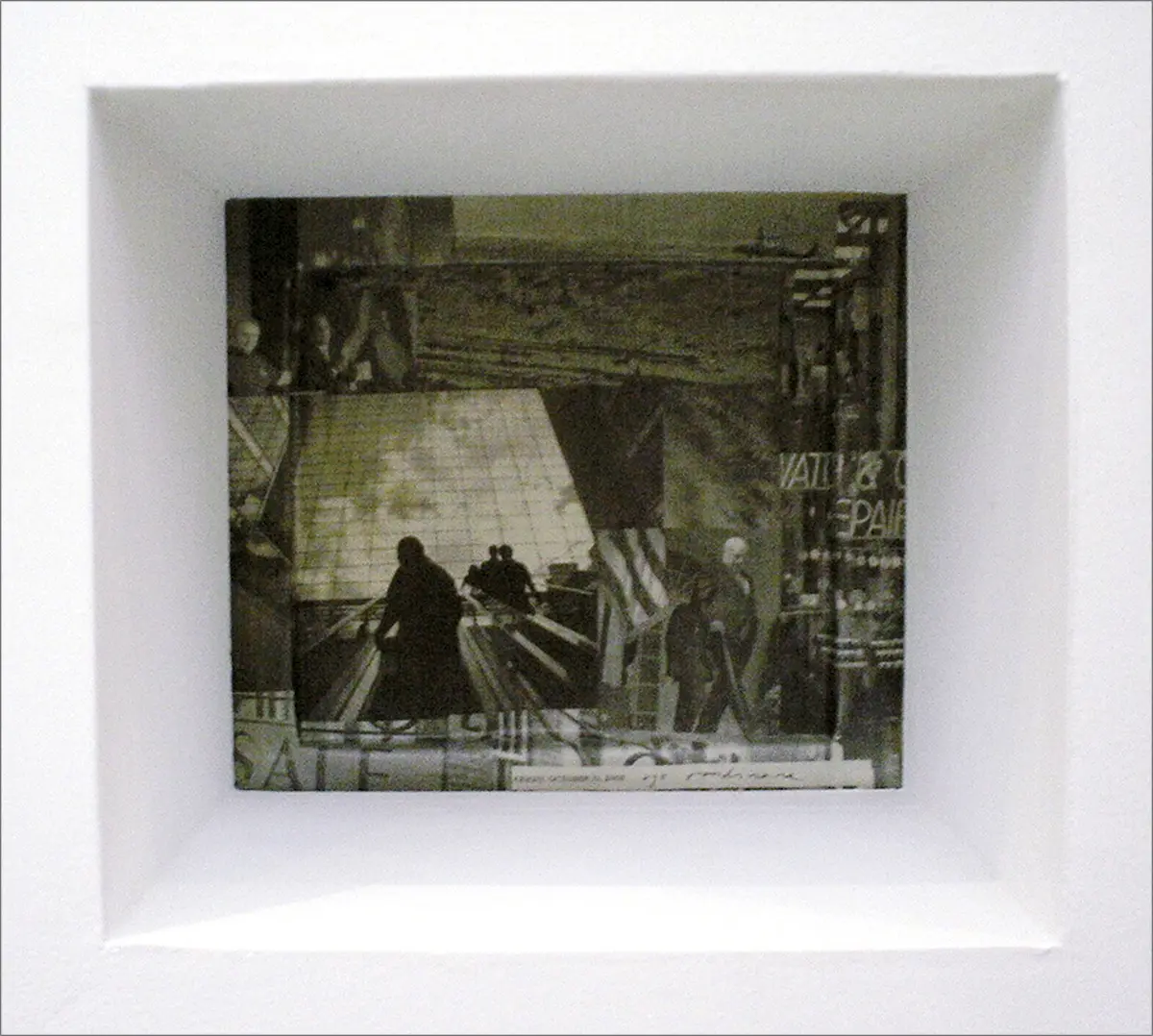
This is what occurs as one is casually confronted with Francis Alÿs’s Show Shine, which is placed at the bottom of the stairs that access the collection’s second floor—this work is literally a find. The only image visible through small perforations is a hand shining a shoe, and its placement forces the viewer to crouch in order to see it, in approximately the same position one would adopt if one were actually shining a shoe. Curatorial elements like this make exploration of the show playful, dynamic, and enjoyable.
In a way, the confluence of such diverse artistic generations, media, and proposals is overwhelming. However, despite the thematic freedom granted to the viewer, the show does possess a coherent discourse, residing in the interaction that is established between visitor and space.
The words of Michel Blancsubé helps one to better understand the show’s concept: “It all started when I had the idea of bringing out once more a number of small works, essentially drawings. I needed to think about the reduction of the exhibition spaces so that these works were not lost in the large white cube. From that decision, the idea of the labyrinth, or to be precise, of the labyrinthine mechanism, was born. As in any labyrinth, disorientation and play are sought and fostered, but here there is no true center, nor an endpoint to be arrived at.”
In the exhibition, there are works by Mexican artists from different generations, including well-established figures like Gabriel Orozco, Pablo Vargas Lugo, Luis Felipe Ortega, Sofía Táboas, Carlos Amorales, and Gabriel Kuri. Also, there are works by Mexico-based foreigners such as Francis Alÿs, Melanie Smith, and Thomas Glassford, alongside younger artists like Stefan Brüggemann, Inaki Bonillas, Ricardo Rendón, Moris, Miguel Monroy, and Mónica Espinosa. There are also works by Venezuela’s Arturo Herrera and two works by Jorge Pardo from Cuba. International artists in the collection include Thomas Hirschhorn, Jasper Johns, Ugo Rondinone, Paul McCarthy, Richard Serra, Sherrie Levine, Kiki Smith, Peter Fischli and David Weiss, and many others, not to mention Henri Michaux, the author of the phrase that gives the show its title.
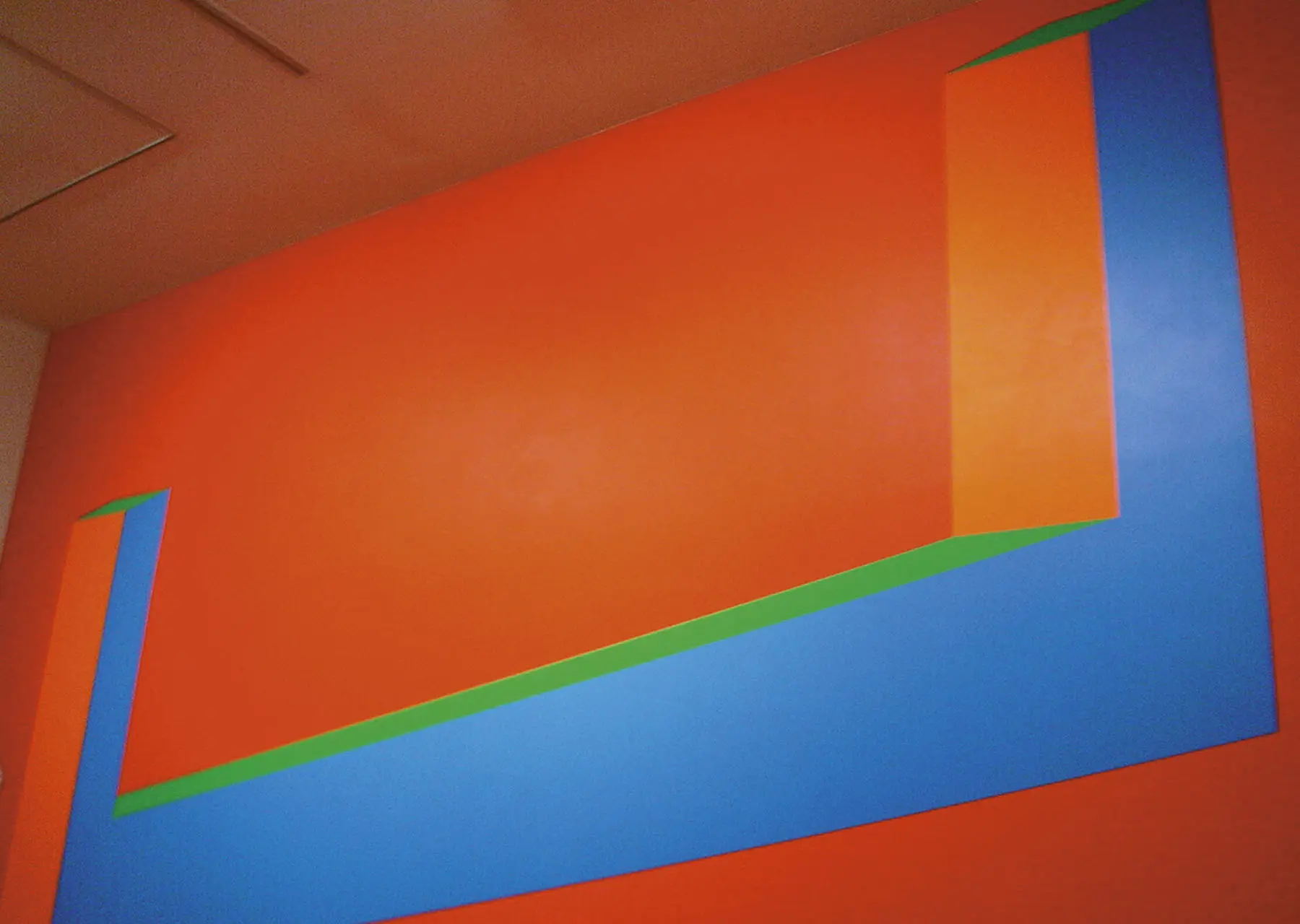
It is important to note the inclusion of Sol LeWitt’s Wall drawing #994, previously shown in Mexico at the Sala de Arte Público Siqueiros and later acquired by the collection. It is now on view, with the minimalist simplicity and the perceptual challenges usually posed by LeWitt’s works.
Abaseh Mirvali, the collection’s director, says that this is without a doubt the most ambitious exhibition organized in the five years since the opening of the Jumex exhibition space. For her, the show materializes the interests of the curator and the entire working team. The collection has future plans to change its location. The intention is to leave a permanent exhibit in its current site in Ecatepec, outside Mexico City, and to generate a new temporary exhibit area in Polanco, which, with its greater accessibility, will attract more visitors to both the shows and the concurrent activities.
To conclude
with the exhibition’s metaphor, visiting the bottom of the well and exploring
its crevasses provoke not only a reflection about the possibilities of
interaction with contemporary art but also an integrated, clear experience, one
that is full of textures and sensations.
ISAURA RUIZ