
The proliferation of art fairs is a worldwide phenomenon. Be the official or “off,” art fairs have become the main forum for galleries and an indispensable platform for established or emerging artists. The relationship, or perhaps complicity, between official and private institutions, artists, and critics, under the banner of the luxury industry—especially in France—was never as close. This situation contributes to thickening the plot of what today has become a globalized, interactive market, whose fulminating enthusiasms and equally brutal exclusions reflect the increase in what often is purely financial speculation around the work of art, which directly influences the success of the marginalization of artists: a situation of the inequality that resembles, no more and no less, that of the world.
Despite being one of the world’s oldest art fairs, FIAC partakes of this co-opting system, in which one could fairly wonder, with respect to contemporary art, whether what is produced within an economic rather than an artistic logic is more accurately described as the creation of a consumer good (a “piece,” an “object,” the artist’s “work”) instead of the creation of aesthetic order. This debate would seem out of place or outdated were it not for the existence of a financial bubble in the global market for contemporary art—dominated by the American market—and the threat of a bust after deliriously rising prices over a few years. Does the announcement of a future fair in Shanghai (to take place September 6–9, 2007) make this postulate viable, as well as another one according to which some regions absent from this market throughout the twentieth century, such as China and Latin America, are perhaps asserting themselves alongside the historical leaders, Europe, and the United States?
For its latest edition, FIAC with its three different exhibition sites and fifty galleries had to accept the simultaneity of other events, just as Miami, London (Frieze), and Berlin had to accept them before. With three “off” fairs—Show Off (modern and contemporary art), Slick (emerging art), and DiVA (video)—created in response to the exclusion of certain galleries, the lack of space, aesthetic prejudice, and the cost of booths in FIAC, along with an emerging market, the Parisian art fair offerings were distributed among six sites and more eclectic than ever. In the face of such dispersion—which raises many questions about the effectiveness of display and commercial profitability—Paris had the undoubted advantage of its architectural patrimony. For this latest edition, FIAC took advantage of that cultural wealth, installing galleries and works in three different historical sites, connected by the “triumphal” axis that runs from the Louvre (Cour Carrée) to the Arc d’Triomphe, passing through the Jardin des Tulleries (with open-air sculptures) and the round-point of the Champs Elysées (Grand Palais).
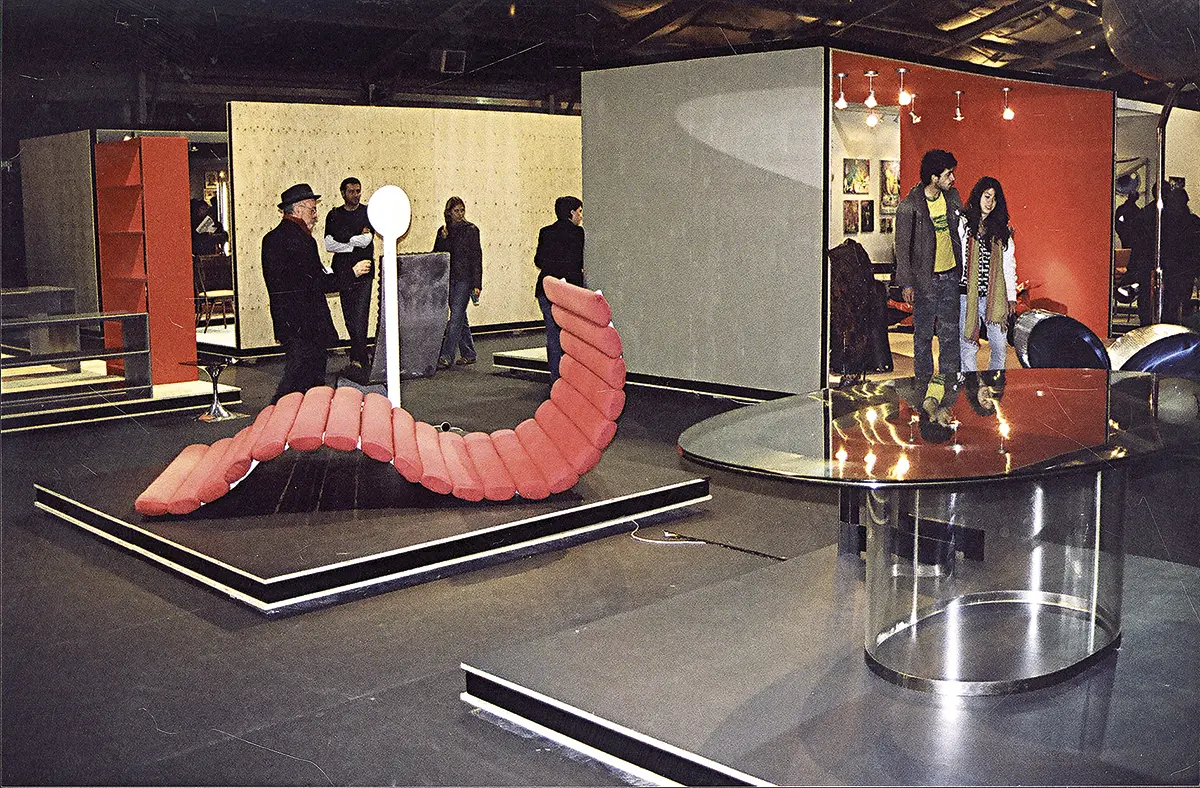
The Grand Palais, reopened after thirteen years of renovation, exhibited established modern and contemporary art as well as emerging artists in ninety-eight galleries, while the Jardin des Tulleries hosted thirteen open-air sculptures outside of the celebrated Maillols, which are permanent installations. The Carré at the Louvre, with sixty-two galleries gathered under a tent presented “emerging trends in contemporary art,” including nine galleries that specialized in collectible and contemporary design. Despite the decrease in the number of visitors—down 25% from the last fair—Martin Bethenod, the General Commissar of FIAC and Jennifer Flay, the Artistic Director, see this dispersion as a positive element and a generator of empathy, because it once again places FIAC at the heart of Paris. What distinguishes FIAC from other international fairs and constitutes an unquestioned advantage is the richness and variety of cultural and artistic offerings in the French capital simultaneous to the fair. FIAC’s VIPs were also the first to benefit from the organized tours that connected art and culture with visits to purveyors of the luxury industry: Louis Vuitton, Hermès, Guerlain, Chanel, Lenôtre, or Dior.
The oldest and most prestigious galleries were located at the Grand Palais. The site’s architectural magnificence, with its high translucent-glass cupolas supported by iron box-shaped ornaments, made it a prestigious and very attractive space. The lower number of participating galleries due to the smaller number of booths was no obstacle for some of the heavy-hitters such as Marlborough from New York or Waddington from London, which preferred a patrimonial location over a wider space. The return of a section of FIAC to the Grand Palais also favored the reappearance of important foreign galleries, with an increase of 25% from the last edition. New arrivals included Sadie Coles HQ (London), Barbara Gladstone and Leonard Hutton (New York), Michael Werner and Jablonka (Cologne).
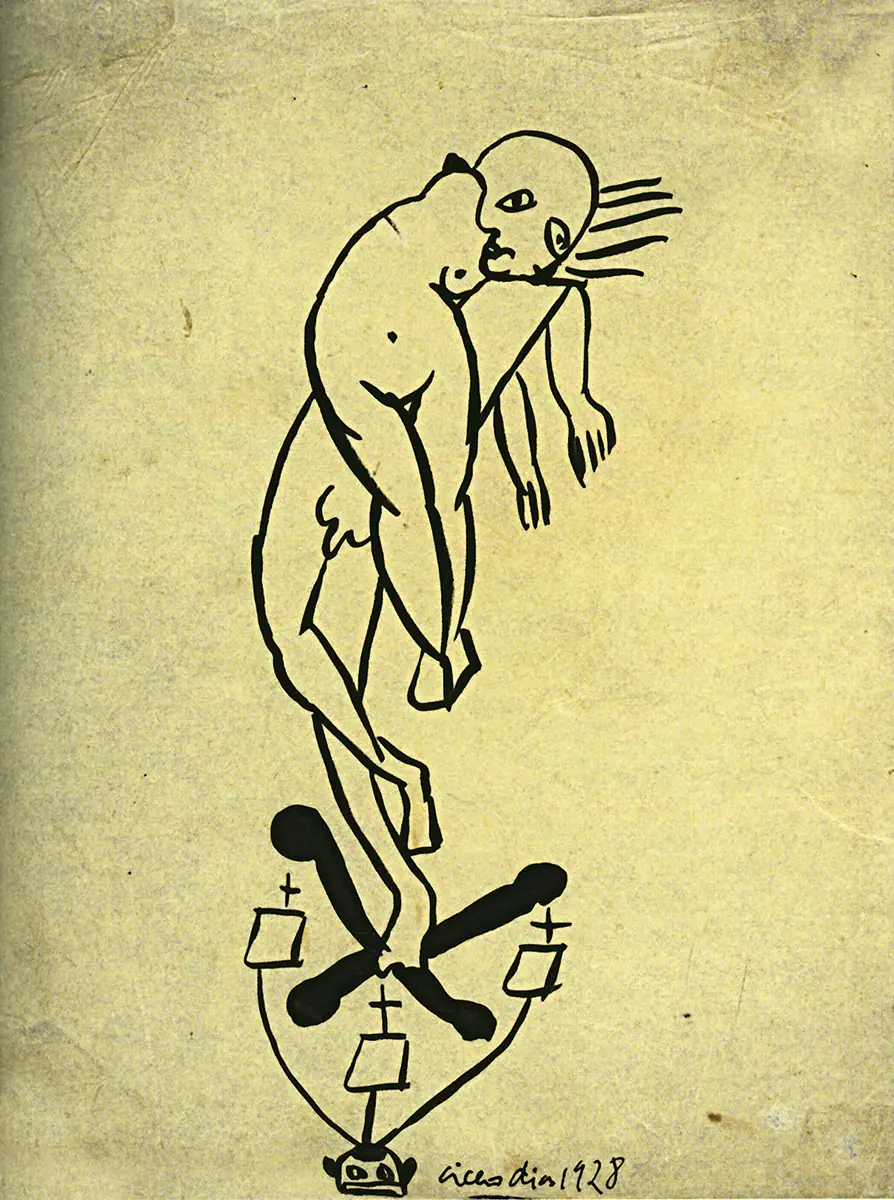
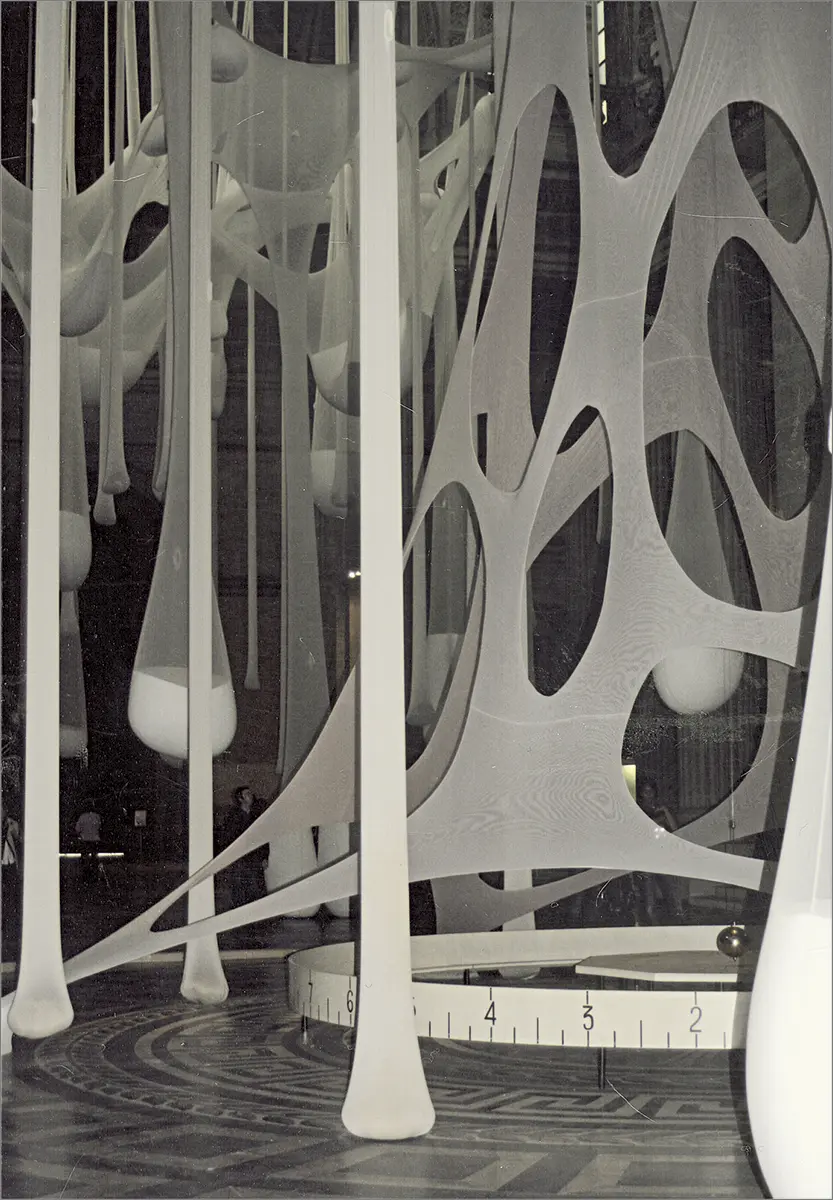
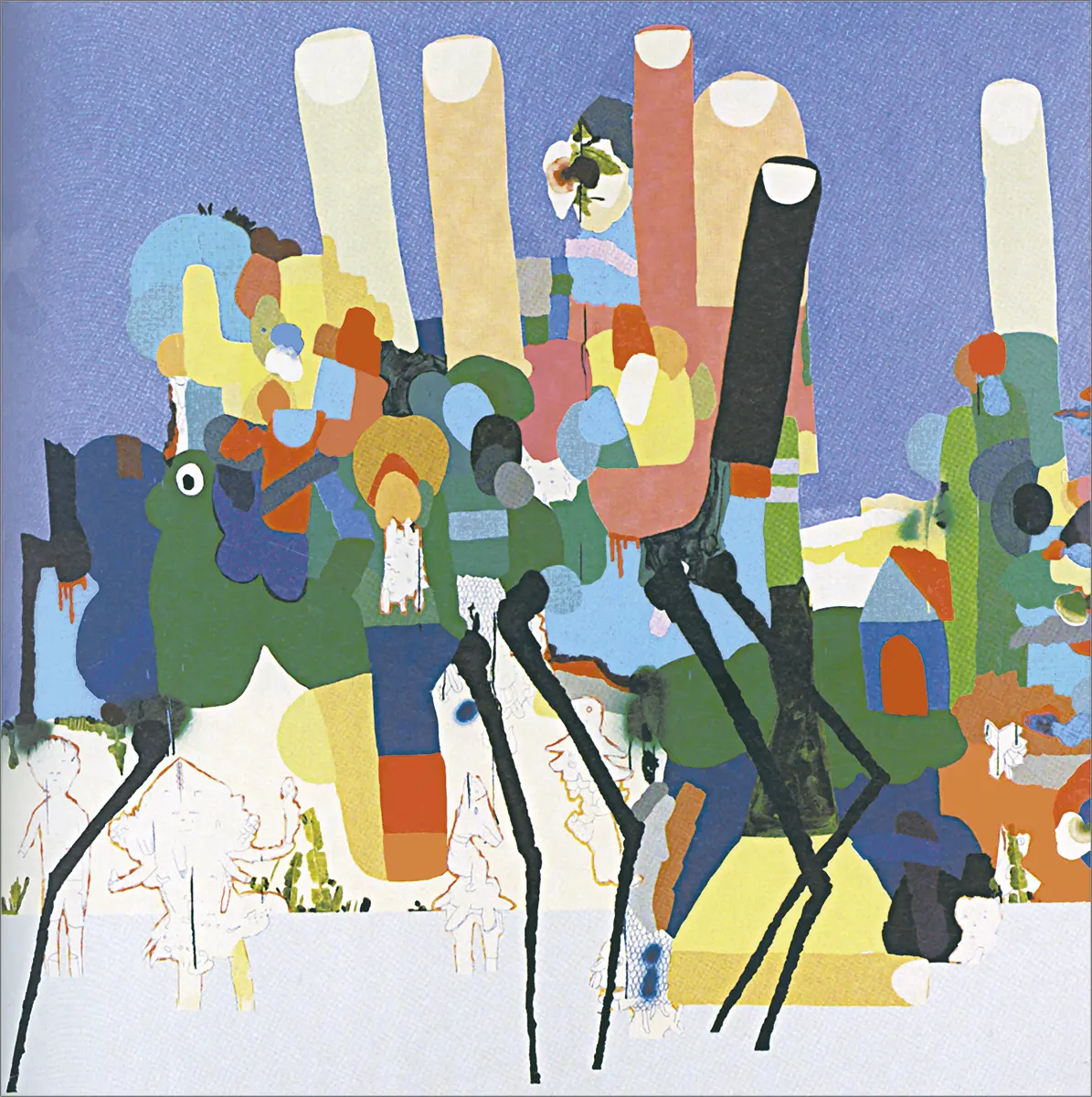
The entire roster of galleries and artists present at the fair revealed a Euro-American dominance throughout the three sites, aside from the presence of Hiromi Yoshi (Tokyo), Dvri (Israel), Nature Morte/Bose Pacia (New Delhi/New York), and Noga (Tel Aviv), which were all present for the first time at FIAC. Havana, the sole Latin American gallery, preferred to participate in Show Off and displayed canvases by the Cuban artist Roberto Diago works by the Capotes and drawings by Los Carpinteros. The presence of Latin American artists was reduced, but several Parisian galleries presented these artists, including Vik Muniz at Xippas, Gabriel Orozco at Chantal Crousel, Andrés Serrano at Yvon Lambert, and Leandro Erlich at Emmanuel Perrotin. Only two one-person shows displayed Latin American art: a highly colorful one by the Costa Rican artist Federico Herrero at Blow de la Barra, on the Carré at the Louvre, and another very well-done show of watercolors and drawings from 1925 to 1944 by Cicero Dias, at Marwan Hoss. One had to take the time to go to the Pantheon, with its tombs of illustrious men, in order to admire Ernesto Neto’s astonishing and spectacular installation titled Leviathan Thot, the Brazilian artist’s response to a request from the Fall Festival.
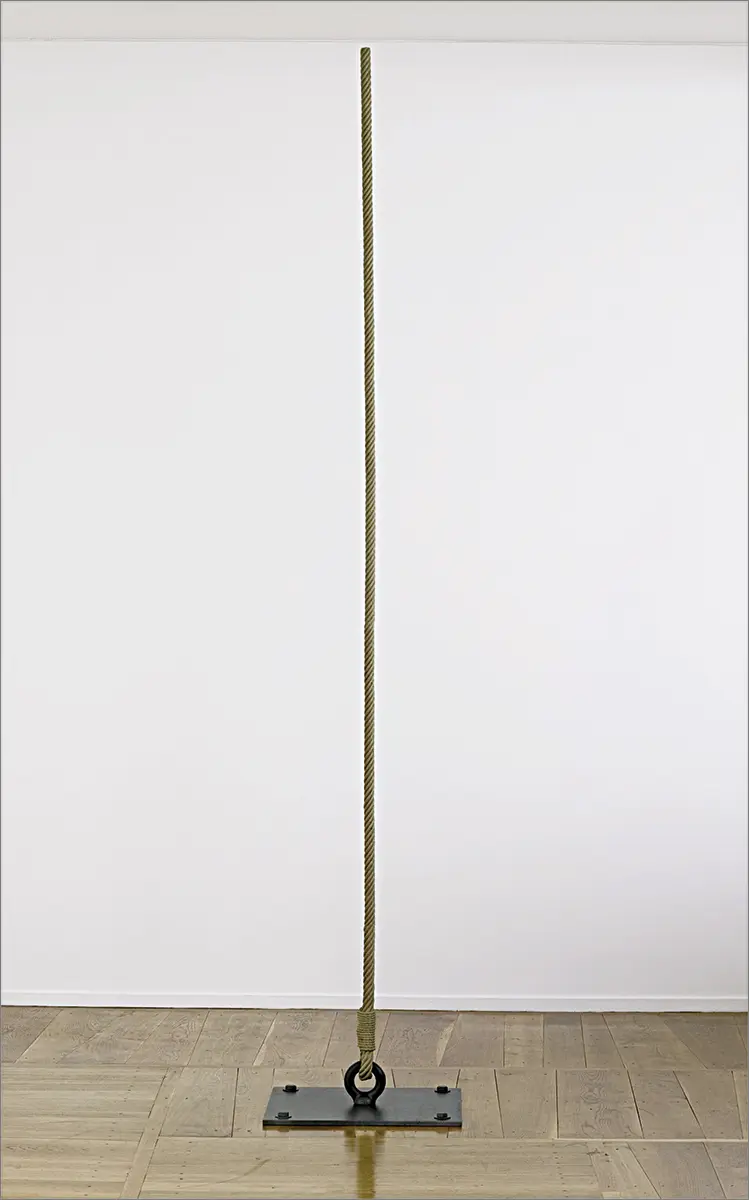
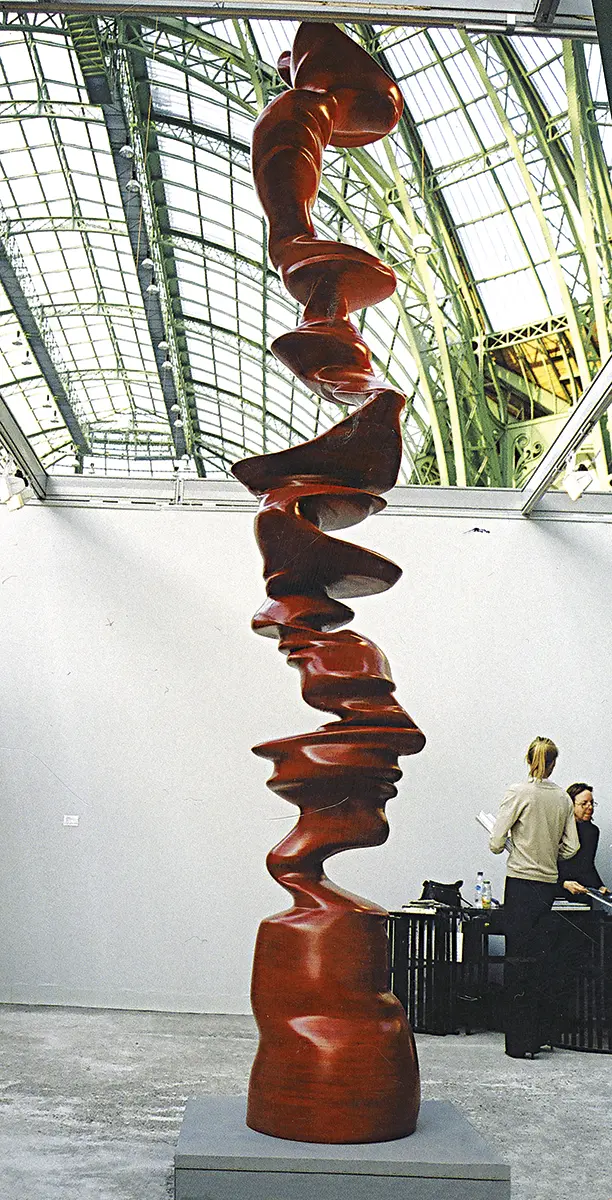
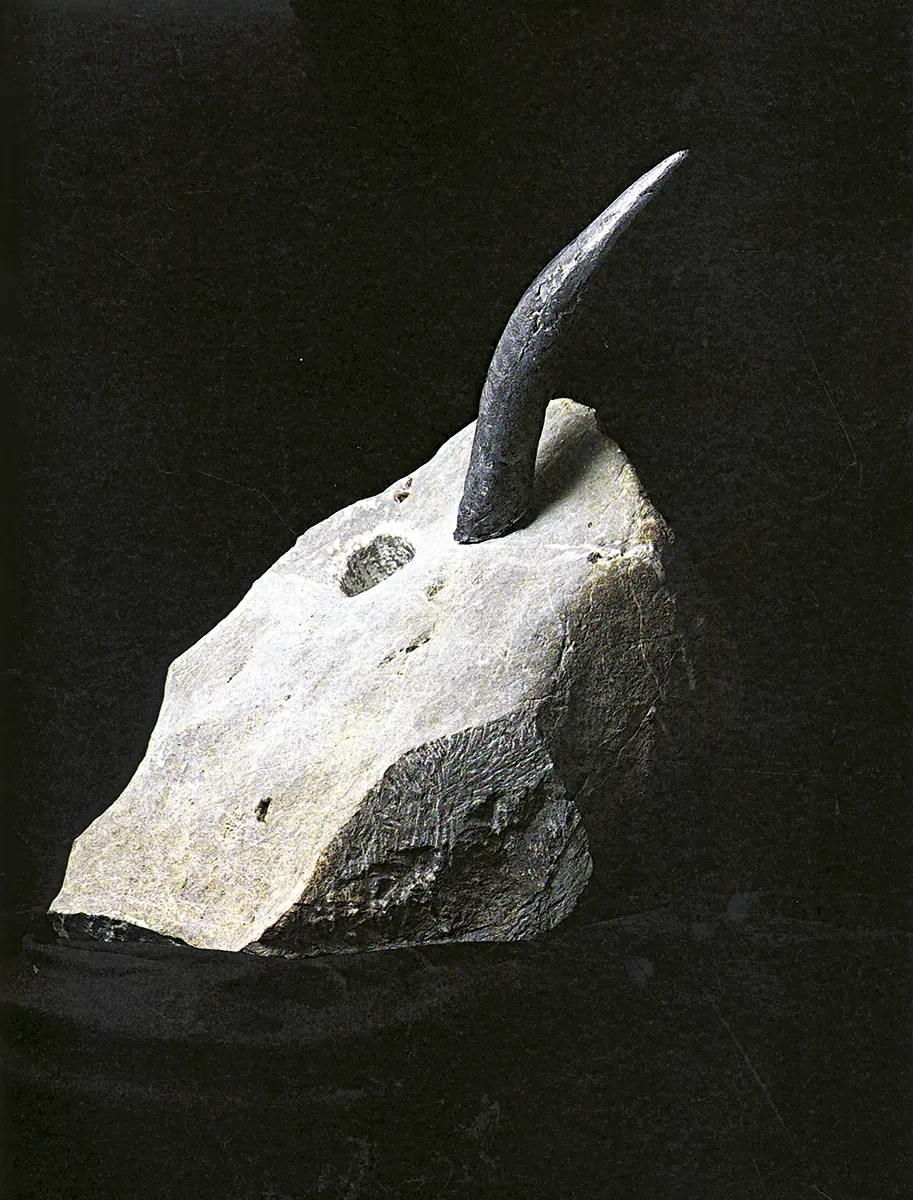
Another difference from previous editions that was probably due to the lack of space was a decrease in individual exhibitions. Yet there were two Abstract Expressionist shows—Ronan Barrot’s works at Claude Bernard and a beautiful retrospective of Gérard Schneider (who died in 1986) at Applicat-Prazan —while Louis Carré honored narrative figuration with an exceptional display of sculptures displaying the Spanish artist Eduardo Arroyo’s joyful works from 1973 to 2006. The Marlborough Gallery, meanwhile, was devoted to a posthumous tribute to the French artist Georges Mathieu. Also notable was the superb exhibition at Thaddaeus Ropac devoted to the British sculptor Tony Cragg, who was also present at Lisson Gallery and in the Jardin des Tulleries with a magnificent stainless steelwork, I’m alive, from 2004. The safe value Alghiero Boetti was seen at Tornabuoni Arte. At the Grand Palais, the Karsten Greve Gallery had one of the most beautifully curated booths, dense, fluid, and homogeneous, with works by Soulages, Cy Twombly, Sigmar Polke, and especially a recent group of bronzes, collages, and textiles dating mostly from 2005 by Louise Bourgeois. The grand dame of French-American sculpture, with her more than eighty-five years of age, displays an inexhaustible vitality in the intimate, as seen in Fountain Couple from 1992.
The diversity of styles and techniques present at the Grand Palais made it possible to admire the work of artists of the new generation, such as the French photographer Philippe Ramette’s explorations of lightness and the absurd at Xippas and the urban landscapes of painter Yves Belorgey. At Marion Goodman, Thomas Struth’s photographs shared space with William Kentridge’s beautiful dark pastels and John Baldessari’s Pop cutouts. The painting was also present at Galerie Lelong, with a very beautiful Untitled canvas by Jan Voss and the Italian artist Loris Cecchini’s white bas-reliefs integrated into the skin of the wall, chair, and stairs at GalleriaContinua. At Jerôme de Noirmont, the French conceptual artist Fabrice Hyber presented a large canvas with a collage of objects and animals titled Homeopathic Painting.
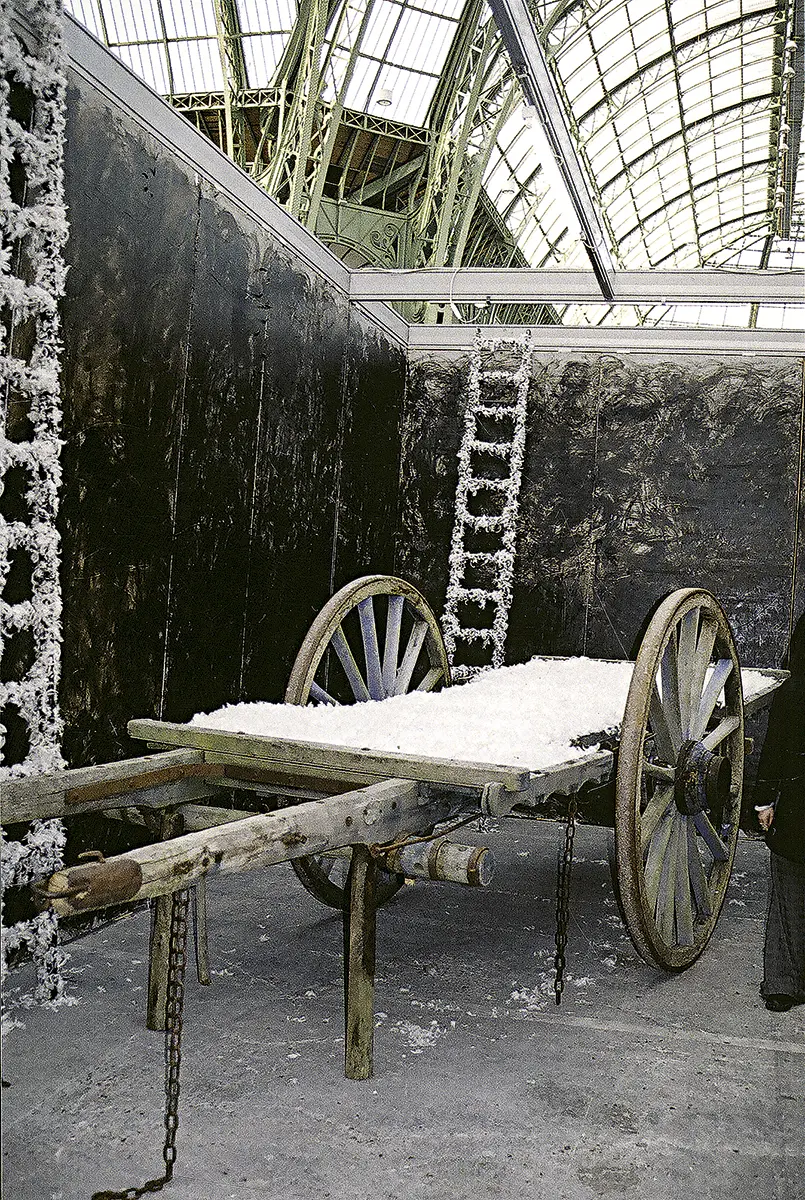
The salutary eclecticism allowed views of Jaume Plensa’s sculpture at Lelong, Anish Kapoor’s work at Lisson, and a work titled Jobs that Adel Abdessemed, an artist of Algerian background and the newest star in the French scene, exhibited at Kamel Mennour. Erna Hecey Gallery presented the French artist Olivier Millagou with an installation titled Pebbles made of a large number of rounded rocks drawn on and painted and placed on the floor. Other galleries showed important works, especially Yvon Lambert, which presented two French solo shows, one by Bertrand Lavier and the other an impressive installation by Claude Levêque, which showed a 2006 work, a cart filled with white plumage in a rather dark space. At Françoise Paviot, tribute was paid to photography with Anna and Bernhard Blume, a couple of German artists who are almost seventy years old, and their Transcendental Constructivism black-and-white triptych of 2005, which expressed true complicit humor. As always, the 1900/2000 Gallery offered a selection of Dada and Surrealism with a multiplicity of small photographic formats, paintings, and objects from different generations. Gallerie de France—whose closing has been announced by Catherine Thick, due to the incomprehension of a marketplace that, in her view, “puts everything at the same level today”—exhibited a magnificent sculpture/installation by Pier Paolo Calzolari from 1998 titled Palo d’oro: Hommage aux fleurs. Finally, the “classic” modern and contemporary selections included works by Picasso at Jan Kruger accompanied by a beautiful Zoran Music from 1972.
Of the newer generations of artists, there were some works that were very interesting, like Sarah Lucas at Gladstone and Sadie Coles, with her astonishing, fragmented anthropomorphic “figures” that nod to Louise Bourgeois, in dialogue with a group of chairs. In the second-floor galleries, in another innovation at FIAC, Esther Schipper showed a colored aerial installation that recalled Calder and Miró by the American artist Nathan Carter titled The All-city Cross-town Street-level Gyration Maneuver. At Emmanuel Perrotin, the Belgian artist Wim Delvoye’s forced one’s attention with a sulfurous and provocative 2006 installation Rex, a stuffed pig tattooed with the image of Christ.
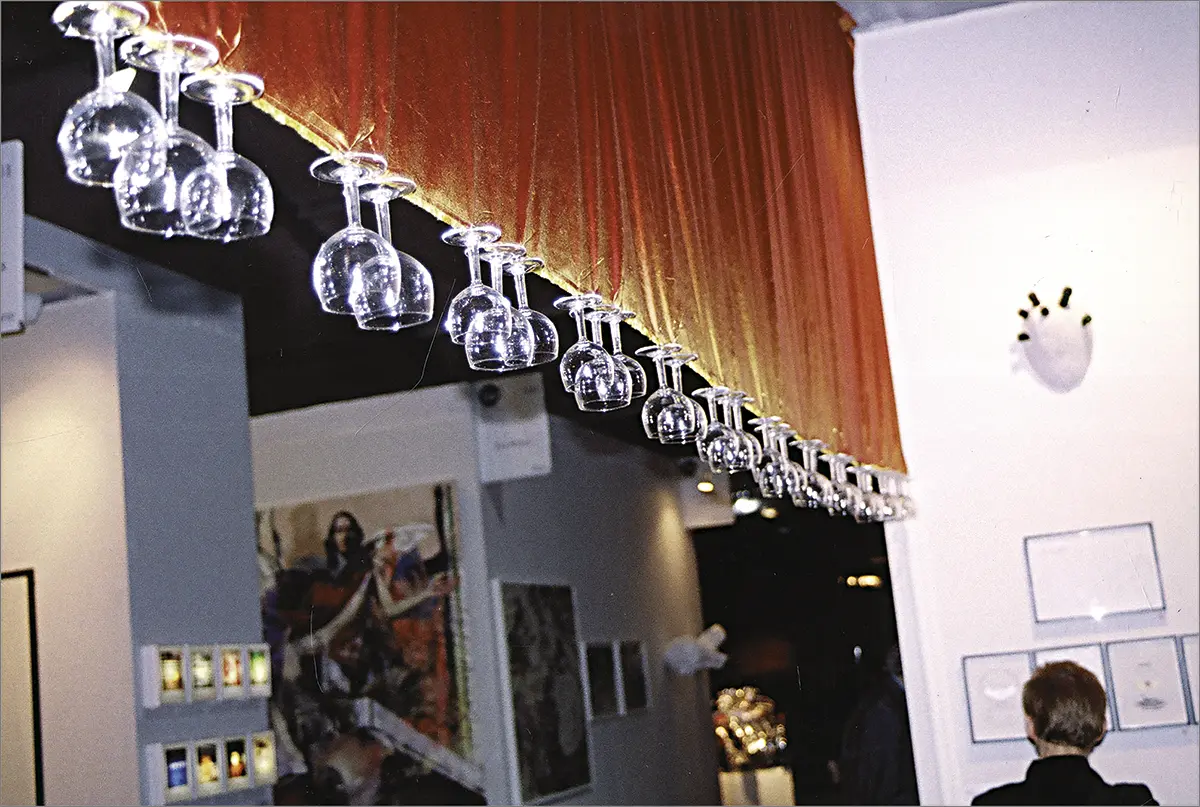
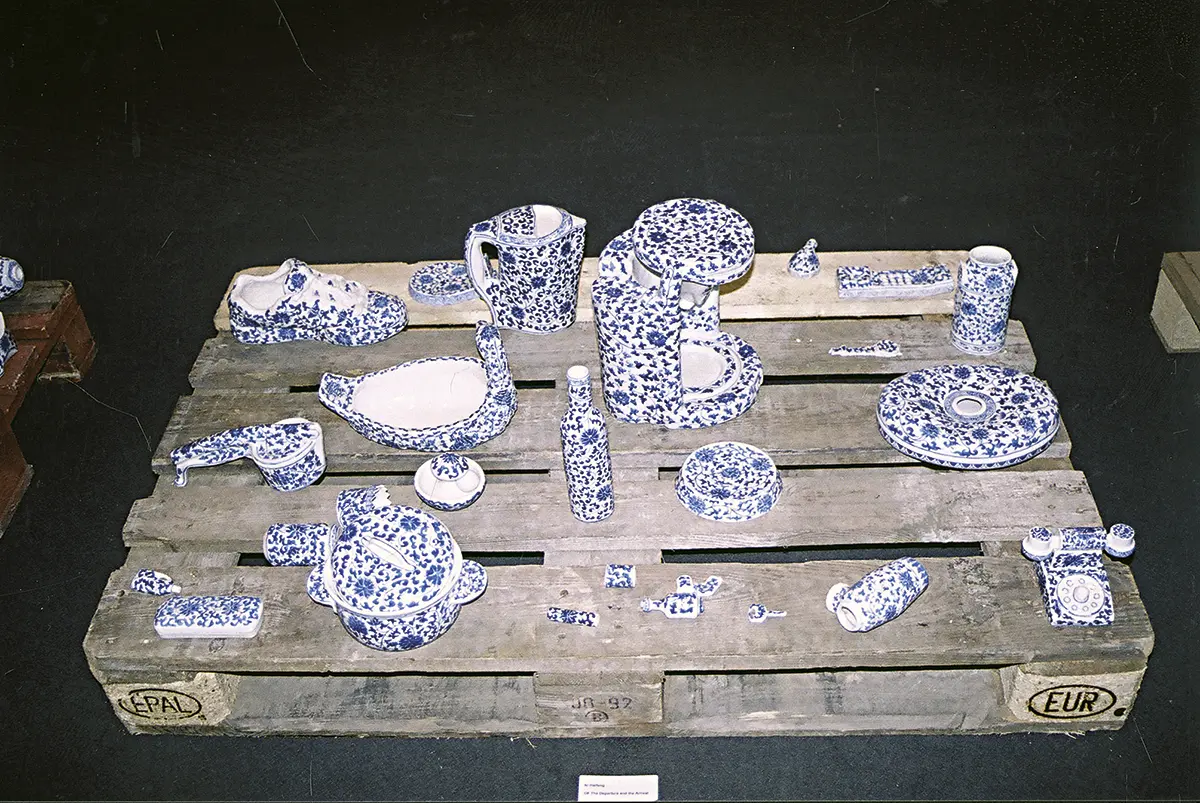
The distance to the Carré du Louvre, approximately 1,000 meters, didn’t diminish the record number of visitors this year over the FIAC’s three sites—more than 85,000 visitors, 4% more than the previous year. In the sixty-two galleries as a whole atmosphere of déjà vu reigned although works were of great quality, and some artists did stand out. Martine Aboucaya presented an interesting video by Marylène Negro titled Las ciervas showing images of wintry woods in looping fades, with an increasingly strong musical score, dramatizing an animal’s almost invisible and fleeting presence. The painter Federico Herrero born in Costa Rica had a solo show at Blow de la Barra. At Aline Vidal, another French artist, Didier Trénet, exhibited an installation that included drawings, a curtain trimmed with wine glasses, and a sculpture of thick copper wires, and petanque balls from a traditional Southern French game. Wine and petanque—what a French installation! Virginie Barré at Lowenbruck made jest of architectural modernity, juxtaposing it to “exotic” warriors in a black-ink drawing, Warriors and House of the Bauhaus Master. But two artists seemed most interesting, both at the conceptual level and in terms of material execution. One was China’s Hi Haifeng, at Lumen Travo, who presented a white-and-blue installation titled Of the departure and the arrival with porcelain objects that resembled the Dutch ceramics of Delft, everyday objects created in China by Chinese artisans. The other was Miri Segal with a video installation presented by the Tel Aviv gallery Dvir. In Downcast, Autumn Dale, the artist filmed a poor neighborhood in Tel Aviv where she had noticed that pedestrians always walked while looking at the ground. But the image was inverted and reflected on pools of water, thus forcing the viewer to look at the ground in order to see the image's right side up. The dynamics of up and down and depth and surface created a different relationship with the world.
In multiple visits to the Grand Palais and Carré du Louvre, one could observe the strong presence of new-generation French artists. One of them, Philippe Mayaux (born 1961), a painter, sculptor, and installation artist, received the Marcel Duchamp Award, competing against artists such as Leandro Erlich, Adel Abdessemed, and Bruno Peinado. The award consists of 35,000 euros and an exhibition at the Georges Pompidou Center, in 2007.
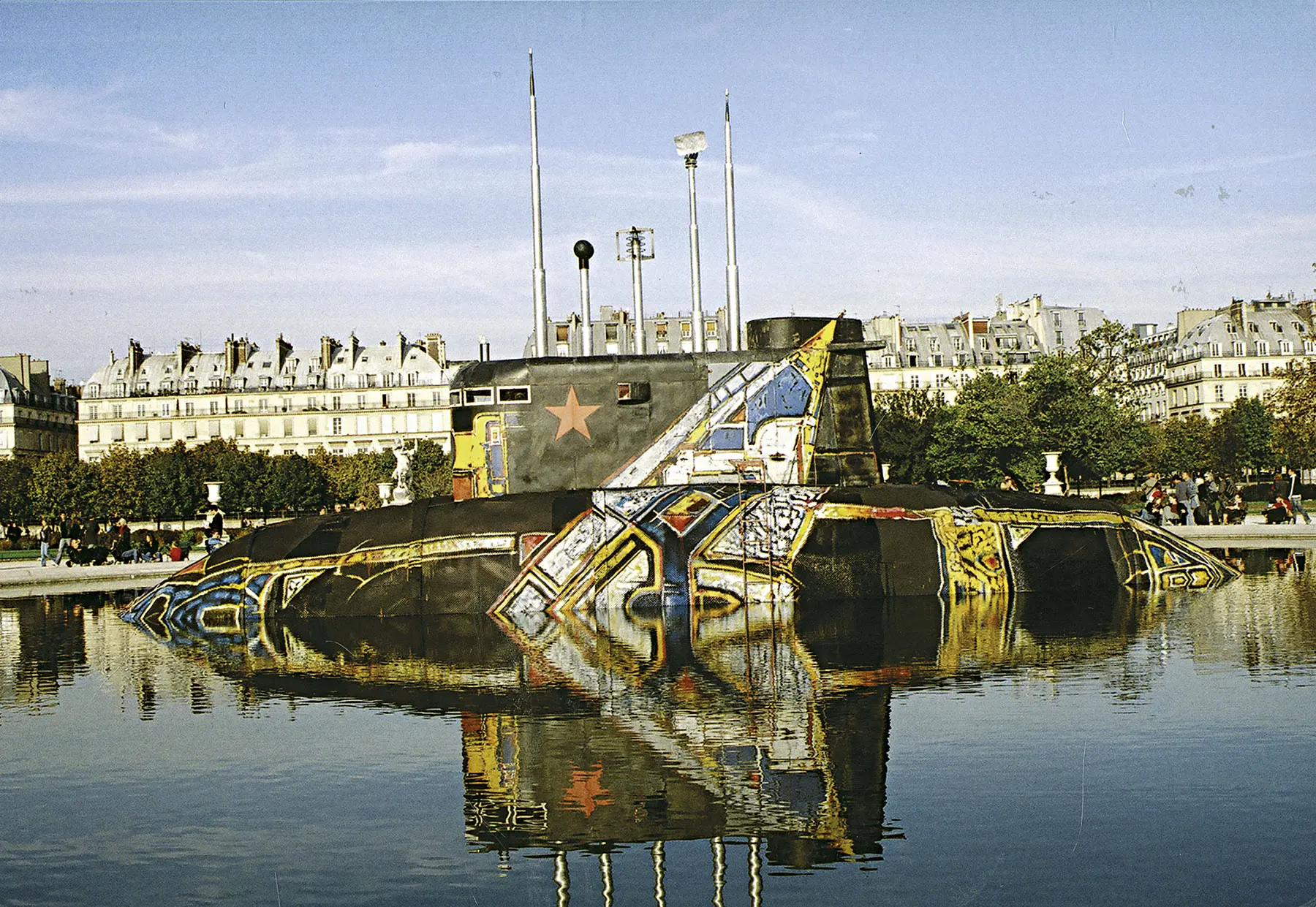
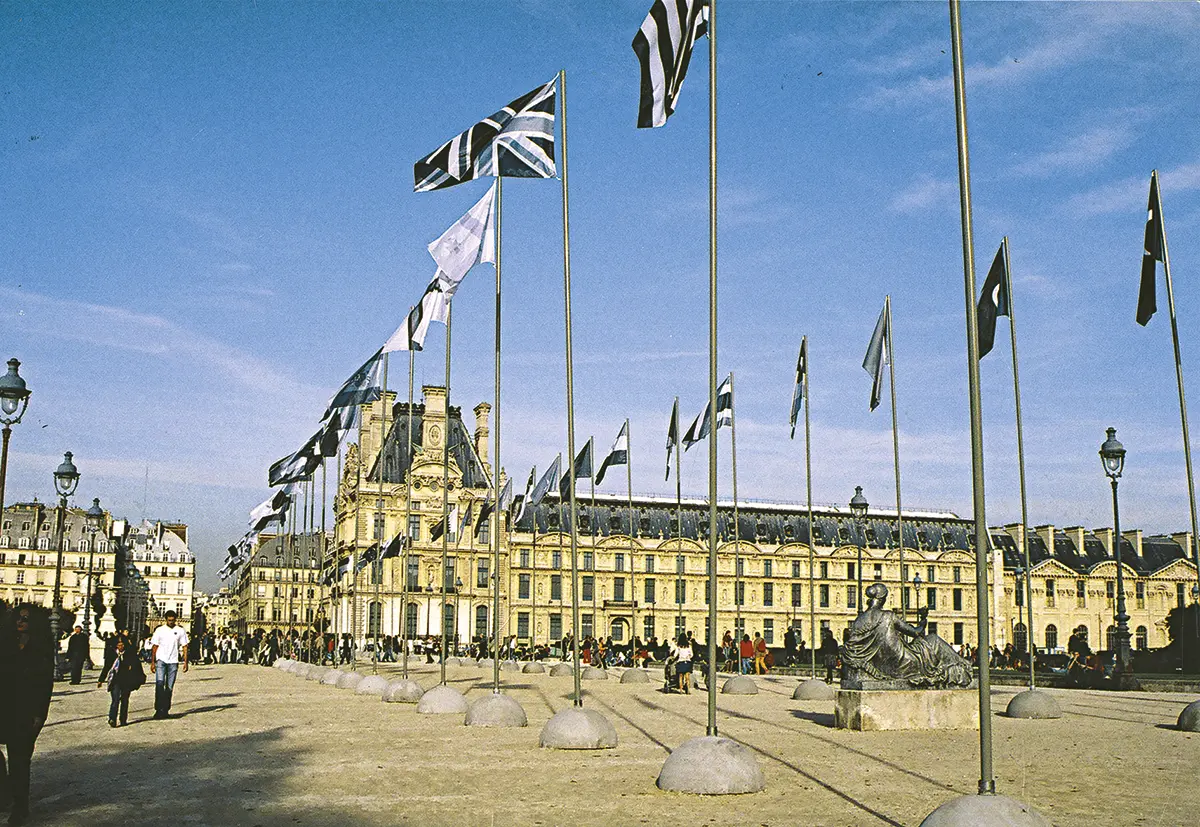
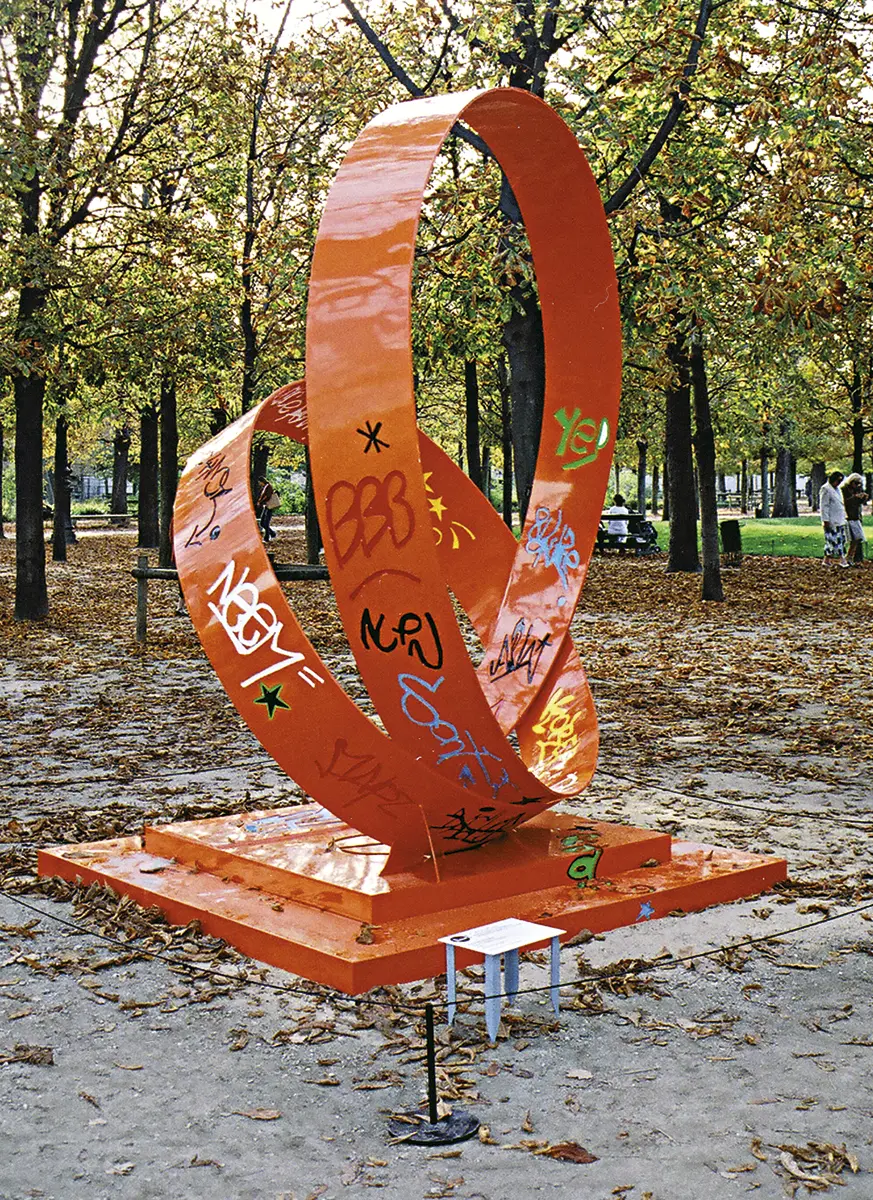
Visiting the Jardin des Tulleries with its thirteen open-air sculptures required taking a stroll, making a transition between the two sites visited before. Thanks to the agreeable and sunny Paris autumn, the pause made it possible to walk around at any time of day and appreciate the variety of the sculptures on display, including the aforementioned work by Tony Cragg; Panamarenko’s surprising and entertaining submarine that talked and sang in French and Russian while floating on a pool; the Cuban artist Wilfredo Prieto’s Apolítico, a series of replicas of world flags in white, black, and gray on sixty tall poles; the pile of aluminum buckets, A Giant Leap of Faith, by the Indian artist Subdoh Gupta; and David Mach’s rather kitschy sculpture titled Tit Takes Two, representing two oversize sumo wrestlers wearing blue belts, attempting to lift a pink container. More discreet but no less interesting was Frank Scurti’s 2006 sculpture What is Public Sculpture (Anna) and What is Public Sculpture (Steevie), two intertwined orange-colored “ribbons” of painted iron covered with signs, that posed the question of the destiny of a work of art in the public space, a destiny that commonly is to be covered in graffiti.
What to say now of the “off” fairs? In terms of content, Show Off doubtlessly wants to be a salon for artistic discoveries, and it has asserted itself despite a somewhat circumstantial identity. Not desiring to be considered a “Reject’s Salon” because one-third of the twenty-eight galleries were not selected for FIAC—such as the French galleries Eric Dupont, Magda Danysz (a founder of Show Off), Filles du Calvaire, Vanessa Quang, or Baudouin Lebon—the fair offered a number of surprises in a space that was difficult and somewhat narrow yet received more than 15,000 visitors. Many collectors were present, especially foreign ones, but both Show Off and FIAC saw a noticeable increase in the number of French collectors. In an unprecedented move, the Show Off galleries had unified their database of collectors, amounting to more than 2,000 addresses. As FIAC does every year, Show Off presented parallel events with a dynamic program: critical debates, six artist’s performances, monograph signings, projections of films and videos, etc. Among the two generations of galleries present, the highlights included Baudoin Lebon (Paris), with an installation of six sculptures by Valdimir Skoda (which was initially slated for FIAC), and the works of Canada’s Jerôme Fortin (born 1971) at Pierre François Ouellette Art Contemporain (Montreal), centered around everyday objects that the artist salvages, gathers, cut out, or folds to make into poetic, fine, and aesthetic objects, presented as a cabinet of curiosities. At Gagliardi Art System (Turin), a white marble reproduction of the Christ in Michelangelo’s Pietá (Remembrance, 2006) by Fabio Viale (born 1975, Italy) was surprising; the sculpture was fully understood upon seeing the black-and-white photograph that accompanies it, representing the original in Rome’s St. Peter’s Cathedral, amputated of its Christ. Viale is a sculptor who works on the contradiction between the light and the hefty, systematically using white marble. While painting, photography, and video were present at Show Off, there were also installations. The installation No Evolution by Pascal Lièvre at Vanessa Quang staged thirteen monkeys in orange-colored synthetic plush, situated like the apostles around Christ in the Last Supper. Like other artists who have dealt in an iconoclastic manner with religious images, this work by the video- and performance-artist was filled both with humor and reflection; at its center was a TV receiver that the monkey blessed and which transmitted images from the film The Exorcist, the original audio replaced with a dialogue about Creationism. The young gallery Marc de Puechredon is interested in video and performance artists. In this first edition of Show Off, the installation presented by French artist Béatrice Valentine Amrheim titled Luster Video was composed of a suspended group of twenty-five cellular phones of the latest generation, on which fragments of bodies had been recorded. Four photo-editions of the videos displayed on the telephones were on exhibit; at once intimate, poetic, and free of taboos, these images conveyed the artist’s essential topic: the body and the body system.
The Slick fair, in its first edition, selected twenty-two international contemporary art galleries and was held in the highly picturesque neighborhood of Ménilmontant. A project born from the association of two galleries, Cécile Griesmar (Hors Sol) and Joan Tamer-Morael (Artcore), and the journalist Aude de Bourbon Parme, this fair wants to be “a project to bring together professionals who do not have the visibility they deserve.” The displays at the galleries felt a bit like exhibitions of works by first- or second-year art students. Only the two spaces devoted to digital art were truly professional; one of these, Numeriscause (Paris), featured works by the French artist Miguel Chevalier among others. Visiting this fair, where neither quality nor selectiveness seemed to be present, raised questions about the organizers and doubt whether the artists presented there deserved the visibility granted to them.
DiVA, which specializes in video like Barcelona’s Loop fair, was on its second edition in Paris. DiVA was created by Thierry Alet, a New York-based French artist. Since it can move to different cities and to unexpected places, DiVA has a traveling identity, and on this occasion, it was installed in the design-chic Hotel Kube close to the Gare du Nord, an eccentric and popular neighborhood. As with Slick, the location didn’t unsettle DiVA’s many visitors and several groups of collectors such as the “Maecenas from the South.” In the midst of a selection of works lacking vigor, two proposals by women were notable: the Indian artist Sulekha’s documentary about the condition of women in India, at MB Gallery (Paris) and the work by the England-based African artist Grace Ndiritu that interpreted women’s fate in a symbolic, strident way, at Vacío 9 (Madrid).
In conclusion, for its 2006 edition, FIAC featured smaller spaces that allowed for a visit adjusted to human scale and once again asserted its generalist identity, balancing between modern and contemporary art. New York’s Envoy Gallery, present at both Slick and Show Off, stated: “In an art fair with no more than twenty or thirty exhibitors, the dose of beauty or of intelligence is easier to handle. Small fairs make it possible to take time for reflection.” Visiting the six sites distributed around Paris this year on the occasion of FIAC demanded much time, but did it allow its many visitors to wonder about the meaning of this phenomenon of proliferation and its impact on the dissolution—or disappearance—of critical judgment, as the dominance of economic relationships breaks the historical link? One wonders whether a retroactive look at contemporary art is possible since its relationship with history no longer exists.
*Photo: Leon Birbragher.
CHRISTINE FRÈROT
Art historian and critic whose work involves both research and teaching. École des Hautes en Sciences Sociales, Paris.