Los bordes del dibujo (The Edges of Drawing) was a compilation of representative examples of contemporary drawing in Colombia. It included works by Johanna Calle, Mateo López, Liliana Estrada, Luz Ángela Lizarazo, Ana Patricia Palacios, Humberto Junca, Pablo Solano, Claudia Puentes, Teresa Sánchez, Máximo Flórez, Olga Lucía García, Carlos Mery, Carlos Franklin, Miguel Ángel Rojas, and Marta Combariza.
The show, curated by Ana Maria Lozano, comprised works made with pencil, with clothing items, and even with video, in an investigation of blurred borders of technique, highlighting the mechanisms through which a dialogue is established with other techniques and disciplines. The results of these transgressions were ambiguous in their revolutionary character, as they inhabited a traditional medium but escaped definitions. In the exhibition, drawing was translated into multidisciplinary expressions that ranged from embroidery to subtle transformations of architecture.
Lozano began with an interest in the conditions that have allowed drawing to become a dominant language today, when historically it had always been considered, like photography, a provisional and transitory gesture, an unfinished and intermediate language.
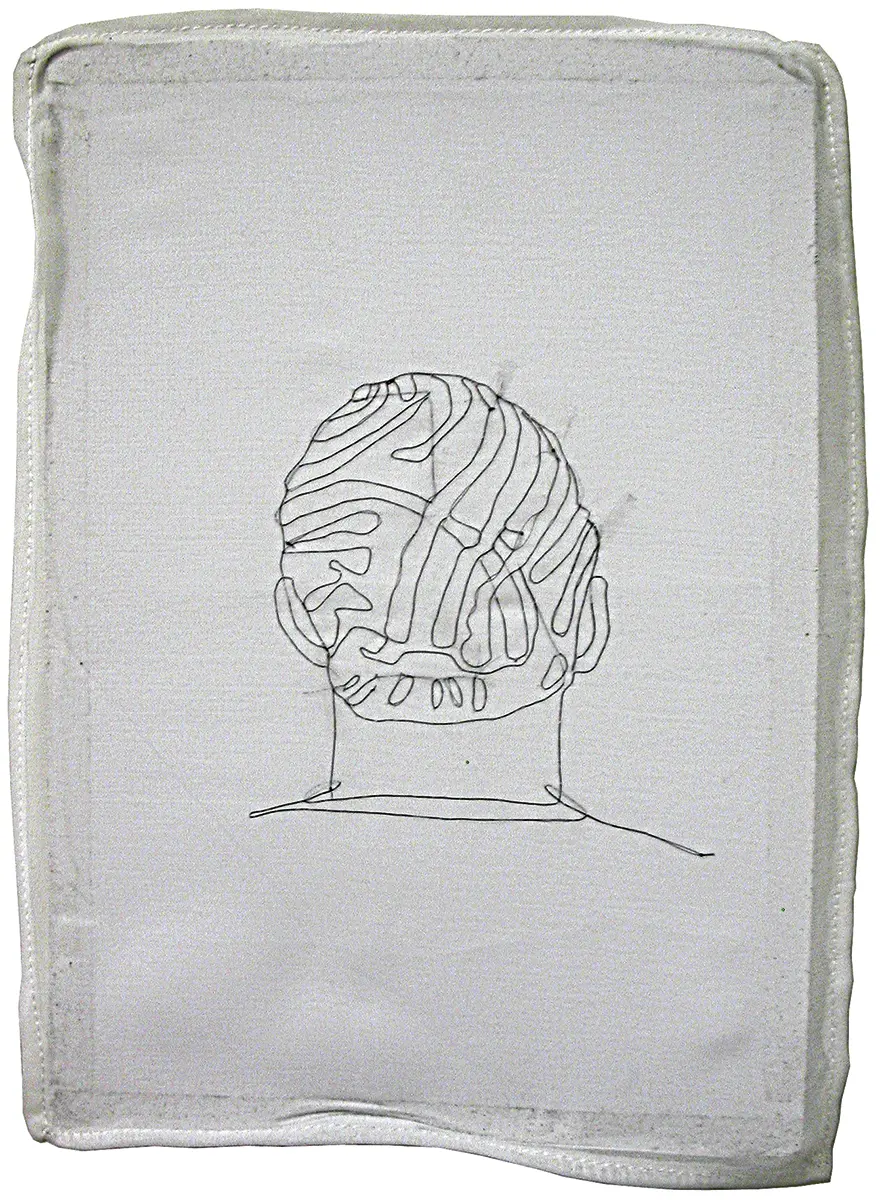
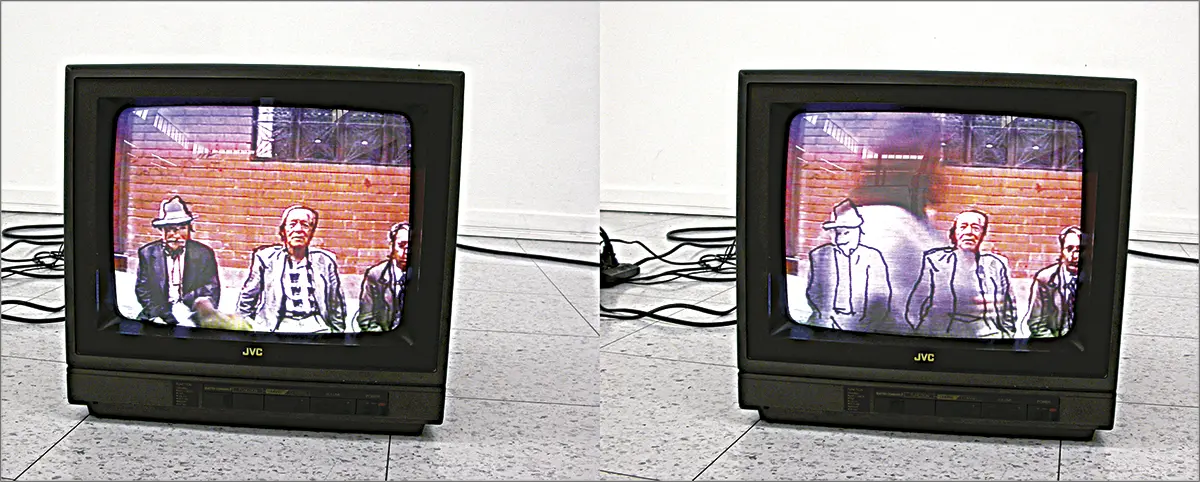
Starting from an issue as old as art itself and offering a transversal look at the solutions that different generations have offered for the same problem, the show explored representation based online, point, volume, and empty space, the latter being one of the most recursive elements. Empty space acquired vital importance in works like Claudia Puentes’s Encuentros delineados, in which the artist draws the outline of passing pedestrians on a car window; when the car moves, all that is seen on the glass is the silhouette of those fleeting presences. Carlos Franklin’s drawings were based on lines created with fragile materials such as hair or dust and construct characters that move in spaces that acquire an unimaginable presence. Similarly, Pablo Solano’s ink drawings revealed a minor operation with a partial materiality not lacking in power.
With its apparently simple form, the medium revealed itself as multi-faceted and immensely broad; each time one attempted to define what drawing is, it shifted and appeared as a different body, with different whims. Drawing is, as the curator described it, “a language inhabited by many works of art for its rhizomatic behavior that escapes sedimentation.”
The line acquired life and volume in the case of Miguel Ángel Rojas’s Broadway, with the undulating row of dozens of “ants” transporting coca leaves on the wall, or Marta Combariza’s entre, which presented a series of impossible garments, forming a drawing with their thread and outlines.
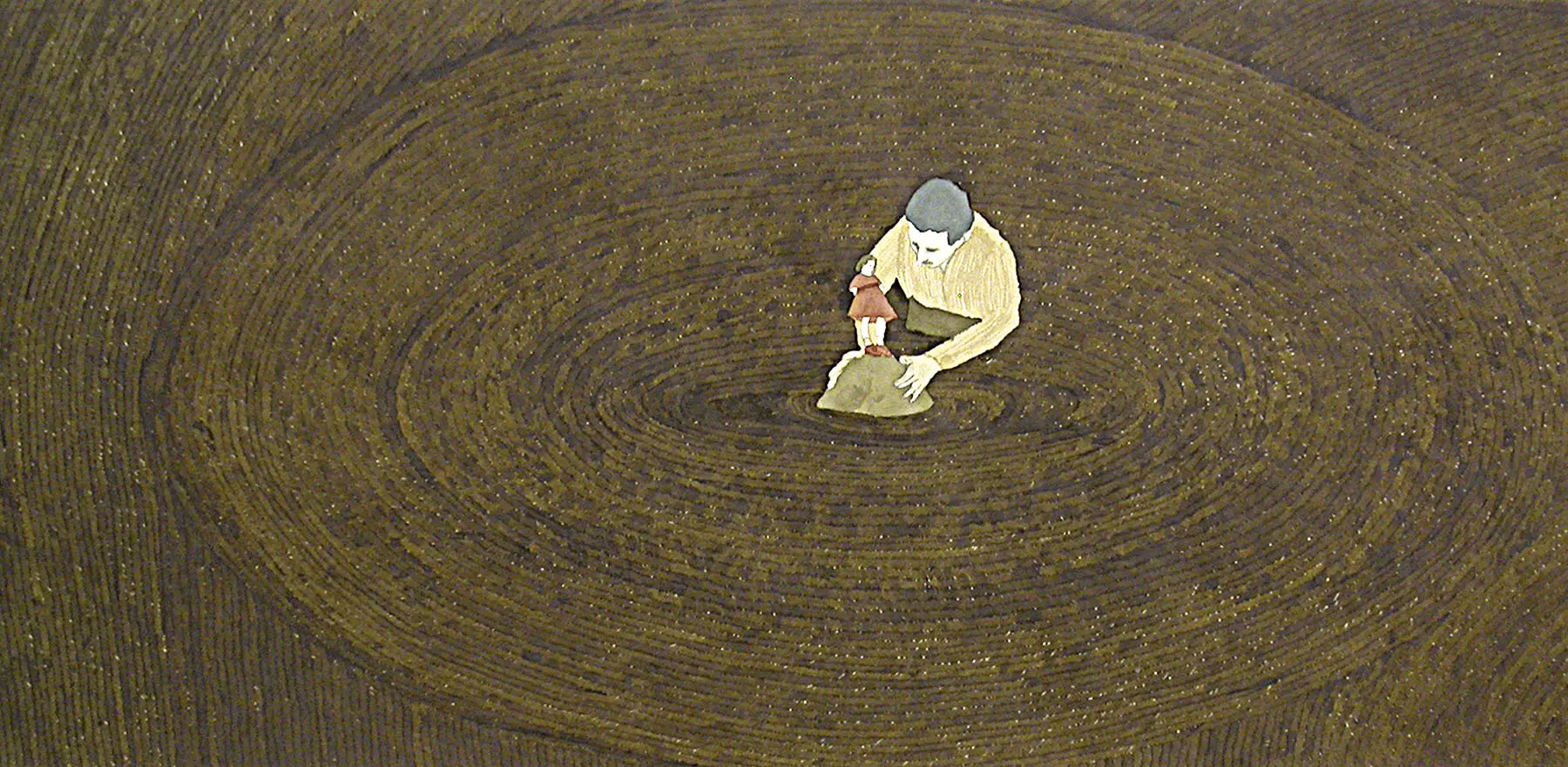
Thus, the painstaking labor, the reflexive craft, and the quasi-obsession that characterize drawing were also highlighted in the show. In his series Dibujos que caen, Mateo imitated everyday objects like milk cartons with great precision; this kind of drawing translated into three-dimensional space, tricking the observer with its realism, yet it aroused suspicion as the fragility of paper as structure and support for the line was revealed at the same time. The drawings in Johanna Calle’s Efluvios series were reiterations of a single movement that became the undulating gesture of water, surrounding characters that were mid-way between fairytale, dream, and the country’s situation.
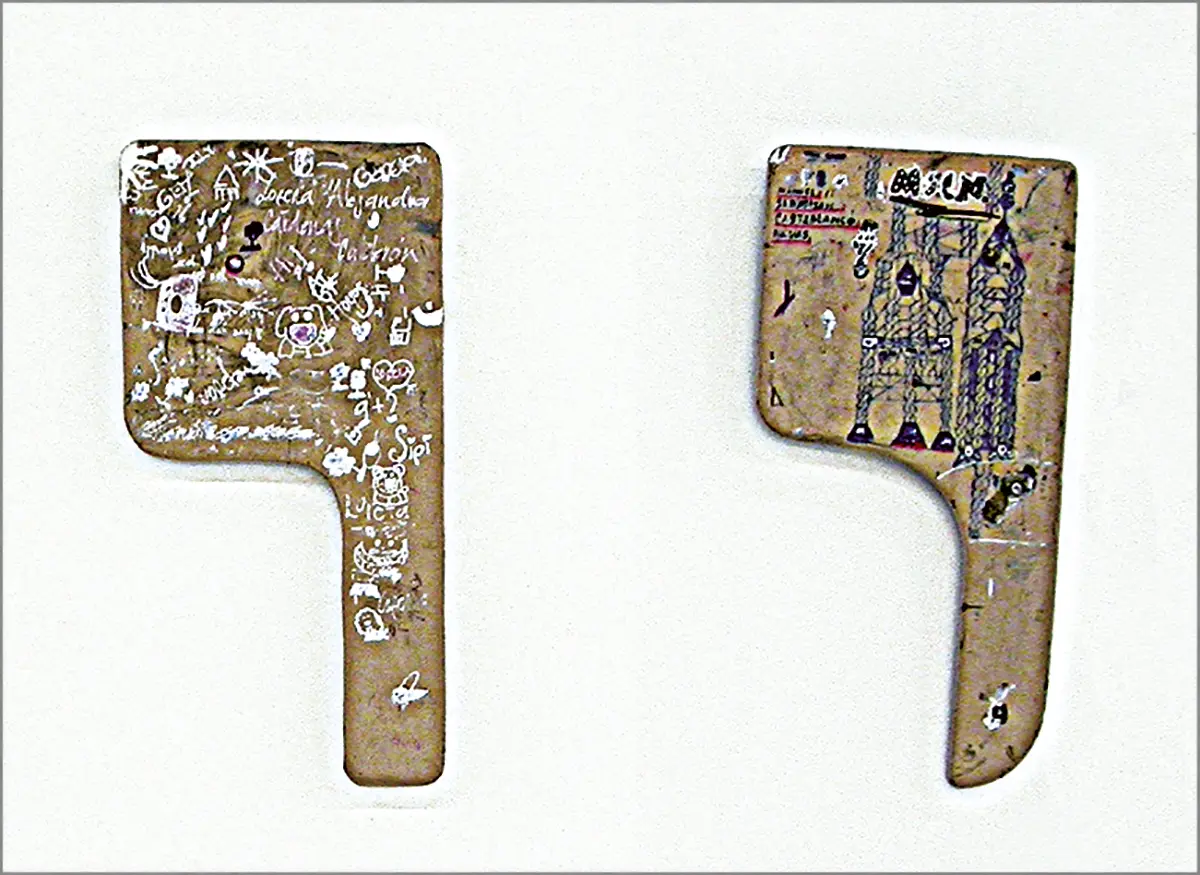
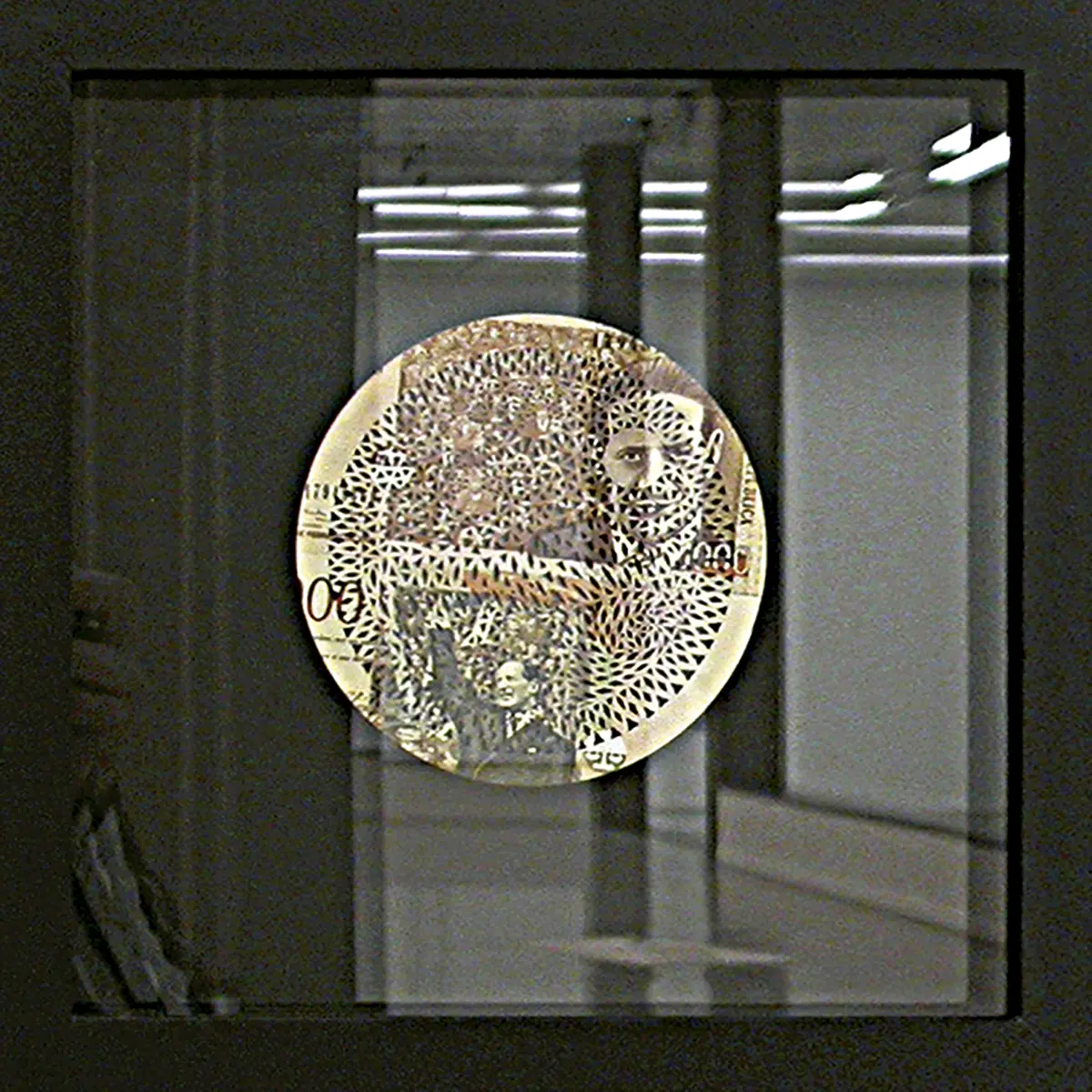
Humberto Junca’s desks titled Con la derecha represented the most informal appropriation of street drawing. By taking and “curating” a display of desktops on which children have carved names and drawings, Junca revealed the great evocative power of that gesture, because it brings back memories of one’s long school lessons. Something similar is what Darío Ramírez achieved with his series of perforated bills, based on the common practice, also driven by tedium, of transforming money in a subtle manner.
With its different ways of confronting the public—the beautiful, the automatic, the carefully wrought, the slapdash—the show made evident the difficulty in taming what is shown: these were not paintings, sculptures, or architecture but drawings informed by and hybridized with all of the above. The diversity of proposals revealed drawing as a contemporary language with a certain capacity for transgression and disarticulation on the basis of the insignificant, the small, the subtle, the “soft voice” described by the curator. Drawing was presented not as the prelude of something to come but as a final result and complete affirmation.
MARÍA CLARA BERNAL