
This year’s Art Basel/Miami Beach could be the rendition known as the litmus test of the art fair. Why? Because Art Basel/Miami Beach, which today is probably the largest convention of its type, has become a sort of endurance exercise due to the overabundance of programming throughout the city, making it next to impossible to see it completely during its brief run. What no doubt fueled the dizzying feel of Art Basel/Miami Beach 2006 were the other fairs that have coupled themselves with it and their attendant galleries: Scope (ninety-four galleries), Pulse (fifty galleries), Bridge (sixty-seven galleries), NADA (eighty-one galleries), Photo Miami (forty galleries), Aqua (forty galleries), DIVA (eighteen galleries), POOL (forty-two artists), and Fountain (ten galleries plus artists). On the other hand, exhibiting art in conjunction with the art fair epicenter of Art Basel/Miami Beach is, in the abstract, not innately bad.
An analogy with biennials is apt here; concurrent with almost all biennials are the unofficial side projects that add to the core exhibition. In those instances, however, there is always a context that the alternative projects engage and have historical precedence such as the counter exhibition. In contrast to a biennial and the multifarious unofficial shows that occur around one, Art Basel/Miami Beach and the other fairs simultaneously mounted can inadvertently feel like a gargantuan, labyrinthine flea market. And it is this aspect that has given the art fair a derisive disregard. While lots of art critics—and I don’t mean journalists—actually bypass the fair because of what they perceive as an absence of context, their notion of de-contextualization rests on assumptions that the art fair as a concept is anti-intellectual and therefore lacking in discourse. The ostensible elitism is not altogether unmerited, but the broader programming that accompanies Art Basel/Miami Beach and others should hopefully begin to allay any fears of the art fair as the equivalent of the frightening Mall of America. For this year, the various fairs were worth exploring for a myriad of reasons, including design and installation, ideology, the specificity of the media shown, and individual works that one stumbles across like needles in a haystack; or, in regard to Art Basel/Miami Beach 2006, because of the quality of work exhibited and the possibility of never seeing important pieces that enter into private collections.
Aqua, for example, was consistently elegantly installed; taking over a hotel on Collins Avenue, the rooms’ furniture was taken out and there was a rather pristine effect to how works were displayed, regardless of the gallery exhibiting them. It was almost as if there was an overseer making sure that galleries adhered to certain display criteria. In contrast, the Bridge fair was down the way, at another hotel. Bridge originates in Chicago, and like other fairs, it’s taking its show on the road to other locales, including London. The problem with this newcomer’s presentation was the bric-a-brac quality of installed work, consequently giving it the feel of a badly hung M.F.A. show. Other fairs stood out for reasons that had nothing to do with the display but for the specificity of medium, as was the case with Photo Miami and DIVA, two fairs that respectively focus on photography and video. Whereas Bridge’s bottom line in selecting galleries was the entrance fee, which in Miami was much more than Chicago, Photo Miami’s galleries were selected by a roster of international professionals including David Liss, the Director/Curator at the Museum of Contemporary Canadian Art, Toronto.
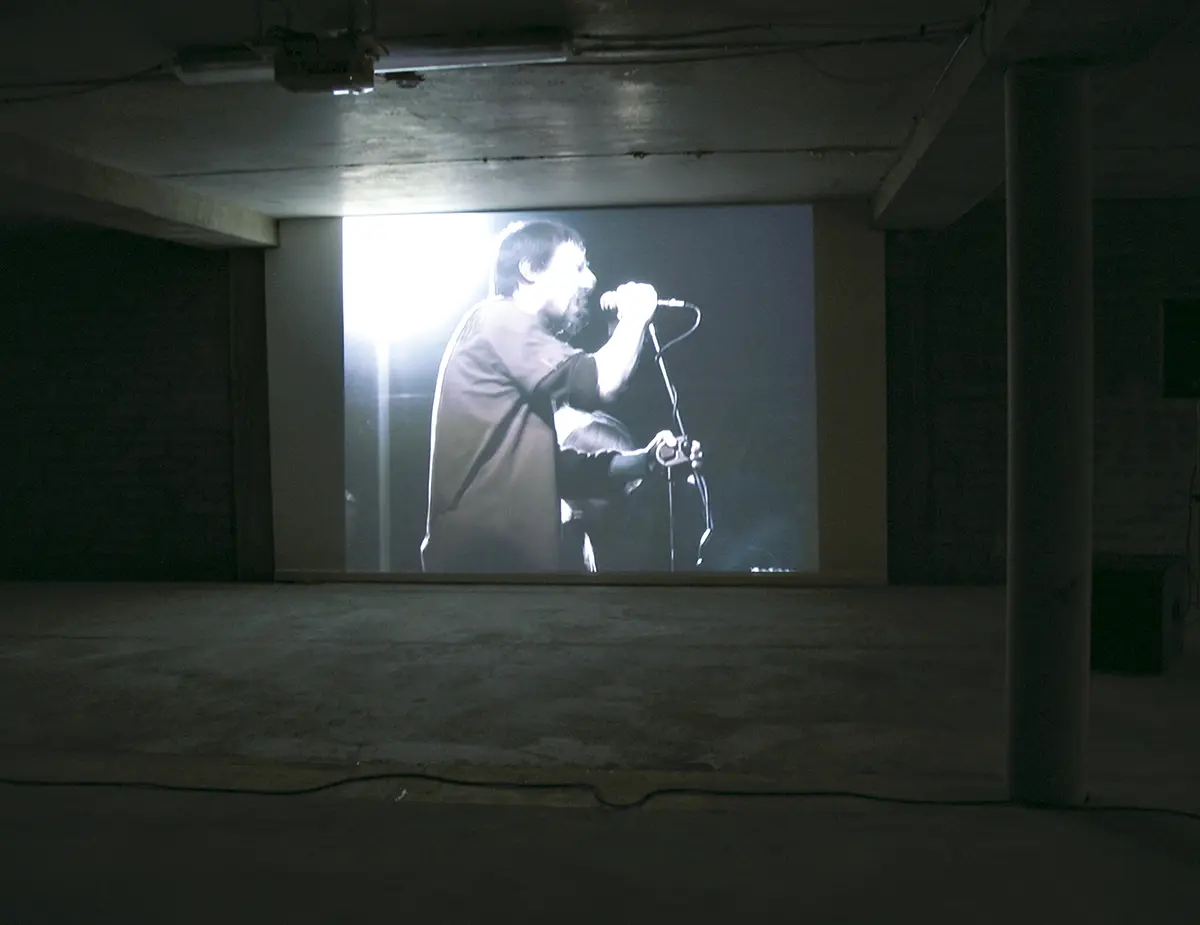
DIVA set up its galleries in small shipping containers on the beach, and this was a rather eclectic choice. But one exhibitor among many worth noting at DIVA was the Dublin-based Rubicon Gallery. This gem of a gallery presented a looped work by Martin Healy. Titled Genesis 28:12 (2006), the video was of a cover band playing the iconic Led Zeppelin song Stairway to Heaven. While this is no great conceptual feat, what elevated the work’s complexity was that it played forward and then backward. Both sequences not only toyed with Wittgenstein’s riff on language and the construction and deconstruction of meaning, but the reversal referenced conspiratorial theories of the original song as having subliminal Satanic messages. The POOL fair was ideologically unique in that it barred any artist that had gallery representation from participation; this in itself was a worthy concept that updated Courbet’s counter-exhibition against the status quo and the state-sanctioned Salon. However, it was at Art Basel/Miami Beach where most of the interesting works and projects were presented.
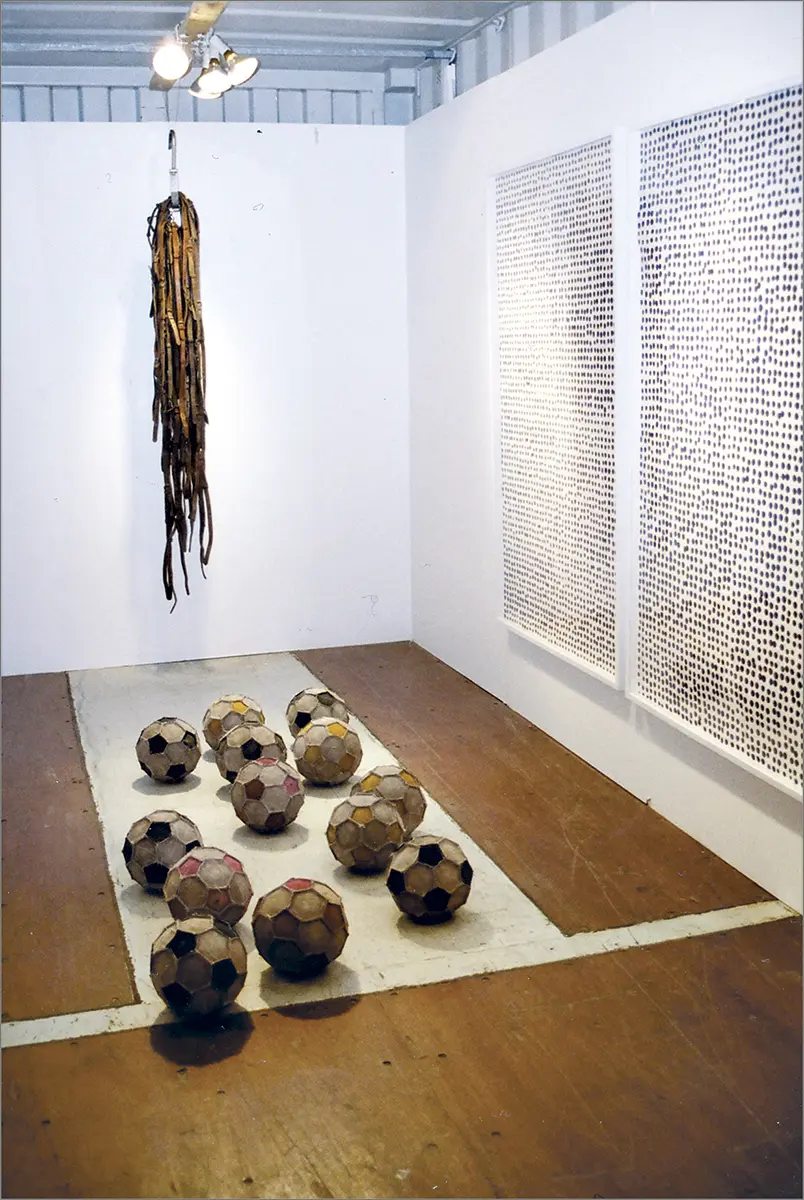
This year was the largest fair to date; some two hundred galleries presented over fifteen hundred artists working in a broad range of media in four exhibiting formats, under the rubrics of Art Galleries, Art Nova, Art Positions, and Art Kabinett. Along with these presentations mounted in the Miami Convention Center were also the ubiquitous side projects, including Art Projects, Art Loves Design, Art Loves Film, Art Loves Music, Art Bars, and the Art Sound Lounge and the Video Lounge.
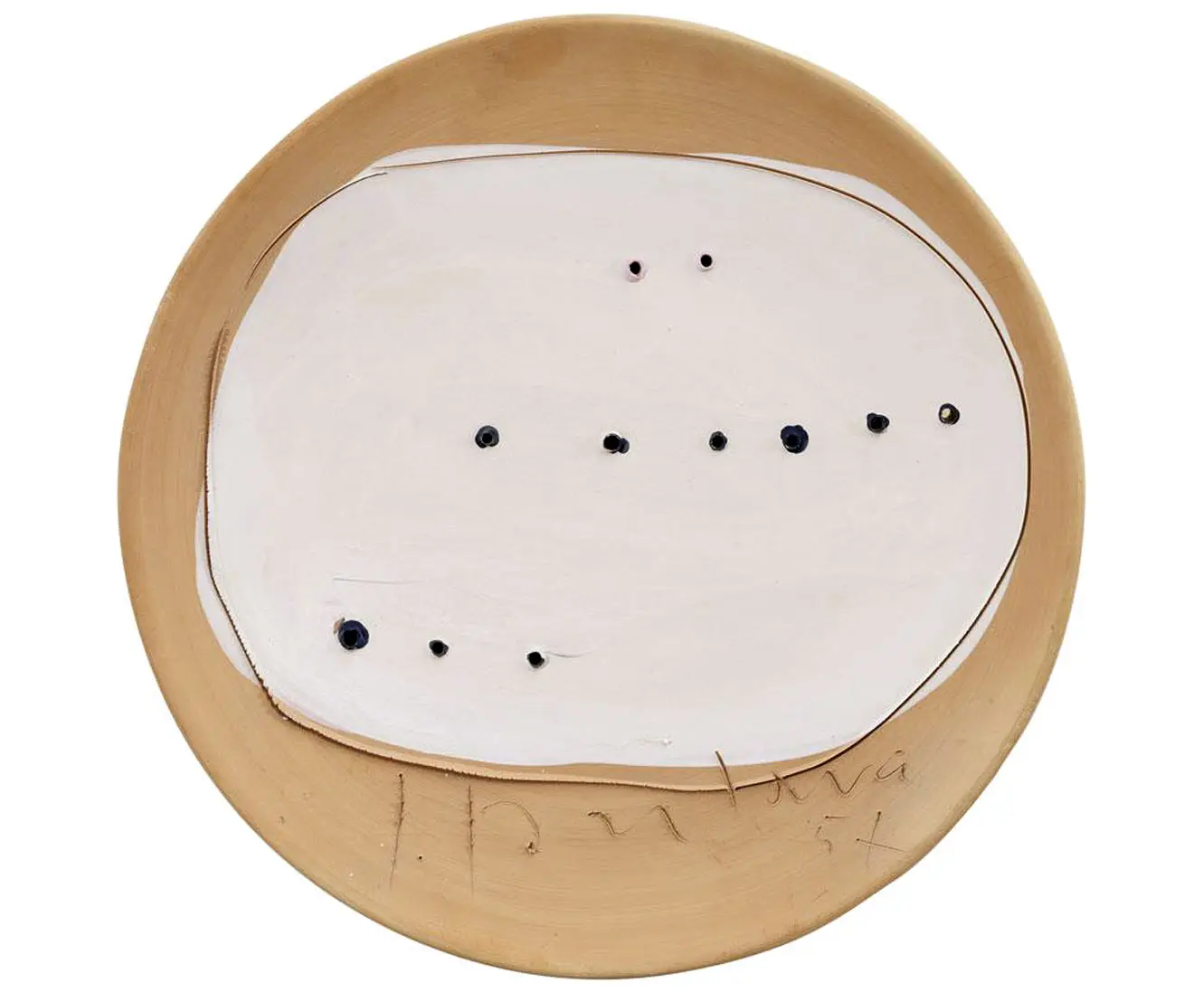
Whereas occasionally one can link the predominance of certain media in the art fair with critical issues outside of it, such as when there was a lot of painting that reflected a resurgent interest in the medium, this edition of Art Basel/Miami Beach was not dominated by any particular medium. To be sure, there were works that seemed instantaneously purchased, such as those by Damien Hirst, but even the works presented by this iconic British artist were not his most important or interesting. There were, however, some incredibly stunning works by other artists of Hirst’s caliber and higher: Karsten Greve Gallery based in Switzerland, for example, exhibited a breathtaking room of important two- and three-dimensional works by Lucio Fontana. Some of these include his historically pivotal Teatrini and polychromatic ceramic pieces. These works, which preceded his famous forays into his slashed and punctured monochromatic canvases, were already worth the fair’s admission price.
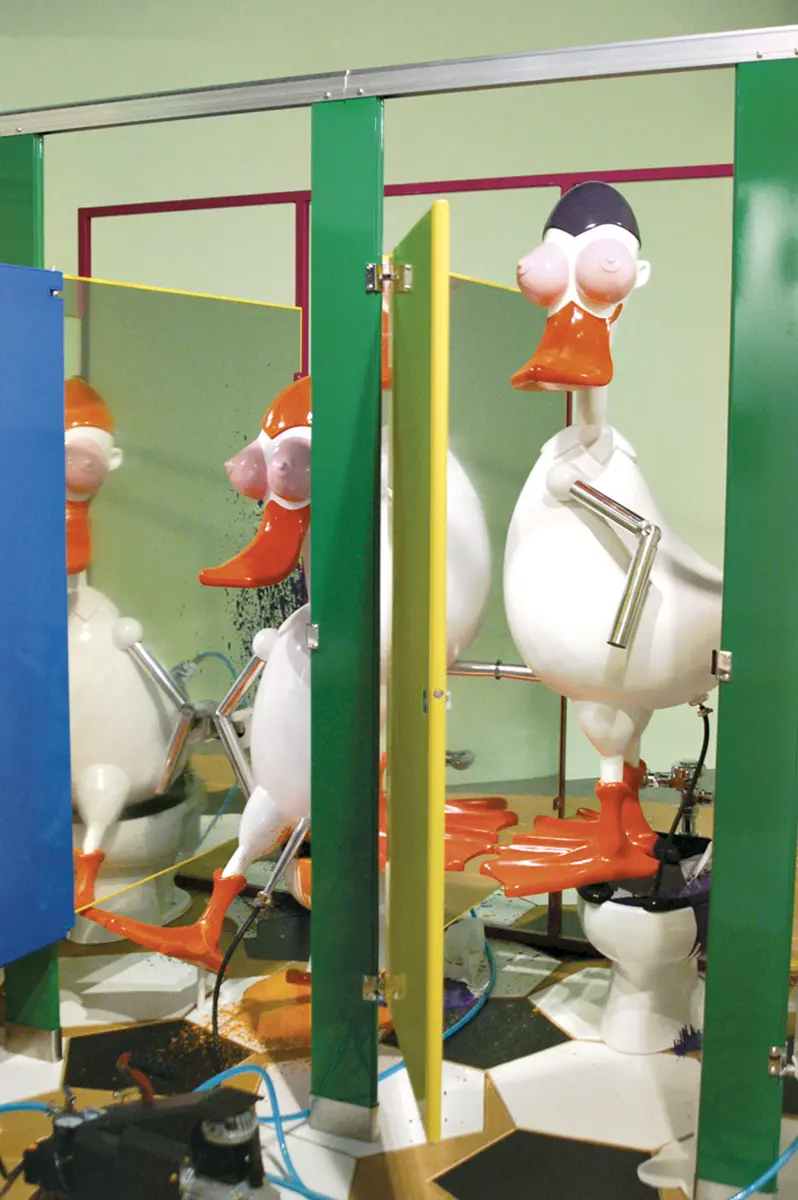
Another older established artist of note, of which there were many this year, was the always-impressive Richard Jackson. Jackson exhibited with Yvon Lambert in a solo booth in Art Kabinett. His installation, titled Ducks in the Men’s Room (2006), was a tour-de-force that converged painting, sculpture, and environmental work. Scatological but nonetheless visually poetic and humorous, the piece consisted of ducks defecating paint in the bathroom and all over each other. Jackson is a seminal California artist whose influence can be seen in other important L.A. artists, including Paul McCarthy and Mike Kelley.
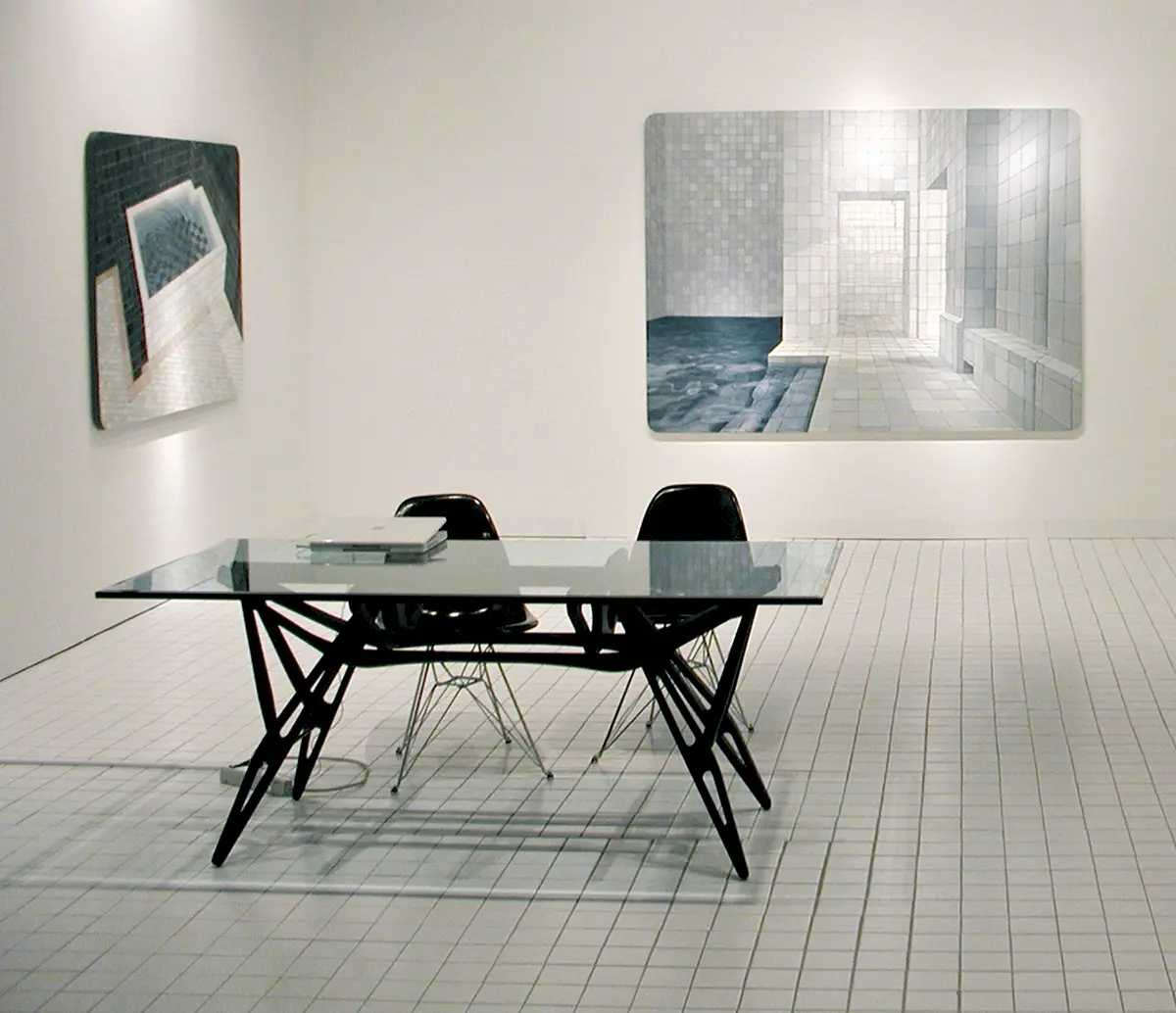
Another excellent solo project was at Lehman Maupin, which showed new paintings by the Brazilian Adriana Varejão. In the past, Varejão’s paintings have engaged Brazil’s colonial history through citations of Dutch Delftware, Old World porcelain, and the violence of this history, graphically represented by viscera. This time around, her paintings were much more subtle, demure, and more conceptual via their lack of over-the-top politics.
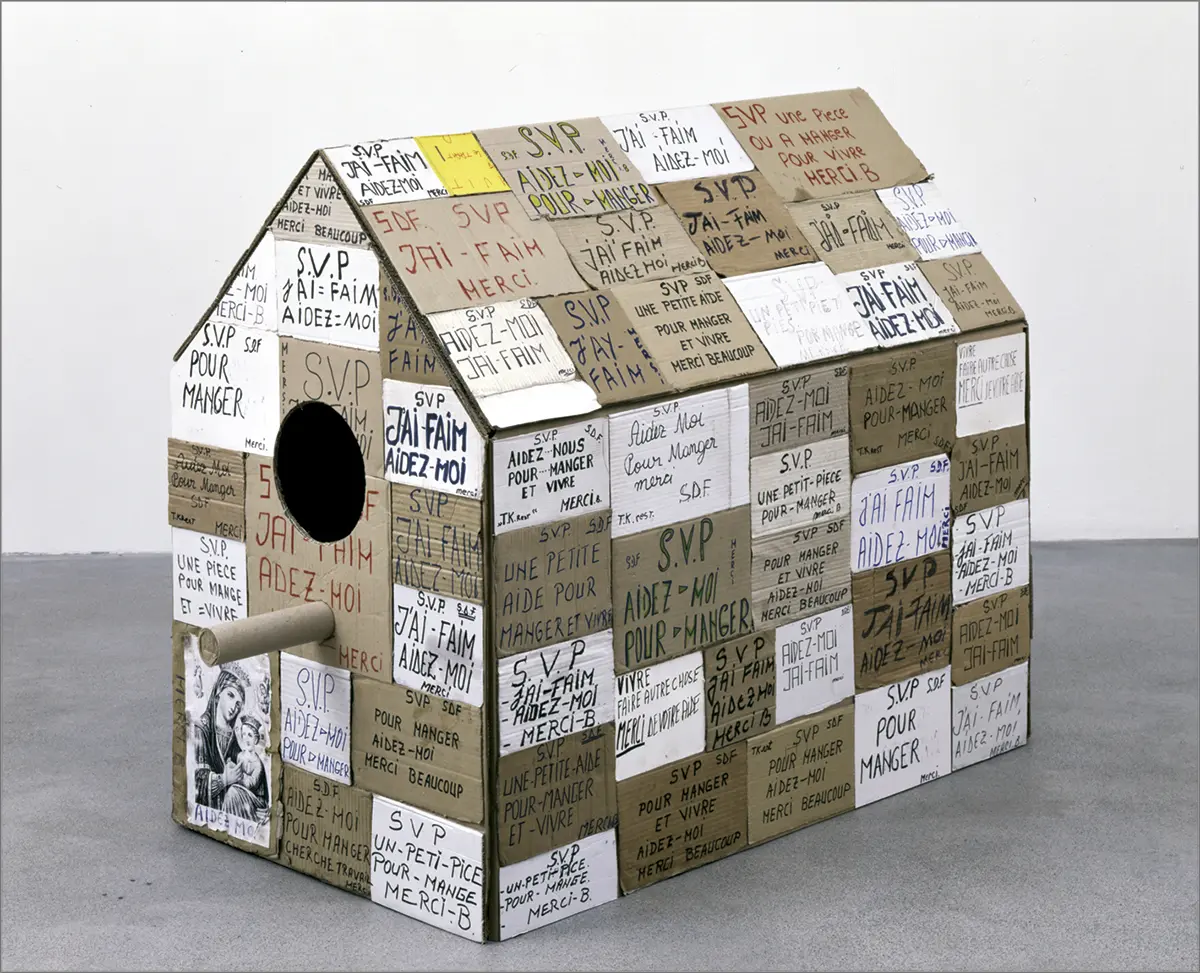
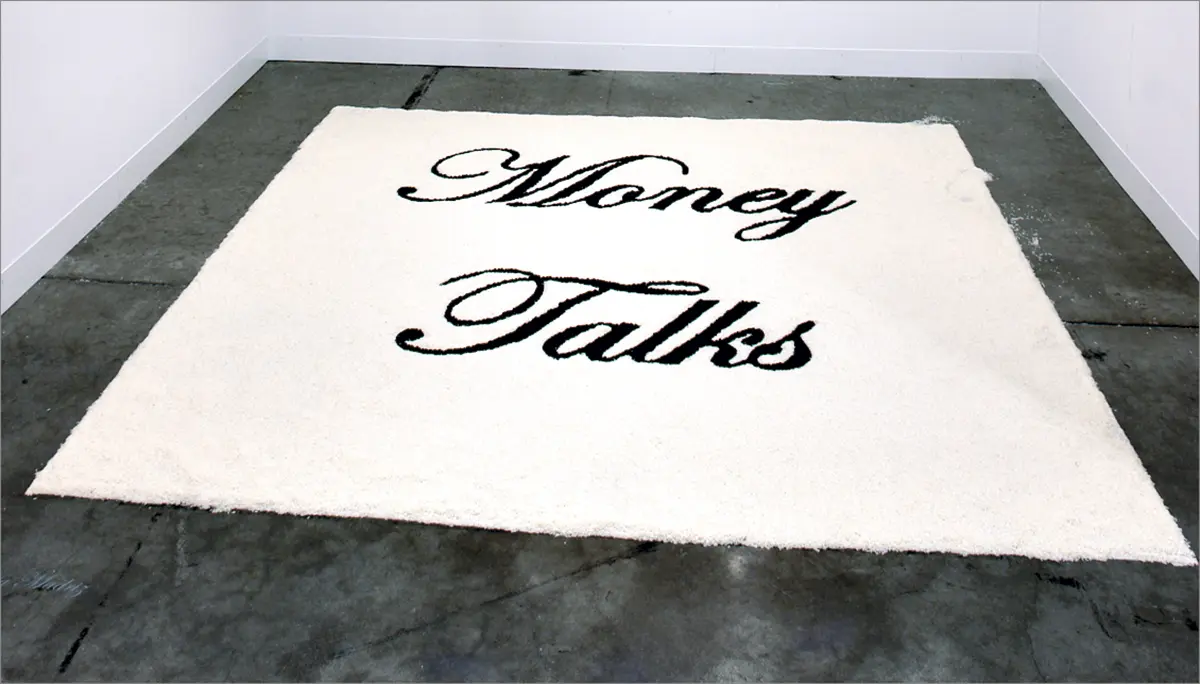
South American galleries were very strong this year, and some of the many highlights included Mexico City’s KBK Gallery that showed Marcela Astorga, Moris Moris, and Dario Escobar. Also worth mentioning was a beautiful floor piece of rice and beans by Lucia Mardiz that was presented by the Costa Rican gallery Jacob Karpio. Titled Money Matters (2006), Mardiz’s sculpture was an astute merger of form and content: the rice created the negative ground on which the letters made from black beans spelled out the title of the work in a formal-looking font. Two other artists working in the text but from different concerns were the peripatetic New York-based Venezuelan artist Javier Téllez and the British artist Fiona Banner. Téllez showed with the Swiss gallery Peter Kilchmann, and his piece was made during his residency in Paris. Appearing like an Arte Povera version of a birdhouse, the knee-high and rather large sculpture was made from signs written by the Parisian homeless. Included on the inside of the birdhouse was a slide projection of the authors of the texts mounted on the outside of the anthropomorphic avian architecture. Like a Dan Graham by way of David Hammons and Jimmy Durham, Téllez is a formidable artist who never ceases to surprise with his artistic intelligence and astute merger of seemingly simple materials with high concept.
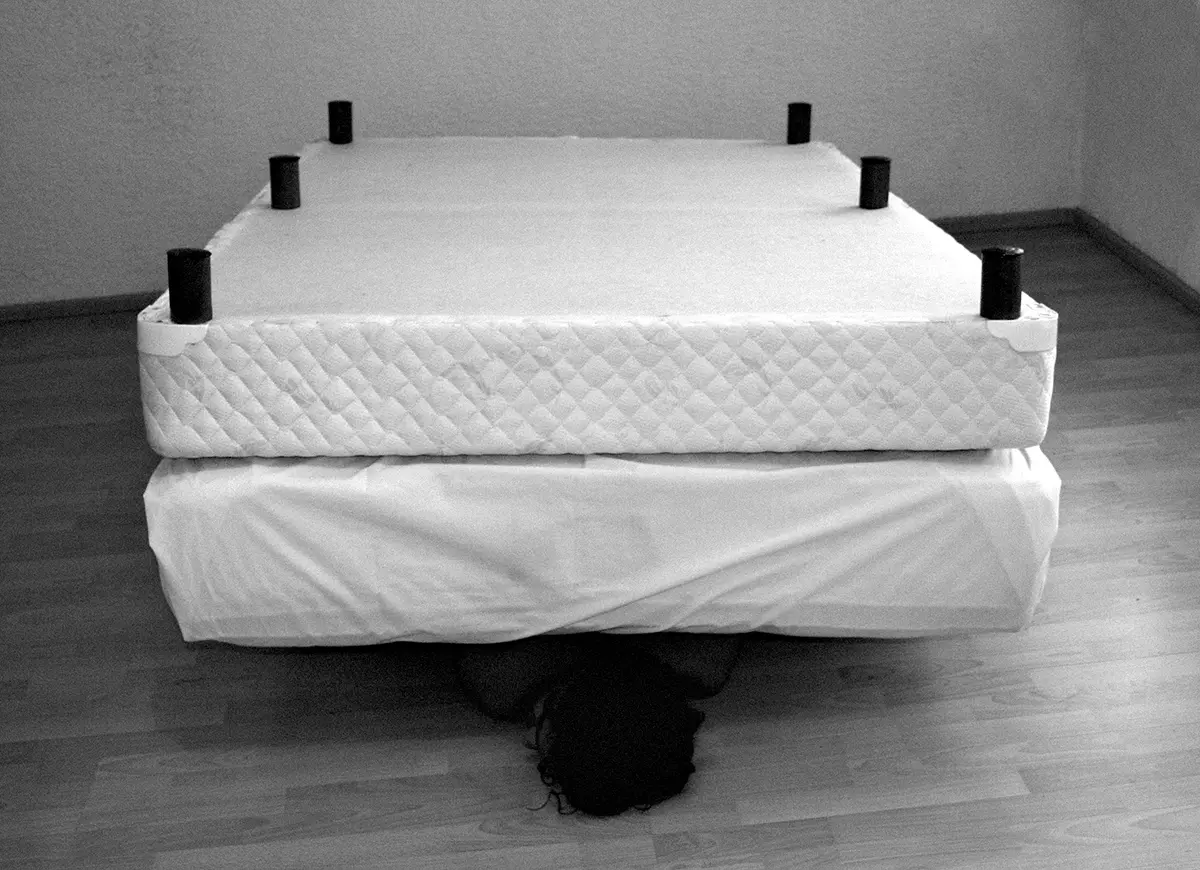
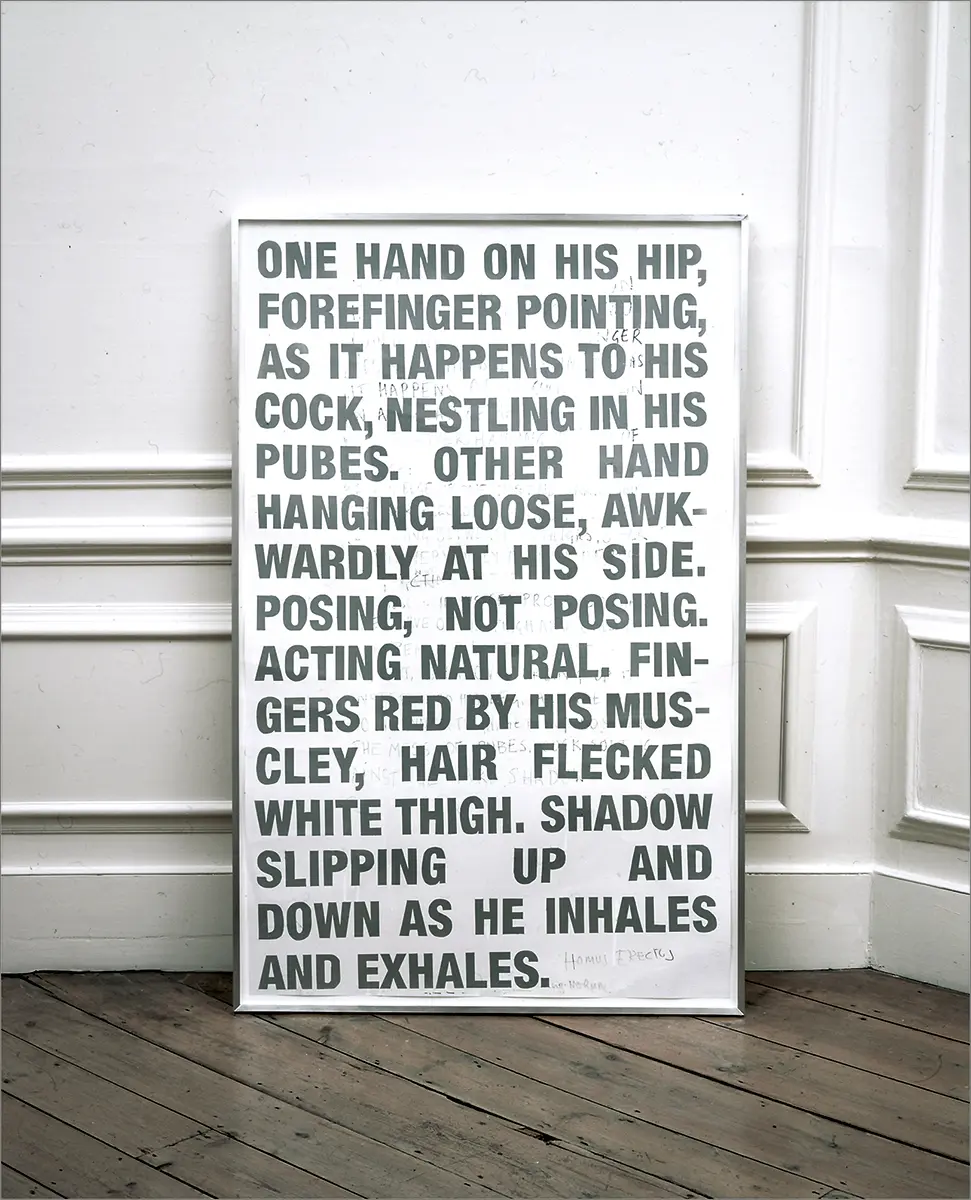
Fiona Banner, who exhibited with London’s Frith St. Gallery, showed a piece titled Homo Erectus (2006) that was the textual analog of a drawing of a nude male model. The literality of the text was so matter-of-fact that it vacillated between a pornographic narrative and an academic description of a figure drawing class where students artistically render the nude. Unlike past renditions of Art Basel/Miami Beach, the video did not seem to permeate this year’s offerings, but there were many fine works, including one by the Mexican artist Gonzalo Lebrija at I-20. Photography was also well presented at the fair. One interesting emerging artist is the Mexico City-based Cuban artist Ariel Orozco, who exhibited with the Mexican gallery Myto and is young, brash, and occasionally unresolved but shows much talent and promise. His piece titled Ejercico de sueño (2006) was a black-and-white photograph of a mattress presumably on top of the artist. Striking for its freshness and its historicity, the work was reminiscent of the early body art photographs of Charles Ray, like Plank Piece.
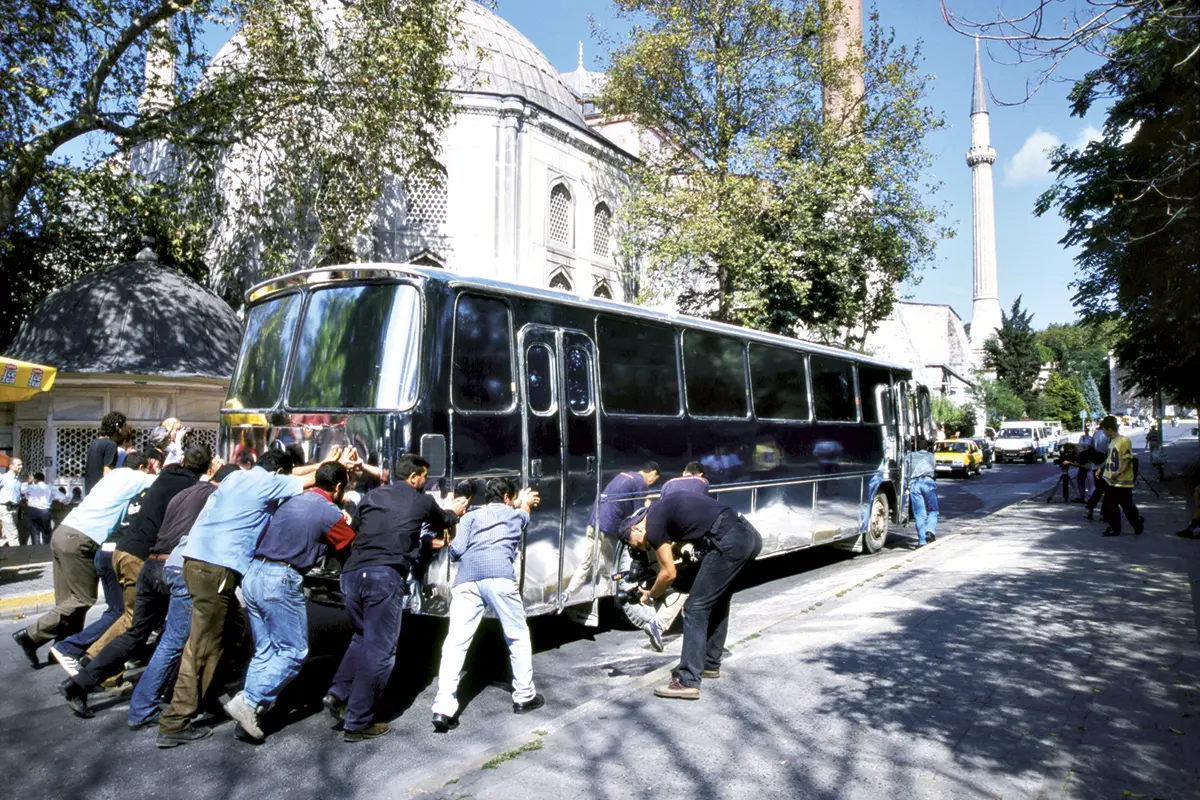
Finally, a work that could be seen as encapsulating this year’s fair was a performance by the always-interesting Albanian artist Sislej Xhafa. Titled Elegant Sick Bus (2001), the work consisted of a tour bus covered in Mylar and pushed around Miami by those persons who clean the city, pick up people’s trash, wash dishes in restaurants, and manicure the beautiful lawns of Miami’s richest art collectors: immigrant laborers.
RAÚL ZAMUDIO
New York-based independent curator, critic, and host of the curatorial project/talk show Art After Dark.