
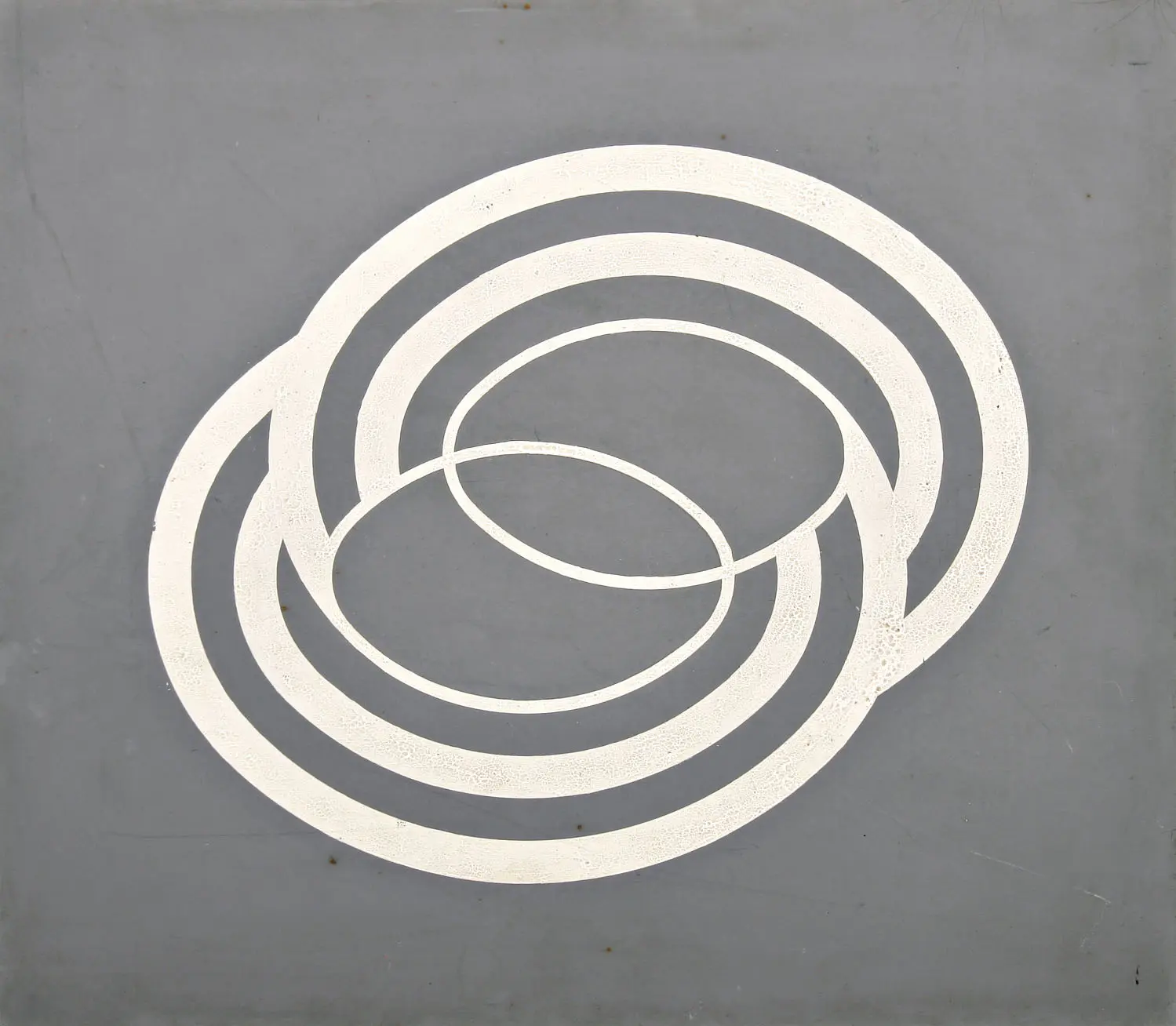
The São Paulo Museum of Modern Art (MAM) presented the show Concreta ’56—A Raiz Da Forma from September 26 through December 3, 2006. The show celebrated the fiftieth anniversary of the historical First National Exhibition of Concrete Art, which was held at the same museum and became the apex of the movement at the national level.1 Gathering artists from São Paulo and Rio de Janeiro, the show demonstrated specific differences between the paulista and carioca nuclei.2 Both groups were part of the Concrete aesthetic project and provoked a wide-ranging critical debate, which articulated definitions of the two groups.
The recent exhibition highlighted the historical circumstances in Brazil during the 1950s, the active period of the movement, establishing connections between the visual arts and avant-garde poetry. Concreta ’56—A Raiz Da Forma also showed a broad profile of production in the field of design between 1948 and 1966.
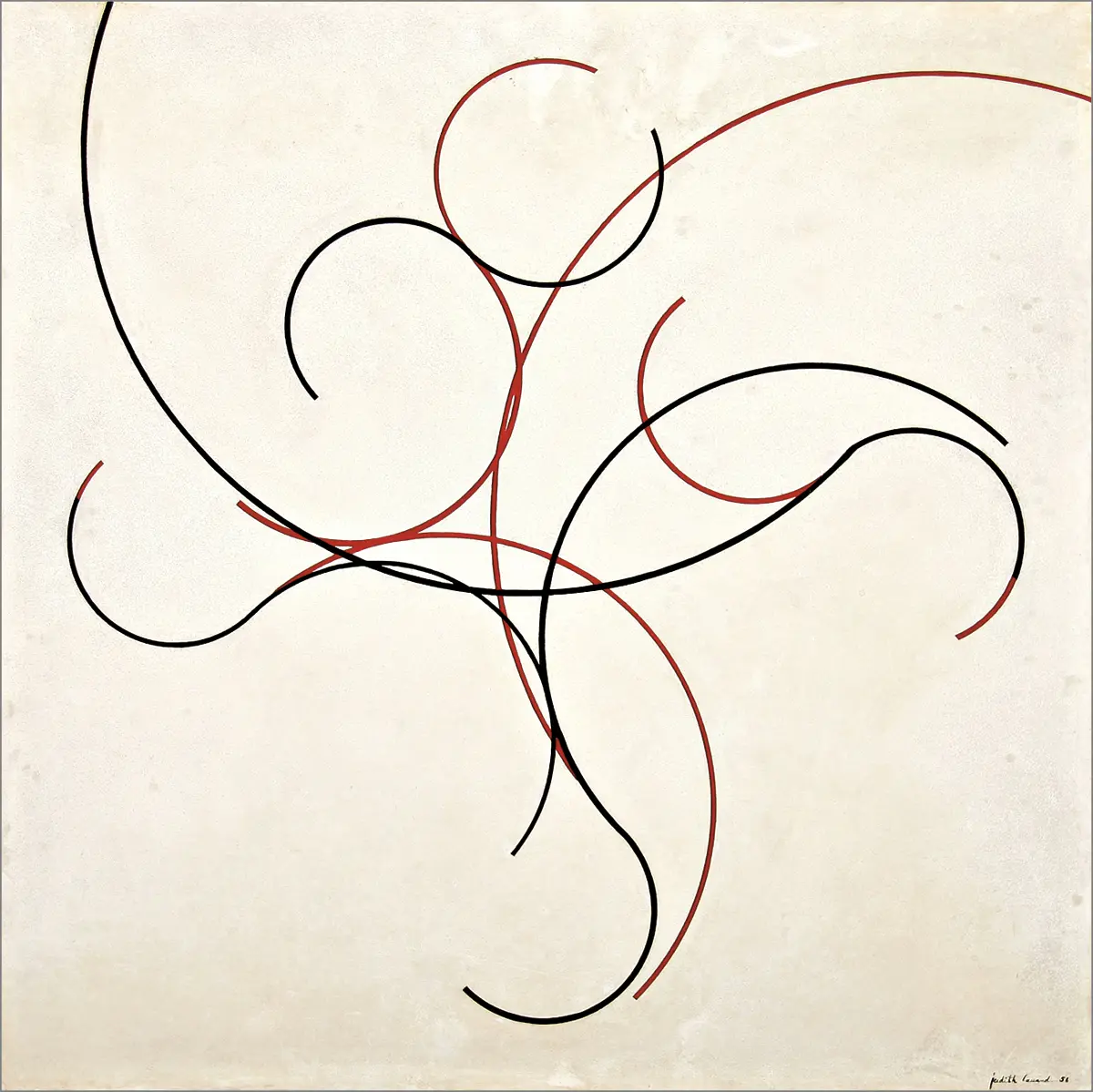
The show brought together twenty-six artists, including fifteen painters, one designer, one printmaker, and six poets, as well as twenty-seven designers, all of the Brazilian. The many works on view included key works in painting, sculpture, photography, poetry, and graphic and advertising material, along with the new visual aesthetic represented in book covers, records, and furniture design, among other objects and documents. A 311-page bilingual catalog was launched and presented during the show. Written in Portuguese and English, this volume gathered texts, period documents, a chronology, biographies, and a visual record of the works, all of which made it invaluable.
The original design of one of the 1956 show’s galleries was reconstructed; here, the curators not only displayed the same works that had been presented in the earlier show but also reproduced the original arrangement. This was possible due to laborious research by the curatorial team, whose members located a group of photographs from the period preserved in the archives, as well as magazines and newspapers. The co-curators of Concreta ’56—A Raiz Da Forma were Lorenzo Mammi (visual arts), André Stolarski (design), and João Bandeira (poetry).
Concrete Art can be understood within the context of art history as belonging to the historical framework of Modernist art. It was an aesthetic already sketched as a movement with De Stijl, from which it inherited a formal understanding of the pictorial language. It also had points in common with the philosophy of the Bauhaus, especially in regard to the social vision of art and the notion of integrating all the arts into the city and collective life. The original concept came from Max Bill, who adopted the name “Concrete Art.” Since their beginnings, the Concrete artists have attempted to delimit and differentiate their experiences in relation to abstract art, using their knowledge of Bauhaus as a model, which contributed to increased objectivity. They deduced and understood that color and form are events belonging to the sphere of pure perception as well as energies that interact dynamically in the visual realm. This experience was added to an approach to mathematical science, which motivated the use of forms without reference to nature.3

In Brazil, Concrete Art was the most important movement of the 1950s, and its repercussions and historical importance are comparable to those of Modernism in the 1920s. The exhibition Concreta ’56—A Raiz Da Forma not only represented the culminating point of that movement in the country but also had another important value: it made clear the significant differences between the São Paulo and Rio de Janeiro groups of visual artists.
After seeing the show, critics have been able to clearly distinguish two lines of contribution to the Concrete current in Brazil: that of the Concretes in São Paulo and that of the Neo-Concretes in Rio de Janeiro.4 The São Paulo artists, who became known as the Concretes or Concretists were heavily influenced by the avant-garde work and legacy of Max Bill. This Swiss artist exhibited at the São Paulo Museum of Art (MASP) in 1950. He also participated as a guest artist in the first São Paulo Biennial, where he won the Grand Prize for his Unidad Tripartita (currently at the São Paulo Museum of Contemporary Art), and the Swiss abstract-geometric artists were key points of reference for the São Paulo group’s practice, which was always close to scientific/mathematical realities and the quest for new technical processes. To those ends, they embarked on the exploration of form and space, observed the mathematical order investigated the theory of gestalt, created serialized works, and sought new techniques and innovative production processes, leaving behind the cult of oil painting and instead of working with Eucatex, industrial inks, and a paint gun.
In a 1977 text, Aracy Amaral underscored the technical issues and observed that a close relationship with industry and technology, the application of the artist’s work to practical life, and the “understanding of art as product,” were all relevant characteristics of the São Paulo group. At the same time, Amaral noted that it was not by chance that the São Paulo group published its manifesto in a magazine titled Arquitetura e Decoraçao since many of the artists worked professionally in those fields, as well as in advertising and the graphic arts.
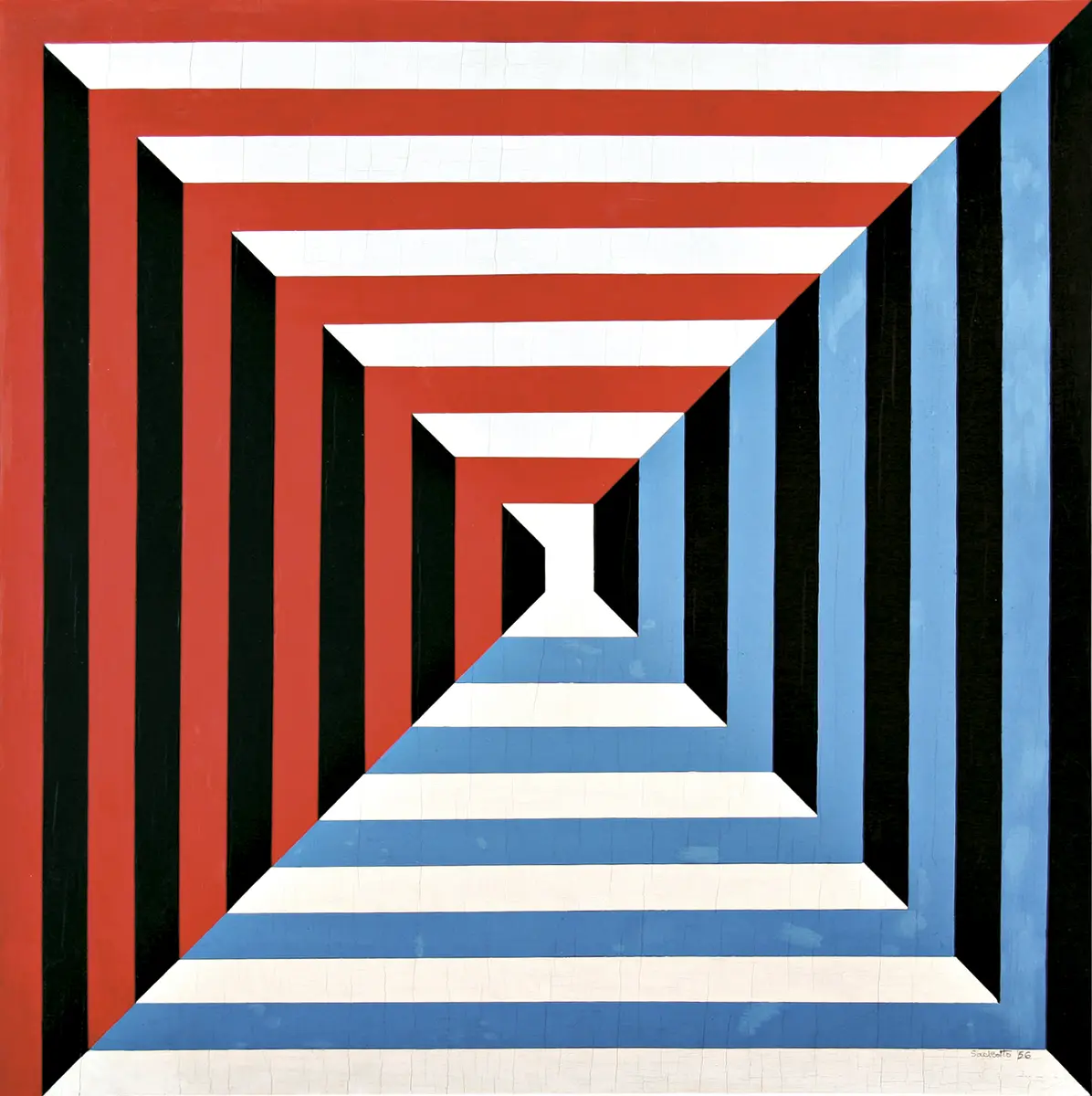
In a text titled "El Objeto," published in the aforementioned magazine around December 1956, Waldemar Cordeiro noted this: “The concept of productive art is a deathly blow to idealism, and it emancipates art from the second-class, dependent situation it has been relegated to.” In this text, Cordeiro pointed out that “art is not the mere expression of intellectual, ideological, or religious thoughts.” Cordeiro’s aesthetic formulations were firmly supported by Konrad Fiedler’s theory of pure visuality.
The São Paulo group coalesced around the pioneering figure of Cordeiro, its main theorist, and included the following artists: Geraldo de Barros, Lothar Charoux, Kasmer Fejer, Anatol Wladislaw, Leopoldo Haar, Luis Sacilotto, Alexandre Wollner, Judith Lauand, Maurício Nogueira Lima, and Hermelindo Fiaminghi.
Another Concrete exhibition, also organized at the Modern Art Museum in São Paulo, was a key event: the Ruptura group’s show, held in 1952. On that occasion, the exhibitors presented a manifesto, announcing the group’s name. The show and the Ruptura Manifesto had profound repercussions on the artistic scene, provoking an intense debate among artists and critics and also reaching the media.5 An important journal of Concrete poetry emerged during the same year: Noigrandes; its driving forces were the de Campos brothers, Haroldo and Augusto, along with Décio Pignatari.
Grupo Frente also appeared in Rio de Janeiro in 1952, gathering abstract artists from various schools. A year later, in 1953, the city’s Modern Art Museum presented conferences by Max Bill and the Argentinean critic Jorge Romero Brest, as well as rG exhibitio~˘of Argentinean Concretes. Thus, significant interactions took place between artists linked to the Concrete current in both countries.
Living at the time in Rio de Janeiro, Mário Pedrosa became a relevant theoretical presence in the field of art criticism, working at the same intellectual level as Waldemar Cordeiro in São Paulo. Pedrosa was the promoter of Concrete art ideas in Rio de Janeiro; later, the role fell to the poet Ferreira Gullar. Gullar carried forward a monumental critical effort in the process of differentiating the contributions of São Paulo and Rio artists. The latter came to be called Neo-Concretes or Neo-Concretists. With Reinaldo Jardim, Theon Spanudis, and several visual artists of the caliber of Amílcar de Castro—Franz Weissman, Lygia Clark, and Lygia Pape—Gullar wrote the Neo-Concrete Manifesto, a foundational document in the history of the movement. Gullar also wrote other important texts theorizing about the singularity of the Rio artists’ production.
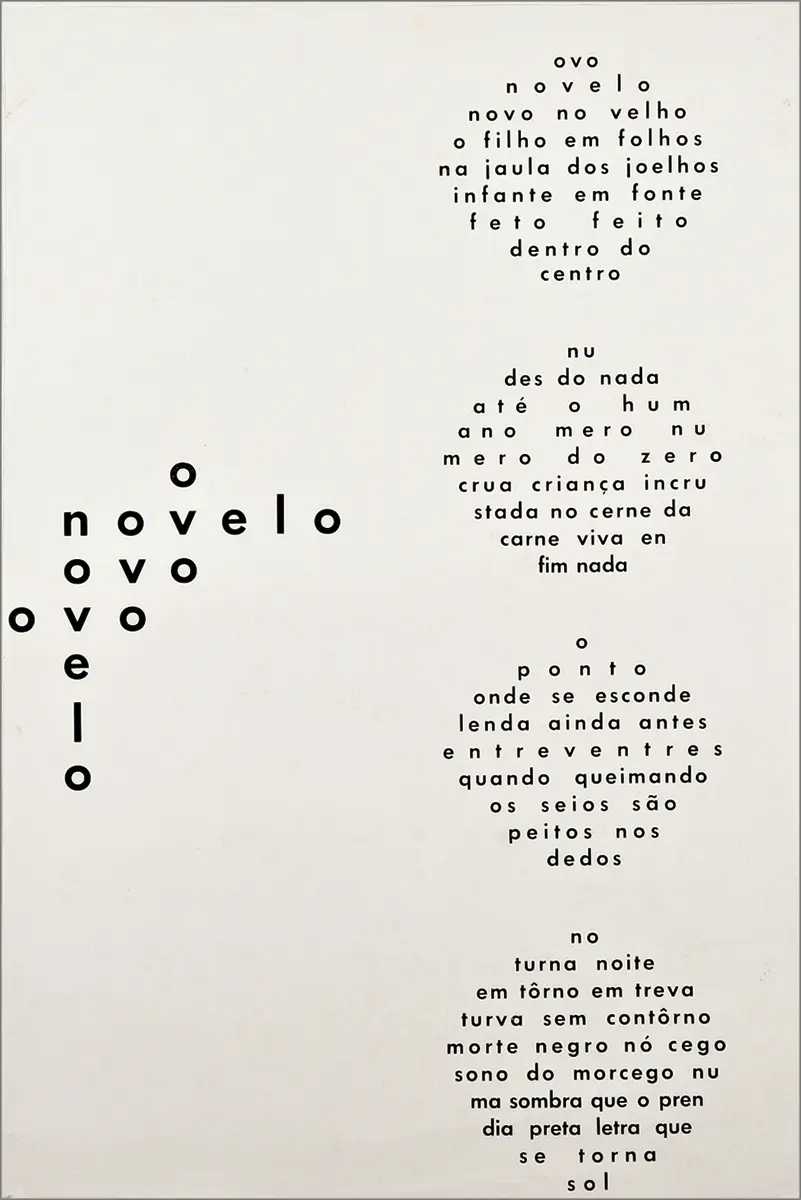
The Rio artists, in contrast to the São Paulo group, did not claim a new social function for the artist or his or her incorporation into a new social project. At the same time, the artists linked to the Neo-Concrete movement were not interested in achieving professional standing in industrial activities, advertising, or design.6 They investigated and proclaimed subjectivity and the freedom to experiment, and when they broke with the traditional space of the work of art, they began working structurally with the space/environment, even “concretizing” body experiences and performances.
At the moment of historical revision, citing the manifesto published in the catalog of the First Neo-Concrete Exhibition, Ferreira Gullar reminds one that the position of artists and poets was defined not only with respect to Concrete Art but also to the period’s contemporary art in general.7 A clarifying passage in that manifesto proposes: “Neo-Concrete Art, born of a need to express modern Man’s complex the reality within the structural language of the new art denies the validity of art of scientific and positivist attitudes and repositions the problem of expression by incorporating the new verbal dimensions [created by non-figurative art]...”8
“Verbal” is here defined as the “new vocabularies” of an emergent geometric language.
NOTES
1 The National Concrete Art Exhibition was held in 1956 at the São Paulo Museum of Modern Art and in 1957 at the Rio de Janeiro Museum of Modern Art.
2 Carioca is a term used to designate those born in Rio de Janeiro.
3 Ferreira Gullar, “Neo-Concrete Art—A Brazilian Contribution,” in Projeto Construtivo Brasileiro na Arte, ed. MAM/Río and Pinacoteca del Estado de São Paulo, 1977.
4 “Dos líneas de contribución: Concretos en São Paulo/Neoconcretos en Río.” Ibid.
5 The Ruptura Manifesto was signed by Charoux, Cordeiro, de Barros, Fejer, Haar, Sacilotto, and Wladyslaw
6 Only Amílcar de Castro was involved in the graphic arts field, as a layout artist for the Journal de Brasil, a major Rio de Janeiro daily.
7 In “Da Arte Concreta à Arte Neoconcreta,” in Projeto Construtivo Brasileiro na Arte, cited note 2.
8. "Verbal" is here defined as the "new vocabularies" of an emergent geometric language.
* All works illustrating this text are photos by Luigi Stavale and courtesy of Museu de Arte Moderna de São Paulo.
LISBETH REBOLLO GONÇALVES