
By force, the first edition of the Architecture, Art, and Landscape Biennial of the Canaries seemed to be conditioned for failure, or at least for the borderline detouring of the very statements that, in principle, seemed to drive it. The Biennial was commissioned by Antonio Zaya, in the areas of Art and Landscape, and was under the general directorship of Rosina Gómez-Baeza.2
With an extremely ambitious conceptual platform that seemed to open up infinite lines of reflection, resulting even in ideo-thematic anarchy and sensorial paradox, which was undoubtedly reflected in a multifarious catalog with works whose works moved in very dissimilar discursive directions and where the enunciation of the landscape functioned as a smothering and claustrophobic elective context for proposals that (fortunately, of course) had nothing or precious little to do with the landscape and its conflictive relationships with contemporary culture and society. Sustainable culture, landscape, periphery, cultural laterality, post-colonial spirit, migrations, travels, archaeology, ecological feelings, conservation of the environment, urban speculation, overwhelming growth in tourism —such were the thematic orders that shape a kind of “all inclusive” curatorial model. It was never clear what this Biennial was about, and the irrefutable proof of this failure resides in the fact that in the face of such conceptual dispersion, a corpus of artistic proposals was erected that could not but establish a dialog on the basis of opposition, paradox, and in some cases (the majority) or an alarming complacency and banality.
The thematic issue, even if we have already warned about the anarchy of this edition is one of the vectors that end up disrupting the possibility of many-faceted readings, equivocally conditioning many approaches to the yoke established by the coordinates set by the commissariat. In that sense, good works that consciously rejoiced in taking distance from the pre-established thematic hegemony has been fated to be misread or at a minimum misinterpreted owing to their connectedness to the otiose topic of the landscape. The instrumentalization of value judgments exercised by borderline criticism in search of such haphazard connections is often regrettable. This is not the first time that good works and aesthetic proposals based on performance, installation, and intervention of public and private spaces have been poorly read or judged read as failed and insufficient, by virtue of their lack of correspondence and contact with the general lines designed by the event’s commissars. Many critics strive to discover there, where they do not exist, unsuspected resonances, congruencies, and haphazard participation of the works in the established thematic anchors. Therein derives, in part, an analytical amnesia that misjudges the true reach and projection of works that are nevertheless effective in their own autonomy, because they distance themselves from the demands of the theme in question.
One of this Biennial’s distinguishing features, which has been used as a convincing metaphor by the director and the commissar is the fact of its scattered location throughout the Canary archipelago. Which, far from being a virtue and serving as the topological justification of certain geographic characteristics, ended up posing a conflict for the movement of the interested public. Somebody said, almost by accident, that this had been a Biennial for the media, and this was in large part a true assessment. While it is true that the intention —certainly commendable—was to break with the meaning and the hegemony of the centrality that is so typical of these kinds of events, in favor of a dispersion that would function as a presumptive metaphor for the archipelago itself, from the practical point of view the decision was a mistake. Some questions arise, then: For whom was this Biennial organized? Who is it's real public? Who benefits from its existence? Was the intention to jump into the bandwagon of the generalized trend towards Biennials, as a premeditated maneuver in an electoral context? Is this perhaps the moment to assume, without hypocrisy, that contemporary art is a matter or a phenomenon for the elites and the specialists? Unless by express invitation from the Canary Islands government and its cultural dependencies, touring all the Biennial sites on one’s own, as an individual, is almost impossible, taking into account the cost, the time required, the variety of sites, and their location removed from each island’s urban center. Seven islands, and within each one, sites selected for specific projects produced by the Biennial, inaccessible without an assigned transport.
Yet beyond these mistakes, this edition of the Biennial had several successes, such as the recuperation of new spaces for cultural activity, and not only those with an architectural/historical importance but others of a natural character that act as relevant anchors for the archipelago’s identity. Along these lines, the purpose of strengthening a critical gaze on the landscape activates new mechanisms that contribute to the conservation and perception of the islands’ natural, archaeological, and architectural patrimony. On the other hand, and even as we have noted the risks and the practical ineffectiveness of the attack against centralization defended by the commissar, it is no less true than the abandonment of the traditional concept of an exhibition and the refusal to pay excessive tribute to the idea of spectacle are merits of this convocation. In the economic domain, without entering into the implications of many of the figures involved, we must point out that 50 percent of the 115 works presented were produced by the Biennial as specific projects for sites previously selected by the commissariat, the directorship, and the technical team.
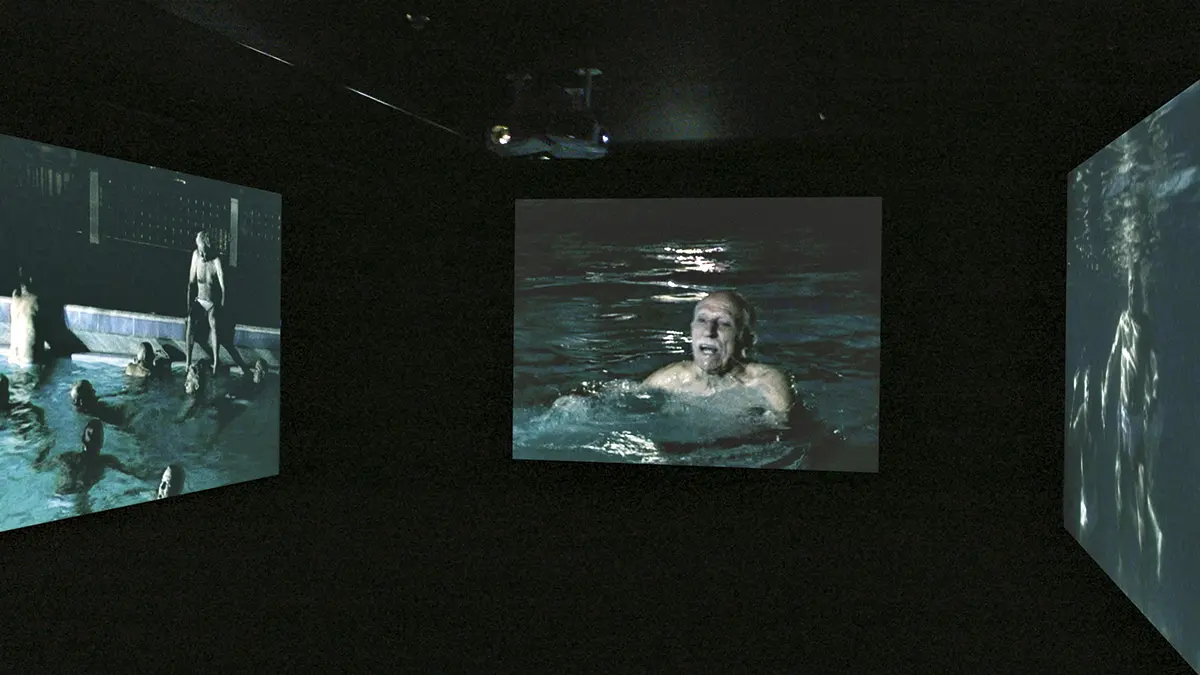
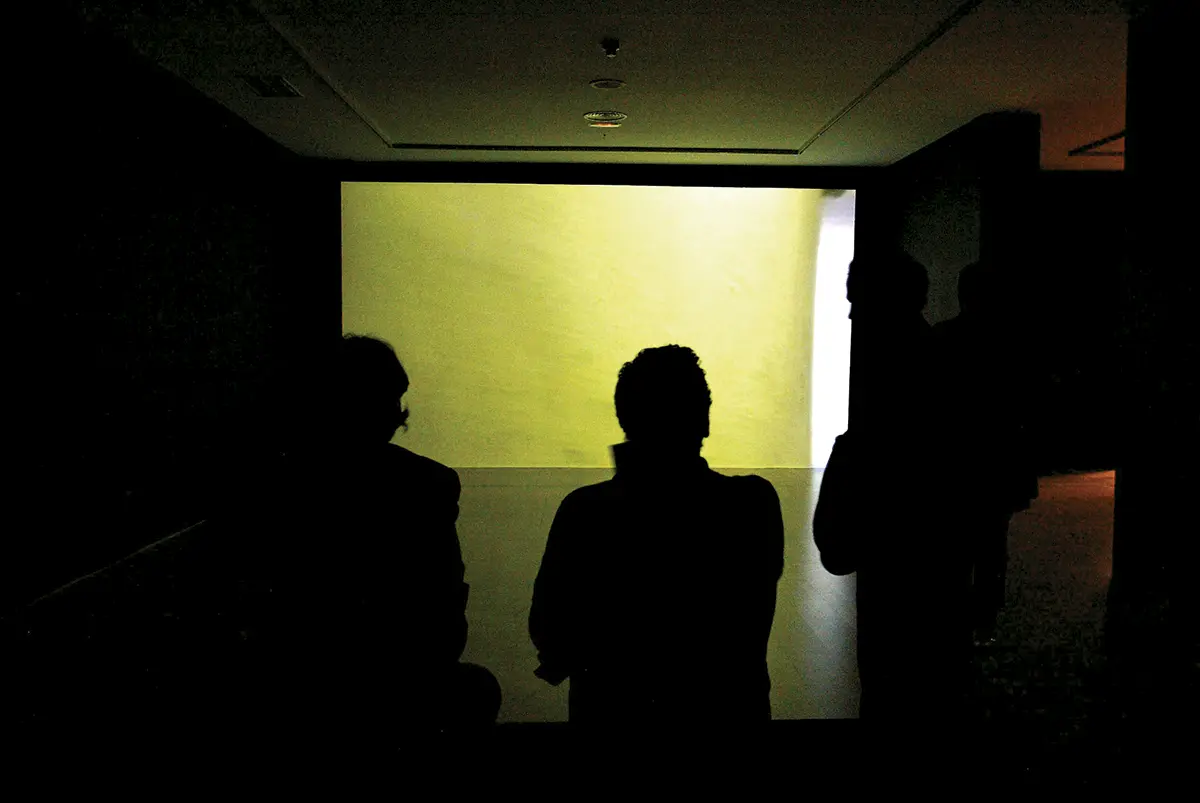
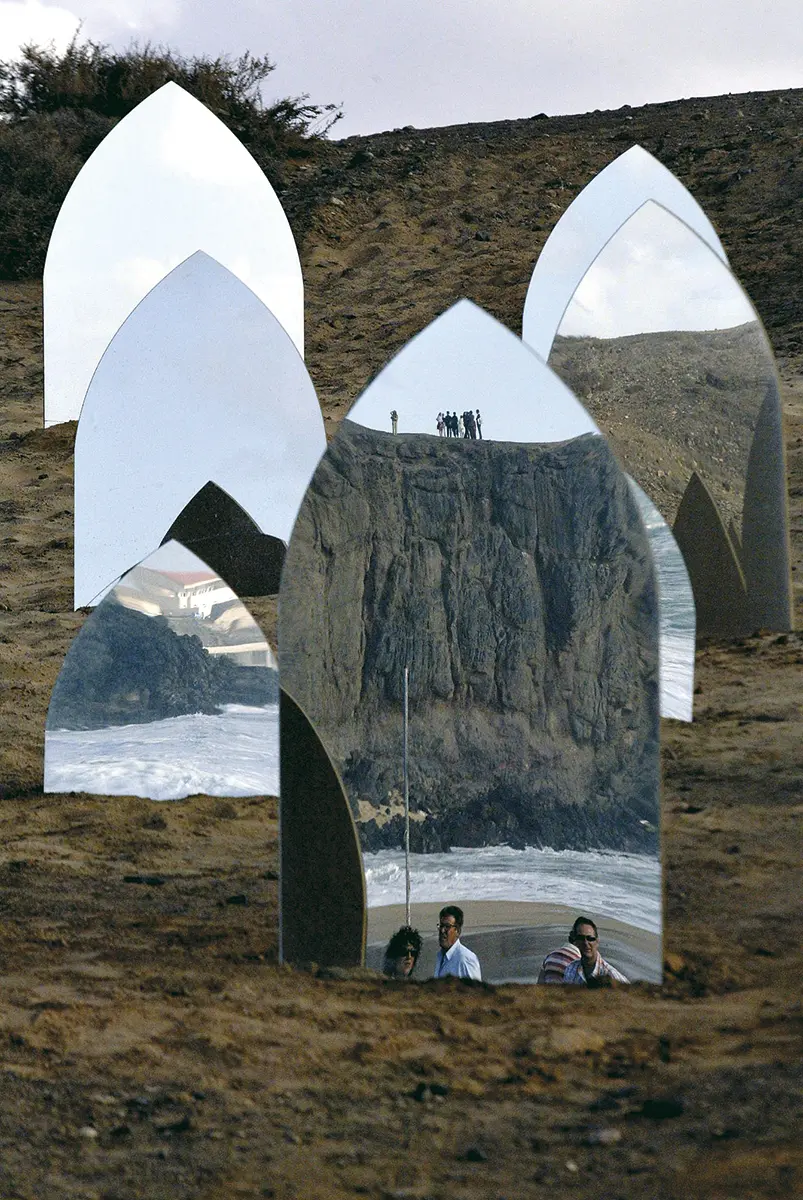
The collective exhibition of works by Venezuelan artists Alexander Apóstol, Sergio Brito and Javier Téllez at the Museo de Bellas Artes de Santa Cruz de Tenerife, was one of the key points in the proposed itinerary. Three spectacular videographic works that, with differing degrees of sharpness, sensitivity, and commitment dove, and explored the complex world of the phenomenon of migration. Also to be highlighted is Sergio Brito’s impacting video at the Canteras beach in Gran Canaria, a vertically oriented screen receiving a projection of the sea as the metaphor of a wall. A beautiful work of art with many possible readings, each pointing towards the drama of the blind, uncharted journey and the arrival at a location where one never finds a place, more than a wall that reminds us of the falsity of the new democracies and the misleading, fallacious nature of the politics of tolerance. Thanks to its forcefulness and the articulateness of its ideas, another stand out was Holly Land, an installation by French artist Kader Attia, located on a beach in El Cotillo, Fuerteventura. Ninety fragments of eye-shaped mirror sheets stuck to the sand, facing the sea, become a chilling —but no less poetic— metaphor of a cemetery inhabited by the soul of the voiceless, in the representation of the human displacement from coast to coast. In the same island of Fuerteventura, but the Case de los Coroneles La Oliva, a masterwork of Canary civilian architecture, was a Moroccan artist Jaafar Akil’s somewhat intranscendent and excessively hedonistic photographs, in differential dialog with the proposals presented by Otobong Nkanga (Nigeria), Allan de Souaz (Kenia), Won Ju Lim (Korea), Miwa Yanagi (Kobe) and Ángel Delgado (Cuba) with Punto de fuga, an installation that was very well rounded conceptually but disappointing as a formal execution. The Conjunto Conventual Betancuria hoisted a highly suggestive video and a performance by Johannesburg artist Johan Tom; the latter was excessively long and tested the patience of any viewer, but it had the highest degree of evocativeness and a sense of transcendence, at the very limit of physical resistance. The Recova, in Tenerife, presenting works by Adel Abdessemed (Algeria), Fernando Álamo (Santa Cruz de Tenerife), Thami Benkiara (Fez), Carmela García (Lanzarote), Sara Maneiro (Caracas) and Mateo Maté (Madrid), was one of the most infelicitous group shows, a kind of excessively anarchic pastiche, where the sharpness of a few works was eclipsed by the general miscue. At the other end of the spectrum, the installation presented by Alexandrian artist Mahmoud Khaled at the Cabrera Pinto Institute, alongside a video projection by Eija-Liisa Ahtila (Finland), and the proposals by Eelco Brand (Rotterdam) and Ursula Biemann (Zürich), at the Casa de Los Capitanes, saved with their interest the boredom and laziness of a tour that already accused excessive tiredness.
This contradiction between the conceptual quality of the works and the intelligent striving of their formal solution through the media and the language had an effect on more than a few proposals. This was evident in the staging in two of the seven islands: Lanzarote and El Hierro. The former hosted two f the tour’s key works, La marea Negra, by Ángel Marcos at the Castillo de Santa Bárbara, now the Museo del Inmigrante, and Greece’s Maria Papadrimitriou extraordinary intervention titled The Plug Inn Hotel, both site-specific works. Both dealt with the phenomenon of migration from standpoints that were connected but differed in their degree of effectiveness; Papadrimitriou’s work was a veritable icon of this Biennial, and raised questions about La Marea Negra, with its clearly xenophobic title (independent, of course, of the author’s intention.) The work of the Greek artist made obvious the sobriety of the concepts and their connections, where nothing seemed to be missing and nothing seemed to be superfluous, while Marcos’ work reflected a gratuitousness and a haphazard nature in its language and the media used. In El Hierro, in the old village of Guinea, the interventions by Cecilia Paredes (Peru) and Concha Jerez (Las Palmas) highlighted the same disjunctive. Cecilia Paredes’ beautiful and unprejudiced
El rocío de cada mañana reached great heights of eloquence and connected well with the conceptual platform proposed by the Biennial, as its articulation was based in the recovery of a local legend; however, Canary artist Concha Jerez’s intervention bared, despite the abundance of resources and the undisguised aspirations to spectacle, the failures of a mise-en-scene where excess displaced the idea. Canary artist Alexis W’s installation, on the other hand, revealed the pointedness with which a work of art seemingly distant from the Biennial’s statement was able to trace a highly suggestive map of the human landscape by means of the theft and expropriation of other’s dreams.
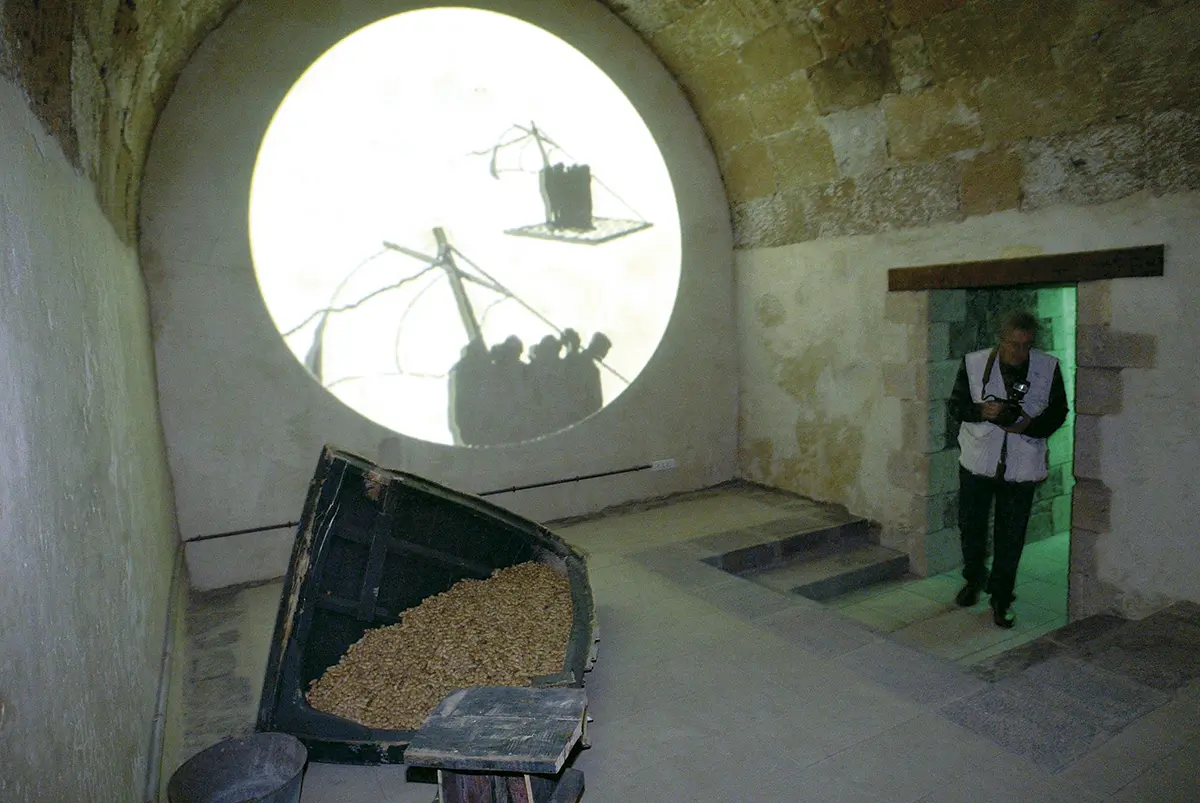
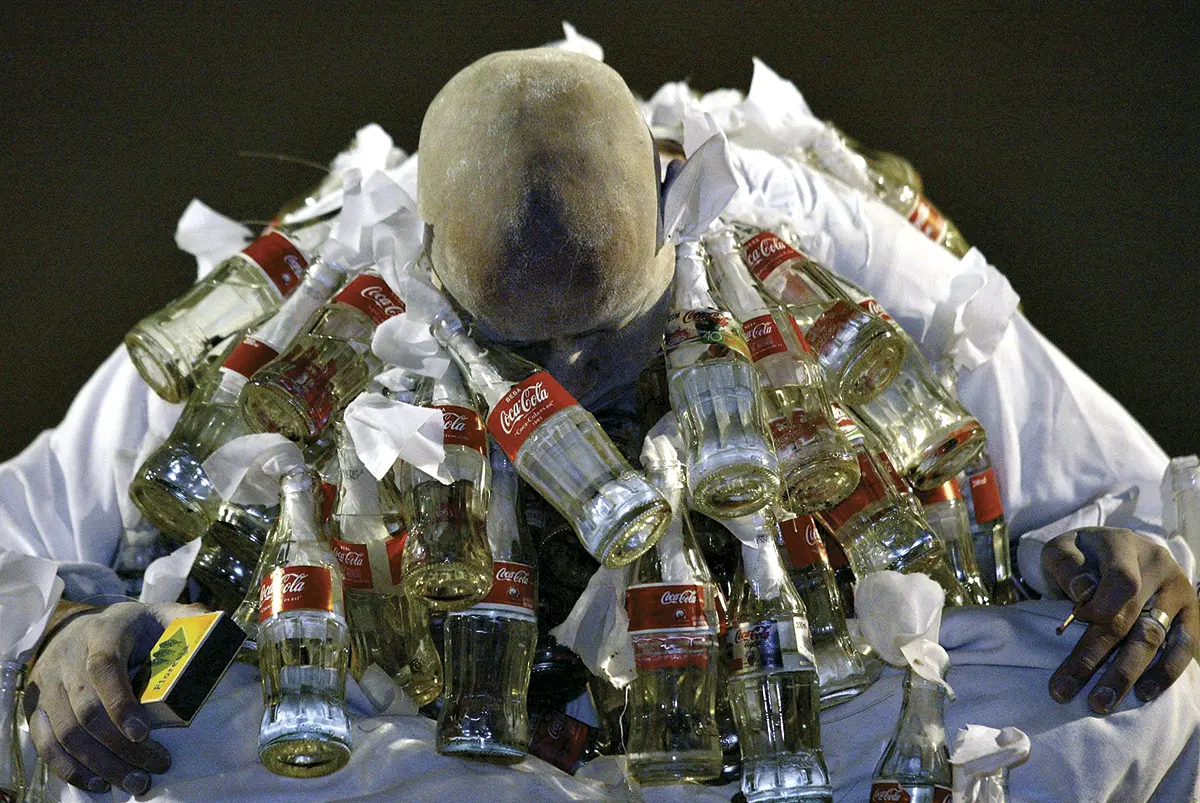
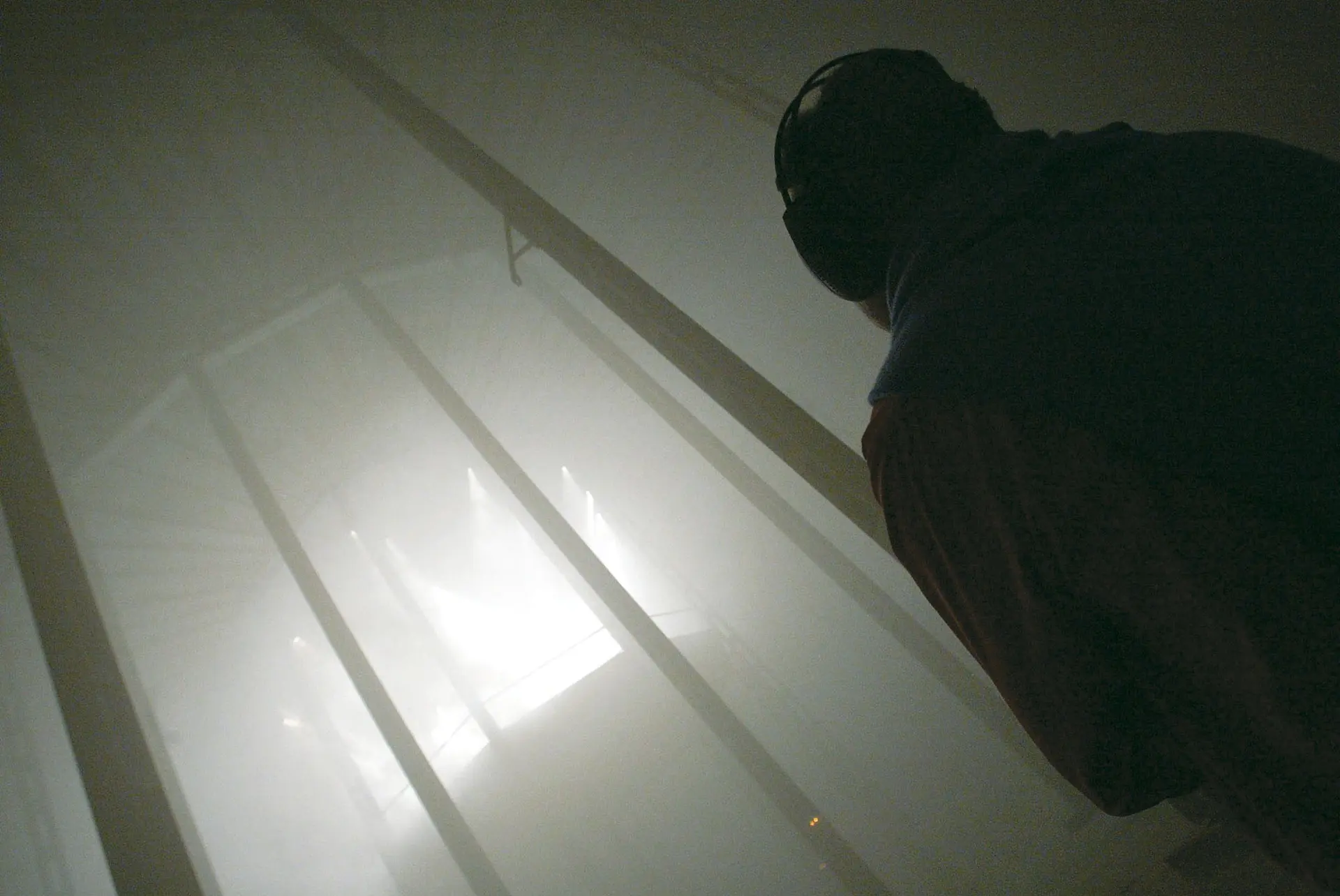
Finally, a proposal that captured the attention of the media was the installation presented by Chilean artist Alfredo Jaar, whose location was one of the most coveted by the rest of the artists: the Espacio Cultural El Tanque, in Santa Cruz de Tenerife. Based on the pathetic story (shame on our anarchic world’s politician’s) of two Africa adolescents who froze to death in the landing area of a plane flying from Guinea-Conakry to Brussels. this work surprised many with the way in which the suffering of others is appropriated to tickle our collective prurience. In the eyes of everyone, this was a large spectacle, and after leaving El Tanque, the party continued. A voice seemed to be calling out: the spectacle must continue, let’s go on with the party.
The very fact that the Biennial wants to take on the role of an emblematic show of what contemporary art has been and is in these regions, besides serving as a measure and state of opinion regarding the contemporary in cultural areas as complex as Africa, Latin America (including the Caribbean,) Asia, and a highly stratified Europe itself results in a pose of intellectual solvency with which artists and a good number of critics don’t hesitate to express their disagreement. Any selection is exclusionary, and by extensions it establishes hierarchical models that, at a minimum, need to be examined with skepticism. Events like this will also, and above all, serve to procure a revisionist and critical minded review of artistic practices from the standpoint of an inclusive, yet not arbitrary, perspective, as well as its validation, hybridization, and classification mechanisms, while leaving room for an assertive intromission into the prolix, labyrinthine interstices of the identity and the histories of this part of our cartography: the stage for a wide array of lateral expressions, marginal acts of resistance, and political incongruences that clamor for protest and contestation.
NOTES
1. Slogan of an art students protest that burst into the opening of the International Symposium on Africa, America, and Europe: Art and Social Landscape just as the vice-counselor for Culture, Dulce Xerach, was speaking. Another group of students, in a legitimate act of reprobation, displayed a sign against the project of the Grandilla industrial port. All of this took place at the Main Auditorium of the Information Science School at the La Laguna University, in Tenerife.
2. For reasons of rigor, and even though one of the areas of this Biennial is not dealt with in this article, we need to point out that the convocation defined two large terrains. One of them was
Art and Landscape, commissioned by Antonio Zaya and directed towards contemporary aesthetics; the other one was Architecture and Landscape, directed by a committee coordinated by Virgilio Gutiérrez. The latter section was structured on the modality of the observatory and its results will be exhibited in January in concrete sites, with all the necessary documentation.
ANDRÉS ISAAC SANTANA