
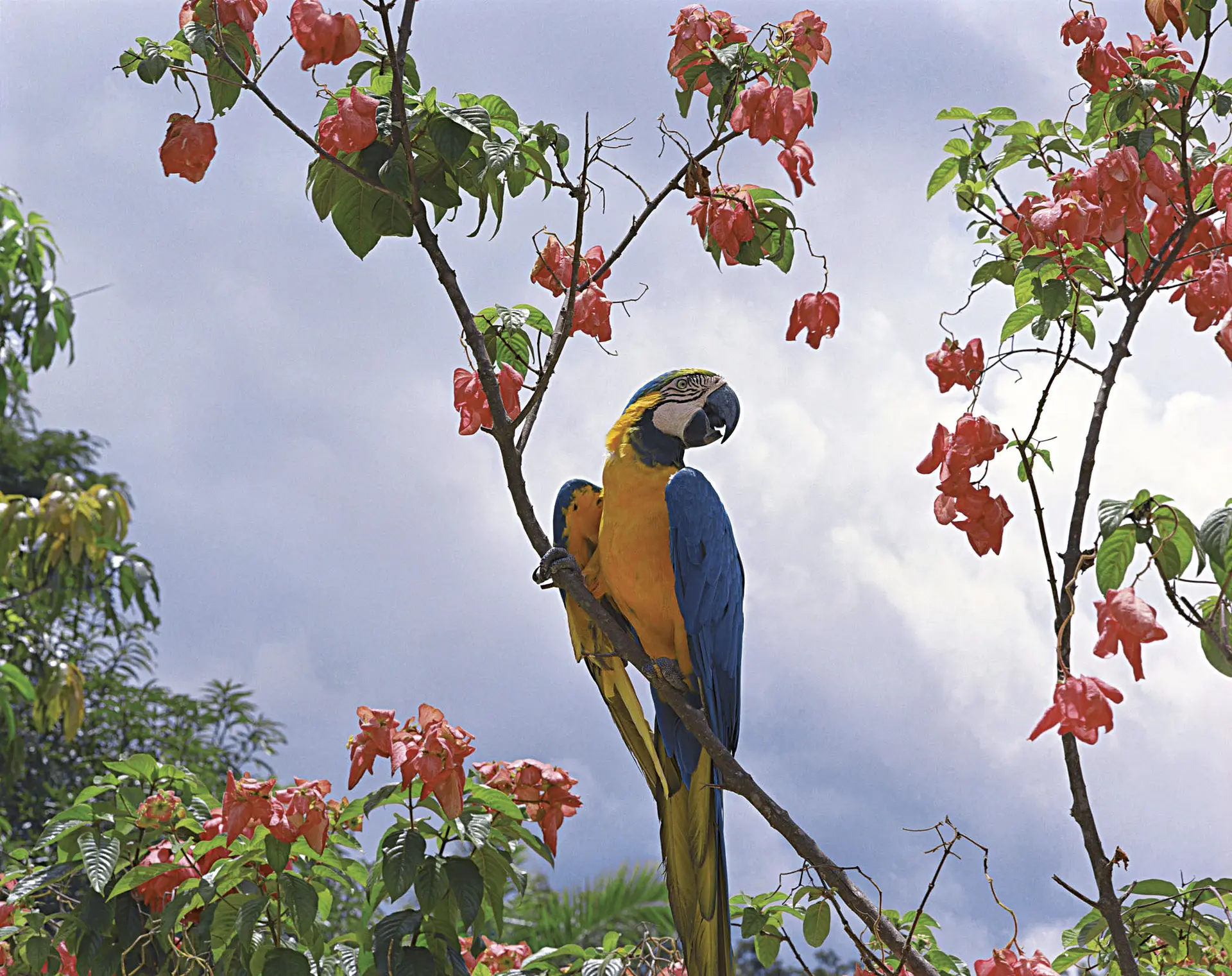
On his fourth voyage, Columbus finally reached what he imagined to be a large landmass, given the size of the river delta that enters the sea near the coast of what we now know as the island of Trinidad. Going ashore, thinking his feet were touching not an island but a vast continent, which he erroneously identified as the Indies, Columbus claimed to have arrived at the Land of Grace, at Eden. This false conception of the New World as the Earthly Paradise has fired the imagination of many ever since. Among them is Sergio Vega, in whose work we find characters like Dante, St. Francis, Gaspar de Carvajal, Antonio de León Pinelo, Che Guevara, and the Amazon rainforest with its characteristic flora and fauna; in particular, parrots are featured as birds of paradise—figures upon which a large part of the artist’s discourse is articulated.
The artist has investigated the iconography of the parrot in relation to the conquest and colonization of the Americas, and also in relation to popular culture and the natural sciences, to construe the parrot as a multifaceted character that assumes a variety of roles in his works. These speaking birds initially function as a sign of exoticism, where the notions of the paradisiacal and the exotic meet. The artist attributes to the parrot icon the speculations and expectations of conquistadors and those who documented the Indies in their chronicles about the location of Paradise somewhere in the New World. His works also allude to the parrot’s entrance into European painting after the discovery of the Americas, as in Rubens’s version of Titian’s Adam and Eve, which adds a parrot to the scene. Because parrots are capable of imitating human language, but not often of articulating it—although a parrot in a Boston laboratory possesses a vocabulary of over one thousand words and communicates using language, while chimpanzees usually learn up to three hundred words—they were attributed mystical qualities. As the artist says in an interview with Nicolás Guagnini in BOMB magazine: “Parrot-mania has to do with many other things. I believe there is a fascination with Earthly Paradise in the culture as a consequence of Humanity’s latest sins. Our anxiety about the extinction of tropical forests (the loss of paradise) and genetic-manipulation experiments (which can be compared to eating the forbidden fruit.) In that mix of ideas, where the parrot starts out as a Third World icon and profane interlocutor (parrots are famous for repeating vulgar language,) we can begin to see them as a sacred species that speaks directly to God in the language of Adam.”1
In that sense, the parrot has become for Vega the perfect allegorical vehicle to dismantle certain stereotypes associated with Latin America, in particular, those related to its exoticism, and to establish within his work operational categories such as “tropical modernism” and “magical conceptualism.” At the same time, parrots symbolize a meaningless repetition, which works as a powerful critical metaphor for our continent’s cultural realities, especially regarding the mirage of our modernity. In a debate between Marta Traba and a number of Venezuelan intellectuals in the El Nacional newspaper, from May to September of 1965, Traba disqualified artists that only imitated the languages imposed by the West.2 Sergio Vega’s work suggests, conversely, that a Latin American art devoted to the representation of the exotic as a feature of our identity is guilty of the same imitative attitude criticized by Traba.
The instrumental use of stereotypes is essential to Vega’s work, as the way he deconstructs a history that has been written through erroneous interpretations, such as the history of our continent. By inserting this allegorical commentary into the current context of globalization and multiculturalism, his seemingly archaic discourse starts to produce its effect and to subvert the very notion of history.
This series of semiotic and linguistic considerations about paradise and its implications for contemporary art in Latin America has driven Vega to create a body of work that is heterogeneous, has multiple readings, and is critical of identity politics that, especially in the art world, have attempted to homogenize the Other on the basis of phenomena like multiculturalism and the growing insertion of Latin American art into international circuits.3
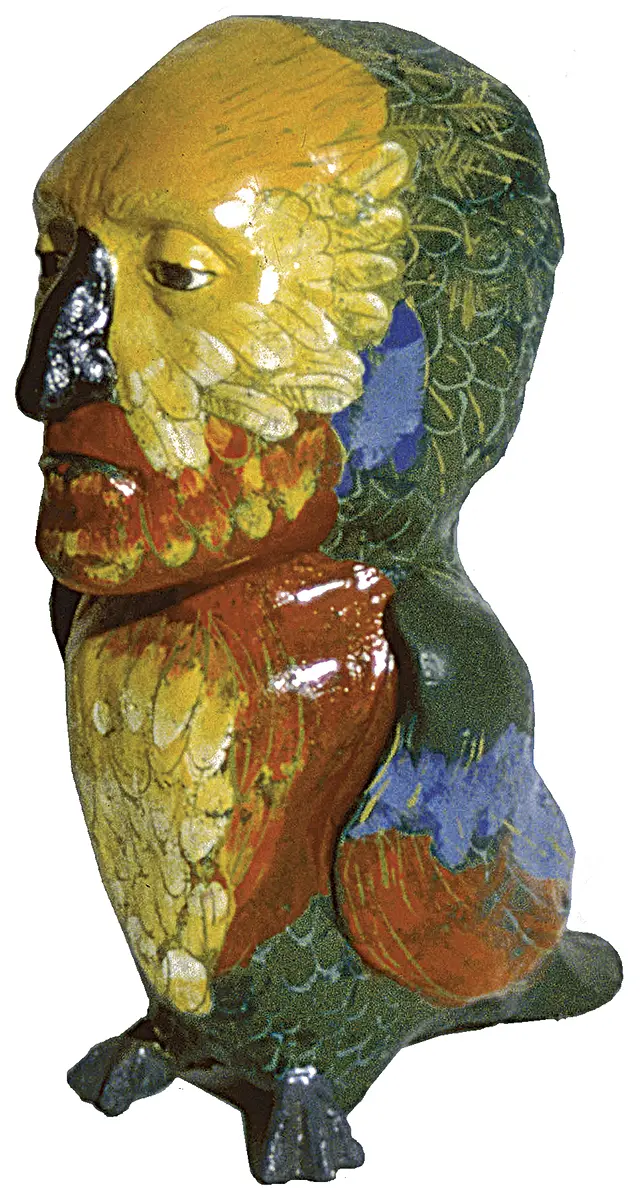
In one of Vega’s first individual shows in New York, at Basilico Fine Arts in 1996, titled Memoirs of an Outspoken Parrot, the artist presented a series that displayed seeds of his later work, such as his recent installation at the Venice Biennial. As one entered the gallery, which featured a photograph of the artist’s father’s mambo band, one encountered a small sculpture titled Dante-Parrot, a hybrid figure with the body of a parrot and Dante Alighieri’s face. On the wall was a series of dark, forest photographs, titled Dentro del Infierno Dantesco, with verses from Dante’s Inferno.
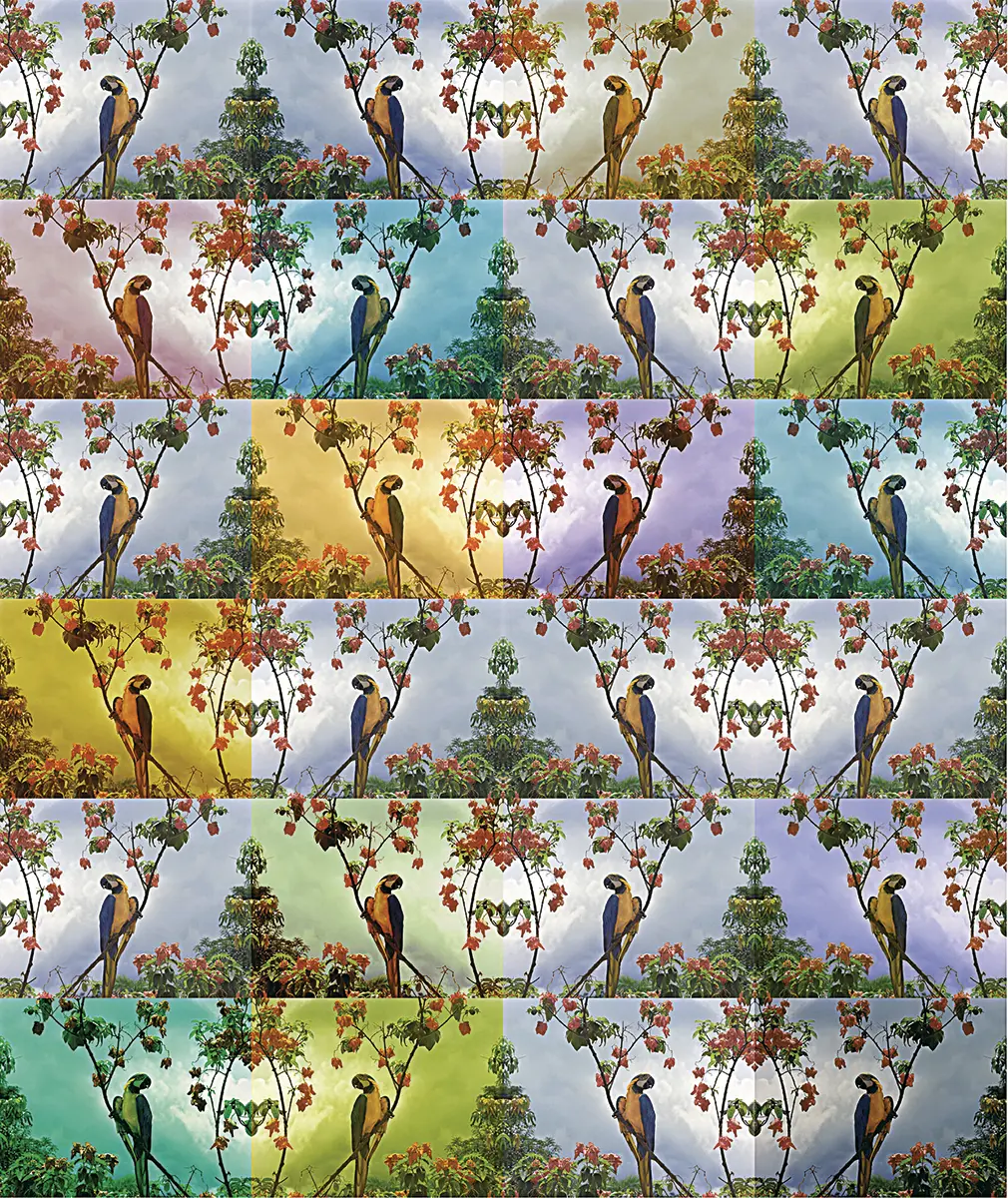
At the first Yokohama Triennial, a gallery was entirely covered in photographs, forming a large mural or wallpaper with the repeated image of a parrot posed on the branches of a flowering tree. In this work, Rococó tropical, the repetition of the parrot motif and the vegetation formed a multicolored, ornamental grid reminiscent of the decorations found in Baroque-period palaces.
However, Dante-Parrot was to mark Vega’s later production and, according to the artist, this piece proposes a paradox of ideas about originality in the representation of a constituted Latin subject. Dante, the author who articulated a new language—the vernacular that that became modern Italian—is reincarnated in the vernacular representation of a speech-imitating bird.
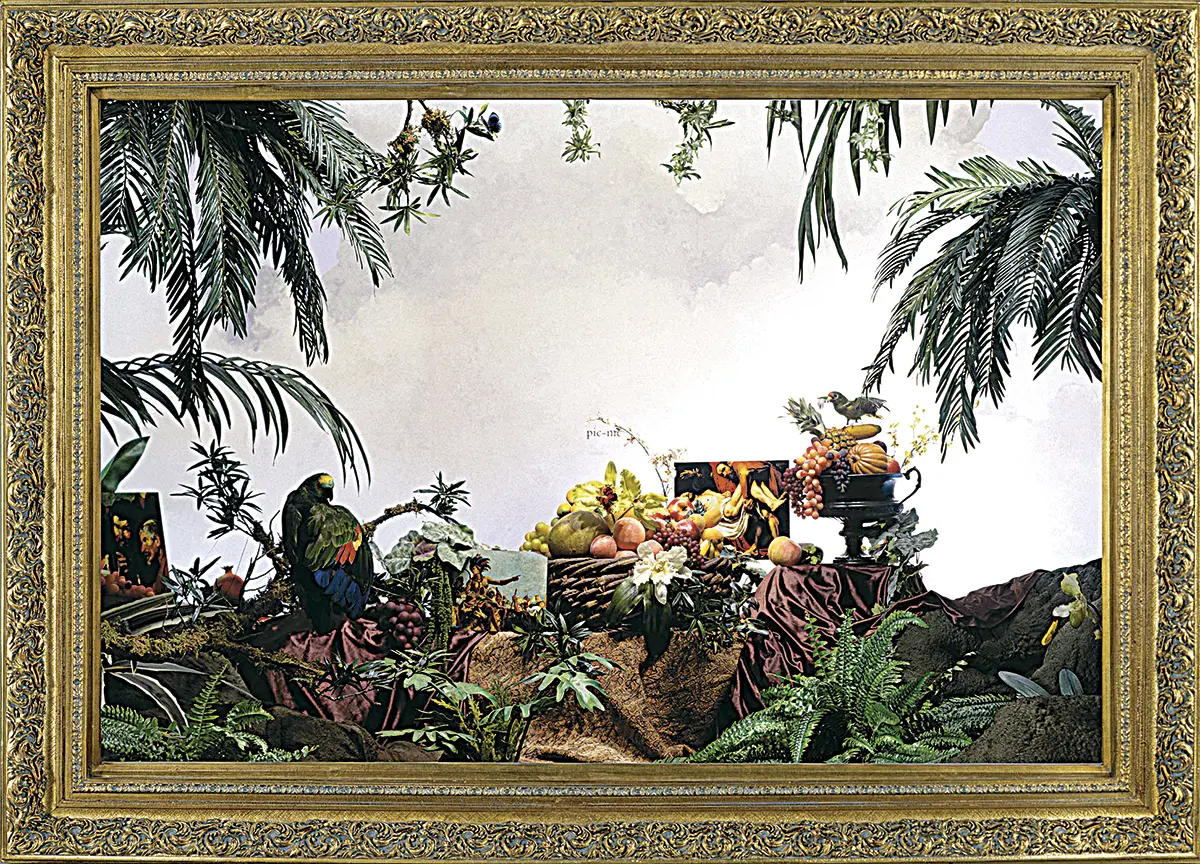
Parrots have continued to be a leitmotif in Vega’s work, as in Picnic, the Golden Age with Mosquitoes (1999–2000), a diorama that functions as a Baroque painting, presented at Site Santa Fe in 1999 and the Lyon Biennial in 2000. In the installation, the frame was a window that opened to the space of the diorama, and the glass had the word “picnic” inscribed. Inside the diorama was a large still life resembling a cornucopia of fruits and flowers among velvet and small reproductions of paintings by Velázquez, Rubens, Caravaggio, and Tiepolo, as well as two stuffed parrots, one spreading one wing and showing off its colorful plumage, and the other in flight, catching a banana. All of this was set against a tropical forest background and had a soundtrack of Baroque music, birds, and insects. Vega’s references to the Baroque are not gratuitous; Latin American literature’s Magical Realism is full of them. As Jean Franco points out in her book The Decline and Fall of the Lettered City, “the temptation of Magical Realism was its re-enchantment of the world by introducing in literature popular beliefs and practices as a way of dissenting from post-Enlightenment rationalism. On the negative side, Magical Realism was a mode of cultural incorporation that collapsed literature into anthropology or turned it into a kind of jungle expedition in search of genetic samples.”4
It is precisely this conception of Magical Realism that Sergio Vega shares by combining in his work an ethnographic discourse with a poetic aspect. This is part also of what the artist has called “magical conceptualism,” which for him encompasses a series of contradictions and is, in his case, a sort of defeatist naturalism in the face of an impossible reality. The museum as a site of representation has been chosen by Vega to carry out a project that posits itself as a critique of those same mechanisms of representation. The museum has been one of the most fertile spaces of critical speculation in the last thirty years, from conceptual art’s institutional critique in the 19760s and 1970s to artists’ more recent elaborations on the museum, the public, and the reception of the work of art, as well as the role of the museum institution in the ideologically biased construction of cultural identities, which fit with an essentially hegemonic and Euro-centric idea of culture. Deconstructionist thinking reformulated the issue of identity as essential to the understanding of postmodern culture in the 1980s, a phenomenon that extended to the visual arts. In the 1990s, a large sector of committed art, instead of directing its critique toward the machinery of capitalist consumption, directed it toward the institution that defines, classifies, and exhibits the Other. Vega’s work is an example of this course. The artist has appropriated certain practices from ethnography and anthropology to create an ambiguity between the work of art and the cultural artifact, in the process blurring the differences between them.
Vega’s work has often featured a dissection and analysis of museums and art-world institutions, including academia. Ideas related to collecting, classifying, archiving, and representing through the museological devices are shared by works like Picnic, the Golden Age with Mosquitoes, and A Summer Garden (2002–2004), where the museum and its complex mechanisms of representation and legitimization are the starting point and the museum as an ideological construct ends up exhibiting itself.
A Summer Garden defies the viewer’s assumptions and the conventions of traditional museography by referring to Marcel Broodthaers’s paradigmatic Un Jardin d’Hiver. In a similar manner to what Jean Franco describes regarding the dangers of Magical Realism in the passage cited above, Vega places the viewer in the role of an explorer or ethnographer who journeys to the jungle to discover the Other. What he exhibits behind the bushes is an inventory in the form of botanical and naturalist-like plaques of the stereotypes based on the false conception of the New World as an earthly paradise that informed the discovery and colonization of our continent, and which constitute an imaginary of the exoticism that has stigmatized Latin America’s cultural production ever since.
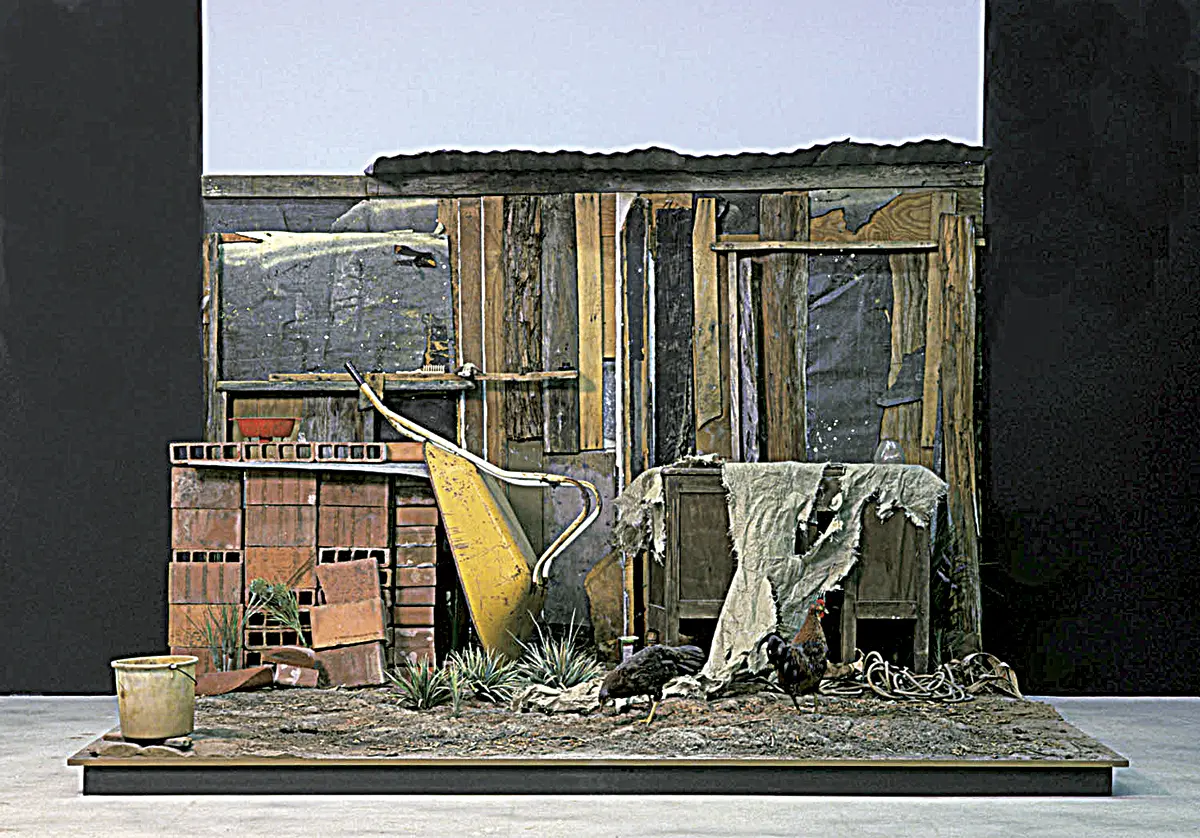
This relationship with the museum informs Sergio Vega’s most recent work, including the installation he presented at Miami Art Central in the Ten Floridians show and the expanded version of this piece was seen at the most recent Venice Biennale, where his ideas were explored during the last decade converge. For years, the artist has based his work on a book titled El paraíso en el Nuevo Mundo, comentario apologético, historia natural y peregrina de las Indias Occidentales de la tierra firme y del mar oceánico, by Don Antonio de León Pinelo. This book was useful to Vega as he built a project of artworks that functioned as models for the critical analysis of contemporary and historical discourses related to tropicalism. According to Pinelo’s theory, the Garden of Eden was located in the center of the South American landmass, in the area of Mato Grosso in Brazil, precisely in the city of Cuiabá. Vega undertook several journeys to Cuiabá in search of a lost Paradise, and what he found were the byproducts of a failed modernity: poverty, misery, provisional architecture, and underdevelopment. This encounter with Pinelo’s “paradise” is presented in a diorama titled Photographing Alice’s Backyard; it reconstructs the backyard of a makeshift dwelling, with the elements that characterize this kind of architecture—the tin roof, wood recycled from other constructions, industrial debris, and domestic fowl.5
Vega entered this traumatic Eden with his camera to document poverty and was expelled by the owner, who threw stones at the artist and had him chased by her dogs.
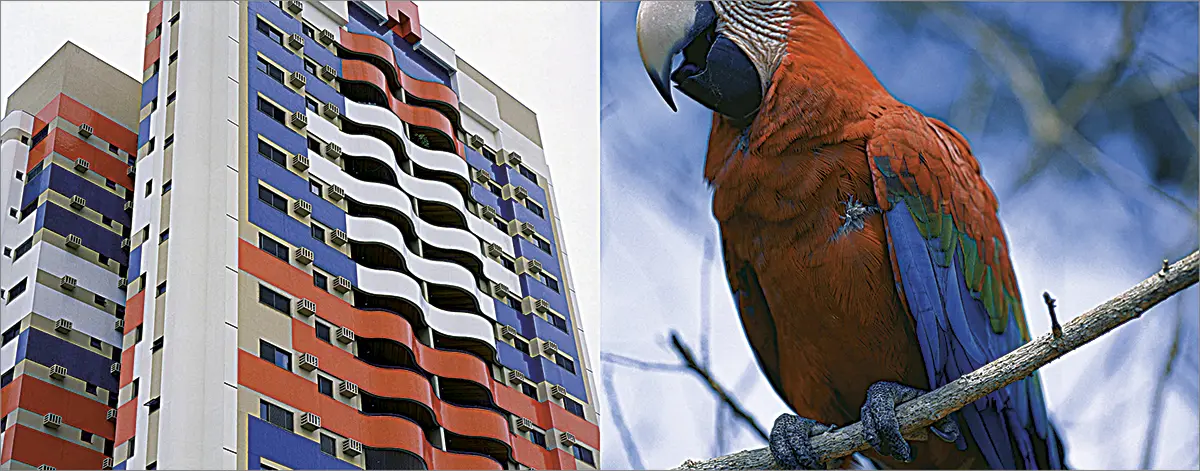
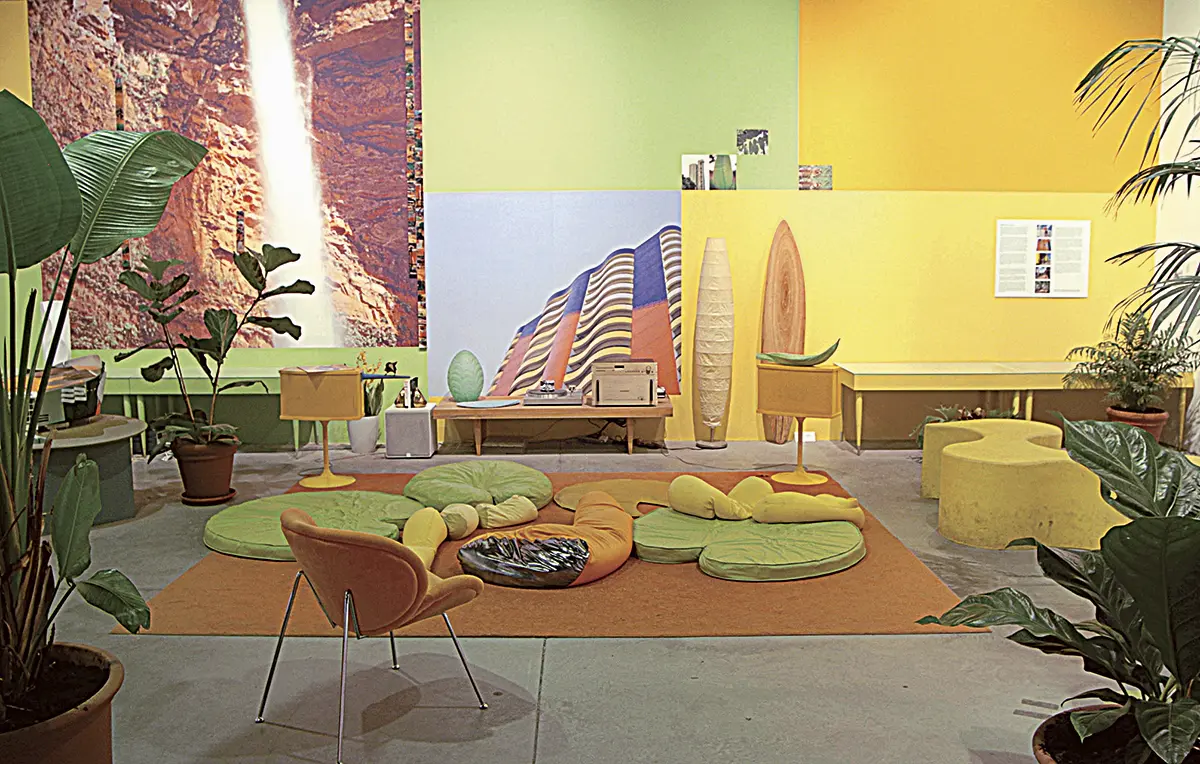
Another recent model is Modernismo Tropical//Tropicalounge, also inspired by Cuiabá’s architecture. According to the artist, “the city’s largest buildings are distributed along an avenue as if for a carnival parade, but instead of dancing to the deep drums of samba music, they seemed to glide to the elegant tunes of bossa-nova. Their monumental presence announced, ostentatiously, the triumph of modernity over the forest.” The installation emphasizes precisely the utopian character of “tropical modernism,” not only in Brazil but in Latin America as a whole. Modernismo Tropical/Tropicalounge is a display of exhibition devices and furniture designed for the audience to peruse, listening to a selection of bossa nova records and examining display cases containing memorabilia of Brazilian tropicalism and modernity. Both the furniture and the manner of the objects’ installation relate to the display strategies of the Italian-Brazilian architect Lina Bo Bardi, who organized similar arrangements at Salvador, Bahía Museo de Arte Popular.
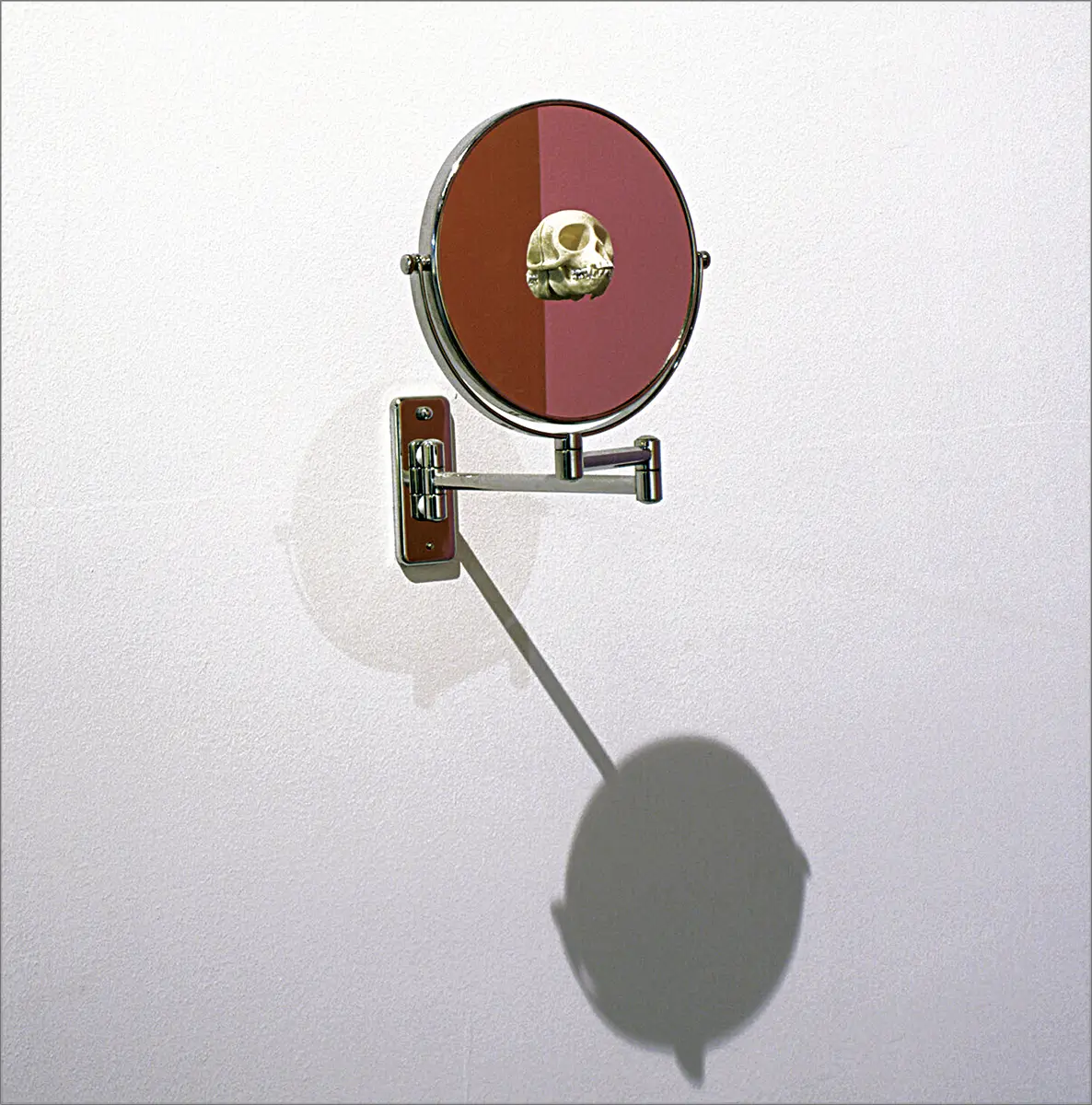
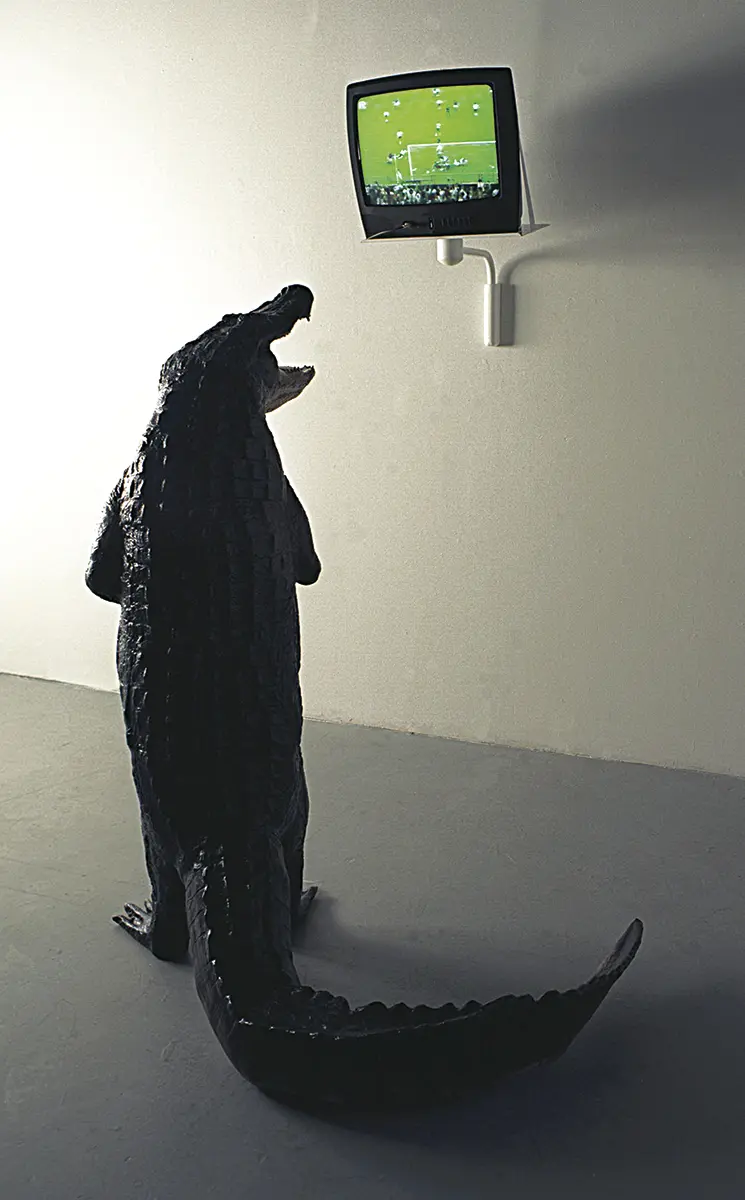
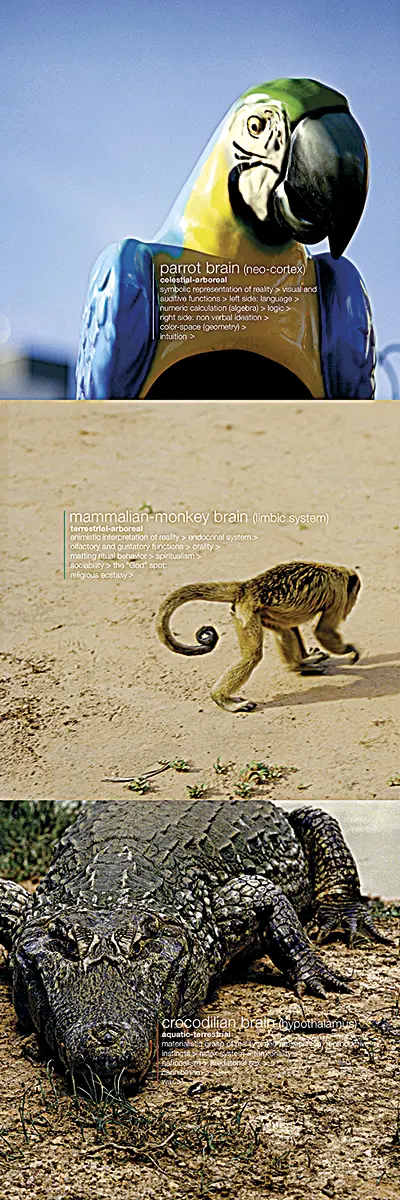
Vega’s series Global Warming, also presented in Venice, alludes to a very real phenomenon that threatens the Earth and has been largely the result of the deforestation of tropical areas, including the Amazon basin. In this installation, the artist speculates about the consequences of this warming and whether it could produce mutations in our brains, turning us into a different species. Vega revisits images of tropical fauna, such as alligators, monkeys, and parrots, to which he assigns meanings based on theories of the evolution of the human brain to articulate a critique of the current state of the world. For instance: “the global, massive resurgence of religious fundamentalism can be interpreted as a mutation of the ‘crocodile brain’; the erosion of credibility in the public sphere and the decline of social institutions are interpreted as mutations in the ‘mammalian–monkey brain’; and the isolation of wide educated sectors of the population from decision-making processes has generated a search for alternative forms of knowledge and of its circulation and exchange, which is interpreted as the mutation of the ‘parrot brain.’” Fundamentalismo: la ascensión del cerebro del cocodrilo presents a crocodile standing as a human being, watching television. Close by was El espejo roto, which was the skeleton of a small monkey emerging from a mirror in which the visitor could see his or her own face. On a large wall was a letter in pure colors with a stuffed parrot in its center, suspended in the act of speaking in front of a microphone. This work, titled Cruzando el cuerpo calloso, alludes to the duality of the cerebral cortex, which registers language and logic in one hemisphere and sensory perception and intuition in the other.
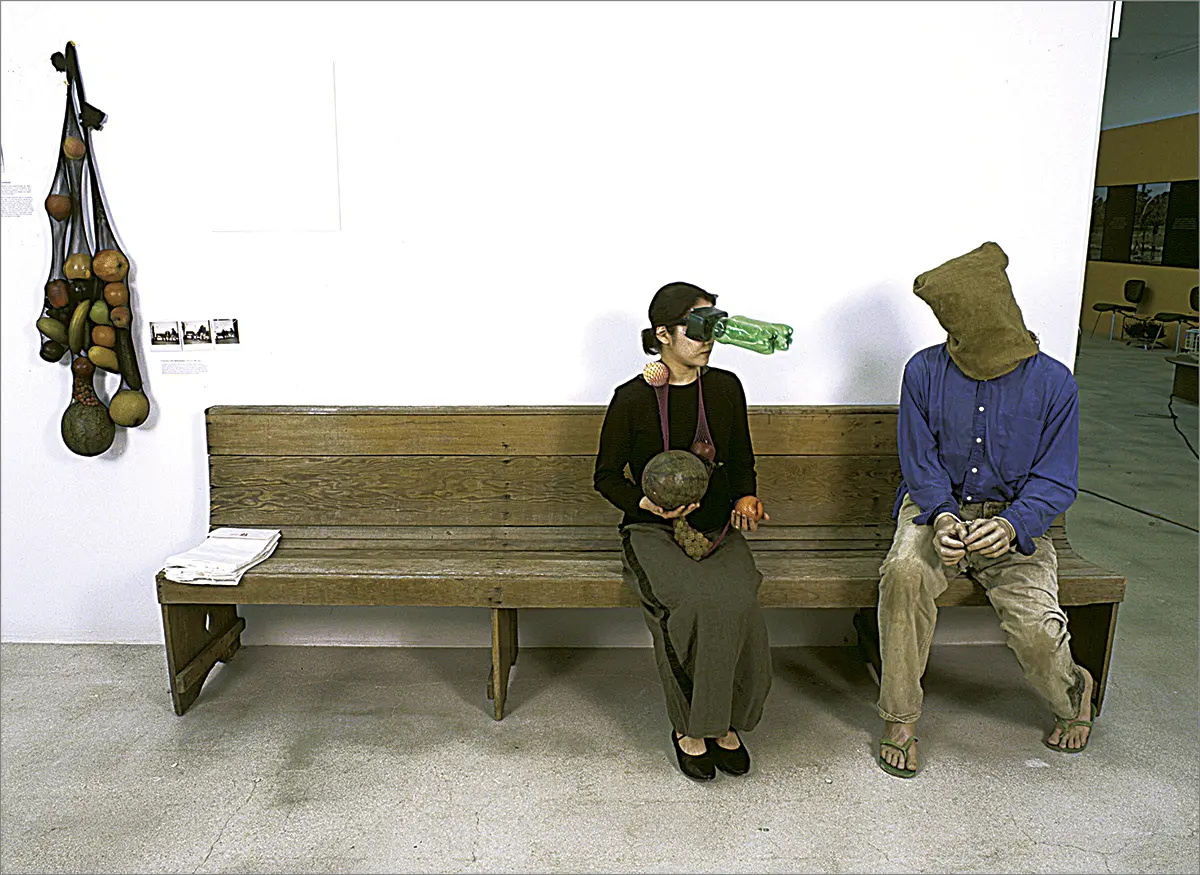
The last model developed for these installations, titled Waiting Room/The Void, associates in a somewhat irrational way a series of events that took place in Brazil, in the fields of art and politics, during the country’s military dictatorship. According to the artist, the project refers to a place located near Cuiabá, known as Portão do Inferno (“Gates of Hell”), where hooded prisoners were brought by the military to be thrown into a precipice. Vega built a replica of the police post’s waiting area, with a prisoner waiting with a cloth bag on his head. In this nightmare scenario, inspired also by Borges’s story “El Sur,” in which the main character enters a bar and finds himself in a different time and transformed into someone who will be murdered, the artist presents interactive objects for the participants to experiment with their sensory perception and take their own portrait alongside the prisoner. Interestingly, this installation refers to works that were created in Brazil in the 1960s, inspired by Gestalt therapy and sensory-perception experiments, in particular Lygia Clark’s masks that distorted perception. These objects interrogate environmentalist political positions, utopian social models imported to Brazil, and the body itself as an exotic object. Was the intention to create a contradictory environment of absurd propositions? Or is it a matter of abandoning oneself to sensory experimentation to untangle the memory of trauma, the dissolution of the border between one’s own being and the Other?
The somewhat sinister association of neo-concrete art with the torture and murder tactics of the Brazilian military dictatorship of that era might be rough, but it certainly points to an inescapable fact in a good part of Latin America. Modernist movements almost always were accompanied by military dictatorships, not only in Brazil but also in Venezuela. Perhaps it was the fact that made the modernist paradise an illusion and announced its ultimate failure.
Sergio Vega’s art certainly has a political agenda, deployed in poetic fashion through the history of the nonsense that has outlined Latin American identity and the stereotypes that still stigmatize us; his most recent installations, beyond allusions to a lost paradise, point toward the nostalgia, some Latin Americans feel for the loss of our modernity.
NOTES
1. BOMB, December 2000.
2. “El arte latinoamericano: un falso apocalipsis,” in “Papel Literario,” El Nacional, Caracas, May 2, 1965.
3. Benjamin Buchloh argues that Marcel Broodthaers uses the eagle in his work not only as an icon of imperialism but also as a critical allegory of the avant-garde, especially conceptual art, in its desire of knowledge as power. In Vega’s case, the constant repetition of the already known, appropriation as a mimetic impulse, and the desire for the exotic determine the current condition of what he calls the Post-Colonial Avant-Garde.
4. Jean Franco, “The Magic of Alterity,” The Decline and Fall of the Lettered City: Latin America in the Cold War (Cambridge, MA and London: Harvard University Press, 2002) 159.
5. In this regard, I must comment on Hugo Chávez’s recent initiative to build “vertical henhouses” in the ranchos that dominate the city of Caracas, as part of his projects of “endogenous development,” which include hydroponic urban orchards and those “vertical henhouses,” which are nothing but a return to the conuco and the yard of poor peasant dwellings. Another contemporary artist, however—Slovenia’s Marjetica Potrc—found literal and not ironic inspiration in Chavez’s urban hydroponic orchards and created a similar project in San Gimignano titled Tropicalia, once again confirming the fascination that the stereotype of the “tropical” exerts on European imaginations.
JULIETA GONZÁLEZ
Independent curator and curator of the Berezdivin Collection, San Juan, Puerto Rico.