
The National Art Show, MNA 2005–2006, organized by the Instituto de Cultura Puertorriqueño was an observatory for the dynamics between globalism and localism as they impact the creative climate of a Caribbean island, one that has had an incomparable development in the graphic arts and now seeks to renew that powerful influence.
On this occasion, the MNA was smaller than the version in 2006. It presented 127 artists from various generations and different aesthetic languages. It included the old masters (Rafael Tufino, Domingo García, and Rafael Rivera Rosa), artists with an international presence (Arnaldo Roche, Rosa Irigoyen, and Tony Hambleton), and new collectives offering what is not found in the large international fairs: spaces for exploration and thinking outside the commercial circuit. In Área, Quintin Rivera Toro, a creator of conceptual works that alter iconic signs for political critique provoked a dialog about contemporary creativity. The collaborative =Desto presented a sequence of works alluding to the fleeting every day and the disintegration of assumptions in art, labeling the dust gathered in napkins as lab samples. Carlos Reyes, the founder of the alternative space TagRoom, showed the video of a performance of a boxing match against himself that was also an allegory of the artist as the loser amid the global movements of art.
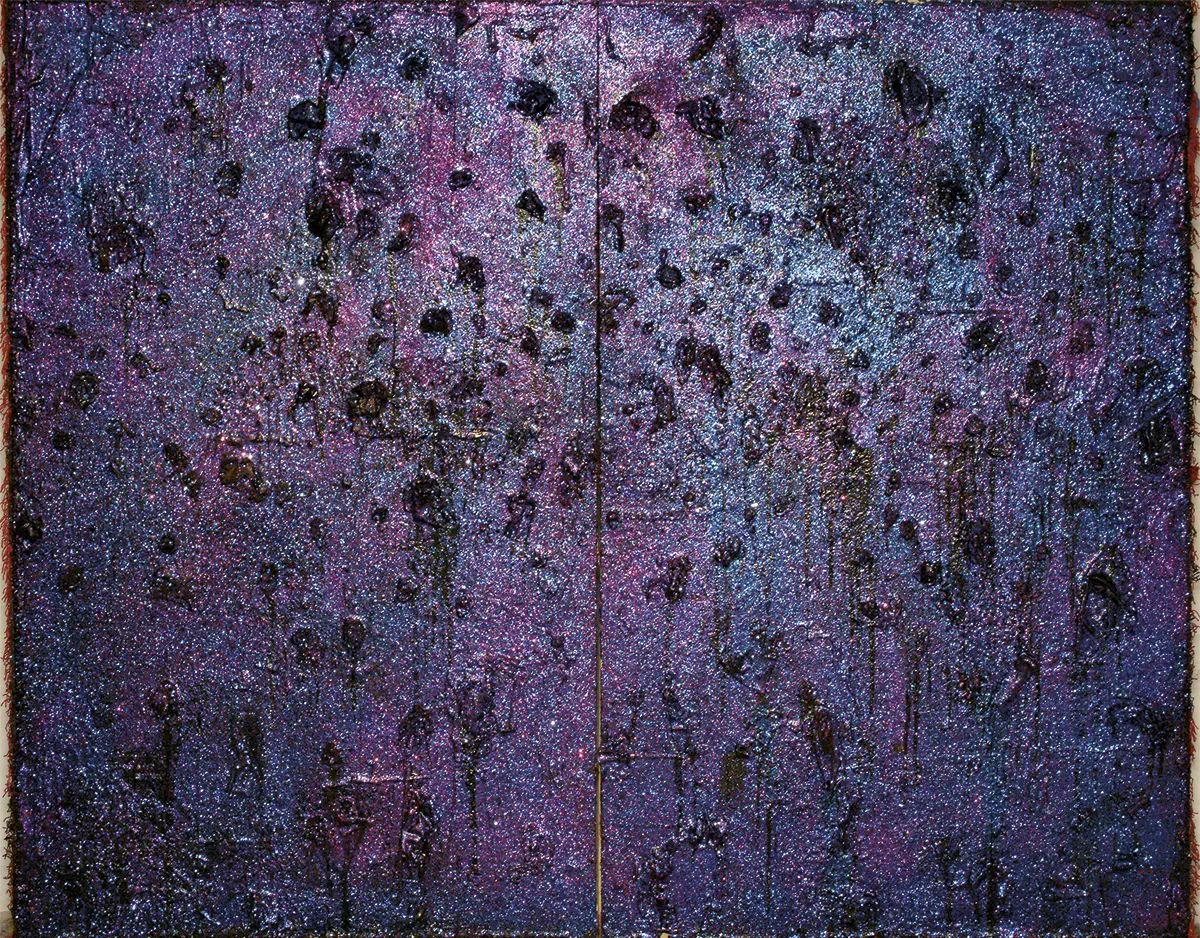
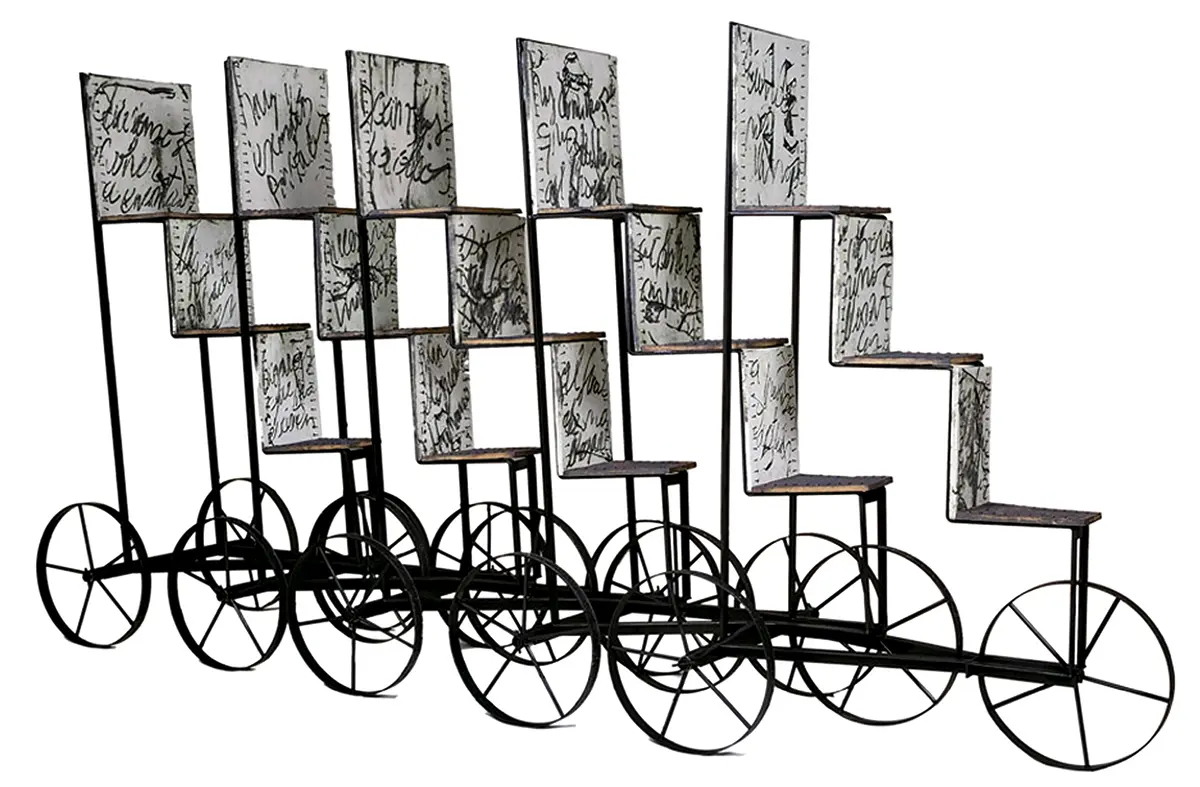
In his essay La Patria, Chaos Theory, and La Muestra Nacional de Arte, Joel Weinstein described the impossibility of organizing a non-chaotic exhibition. But this year’s selection included strong aesthetic proposals: Melvin Martínez’s abstract paintings made with the glitter of popular celebrations; Arnaldo Morales’s machines that interpreted spaces that are vital for all human beings; Néstor Otero and Annex Burgo’s sculpture installations on tables; Kjesús “Bubú” Negrón’s intervention in the border region of Chiapas; Rigoberto Quintana’s painting, which transferred Bosch’s universe to the history of Puerto Rico; Anaida Hernández’s gyrating iron mobiles on a large mirror; Yelyn Vivoni’s Dos mil doscientos recuerdos al viento, made of 2200 small ceramic squares tied together with wire, which achieved the quality of the painting; Luis Ivorra’s Éxodo, composed of welded unicycles and paint; Ramón Feliciano’s autobiographical allusions to the artistic process in an installation of scissors, knives, and brushes on wood.
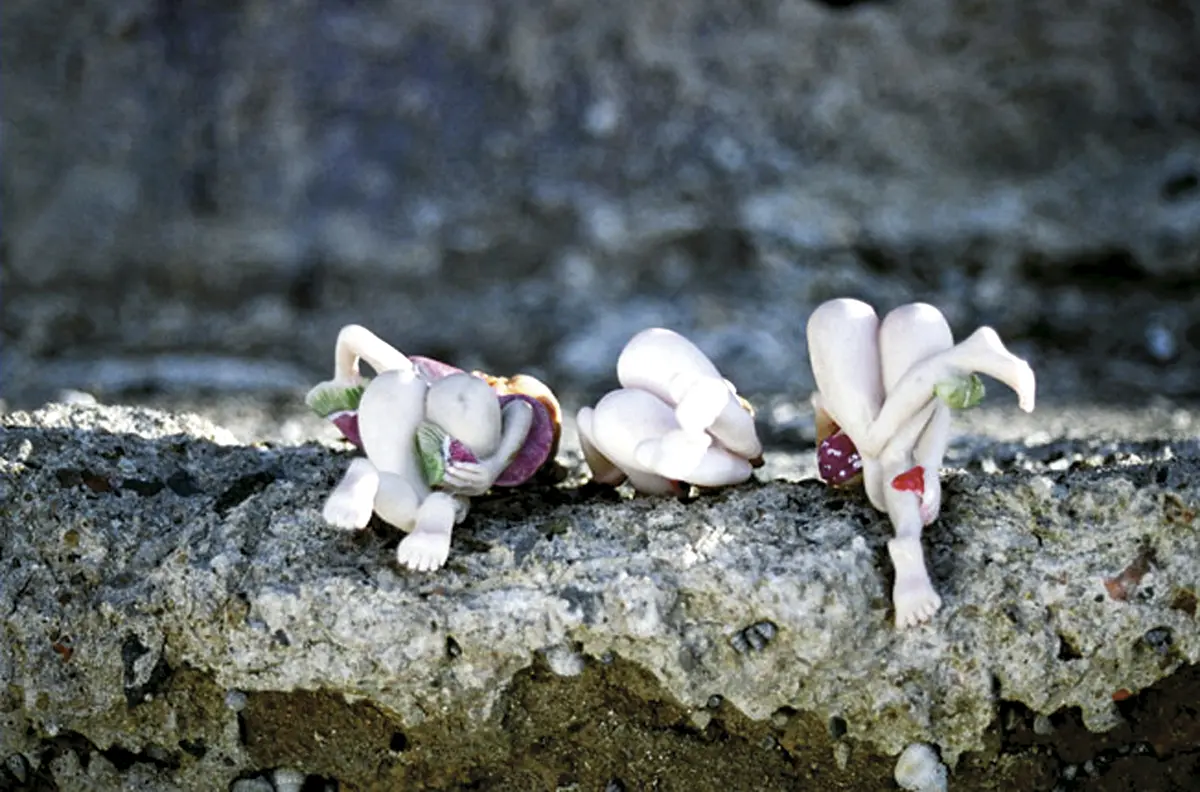
On to Greener Pastures, by Denise Santiago Rodríguez, which juxtaposed a linguistic code and the synthesis of form; Rogelio Báez’s topography in La Isla del Encanto, which was filled with light bulbs, alluding to its frenzy. There were excellent works in photography: Rivera Villafañe’s close-ups of urban architecture and streets in saturated and contrasting colors; Aaron Salabarrías’s series with dolls that parodied tourists in real landscapes; and the poetic limpidity of Guillermo Real’s children at play, “flying” over a beach. One of the best works, thanks to the fictional interplay between the gaze and the construction process was Visitantes/Visitors BCN. This photograph, as Weinstein points out, is a manipulated collage with an invented depth of the field that “captures an instant of absolute verisimilitude.” Especially strong were images of violence as signs of the local intersected with the globalized world and/or with the issue of gender: Nemyr Canals’s work; Christopher Rivera’s xylograph Todos contra todos, así es la vida; Carmen Olmo’s Chicas para cortar; and the menu about female aesthetics deployed by Inés Aponmte in Bandeja. The anxiety caused by the big cities that devour the natural island landscape underpinned Rabindranat Díaz’s architectural model and Javier Martínez’s painting.
Thanks to its impeccable display, the MNA reflected the way that the Puerto Rican artists integrate, consume or transform contemporary modes of creation in the face of their socio-political reality. One of the masters of the flourishing period of poster art, Antonio Martorell, presented Laberinto letrado, an installation in a room that created an allegory between windmill giants and war helicopters and their war-like illusions. There were several examples of politically committed art, which is distrusted when it eludes the space of ambiguity so dear to contemporary aesthetics but continues to be produced in Puerto Rico as linked to the construction of identity. Carlos Irizarry, who once kidnapped a plane for a performance, presented the digital portrait of an assassinated political activist in the middle of a simulated newsprint-covered wall. Papo Colo’s video There is no place like home was connected by its local references to a global current toward the return of the political in art. Invoking symbols with the colors of the political parties of the island, Colo carried out a ritual in front of the capital and sacrificed a lamb (the national symbol), whose blood the viewer saw flowing. Rafael Trelles explored the rhetoric of religious power joined to a war-making discourse in an effective painting of a rocket with an inverted Sacred Heart and the insignia of the U.S. Air Force.
In Inflatable Head of Columbus, Miguel Luciano found inspiration in an event of the worst magical realism in the history of Puerto Rico, a story about the mayor of a town who spent millions to erect a giant sculpture of Columbus that nobody was to put together. Luciano’s project, which will conclude with the return of the imitation work to the sea, is a faithful reflection of the nation’s reality and a revelation of its incoherence. In
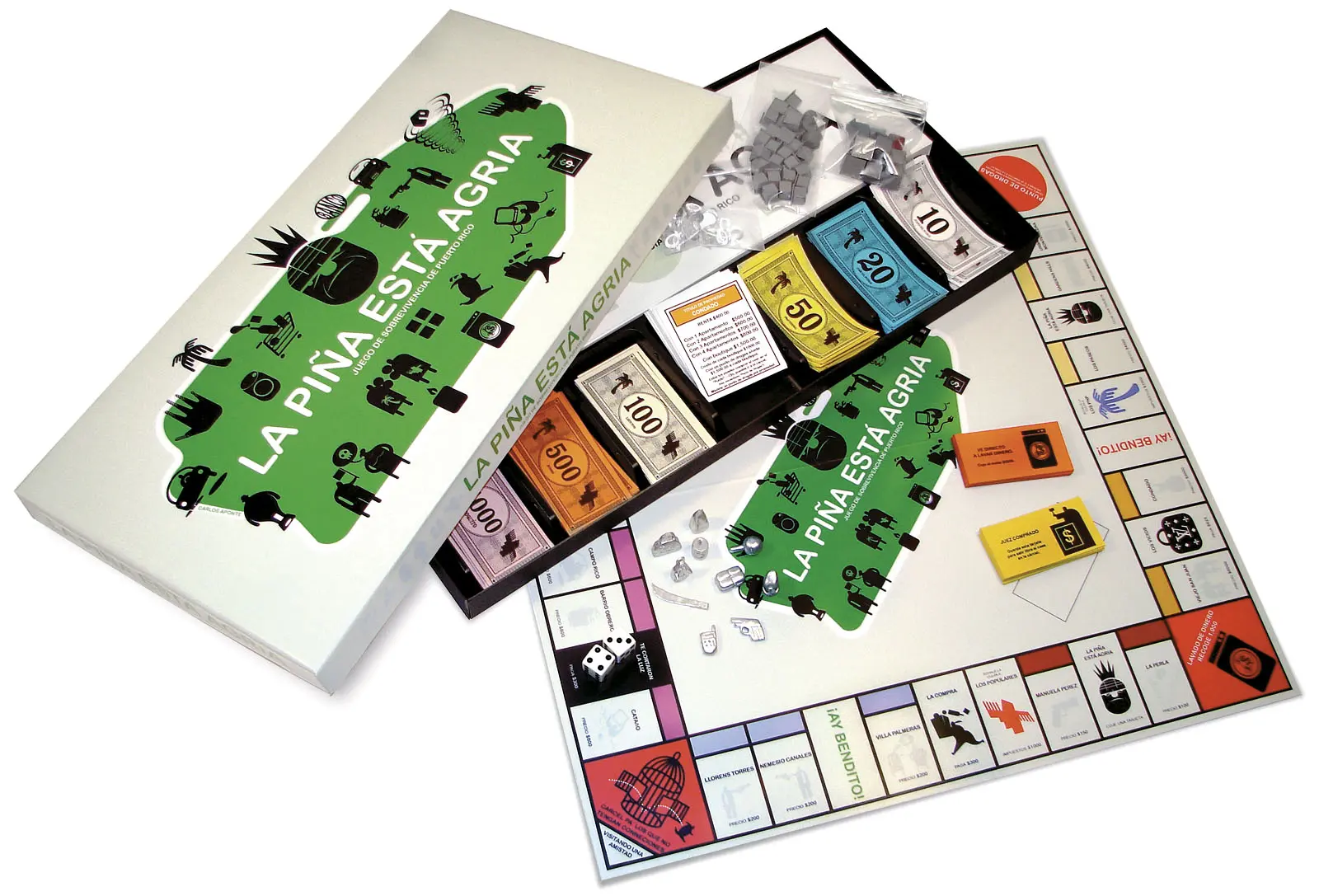
Monopolio, Carlos Aponte included game cards with the Puerto Rican expression “La piña está agria,” but revealed hidden rules for survival on the island and a dysfunctional socio-economic model that is common to other places. Filipo C. Tirado Medina used burlesque elements in his busts of iconic twentieth-century characters such as Castro, Uncle Sam, and Ché Guevara under the title Para poder ser yo, tengo que ser otro, which evoked and dismantled Octavio Paz’s famous line. Among the few videos presented, given the extensive show of the genre that preceded MNA, the highlight was Jorge Rito Cordero’s performance in which he, uninvited, carried a cross like Christ to ARCO. When chased by the surprised security guards, he took it apart, turned it into a bench, and ended a pilgrimage that spoke of exclusion from the large-scale fairs that today define what is and isn’t art. If collectors were more authentic, they would allow themselves to be surprised by a local show such as MNA. The paradox is that, as in quantum physics, the gaze’s desire changes the behavior of what is observed. We wish for it to be seen without being driven to distortion.
ANDRIANA HERRERA