
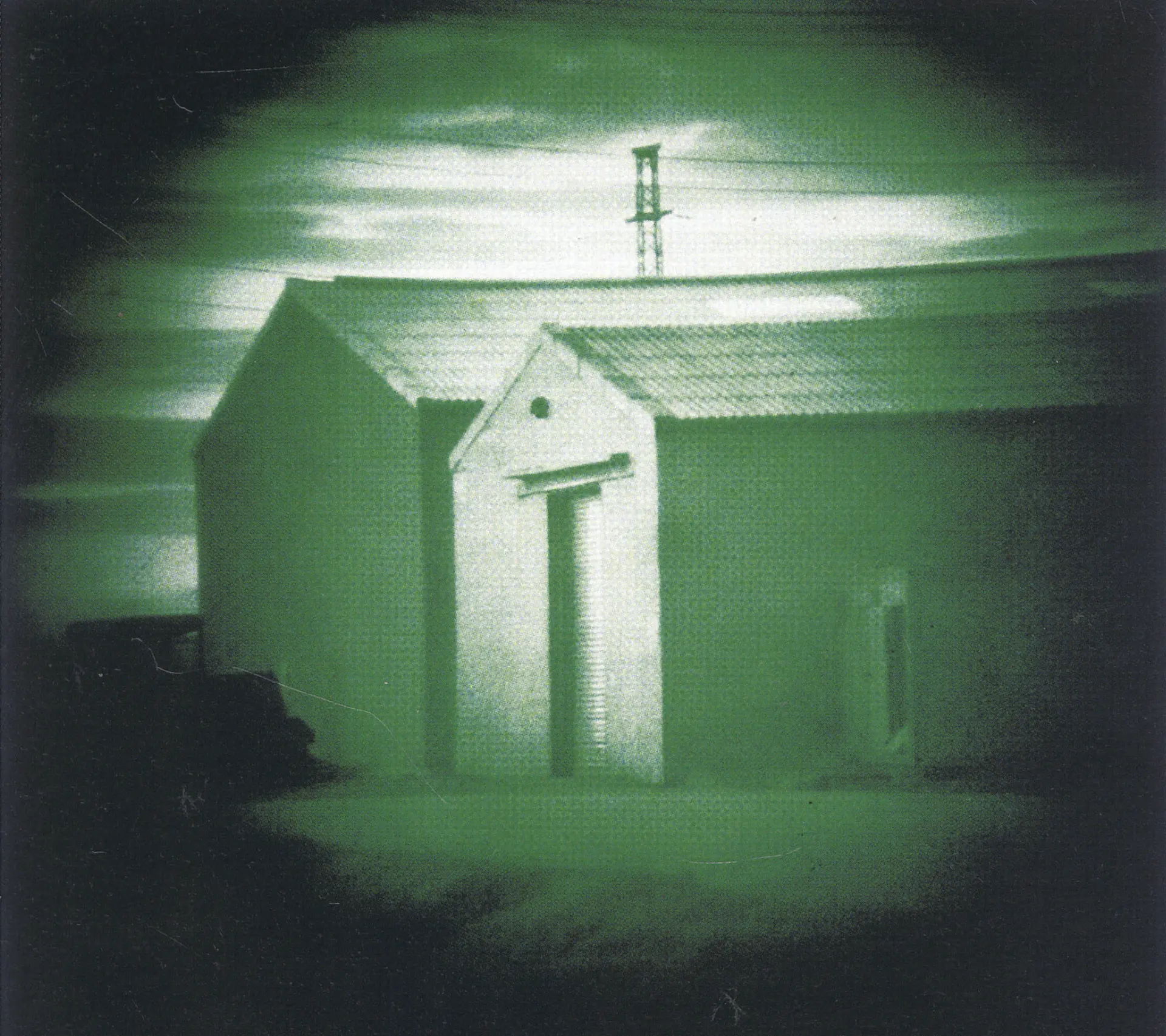
The second edition of Art Bo was a project of the Bogotá Chamber of Commerce, with María Fernanda Campo Saavedra as its executive president and Andrea Walker Bonilla as its director. It comprised four spaces: the area for the gallery booths; an educational area for children, a young artists’ space managed by María Iovino and María Clara Bernal, an open-air sculpture area including an academic forum.
Of the fifty-two participating galleries, twenty-one were from Colombia. Among the thirty-one galleries coming from abroad, Venezuela, with eleven, had the largest presence, followed by Argentina with five, Chile and Mexico with four each, the United States with three, Spain with two, and Brazil and Cuba with one each. Arranged in the Bogotá Fairgrounds’ outstanding facilities, and impeccable in its presentation, the fair had 15,000 visitors.
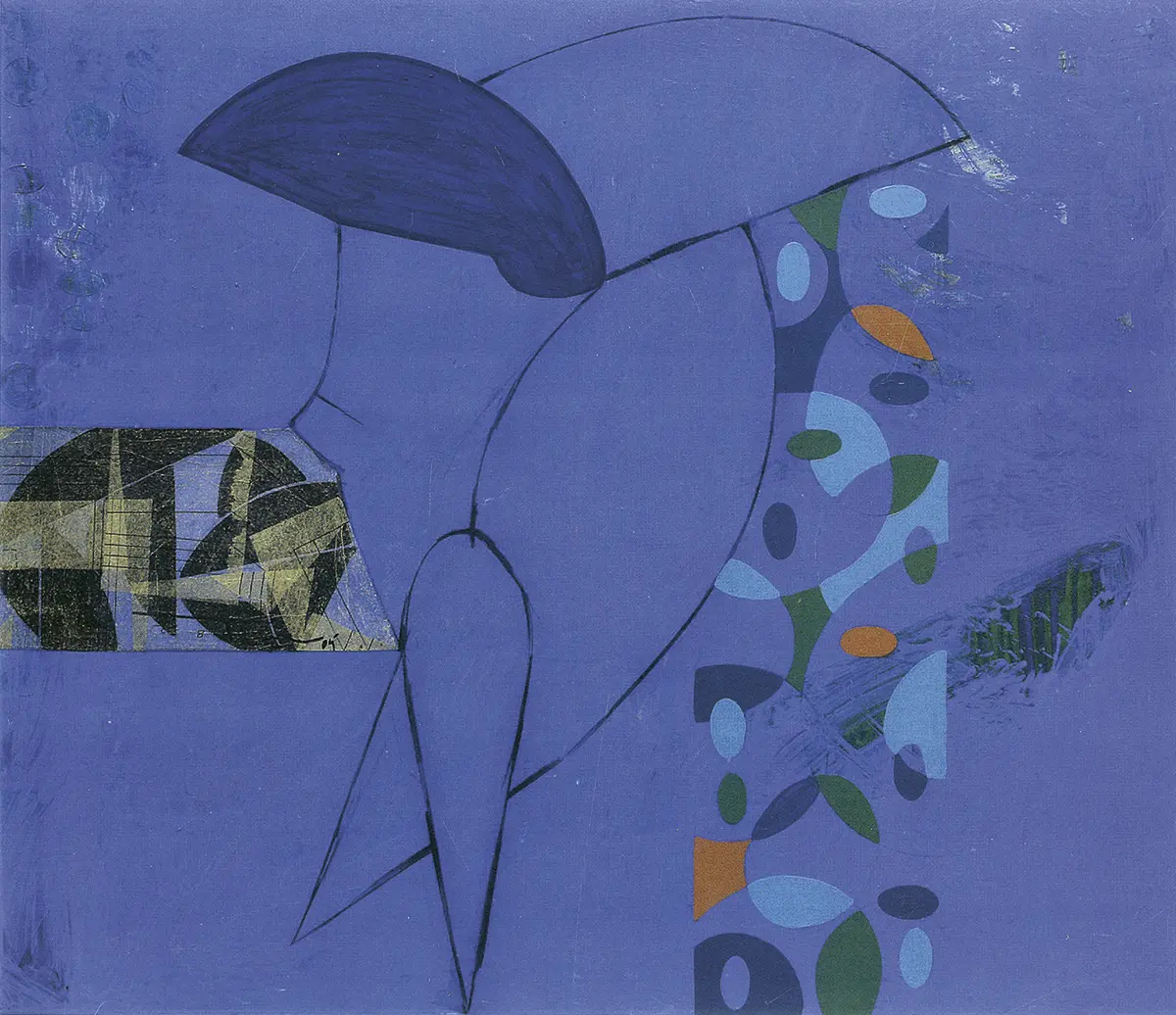
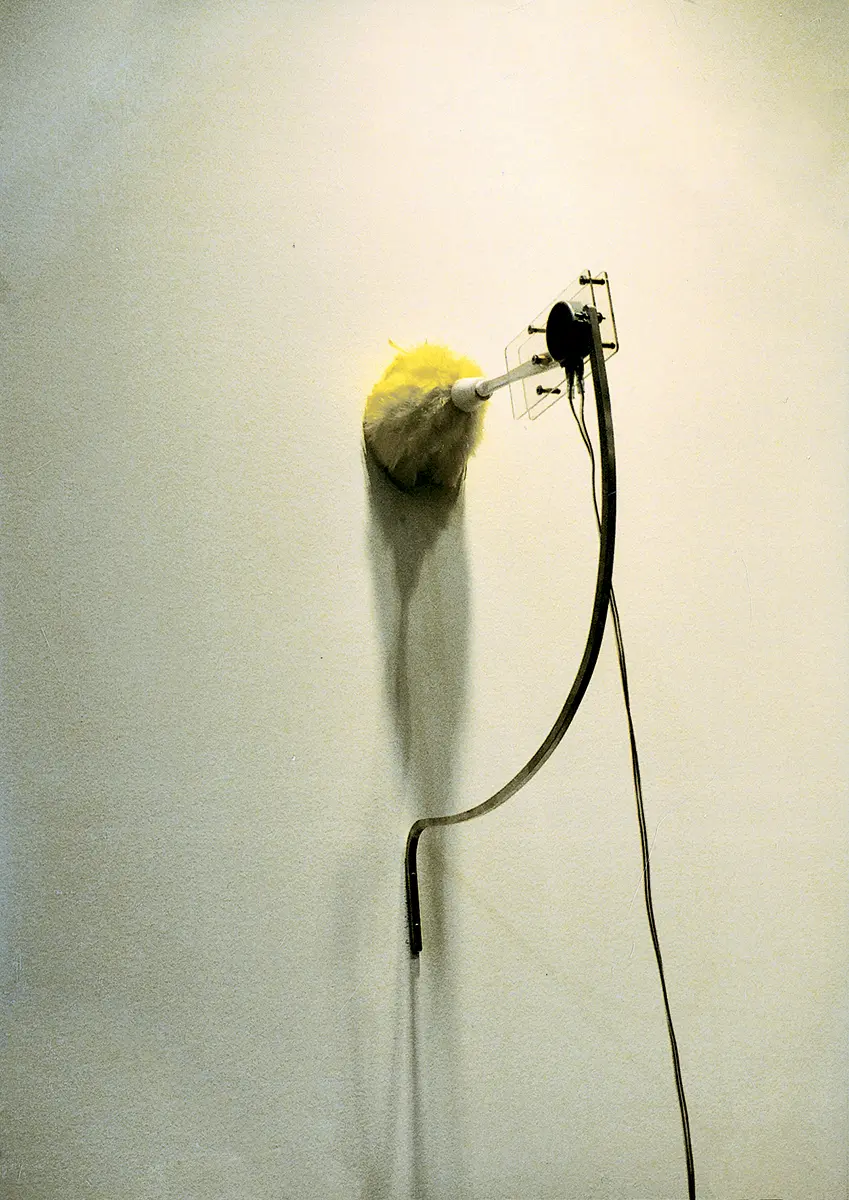
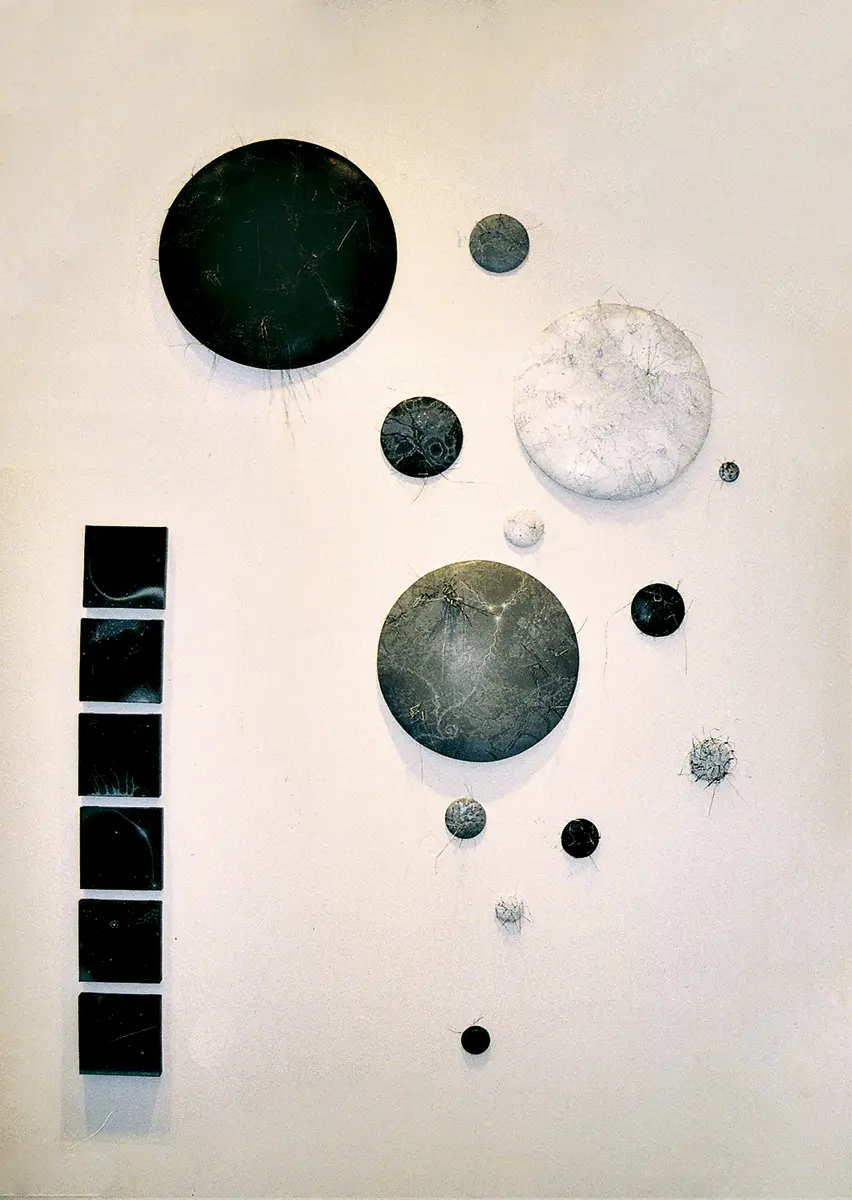
Among the various selections presented by the galleries, some booths stood out for their strong and unified presentations. As he has done at other fairs, Henrique Farías, a New York-based Venezuelan gallerist, presented a highly cohesive booth with contemporary constructivist artists, including Luiz Lizardo and Ramsés Larzabal. In addition to other Venezuelan artists, Caracas’s Galería 39 presented the work of Mercedes Elena González, who creates galaxies with painted and padded circles in a variety of sizes. The Arte Consultores booth, managed by Beatriz Esguerra, was dominated by a zen-like atmosphere in the display of Ángela Jiménez’s sepia and ochre graphisms on paper. Mexico’s KBK Galería presented works by Darío Escobar, an artist who reinvents himself constantly yet retains a connecting thread through his work; he has deconstructed sports implements, and for this event, he transformed bicycle tires into artwork against the wall. Dabbah Torrejón, one of Buenos Aires’s most contemporary galleries presented several interesting artists: Adriana Salazar, from Colombia, who creates intriguing objects that move rhythmically using small motors and feather dusters or cheerleading pom-poms; the works produced by the collaboration between Guillermo Kuitca and Mariano Giraud, composed of multiple electrical outlets: two in white, two in black, and two in red inscribed with the word “HELP.” Additionally, of note were Daniel Joglar’s mobiles of manipulated circles and rods, in various sizes.
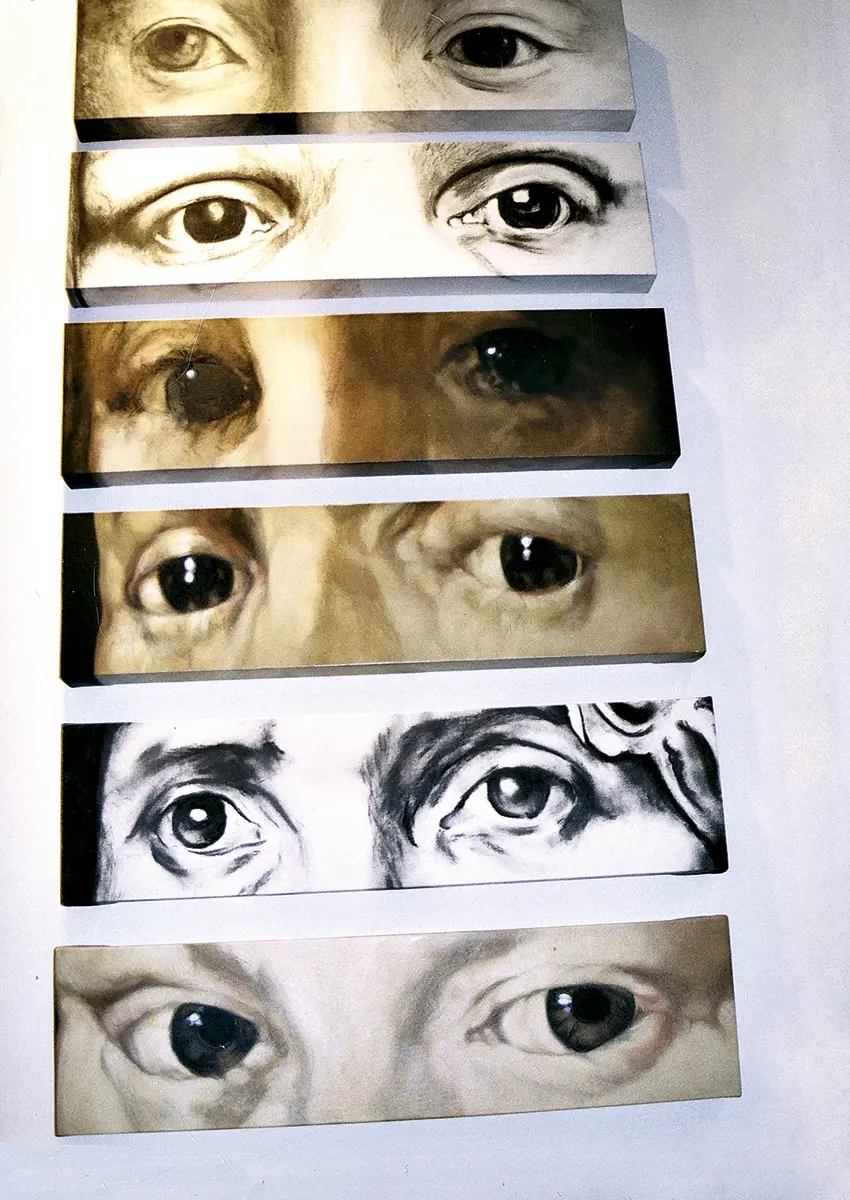
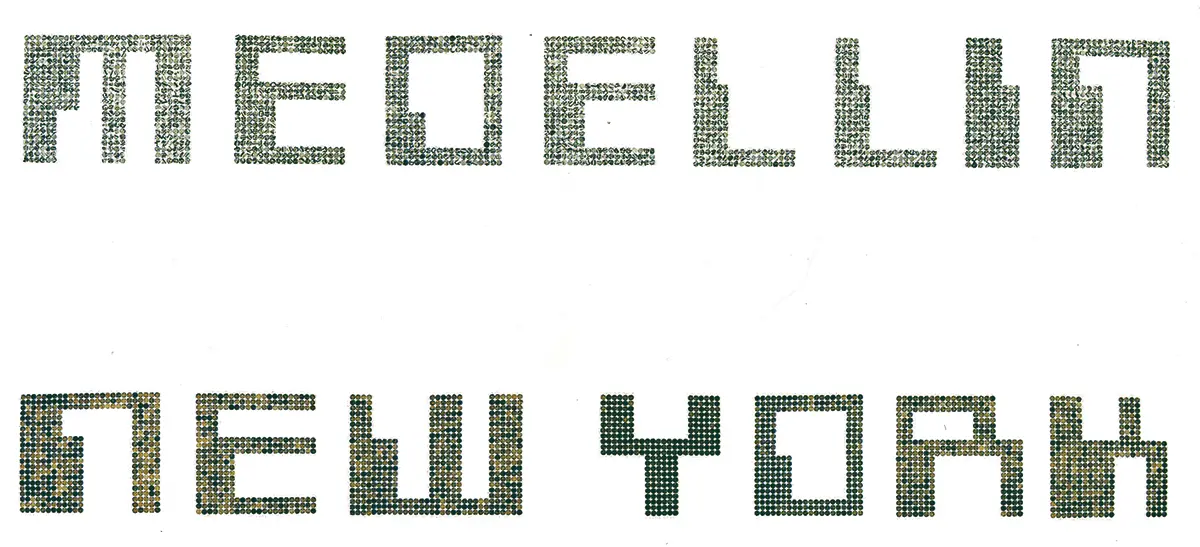
Galería Alcuadrado also stood out with Miguel Ángel Rojas’s drawings of the words "Medellín" created with small circular cutouts of coca leaves and "Nueva York" with those from one-dollar bills. Alcuadrado also showed Juan Fernando Herrán’s photographs of crosses of different materials found in the Colombian landscape and a wall drawing of adhesive vinyl by Regina Silveira. Not far from the fairgrounds, at the Antonio Nariño Center’s theater, this same gallery—which often presents its artists’ works in recovered urban spaces—exhibited works by the Brazilian photographer Caio Reisewitz; the theater is from the 1950s and has not been restored since its construction; it contrasted with Reisewitz’s impeccable, large photographs.
Several of José Alejandro Restrepo’s video installations could be found at Valenzuela & Klenner; some of them had already been seen in Bogotá, such as Santo Job, Santa Lucía, and Relicario con huecesillos del oído, a video showing a hammer, an anvil, and a stirrup as metaphors of the inner ear’s bones. Also to be found there was Víctor Escobar’s Caleta: where the wall was peeled away and one found hidden bills, an experience very close to realities that Colombians have lived through.
Only a few galleries presented individually exhibitions. Among them was León Tovar Gallery, from the U.S., with a show of works by Carlos Jacanamijoy, an artist from the Colombian-Amazon basin region, who brings organic abstraction to his canvases as a vision of his region, and Mundo Gallery, with a show by Darío Ortiz, whose figurative paintings are inspired in academic masters.
The standouts in the Venezuelan contingent were Milton Becerra’s droplets made of laborious weavings with nested stones at Durban Segnini and paintings by Schuster and Zajac—two artists who each make a painting on the same topic but retain their individual styles, with the final work comprising the two parts—at Art Nouveau. Okyo Gallery commented on Paulo Castro’s successful sales with his sensible, geometric, and abstract cloth-strip collages.
Kcho, the Cuban artist who makes drawings and sculptures with images of rafts, oars, fishermen’s homes, and inner tubes—and who was most talked about for his incorporation to Madrid’s Marlborough Gallery and his recent exhibition at the Alonso Garcés Gallery—was represented at the fair by the galleries of Juan Ruiz and Joan Guaita.
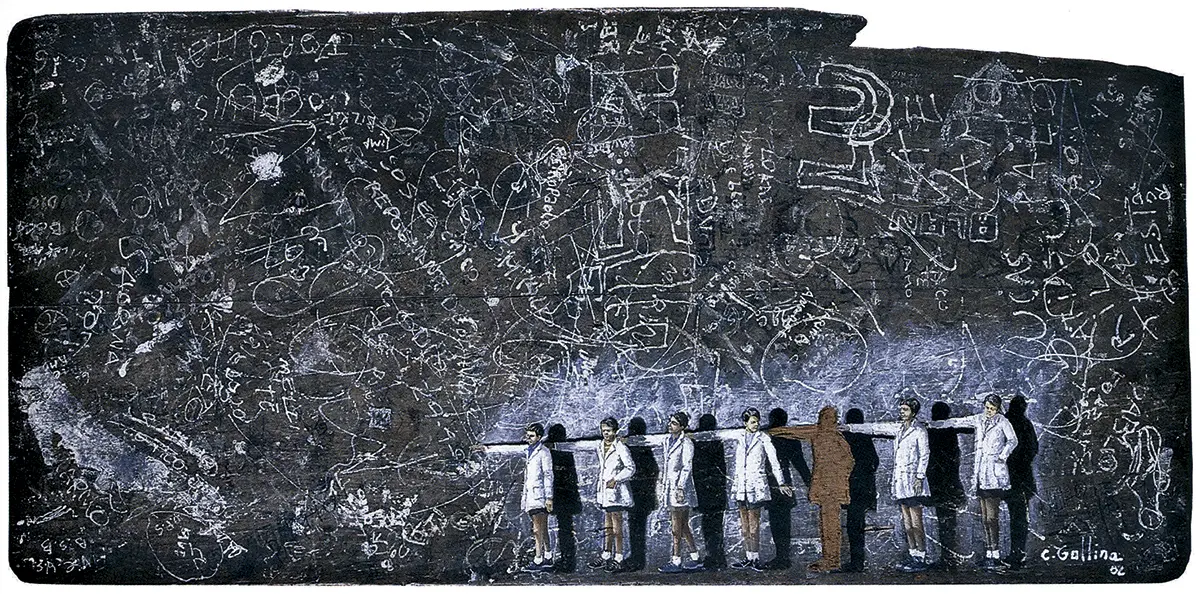
Besides its booth at the fair, Praxis Mexico, with its usual solid group of artists, presented an excellent show of paintings and drawings by Claudio Gallina at the Bogotá Chamber of Commerce; particularly notable were Gallina’s paintings on the wooden tops of old school desks that still bore inscriptions and graffiti made by students over the years.
Enrique Guerrero presented a rather minimalist booth with small-format works, including one by the young artist Ricardo Rendón, a small triptych of agglomerated material with a circular incisions of varied diameters that produced an intriguing optical illusion.
Some of the best-known names in Brazilian art, like Rubens Gerchman, Artur Barrio and Lygia Clark, were at Galerie Toulouse as well as Carolina Valansi’s interesting photographs of brides and grooms with stitched stabbings.
Aldo de Sousa Gallery offered paintings by several Argentinean artists and the highlights were Juan Lecuona’s abstract paintings and Sergio Camporale’s surrealistic visions. Also from Argentina, Via Marguta Gallery presented Ernesto Berra’s lyrically abstract paintings and Raúl Díaz’s solitary characters on textured canvases.
The great masters of kinetic art, Cruz Díez and Soto could be found in several galleries such as Art Nouveau, Graphicart and D´Museo. Other important masters enriched the fair, among them Roberto Matta and Fernando de Szyszlo at Galería Isabel Aninat; and Fernando Botero at Galería El Museo.
Among the Colombian galleries, we found the works by Thomas Ruff, an artist active in the international European market, and the young Colombian artist Adriana Duque’s photographs at Galería Alonso Garcés.
Galería El Museo, which brought the Spanish artists Juan Francisco Casas and César Delgado also showed Argentinean photographer Marcos López, who places his characters in surreal situations on constructed stages. Quinta Galería alternated the work of Colombian and Spanish artists, such as Txillida’s monochrome paintings in white, gray, or ochre. Rodrigo Echeverri, at Galería Casas Riegner, presented some interesting constructions that were flat but at the same time created the sensation of relief. Luis Fernando Peláez brought assemblages of objects as suitcases with photographic images and resins to Galería Sextante. At Mauricio Ruiz’s gallery, Germán Botero presented a new turn in his oeuvre with geometric carvings on wooden trunks, taking advantage of their features and veneers.
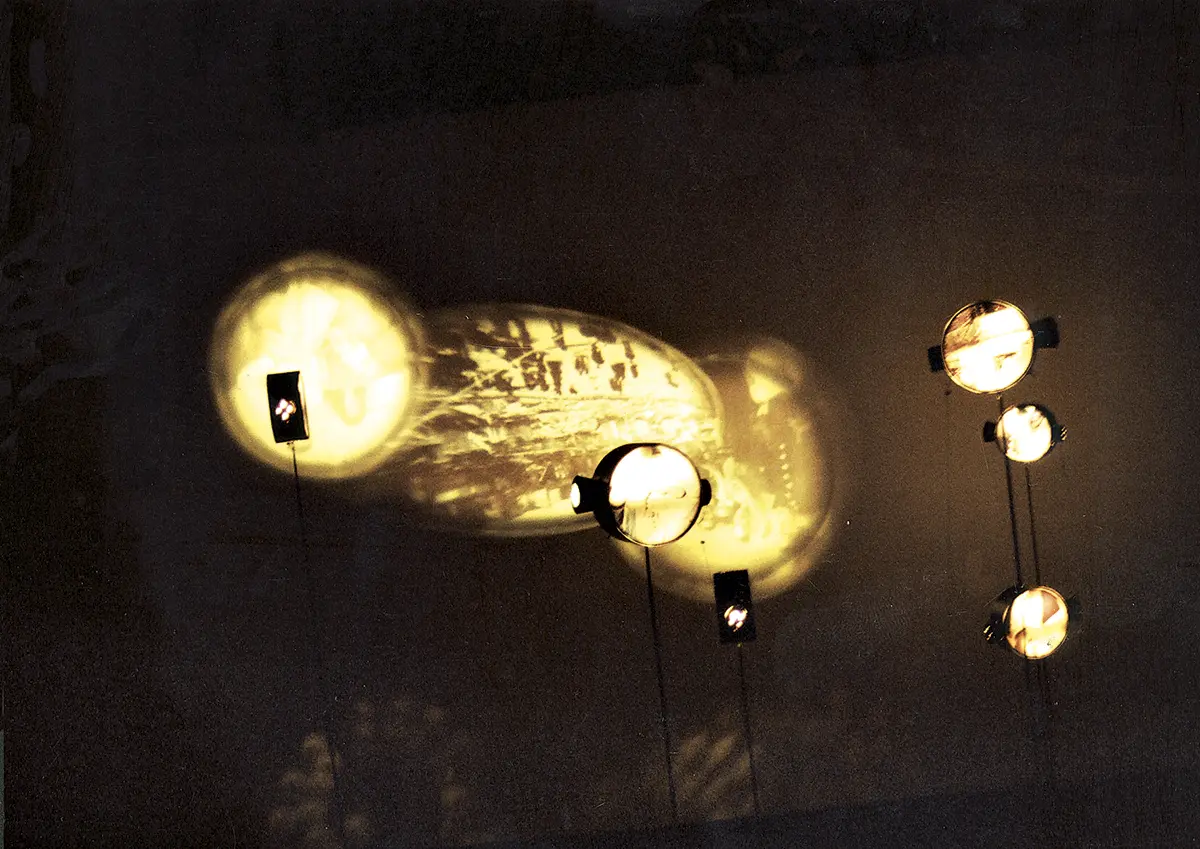
The space for young artists, curated by María Iovino and María Clara Bernal and titled Muestra Arte Cámara, offered new proposals. Among the highlights were: Héctor Mora’s Immigrant Protector video, made with cellular-phone technology and dealing with the traumas and misfortunes of a Latin immigrant in the big city; Lina Dorado’s and Luis Cantillo’s Dos Alrededor de la montaña, a poetic animated video; Mateo López’s subtle drawings and objects created from everyday materials; and an installation by Rodrigo Facundo is in a dark room with multiple circular objects hanging from the ceiling and containing images that became distorted as they were projected on the wall. During the fair, Estefanía Sokoloff, the cultural director of the Centro Colombo Americano curated a performance festival that was fully documented.
Also important to note were the thirteen sculptures situated outside of the exhibition grounds. While some of these had been seen before, they transformed the arid cement area into an interesting space for the dialogue between the works of both well-known and emerging sculptors. These included: Edgard Negret, John Castles, Germán Botero, and Nicole Sivickas, presented by Galería La Cometa, as well as Gustavo Bejarano and Luis Poblador at EntreArte, U.S.
With the support of its Chamber of Commerce, Bogotá has joined the new art fairs held around the world, which open up fresh perspectives for the public, galleries, and collectors alike.
CELIA SREDNI DE BIRBRAGHER
Founder and Director of Arte en Colombia/ArtNexus.