
The current exhibition at Ramis Barquet’s uptown venue is a one-man show by Esteban Lisa (1895–1983), a visionary artist originally from Spain, who lived his whole life in Argentina, where he produced a most interesting body of abstract works beginning in 1925 and continuing to the end of his long life. The appreciation of Lisa as an artist is, however, a very recent phenomenon, for he chose never to exhibit his works. The first major exhibition of his work took place in 1987, four years after his death, when the Esteban Lisa Foundation held an exhibit in Buenos Aires. The following year the Museo Municipal de Artes Plasticas Eduardo Sivori, also in Buenos Aires, gave him his first museum exhibition. Since the 1998 retrospective at the Torres Garcia Museum in Montevideo, his work has been appearing steadily in gallery exhibitions in Europe as well as at the international art fairs.
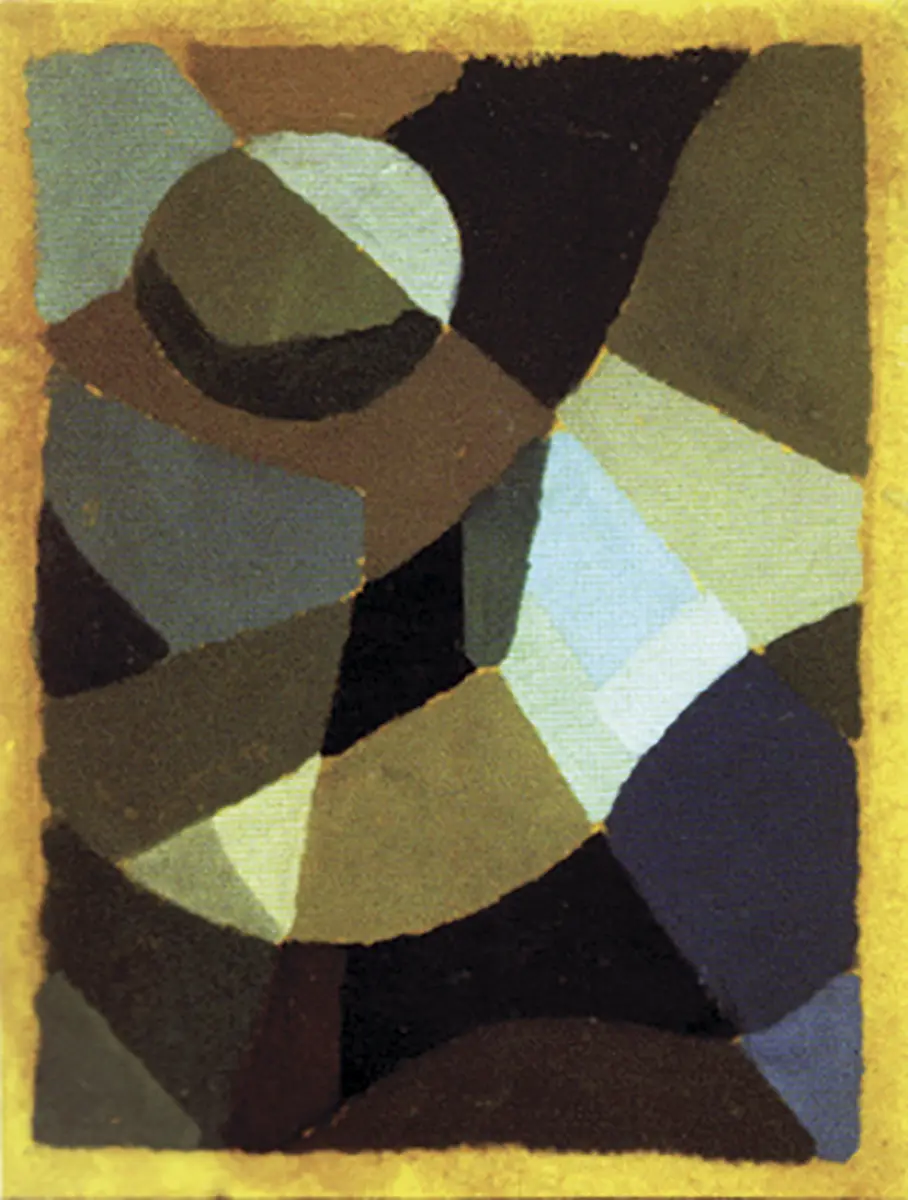
Lisa belongs to the tradition of hermetic artists in Latin America who purposely stay out of the mainstream of the artistic currents and platforms of their time to develop their own paths that are not only artistic trajectories but also the development of philosophies. Xul Solar (1887–1963), another Argentinean artist, comes to mind in relation to Lisa’s work because he was a contemporary who also developed his own artistic and philosophical theories outside of the mainstream.
An artist like Lisa is truly a “missing link” in the art scene from the contemporary perspective of our very commercial times. In our present market-driven art world, we have a difficult time understanding the concept of art without marketing. From our perspective, it is hard to comprehend that there were artists that declined the opportunities the market offered, to pursue an artistic ideal in complete detachment.
Aside from the isolation from the market that sets Lisa’s work apart, Latin American artists that work with abstraction are also usually lesser known than their counterparts who developed modernism through figuration. The importance that abstraction has in the tradition of modern Latin art has received due attention since the groundbreaking exhibition “Inverted Utopias,” curated by Mari Carmen Ramirez and Héctor Olea for Houston Museum of Fine Arts in 2004. However, the muralists from Mexico and the Surrealists from the whole continent are still the most widely acknowledged expressions of Latin modern art to America and the world at large, a fact amply demonstrated as recently as 2005 by the huge success of the Frida Kahlo exhibition at Tate Modern in London. This exhibition of Lisa’s abstractions is therefore not only a great opportunity to discover an artist of quality but also an informative look into another step in the development of abstraction in the Americas.
It should not be surprising that artists that choose to work and develop along a personal path have remained unknown to the art world much longer than their counterparts, even after the development of interest in art from this region. Lisa not only had no exhibitions during the long span of his work’s production but also several years after his death; not until the 1990s were exhibitions of his work mounted at international commercial galleries. Yet, for the visitor entering the Barquet Gallery, the abstract works of Lisa speak for themselves in the clarity of their purpose and the quality of execution. He shows the same commitment to abstraction that took hold in Europe at the beginning of the last century and that was well established in the avant-garde cultural centers before the First World War.
Lisa’s work has a strong affinity with the works of the Russian Suprematists. While it contains the spiritual qualities of art that were an integral part of Kandinsky’s work, it can also be seen in the context of American abstraction when compared to the work of Arthur Dove (1880–1946), America’s first painter of abstraction. Lisa also shares with Dove the isolated development of his work and his lack of contact with the artistic milieu of his time. Another similarity with Dove’s work is the small scale of Lisa’s works. The works shown in the gallery are mostly thirty by twenty-three centimeters in dimension, and it is a rare treat to see so much good use of the pictorial plane. One has to agree with Professor Sullivan, who states in the exhibition catalog, “In more recent times largeness is often equated with concepts of ‘impressiveness’ or even equated with quality. Rarely do we have the opportunity—or the pleasure—of walking into an exhibition of works of art of discreet size.” It is indeed a rare treat to see abstraction of this quality that can transcend the limitations of its size and time of creation to bring us an aesthetic experience as meaningful as this selection of Lisa’s work that so elegantly demonstrates that quality has its own way of coming forth and negotiating a permanent presence.
ALBERTO BARRAL