
The Museo Nacional’s curatorial team did careful research into the history of the National Salon and produced the show and book titled Marca Registrada: Salón Nacional de Artistas, Tradición y Vanguardia, a project supported by the Ministry of Culture.
To reflect on the National Salon is important because beyond its successes and failures and the many criticisms that have been made of it, it has been an important and significant event in Colombia’s artistic life, one that with occasional interruptions have maintained their regularity for over sixty years. On the Salon’s fiftieth anniversary, Camilo Calderón published a book (through Colcultura, today the Ministry of Culture) that gathers together the works presented at each version of the Salon and the comments made in the press. This book has become an obligatory document for anyone interested in reviewing Colombian art. Marca registrada refers to this text, and the project is driven by the need to recover the history of the Salon. In the words of Cristina Lleras, Collection Curator at the museum, the Salon’s “lack of memory” is worrisome. This is why the team, along with the invited curator Beatriz González, set for itself the task of looking at the history of the Salon through a prism that seeks to investigate the relationship between the Salon and the development of Colombian art, without ignoring its inherent problems and the debates around it.
I had the opportunity of touring the entire show in the company of one of its curators and I understood the scope of the project; however, I wonder whether a regular visitor would perceive the museum’s various spaces as a unit without a guided tour.
The show was structured to address seven moments and six problems relative to Colombia’s art: “Antecedents to the Salon,” which covers the national exhibitions presented between 1904 and 1930; “Art Without Revolution,” covering the period 1940–-1952; “The Will to Modern Painting,” 1957–1964; “All the Tendencies,” 1965—–1969; “Spectators at a Funeral,” 1965–1981; “The National Salon Starts Again: Trial and Error,” 1985–1989; and “Underexposed,” 1990–2004.
The “Antecedents to the Salon,” were shown on the third floor of the museum, which featured works that are part of the Museo Nacional’s collection and were included in official exhibitions in the early twentieth century, when the Colombian art world focused on the Escuela de Bellas Artes. Unadvised visitors were led to connect this exhibit with what took place in the first floor’s main gallery, which held works covering for a sixty-year history.
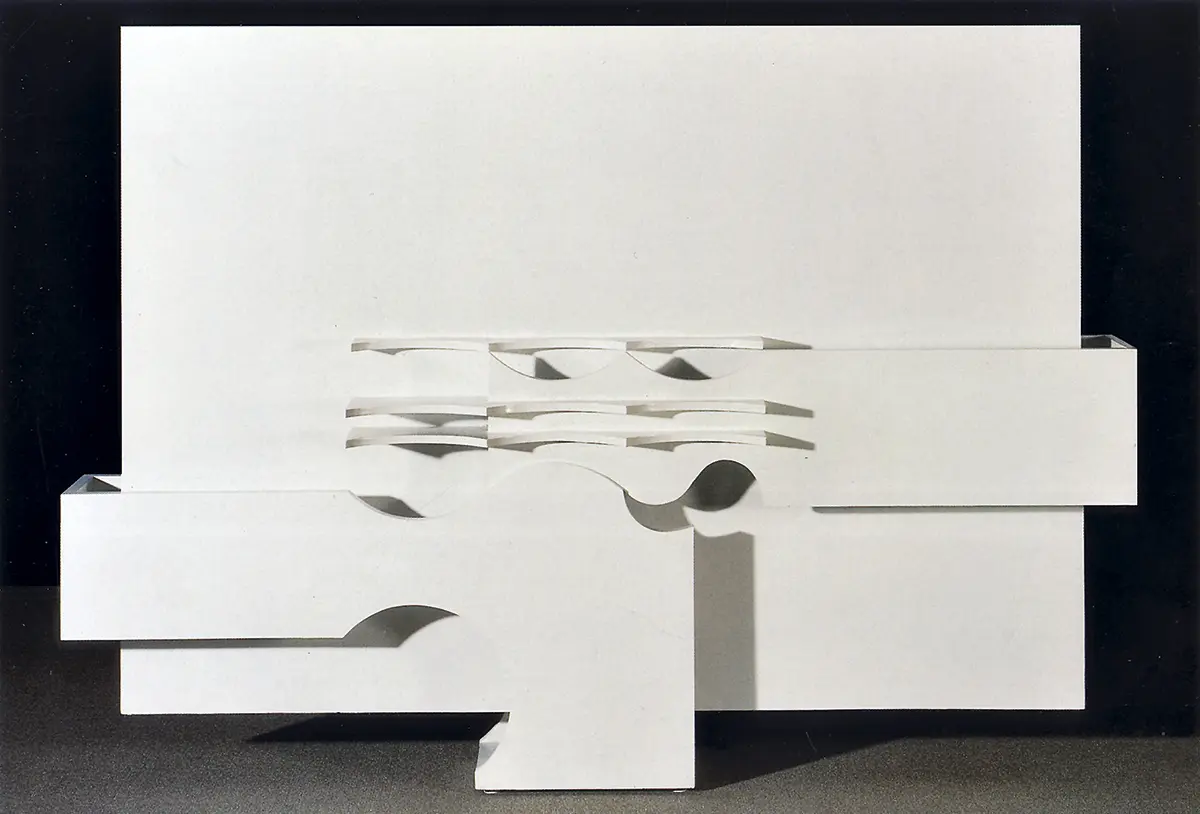
In the first floor’s main gallery, works were arranged in the manner of old Salons, which were without modern notions of the exhibition and covered walls entirely with works of art; this approach did not allow for easy viewing of individual works and generated a sensation of overcrowding. The gallery’s walls were covered with wallpaper designed with images and newspaper articles alluding to the National Salon. These documents, as a backdrop, made clear the continuing debate that has been generated by this institutional show since its inception. Included alongside the artworks were testimonial videos of critics and artists who discussed the different Salons. But on the whole, the gallery was rather saturated with information that, albeit of great value, was excessive. Of the six categories used to organize this sixty-year history, the clearest one was “The Will to Modern Painting” curated by Carolina Vanegas. The works selected here accounted for a term as precise as “artistic will,” coined by Riegl and Worringer, which underscores the forceful intentionality that generates a given way of making art. Despite the diversity of the works selected, an attitude tending toward a particular geometry and a synthesizing intention derived from modern art was visible in the works from masters such as Grau, Ramírez, Widemann and Roda, among others. “All the Tendencies,” as the title indicates, was a heterogeneous selection that covered just four years but highlighted a will that had become plural, a modern directive that had broken into multiple lines, without a dominant direction. In my opinion, this condition became even more explicit in the next period, titled “Spectators at a Funeral,” which included works of such great diversity that the viewer continued to feel the coexistence of “all the tendencies” with the presence of works as dissimilar as a hyper-realistic drawing by Alfredo Guerrero, a self-portrait that received a mention at the 15th Salon in 1976, alongside a xylography by Alfonso Quijano that alluded to violence, Bernardo Salcedo’s boxes, and Caro’s memorable Colombia, a painting on the tin—the last two were produced with a more connected intention.

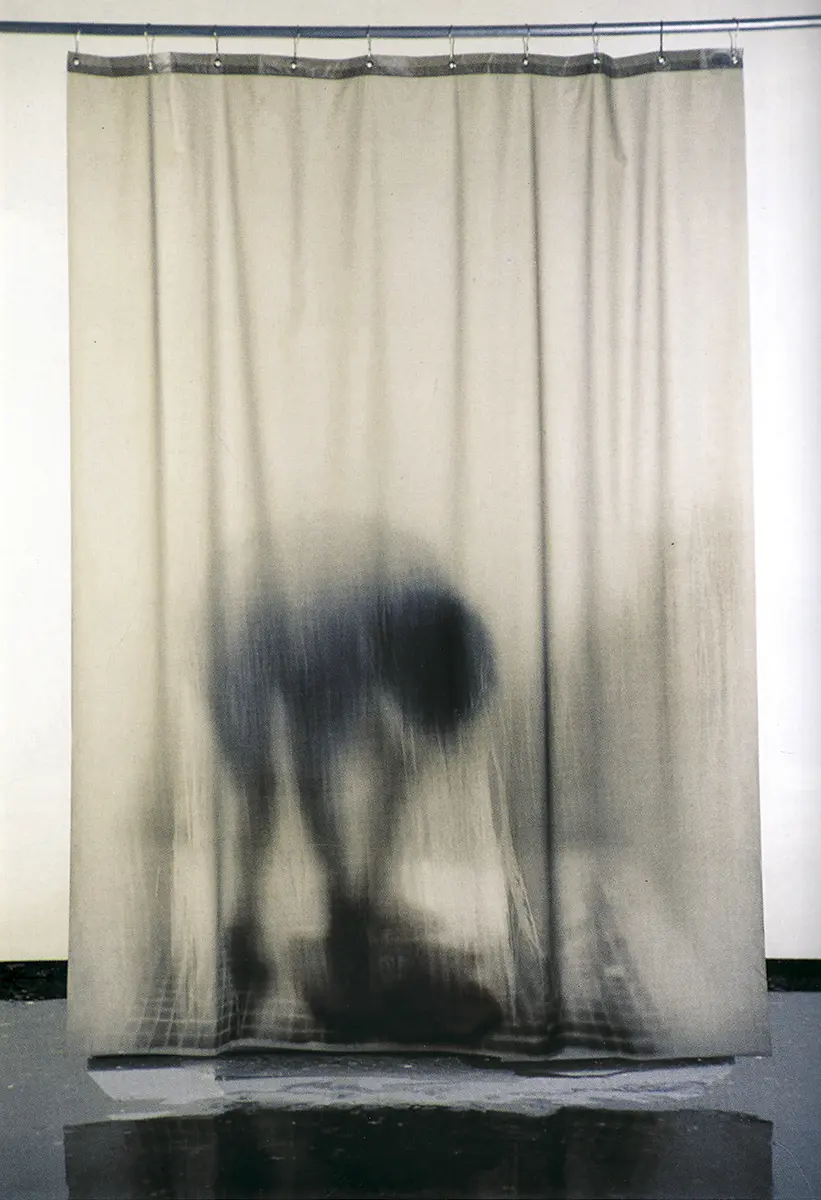
A special subchapter, “Trial and Error,” was devoted to the reopening of the Salons. Beatriz González had an interesting observation about this period: “Art criticism did not realize the shifts art had undergone in the decade’s last Salons,” which, as the curator pointed out, made it possible to speak repeatedly of a crisis in art. The show once again presented one of Óscar Muñoz’s memorable curtains, which did not receive an award at the 30th Salon in 1986, as well as Alicia Barney’s Bocagrande, which was first presented at the Salon in 1980.
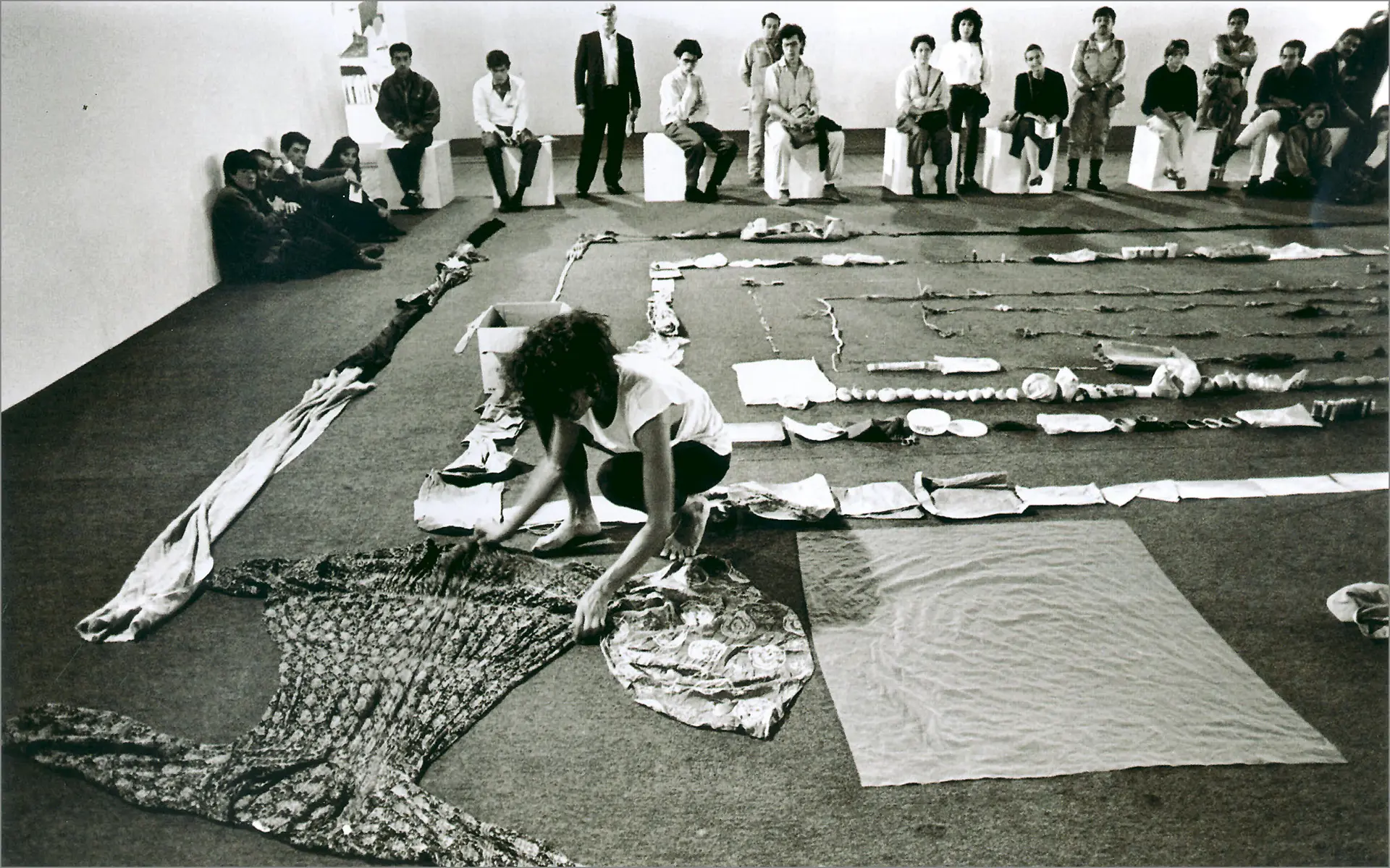
The last category was “Underexposed,” covering the decade of the 1990s, one commonly assumed to be that of the entrenchment of contemporary art in Colombia, and reaching into 2004. For this show, a fragment of María Fernanda Cardoso’s Sin Título, the winner of a mention at the 33rd Salon in 1990, was reconstructed. This work, alongside Juan Fernando Herrán’s crown of thorns, Pablo Wan Wong’s assemblages, and María Teresa Hincapié’s performance, were landmarks in the art of the period. We should truly be thankful for the opportunity to again have contact with such key works in Colombian art.
The alternative gallery included videos and photographs, and it was an opportunity to remember some of the most memorable works of art of recent years, including María Elvira Escallón’s In Vitro, a winner at the 37th Salon in 1997, and María Teresa Hincapié’s Una cosa es una cosa, a winner at the 33rd Salon in 1990.
Exhibited in an event parallel to the show were two new collections of popular prints by Álvaro Barrios and Augusto Rendón, donated by the artists. These prints are significant works that reflect two dissimilar but equally transcendental moments in the history of Colombian art. Rendón is a pioneer of the graphic arts in Colombia and also of what is known as “committed art,” which defines a whole chapter in the art of the 1960s and 70s. Álvaro Barrios is one of the initiators of conceptual art in the country, and his style is connected to Pop Art, an obligatory point of reference for the beginnings of contemporary art in Colombia.
Undoubtedly, the catalog Marca Registrada is an important event and contributes to the history of the Salons begun by Camilo Calderón sixteen years ago. The book recovers works of such importance as Antonio Caro’s Aquí no cabe nadie, a pioneering effort of 1972 with great currency today; with this work, the art world is confronted with the innumerable deaths that have taken place in the country since that year. Indeed, Marca Registrada achieved its goal: to reactivate the memory of the Salons and to open the door to a new way of looking.
MARTA RODRÍGUEZ