
Bi-cultural identities, geo-political restructurations of the territory, the crisis of Occidentalism, the decadence of the post-colonial fallacy, steeled suspicion of the phenomenon of globalization, and complete discredit of all one-note, essentialist identity models: these are some of the operational axes of contemporary thought. Our culture hesitates between the moving terrain of undefinedness staged genealogies and the crossing and tensions of the borderland and its contradictions. Contemporary subjectivity is, then —and as a consequence of these— more slippery, more resistant to the definitions of a rational profile based on the traditional structures of belonging to one country, one identity, one kind of gender, one nation, one specific territory, one racial model. The greatly complex phenomena of emigration and immigration, in that sense, are mapping out a world where promiscuity seems to become a mark of distinction, against that model of illusionistic purity defended by a certain historical narrative. The utopian epiphany lay skepticism steals its right to centrality.
It is in regards to this scene and their complex relationships of dialog that Paco Barragán most recent commissariat, exhibited at the Burgos CAB under the title of nEUclear reactions, acquires meanings that are quite different from those identified by some critics in an attempt to disentangle its ultimate significance. While it is true that in the exhibition’s mise-en-scene, its narrative articulated by works exhibited on the basis of winks and complicities, is not entirely satisfactory, at least not from an irrefutable eloquence, the conceptual underpinnings of the discursive platform conceived by the commissar, we must extensively recognize the speculative intellectual exercise and the spirit of distancing from the conservative schemas that stimulate the majority of exhibition projects in the Spanish cultural field, traversed as it is by excessive devotion to the classics and to aesthetic values that are safe from any risk. Whether we want it to be or not, this is a thesis the exhibition were on the basis of the work of fourteen artists whose life-stories mix different origins and cultures in a kind of palimpsest, an attempt is made to at least suggest a front of debate about what today’s Europe is, a Europe without Europeans, leaving aside the reductionistic, and fictive paradigm of a pure, white, Western, and enlightened territory. Perhaps such an starting idea will seem somewhat naive, which would certainly be a respectable judgment, but I believe that beyond the presumptive clumsiness of its governing axiom, the show has at its base an interest in problematizing, discussing, and foregrounding in the debate about art issues that have remained unresolved in all political platforms.
Starting from this premise, nEUclear reactions become an unfinished show; it is rather, and much, on the contrary, a propositional intellectual exercise, a kind of laboratory for ideas in search of answers, beyond the assertion of conclusive, learned thesis. For this reason, the idea of signaling it in the profuse landscape of collective exhibitions appealing to nationality, to localism, to ethnicity or to any number of denominations of origin as sterile classificatory criteria are somewhat equivocal. Its specular procedure is of another depth, since —in the words of the commissar himself, “nEUclear reactions does not seek to homogenize or level differences. On the contrary, it suggests a perspective that is based on broken identities in order to carry out a critical investigation of contemporary artistic practices.”1 This being the case, the roster of selected artists responds to an element that is common to all of them, the fact of residing in different parts of the world and having a multi-cultural family history, which defines the profile of a bicultural subjectivity that in most cases, rather than being an advantage for the mastery of two languages and the possession of dual citizenship, becomes a veritable conflict where the constant re-definition of the self is at the basis of every social and human act, including —of course— the very production of the aesthetic fact.
The classic questions such as Who am I?, How do I relate to others?, What is my place in the world? Where is my home (in the hypothetical best-case scenario that home exists as a physical and nuclear entity)? seem like ghosts that perambulate through this show with the clear purpose of creating a state of disquiet in the interlocutors —advised or not— who is confronted with these works. In response to this idea, the words of Irit Rogoff acquire major significance: “in a previous formation there existed a necessary alliance between an identity (being red, French, Muslim) and its location within a national, regional or cultural site (being Turk, Northern European, of the art world.) In the current moment, however, the mutual dependency of these two categories has faded in an intriguing way.”2 Contemporary subjectivity is, then, more and more vanishing, dissident, slippery, as are, in good measure, artistic practices themselves, where a new “paradigm of contamination” is certainly established, a paradigm of referential promiscuity, the product of identity crossings, diversity of origins, mutual coexistence in a heterotopical space, and the unrepentantly nomadic state of life. Today’s nomadism, of which many of us are aware in the first person, is the most devastating attack against notions such as family and home. Where is home, and to what family do I belong, if each journey takes further and further away from my origin.
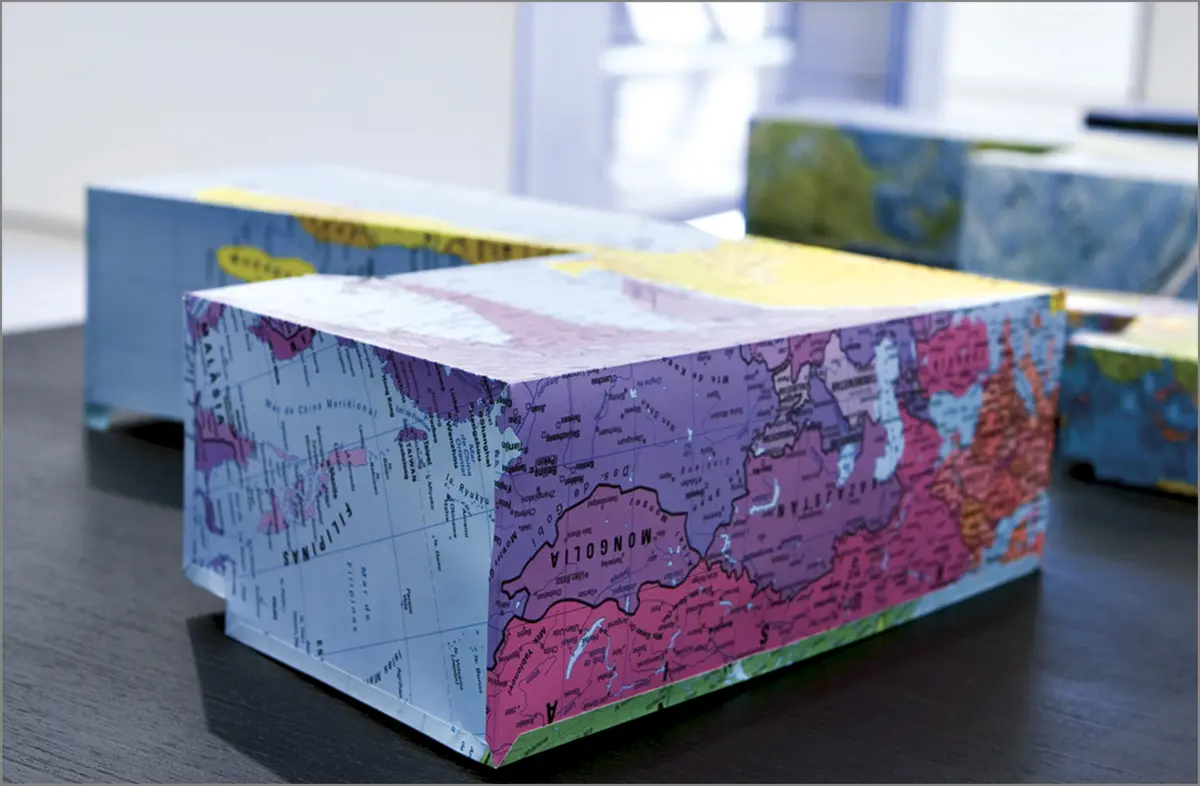
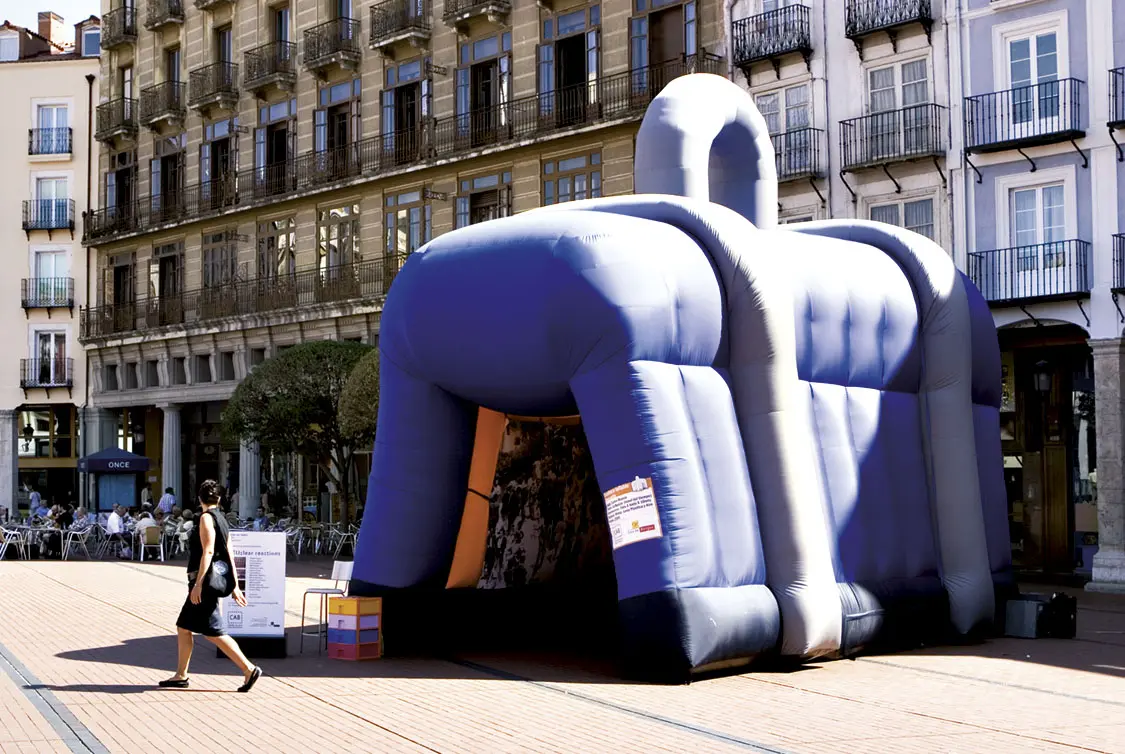
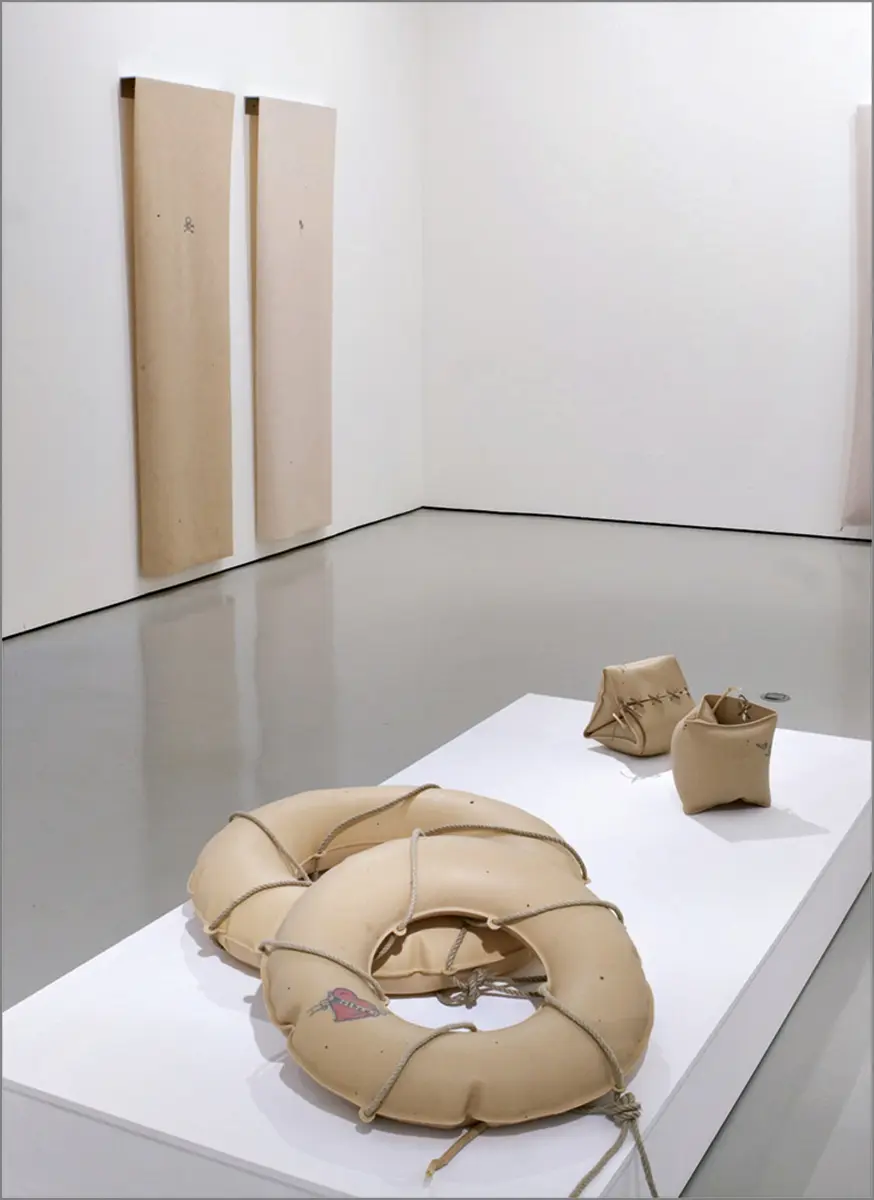
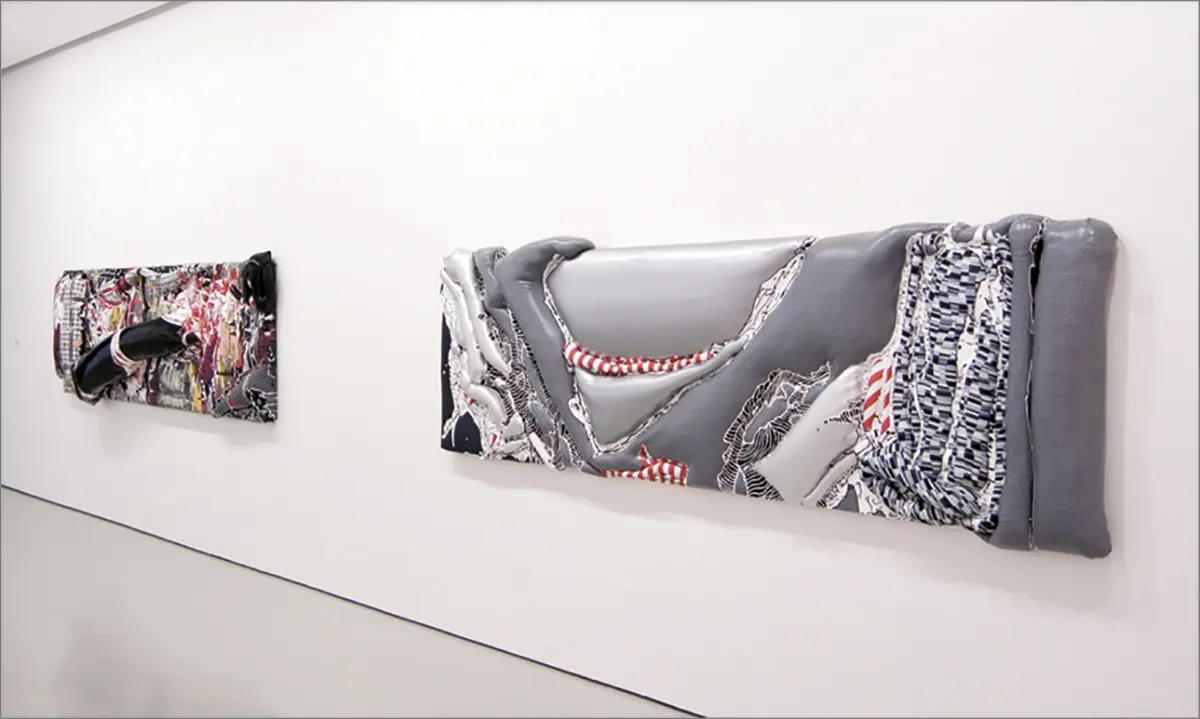
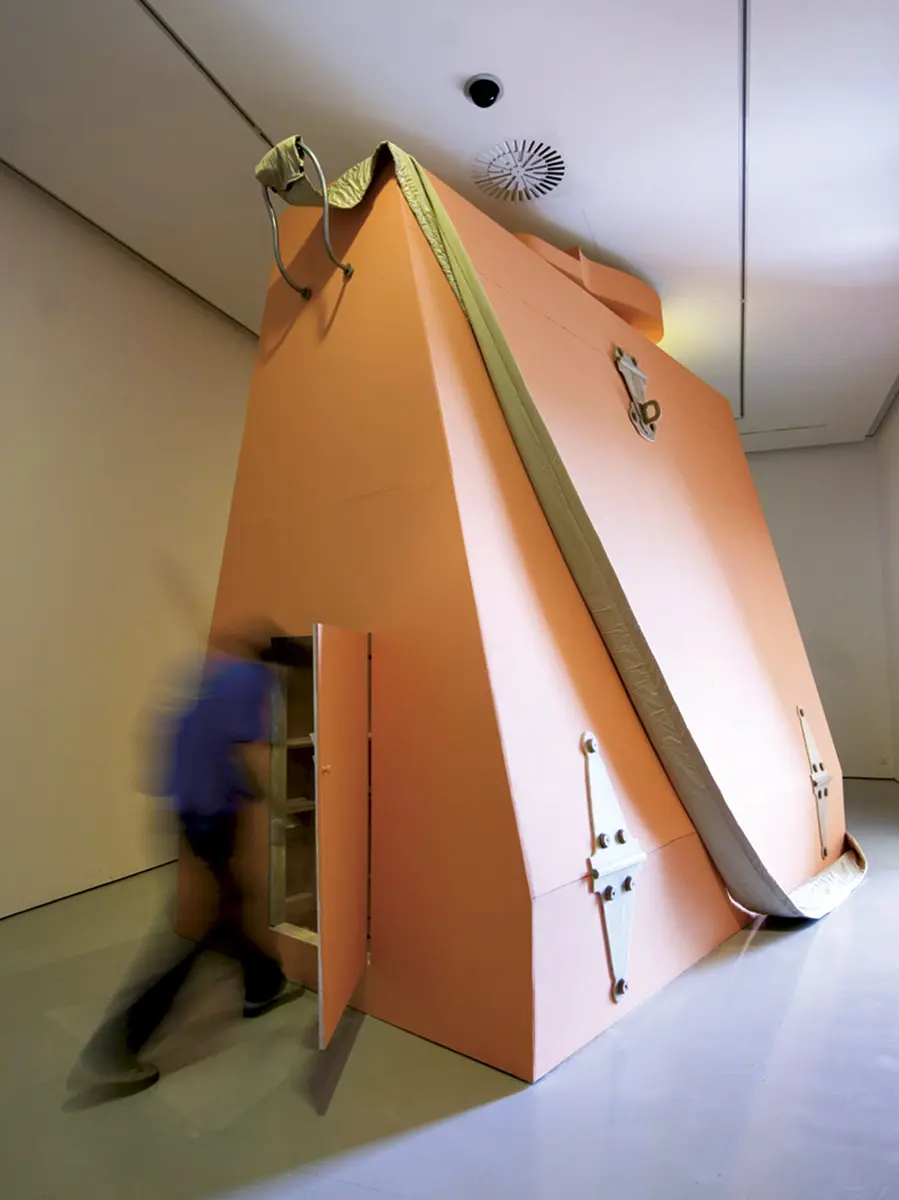
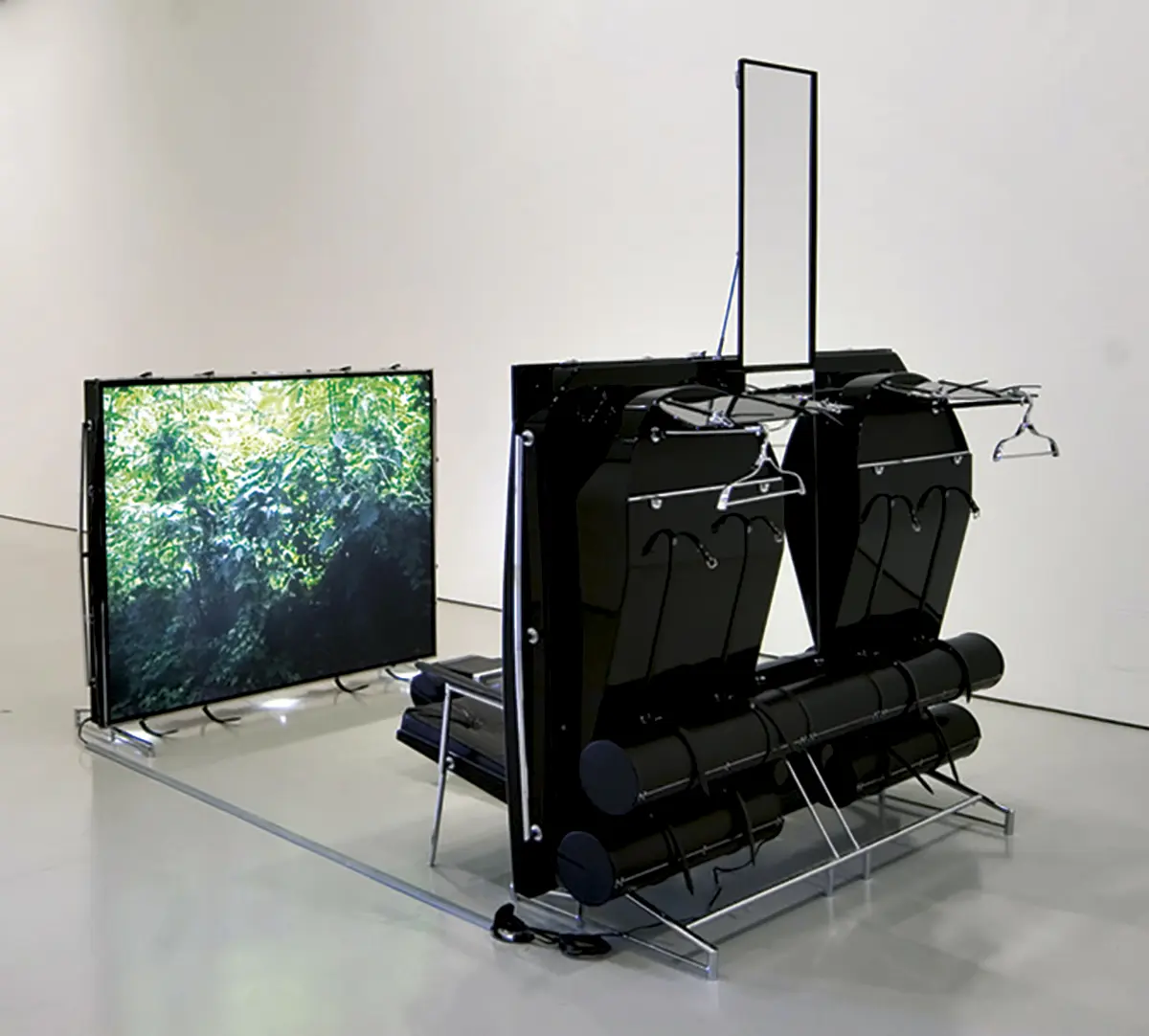
In that sense, and responding to this criterion of ambiguity and contamination, the works of Shane Cotton, François Bucher, Edith Dakovic, MK Kaehne, Clemencia Labin, Darren Sises, Carlos Blanco, Alexander Apóstol, Shane Waltener, Daniel Chust Peters, Aldo Lacobelli, Reuben Paterson, Charles Júhasz-Alvarado, Imants Tillers, are all true hybrid essays that set and mix elements from the cultures of origin with others from the receptor culture, as well as whimsical admixtures of high culture and traditional popular culture. Carlos Blanco’s suitcases, that huge inflatable artifact that with its tunnel-like structure invites us to visit the past and recover it in the shape of a present that we must continue to face, and those by of Russo-German artist MK Kaehne, resolved with all the basic utensils for life in the nomadic space, alongside the giant shoebox as a metaphor of immigration transformed into a Trojan horse, speak of the figure with great symbolic potential: the portable home. The reflection about identity is transformed by skin as the first signal of distinction mark Canadian artist Edith Dakovic’s excellent work, while Brazilian/Spanish artist Daniel Chust’s world maps use the figure of the workshop/home as a fortress of resistance. Along the same lines, the works of Australian aboriginal artist Daniel Siwes and Venezuelan artist Alexander Apóstol visit the home as sustenance for life, but also as a site of conflict, disunity, and loss of ties. Belgian/Australian artist Shane Waltener recovers traditional female practices in order to create a meeting point where a slow dialog against the speed and amnesia of the global model are rendered possible. Latvia/Australian artist Imants Tillers’ fragmented puzzles rearticulate, in a plane of infinite references, aboriginal and European elements, thus speaking of identity, belonging, and displacement. Maori/New Zealander Shane Cotton’s landscapes are revealed around identity as a fallacy and its construction mechanisms. And something similar is the case of Colombian/French artist François Bucher, folding magazine pages with the result of a view of collage that alludes to the montages and arbitrary manipulations by the power of all kinds of denominations of origin. The structuring axis in Maori/New Zealander Reuben Paterson’s poetics are feelings of loss, multi-cultural journey, and uprootedness, expressed in his subtle pictorial installations made with glitter and printed cloth. Italian/Australian artist Aldo Lacobelli and Venezuelan/French artist Clemencia Labín produce visual symptoms of a kind of shifted memory and culture of the self, which forces a constant, obstinate, and even painful redefinition of being in the world.
NOTES
1. From the text in the catalog of the show.
2. The commissar of the show quoting Irit Rogoff’s words in the catalog of the show.
ANDRÉS ISAAC SANTANA